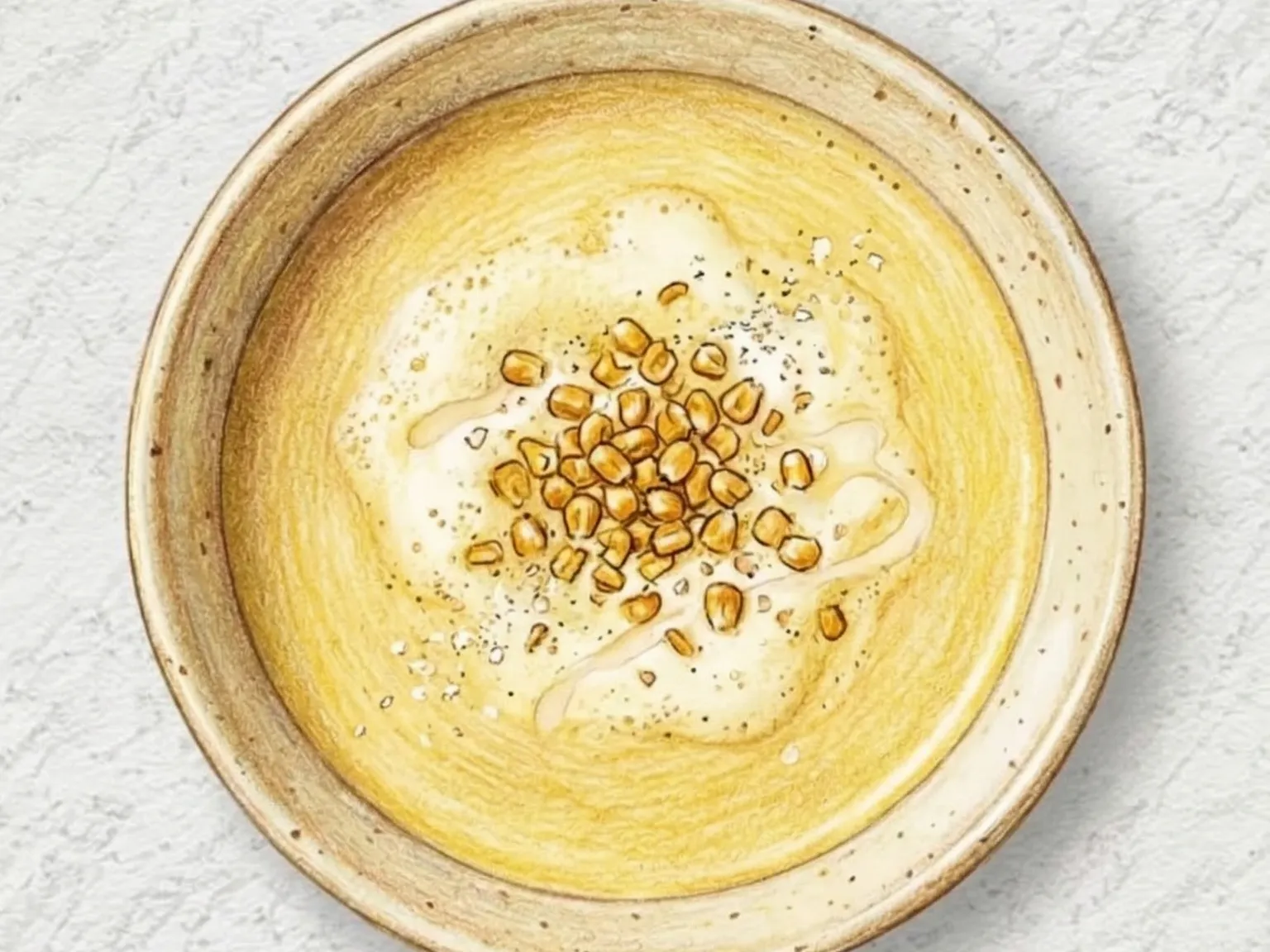
Korean Sweet Corn Latte (Butter Sauteed Corn Milk Drink)

Korean Sweet Corn Latte (Butter Sauteed Corn Milk Drink)

Quick answer

Sweet corn latte begins by sauteing cooked corn kernels in butter until fragrant, then simmering them in milk to draw out the corn's natural sugars before blending everyt...

What makes this special

  • Sweet-corn-latte caramelizes corn in butter before simmering in milk to amplify its natural roasted sugars.
  • Butter-sauteing 2 minutes caramelizes corn starch for amplified nuttiness
  • Straining after blending creates the silky-smooth texture
Total time
18 min
Level
Easy
Servings
2 servings
Ingredients
6
Calories
176 kcal
Protein
7 g

Key ingredients

cooked corn kernelsmilkcondensed milkbuttersalt

Core cooking flow

  1. 1 Melt 1 teaspoon of butter in a small pot over low heat, add 180 grams of coo...
  2. 2 Pour 420 milliliters of milk into the pot and simmer gently over medium-low...
  3. 3 Turn off the heat, transfer the mixture to a high-speed blender, and process...

Sweet corn latte begins by sauteing cooked corn kernels in butter until fragrant, then simmering them in milk to draw out the corn's natural sugars before blending everything smooth. The butter amplifies the starchy, roasted aroma during the initial saute, coating each kernel so that the fat-soluble flavor compounds dissolve fully into the milk during the five-minute simmer. Blending the mixture until completely smooth and then straining it through a fine sieve removes any remaining hull pieces, producing a texture as silky as a custard sauce. This straining step makes a noticeable difference in the final quality. Condensed milk adds a rounded sweetness, and a small amount of white pepper introduces a faint spiced warmth that gives the drink depth beneath the sweetness. It works equally well served hot in a ceramic mug or chilled and poured over ice; the corn aroma remains vivid in both versions.

Prep 8min Cook 10min 2 servings
Recipes by ingredient → milk butter

Instructions

Read the steps as a cooking flow: prep, heat, seasoning, doneness control, and finish.

6 steps
  1. 1
    Control

    Melt 1 teaspoon of butter in a small pot over low heat, add 180 grams of cooked corn kernels, and sauté for 2 minutes until fragrant and slightly golden.

  2. 2
    Control

    Pour 420 milliliters of milk into the pot and simmer gently over medium-low heat for 5 minutes to infuse the milk with the sweet, rich flavor of the corn.

  3. 3
    Prep

    Turn off the heat, transfer the mixture to a high-speed blender, and process until extremely smooth and creamy without any visible solid corn fragments remaining in the liquid.

  4. 4
    Finish

    Strain the blended liquid through a fine-mesh sieve into a bowl to remove any remaining fibrous bits, ensuring a perfectly silky and elegant texture for the finished corn latte.

  5. 5
    Season

    Stir in 1 tablespoon of condensed milk, 0.25 teaspoons of salt, and 0.1 teaspoons of white pepper, mixing well to balance the sweet and savory notes of the latte.

  6. 6
    Finish

    Pour the latte into a glass to serve immediately while warm, or chill completely in the refrigerator and serve over ice for a refreshing cold corn milk drink.

After the steps

Pick a recipe that fits this dish.

Continue with shared ingredients, meal pairings, or a similar method.

Recipes That Go Well With This

More Drinks →

Based on shared ingredients and meal pairing

Korean Sweet Red Bean Latte
Shared ingredient: milk Drinks

Korean Sweet Red Bean Latte

Pat-latte is a Korean red bean milk drink built around two simultaneous uses of the same cooked beans. Most of the beans are blended smooth with water into a thick puree, while the remainder are left whole and stirred in afterward to provide soft, chewy pockets of texture throughout. That combined bean base goes into a saucepan with milk and warms over medium-low heat as sugar, sweetened condensed milk, a pinch of salt, and vanilla extract are added one by one. The condensed milk transforms the beans' mild natural sweetness into something denser and more complex, landing somewhere between caramel and roasted grain. Salt does not make the drink taste salty but instead sharpens the contrast that makes the sweetness register more clearly on the palate. Vanilla rounds off the earthy, slightly rustic edge of red bean aroma and brings the whole flavor profile together. Served hot, the drink takes on the gentle warmth of traditional red bean porridge. Poured over ice, the same flavors tighten and become more concentrated. Either way, stirring once before drinking keeps the whole beans evenly distributed rather than settled at the bottom.

Korean Banana Milk
Shared ingredient: milk Drinks

Korean Banana Milk

Banana milk is a homemade version of one of Korea's most consistently popular packaged beverages, sold in its distinctive small barrel-shaped bottle since 1974. Fresh ripe bananas are blended with cold milk, a spoonful of condensed milk, and a drizzle of honey to hit the characteristic level of sweetness. A small amount of vanilla extract bridges the fruit flavor and the dairy base, smoothing out any sharpness. Blending with ice produces a thick, smoothie-like consistency, while leaving out the ice gives a thinner, pourable drink closer to the original product. Unlike the commercial version, the homemade result contains no artificial flavoring or coloring, so the color stays a natural pale yellow rather than the vivid shade of the packaged drink. The sweetness varies with banana ripeness, and honey can be adjusted accordingly. Using frozen bananas in place of fresh ones plus ice delivers a cold, creamy texture without dilution. The whole preparation takes under five minutes, making it a practical option for a quick snack or light breakfast.

Gotgam Cream Cheese Roll (Dried Persimmon Rolls)
Serve together Desserts

Gotgam Cream Cheese Roll (Dried Persimmon Rolls)

Gotgam cream cheese roll is a no-cook Korean dessert that requires nothing more than a knife, a bowl, and a refrigerator. Dried persimmons are slit open and flattened into thin sheets, each one acting as the outer wrapper. The filling is cream cheese mixed with honey and fresh lemon juice to balance its natural richness with acidity, and finely chopped walnuts are folded in throughout to add a crunchy, nutty element to every bite. The filling is spread across the opened persimmon, which is then rolled tightly and wrapped in plastic wrap. Twenty minutes in the refrigerator firms the roll enough to slice cleanly. Dipping the knife in warm water and wiping it dry before each cut produces the smoothest cross-sections. The finished slices reveal clearly defined layers: the chewy, caramel-sweet dried persimmon on the outside, the tangy cream cheese in the middle, and flecks of walnut distributed throughout. The combination makes it a natural pairing with wine or a polished addition to a traditional holiday table.

Korean Strawberry Latte
Similar recipe Drinks

Korean Strawberry Latte

This strawberry latte layers a hand-crushed fresh strawberry base at the bottom of the glass, then builds a two-tone presentation by slowly pouring cold milk down the inside wall. The berries are crushed with a fork rather than blended smooth, leaving irregular pieces of fruit that provide texture in every sip. Mashing them with sugar and allowing five minutes for osmosis draws out enough juice to dissolve the sugar into a concentrated, syrupy base that sits dense at the bottom. One or two drops of vanilla extract smooth the sharp edge of the strawberry's acidity without masking the fruit. Honey, used in place of or alongside sugar, leaves a floral sweetness in the finish that plain sugar cannot replicate. Pouring the milk against the inside wall of the glass rather than directly over the fruit keeps the red base layer intact and the two-tone separation distinct. Stirring the drink collapses the layers into a uniform pale pink with flecks of fruit dispersed throughout. Made with fresh spring strawberries at peak ripeness, the latte delivers a real-fruit fragrance that processed strawberry syrups cannot match.

Serve with this

Korean Curry Flavored Tempura
Street food Easy

Korean Curry Flavored Tempura

Curry twigim mixes curry powder directly into the frying batter, giving it a vivid golden color and distributing spice throughout the coating before any frying begins. Sweet potato, carrot, and onion slices are dipped in this batter and deep-fried at 170 degrees Celsius. The key technical requirement is ice-cold water in the batter: cold temperature inhibits gluten development, which keeps the coating thin and produces a shattering, light crunch when bitten. Using warm or room-temperature water causes the gluten strands to develop fully, resulting in a thick, chewy crust that absorbs oil rather than repelling it. Because the curry powder is built into the batter itself, every piece carries turmeric, cumin, and coriander flavor in each bite without needing a dipping sauce. Compared to standard Korean vegetable tempura, the curry spices add an aromatic warmth and complexity to the sweet vegetables that distinguishes it clearly. The texture is best immediately out of the oil while the coating is still rigid.

🍺 Bar Snacks 🧒 Kid-Friendly
Prep 15min Cook 15min 4 servings
Dasik (Korean Honey-Pressed Roasted Grain Confection)
Baking Easy

Dasik (Korean Honey-Pressed Roasted Grain Confection)

Dasik is a traditional Korean pressed confection made by kneading roasted grain or nut powders with honey and pressing the mixture into carved wooden molds. Unlike baked goods, dasik holds its shape entirely through the binding power of honey, with no heat applied during preparation. This technique produces a texture that is slightly resistant at first contact, then dissolves gently at body temperature in a way that releases the full aroma of the main ingredient. Roasted soybean powder yields a nutty version, black sesame produces a deeply aromatic one, and additions of pine nut powder or cinnamon develop the flavor in different directions. The wooden molds carve decorative patterns into the surface of each piece, giving dasik a visual refinement that matches its restrained sweetness. For centuries, dasik has been a standard offering at Korean tea gatherings, and its subtle flavor remains a natural match for the gentle bitterness of green tea.

🧒 Kid-Friendly ⚡ Quick
Prep 20min 4 servings
Korean Rolled Omelette (Layered Vegetable Egg Roll)
Side dishes Easy

Korean Rolled Omelette (Layered Vegetable Egg Roll)

Gyeran-mari - Korean rolled omelette - is a staple of Korean lunchboxes and dinner tables, a dish every Korean home cook masters early. Finely diced carrot, onion, and scallion are mixed into beaten eggs and poured in a thin stream across a lightly oiled rectangular pan. When the egg layer is half-set, it is rolled from one side to the other, then more egg mixture is poured beside the roll and the process repeats three to four times, building concentric yellow layers visible when sliced. Air trapped between the thin sheets gives the omelette its characteristic pillowy softness. Temperature control is critical - too hot and the egg browns; too cool and the layers will not bond. After cooking, wrapping the roll in a bamboo mat or kitchen towel for two minutes sets its shape into a clean cylinder. Found in school cafeterias, picnic bento boxes, and family dinners across Korea.

🏠 Everyday 🧒 Kid-Friendly
Prep 10min Cook 8min 2 servings

Similar recipes

Korean Injeolmi Latte (Roasted Soybean Powder Milk Drink)
Drinks Easy

Korean Injeolmi Latte (Roasted Soybean Powder Milk Drink)

This beverage uses the roasted soybean powder commonly found on Korean rice cakes to create a milk based dessert drink. Pre-roasting the powder is a mandatory step to eliminate the sharp, grassy scent inherent in raw soybeans. Toasting transforms these raw qualities into a nutty fragrance similar to roasted grains. To ensure a consistent texture without clumps, the powder must be passed through a fine sieve before it meets the milk. Brown sugar syrup provides a dark, caramel sweetness that grounds the toasted base, while a small amount of honey adds a subtle floral lingering. A pinch of salt sharpens the overall profile and prevents the sweetness from feeling flat. Because the oils in roasted soybean powder remain stable across different temperatures, this drink performs well whether served over ice or heated. A final dusting of powder on the surface mimics the appearance of a traditional injeolmi cake and increases the aromatic impact of the first sip. For a variation, adding a shot of espresso introduces a bitter edge to the nuttiness, while incorporating black sesame powder creates a darker color and a more concentrated grain scent.

🍺 Bar Snacks ⚡ Quick
Prep 7min Cook 5min 2 servings
Sweet Rice Punch (Traditional Korean Malted Barley Grain Drink)
Desserts Medium

Sweet Rice Punch (Traditional Korean Malted Barley Grain Drink)

Sikhye is a traditional Korean sweet rice punch made by steeping malted barley powder in lukewarm water, straining the liquid, adding cooked rice, and holding the mixture at around 60 degrees Celsius for one hour until the rice grains float to the surface. The amylase enzymes in the malt break down the rice starch, producing a distinctly malty, clear sweetness with grain depth that no sugar alone can replicate. Only the clear top liquid is used after settling -- discarding the sediment keeps the punch from turning cloudy. Simmering with sugar and sliced ginger for 20 minutes rounds the sweetness and adds a gentle, spiced warmth to the finish. Served well chilled with the reserved floating rice grains and pine nuts on top, the cold temperature sharpens the malty aroma and makes each sip crisp. Temperature control during the steeping stage is critical: if the mixture exceeds 70 degrees Celsius, the amylase denatures and the grains will not float, so keeping a steady 60-degree hold determines whether the preparation succeeds.

🎉 Special Occasion 🧒 Kid-Friendly
Prep 20min Cook 180min 4 servings
Sweet Pumpkin Rice Punch (Korean Kabocha Malt Drink)
Desserts Easy

Sweet Pumpkin Rice Punch (Korean Kabocha Malt Drink)

Danhobak sikhye is a Korean malt rice punch with steamed kabocha pumpkin puree stirred in to thicken the body and deepen the color beyond what plain sikhye offers. The base follows traditional method: cooked rice steeps in malt-strained water held at around 60 degrees Celsius, where the malt enzymes convert starches to maltose over several hours, creating a sweetness that needs no added sugar. Kabocha puree blended into the fermented liquid adds a dense, velvety weight and a warm golden-orange color. Sliced fresh ginger added during the fermentation hold leaves a faint spicy note in the finish, which prevents the pumpkin's natural sweetness from turning cloying as the drink warms. After the steeping is done, the liquid is brought to a full boil to stop the enzyme activity before cooling. Served cold with a few floating rice grains, it occupies the space between a refreshing beverage and a light dessert.

🎉 Special Occasion 🧒 Kid-Friendly
Prep 20min Cook 70min 4 servings

Tips

Super-sweet corn gives better natural sweetness.
Use very little pepper to keep flavors clean.

Nutrition (per serving)

Calories
176
kcal
Protein
7
g
Carbs
24
g
Fat
6
g