Bo Luc Lac (Vietnamese Shaking Beef Sirloin Wok Stir-Fry)
Bo luc lac takes its name from the shaking motion that defines how the dish is cooked. Cubed beef tenderloin or sirloin, marinated in soy sauce, oyster sauce, garlic, and sugar, goes into a wok heated to the point of smoking. The cook shakes the wok vigorously to toss the cubes through the oil, searing each face in seconds while the tossing motion keeps steam from building up and stewing the meat. The result is a dark, caramelized crust on the outside while the center stays pink and rare. The dish emerged from Vietnamese-French fusion cooking in colonial Saigon, when Western beef cuts became available and Vietnamese cooks applied their own techniques to them. The beef is plated over watercress dressed with lime juice and cracked black pepper; the sharpness of the watercress and the acidity of the lime cut through the rich, soy-glazed exterior. A dipping sauce of salt, pepper, and lime juice accompanies the plate. The contrast between the charred, deeply savory meat and the cool raw greens beneath has kept this one of Saigon's most recognizable dishes for decades.

Almond Croissant
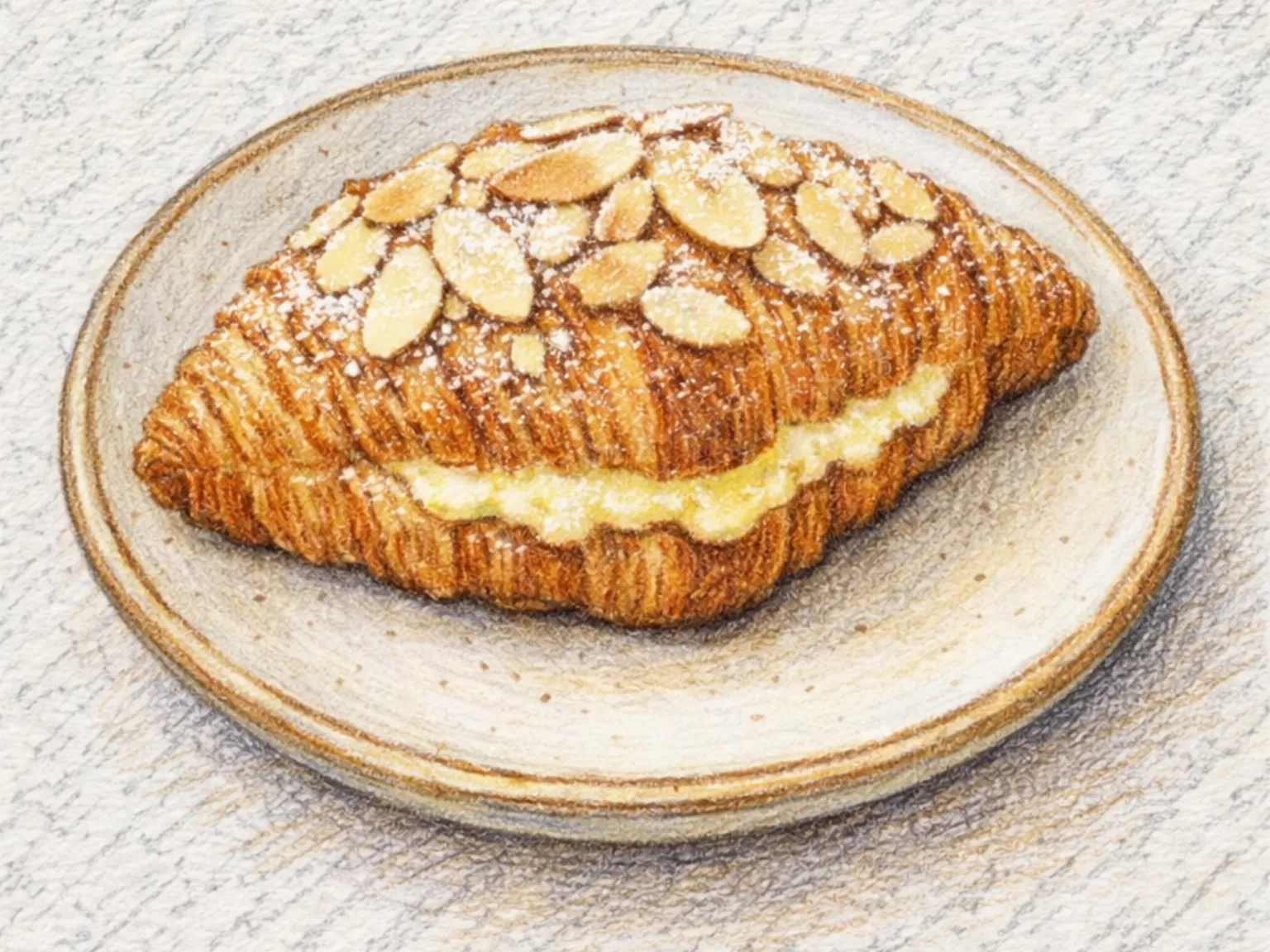
The almond croissant was born in French bakeries as a practical solution to leftover stock - day-old croissants soaked in almond syrup, filled with frangipane, and baked again until golden. What started as waste reduction became the most requested item in the pastry case. The syrup soak - typically simple syrup infused with almond extract or a splash of amaretto - revives the dried, compressed layers and adds sweetness before the second bake even begins. Frangipane, made from butter, sugar, ground almonds, and egg, is piped or spread generously inside the halved croissant. During the second bake, the cream melts and sets into the hollow interior, creating a dense, marzipan-like filling that is richer than anything in the original pastry. Sliced almonds pressed onto the surface toast in the oven, providing a brittle, crunchy contrast to the soft interior. The base of the croissant, where syrup pools during baking, caramelizes into a sticky, deeply sweet layer. A dusting of powdered sugar over the finished pastry adds a cool sweetness against the warm butter. Many Parisian bakeries now bake almond croissants fresh from current stock rather than leftovers because demand far exceeds the supply of day-old pastries.

Korean Butter Soy Stir-fried Dried Squid
Butter-soy jinmichae-bokkeum stir-fries dried shredded squid (jinmichae) in melted butter with soy sauce and oligosaccharide syrup, making a banchan that is rich, salty-sweet, and distinctly different from the standard gochujang-dressed version. The butter's milk fat coats each strand of squid and creates a noticeably smoother mouthfeel than oil-based preparations. The sequence matters: garlic goes into the melted butter first and cooks for just twenty seconds to bloom its aroma without burning, then the soy sauce and syrup go in to form the glaze base, and only then does the jinmichae enter the pan. The entire stir-fry window is no more than two to three minutes - squid proteins contract and toughen quickly at high heat, so extended cooking ruins the texture. Half a tablespoon of gochugaru is enough to add gentle warmth and a reddish tint without overriding the butter's character. This banchan works in children's lunchboxes and holds up equally well as a beer snack.

Chicken Curry Rice
Chicken curry rice is a Japanese-style curry where bite-sized chicken thigh, potato, carrot, and onion simmer together until the curry roux melts into a thick, glossy sauce. The spice blend is gentle rather than fiery, with a mellow sweetness drawn from the slowly cooked vegetables. Chicken thigh meat stays moist and succulent even after prolonged simmering, absorbing the curry flavor throughout. The potato pieces break down slightly at the edges, thickening the sauce further and giving it a starchy body that clings to each spoonful of rice. A one-pot format makes it easy to scale -- prepare a large batch and the flavor deepens further overnight as everything continues to meld, making it well-suited for family dinners or weekly meal prep.

Korean Clam Stir-Fry (Manila Clams with Butter, Garlic and Chili)
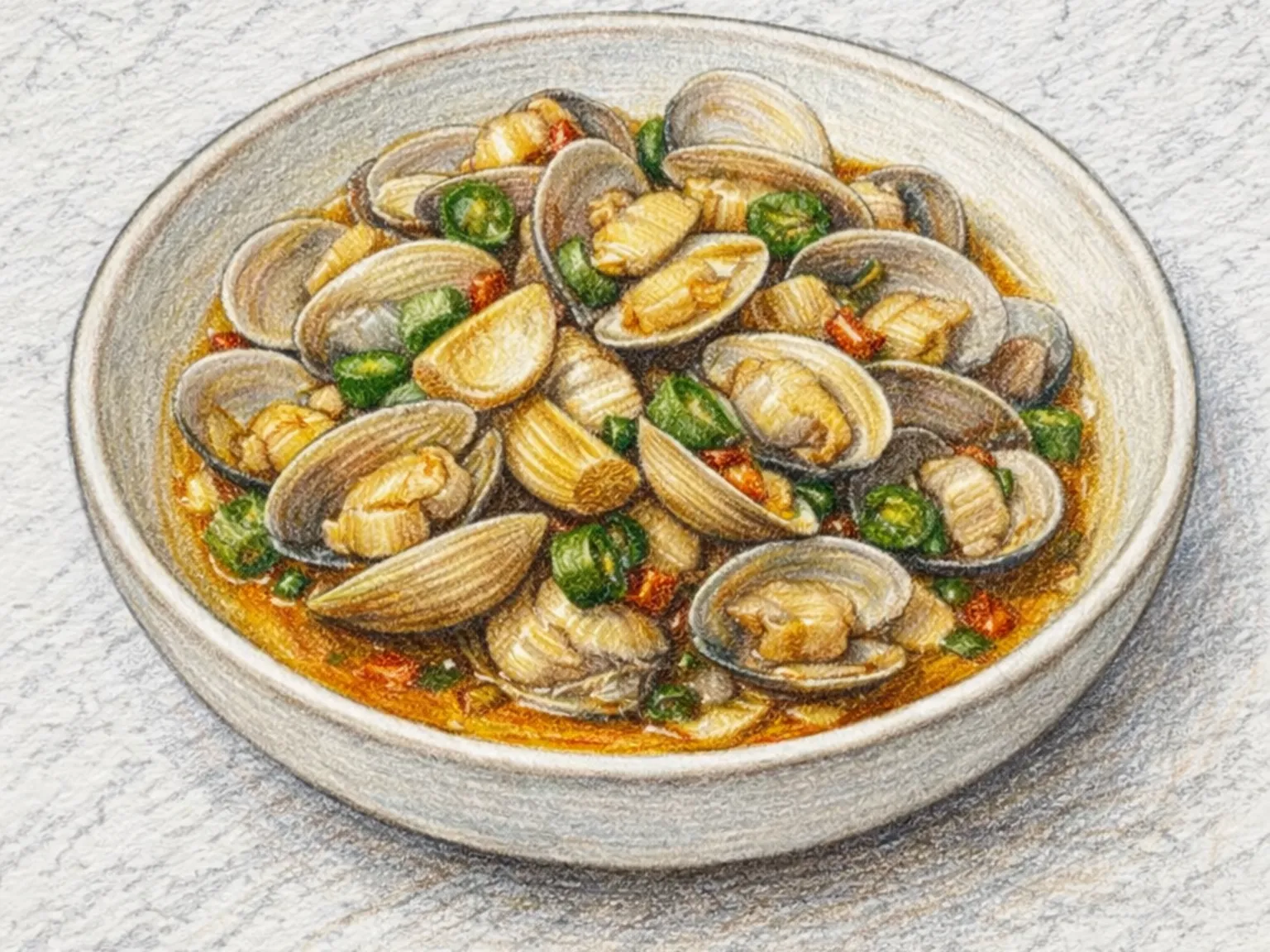
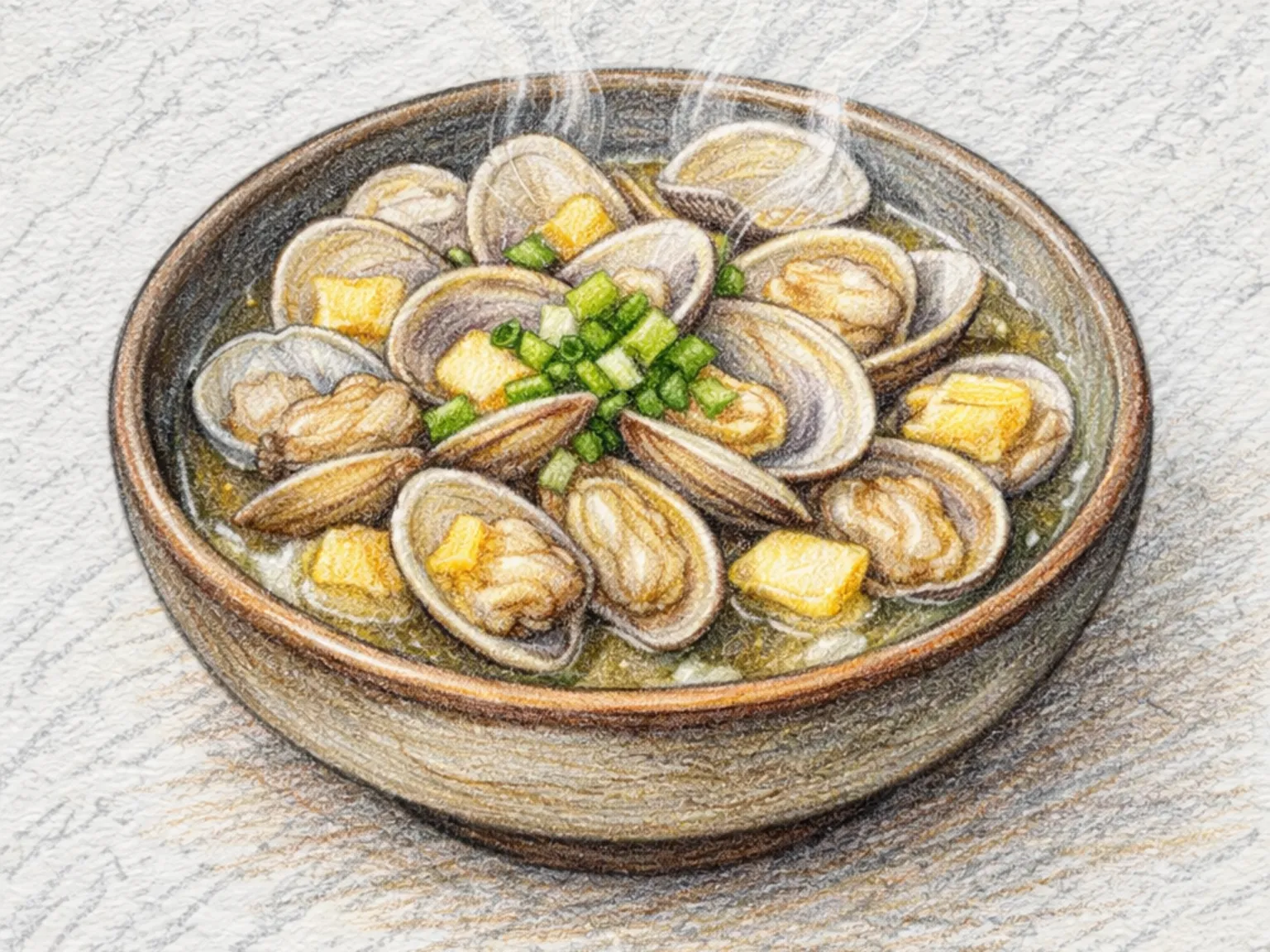
Bajirak bokkeum is a Korean clam stir-fry where purged manila clams are cooked quickly over high heat with butter, garlic, and cheongyang chili. Thorough purging in salted water beforehand removes all sand and prevents grit from appearing in the finished dish. Rice wine goes in first with the lid closed, so the alcohol steam helps the clams open rapidly while eliminating any lingering briny or muddy off-notes. Once the shells open, butter is added and emulsifies naturally with the released clam juices, building a salty, savory sauce without any additional effort or thickening agent. Generous sliced garlic infuses the butter sauce with depth as it cooks, and the cheongyang chili introduces a bright, sharp heat that prevents the richness from becoming too heavy. A small measure of soy sauce adjusts the final seasoning, though it must be kept minimal because the clams already contribute their own pronounced salinity. Scallion is tossed in at the very end for a clean, herbal finish before the pan comes off the heat. Total cooking time must stay within three to four minutes: beyond that window, the clam meat contracts, toughens, and loses its tender, juicy texture entirely. The sauce left in the pan after eating is intensely concentrated with shellfish flavor and pairs exceptionally well with crusty bread for soaking up every last drop. The dish works equally as a drinking snack alongside beer or as a side with steamed rice, and frozen manila clams produce reliably good results when fresh ones are unavailable.

Cheese Arepa (Venezuelan Griddled Cornmeal Cheese Pocket)
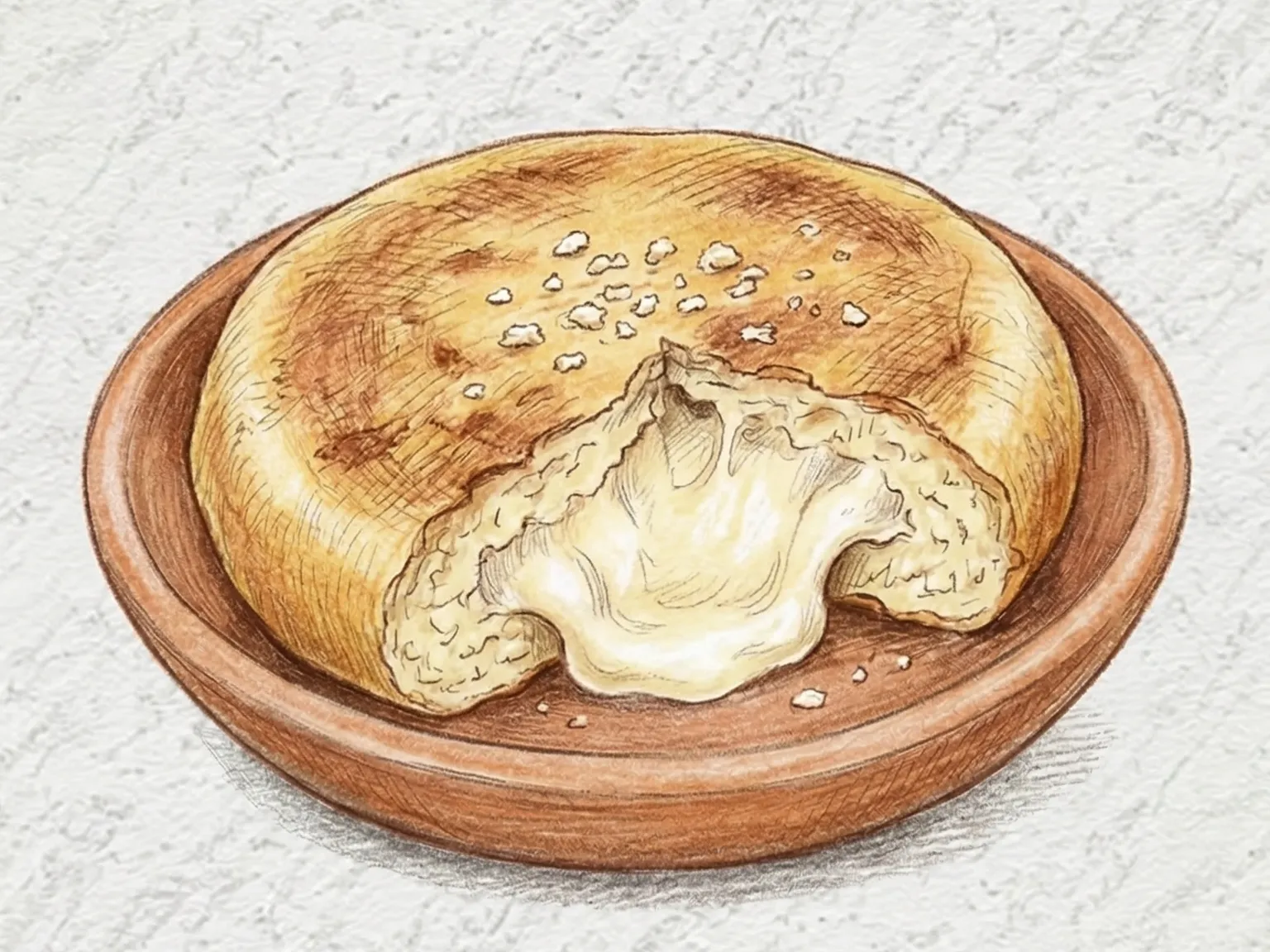
The arepa is the daily bread of Venezuela and Colombia, with origins reaching back to pre-Columbian indigenous peoples who ground maize on stone metates and cooked the patties over fire. The dough has no leavening, no fat, no yeast - only pre-cooked cornmeal (masarepa), water, and salt, worked by hand into thick discs and cooked on a budare, a flat cast-iron griddle, until a golden-brown crust forms on both sides. Inside, the arepa stays soft with a faintly undercooked texture that contrasts the crust. For cheese arepas, queso blanco or mozzarella is either folded into the dough before cooking, creating pockets of molten cheese throughout, or stuffed inside a freshly grilled arepa split open while hot. Either way, the warm corn shell traps stretchy, salty melted cheese in every bite. The corn flavor reads toasty and cleanly sweet, and the fat from the cheese provides the counterpoint. Street vendors across Caracas and Bogota sell them around the clock, filled with everything from black beans to slow-cooked shredded beef.

Chapssal Kkwabaegi (Glutinous Rice Twist Donuts)
Chapssal-kkwabaegi are Korean twisted donuts made from a yeasted dough of glutinous rice flour and bread flour, proofed until nearly doubled, shaped by twisting pairs of ropes together, and fried at 170 degrees Celsius. The high ratio of glutinous rice flour gives the interior a notably chewy pull that sets these apart from standard wheat donuts, though over-proofing turns that chew tough rather than springy. Maintaining oil temperature at 170 degrees keeps the shell golden and crisp while minimizing grease absorption, so the finished donut stays light in hand. Tossing them in cinnamon sugar immediately after draining lets the residual heat partially melt the crystals into a thin, clinging sweet crust.

Korean Steamed Clams with Soju
Bajirak sul jjim is a Korean drinking snack of baby clams steamed open in soju with garlic and butter, producing a savory broth suited for dipping bread or cooking noodles afterward. The alcohol in soju evaporates quickly, steaming the clams open while stripping away any fishy odor, and leaving a faint grain-spirit aroma in the liquid. Butter is added after the shells open so it emulsifies with the released clam juice to form a rich, cohesive sauce; adding it from the start causes the fat to separate and float on top. Generous sliced garlic steams alongside the clams, losing its raw bite while retaining a mellow fragrance that builds depth in the sauce. Diagonally cut cheongyang chili adds a sharp heat accent to the salty, buttery liquid. Scallion is scattered on top at the end for a fresh finish. White wine can replace soju, adding acidity and a different aromatic character, but soju's clean grain note pairs more naturally with clams in a Korean context. Bajirak - short-neck clams - are smaller and sweeter than other Korean clams, making them well suited for quick steaming, and frozen clams release sufficient broth to make the dish work. Cooking thin wheat noodles in the remaining liquid after the clams are eaten makes an excellent final course.

Korean Salt-Grilled King Prawns
Daeha-sogeum-gui is a Korean salt-grilled king prawn preparation where whole shell-on prawns are placed directly on a bed of coarse sea salt and cooked over indirect heat. The salt draws out surface moisture while conducting steady, even heat beneath the shells, so the prawns essentially steam inside their own carapace and keep their flesh springy rather than contracted. Scoring the back with kitchen scissors and removing the intestinal tract before cooking eliminates any off-note from the gut, leaving only the clean, natural sweetness of the prawn. The precise moment to pull them from the heat is when the shells turn a solid bright orange, as any longer drives off the moisture that keeps the flesh tender. A squeeze of fresh lemon adds acidity that sharpens the natural umami without masking it, and the dish works well with no additional seasoning at all.

Korean Steamed Scallops
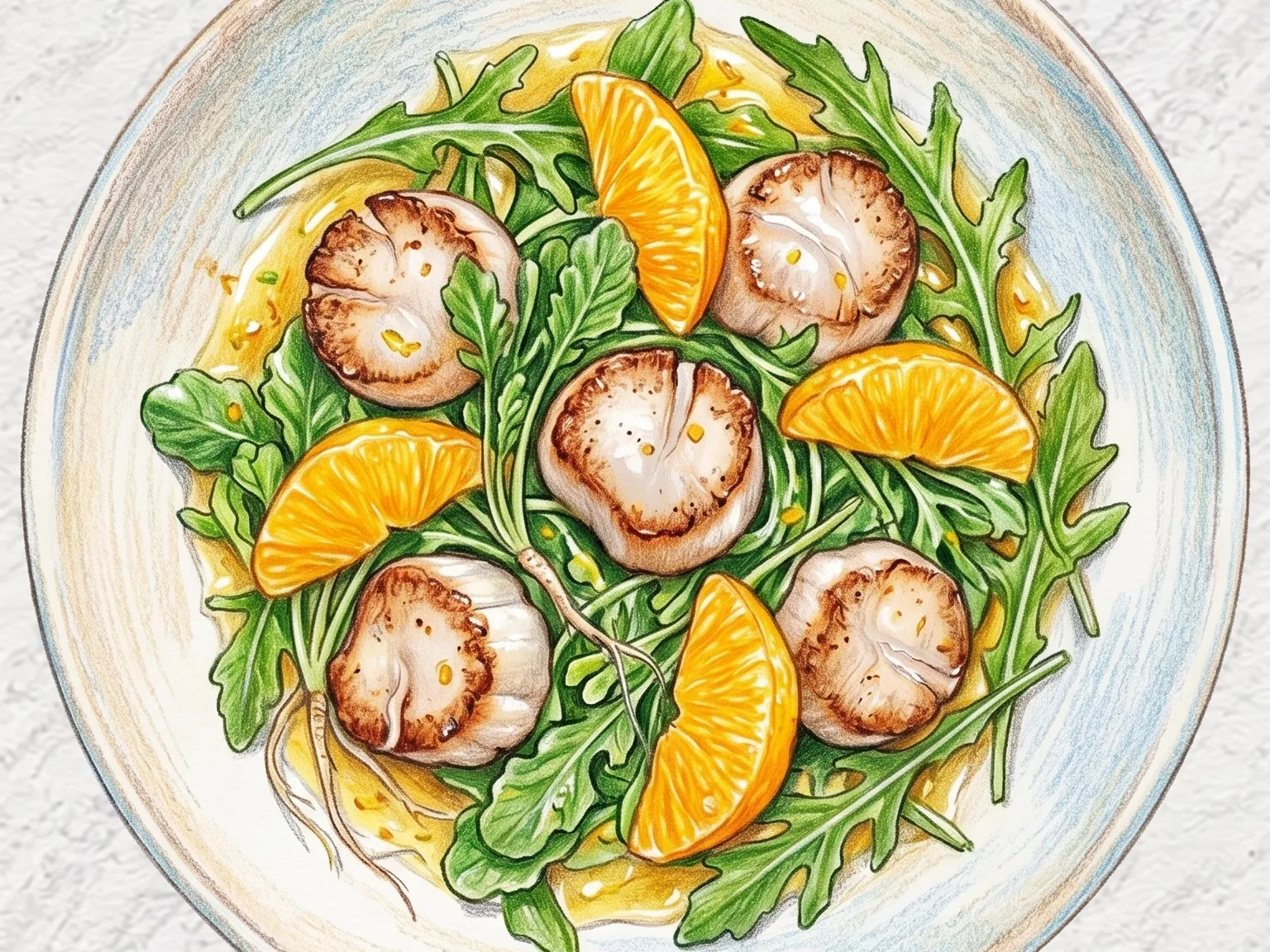
Garibi-jjim is a Korean steamed scallop dish that depends as much on timing as on seasoning. The scallops are placed in their shells, covered, and steamed with rice wine, garlic, and butter. Rice wine vapor penetrates the flesh as it cooks, stripping away the oceanic sharpness while the shells trap the released juices underneath. Pulling the scallops off heat before they contract fully is the key move - left too long, they turn rubbery and lose their natural sweetness. Butter melts into the pooled juices inside each shell, forming a warm, savory sauce without any extra work. A small pour of soy sauce sharpens the umami, and thinly sliced green onion laid over the top cuts through the richness with a fresh note. The entire preparation takes under fifteen minutes, which makes this a practical choice for an impromptu drinking spread or as a starter when a more elaborate main follows.

Fettuccine Alfredo
Fettuccine Alfredo is an exercise in simplicity where technique matters more than a long ingredient list. Wide fettuccine noodles are tossed with unsalted butter and finely grated Parmigiano-Reggiano cheese, using starchy pasta water to create a smooth emulsion that clings to every strand. The original Roman recipe contains no cream at all - the silky texture comes from the marriage of melted butter fat, cheese protein, and the starch released by the pasta during cooking. The pan must stay off direct heat while tossing, as excessive temperature breaks the emulsion and turns the sauce grainy and clumped. Speed is essential: the dish should move from pan to plate in under a minute. Generous freshly cracked black pepper provides a sharp counterpoint to the rich, concentrated cheese flavor. Born in Rome in the early twentieth century, this pasta remains one of the most recognizable Italian dishes served worldwide.

Blue Crab Lemon Garlic Pasta
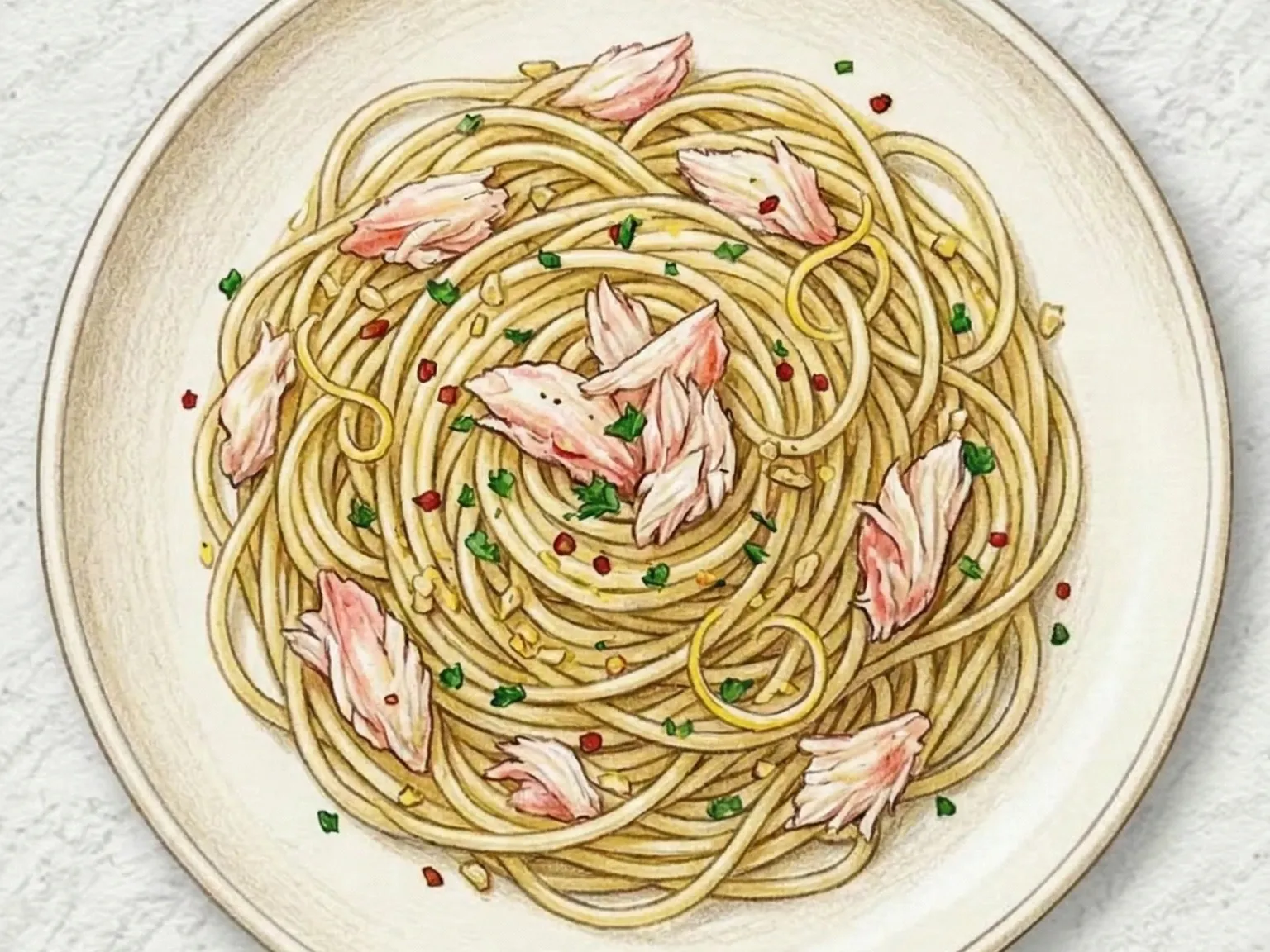
Blue crab lemon garlic spaghetti starts by slowly warming thinly sliced garlic in olive oil over low heat until fragrant - pale gold, not browned. Crab meat and a splash of rice wine go in next to cook off any raw marine smell before butter is added and stirred until it melts into the oil. Starchy pasta water emulsifies the fat into a thin, glossy sauce that coats each strand of spaghetti evenly without heaviness, carrying a clean, oceanic flavor throughout. Lemon zest and juice are added only after the heat is turned off - adding them while the pan is still hot drives off the volatile citrus aroma before it reaches the plate. Keeping the garlic just short of golden, pale and softened rather than browned, is what separates a clean, nutty depth from an acrid bitterness that would overpower the crab. Fresh crab meat, picked directly from a live blue crab, delivers a noticeably sweeter flavor than thawed frozen product and is worth the extra effort when in season.

Avocado Eggs Benedict
Avocado eggs Benedict reimagines the classic brunch dish by replacing the traditional Canadian bacon with ripe avocado, trading cured-pork saltiness for a creamy, grassy richness. A split English muffin is toasted until the cut face is golden and craggy, creating a sturdy base that holds up under the toppings without soaking through. Thick slices of avocado fan across each half before the poached egg is placed on top, its white set firm and the yolk still entirely liquid. Piercing the yolk releases a slow golden flow that runs over the avocado and settles into the muffin's porous surface. Hollandaise - made by emulsifying clarified butter with egg yolks and lemon juice - adds a tangy, buttery richness over the top. Many versions simplify by skipping the hollandaise in favor of a squeeze of lemon and flaky salt, relying on the egg yolk alone as a sauce. The dish spread from the brunch culture of Melbourne and Los Angeles during the 2010s avocado boom and has since become a fixture on cafe menus worldwide, particularly as a plant-leaning alternative to the original.

Chicken Biryani (Mughal Spiced Saffron Layered Rice with Chicken)
Biryani emerged from the encounter between Persian pilaf technique and Indian spice culture during the Mughal Empire, and it remains a ceremonial dish served at weddings, festivals, and Friday prayer gatherings across the Indian subcontinent. Chicken is marinated in yogurt, saffron, garam masala, and ginger-garlic paste, then layered in a heavy-bottomed pot with par-cooked basmati rice, saffron milk, fried onions, and fresh mint placed between each layer. The pot is sealed with a flour-and-water dough in a technique called dum. Inside the sealed vessel, steam circulates and the rice and meat cook in each other's aromatic vapors, exchanging flavor in a way that open-pot cooking cannot replicate. When the dough seal is broken at the table, the released cloud of saffron, cardamom, and rosewater is the dish's most dramatic moment and the signal that it is properly done. In a well-executed biryani, each grain of basmati should stand apart and carry the seasoning evenly, and the bottom layer of rice should have formed a crisp, golden crust similar to Persian tahdig. The Hyderabadi and Lucknowi styles represent two distinct traditions: the former layers raw chicken directly with par-cooked rice and cooks everything together, while the latter par-cooks both components separately before assembling, producing a cleaner, more delicate result.

Apple Crumble
Apple crumble was born from wartime constraint: during World War II, butter and sugar rationing in Britain made traditional double-crust pastry impractical, and bakers found that rubbing a far smaller amount of fat into flour and oats produced a topping that required none of the skill or rolling that pastry demanded. Sliced apples are tossed with sugar, lemon juice, and cinnamon, then spread into a baking dish and covered with the rough, breadcrumb-like mixture. In the oven, the fruit collapses into a thick, bubbling sauce while the topping bakes unevenly: the peaks turn deeply crisp and golden, while the underside where the topping meets the fruit juices becomes slightly sticky and chewy. Tart apple varieties such as Granny Smith hold up better under oven heat than sweet ones, turning into a fragrant sauce that contrasts with the sandy crumble overhead. The tension between the hot, yielding apple beneath and the crunchy, butter-scented rubble on top is the structural logic of the dish. Served with cold vanilla ice cream or warm pouring custard, the contrast multiplies further as cold cream melts into the steaming fruit. It remains the default British home dessert precisely because it needs nothing beyond what a reasonably stocked cupboard can supply and comes together in under an hour.

Korean Curry Fried Rice (Golden Spiced Chicken Fried Rice)
Curry bokkeumbap is a Korean fried rice where curry powder coats each grain with warm spice and gives the rice a vivid golden color. Chicken breast, onion, carrot, and bell pepper are stir-fried together before the rice goes in, distributing protein and vegetables evenly through every serving. The curry fragrance develops gradually with each bite - more present than plain fried rice but lighter than a curry sauce, landing at a satisfying middle point between the two. Bell pepper adds sweetness and a visual contrast of color against the golden rice. Topping with a fried egg raises the dish further: when the yolk breaks and mixes into the rice, a layer of creaminess runs through each bite. The recipe works well with day-old rice and requires few ingredients, making it a practical weeknight meal.

Korean Soy-Glazed Mushroom Stir-Fry
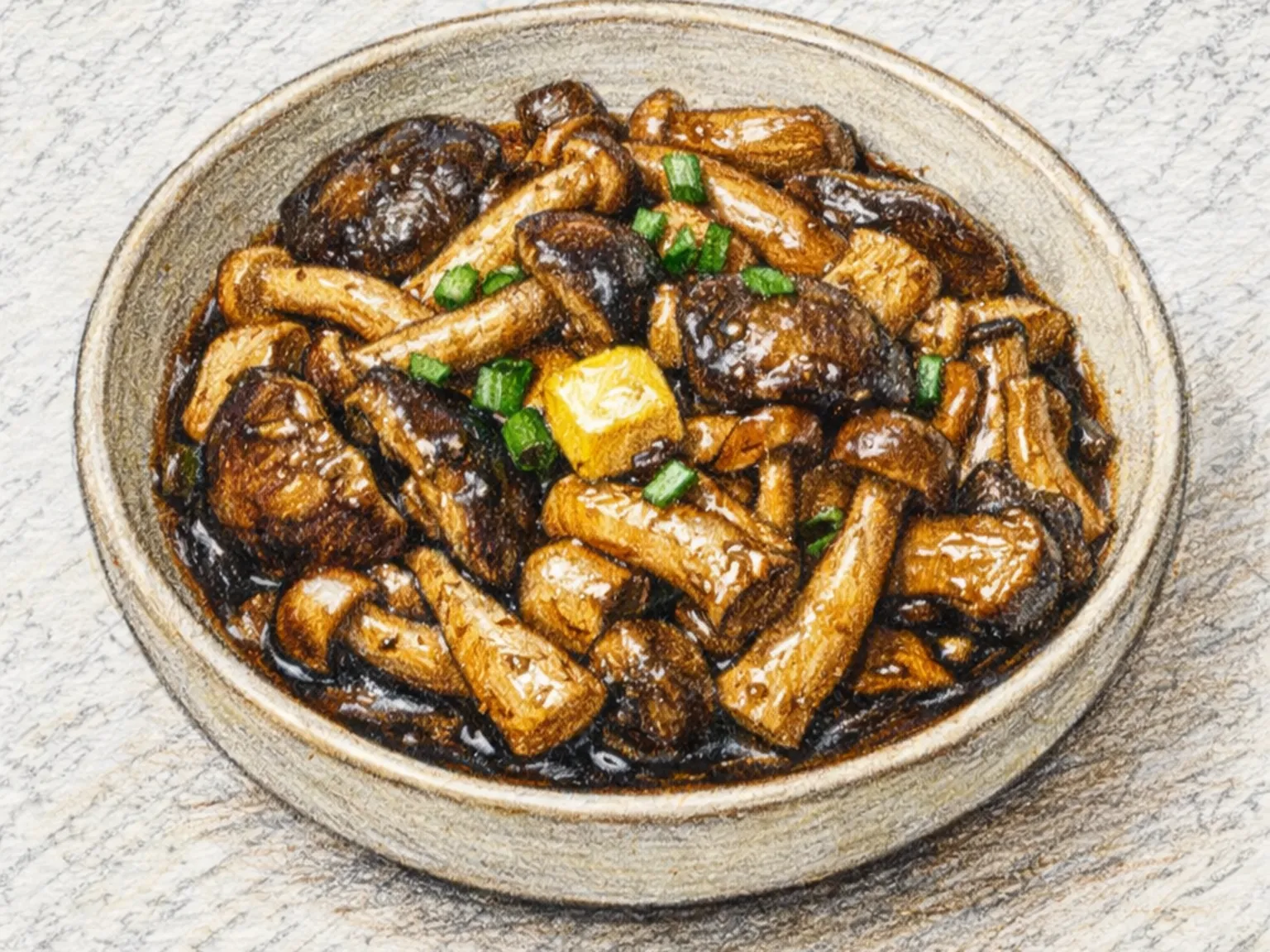
Oyster mushrooms and shiitake are sauteed in melted butter, then finished with a measured pour of soy sauce that reduces into a glossy, caramelized glaze across the surface of each piece. Sliced garlic goes into the butter first and cooks until fragrant, building an aromatic base before the mushrooms are added. Cooking over strong heat is the non-negotiable step: moderate temperatures cause the mushrooms to release moisture and stew in their own liquid rather than sear, losing the slightly crisp exterior that defines the dish. Once the mushrooms are colored and their edges firm up, soy sauce is added and tossed rapidly so it coats every surface and reduces rather than pools. The butter infuses the mushrooms during cooking with a rich, almost nutty undertone, while the soy sauce caramelizes under heat to produce a salty-sweet lacquer. A small knob of additional butter stirred in off the heat gives the sauce a final sheen. With only five ingredients, the dish depends entirely on the interplay between butter depth and soy intensity to deliver flavor well beyond its simplicity. Spooned over steamed rice, it turns a plain bowl into a complete meal.

Korean Beoteo Ojingeo Gui (Butter Grilled Squid)
Butter ojingeo gui is a Korean street snack of semi-dried squid scored with shallow cuts, seared in butter on a flat iron griddle, then coated in a glaze of soy sauce, oligosaccharide syrup, and gochugaru. Semi-dried squid has less moisture than fresh and a more concentrated chew, which means it develops a toasty crust from the butter quickly without steaming through. The scoring allows the glaze to penetrate into the flesh rather than sitting only on the surface. Over high heat, the soy-and-syrup mixture caramelizes fast, coating the squid in a glossy, sweet-salty lacquer. Gochugaru adds a round, lingering heat at the finish. A scatter of sesame seeds goes on last, releasing a nutty aroma with each bite. The combination of butter richness, soy glaze, and chile heat has made this one of the most recognizable items at Korean pojangmacha stalls.

Red Bean Pastry (Korean Gyeongju Soft Bun with Anko)
Gyeongju-ppang is a baked Korean pastry made from a yeast-leavened dough enriched with milk and butter, wrapped generously around a core of sweet red bean paste. The dough is rolled thin, formed around the filling with the seam placed down, and baked at 180 degrees Celsius until the top domes up smooth and the surface takes on a pale golden color. Because the filling-to-dough ratio is deliberately high, the dominant flavor in each bite is the dense, sweet red bean, with the thin enriched shell contributing a quiet dairy aroma. The pastry traces its lineage to hwangnam-ppang, originating in the Hwangnam district of Gyeongju, and has become one of the city's defining food souvenirs. It stays moist after cooling, which makes it practical both as a packaged gift and as an everyday snack eaten at room temperature.

Korean Butter-Grilled Mushrooms
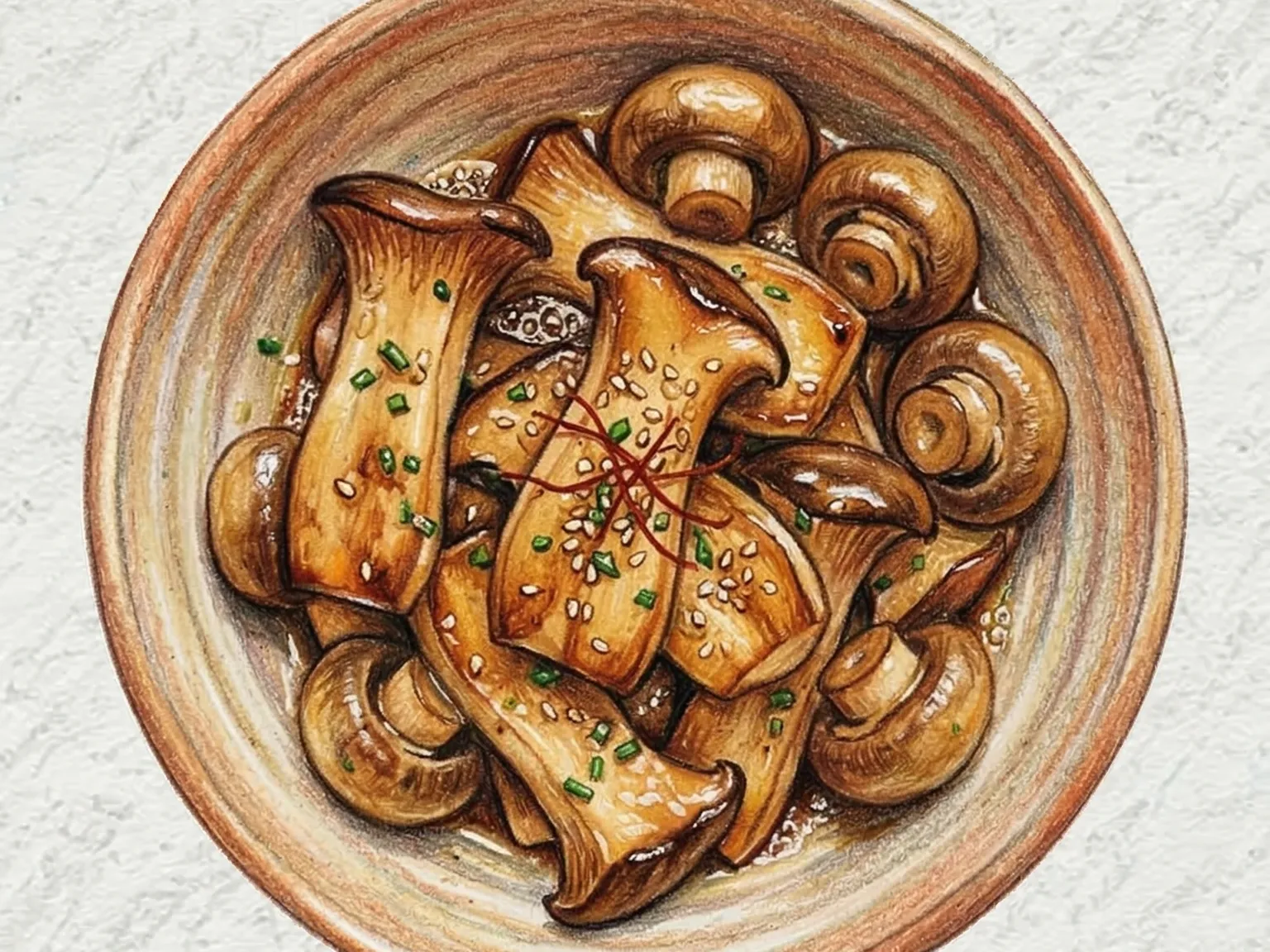
This dish takes thickly sliced king oyster and button mushrooms, sears them in melted butter over high heat for about four minutes until golden on both sides, then finishes with a quick toss of soy sauce for a glossy coating. Garlic goes in with the butter at the start, releasing its fragrance into the fat before the mushrooms hit the pan. Soy sauce added just before the heat is cut keeps the finish clean rather than acrid. A crack of black pepper and a scatter of chopped chives complete the plate, delivering concentrated umami without any meat. The preparation is straightforward and fast, making it a practical choice to put together quickly at the table.

Korean Soy-Glazed Grilled Rice Cakes
Garaetteok-ganjang-gui is a Korean soy-glazed grilled rice cake dish where cylindrical garaetteok is sliced on the diagonal, pan-fried until the cut surfaces blister and brown, then coated in a reduced sauce of soy sauce, rice syrup, and butter. Briefly dipping the rice cakes in boiling water for thirty seconds before grilling softens their outer layer so the glaze absorbs evenly, and the pan-frying then produces a dual texture of crunchy shell and stretchy, chewy interior. A one-to-one ratio of soy sauce to rice syrup, reduced over medium heat until thick and viscous, gives the surface a lacquered sheen, and stirring a knob of butter in off the heat adds a creamy richness that rounds out the soy's saltiness without overwhelming it. A finishing scatter of crumbled seaweed and ground sesame introduces oceanic and nutty notes that elevate this from a plain grilled rice cake to a finished snack. A small spoonful of gochujang stirred into the glaze produces a spicy version, and a slice of cheese melted over the top just before serving gives it a Western-influenced character that works surprisingly well against the chewy rice cake base.

Steamed Mussels Mariniere
Moules mariniere is a classic dish from northern France in which mussels are steamed open in a base of white wine, butter, garlic, and shallot over high heat. As the mussels open, they release their briny cooking liquid into the wine-butter base, and within roughly five minutes that mixture becomes a deeply aromatic broth that is far more complex than the sum of its parts. The brevity of the cooking time is not incidental but essential. Mussels cooked just until they open remain plump and firm, while those left on the heat any longer shrink and turn chewy. The moment the last mussel opens, the heat comes off. Fresh flat-leaf parsley is scattered over the top before serving, adding a clean green note against the richness of the broth. A dry white wine is preferable to one with residual sweetness, because its acidity balances the butter and amplifies the oceanic flavor of the mussels. Finishing with a small knob of cold butter stirred in at the end gives the sauce a glossy sheen and a rounded, velvety finish. The broth that collects at the bottom of the pot is often considered the best part of the dish, traditionally mopped up with torn pieces of crusty baguette.

Soy Butter Udon (Pan-Tossed Udon in Caramelized Soy Butter)
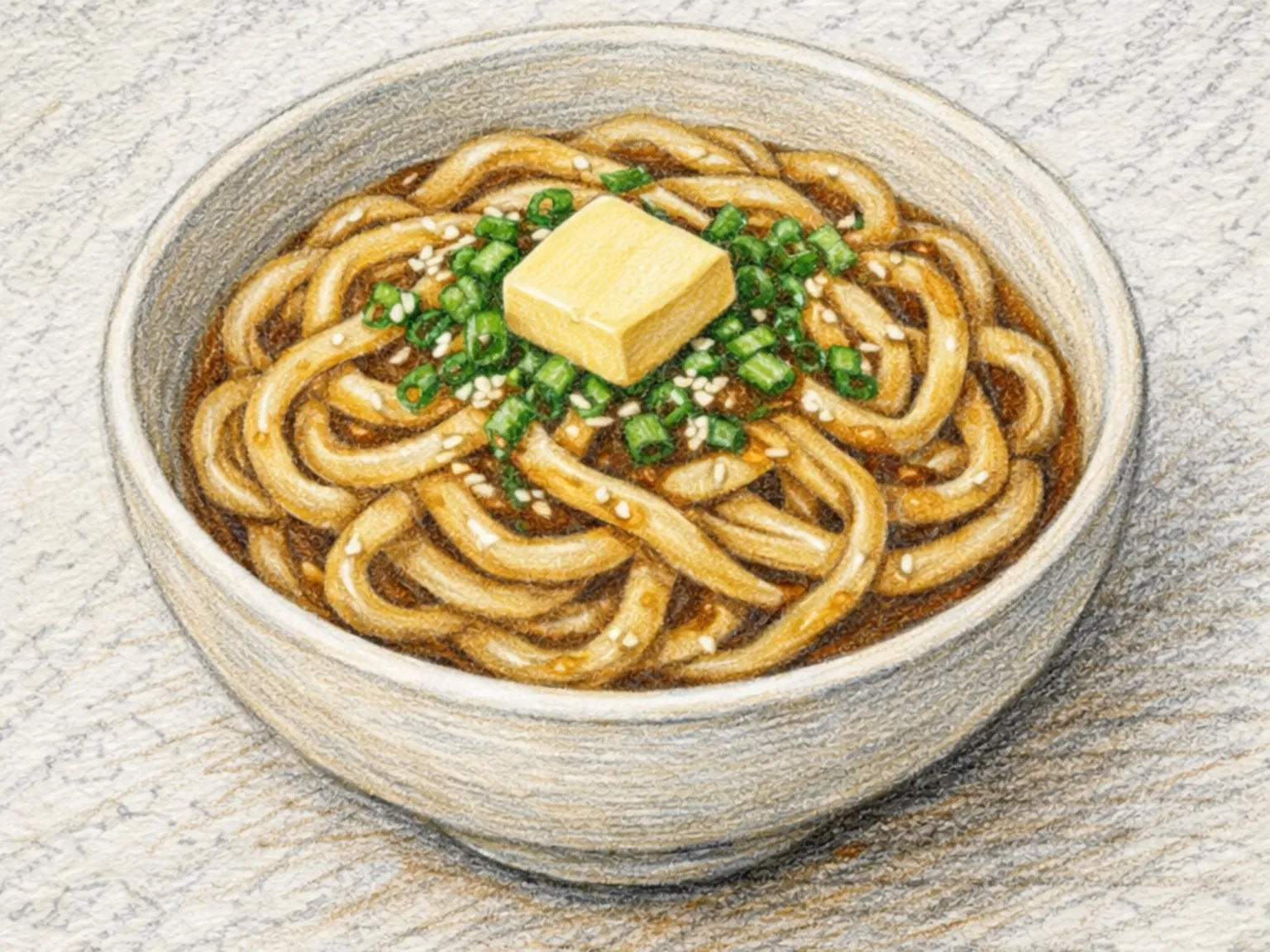
Ganjang butter udon is a quick pan-fried noodle dish that delivers deep, satisfying flavor in roughly ten minutes. Boiled udon noodles go into a pan with melted butter, and as soon as they hit the hot surface the butter releases a toasted, nutty fragrance. Soy sauce added to the pan caramelizes almost immediately against the heat, forming a savory-sweet glaze that coats every strand of the thick, springy noodles. The fat from the butter helps the glaze adhere evenly and rounds out the soy's saltiness with richness. Katsuobushi piled on top at the finish adds a layer of smoky umami that deepens the overall flavor, and an egg yolk placed in the center and stirred through transforms the dish with a creamy, silky texture. It is an ideal solution for a late-night craving or a satisfying solo meal when time is short.

Deulkkae Mushroom Lasagna Bianca
Deulkkae mushroom lasagna bianca layers sauteed button and oyster mushrooms coated in perilla seed powder between lasagna sheets, baking without traditional bechamel into a white lasagna with a distinctly Korean character. The mushrooms must be cooked in small batches over high heat - loading too many at once causes them to steam in their own liquid instead of browning, which loses both color and chew. Ground perilla seeds replace cream as the source of richness: they contribute a dense, nutty weight that fills the layers without dairy fat, and their flavor sits closer to toasted sesame and walnut than to any herb. That nuttiness locks onto the earthy quality of mushrooms in a way that differs noticeably from a standard bechamel-based lasagna. Mozzarella and Parmigiano bind the layers together and develop a golden crust across the top during baking. The lasagna needs to rest for at least ten minutes after it comes out of the oven so the layers compress and each slice cuts cleanly without falling apart.