Recipes with mirin

109 recipes. Page 1 of 5

Buy mirin
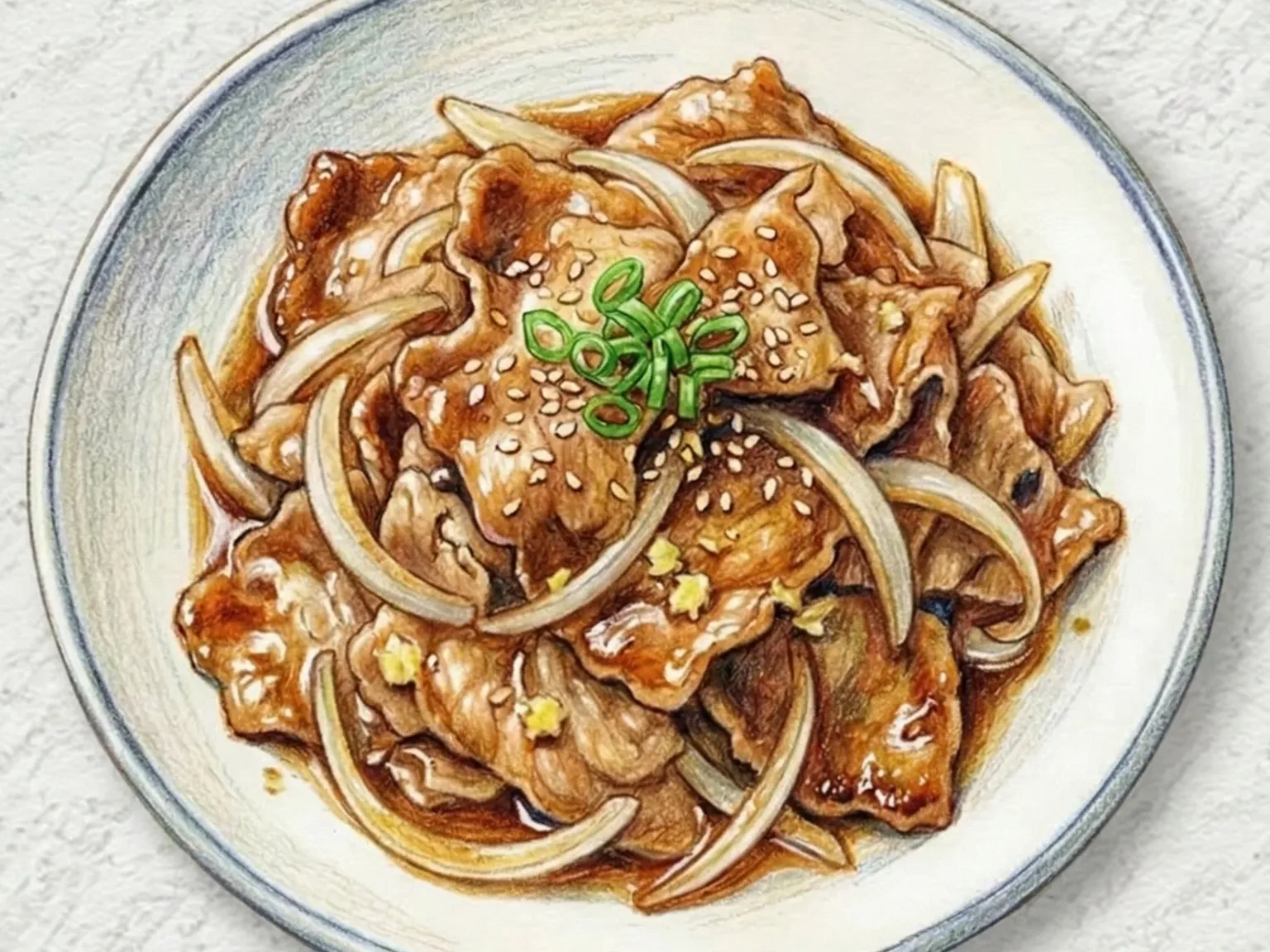
Buta Shogayaki (Japanese Ginger Pork Stir-Fry with Soy Mirin Glaze)
Asian Easy

Buta Shogayaki (Japanese Ginger Pork Stir-Fry with Soy Mirin Glaze)

Buta shogayaki is one of the most frequently cooked dishes in Japanese home kitchens, appearing in bento boxes, teishoku set meals, and university cafeterias with equal regularity. The name translates directly as pork ginger stir-fry, and the technique is as precise as it is simple: thinly sliced pork loin or shoulder is marinated briefly in a mixture of soy sauce, mirin, sake, and freshly grated ginger, then seared quickly in a hot pan and finished with a reduction of the marinade. The ginger does more than add flavor -- it contains proteolytic enzymes that break down muscle fibers, measurably tenderizing the meat even in a marinade as short as ten minutes. The slices must not overlap in the pan; piling them causes steam to accumulate and the pork poaches rather than sears, losing the caramelized, slightly charred edges that define the dish. The marinade is added only in the final thirty seconds so it reduces rapidly into a sticky, glossy glaze that adheres to every surface rather than pooling at the bottom of the pan. Placing the finished pork over a mound of shredded raw cabbage is not optional in traditional presentation -- the cold, crunchy vegetable contrasts sharply with the hot, lacquered meat and cuts through the sweetness of the mirin glaze. Shogayaki has been a menu fixture since the mid-20th century, when rising pork production in Japan made it affordable enough for everyday cooking. From pantry to plate in fifteen minutes, it demands nothing more than a hot pan, fresh ginger, and attention to heat control.

🍱 Lunchbox ⚡ Quick
Prep 10min Cook 12min 2 servings
Aimaze (Simmered Root Vegetables with Vinegar)
Side dishes Medium

Aimaze (Simmered Root Vegetables with Vinegar)

Aimaze is a root vegetable side dish from the Noto area of Ishikawa, traditionally prepared for New Year and other special occasions. Soaked flattened soybeans, burdock, and fried tofu are simmered with soy sauce, mirin, sake, and sugar only until they retain some bite. Briefly blanched daikon and carrot are folded in at the end, while vinegar is added after the heat is turned off. The finished dish has distinct vegetable textures and can be served warm or cooled.

🎉 Special Occasion 🍱 Lunchbox
Prep 20min Cook 20min 4 servings
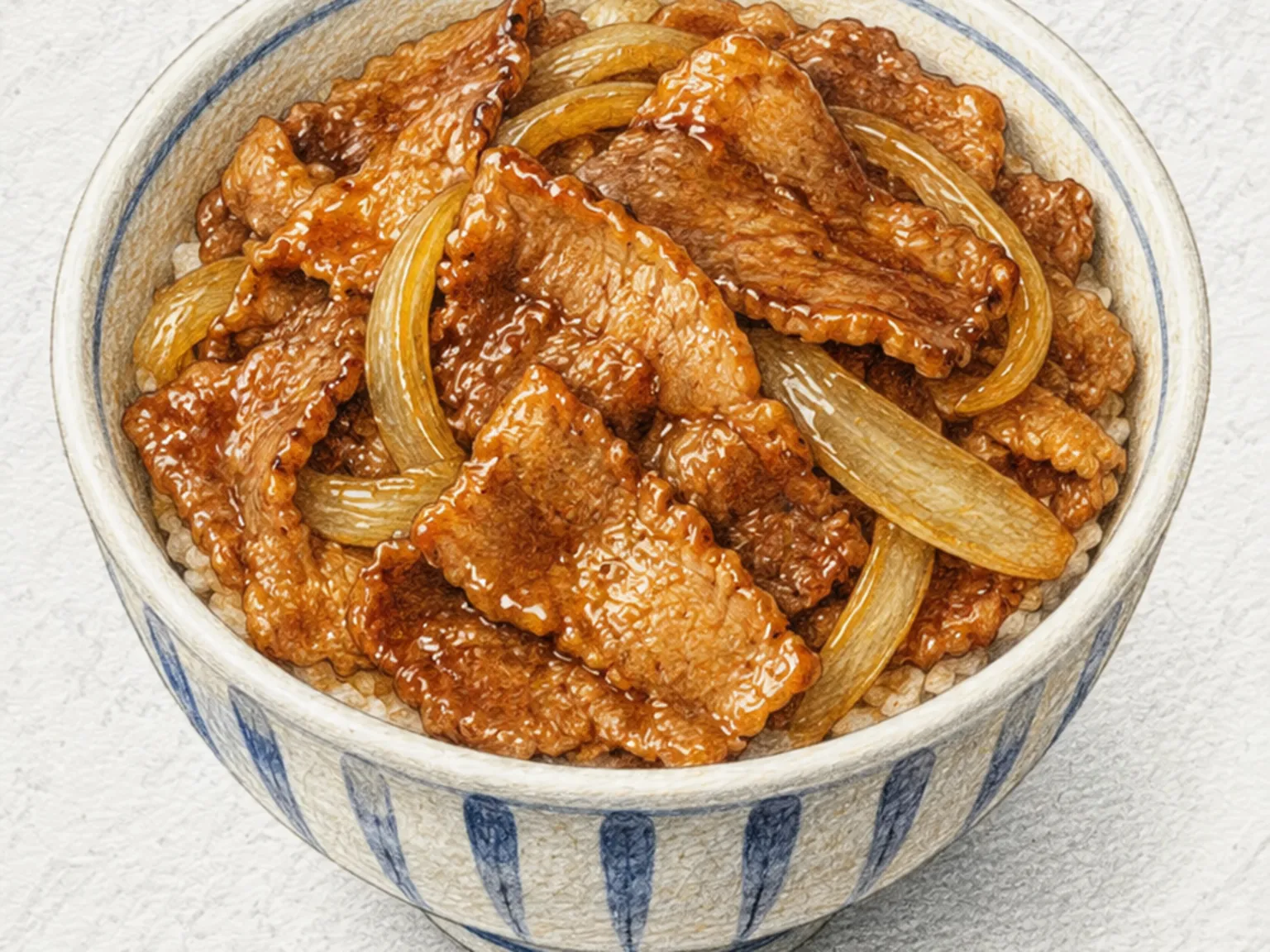
Pork Rice Bowl (Sweet-Salty Glazed Pork over Rice)
Rice Easy

Pork Rice Bowl (Sweet-Salty Glazed Pork over Rice)

Butadon is a Japanese pork rice bowl that originated in Obihiro, Hokkaido, where thin slices of pork belly or shoulder are simmered with onion in a glaze of soy sauce, mirin, and sugar, then laid over a bowl of steamed rice. The soy salt and sugar sweetness balance precisely as the meat absorbs the sauce, while the onion dissolves gradually into the cooking liquid, contributing a natural sweetness that deepens the glaze. Where the pork meets the pan, the edges caramelize into a slightly charred coating that adds a roasted dimension to the otherwise clean, saucy topping. Hokkaido pork, with its firm texture and higher fat content, is traditional, though any well-marbled cut works. The preparation is genuinely simple - one pan, one sauce, no elaborate knife work - which is exactly why it became a staple weeknight meal across Japan.

🏠 Everyday ⚡ Quick
Prep 15min Cook 15min 2 servings
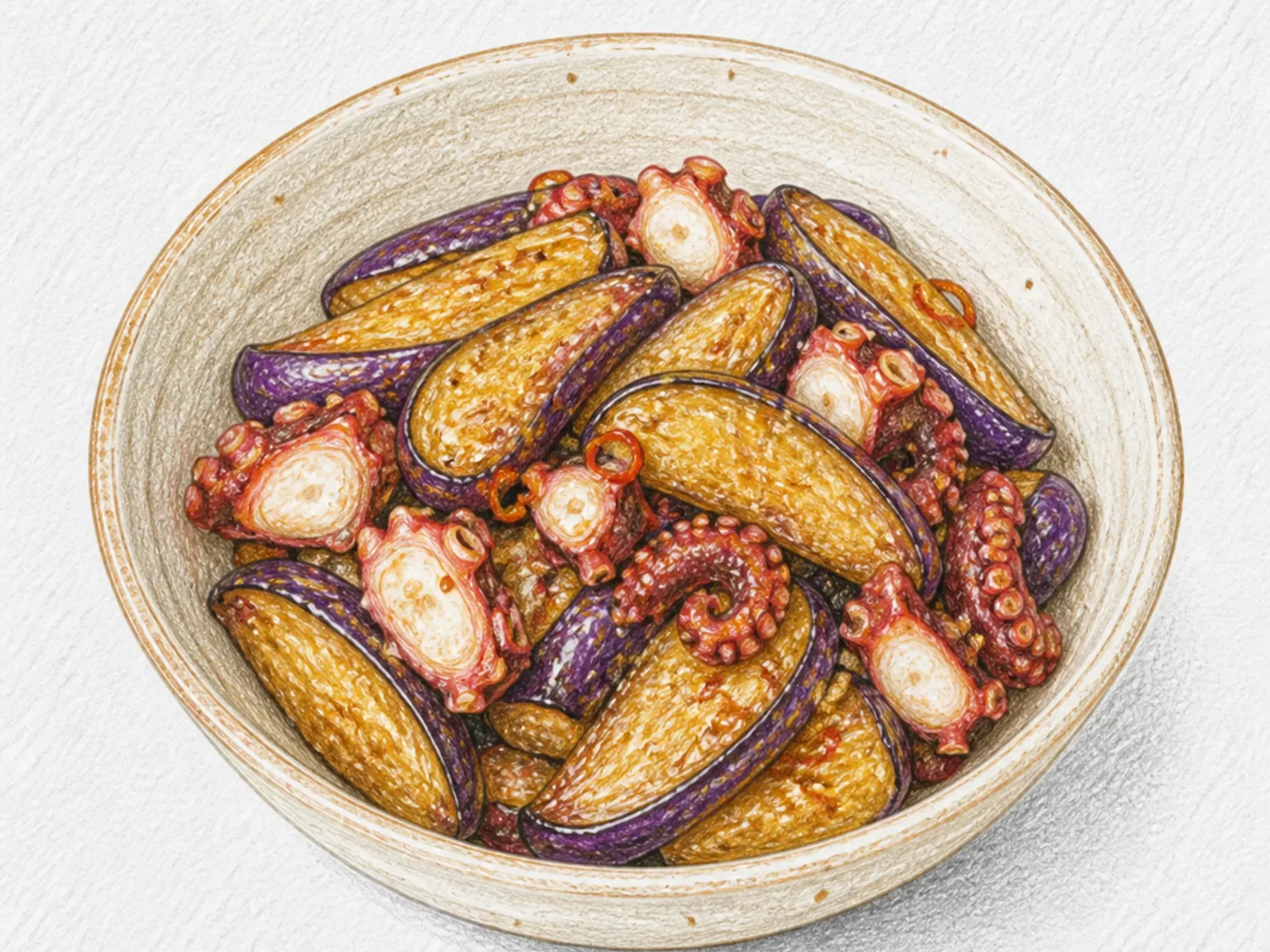
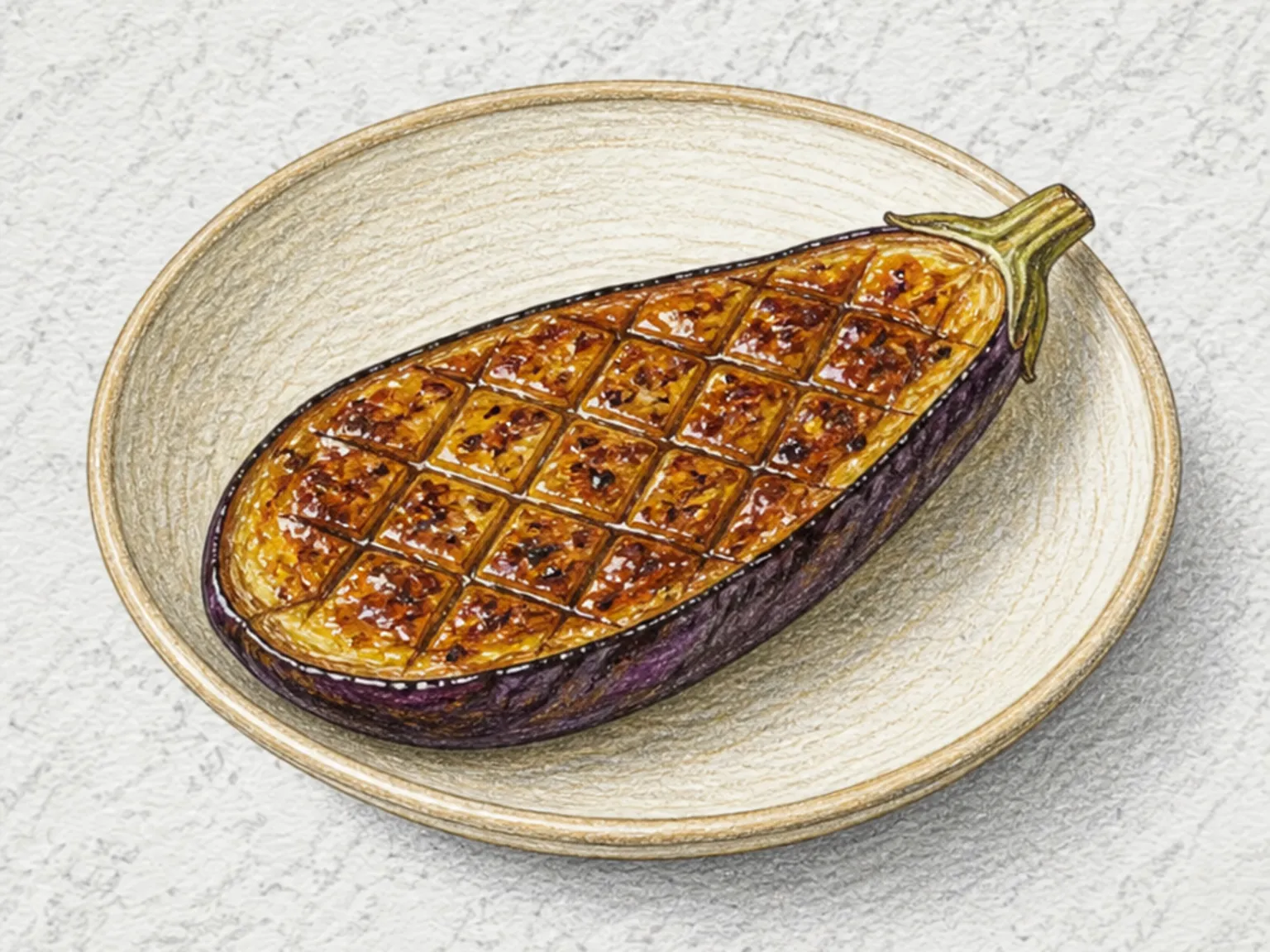
Buta-ae (Octopus and Eggplant Miso Stir-Fry)
Stir-fry Easy

Buta-ae (Octopus and Eggplant Miso Stir-Fry)

Buta-ae is a sweet and lightly spicy miso stir-fry of boiled octopus and eggplant from the Amakusa area of Kumamoto Prefecture. Three medium eggplants are halved lengthwise and cut diagonally about 5 mm thick. Two salt-boiled octopus legs are cut into bite-size chunks. The eggplant goes into the oiled pan first and cooks until the surface is coated and the flesh begins to soften. The octopus is added only for a brief stir-fry so its firm texture remains. Miso, mirin, and sugar are mixed beforehand, then folded quickly through the hot ingredients with optional sliced chili. The dish is finished as soon as the thick seasoning coats the eggplant and octopus evenly. Despite the word for pork in its name, the dish arose when octopus from Amakusa Bay replaced pork, which was once scarce in the region. It is served with rice, with shochu, or cooled in a lunch box.

🏠 Everyday 🍱 Lunchbox
Prep 15min Cook 12min 4 servings
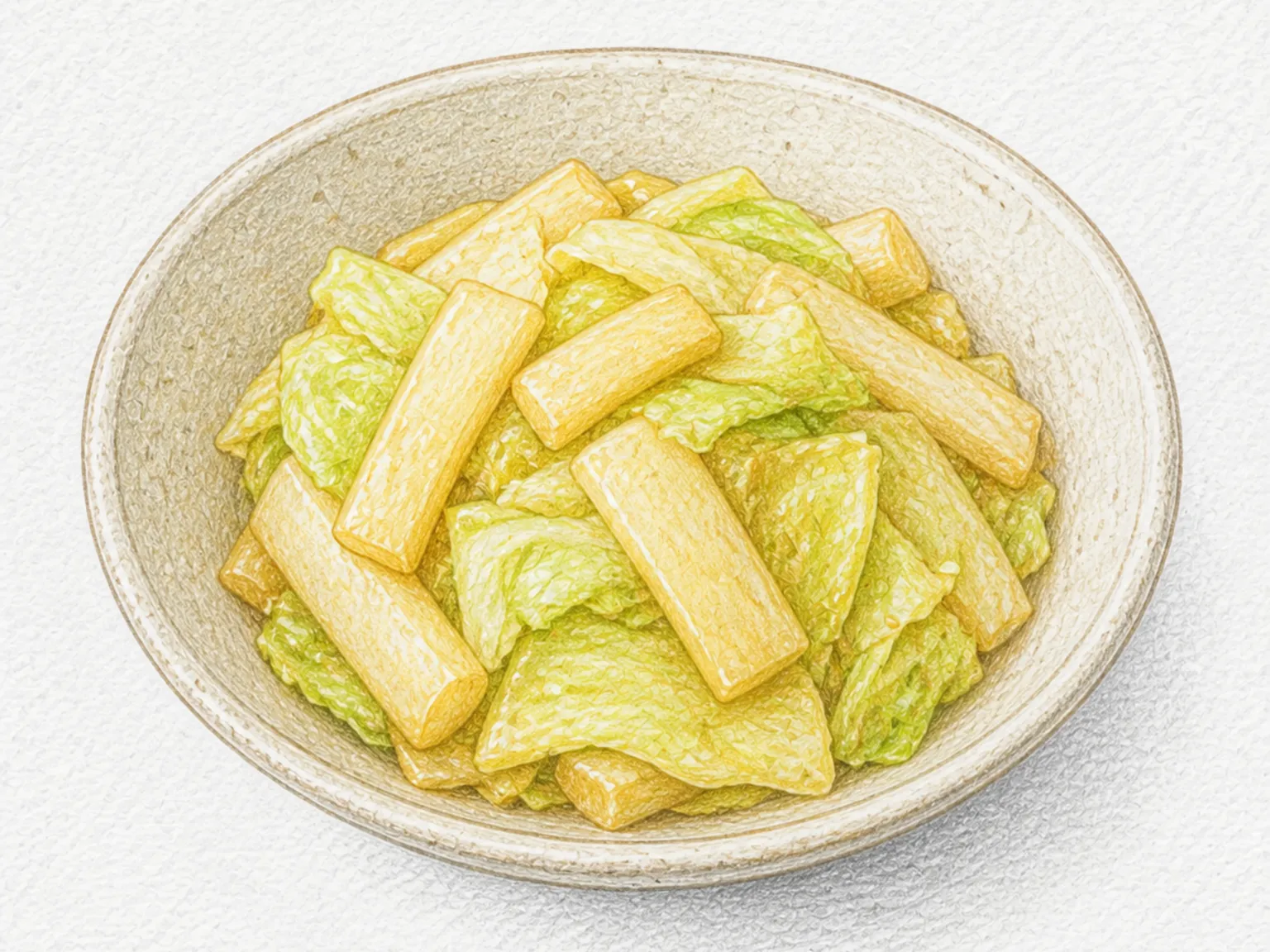
Cabbage Mochi (Soy-Braised Cabbage with Rice Cakes)
Street food Easy

Cabbage Mochi (Soy-Braised Cabbage with Rice Cakes)

Cabbage mochi is a local dish from the Ose district of Koriyama, Fukushima, made by coating softened rice cakes with cabbage cooked in soy and kombu seasoning. The mochi are first boiled for about two minutes until pliable, while roughly cut cabbage is quickly stir-fried in oil. Sake, mirin, and water are added so the cabbage can soften without scorching. Soy sauce and concentrated kombu noodle sauce then give the vegetables a savory, lightly sweet broth. The drained mochi go in last and are turned gently until every surface is coated. The dish has been prepared in Ose for more than eighty years. Farming households that produced their own rice and cabbage could make it throughout the year, serving it as a simple meal or a substantial snack.

🏠 Everyday
Prep 10min Cook 15min 2 servings
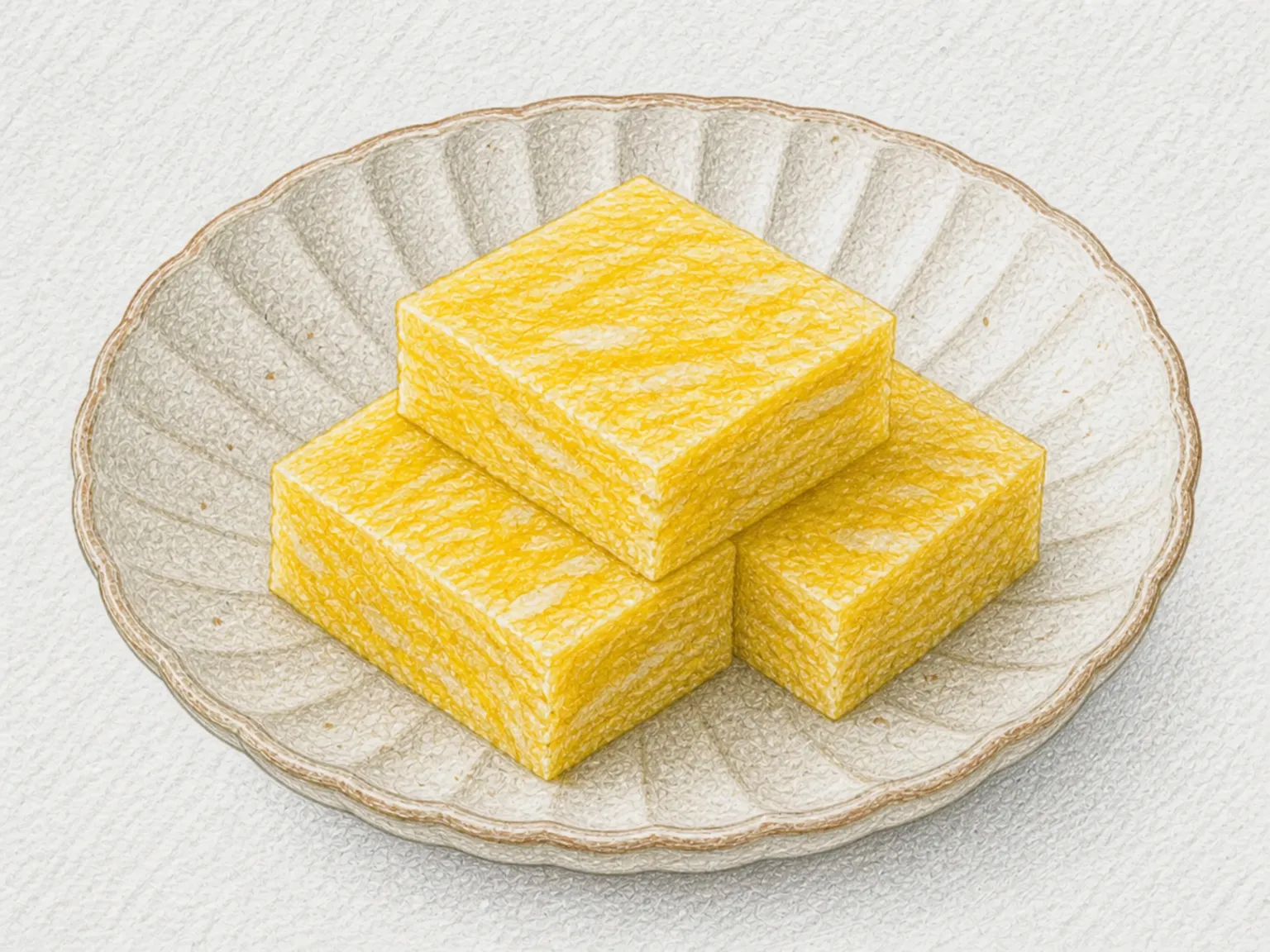
Tamago Kanten Sweet-Savory Egg Agar
Desserts Easy

Tamago Kanten Sweet-Savory Egg Agar

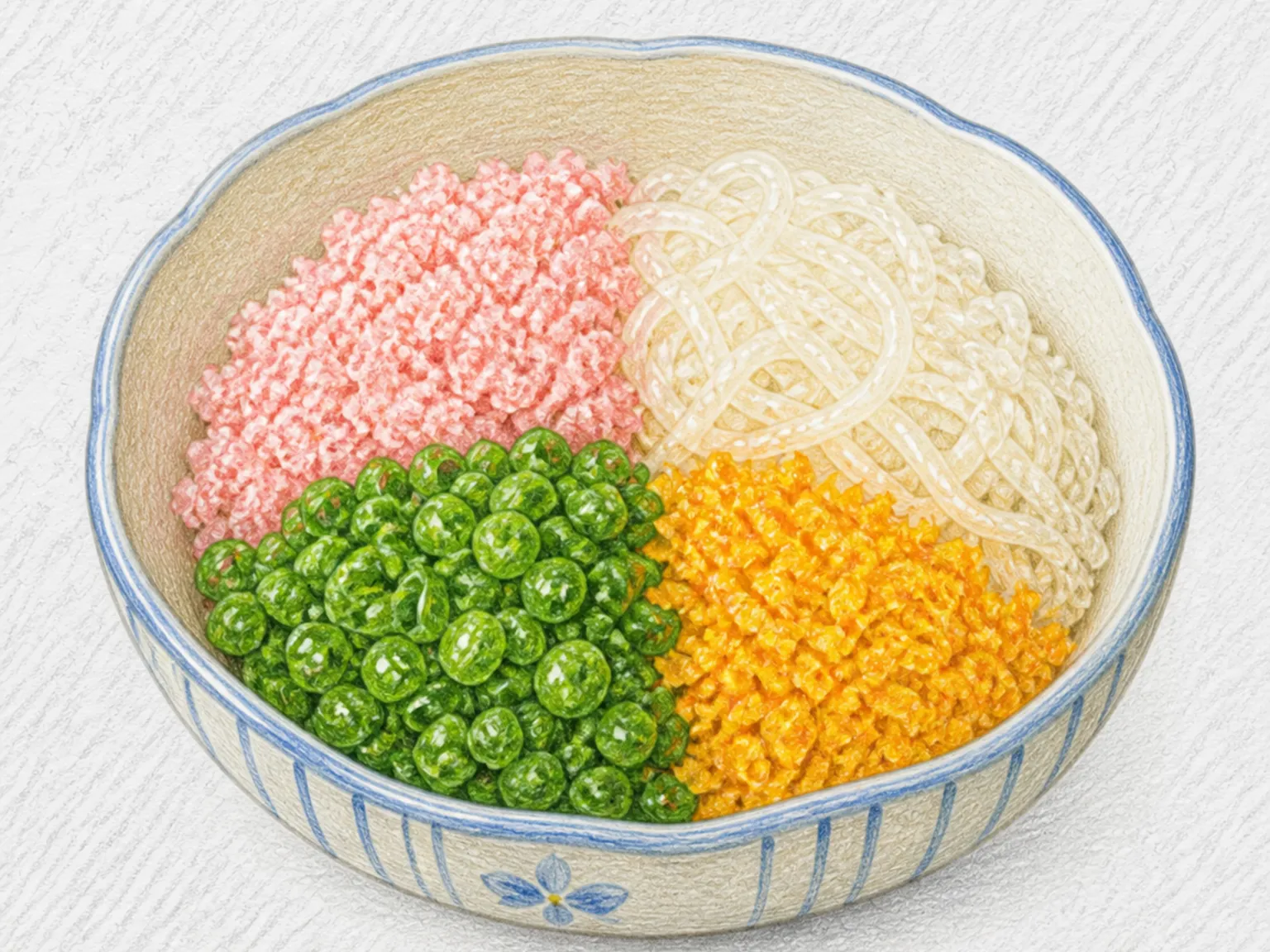
Tamago kanten is a Shonai celebration food from Yamagata that streams beaten egg into agar liquid seasoned sweet and salty with soy sauce and sugar, then chills it firm in a mold. Agar dishes were already rooted in local daily life when once-valuable eggs were added, turning this version into both a confection and side dish for New Year and festival tables. Stick agar needs at least thirty minutes of soaking, then is torn small and simmered in fresh water until no solid center remains. Seasonings enter the fully dissolved agar before the egg is poured quickly in a thin circle. This leaves fine yellow ribbons visible in every cut face. The hot mixture is transferred to a water-rinsed mold, cooled briefly, and refrigerated until cleanly sliceable. Its character comes from tender egg suspended in brittle agar with mild sweetness and soy savoriness.

🎉 Special Occasion 🧒 Kid-Friendly
Prep 40min Cook 10min 4 servings
Gobo Maki (Burdock Wrapped in Eso Fish Skin)
Grilled Hard

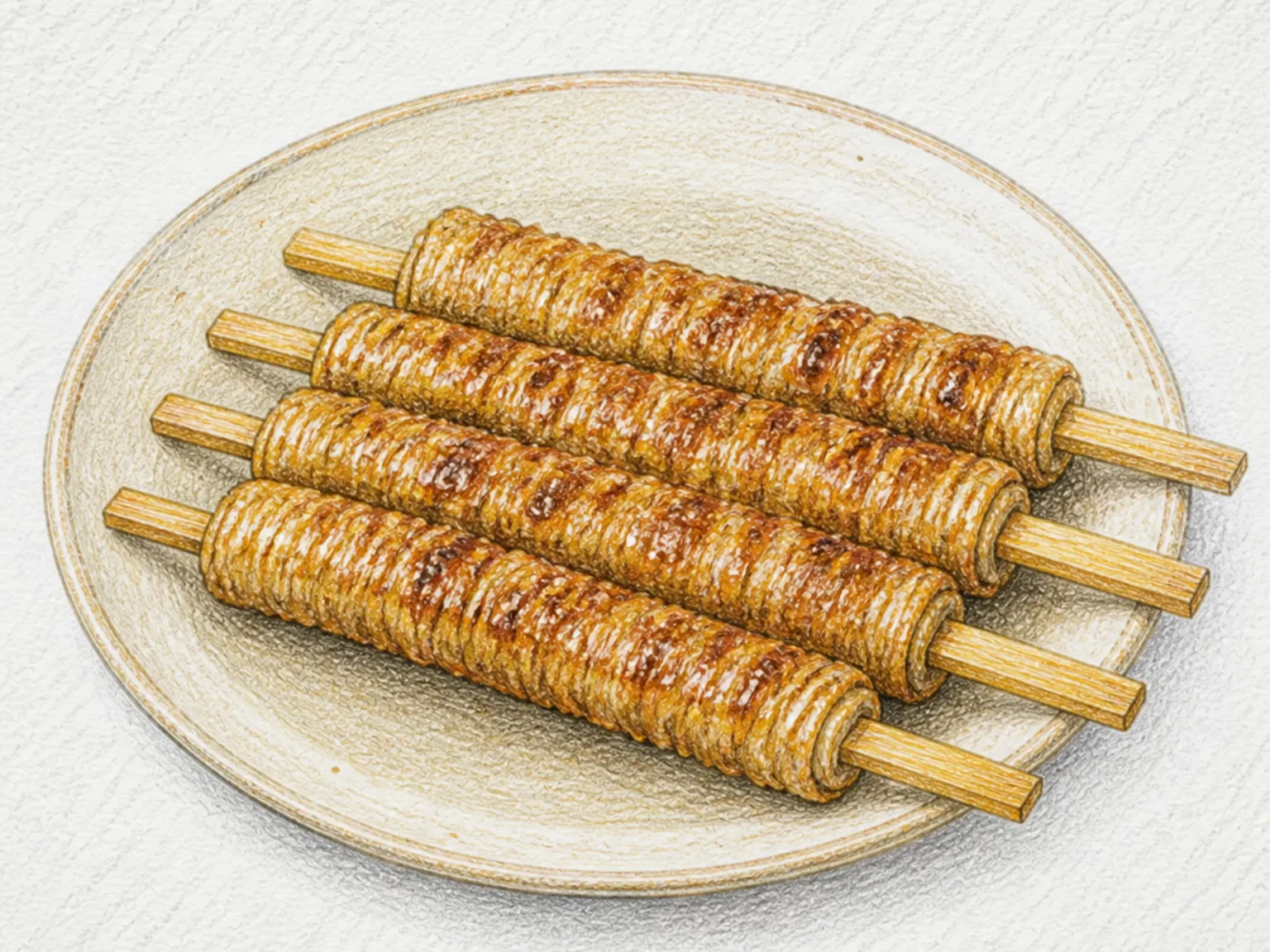
Gobo Maki (Burdock Wrapped in Eso Fish Skin)

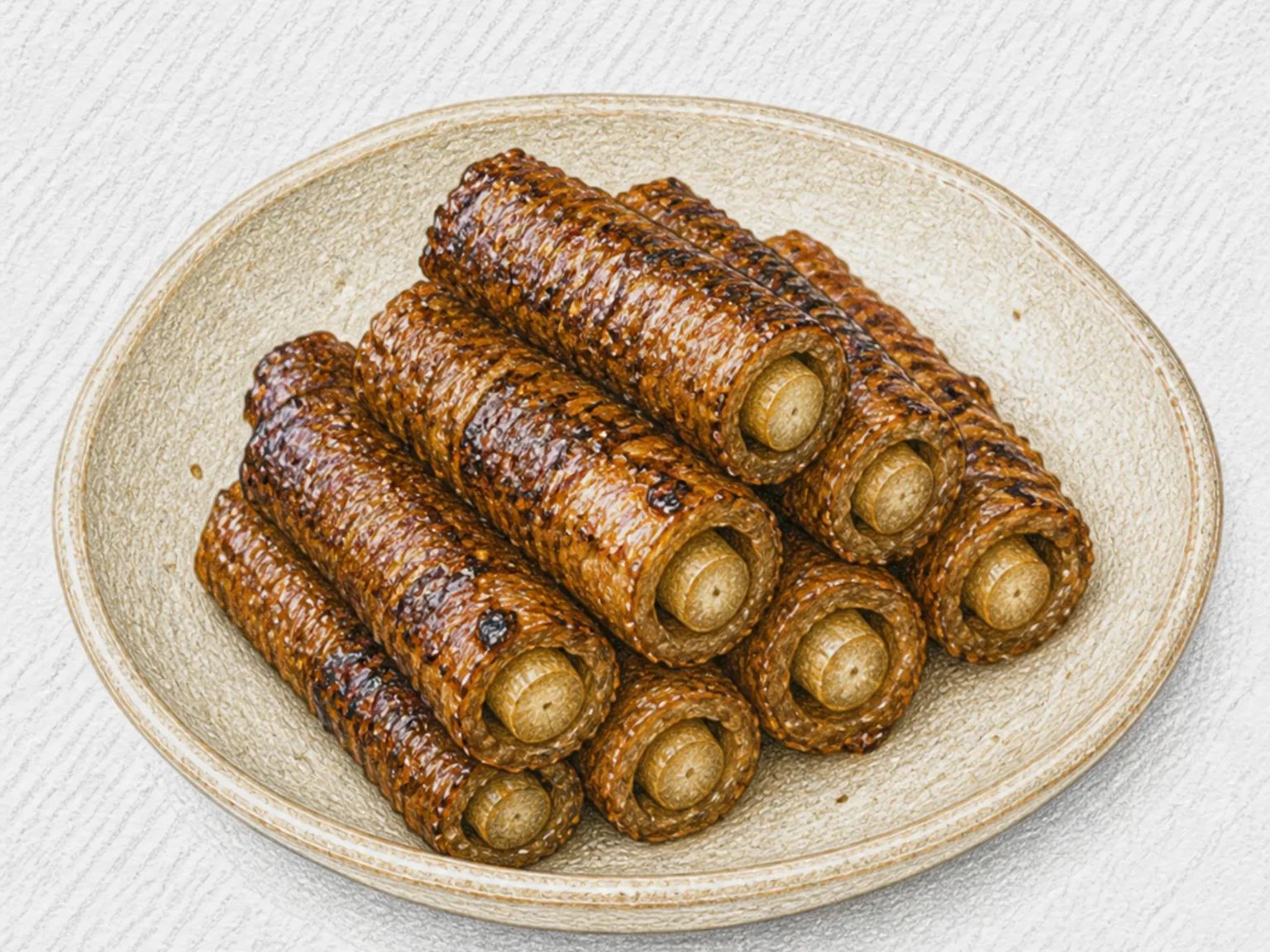
Gobo maki is a grilled seafood preparation from Hagi City in Yamaguchi Prefecture, traditionally served at festivals, for guests, and in cherry-blossom viewing lunches. It uses the skin separated from eso fish during local kamaboko production rather than wrapping the burdock in fish paste. The skin is soaked overnight in a concentrated sweet and savory sauce of soy sauce, mirin, cooking sake, and sugar. A burdock root cut to 15 to 20 cm is threaded onto a metal skewer, then wrapped one sheet at a time with the marinated skin. The skewer is turned continuously over the heat so the skin cooks evenly and the sauce darkens without burning in one place. It is ready when the outside is fully cooked and browned with light char marks. After a short rest, the skewer is removed and the roll is sliced to show the burdock center.

🎉 Special Occasion 🍱 Lunchbox
Prep 25min Cook 20min 1 servings
Kasujiru Toyama Turnip Soup with Sake Lees
Soups Medium

Kasujiru Toyama Turnip Soup with Sake Lees

Kasujiru from Yonezawa in Yamagata simmers firm Toyama turnips with uchimame flattened soybeans and fried tofu in a miso-style broth, then dissolves a generous amount of sake lees for mellow fermented aroma and body. Toyama turnips are harder and sweeter than common turnips and store well through winter. Local cooks use a technique called bukkaku, levering irregular bite-size pieces from the root with the corner of a knife so the rough surfaces absorb broth. The turnip cooks first in dashi, followed by the tofu and dried flattened soybeans until everything softens. Miso, sake lees, and mirin are loosened separately with hot broth before returning to the pot, preventing dense lumps. Tender turnip greens enter only for the final boil. Cooling once and reheating helps seasoning penetrate the firm root, but soup made with sake lees should not be assumed completely alcohol-free.

🏠 Everyday
Prep 25min Cook 40min 4 servings
Nikuten (Layered Beef Tendon and Potato Pancake)
Pancakes Hard

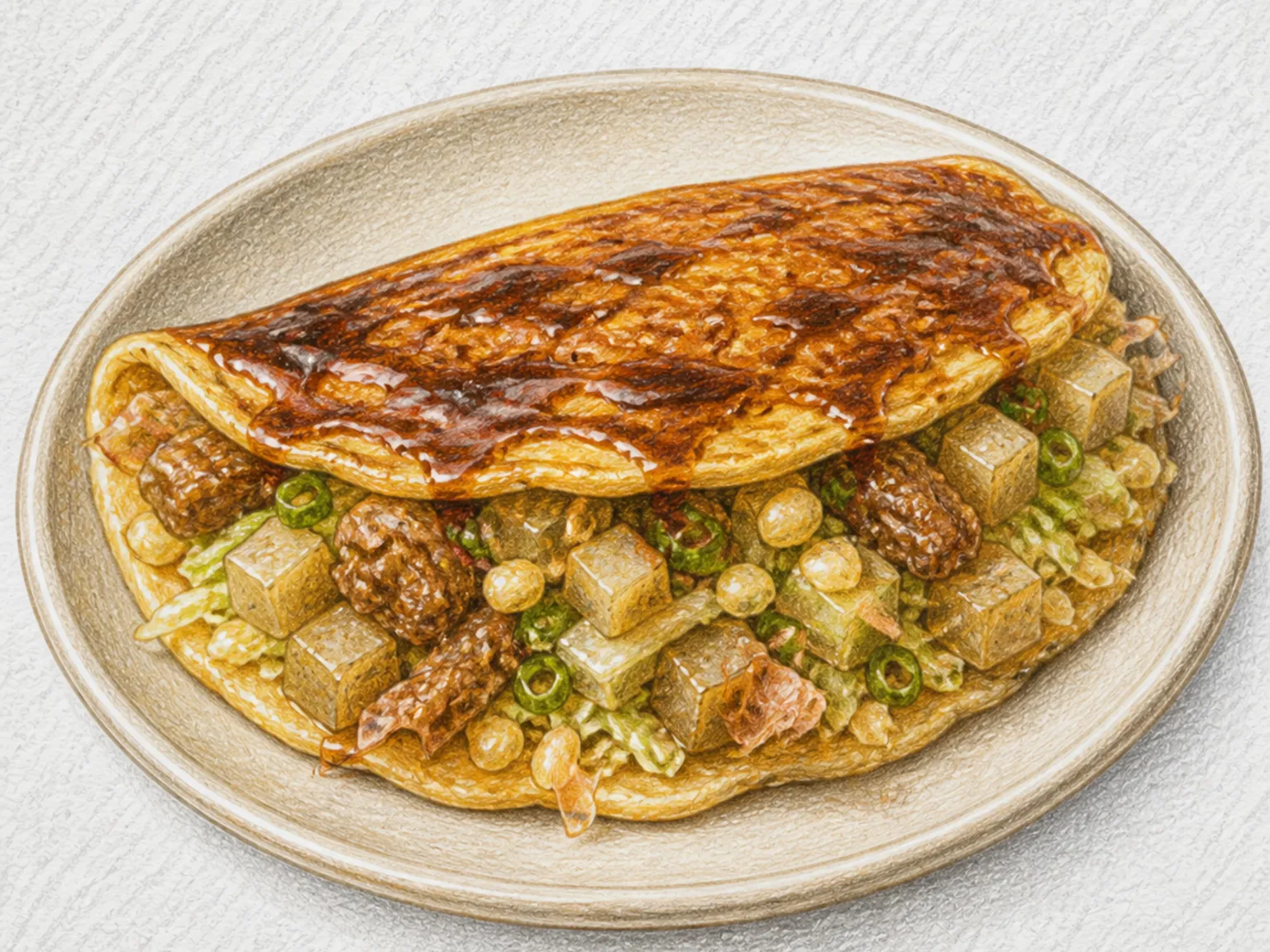
Nikuten (Layered Beef Tendon and Potato Pancake)

Nikuten is a griddled specialty of Takasago in Hyogo. A thin wheat batter is layered with bonito powder, sweet soy-simmered potato, konjac, cabbage, scallion, tender beef tendon, and tempura crumbs, then covered with more batter, flipped, sauced, and folded in half. Unlike a mixed okonomiyaki batter, the stacked construction keeps the potato pieces and shredded vegetables distinct. The tendon must be simmered until tender before assembly, while the final griddle stage heats every layer and crisps the outside.

🎉 Special Occasion 🍺 Bar Snacks
Prep 30min Cook 135min 4 servings
Botan Nabe Wild Boar Hotpot
Stews Medium

Botan Nabe Wild Boar Hotpot

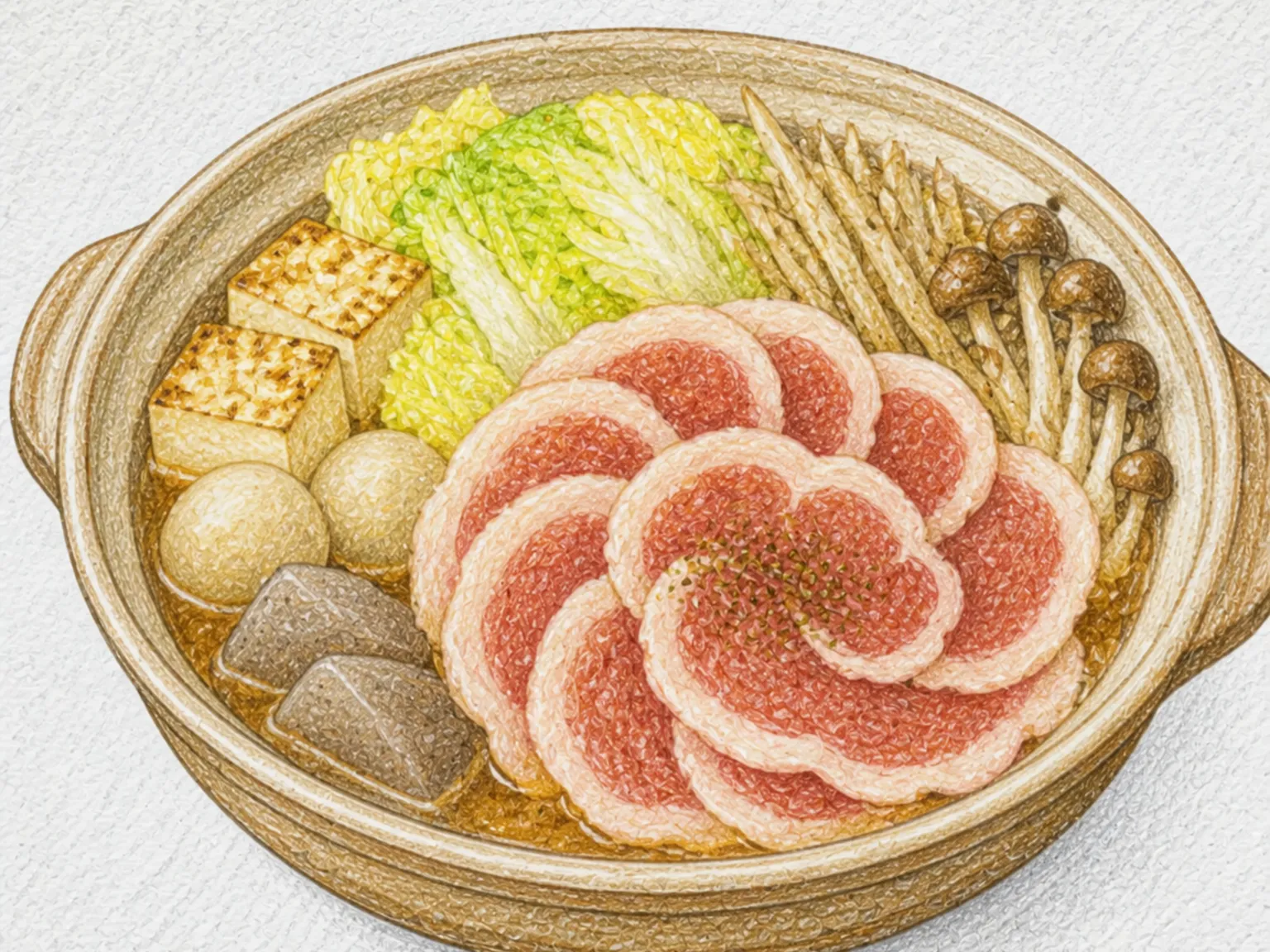
Botan nabe is a hotpot from Tanba Sasayama City in Hyogo. Thinly sliced wild boar loin, grilled tofu, napa cabbage, burdock, taro, konnyaku, mushrooms, and other vegetables simmer in dashi seasoned with equal amounts of red and white miso. One account traces it to around 1908, when troops stationed in the area put boar caught during training into miso soup or brought the meat to local inns for a miso hotpot. Inns later arranged the slices like peony petals, linking the presentation to the name botan. It is served mainly in winter, at New Year, and for guests, with ground sansho added at the table.

🎉 Special Occasion 🍺 Bar Snacks
Prep 35min Cook 30min 4 servings
Agemaki Yuba no Nimono (Simmered Fried Yuba Rolls)
Steamed Medium

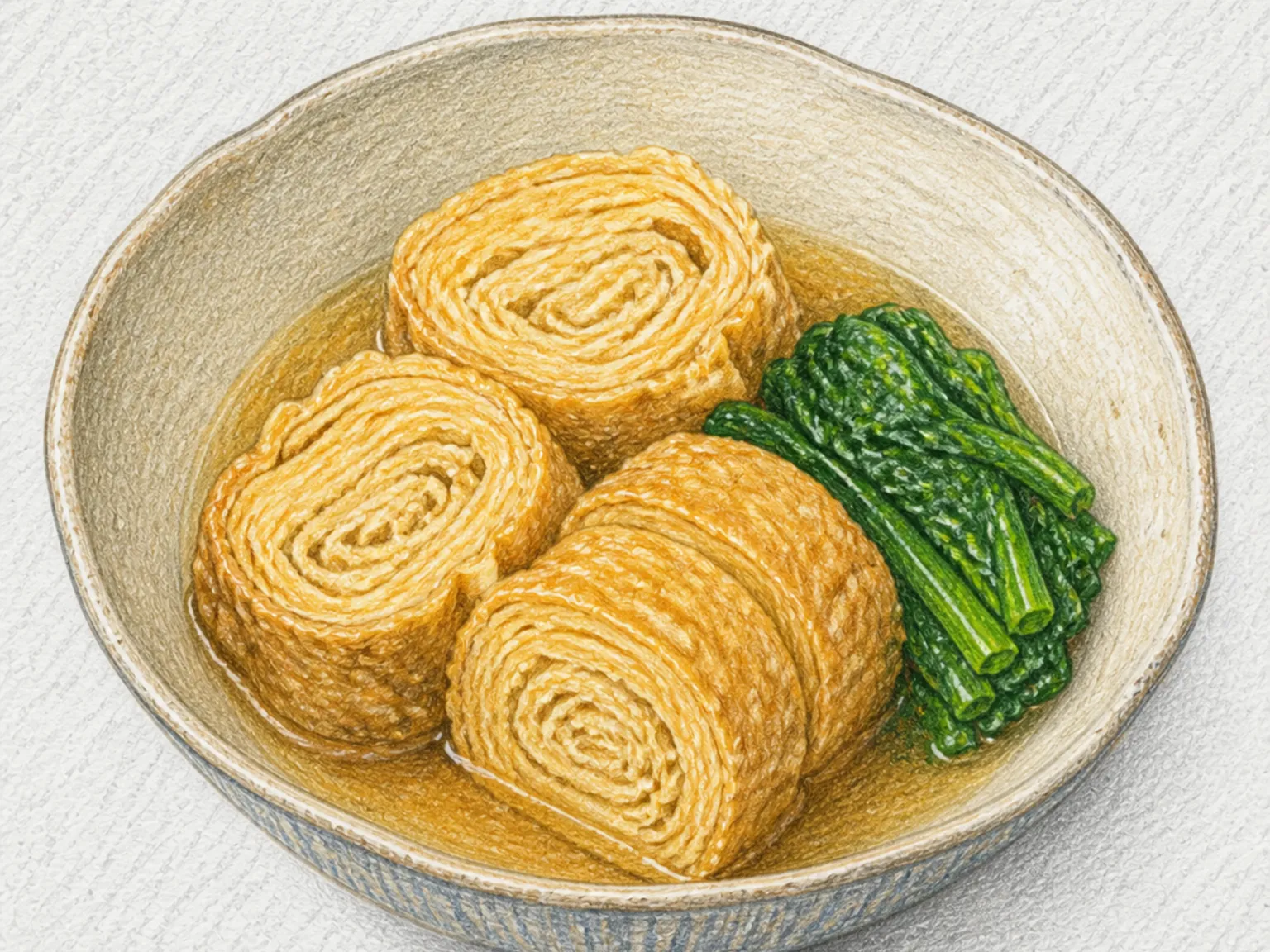
Agemaki Yuba no Nimono (Simmered Fried Yuba Rolls)

Agemaki yuba no nimono is a traditional dish from Nikko in Tochigi. Layers of yuba are rolled into a log, sliced, fried, and dried to make agemaki yuba. The prepared rolls are first simmered in water to remove excess oil and restore tenderness, then cooked slowly in sweet, lightly seasoned dashi. Nikko writes yuba as 湯波 and traditionally lifts the soy-milk skin from its center, producing a doubled sheet with thickness and a rippled surface. Ten to fifteen minutes of preliminary simmering and another twenty minutes in seasoned stock soften the center and let it absorb flavor. Blanched spinach adds a clear green contrast suitable for New Year and celebration meals.

🎉 Special Occasion
Prep 10min Cook 40min 5 servings
Wariboshi Daikon Harihari-zuke
Kimchi Easy

Wariboshi Daikon Harihari-zuke

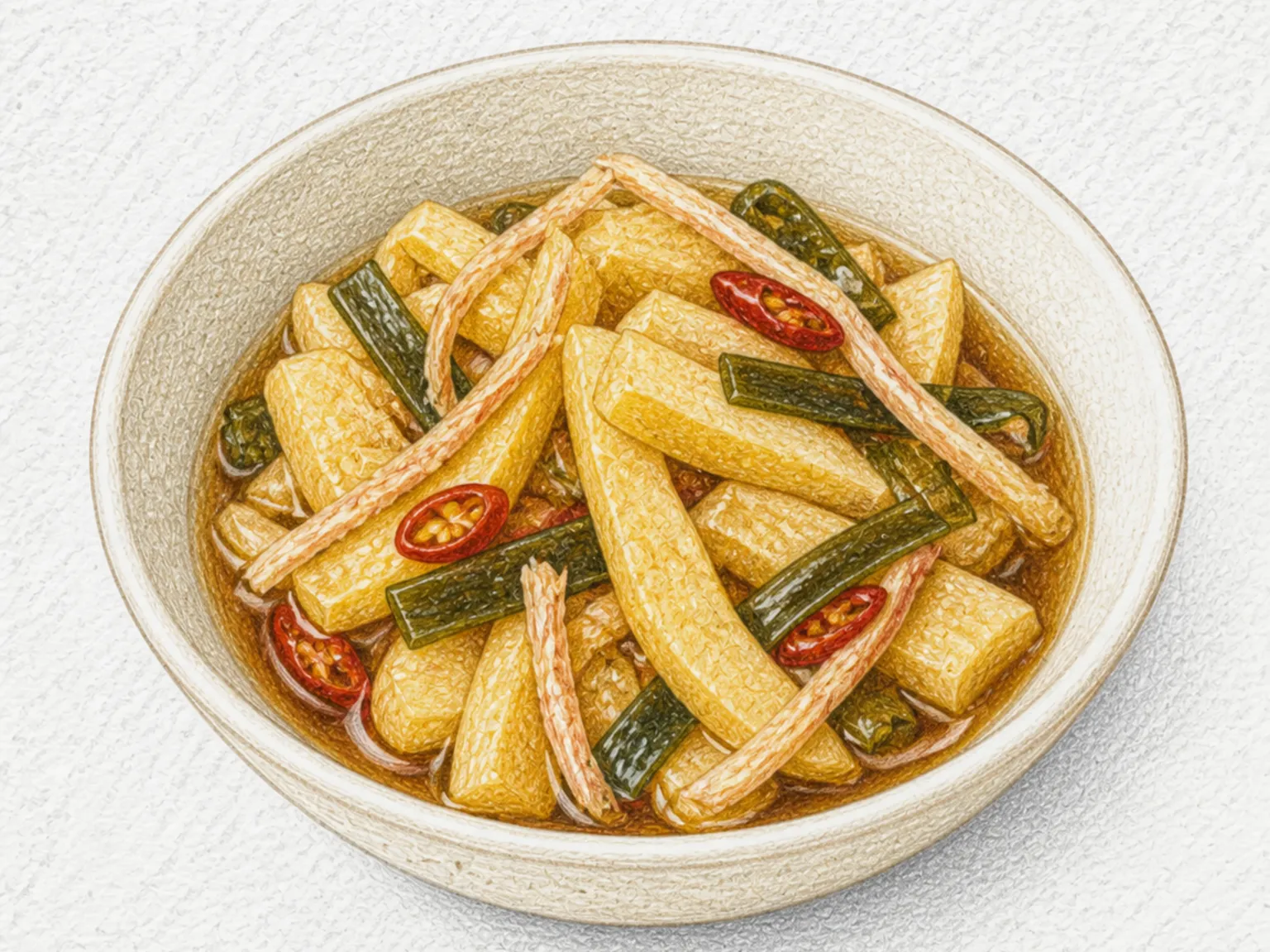
Wariboshi daikon harihari-zuke is a pickle from Miura in Kanagawa, combining thick split-dried daikon with kombu, dried squid, and chile in a sweet soy-vinegar brine. Miura families traditionally split winter daikon lengthwise into sixteen to twenty sections and sun-dried it for about two weeks. The thicker pieces keep a firm, crackling bite unlike finely shredded dried radish. For home handling, the vinegar brine is brought to a boil, cooled completely, and poured over commercial dried ingredients, with the container held at 4°C or colder throughout curing.

🏠 Everyday 🍺 Bar Snacks
Prep 30min Cook 5min 5 servings
Mushroom Memil Soba (Warm Buckwheat Noodles in Mushroom Dashi)
Noodles Easy

Mushroom Memil Soba (Warm Buckwheat Noodles in Mushroom Dashi)

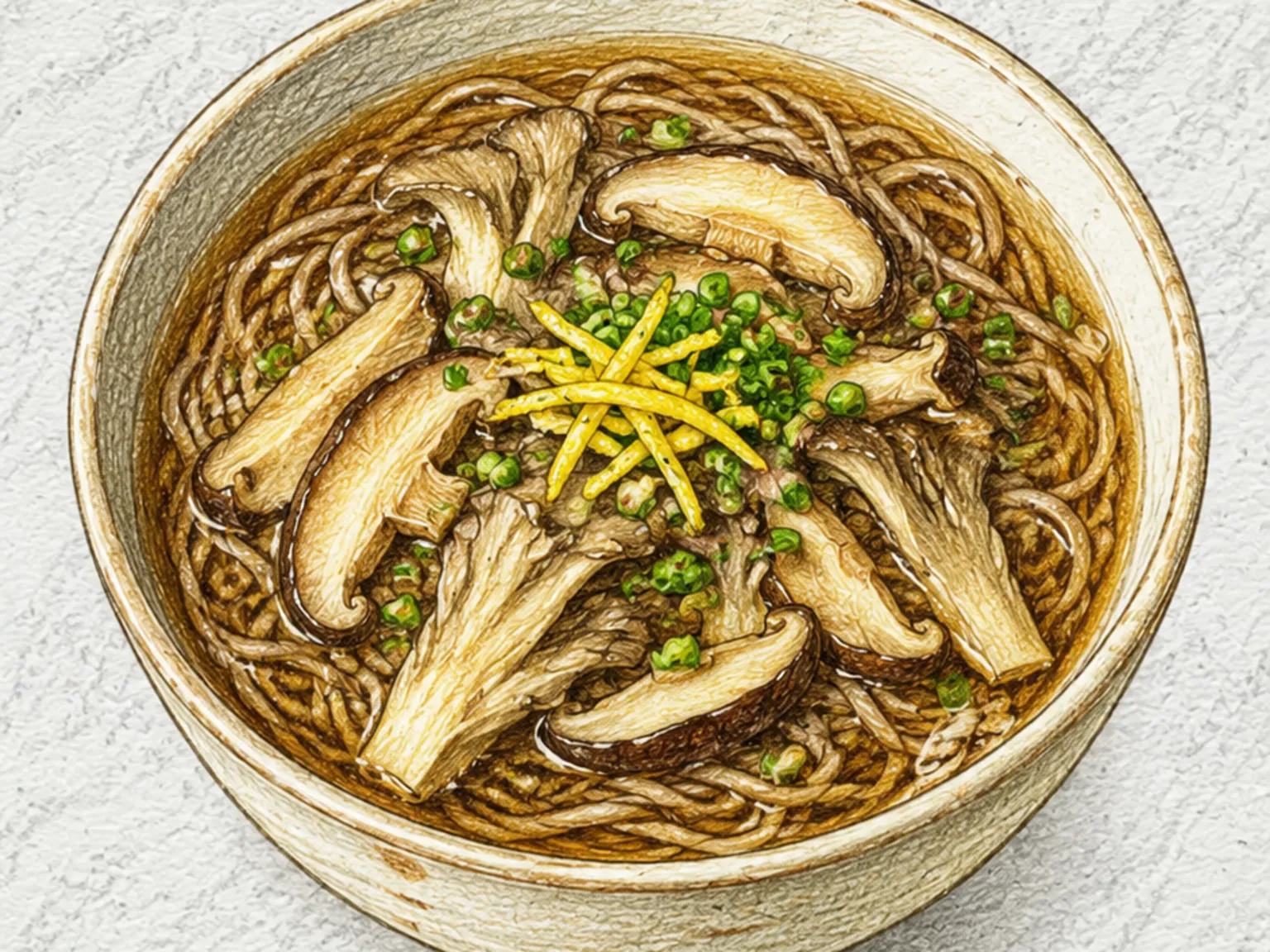
Beoseot memil soba is a warm buckwheat noodle soup built on dashi stock seasoned with soy sauce and mirin, with shiitake and oyster mushrooms simmered for five minutes so their concentrated woodsy depth moves fully into the broth. Dried shiitake contributes far more umami than fresh, and oyster mushrooms torn along the grain absorb more liquid than sliced. The soba noodles are cooked separately and rinsed in cold water to strip off surface starch, which keeps the broth clear and prevents the noodles from turning soft. A small curl of yuzu zest placed on top just before serving sends a sharp citrus note across the broth's earthy weight, lifting the finish without overpowering it. Green onion scattered on top adds a layer of fresh aroma and color.

🥗 Light & Healthy 🏠 Everyday
Prep 12min Cook 15min 2 servings
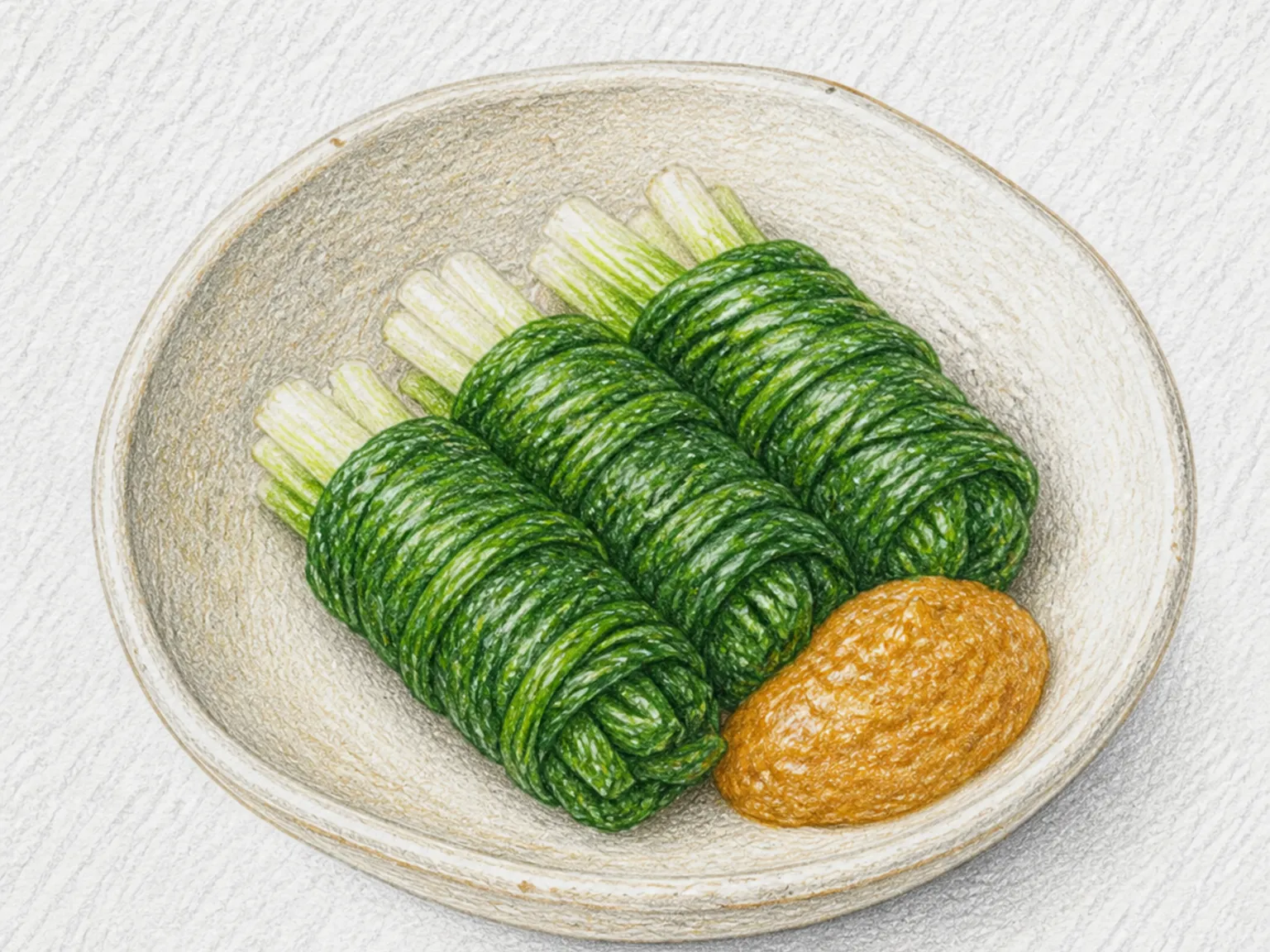
Hitomoji no Guruguru (Coiled Scallions with Vinegar Miso)
Salads Medium

Hitomoji no Guruguru (Coiled Scallions with Vinegar Miso)

Hitomoji no guruguru is a Kumamoto dish made by briefly blanching local wakegi scallions and winding each green leaf around its swollen white base. The root ends enter salted boiling water first so the dense cores cook while a crisp bite remains. After cooling and thorough squeezing, each stalk is folded about 5 cm above the white section and coiled to an even size. A sweet-tart sauce of white miso, sugar, vinegar, and mirin is served alongside. The dish is said to have begun as an inexpensive sake snack during austerity measures in the Higo domain, and the scallions are sweetest in early spring after overwintering.

🍺 Bar Snacks 🎉 Special Occasion
Prep 20min Cook 5min 4 servings
Chashu Pork (Japanese Rolled Braised Pork Belly for Ramen)
Asian Medium

Chashu Pork (Japanese Rolled Braised Pork Belly for Ramen)

Chashu pork takes its name from Cantonese char siu but is an entirely distinct preparation that evolved within Japanese ramen culture. A thick slab of pork belly is rolled into a tight log, tied at intervals with kitchen twine to hold its shape, then braised low and slow in a mixture of soy sauce, mirin, sake, and sugar. Over one and a half to two hours the connective tissue dissolves into gelatin, transforming the meat from firm to yielding - a texture that barely resists the chopstick and melts against the palate. The braising liquid reduces during cooking and lacquers the exterior in a deep amber glaze that clings without being syrupy. Sliced thin, each piece reveals a cross-section of spiraling fat and lean that is as much a visual signature as a textural one. The fat layers have softened to the point of near-transparency while the lean holds just enough structure to stay in one piece. Although chashu is most associated with ramen, where a few slices crown the bowl, it is equally at home over steamed rice as chashu-don, or sliced cold and eaten alongside beer. The leftover braising liquid is never wasted - soft-boiled eggs soaked overnight in it become ajitamago, the marinated soy eggs that are chashu's natural companion.

🎉 Special Occasion 🍺 Bar Snacks
Prep 10min Cook 90min 4 servings
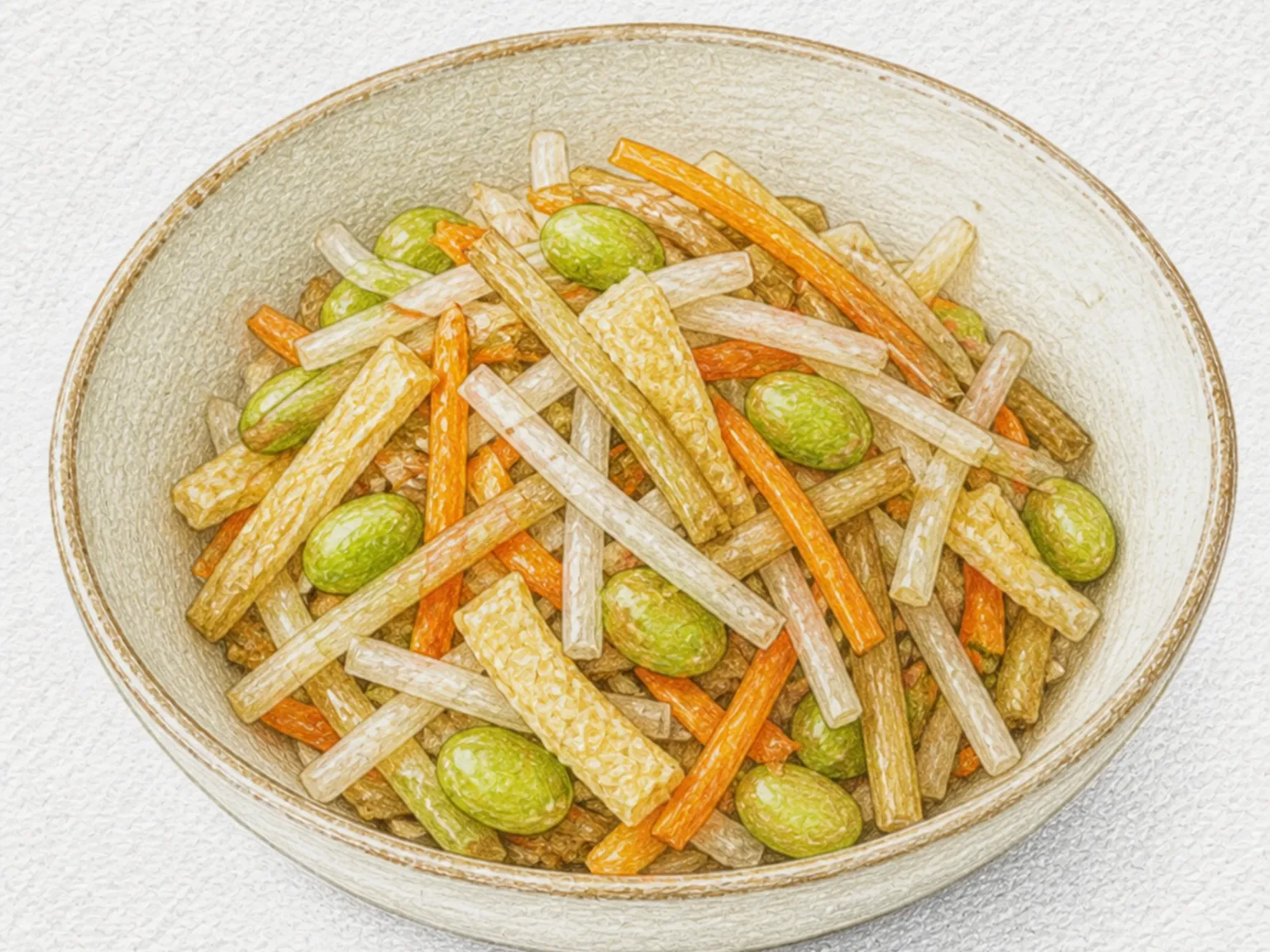
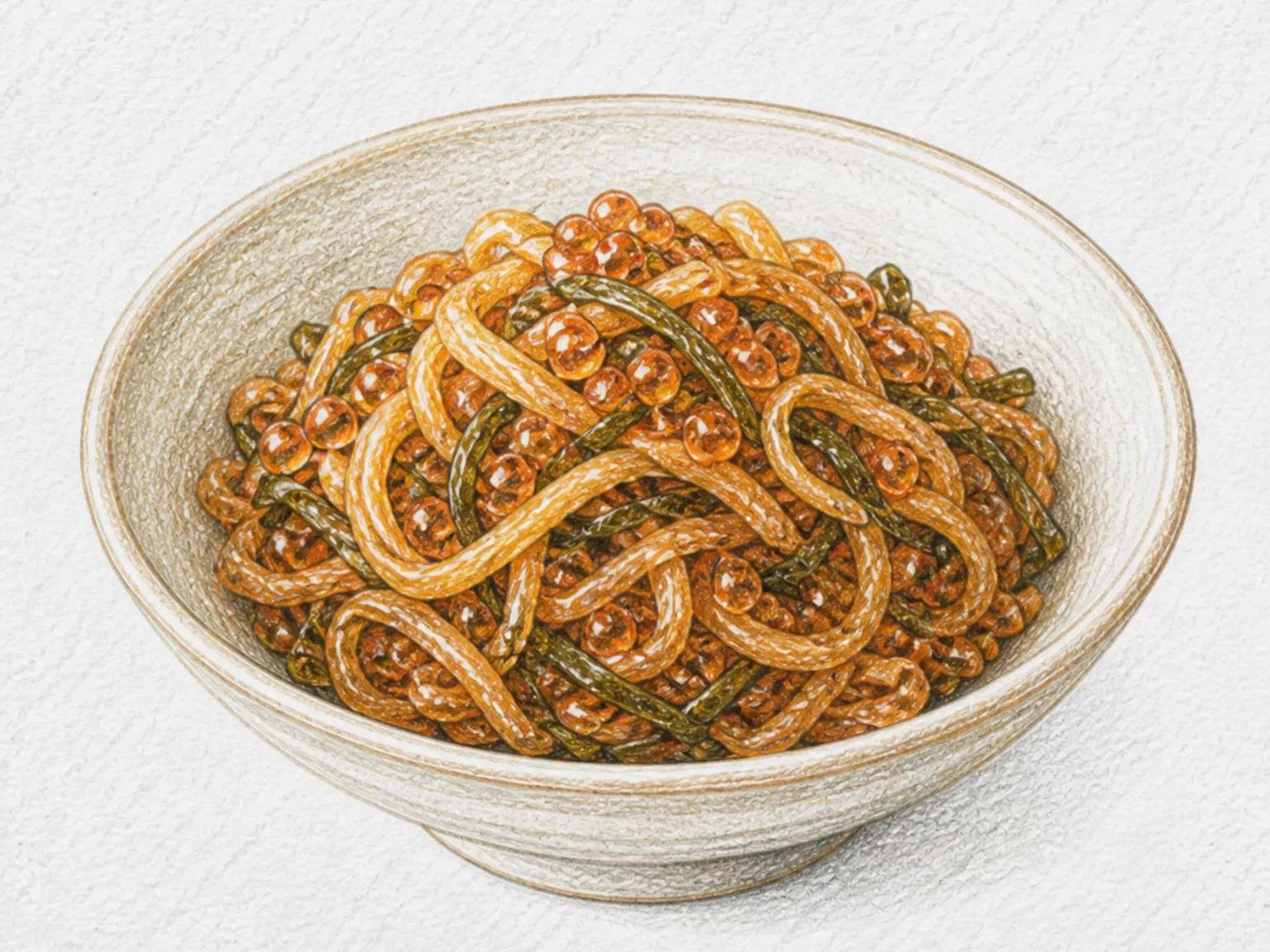
Hyoboshi no Nimono (Simmered Dried Purslane)
Side dishes Medium

Hyoboshi no Nimono (Simmered Dried Purslane)

Hyoboshi no nimono is a preserved-vegetable side dish from Yamagata. Purslane that was blanched and sun-dried in summer is gently rehydrated overnight in winter, then stir-simmered with shirataki, carrot, and fried tofu in a sweet soy seasoning. The dish grew from the drying and salting culture of snowy Murayama and Okitama, where households had to secure food before fields disappeared under winter snow. Dried purslane has a light chew and concentrated green aroma rather than the fresh plant's acidity. Heating it from cold water to one boil, leaving it overnight, and changing the water 2 to 3 times the next day softens the stems evenly and clears stale flavors.

🎉 Special Occasion
Prep 35min Cook 35min 5 servings
Funa-Meshi (Okayama Minced Crucian Carp Rice Bowl)
Rice Medium

Funa-Meshi (Okayama Minced Crucian Carp Rice Bowl)

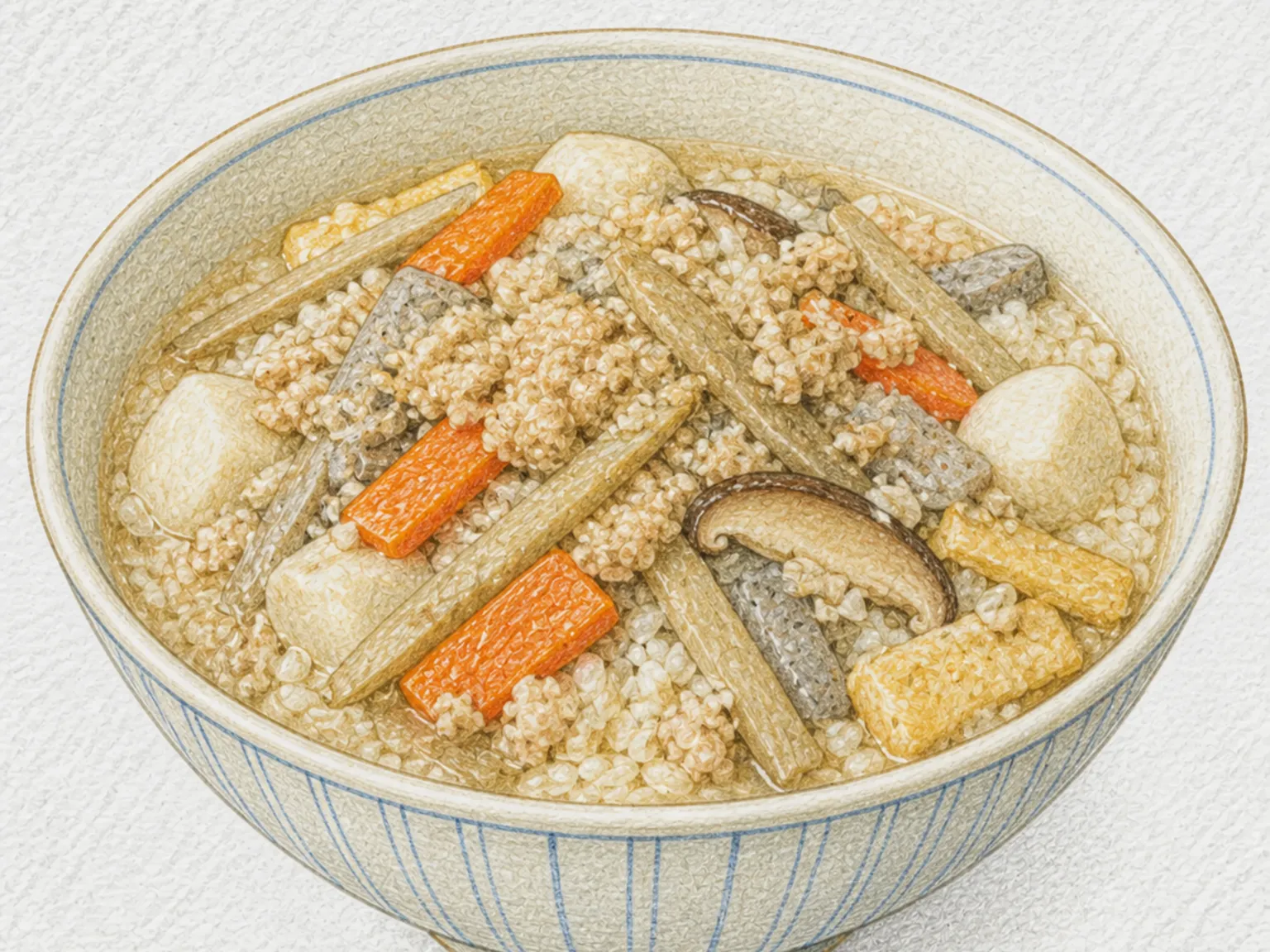
Funa-meshi is a rice bowl from southern Okayama made by loosening minced crucian carp in vegetable and sesame oils, briefly frying it with burdock, Kintoki carrot, taro, fresh shiitake, konnyaku, and fried tofu, then simmering everything in dashi seasoned with dark and light soy sauces, mirin, sake, and sugar. The hot, richly flavored soup is ladled generously over rice and finished with sliced onion and torn nori. Cooking the mince gently until pale before adding the vegetables reduces the freshwater aroma and keeps it granular. The dish grew alongside reclamation around Kojima Bay, where rice fields, canals, rivers, and Kojima Lake supported plentiful crucian carp. It was also called tontoko-jiru or tontoko-meshi after the rhythmic chopping sound made when winter fish were minced on a board.

🏠 Everyday
Prep 25min Cook 30min 4 servings
Japanese Braised Pork Belly
Stir-fry Hard

Japanese Braised Pork Belly

Thick cubes of pork belly are blanched for five minutes to remove impurities, then simmered in water with ginger and green onion for fifty minutes until the fat layers turn translucent and completely tender. The parboiled meat transfers to a fresh pot with soy sauce, mirin, and sugar, where it braises over medium-low heat for another thirty minutes as the liquid reduces by half and lacquers each piece in a dark, glossy coat. Mirin carries off residual off-odors along with its alcohol as it heats, while leaving a gentle sweetness behind in the meat. Ginger neutralizes the musky, funky quality that pork belly fat tends to develop during prolonged cooking. Boiled eggs added to the braising liquid absorb the soy-mirin mixture through their whites, turning amber and picking up savory flavor all the way through to the yolk. Cooling the finished dish completely and reheating it once deepens the texture further: the collagen that dissolved during cooking sets into a firm gel while cold, then melts again on reheating, thickening the sauce into something close to a demi-glace. Skimming the solidified fat from the chilled surface removes excess grease without stripping any of the flavor.

🔥 Trending Now 🏠 Everyday
Prep 20min Cook 90min 4 servings
Miso Potato (Fried Potatoes with Sweet Miso Sauce)
Street food Medium

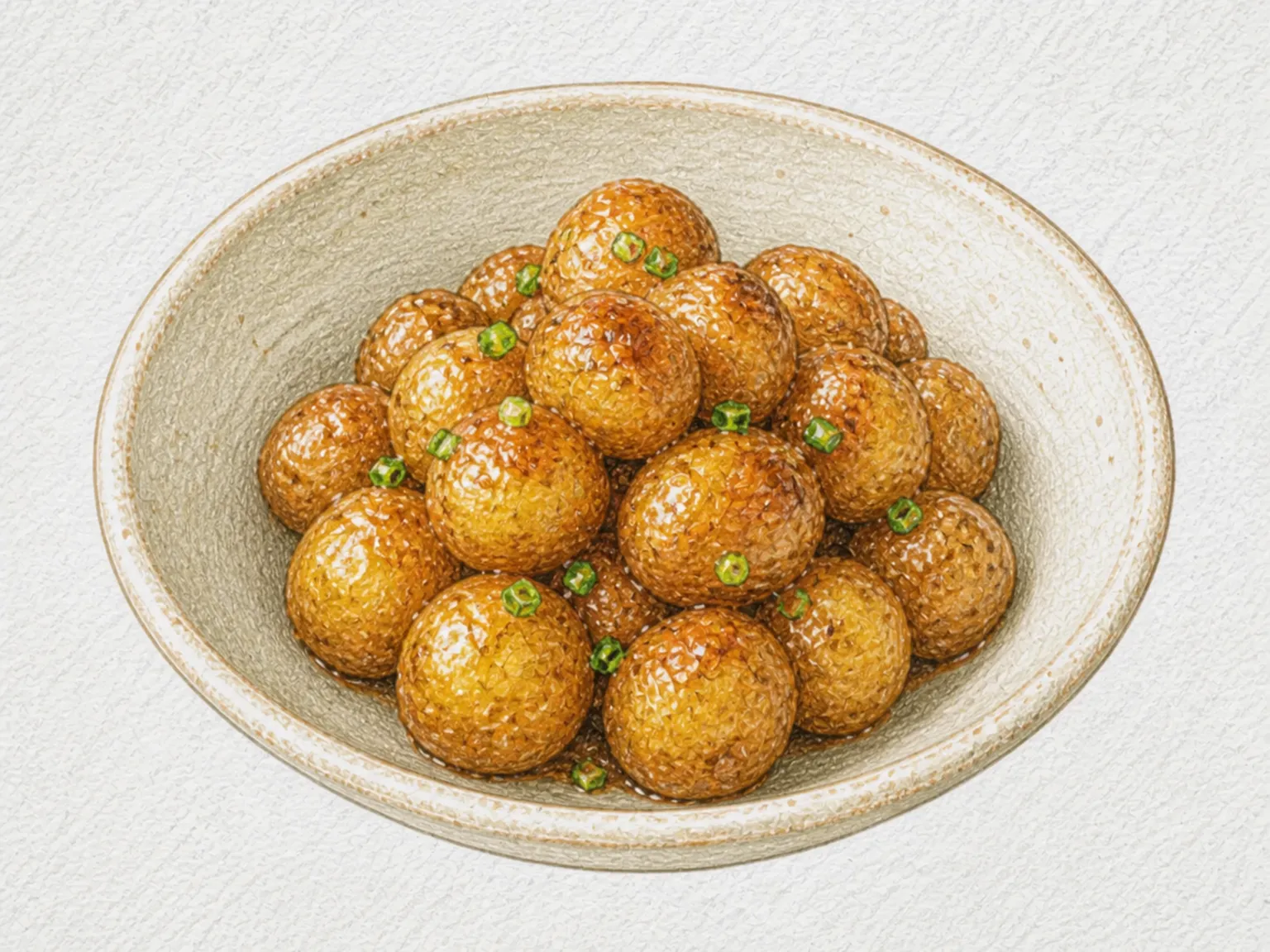
Miso Potato (Fried Potatoes with Sweet Miso Sauce)

Miso potato is a Chichibu, Saitama snack once eaten as kojuhan, a light meal during breaks from farm work. Bite-size potatoes are soaked, parboiled until nearly tender, coated in a loose flour batter, and fried at 180°C until the thin shell becomes crisp. Miso, sugar, sake, mirin, and water are cooked separately into a glossy sweet-savory sauce and poured over the potatoes while they are still hot. Each piece combines a fluffy center, light fried coating, and concentrated miso topping. What began as practical farm food is now served as a home snack, side dish, sake accompaniment, and school lunch item.

🧒 Kid-Friendly 🍺 Bar Snacks
Prep 20min Cook 25min 4 servings
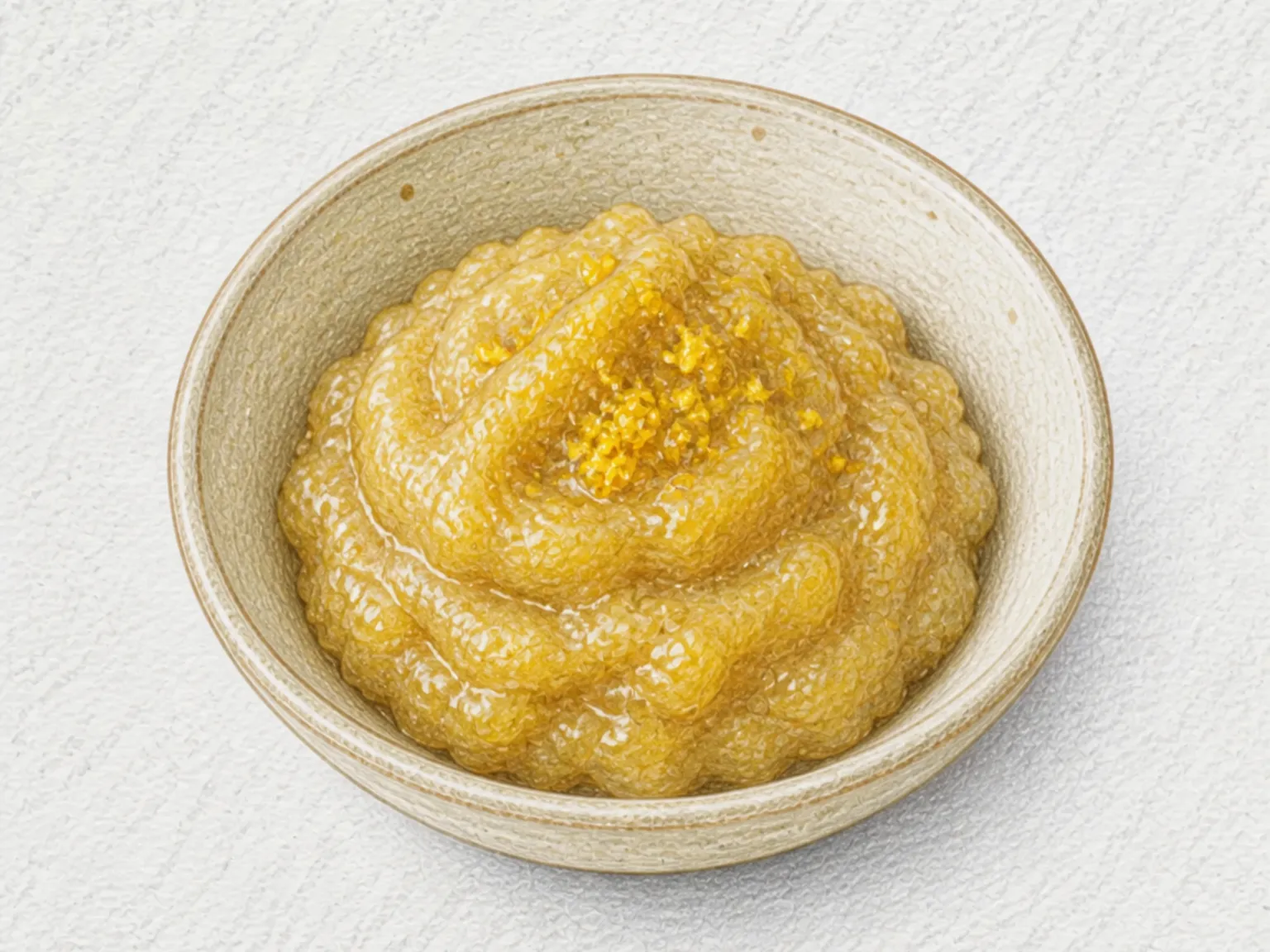
Tanmu Dingaku (Sweet Okinawan Taro Paste)
Desserts Medium

Tanmu Dingaku (Sweet Okinawan Taro Paste)

Tanmu dingaku is a celebratory Okinawan paste made from tanmu, a taro grown in clean flooded fields. The peeled tuber is cut into 2 cm cubes, blanched first, then simmered in fresh hot water until soft. Sugar is added and the mixture is stirred and crushed with a wooden spatula until it becomes thick like Japanese kinton. Mirin gives the final gloss, while finely chopped lemon or mandarin peel adds a fresh aroma. Because daughter and granddaughter corms grow around the parent, tanmu represents flourishing descendants and appears at New Year, Obon, and family celebrations. Small portions may follow rich pork dishes as a dessert.

🎉 Special Occasion
Prep 15min Cook 35min 4 servings
Sake no Chanchan-Yaki (Miso-Butter Salmon and Vegetables)
Grilled Easy

Sake no Chanchan-Yaki (Miso-Butter Salmon and Vegetables)

Sake no chanchan-yaki is a fisherman's dish from the Ishikari area of Hokkaido. Fresh salmon is set over cabbage, onion, shimeji, carrot, and green pepper, coated with a lightly sweet miso sauce, topped with butter, and steam-grilled inside foil. Salt and pepper season the fish first, while sugar, mirin, and sake loosen the miso into a spreadable sauce. Closing the packet and cooking it in a skillet with shallow water traps the vegetable moisture and salmon juices. Once associated mainly with the autumn and winter salmon season, it is now prepared throughout the year as a complete home meal.

🏠 Everyday ⚡ Quick
Prep 15min Cook 15min 1 servings
Sanpei Jiru (Hokkaido Salted Salmon Soup)
Soups Medium

Sanpei Jiru (Hokkaido Salted Salmon Soup)

Sanpei jiru is a winter soup from Hokkaido that simmers salted fish with potatoes, daikon, carrots, and other vegetables in kombu stock. This version uses a salted salmon head and backbone with some flesh attached, allowing the bones and skin to enrich the broth. Unlike Ishikari nabe, which is commonly seasoned with miso and fresh salmon, the salt preserved in the fish provides the main seasoning here. Additional salt is added only after tasting the finished broth. Potatoes and daikon remain in generous pieces, while burdock and konnyaku receive separate preparation to keep the soup clean. Adding the salmon after the root vegetables have started softening prevents overcooked, dry flesh and excessive cloudiness.

🏠 Everyday
Prep 25min Cook 30min 4 servings
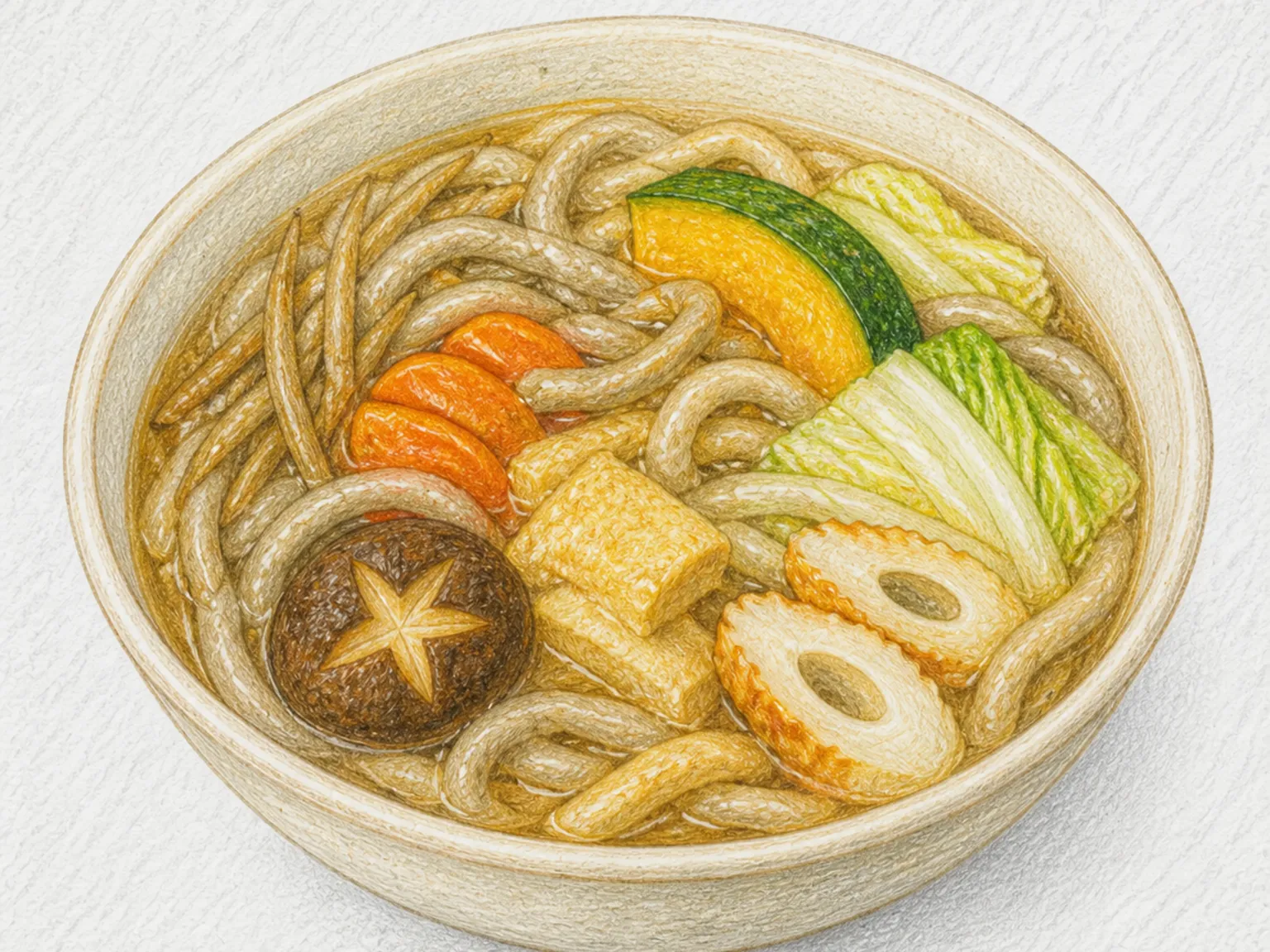
Soba Dojo Buckwheat Dough Hotpot
Stews Medium

Soba Dojo Buckwheat Dough Hotpot

Soba dojo nabe is a winter hotpot from Kagamino in Okayama. Buckwheat flour is kneaded with egg and boiling water, then pinched off and rolled into long, thin pieces shaped like loaches before cooking in dashi with vegetables. Despite the name and shape, the dish contains no loach. Burdock, carrot, napa cabbage, pumpkin, shiitake, fried tofu, and chikuwa simmer together, and soy sauce, mirin, and sake season the broth once the dough is cooked. Passed down in a mountain area as warming cold-weather food, it serves the tender buckwheat pieces and vegetables together in their savory broth.

🏠 Everyday
Prep 30min Cook 25min 4 servings
Akagai Garanmushi Shell-Steamed Clams
Steamed Medium

Akagai Garanmushi Shell-Steamed Clams

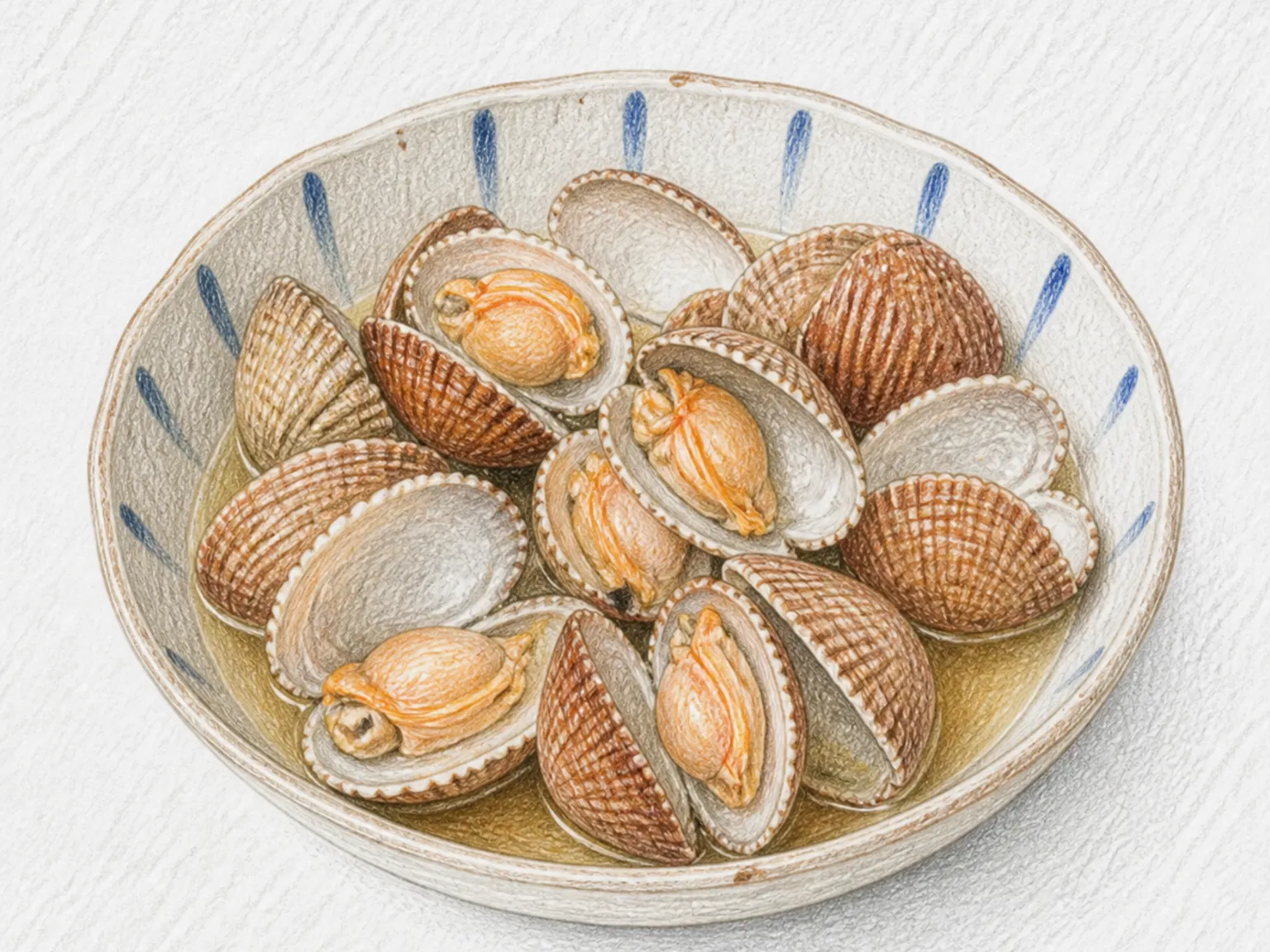
Akagai garanmushi is an Izumo dish from Shimane that cooks small sarubogai clams in their shells with dashi, mirin, and light soy sauce for only a brief time. Locally called akagai, sarubogai are a separate species from the commonly marketed ark shell, smaller and with fewer grooves, and were once emblematic of brackish Lake Nakaumi. The shells are rubbed together to clear mud and sand from their ridges, then all the clams enter the boiling seasoned stock at once under a lid. As soon as the pot returns to a boil, it is shaken, removed from the heat, and left covered for thirty seconds. Open clams are lifted out immediately so the flesh stays tender. The cloudy cooking liquid is not poured onto the plate, and any clam that remains closed is discarded. This fast, controlled cooking preserves the shellfish sweetness prized at New Year meals.

🎉 Special Occasion 🍺 Bar Snacks
Prep 20min Cook 8min 2 servings