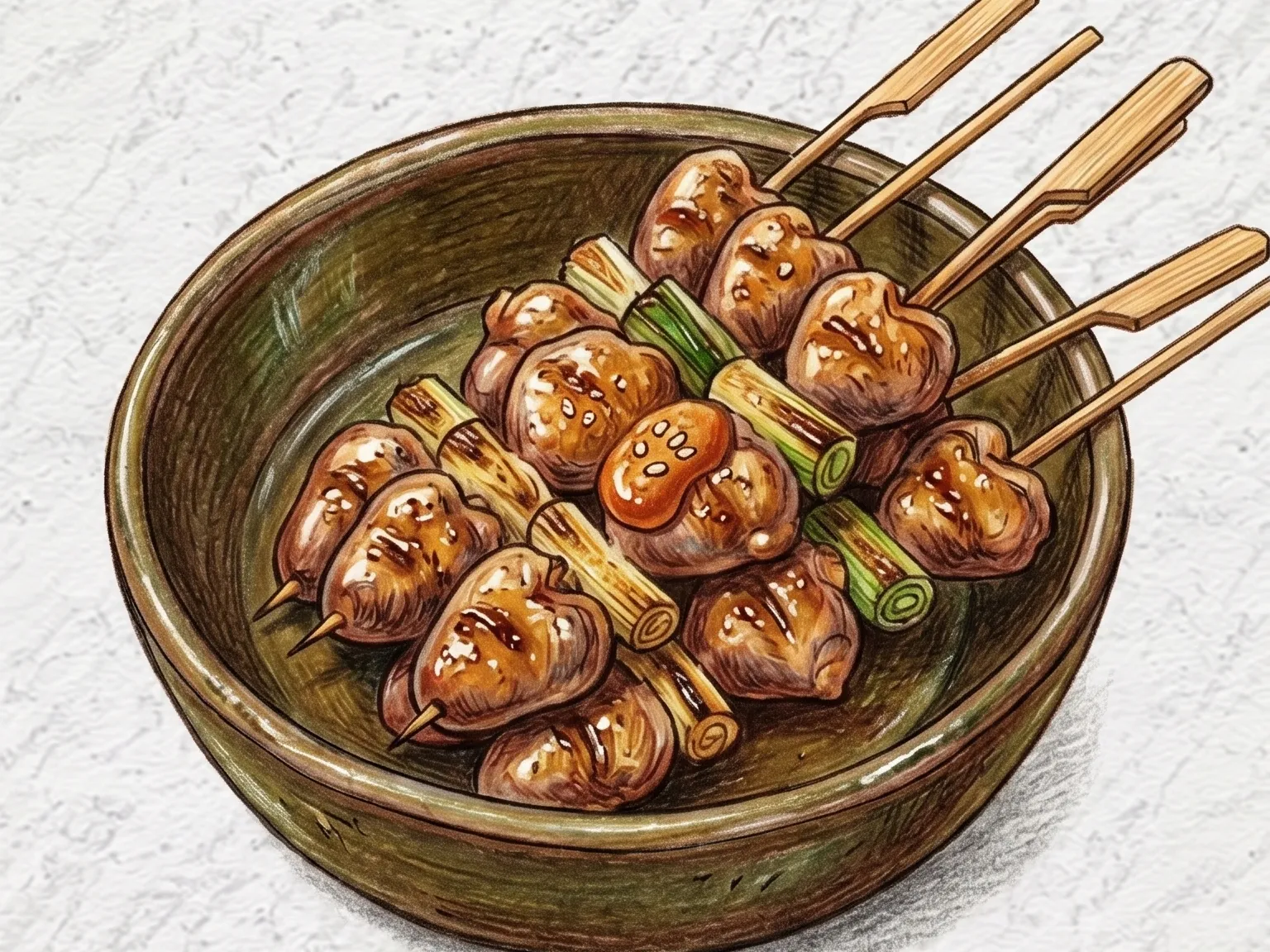
Grilled Chicken Heart Skewers
Quick answer
A recipe for chewy and nostalgic street-style grilled chicken heart skewers.
- Clean flavors in Yeomtong-kkochi-gui depend on splitting and rinsing the hearts before grilling.
- Splitting and washing out blood completely is key to removing gamey notes
Key ingredients
Core cooking flow
- 1 Slice the hearts in half, wash away any blood inside, and pat dry.
- 2 Mix soy sauce, oligosaccharide, garlic, mirin, and ginger powder to make the sauce.
- 3 Thread the cleaned chicken hearts tightly onto skewers.
A recipe for chewy and nostalgic street-style grilled chicken heart skewers.
What Makes This Special
- Clean flavors in Yeomtong-kkochi-gui depend on splitting and rinsing the hearts before grilling.
- Splitting and washing out blood completely is key to removing gamey notes
- Basting with soy-oligosaccharide glaze mid-cook builds a shiny crust
- Dense muscle structure keeps texture firm and springy through chewing
Instructions
- 1
Slice the hearts in half, wash away any blood inside, and pat dry.
- 2
Mix soy sauce, oligosaccharide, garlic, mirin, and ginger powder to make the sauce.
- 3
Thread the cleaned chicken hearts tightly onto skewers.
- 4
Place skewers on a hot pan and grill over medium heat, brushing with sauce on both sides.
- 5
Once the sauce is absorbed and the surface is golden, finish with a touch of sesame oil and pepper.
Tips
Nutrition (per serving)
Recipes to Cook Together
More Grilled →Serve with this
Refreshing Spicy Mulhoe Broth
A golden ratio recipe for a refreshing, spicy, and sweet-and-sour Mulhoe broth.
Shredded Chili Pickle
Spicy and sour shredded chili pickles, perfect for grilled meats.
Diet Konjac Fried Rice
A light and delicious konjac fried rice to enjoy without calorie worries.
Authentic Jeolla-style Kimchi
Authentic Southern-style kimchi with rich fish sauce and rice paste for deep umami.
Similar recipes
Korean Grilled Chicken Skewers
Dak-kkochi-gui is a Korean grilled chicken skewer built on the flavors of street-stall cooking, made by threading bite-sized chicken breast or thigh onto bamboo sticks and painting them with a sauce of gochujang, soy sauce, honey, and minced garlic. Thigh meat is the better choice because its higher fat content keeps each piece juicy over direct heat, while breast will dry out quickly. Applying the glaze in two or three separate coats rather than all at once builds a thick, sticky, caramelized surface. Cutting the chicken into uniform cubes ensures even cooking, and alternating pieces with slices of green onion or bell pepper adds moisture and prevents the meat from tightening up. Turning the skewers frequently over medium heat keeps the sugars in the sauce from scorching while the surface develops an even, deep char. The same result comes out well in an air fryer at 200 degrees Celsius for twelve to fourteen minutes. Gochujang's fermented heat against the sweetness of honey and the smell of searing meat is the unmistakable signature of Korean pojangmacha.
Korean Grilled Chicken Heart Skewers
Dak-yeomtong-kkochi starts by soaking trimmed chicken hearts in milk for fifteen minutes to remove any off-flavors, then threading them onto skewers for direct grilling. A glaze of soy sauce, gochujang, sugar, garlic, and cooking wine is applied in stages during grilling, building up a salty-sweet coating with gentle heat. Unlike regular chicken meat, hearts have a firm, springy chew that deepens in nuttiness the more you bite into them. The milk soak combined with garlic and cooking wine in the glaze cleanly removes any organ taste, so the finished skewers carry only the char from the grill and the layered seasoning. A common sight at street stalls and pojangmacha tents, these skewers work equally well as a quick snack eaten on the spot or as drinking food alongside a cold beer.
Korean Sausage Skewers
Sosiji kkochi are Korean sausage skewers made by scoring Vienna sausages deeply along their length and threading two or three onto wooden sticks, then pan-frying them until golden brown all over. The score marks serve a functional purpose: as the sausages heat, the cuts open up, allowing heat to penetrate to the center more evenly and creating edges that caramelize slightly and turn crisp. A thin film of oil in a medium-heat pan and steady rotation ensures even color across the entire surface, producing a skin that snaps on the outside while the inside stays juicy and springy. Ketchup and mustard are the classic accompaniments, with the tomato sweetness and the sharp, pungent bite of the mustard complementing the salt and fat of the sausage. Threading rice cakes between the sausage pieces transforms the skewer into a sotteok-sotteok style, a widely popular Korean street food variation. The dish comes together in under fifteen minutes and requires no special equipment beyond a pan and wooden skewers, making it a practical choice for a quick snack, a children's side dish, or a lunchbox item that holds up well at room temperature.
Korean Grilled Fish Cake Skewers
Eomuk kkochi gui are Korean grilled fish cake skewers, a staple of street food stalls that pair naturally with tteokbokki. Square fish cake sheets are folded in zigzag layers onto wooden skewers, grilled until the surface takes on color, then brushed with a glossy sauce of soy sauce, gochujang, sugar, and minced garlic. Folding the sheets before skewering multiplies the surface area that the sauce can grip and creates layered thickness that turns each bite into a dense, bouncy chew. Dry-grilling without oil first is important: it drives off moisture from the surface so that when the sauce is applied it clings and does not slide off. A second brief pass over heat after glazing caramelizes the sugars into a lacquered sheen and intensifies the savory aroma. Tucking pieces of green onion between the folds adds another layer of flavor -- the onion's moisture steams away as it grills, releasing a sweet, mellow fragrance that gradually infuses the fish cake.
Korean Sotteok-Sotteok Skewers
Cylinder-shaped rice cakes and mini sausages are skewered in alternating order, then pan-grilled for six to seven minutes until the surfaces turn golden. A glaze made from gochujang, ketchup, soy sauce, oligosaccharide syrup, and minced garlic is brushed on and cooked for two to three more minutes until glossy and sticky. Each skewer delivers a contrast between the dense chew of rice cake and the snappy bite of sausage, unified by the sweet-spicy coating. Originally a Korean street-food staple, sotteok-sotteok is also popular for camping trips and can be made quickly in an air fryer.
Korean Tteok Kkochi Yangnyeom Gui (Grilled Rice Cake Skewers)
Cylinder rice cakes are threaded onto skewers, lightly brushed with oil, and rolled on a grill pan over medium heat for six to seven minutes until the exterior turns golden. A sauce of gochujang, ketchup, oligosaccharide syrup, soy sauce, and minced garlic is applied in two rounds, building a glossy red glaze that clings to the surface. The outer layer develops a slight crispness while the inside remains stretchy and dense - that textural duality is the hallmark of this dish. A light dusting of cheese powder turns it into a kid-friendly snack, and it stands as one of the most iconic items in Korean street-food culture.