Takikomi Gohan (Japanese Mixed Rice Cooked with Vegetables and Dashi)
Takikomi gohan is a Japanese mixed rice dish in which short-grain rice is cooked together with seasonal vegetables, mushrooms, and a seasoned dashi-soy-mirin liquid instead of plain water. Shiitake mushrooms, carrot, and burdock root are julienned and placed on top of the soaked, drained rice-never stirred in-so the grains cook evenly and stay distinct rather than clumping. As the rice cooker runs its normal cycle, the dashi infuses every grain with a savory depth while the soy sauce adds a gentle salinity and the mirin a whisper of sweetness. After a ten-minute rest with the lid closed, the rice is fluffed and the toppings folded through, releasing an earthy, woodsy aroma from the mushrooms and burdock. The dish is a staple of Japanese home cooking, simple enough for a weeknight yet considered enough for a guest meal when made with premium seasonal ingredients.
Kuchizoko no Nitsuke (Saga-Style Simmered Sole)
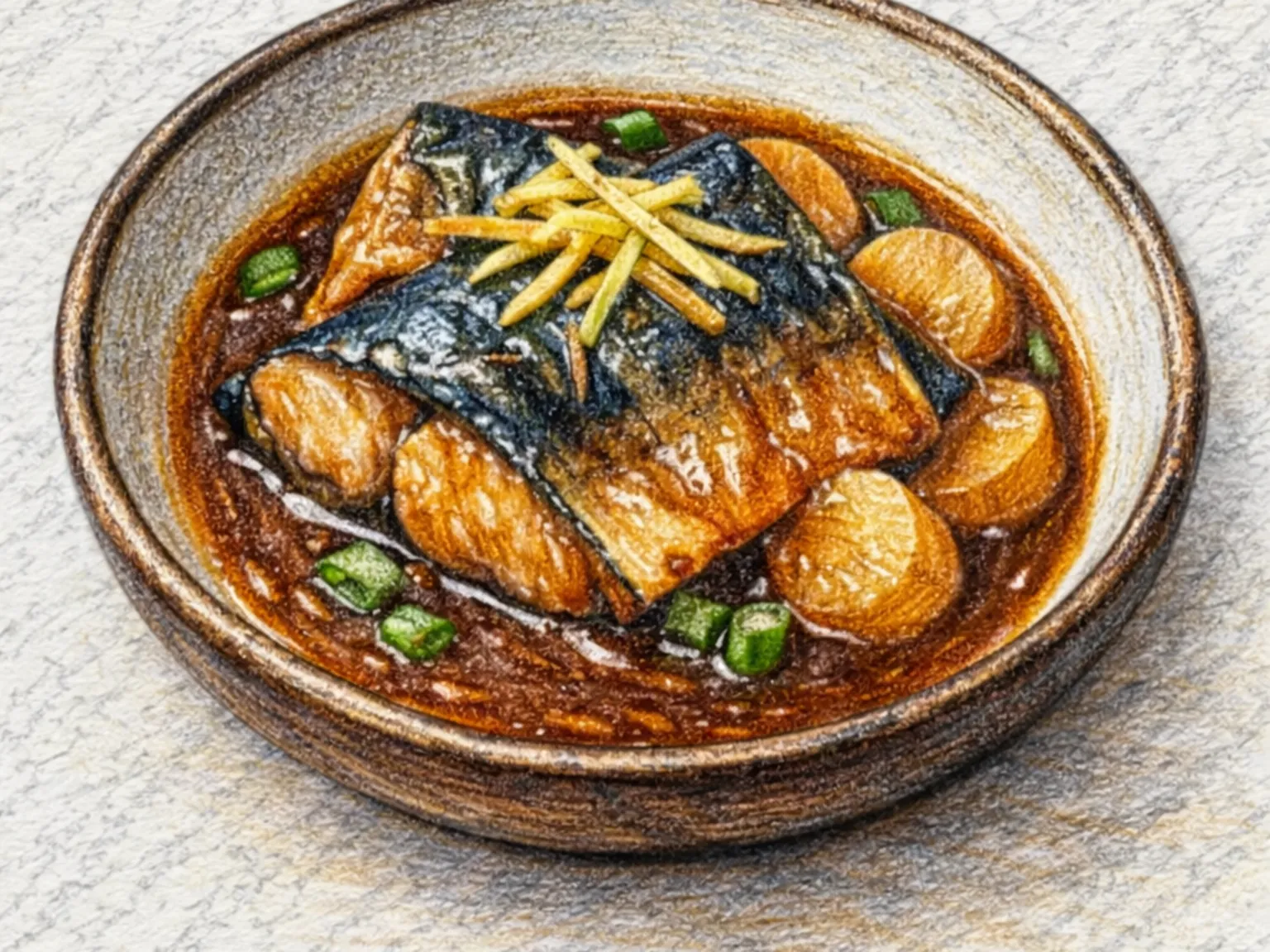
Kuchizoko no nitsuke is a fish dish from the Ariake Sea coast of Saga, where sole is locally called kuchizoko. A whole cleaned fish is scored along the backbone and simmered briefly in a generous mixture of sake, soy sauce, mirin, sugar, and water. Keeping the scored side facing up helps the thin flesh stay intact while the liquid reaches the cut. Ginger juice is added near the end, then the glossy broth is spooned over the fish several times. Burdock cooks in the same liquid and absorbs its sweet and savory seasoning. Sole cooks quickly, so checking the thickest part and lifting the fish as soon as it is done preserves its tender texture.
Assorted Japanese Tempura
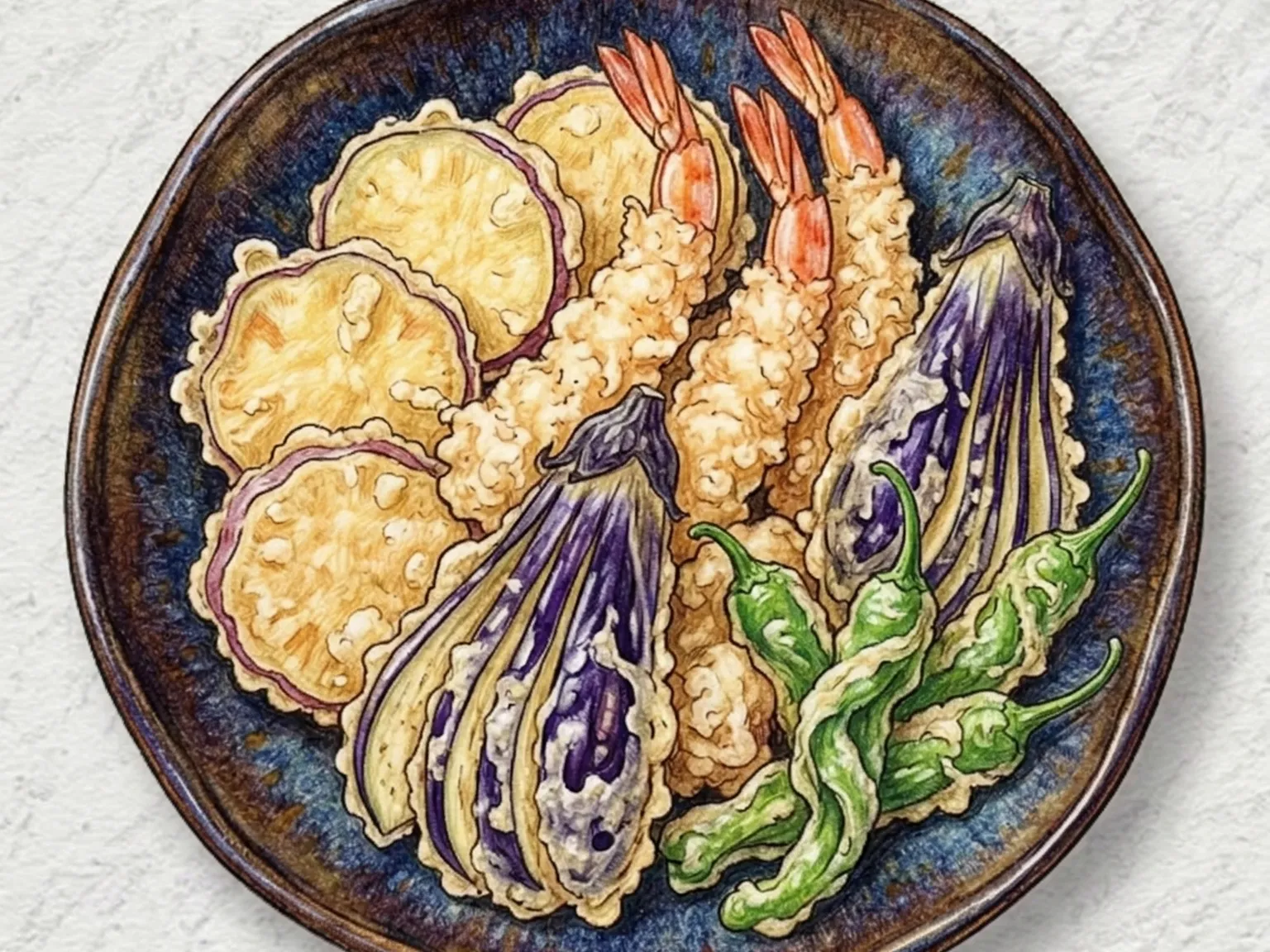
Tempura moriawase is an assorted platter of Japanese tempura featuring shrimp, sweet potato, eggplant, and shishito peppers, each coated in a light, shatteringly crisp batter. The batter is the heart of the technique: egg and ice-cold water are combined with cake flour and stirred only a few times with chopsticks, leaving visible lumps. This minimal mixing prevents gluten development, which is what keeps the coating featherlight rather than dense. Each piece is fried at 170 to 180 degrees Celsius for a short time-long enough to cook the interior while the batter puffs into an airy, lacy crust. Patting ingredients dry before dipping ensures the batter adheres properly. The tentsuyu dipping sauce, made from dashi, soy sauce, and mirin, is served with freshly grated daikon radish, whose mild sharpness cuts through the oil and refreshes the palate between bites. Tempura moriawase is meant to be eaten immediately after frying, when the contrast between the crackling exterior and the just-cooked filling is at its peak.
Nabera-nbushi (Loofah, Tofu, and Pork Miso Simmer)
Nabera-nbushi is an Okinawan summer home dish that gently simmers young edible loofah, pork belly, and firm island tofu in a red-miso seasoning. Nabera means loofah, while nbushi refers to vegetables and tofu cooked with miso. Slow heating coaxes sweet liquid called doo-jiru from the loofah without adding plain water. That juice combines with a small amount of pork broth and the seasoning to form more liquid than a stir-fry but less than a soup. Large torn pieces of island tofu stay intact while absorbing the savory broth, and properly cooked loofah becomes soft, silky, and juicy.
Teriyaki Chicken
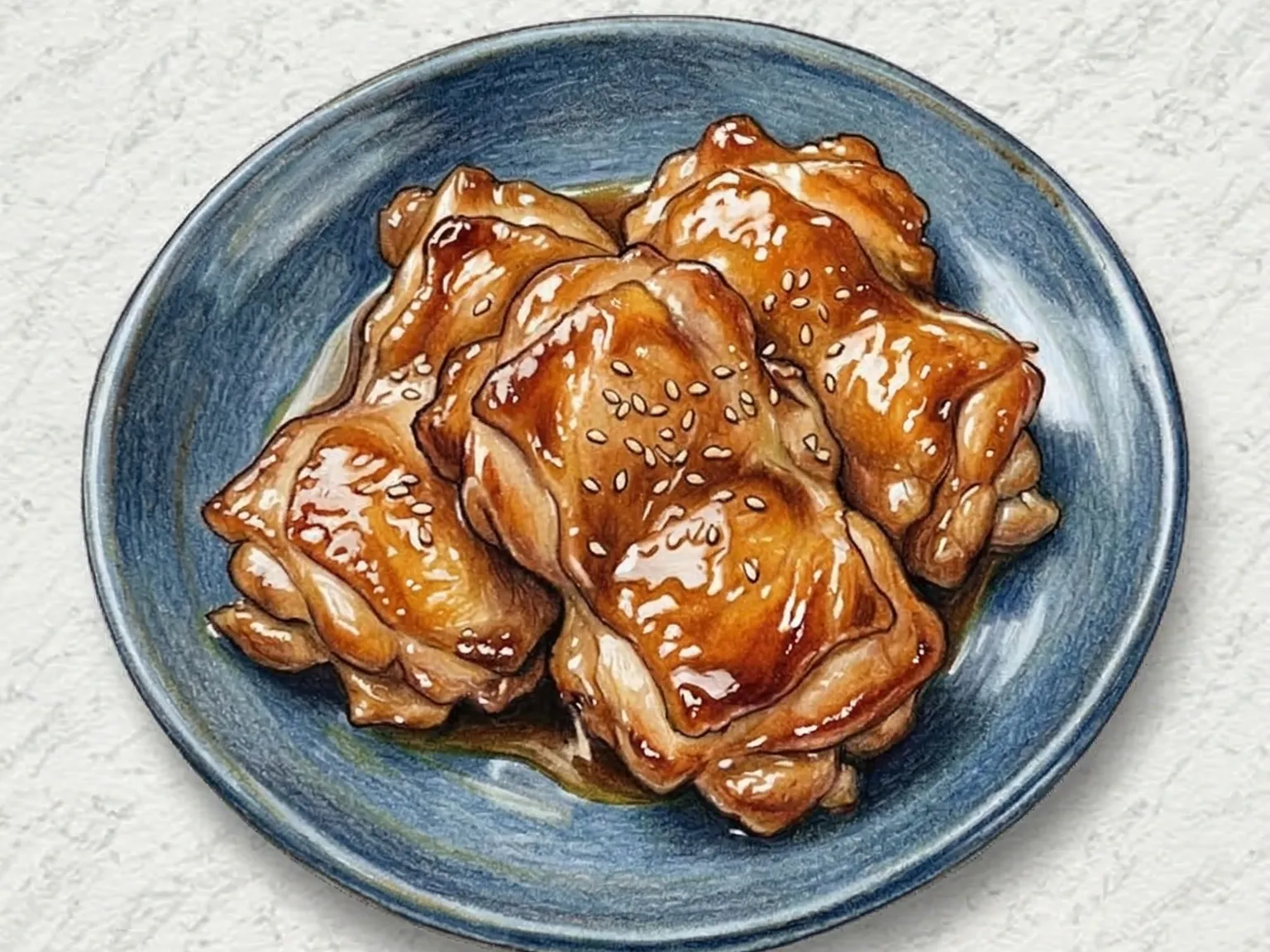
Teriyaki chicken is a Japanese dish of pan-seared chicken thighs glazed in a sweet-savory sauce made from soy sauce, mirin, sugar, and sake. The cooking begins skin-side down, pressing the chicken firmly against the pan to render the fat and crisp the skin to a deep golden color. Once flipped, the teriyaki sauce is poured in and the heat is lowered so the liquid reduces slowly, coating the chicken in a glossy, caramelized lacquer. Garlic and ginger, minced and added to the sauce, contribute a warm aromatic undercurrent that prevents the sweetness from becoming one-dimensional. As the sauce thickens, it clings to every surface of the chicken, creating a sticky, burnished exterior that contrasts with the moist meat beneath. The dish comes together in under thirty minutes and pairs equally well over steamed rice, alongside a green salad, or sliced into a bento box.
Niku Dofu Beef and Tofu Simmer
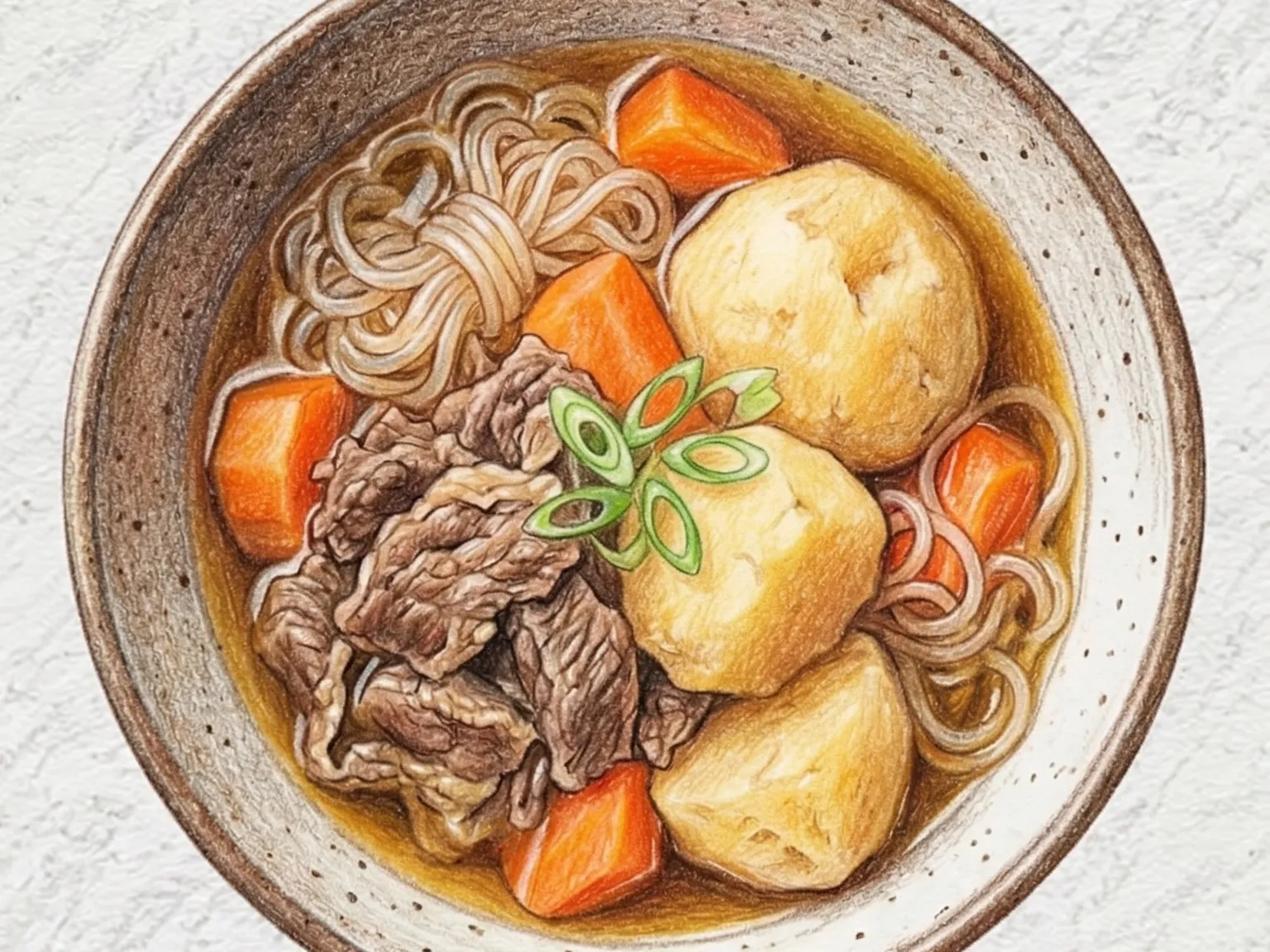
Niku dofu is a Kyoto winter home dish centered on tofu, briefly simmering thin beef and Kujo negi in a sweet soy-seasoned stock. Kyoto's soft water, low in mineral taste, is considered well suited to making delicate clean-flavored tofu. Kujo negi, sometimes praised as the king of leaf onions, brings mucilage inside its leaves, strong sweetness, and fragrance. Kyoto also has a long beef culture, from early records of Tamba cattle to sukiyaki restaurants established in the early Meiji era. The thin beef is first passed briefly through boiling water to reduce foam and excess fat, simmered with tofu for ten minutes, and finished with Kujo negi only at the end. The result preserves the tofu's shape and the onion's fresh sweetness.
Classic Tonkotsu Ramen (Pork Bone Milky Broth Noodles)
Classic Tonkotsu Ramen is a Japanese noodle dish defined by its deep, creamy pork bone broth. The foundation of this soup requires boiling pork back bones and pig trotters with garlic and ginger at a continuous, vigorous roll for seven to eight hours. This sustained high heat emulsifies the fat and breaks down the collagen, producing a milky, gelatinous broth that coats the palate. It is served with thin, firm noodles that retain a springy bite without becoming soggy in the heavy soup. Top the bowl with pork belly chashu braised in soy sauce and mirin, soft-boiled eggs marinated in the braising liquid, and sliced green onions. Maintaining a strong boil without reducing the heat is critical to achieving the characteristic white color and rich texture. Prepare the chashu a day in advance and chill it for easier thin slicing.
Nimiso Red Miso Vegetable Stew
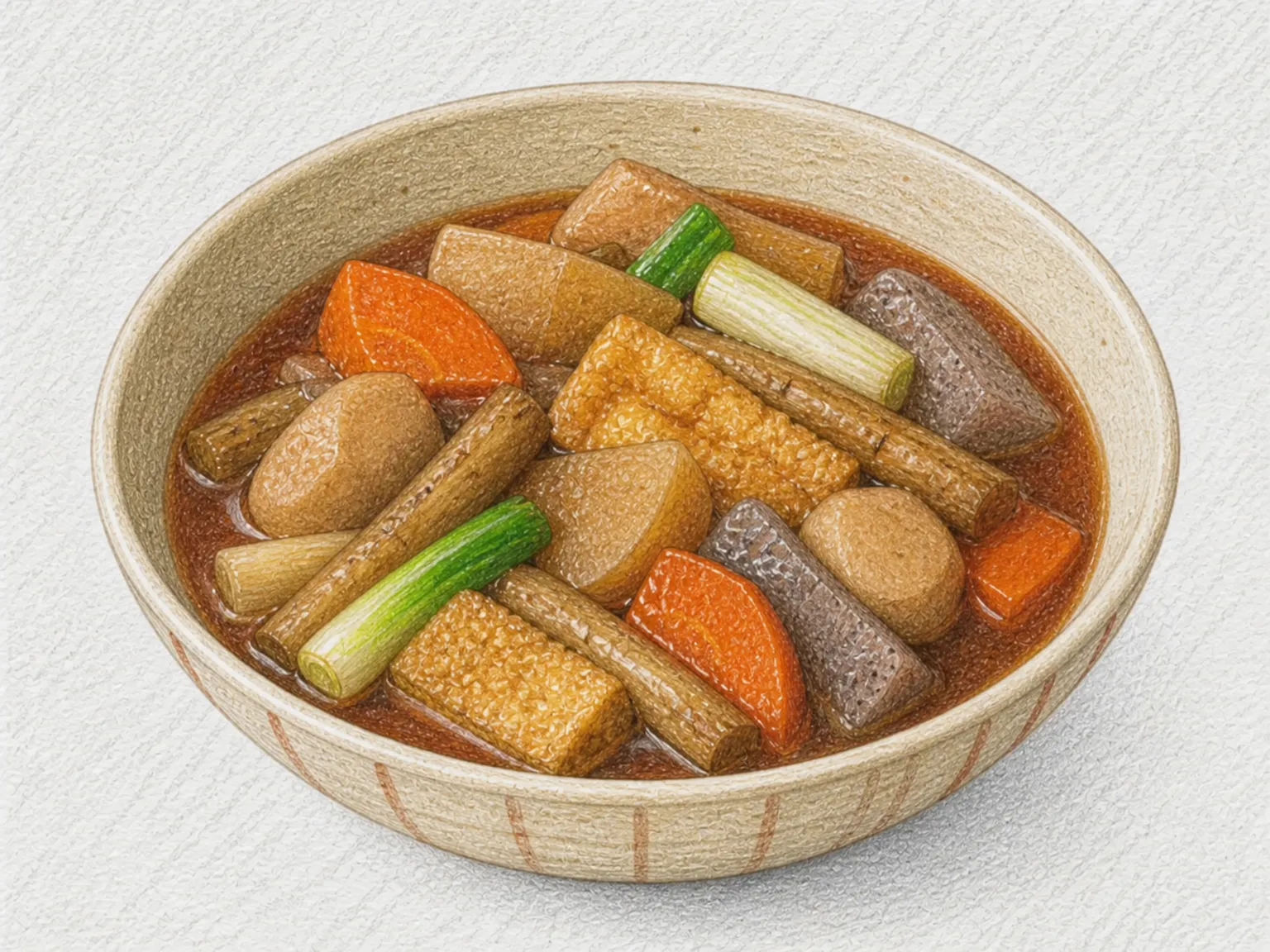
Nimiso is an everyday Aichi stew that slowly cooks daikon, carrot, burdock, taro, konnyaku, and fried tofu in stock seasoned with dark red soybean miso, mirin, and sugar. Also called misoni, it grew from Aichi's soybean-miso culture, represented by Hatcho miso. Red miso made from soybean koji and aged for one to three years develops deep savoriness, acidity, and a mild astringent edge. Household versions vary: some retain ample broth like a hot pot, while others reduce it to a concentrated simmered dish. Their common feature is cooking a generous batch of root vegetables. Here, burdock, konnyaku, and fried tofu are briefly blanched separately to clean their flavors, while leek is added at the end to preserve its aroma.
Unadon (Japanese Grilled Glazed Eel Rice Bowl)
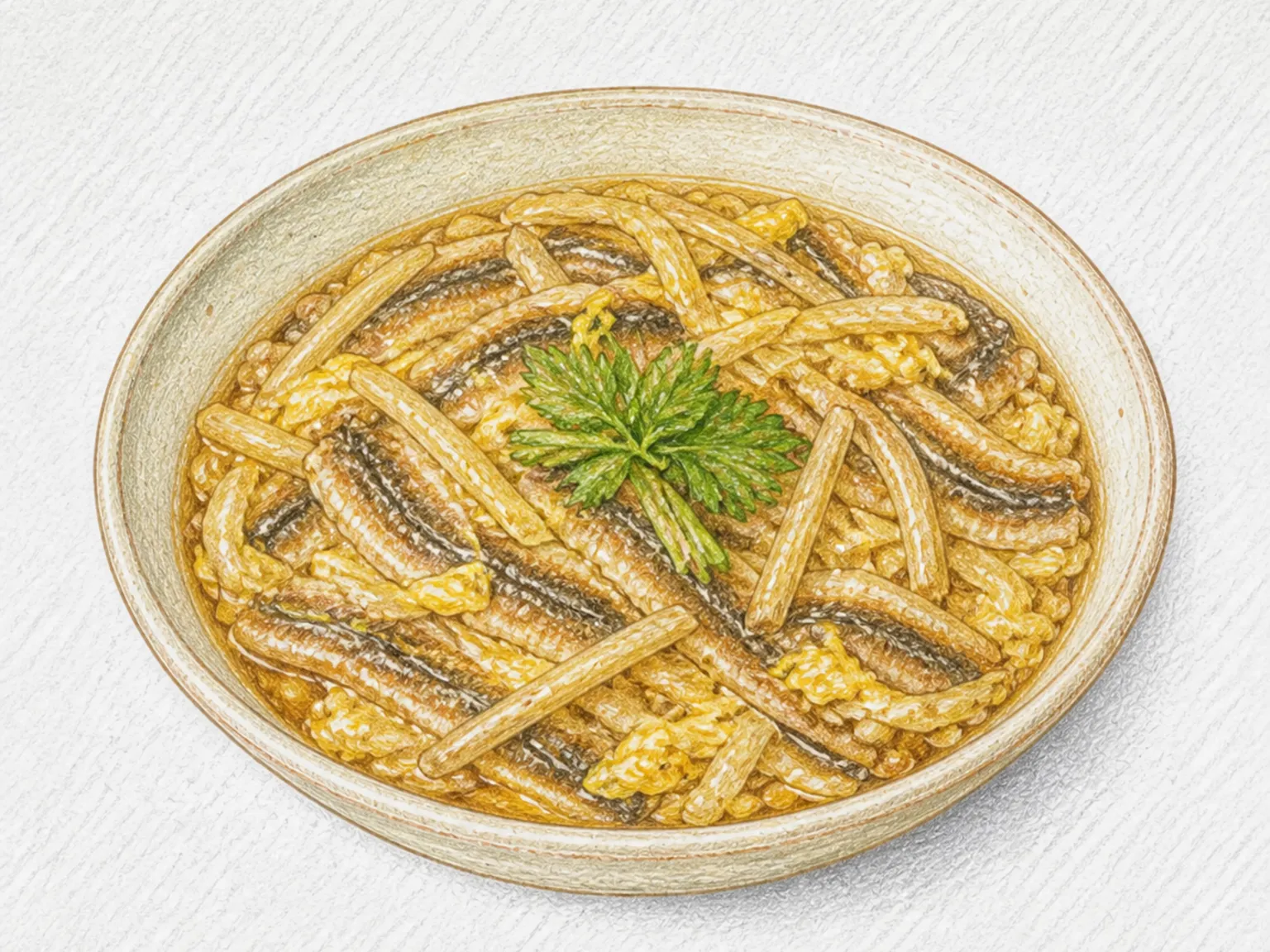
Unadon is a classic Japanese rice bowl dish featuring grilled freshwater eel brushed with a caramelized soy glaze. The preparation begins by drying the eel fillet and letting it rest at room temperature to ensure even cooking. The eel is first placed skin-side down in the pan to render its natural fat and create a tender texture. A rich tare sauce made by simmering soy sauce, mirin, sake, and sugar is repeatedly brushed onto the fish during the final stages of cooking. This process coats the eel in a glossy, sweet, and savory glaze. The cooked eel is served over a bowl of warm steamed rice drizzled with a spoonful of the sauce. Finely chopped chives and a dusting of ground sansho pepper are added at the end, providing a tingly citrus aroma that balances the richness of the fish.
Nita-kumoji (Simmered Aged Turnip-Green Pickles)
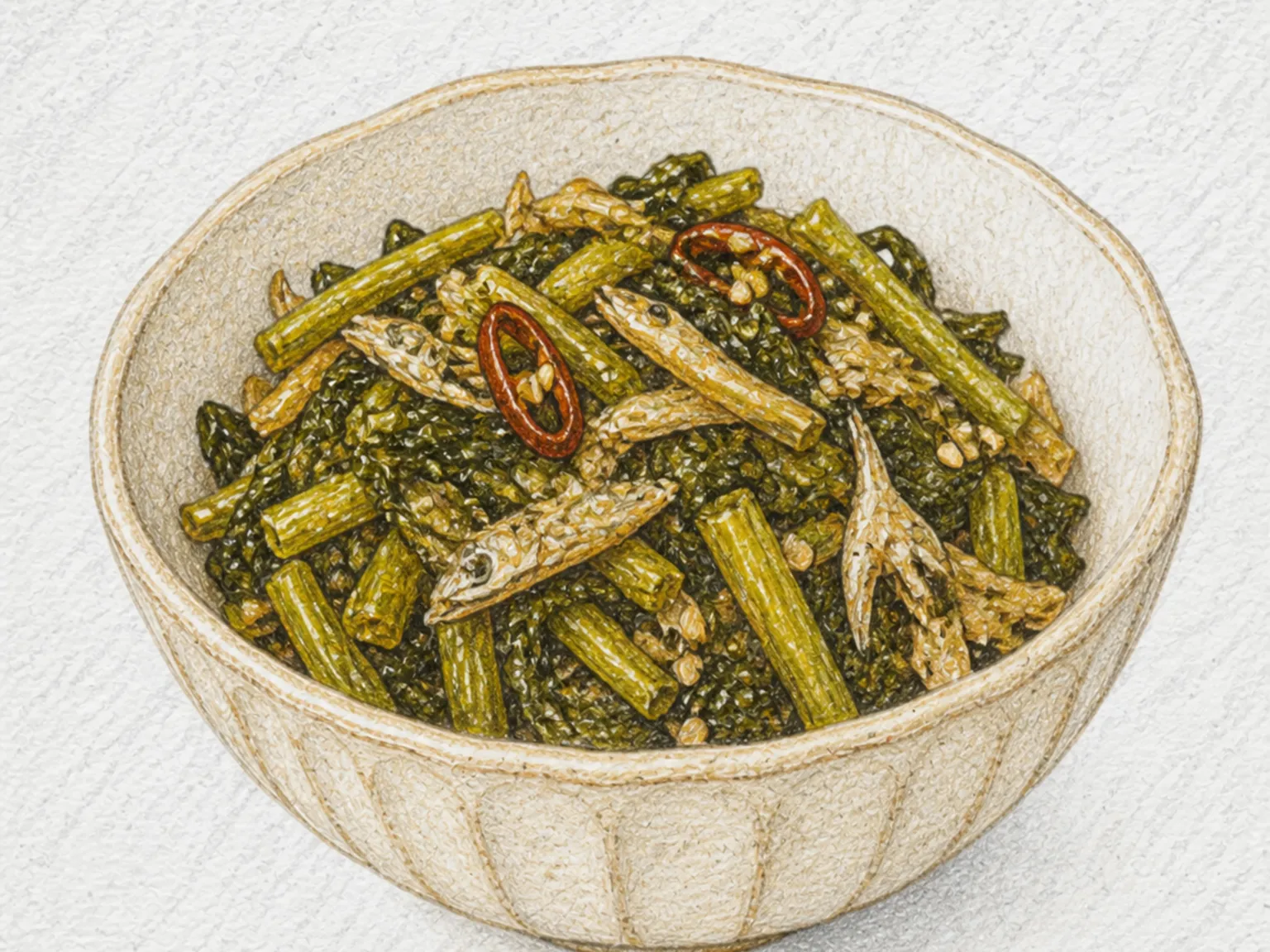
Nita-kumoji is a side dish from the Hida area of Gifu that gives a second life to turnip greens salted in winter and turned sour by spring. The aged pickle is rinsed and soaked with several water changes until moderately salty, stir-fried in oil, then simmered with soy sauce, mirin, sake, niboshi, and dried chili until the liquid disappears. Kumoji is said to derive from an old courtly word for pickles, and the dish reflects the practical habit of wasting none of the winter stores. Leaving a little salt in the greens balances the strong braising liquid. Sesame oil and toasted sesame added over high heat at the end create a glossy, nutty finish.
Yakitori (Japanese Charcoal-Grilled Chicken Skewers)
Yakitori is a traditional Japanese chicken skewer dish where bite-sized pieces of chicken thigh and leek are threaded onto bamboo sticks and grilled. The cooking process involves repeatedly brushing the skewers with a sweet soy-based glaze made of soy sauce, mirin, sugar, and sake. This builds a glossy, caramelized coating that pairs with the smokiness from the grill. Threading the ingredients with small gaps allows heat to circulate, ensuring the meat cooks through evenly. As they grill, the leek segments soften and sweeten, balancing the savory glaze. While the glazed version is common, yakitori can also be seasoned simply with salt, a style known as shio, which highlights the natural juiciness of the chicken thigh. The skewers are served hot as a casual dining item.
Tsukemono Miso-ni (Pickled Cabbage Simmered in Red Miso)
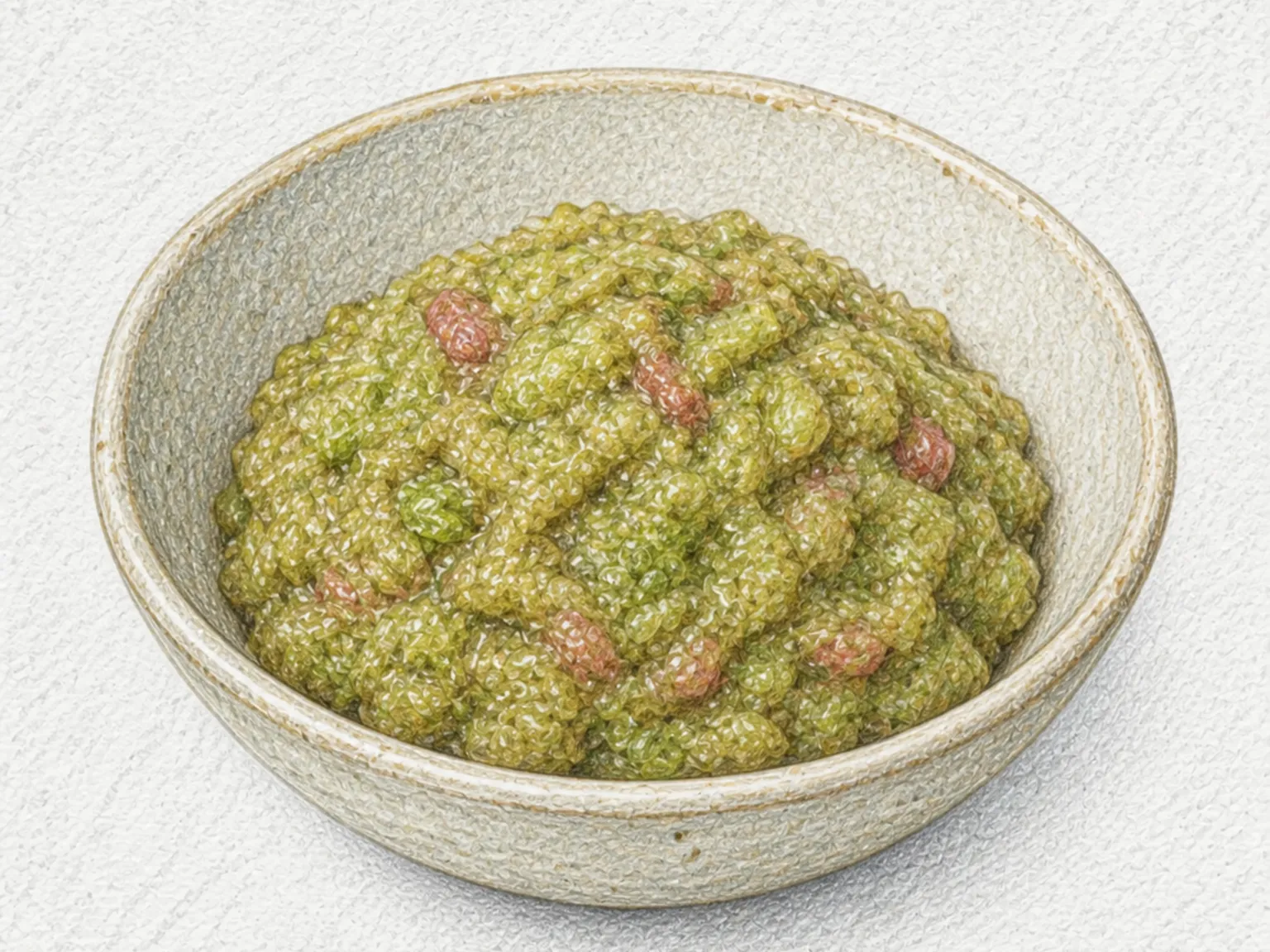
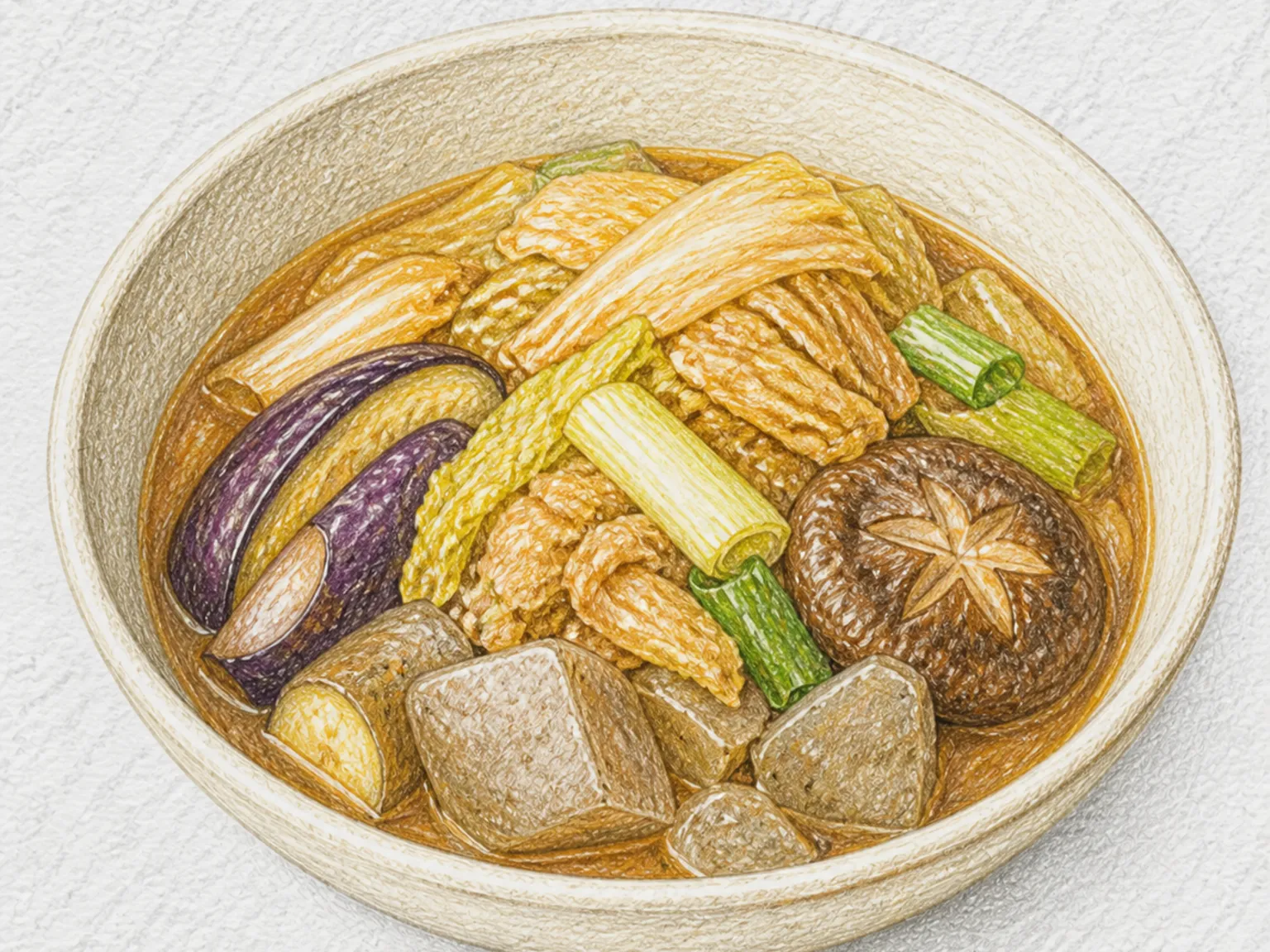
Tsukemono miso-ni is a Gujo, Gifu dish that rescues mature pickled Chinese cabbage after it has become sharply sour and salty. The cabbage is soaked to remove excess salt, then simmered for 20 to 30 minutes over low heat with red miso, water, sake, mirin, sugar, white onion, eggplant, shiitake, and konnyaku. Historical household versions sometimes did use niboshi stock when recooking winter pickles. Salting the cabbage once and then cooking it again in miso reflects a mountain practice of using preserved food without waste. Water, mirin, sake, and sugar soften the forceful saltiness and edge of the red miso.
Yama-Surume Kinpira (Simmered Dried Bamboo Shoot and Wood Ear)
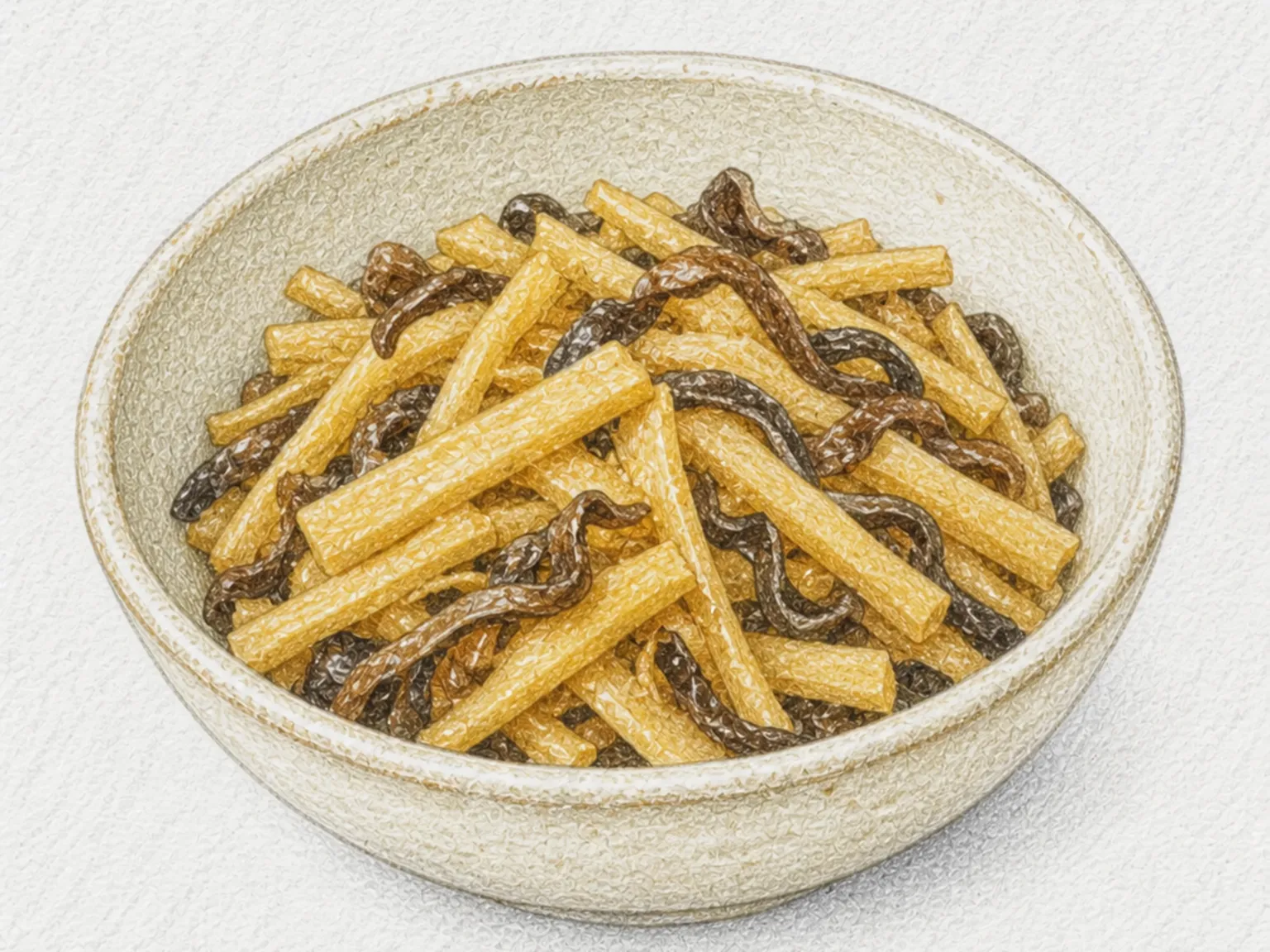
Yama-surume kinpira is a Kumamoto simmer made by boiling dried bamboo shoots until fully rehydrated, cutting them into even 8 cm strips, and cooking them in strong dashi with sugar, mirin, light soy sauce, sake, and salt. Only after the broth has reduced are dry sliced wood ears added so they absorb seasoning while retaining a crisp, resilient bite. In spring, fresh bamboo shoots were split lengthwise, cleaned of inner nodes, boiled, and slowly sun-dried for preservation. The hanging triangular pieces resembled dried squid, leading to the name yama-surume, or mountain squid. Stored shoots could be restored throughout the year for farm-season meals, festival Buddhist dishes in Kuma, everyday sides, and sake accompaniments.