Banana Pudding
Quick answer
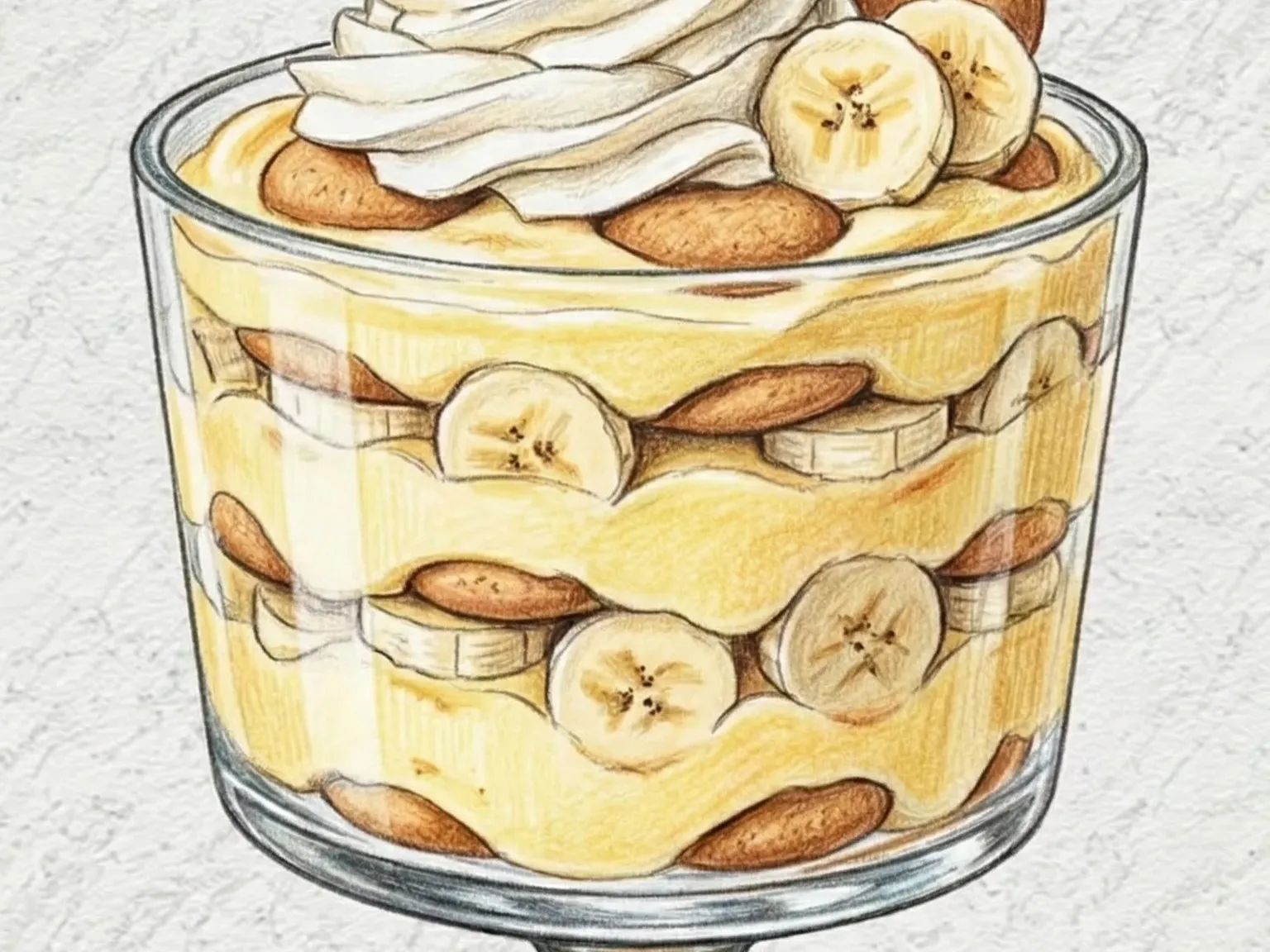
Banana pudding is an American Southern dessert built from repeating layers of vanilla custard, sliced banana, and vanilla wafer cookies.
What makes this special
- Banana Pudding builds layers of vanilla wafers and custard until the cookies soften into cake.
- Vanilla wafers absorb custard moisture overnight, transforming into cake-like layers
- Cornstarch-set egg custard holds its shape when scooped or sliced
Key ingredients
Core cooking flow
- 1 Add 500ml milk, 60g sugar, 30g cornstarch, and 3 egg yolks to a saucepan.
- 2 Set the pan over medium-low heat and stir constantly for 8 to 10 minutes.
- 3 When the first large bubbles rise, keep stirring for 30 seconds to cook out the raw starch taste.
Banana pudding is an American Southern dessert built from repeating layers of vanilla custard, sliced banana, and vanilla wafer cookies. The custard cooks on the stovetop by whisking milk, sugar, cornstarch, and egg yolks until the mixture thickens enough to coat a spoon. Layering begins while the custard is still warm, alternating banana rounds and wafers before topping with whipped cream. Refrigeration transforms the wafers as they absorb moisture from the custard, turning from crisp cookies into something resembling soft sponge cake. Fully ripe bananas are essential since underripe ones carry an astringent edge that stands out against the sweet custard. The entire dessert is stovetop-only, no oven required, making it approachable for most kitchens. Overnight refrigeration stabilizes the layers and deepens the overall flavor considerably.
Instructions
Read the steps as a cooking flow: prep, heat, seasoning, doneness control, and finish.
- 1Season
Add 500ml milk, 60g sugar, 30g cornstarch, and 3 egg yolks to a saucepan.
Before turning on the heat, whisk until the yolks and starch are fully dispersed and no dry lumps remain.
- 2Control
Set the pan over medium-low heat and stir constantly for 8 to 10 minutes.
Scrape the bottom and corners so the custard does not scorch, then check that it coats a spoon thickly.
- 3Heat
When the first large bubbles rise, keep stirring for 30 seconds to cook out the raw starch taste.
Remove from heat, transfer to a bowl, and press plastic wrap directly on the surface to prevent a skin.
- 4Control
Chill the custard for at least 1 hour so the heat leaves and the texture settles.
Slice the 2 bananas thinly just before assembly, which reduces browning and keeps the layers clean.
- 5Prep
Arrange part of the 120g vanilla wafers across the bottom of cups or a dish, then add banana slices and custard.
Repeat in the same order to build 3 to 4 even layers without pressing them down hard.
- 6Finish
Whip 150ml whipping cream until stiff peaks hold, then spread it over the top.
Refrigerate for at least 2 hours, preferably overnight, until the wafers soften and the layers hold together, then serve cold.
After the steps
Pick a recipe that fits this dish.
Continue with shared ingredients, meal pairings, or a similar method.
Recipes That Go Well With This
More Baking →Based on shared ingredients and meal pairing
Coconut Cream Pie
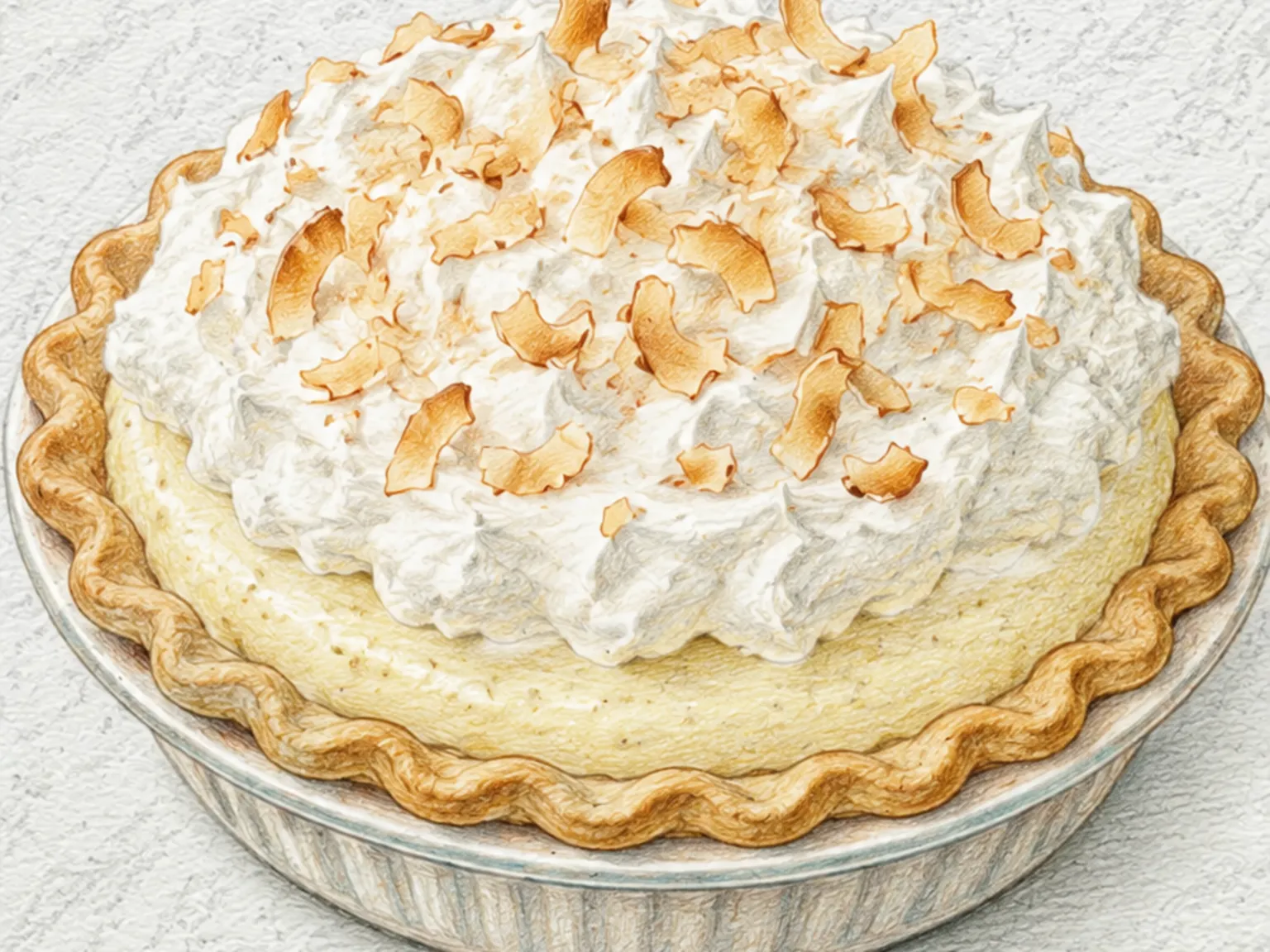
Coconut cream pie fills a blind-baked pastry shell with a thick, silky custard built from coconut milk, whole milk, egg yolks, and cornstarch. The custard is cooked directly on the stovetop, stirred constantly until it thickens enough to coat the back of a spoon without running. Once poured into the cooled crust and refrigerated for several hours, it sets firmly enough to slice cleanly, holding its shape on the plate. The coconut flavor is strong and tropical, drawing entirely from real coconut milk rather than extract or artificial flavoring, so the sweetness stays rounded and natural. A thick layer of freshly whipped cream spread over the top cuts through the density of the custard, and a generous scattering of toasted coconut flakes across the surface adds a nutty, crunchy contrast to the smooth layers below. When sliced, the cross section shows three distinct layers: a golden, crumbly crust at the base, a pale ivory custard in the middle, and white cream on top. The pie is served cold straight from the refrigerator, which keeps the custard firm and the whipped cream stable.
Chess Pie
Chess pie is a custard pie from the American South made from the shortest possible list of pantry ingredients: butter, sugar, eggs, a small amount of flour, and cornmeal. The simplicity of the ingredients does not predict the complexity of what happens in the oven. As the pie bakes, the top surface splits and forms a thin, crackled crust that shatters underfoot of a fork, while beneath it sits a dense, moisture-heavy custard carrying a deep caramel note. Cornmeal introduces a subtle grittiness and the faint sweetness specific to corn, while a splash of vinegar or buttermilk adds just enough acidity to prevent the sugar from going flat. The filling should be pulled from the oven when the edges have set but the center still trembles slightly; it continues to firm as it cools, eventually reaching a texture close to fudge. Served at room temperature, the custard softens into a smooth, yielding consistency. A spoonful of unsweetened whipped cream alongside cuts the richness without dulling the flavor.
Real Pineapple Sherbet
This refreshing fruit dessert is prepared by scooping out the flesh of a mini pineapple and using its hollowed shell as a serving vessel. The fruit pulp is blended until smooth to prevent icy lumps, then mixed with sugar, lemon juice, and oligosaccharide syrup to achieve a sweet and tangy flavor. After pouring the mixture back into the shell and covering it with the top lid, it is frozen for at least four hours. Stirring the mixture occasionally during freezing breaks up ice crystals, resulting in a smoother texture. The active bromelain enzyme present in the fresh fruit provides a subtle tingly sensation on the tongue. Serving the sherbet directly inside the pineapple skin minimizes juice loss and keeps the dessert cold. Letting it stand for five minutes before scraping and topping with fresh apple mint leaves makes it ready to serve.
Banana Bread
Banana bread is a quick bread leavened with baking soda rather than yeast, which means no rising time and a straightforward one-bowl process. The most important variable is the banana: heavily blackened, overripe fruit is essential because the starches have converted to sugar, the flesh mashes effortlessly, and the concentrated banana aroma permeates every part of the crumb. Melted butter adds richness without creaming, a single egg provides structure, and vanilla extract amplifies the banana's fragrance. The batter mixes in one bowl and goes directly into the oven at 170 degrees Celsius for roughly sixty minutes. A toothpick inserted into the center should come out clean. The bread is good warm from the oven, but the flavor is measurably deeper the following day as banana sugars continue to penetrate the interior. Walnuts or chocolate chips folded into the batter add textural contrast without changing the essential character of the loaf.
Serve with this
Bananas Foster
Bananas Foster is a New Orleans dessert invented in the 1950s at Brennan's Restaurant, built around the simple technique of caramelizing bananas in butter and brown sugar before serving them over vanilla ice cream. The sauce begins by melting butter in a skillet and stirring in brown sugar until the two combine into a thick, bubbling caramel. Halved bananas go in cut-side down and cook just long enough to absorb the syrup while holding their shape. Ground cinnamon folded into the sauce adds a warm spice layer that keeps the sweetness from reading as flat, and a squeeze of lemon juice sharpens the overall profile. Traditional preparation calls for igniting rum poured into the hot pan - the blue flame burns off the alcohol and concentrates the molasses notes in a few dramatic seconds. The step can be skipped at home without meaningfully altering the result. Spooning the hot caramelized bananas over cold ice cream generates immediate steam, and the contrast between molten caramel and frozen cream defines every bite. The entire dish takes roughly ten minutes.
Fruit Yogurt Salad
Apple, banana, strawberry, and blueberry are cut into bite-sized pieces and folded into plain yogurt for a fruit salad where the dressing serves as background rather than centerpiece. The yogurt provides gentle acidity that anchors the sweetness of the fruit without overwhelming it. Honey softens the sharper edge of the yogurt, and a squeeze of lemon juice does double duty: it slows the browning of cut apple and banana while leaving a clean citrus note on the finish. Roughly chopped walnuts scattered over the top introduce a crunchy, slightly bitter contrast to the soft fruit and smooth yogurt, breaking the monotony of texture. Swapping in seasonal fruit makes the recipe adaptable year-round without adjusting the base formula - peaches and melon in summer, persimmon and pear in autumn all work within the same yogurt, honey, and lemon framework. Light enough for a morning meal and refreshing enough after a heavy dinner, it sits comfortably in either role.
Citrus Espresso Tonic with Orange
Espresso tonic is a carbonated coffee drink built by slowly pouring espresso over chilled tonic water to form two distinct layers. The tonic must be thoroughly cold to maintain stable carbonation throughout; cooling the espresso for about thirty seconds before pouring it over a spoon produces a clean separation between the two liquids. The quinine bitterness in the tonic water meets the espresso's roast bitterness, creating a balanced interplay rather than one-note sharpness. Orange slices and lemon peel garnish the glass, releasing citrus oils that rise with the bubbles. Specialty espresso with pronounced fruit acidity works particularly well here, harmonizing with the tonic's effervescence and lending natural sweetness without added sugar. Pre-chilling the glass with ice before adding the tonic helps preserve carbonation. The drink gained popularity in Scandinavian coffee culture during the 2010s before spreading worldwide.
Similar recipes
Blueberry Banana Bread
Blueberry banana bread is a quick bread that pairs the dense, sweet moisture of ripe bananas with the sharp burst of blueberries. The riper the banana, the more sugar has converted from starch, which means the bread needs less added sweetener while still tasting distinctly sweet. Melted butter enriches the crumb without weighing it down the way oil can, and baking soda creates a fine, tender rise that keeps the interior soft. Blueberries burst during baking and streak the crumb with rivulets of purple juice, making every slice visually distinct as well as flavorful. The most important technique is restraint with the mixing - once the flour is added, stirring just until the dry streaks disappear prevents gluten from over-developing and keeps the crumb moist rather than tough. Because the fruit carries most of the sweetness and moisture, this is a reasonable choice as a daily snack or a healthier baked good. Sliced warm with butter or cream cheese, it works as a simple brunch dish, and it keeps well for several days at room temperature before the crumb begins to dry.
Bananas Foster
Bananas Foster is a New Orleans dessert invented in the 1950s at Brennan's Restaurant, built around the simple technique of caramelizing bananas in butter and brown sugar before serving them over vanilla ice cream. The sauce begins by melting butter in a skillet and stirring in brown sugar until the two combine into a thick, bubbling caramel. Halved bananas go in cut-side down and cook just long enough to absorb the syrup while holding their shape. Ground cinnamon folded into the sauce adds a warm spice layer that keeps the sweetness from reading as flat, and a squeeze of lemon juice sharpens the overall profile. Traditional preparation calls for igniting rum poured into the hot pan - the blue flame burns off the alcohol and concentrates the molasses notes in a few dramatic seconds. The step can be skipped at home without meaningfully altering the result. Spooning the hot caramelized bananas over cold ice cream generates immediate steam, and the contrast between molten caramel and frozen cream defines every bite. The entire dish takes roughly ten minutes.
Green Bean Casserole
Green bean casserole bakes blanched green beans in a mushroom cream sauce, then tops them with crispy fried onions for a contrast of textures that defines this American holiday side dish. Blanching the beans for just three minutes and shocking them in ice water preserves their bright green color and a slight crunch that survives the oven. Sauteing onion and mushrooms in butter, stirring in flour to build a roux, and gradually adding milk produces a smooth cream sauce infused with earthy mushroom flavor. After twenty minutes in the oven, the casserole is pulled out and topped with fried onions, then returned for five more minutes so the onions crisp without burning. The finished dish layers the crunch of the topping against the creamy sauce and tender-crisp beans.