Real Pineapple Sherbet
Quick answer
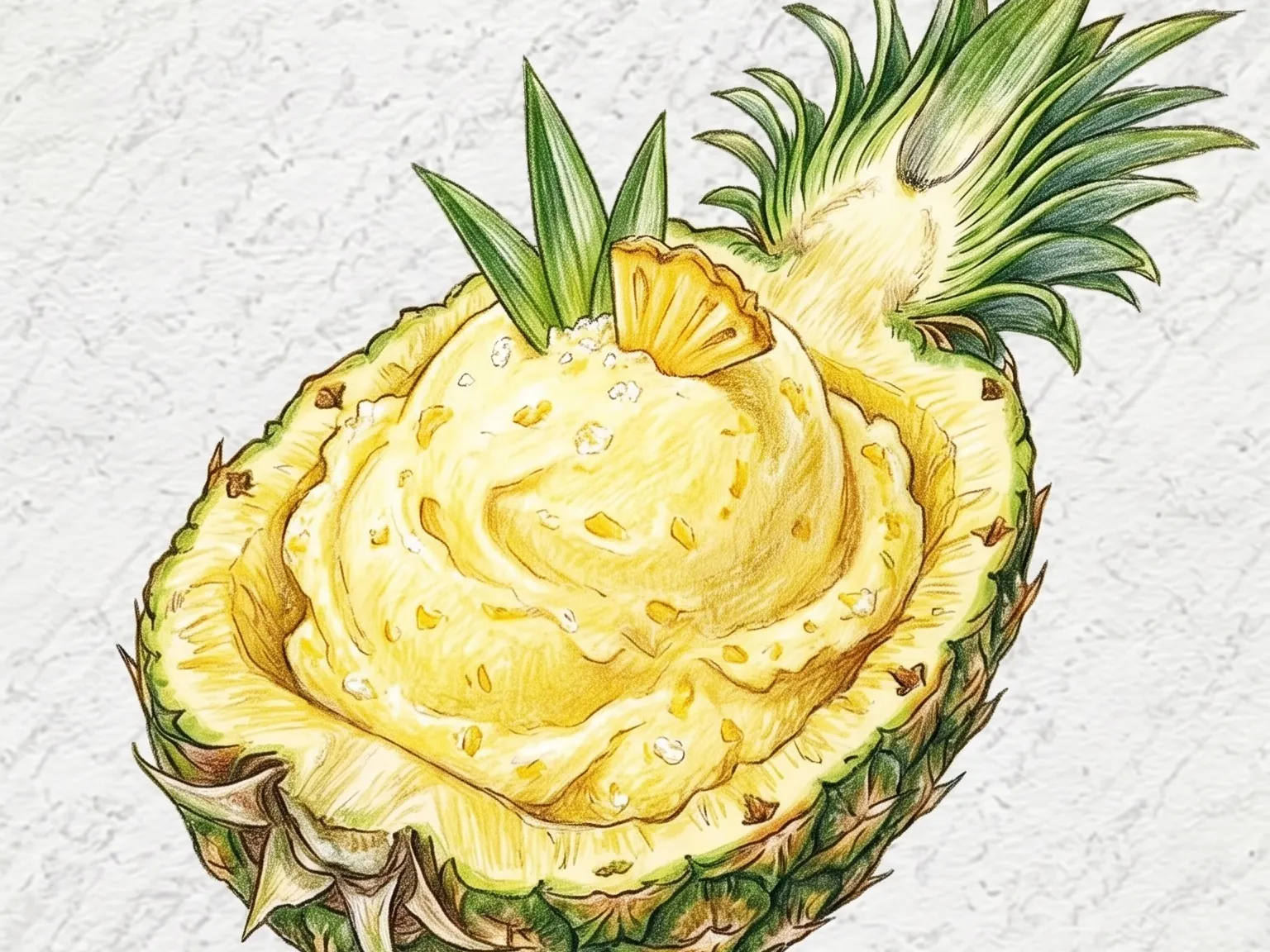
A refreshing and cool fruit sherbet dessert made inside a hollowed-out pineapple.
- Real pineapple sherbet is served directly in the hollowed fruit shell to preserve juice and coldness.
- Pineapple shell serves as the vessel, keeping juice loss minimal
Key ingredients
Core cooking flow
- 1 Slice off the top 2cm of 1 mini pineapple as a lid and carefully scoop out a...
- 2 Transfer all the scooped pineapple flesh to a blender and blend until completely smooth with no lumps.
- 3 Stir 3 tablespoons sugar, 1 tablespoon lemon juice, and 1 tablespoon oligosa...
A refreshing and cool fruit sherbet dessert made inside a hollowed-out pineapple.
What Makes This Special
- Real pineapple sherbet is served directly in the hollowed fruit shell to preserve juice and coldness.
- Pineapple shell serves as the vessel, keeping juice loss minimal
- Active bromelain enzyme gives a faint tingly acidity on the tongue
- Lemon juice and oligosaccharide balance sweetness without cloying
Instructions
- 1
Slice off the top 2cm of 1 mini pineapple as a lid and carefully scoop out all the flesh with a spoon or ice cream scoop without puncturing the shell.
- 2
Transfer all the scooped pineapple flesh to a blender and blend until completely smooth with no lumps.
- 3
Stir 3 tablespoons sugar, 1 tablespoon lemon juice, and 1 tablespoon oligosaccharide syrup into the blended pineapple until fully dissolved and balanced.
- 4
Pour the sweetened mixture back into the hollowed pineapple shell and place the cut lid back on top.
- 5
Freeze for at least 4 hours until a toothpick inserted in the center meets firm resistance throughout.
- 6
Remove from the freezer 5 minutes before serving, scrape with a spoon to create a sherbet texture, then garnish with 2 sprigs of apple mint.
Tips
Nutrition (per serving)
Recipes to Cook Together
More Desserts →Serve with this
Chewy Honey Wheat Bagel
Authentic homemade bagels with extra chewiness from honey and nuttiness from wheat.
Snow Crab Boiling Seafood
A Southern American-style seafood boil featuring snow crab and seafood in spicy Cajun sauce.
Citrus Espresso Tonic with Orange
Espresso tonic is a carbonated coffee drink built by slowly pouring espresso over chilled tonic water to form two distinct layers. The tonic must be thoroughly cold to maintain stable carbonation throughout; cooling the espresso for about thirty seconds before pouring it over a spoon produces a clean separation between the two liquids. The quinine bitterness in the tonic water meets the espresso's roast bitterness, creating a balanced interplay rather than one-note sharpness. Orange slices and lemon peel garnish the glass, releasing citrus oils that rise with the bubbles. Specialty espresso with pronounced fruit acidity works particularly well here, harmonizing with the tonic's effervescence and lending natural sweetness without added sugar. Pre-chilling the glass with ice before adding the tonic helps preserve carbonation. The drink gained popularity in Scandinavian coffee culture during the 2010s before spreading worldwide.
Cheese Arepa (Venezuelan Griddled Cornmeal Cheese Pocket)
The arepa is the daily bread of Venezuela and Colombia, with origins reaching back to pre-Columbian indigenous peoples who ground maize on stone metates and cooked the patties over fire. The dough has no leavening, no fat, no yeast - only pre-cooked cornmeal (masarepa), water, and salt, worked by hand into thick discs and cooked on a budare, a flat cast-iron griddle, until a golden-brown crust forms on both sides. Inside, the arepa stays soft with a faintly undercooked texture that contrasts the crust. For cheese arepas, queso blanco or mozzarella is either folded into the dough before cooking, creating pockets of molten cheese throughout, or stuffed inside a freshly grilled arepa split open while hot. Either way, the warm corn shell traps stretchy, salty melted cheese in every bite. The corn flavor reads toasty and cleanly sweet, and the fat from the cheese provides the counterpoint. Street vendors across Caracas and Bogota sell them around the clock, filled with everything from black beans to slow-cooked shredded beef.
Similar recipes
Pineapple Upside-Down Cake
Brown sugar and butter line the bottom of a cake pan before pineapple rings are arranged in a tight pattern and covered with a vanilla sponge batter. During baking, the sugar and butter melt into a sticky caramel that coats each ring. When the warm cake is inverted onto a plate, the pineapple appears on top in a glossy, amber-glazed arrangement. The fruit's natural acidity cuts through the caramel's sweetness, while the buttery sponge beneath absorbs just enough juice to stay moist without becoming soggy. Running a knife around the edge before flipping ensures a clean release. Patting the pineapple rings dry before placing them in the pan prevents excess moisture from diluting the caramel layer.
Fruit Yogurt Salad
Apple, banana, strawberry, and blueberry are cut into bite-sized pieces and folded into plain yogurt for a fruit salad where the dressing serves as background rather than centerpiece. The yogurt provides gentle acidity that anchors the sweetness of the fruit without overwhelming it. Honey softens the sharper edge of the yogurt, and a squeeze of lemon juice does double duty: it slows the browning of cut apple and banana while leaving a clean citrus note on the finish. Roughly chopped walnuts scattered over the top introduce a crunchy, slightly bitter contrast to the soft fruit and smooth yogurt, breaking the monotony of texture. Swapping in seasonal fruit makes the recipe adaptable year-round without adjusting the base formula - peaches and melon in summer, persimmon and pear in autumn all work within the same yogurt, honey, and lemon framework. Light enough for a morning meal and refreshing enough after a heavy dinner, it sits comfortably in either role.
Watermelon Punch
Subak hwachae is a Korean summer punch that uses half its watermelon blended and strained into a smooth juice base, with the other half scooped into balls as garnish. Mixing the watermelon juice with milk creates a pink, creamy foundation, and lemon-lime soda is stirred in just before serving to preserve its fizz. Adding strawberries and blueberries introduces an acidic brightness and color contrast that watermelon alone lacks, and generous ice keeps the drink cold enough for the fruit aromas to stay sharp. Chilling the watermelon juice thoroughly before combining it with milk is essential to prevent the two liquids from separating. The layered colors of red watermelon, deep blueberries, and vivid strawberries in a single bowl make it as visually striking as it is refreshing, turning a straightforward summer drink into something worth presenting at the table.
Peach Cobbler
Sliced peaches are tossed with sugar and lemon juice, spread in a baking dish, and covered with spoonfuls of biscuit batter that bakes into a golden, slightly craggy topping. In the oven, the fruit juices bubble up around the edges and seep into the base of the dough, creating a zone where crisp crust meets soft, fruit-soaked interior. The lemon sharpens the peach flavor and prevents it from tasting flat under all the sugar. If the peaches lack sweetness on their own, an extra tablespoon of sugar in the fruit layer compensates without making the topping heavier. Served warm with a scoop of vanilla ice cream, the contrast between hot cobbler and cold cream is as much a part of the experience as the flavor itself.
Lemon Meringue Pie
A blind-baked pie crust holds a tart lemon curd filling crowned by a billowy meringue that is briefly baked until its peaks turn golden. The curd is built by cooking lemon juice, water, sugar, and cornstarch until thick, then rapidly whisking in egg yolks and finishing with butter for a glossy, velvety consistency. The filling's sharp citrus bite meets the meringue's airy sweetness in the same forkful, creating a dramatic contrast that is the hallmark of this pie. Spreading the meringue directly over the hot curd helps the two layers bond and reduces the weeping that can form between them. A short burst at 200 degrees Celsius tips each meringue peak with a gradient of caramel brown while the interior remains soft and marshmallow-like. The pie crust contributes a third texture, short and crisp, that grounds the two softer layers above it. Chilling the assembled pie before cutting produces the cleanest slices, with each layer visible in cross-section. Adding lemon zest to the curd intensifies the citrus aroma beyond what juice alone provides.
Misugaru Grain Ice Cream
A healthy homemade ice cream combining nutty multi-grain powder and smooth milk.