Green Bean Casserole
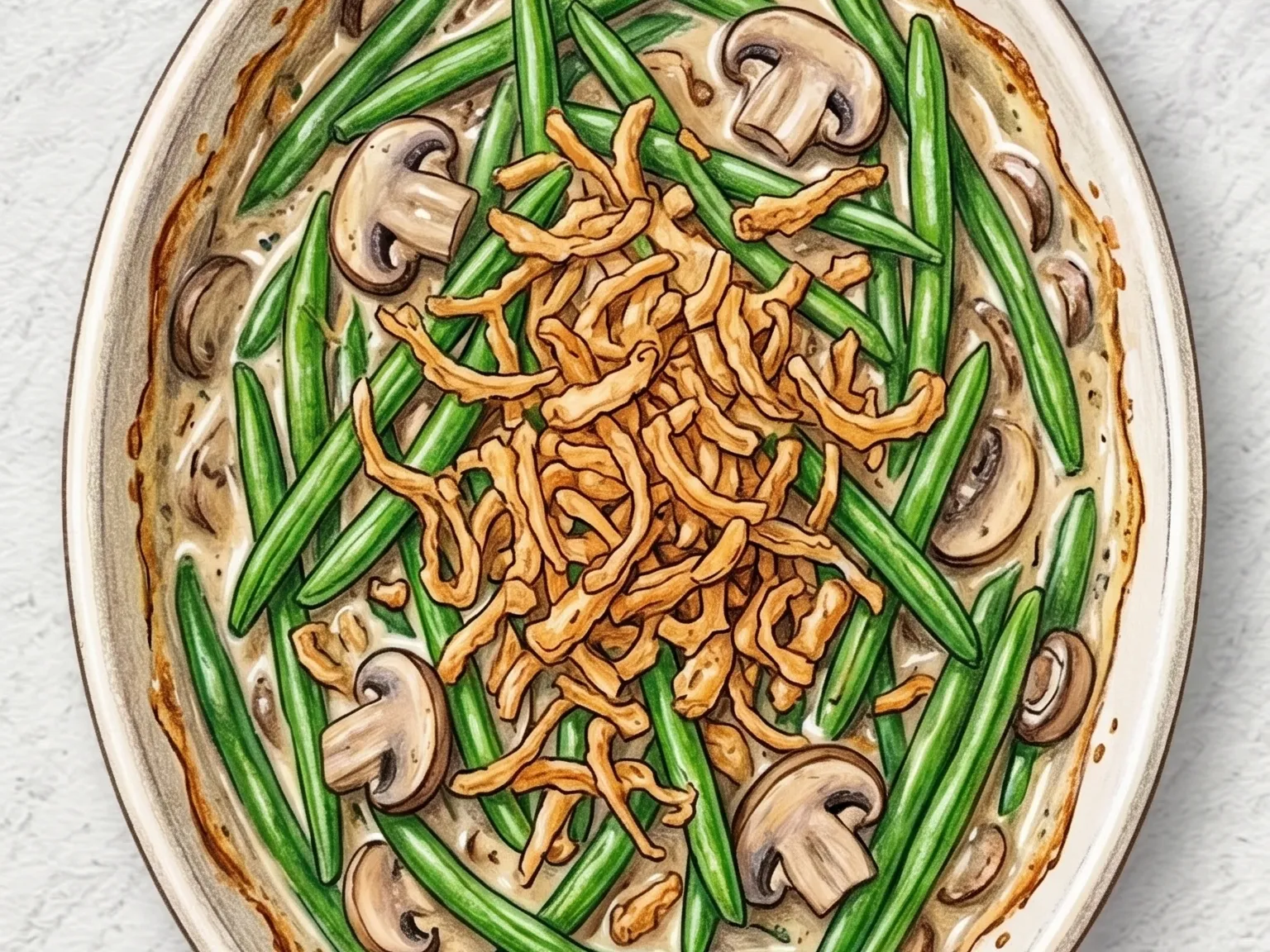
Green bean casserole bakes blanched green beans in a mushroom cream sauce, then tops them with crispy fried onions for a contrast of textures that defines this American holiday side dish. Blanching the beans for just three minutes and shocking them in ice water preserves their bright green color and a slight crunch that survives the oven. Sauteing onion and mushrooms in butter, stirring in flour to build a roux, and gradually adding milk produces a smooth cream sauce infused with earthy mushroom flavor. After twenty minutes in the oven, the casserole is pulled out and topped with fried onions, then returned for five more minutes so the onions crisp without burning. The finished dish layers the crunch of the topping against the creamy sauce and tender-crisp beans.
Adjust Servings
Instructions
- 1
Blanch green beans for 3 minutes and shock in cold water.
- 2
Saute onion and mushrooms in butter.
- 3
Stir in flour, then add milk to form a creamy sauce.
- 4
Combine green beans with sauce and transfer to a baking dish.
- 5
Bake at 180C for 20 minutes, top with fried onions, and bake 5 more minutes.
As an Amazon Associate, we may earn from qualifying purchases.
Tips
Nutrition (per serving)
More Recipes

Chicken and Rice Casserole
Chicken and rice casserole is an American one-dish bake where seasoned chicken thighs sit on top of rice, sauteed onion and carrot, chicken stock, and heavy cream, all placed in a single baking dish and cooked together in the oven. Rinsing and briefly soaking the rice beforehand ensures even moisture absorption during the bake. The cream blends with the stock to create a rich liquid that coats each grain as it cooks. Covering the dish for the first thirty-five minutes traps steam so the rice and chicken cook through simultaneously, and removing the cover for the final ten minutes browns the chicken skin. Fat from the thighs renders in the oven heat and drips down into the rice, distributing a savory richness throughout without needing additional seasoning.

Loaded Baked Potato
Loaded baked potato starts with a russet potato baked whole at 200 degrees Celsius for about 50 minutes until the inside is fluffy and the skin is crisp. Rubbing the skin with salt and butter before baking and poking holes with a fork ensures even heat penetration and a thin, crunchy shell. The hot potato is split open, the flesh is fluffed with a fork, then piled with shredded cheddar cheese - which melts on contact - crumbled crispy bacon, cold sour cream, and chopped chives. The sour cream's cool tang balances the salty bacon and rich cheese, while the chives add a mild onion freshness. No additional cooking is needed beyond the bake itself, making it equally suited as a side dish or a full meal.

Baked Ziti
Baked ziti is an Italian-American oven pasta that delivers a flavor profile similar to lasagna with considerably less assembly work. Tubular ziti noodles are boiled to al dente, tossed in a beef-and-tomato sauce, then layered in a baking dish with generous spoonfuls of ricotta and shredded mozzarella. A final coat of Parmesan across the top browns into a thin crust during the thirty-five-minute bake. The tube shape of ziti traps sauce inside each piece, distributing flavor more evenly than flat noodles. Because no individual layering of pasta sheets is required, the total hands-on time is significantly shorter than classic lasagna. Adding a splash of sauce or water before reheating leftover portions keeps the pasta from drying out.

Tuna Noodle Casserole
Tuna noodle casserole boils egg noodles one minute short of the package time, sautés onion and mushrooms in butter, builds a cream sauce with flour and milk, folds in drained tuna and half the cheddar cheese, then bakes the mixture topped with the remaining cheese at 190 degrees Celsius for 20 minutes. Undercooking the noodles is intentional - they continue absorbing sauce and softening in the oven, so fully cooked noodles turn mushy by the time the casserole is done. Toasting the flour in butter before adding milk eliminates the raw flour taste and produces a smooth sauce when the milk is poured in gradually. Draining the tuna well keeps the sauce from becoming greasy. Splitting the cheese between the sauce and the topping gives the casserole depth throughout while creating a golden, bubbling gratin crust on the surface.

Banana Pudding
Banana pudding is an American Southern dessert built from layers of vanilla custard, sliced banana, and vanilla wafer cookies. The custard is cooked on the stovetop by whisking together milk, sugar, cornstarch, and egg yolks until the mixture thickens enough to coat a spoon. While still warm, the custard is layered in a dish alternating with banana rounds and wafer cookies, then topped with whipped cream. During refrigeration, the wafers absorb moisture from the custard and transform from crisp to soft, creating a cake-like texture throughout. Ripe bananas are essential since underripe ones can taste astringent against the sweet custard. The entire dessert requires only stovetop cooking, making it a no-bake option despite its layered presentation.

Flaky Oven Biscuits
Buttermilk biscuits are built on the tension between cold butter and high oven heat. Cubes of chilled butter are cut into flour until pea-sized pieces remain, and the dough is brought together quickly with buttermilk - just enough mixing to bind, no more. In the oven, the butter melts and releases steam, forcing the dough apart into flaky, irregular layers. The exterior bakes to a golden, slightly crisp shell while the interior stays soft and crumbly. Buttermilk provides a faint tanginess that sharpens the overall flavor and reacts with baking soda to give the biscuits additional lift. Overworking the dough is the most common mistake, as it develops gluten and produces a tough, bread-like result instead of the tender, pull-apart texture that defines a good biscuit. Split while still warm and spread with butter and jam, they are a cornerstone of American Southern breakfast.