Chopped Rainbow Salad
Quick answer
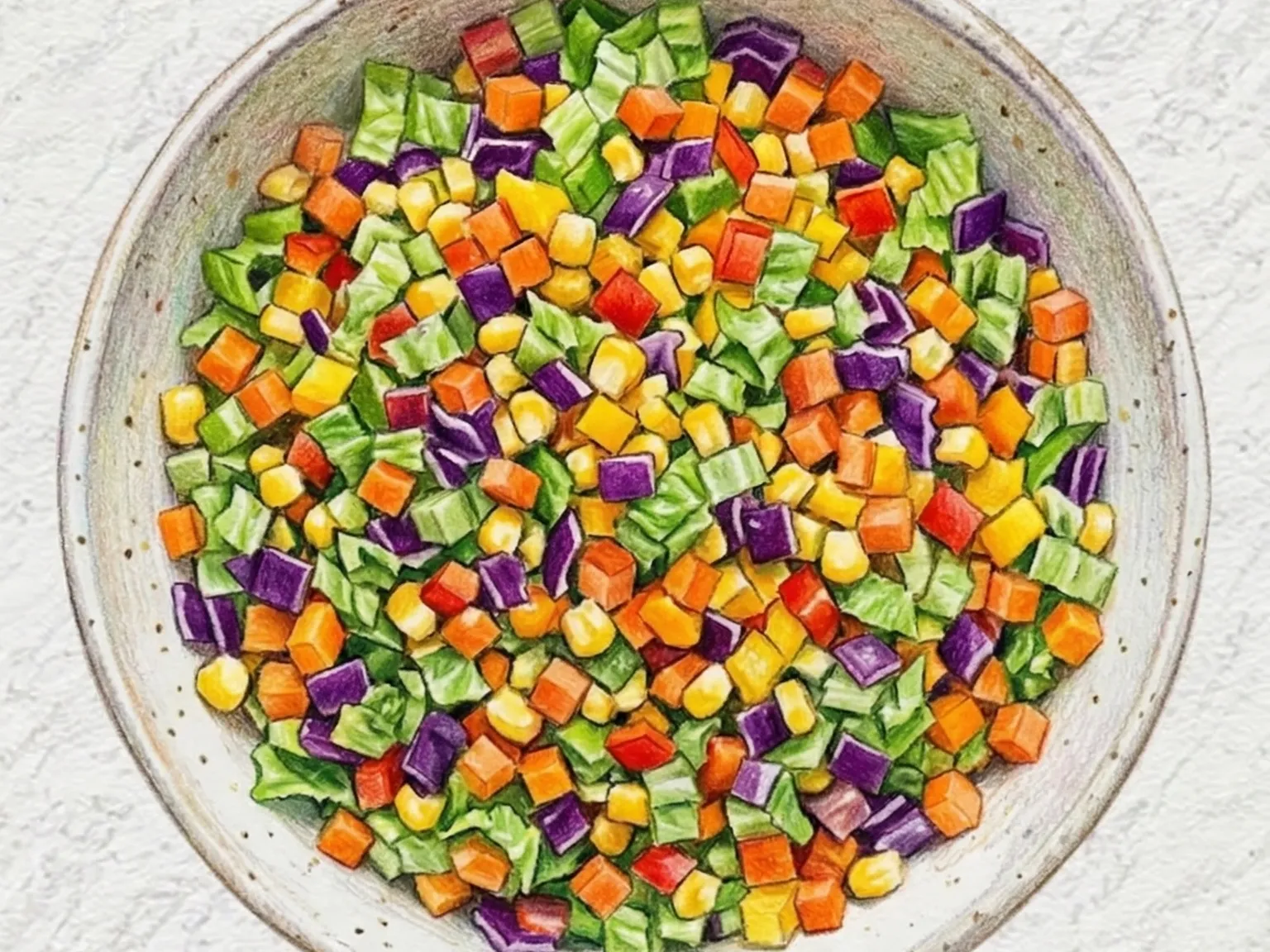
Chopped rainbow salad dices romaine, red cabbage, carrot, bell pepper, and corn kernels into small, uniform pieces so that every forkful picks up multiple colors and text...
What makes this special
- Cutting vegetables into uniform cubes ensures that each forkful contains a consistent mix of crunch and color.
- Uniform cube cuts ensure every forkful carries all five vegetables
- Only oil, lemon, and salt keeps each vegetable's own flavor intact
Key ingredients
Core cooking flow
- 1 Wash 100 g romaine and 80 g red cabbage, then shake off as much water as pos...
- 2 Cut the romaine into fine pieces under 0.3 cm so it is easy to pick up in one bite.
- 3 Dice 70 g carrot and 90 g bell pepper into even pieces about 0.8 cm wide.
Chopped rainbow salad dices romaine, red cabbage, carrot, bell pepper, and corn kernels into small, uniform pieces so that every forkful picks up multiple colors and textures at once. Keeping the cuts even ensures consistent crunch and even dressing coverage across the bowl. The dressing uses only olive oil, lemon juice, and salt, so each vegetable's natural character shows through without interference. Red cabbage's slight bitterness and the sweetness of corn create a built-in contrast, while bell pepper adds structural crunch that anchors the bowl. Because none of the ingredients carry high moisture, the salad holds up well after tossing without going limp, making it well suited for packed lunches or meals prepared in advance. Fresh herbs, crumbled feta, or sliced avocado can be added to turn it into a more substantial single-dish meal.
Instructions
Read the steps as a cooking flow: prep, heat, seasoning, doneness control, and finish.
- 1Season
Wash 100 g romaine and 80 g red cabbage, then shake off as much water as possible and pat dry with paper towels.
Extra moisture thins the dressing and makes the salad lose its clean crunch.
- 2Prep
Cut the romaine into fine pieces under 0.3 cm so it is easy to pick up in one bite.
Shred the red cabbage to a similar thickness, slicing any thick ribs thinly so they do not feel hard.
- 3Prep
Dice 70 g carrot and 90 g bell pepper into even pieces about 0.8 cm wide.
Keep checking the size as you cut, because uneven pieces make the carrot dominate some bites and disappear in others.
- 4Step
Put 70 g corn kernels in a sieve and let them drain for about 5 minutes.
If the surface still looks wet, press lightly with a spoon or towel so the dressing coats the vegetables instead of pooling.
- 5Season
In a small bowl, stir together 1.5 tablespoons olive oil, 1.5 tablespoons lemon juice, and 0.4 teaspoon salt.
Mix until the salt is no longer visible and the dressing looks slightly thickened.
- 6Finish
Place all vegetables in a large bowl and pour the dressing around the edges, not in one spot.
Toss gently for about 30 seconds until the colors are evenly mixed, then serve right away or keep chilled.
After the steps
Pick a recipe that fits this dish.
Continue with shared ingredients, meal pairings, or a similar method.
Recipes That Go Well With This
More Salads →Based on shared ingredients and meal pairing
Chicken Quinoa Power Salad
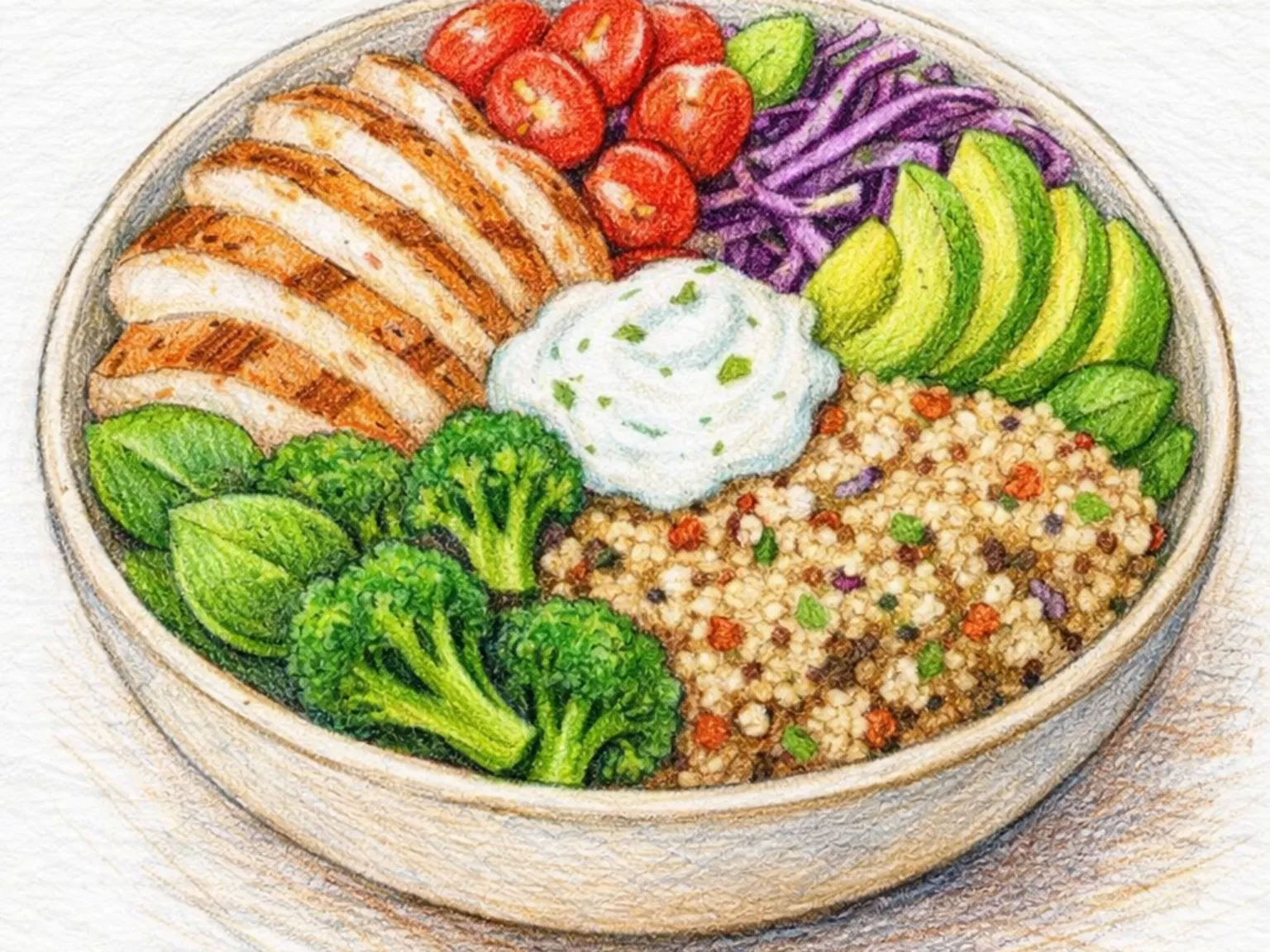
Chicken quinoa power salad brings together pan-seared chicken breast, quinoa simmered for 12 minutes then cooled, romaine lettuce, cucumber, and bell pepper in a single bowl built for a complete, balanced meal. Resting the chicken for three minutes after searing gives the juices time to redistribute inward so every slice stays moist rather than losing liquid at the cut surface. Rinsing the quinoa before cooking removes saponins that leave a bitter residue even after boiling. A dressing of Greek yogurt, lemon juice, and olive oil provides creamy tartness at a low calorie count, and the fermented tang of the yogurt complements the raw vegetables without overpowering them. Bell pepper's natural sweetness adds color and brightness alongside the lean chicken, and the combination of textures - crisp lettuce, tender grain, firm seared meat - makes each forkful more satisfying than its ingredients suggest individually.
Chicken Caesar Wrap
Chicken Caesar wrap rolls pan-grilled chicken breast, romaine tossed in Caesar dressing, and grated Parmesan cheese inside a flour tortilla. Warming each tortilla in a dry pan for about twenty seconds on each side restores moisture to the surface and makes it flexible enough to roll without cracking or splitting. The chicken must be fully cooled before slicing so it distributes evenly inside the wrap; adding it while still warm immediately wilts the romaine. The romaine should be dressed at the very last moment before assembly: dressed too early, the leaves release moisture, turning the whole wrap soggy and limp. Parmesan contributes the sharp, salty umami of aged protein, acting as a flavor bridge between the lean chicken and the creamy dressing. Cutting the finished wrap on the diagonal and presenting it cut-side up exposes the layered cross-section and makes the contents immediately visible.
Blackened Chicken Caesar Salad
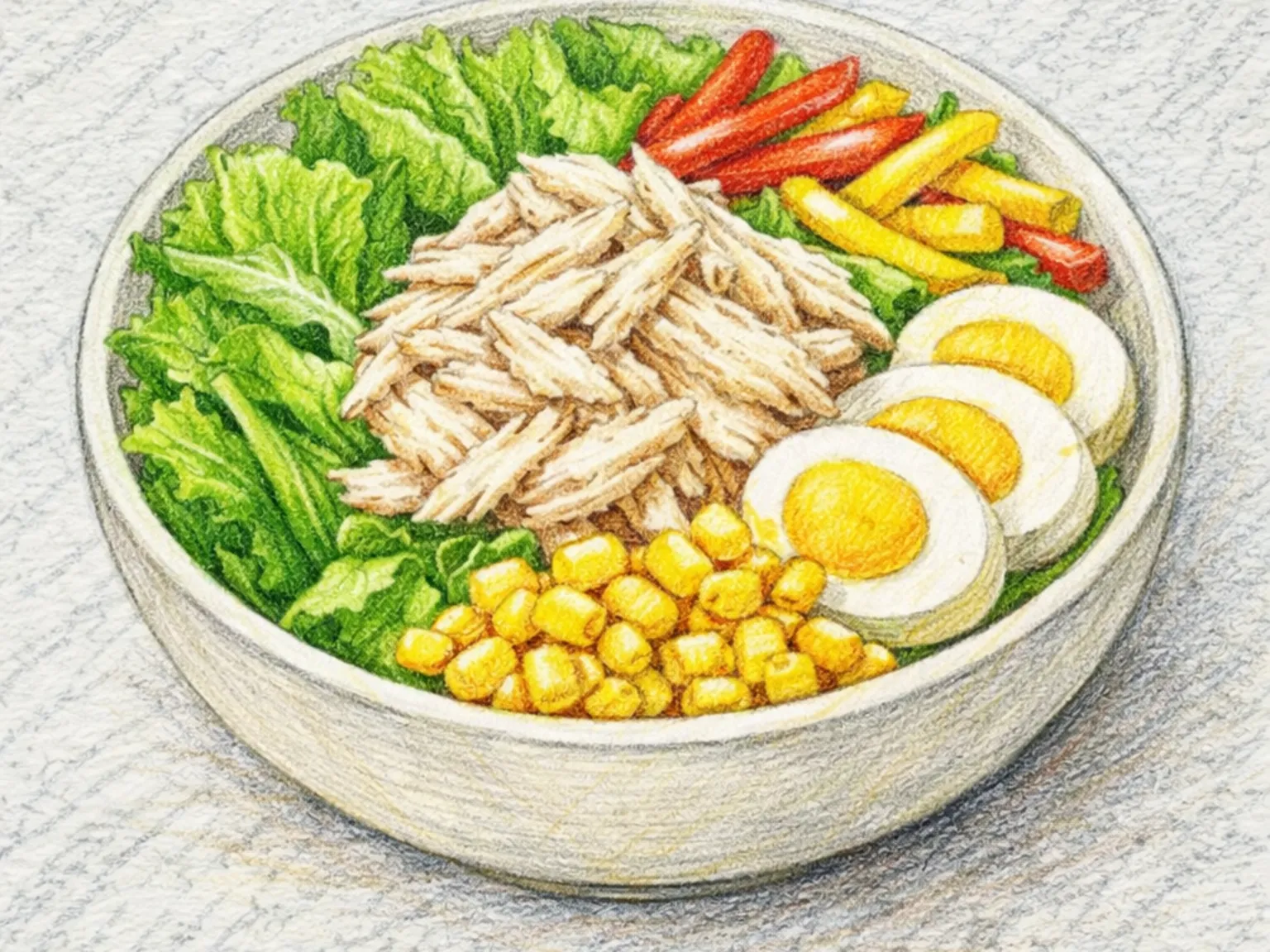
Blackened chicken Caesar salad starts with chicken breast coated thickly in paprika, cayenne, garlic powder, onion powder, and dried herbs before hitting a very hot, dry pan. The spice coating undergoes rapid charring at high temperature, forming a dark, smoky crust that seals in moisture and concentrates the spice aromatics on the surface of the meat. The interior of the chicken stays juicy because the charred crust acts as an insulating barrier, provided the pan is hot enough from the start. Creamy Caesar dressing, made with anchovy paste, egg yolk, lemon, and Parmesan, wraps around the cold, crisp romaine and the sliced hot chicken alike, moderating the cayenne heat without erasing the spice character entirely. Shaved Parmesan adds sharp, salty depth throughout, while croutons introduce a crunchy textural break against the tender chicken and limp lettuce. Because blackening generates substantial smoke, proper ventilation or an outdoor cooking setup is strongly recommended. The dish functions as a full main course rather than a starter salad.
Egg Salad Lettuce Wrap
Hard-boiled eggs are roughly chopped and folded into Greek yogurt with a small amount of mayonnaise, producing a lighter take on classic egg salad. The yogurt stands in for most of the mayonnaise, cutting calories while adding a subtle tang that lifts the richness of the yolks. Crisp romaine leaves replace bread as the wrapper, reducing carbohydrates without sacrificing the satisfying structure of each bite. Diced celery provides textural contrast against the soft filling, and Dijon mustard introduces a mild sharpness that cuts through the egg's richness. A squeeze of lemon juice brightens the entire mixture and keeps the flavor from feeling heavy. Sliced green onion or a dusting of smoked paprika added at the end gives the filling a little color and rounds out the flavor. The dish comes together in under fifteen minutes and holds well in the refrigerator, making it a practical choice for meal prep or a light weekday lunch.
Serve with this
Kimchi Bacon Mac and Cheese
Kimchi bacon mac and cheese layers aged kimchi's lactic tang and smoky bacon into a classic American cheddar cheese sauce over elbow macaroni. A butter-flour roux forms the base, with milk whisked in to build a béchamel before cheddar is melted into a thick, clinging sauce. Crisp bacon pieces add salt and crunch throughout, while chopped ripe kimchi introduces fermented acidity that counteracts the richness of the cheese. A pinch of gochugaru runs underneath with mild, warming heat. The tubular macaroni shape traps sauce inside and out, ensuring each forkful carries the full spectrum of creamy, tangy, and smoky flavors.
Grilled Tomahawk Steak
Grilled Tomahawk Steak is prepared by cooking a thick, bone-in ribeye cut to achieve a seared exterior and juicy interior. The steak must be taken out of refrigeration one hour before cooking to ensure the core reaches room temperature, which prevents uneven cooking. After patting the surface dry, the meat is seasoned with salt, black pepper, and olive oil. Searing the steak in a preheated hot pan creates a deep Maillard crust. The heat is then reduced to add butter, rosemary, and crushed garlic. Continuous spooning of the melted butter over the meat coats the surface with aromatics. Due to the thickness of the cut, the steak is finished in the oven and then rested for ten minutes to allow the juices to redistribute evenly before slicing.
Miso Soup
Miso soup, or miso shiru, is a staple of Japanese home cooking, traditionally served alongside daily meals. The soup features a base of dashi stock made from bonito flakes and kelp, which provides a savory umami foundation. Standard additions include cubed silken tofu and rehydrated wakame seaweed, finished with thinly sliced green onions. The preparation requires heating the dashi stock gently without letting it boil rapidly, then warming the tofu. To preserve the delicate aroma of the miso paste, it is dissolved in a ladle with a bit of hot broth before being stirred into the pot, and the heat is turned off immediately. Home cooks can choose between mild, slightly sweet white miso or a more savory, salty red miso to adjust the flavor. It is a light and comforting soup designed to complement other dishes.
Similar recipes
Caesar Salad
Caesar salad is built on romaine lettuce torn into rough, generous pieces and tossed in a dressing made from mayonnaise, lemon juice, garlic, and anchovy. The anchovy does not taste fishy in the finished dressing; it dissolves into the fat of the mayonnaise and functions as a deep umami foundation that keeps the salad interesting beyond its creamy surface. Lemon juice cuts through the richness of the mayo base, so the dressing coats the lettuce heavily without feeling cloying. Croutons are cubed bread toasted in olive oil until the outside turns crisp and golden but the inside stays slightly soft and chewy, giving them enough structure to absorb dressing without going immediately soggy. Wide, thin shavings of Parmesan add a dry, salty intensity that contrasts with the watery crunch of the romaine. With a short ingredient list, the quality of the dressing balance and the texture of the croutons determine the final outcome.
Sweet Potato Kale Salad
Sweet potato kale salad roasts cubed sweet potato at 210 degrees Celsius for 20 to 25 minutes until the edges caramelize, then combines it with kale that has been torn into bite-size pieces and massaged with a Dijon mustard, lemon juice, honey, and olive oil dressing. The roasted sweet potato's caramelized starch sweetness plays against the mustard's sharp bite, while toasted almonds deliver a nutty crunch and dried cranberries punctuate with tart sweetness. Massaging kale with the dressing for about one minute breaks down the tough cell walls, turning the leaves from fibrous and chewy to tender and absorbent. Cooling the sweet potato fully before tossing prevents residual heat from wilting the kale.
Broccoli Cranberry Salad
Broccoli cranberry salad blanches broccoli for just thirty seconds in boiling water to set its vivid green color and lock in a satisfying crunch, then combines it with dried cranberries for a tart, jammy sweetness and sunflower seeds that add a dry, toasted texture throughout the bowl. A dressing built on Greek yogurt rather than mayonnaise alone delivers genuine creaminess while keeping the overall dish considerably lighter, and a splash of apple cider vinegar gives the finish a clean acidity that cuts through the richness. A small amount of finely diced red onion is enough to add a mild pungency and give the salad direction without making it assertively sharp. This salad rewards preparation in advance because the dressing gradually penetrates the broccoli florets as they sit in the refrigerator, deepening the flavor in a way that freshly dressed salads cannot achieve. After a few hours the textures settle and the flavors meld into something more cohesive than the sum of its parts, making it an unusually practical choice for packed lunches prepared the night before or party spreads assembled hours ahead of time.