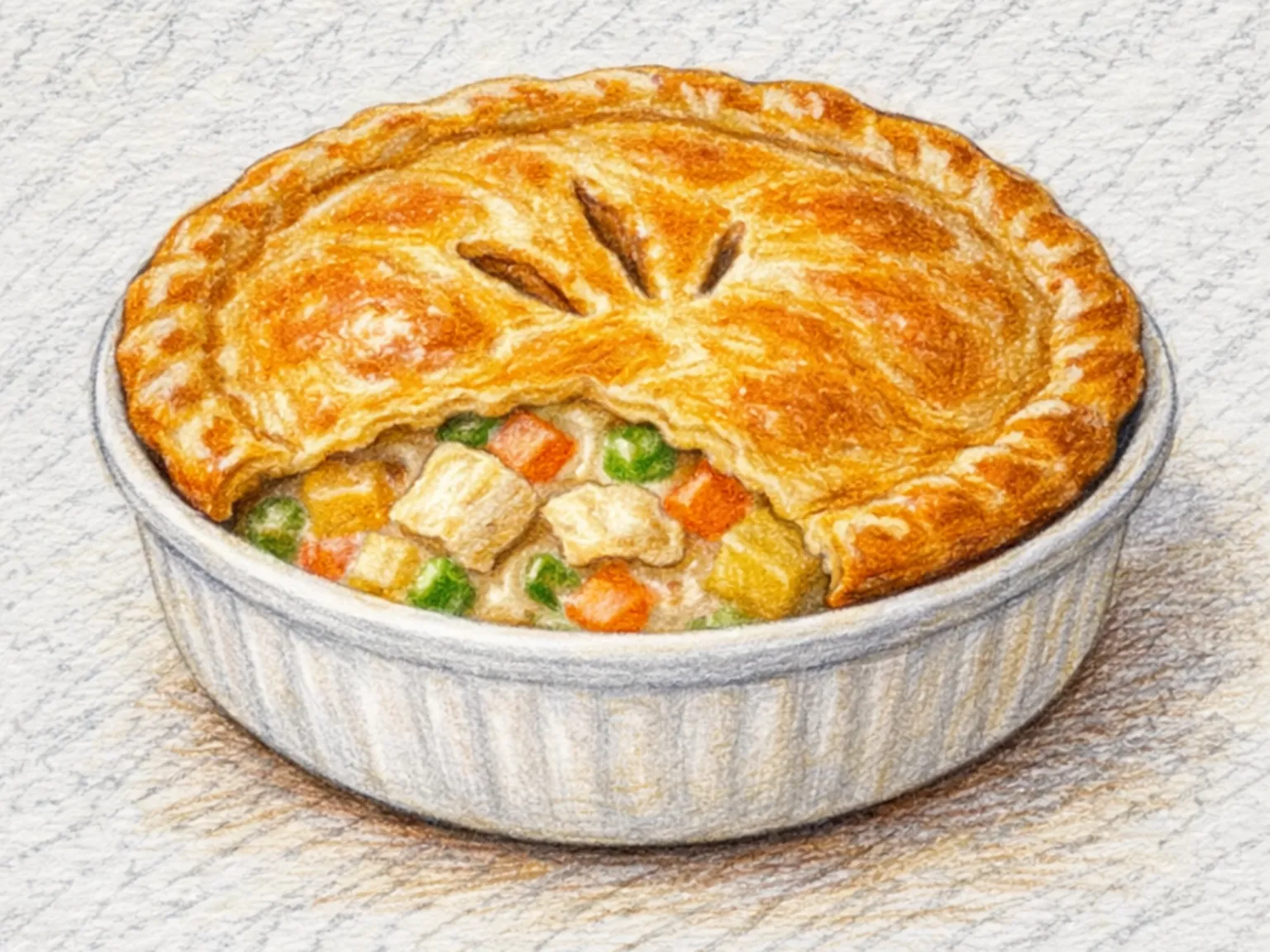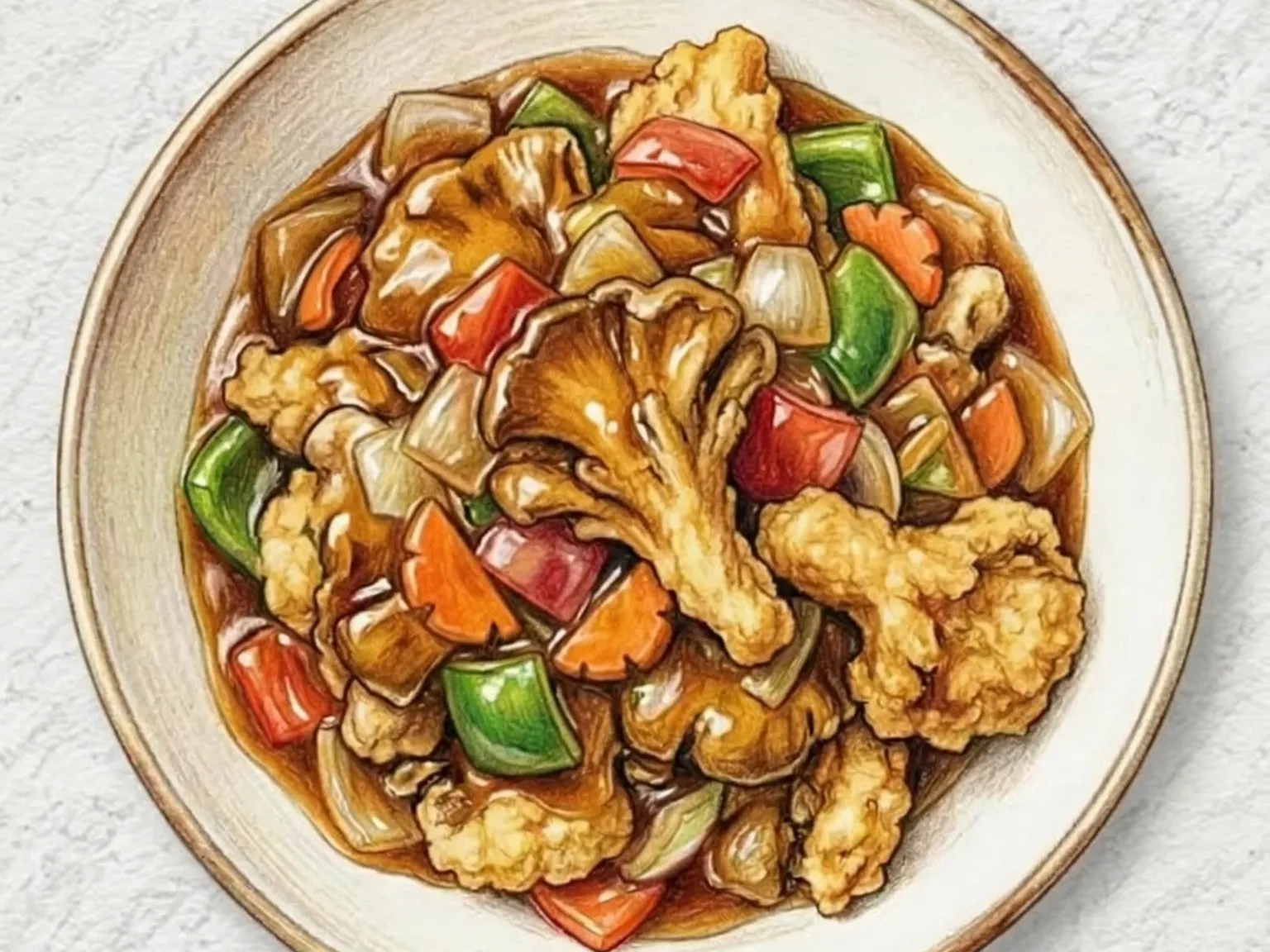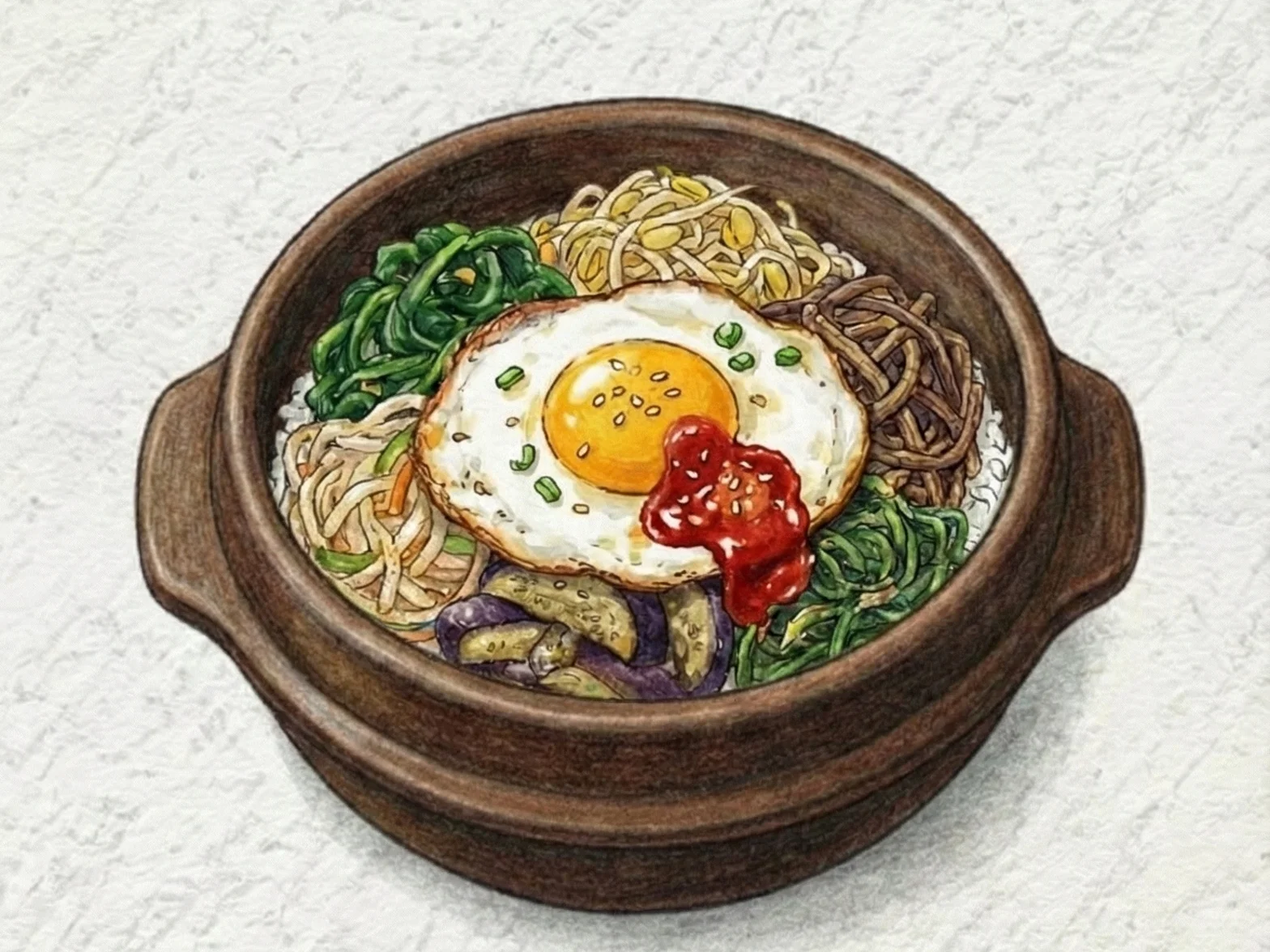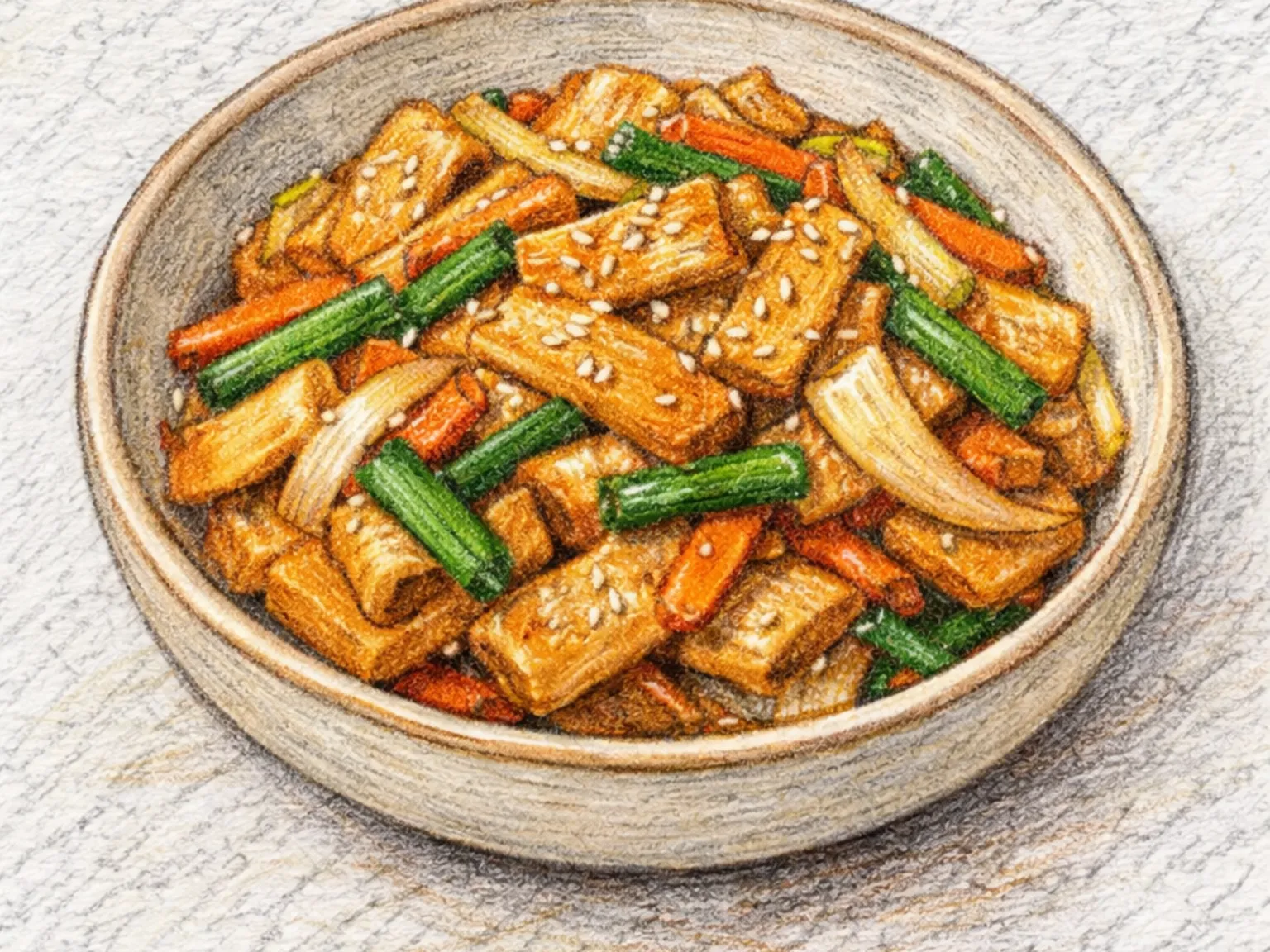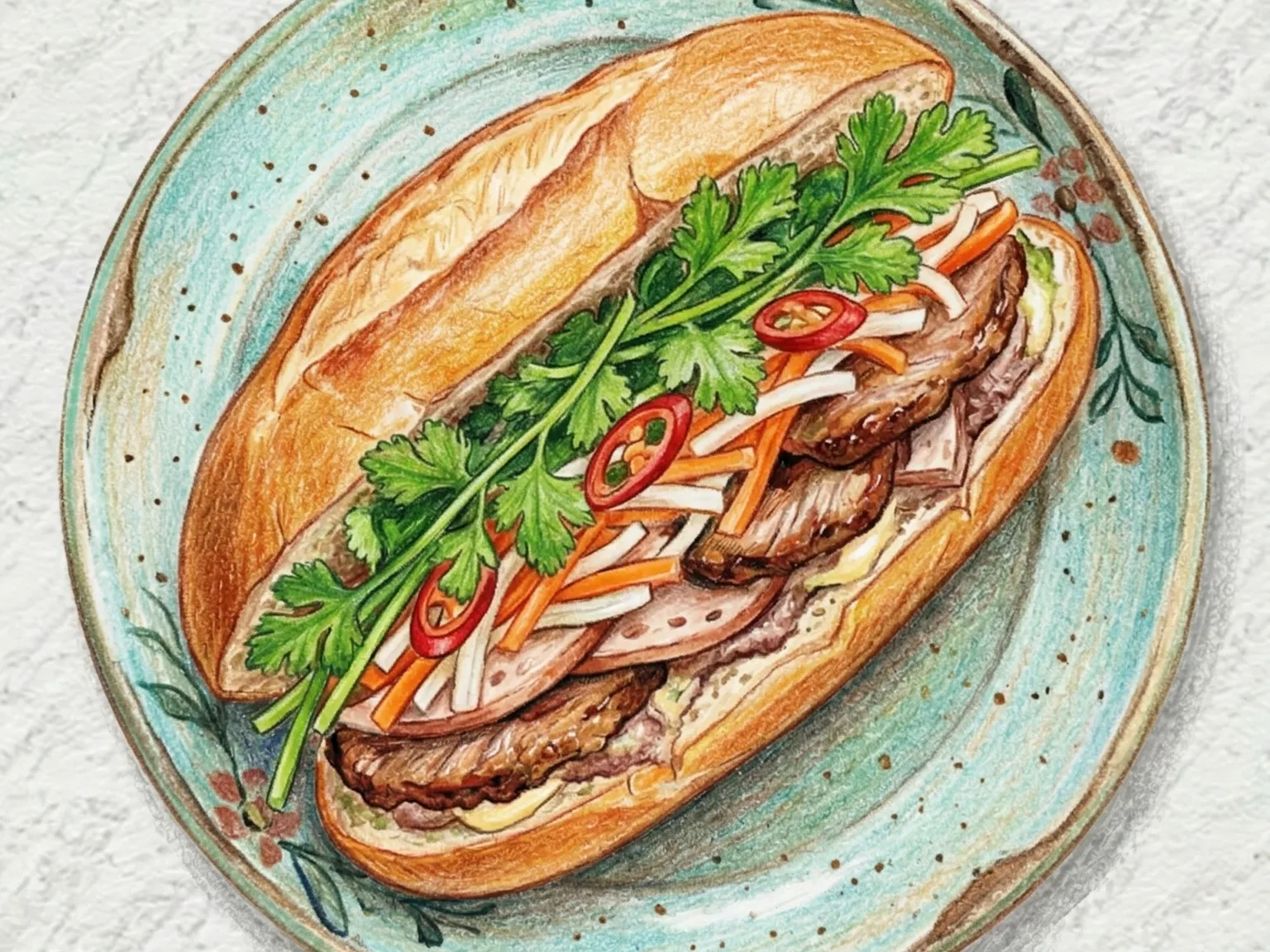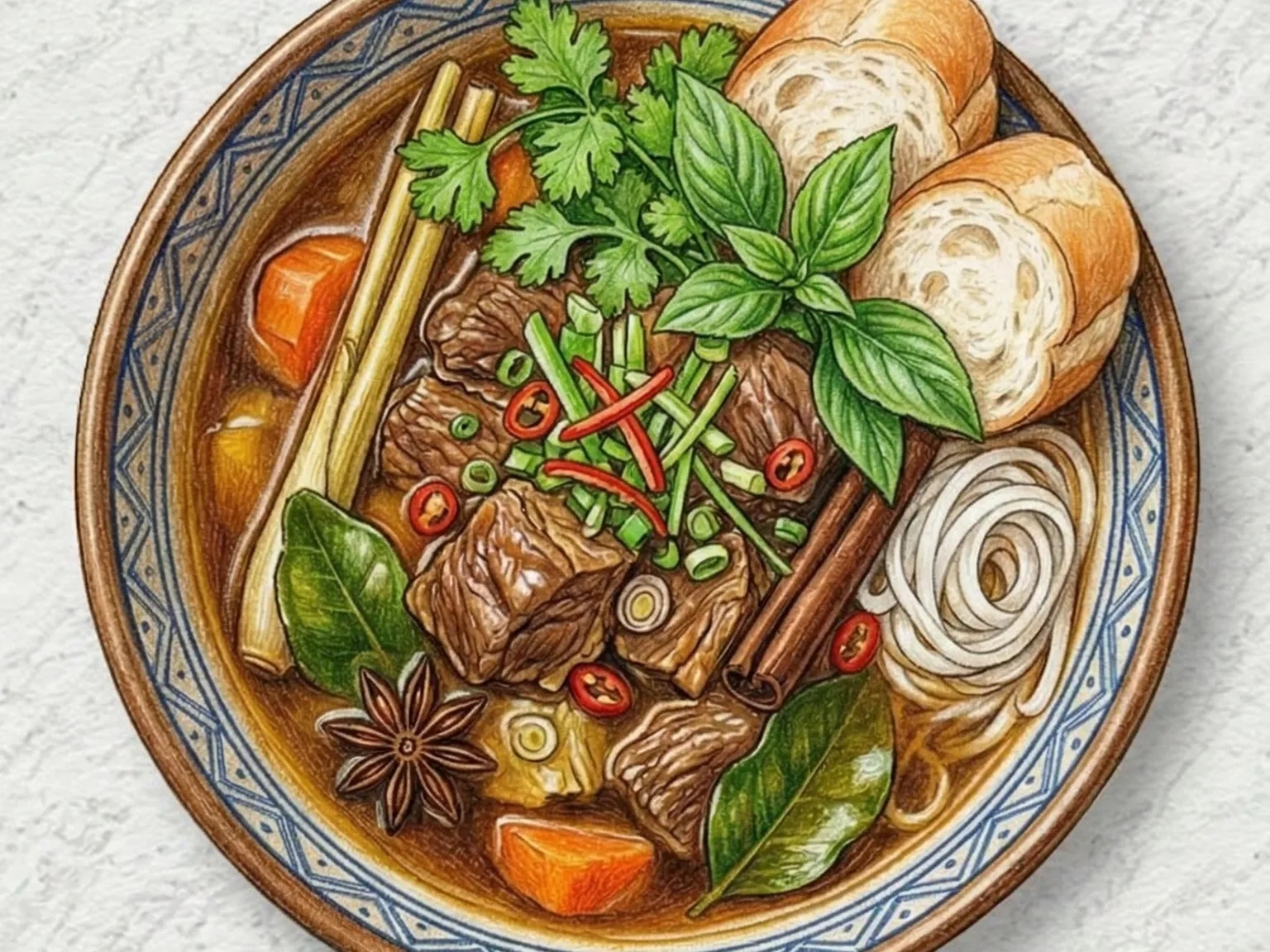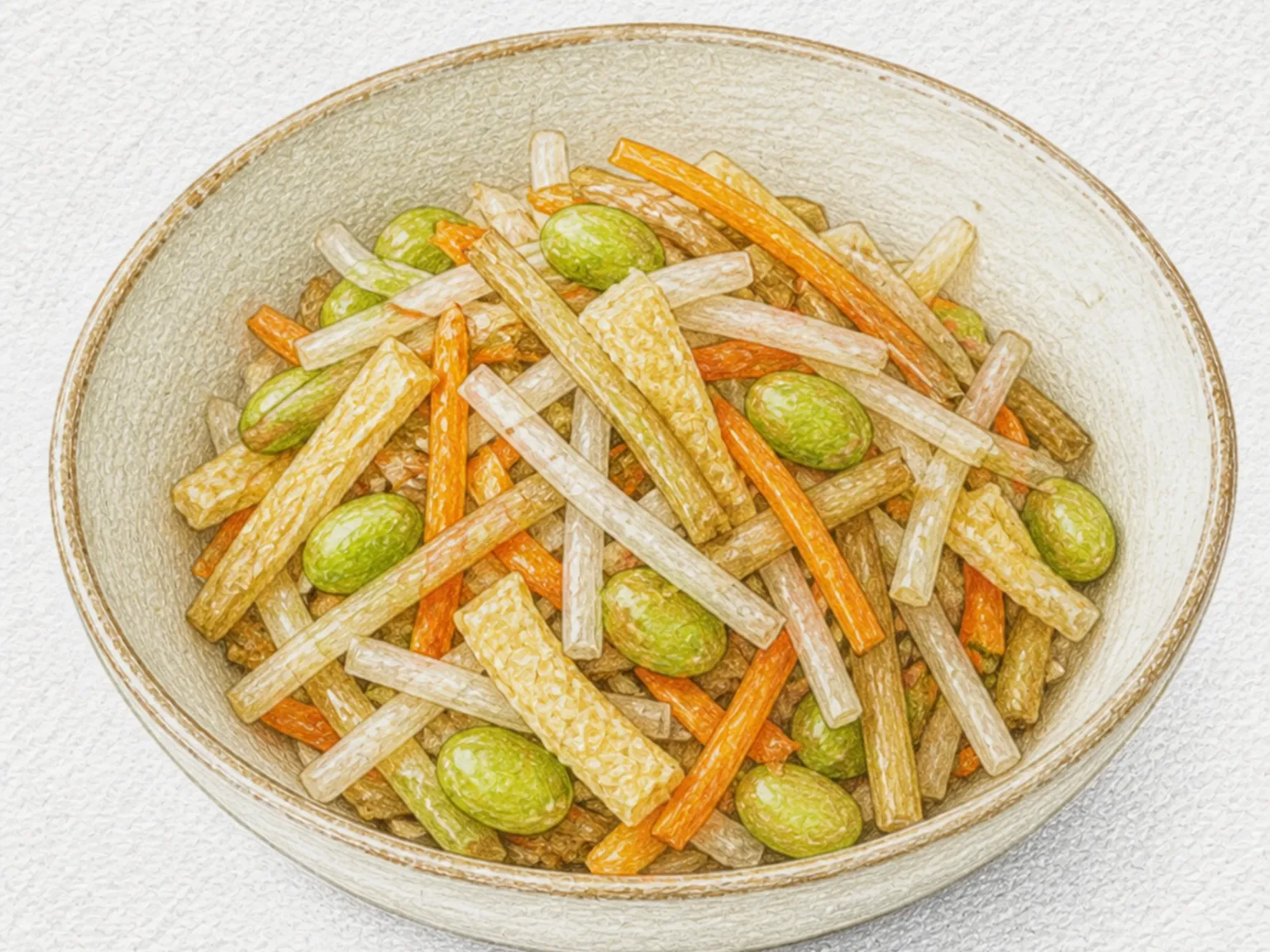
Bánh Mì (Vietnamese Crispy Baguette Sandwich with Pork and Pickles)
Banh mi is the product of French colonialism meeting Vietnamese resourcefulness. A baguette made partly with rice flour results in a bread lighter and airier than its French counterpart, with a shattering crust that flakes on the first bite. The bread is the foundation and everything else is built around its texture. Fillings vary by region and stall, but the classic Saigon version layers pate, cold cuts, pickled daikon and carrot, sliced cucumber, cilantro, and jalapeno. The pickled vegetables provide sharp, tangy crunch that cuts through the fattiness of the meat and pate. At street carts across Ho Chi Minh City, a banh mi is assembled in under a minute and costs less than a dollar, delivering crispy, sour, herbal, spicy, and fatty elements in every bite. The bread was introduced during French colonial rule in the nineteenth century, and Vietnamese bakers gradually reduced the density and adapted the loaves to local ovens and ingredient availability. Today, variations include a tofu version for vegetarians and a shrimp version common in coastal cities. The key to a proper banh mi is bread baked the same day, eaten while the crust is still intact.

Korean Beef & Shiitake Japchae
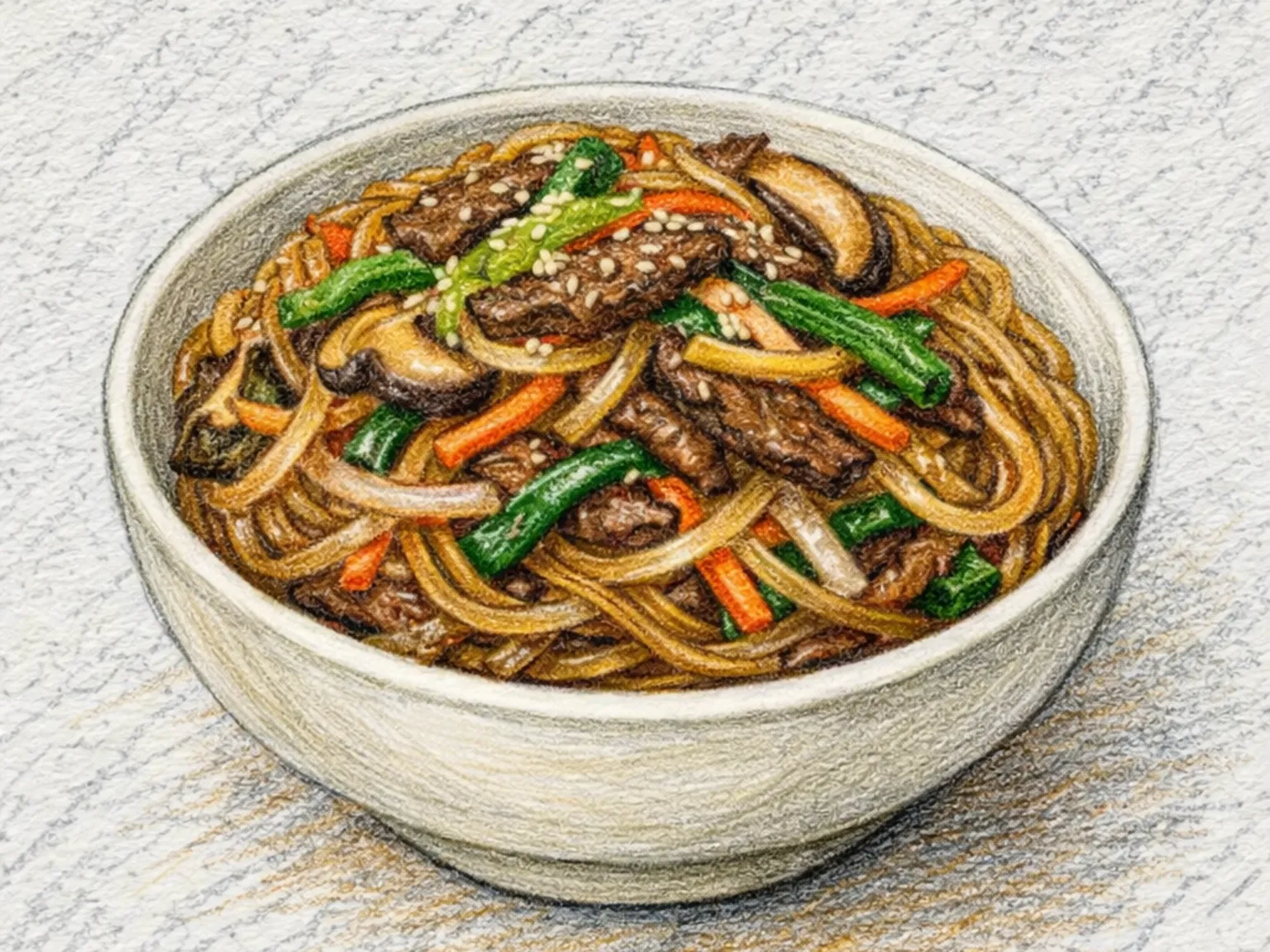
Japchae originated as a Joseon royal court dish of stir-fried vegetables before sweet potato glass noodles were added to create the form recognized today. This version pairs glass noodles with soy-marinated beef and sliced shiitake mushrooms. Each component cooks separately: beef and mushrooms stir-fried with garlic, spinach blanched and squeezed dry, carrots and onions sauteed until just tender. A final toss with sesame oil brings everything together. The noodles should be translucent and springy, carrying a sweet-salty soy glaze into each forkful. A standard presence on every Korean holiday table at Chuseok, Seollal, and birthday celebrations alike.

Korean Mixed Rice Bowl (Colorful Vegetables & Gochujang)
Bibimbap is one of Korea's defining one-bowl meals, assembled by arranging individually seasoned vegetables - spinach, bean sprouts, zucchini, and carrots - alongside marinated beef and a fried egg over a bowl of steamed rice, then mixed together at the table with gochujang. Each component is cooked and seasoned on its own before plating, which preserves distinct textures and flavors right up until the moment of mixing. The act of stirring brings crisp vegetables, tender beef, and spicy fermented chili paste into a single cohesive bite. Leftover namul from previous meals makes the assembly genuinely fast on a weeknight, and when served in a preheated stone pot, the rice forms a golden, crackling crust at the base that provides a final textural reward. The gochujang ratio is adjustable, making it easy to calibrate heat to individual preference.

Korean Busan-Style Stir-fried Fish Cake
Busan-style stir-fried fish cake begins with a step that separates it from rushed versions: square fish cake sheets are blanched for twenty seconds in boiling water to remove the residual processing oil from manufacturing. Skipping this produces a flat, industrial greasiness in the finished dish that no amount of seasoning corrects. Oil goes into a hot pan, minced garlic is fried briefly until fragrant, and julienned onion and carrot are added next and cooked for two minutes until their natural sugars begin to release. The blanched fish cake strips go in, followed by soy sauce and oligosaccharide syrup. As the soy sauce hits the hot pan surface, it reduces almost instantly into a thin, glossy glaze that coats every surface; the oligosaccharide syrup caramelizes in the residual heat, building a sweet-salty layer underneath. High heat and a total cook time of three minutes or less is essential - fish cake left on the stove beyond that loses its moisture and turns rubbery. Diagonally sliced green onion goes in at the very end, added off the heat to preserve its fresh bite. A scatter of sesame seeds finishes the dish. Because the flavors are stable at room temperature and do not deteriorate as the dish cools, it is a reliable and practical side dish for packed lunches.

Bibim Dangmyeon (Spicy Glass Noodles)
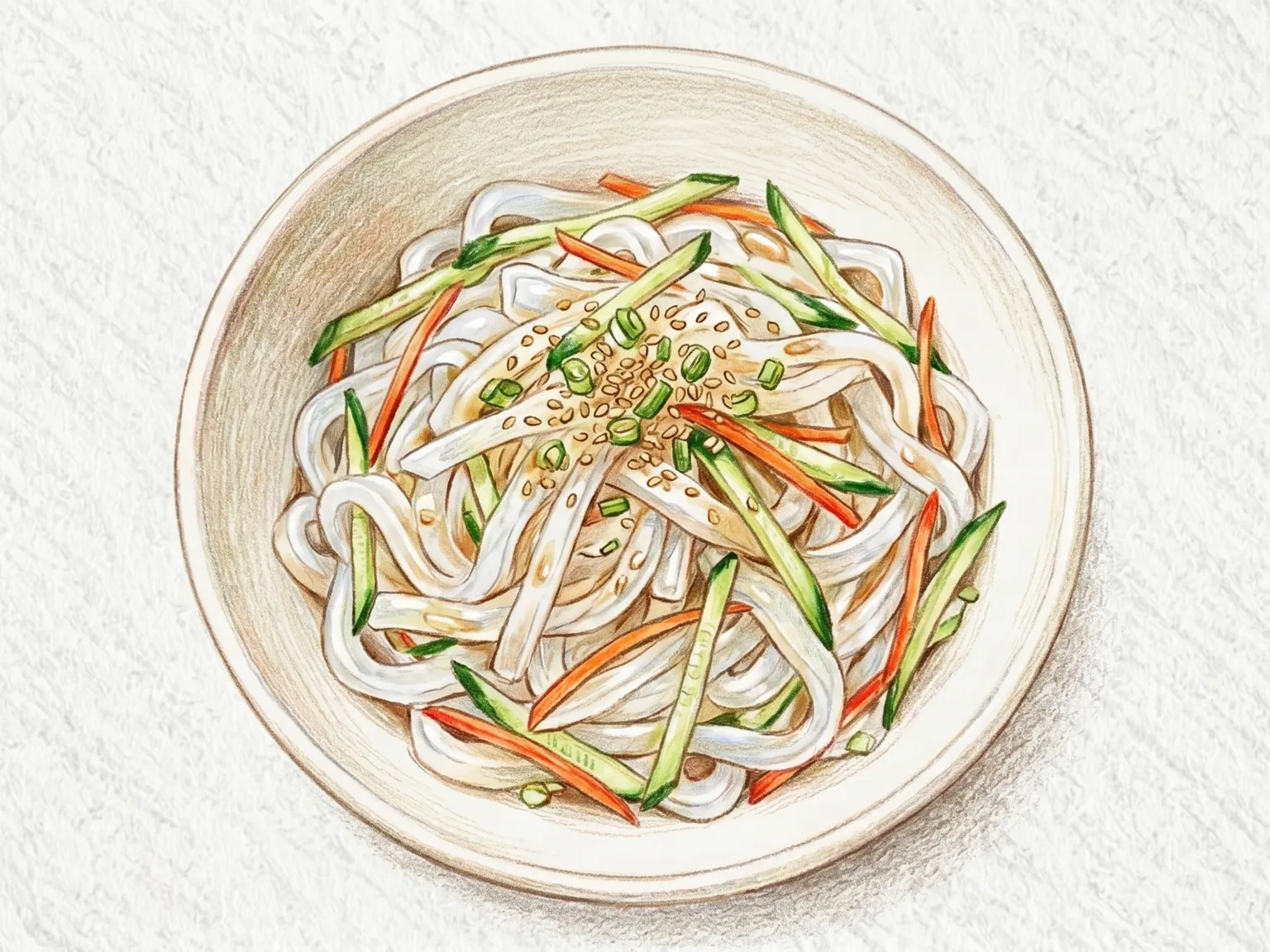
Bibim dangmyeon is a Korean bunsik dish of boiled sweet potato starch noodles tossed together with vegetables in a dressing of gochujang, vinegar, and sugar. The noodles are cooked in boiling water until just tender, then drained and rinsed thoroughly in cold water. The cold rinse is the step that determines the final texture of the entire dish. Skipping it leaves the noodles hot and continuing to soften in their own residual heat, and they eventually stick together in a clump. Running cold water over them immediately halts the cooking, sets the starch, and produces the transparent, chewy, springy texture that defines a well-made dangmyeon. Julienned cucumber and carrot add crunch and visual contrast in the bowl. A pan-fried egg sliced into thin strips and placed on top contributes a mild, rich note and completes the visual presentation. The dressing is a balance of three distinct flavor elements: the heat and fermented depth of gochujang, the acidity of vinegar, and the sweetness of sugar. All three need to coat every strand of noodle evenly, which requires thorough tossing rather than a light fold. Sesame oil added at the end prevents the noodles from sticking together as they sit while also contributing a warm, nutty finish. Because the noodles continue absorbing the dressing over time, the dish is best eaten immediately after preparation when the texture is at its most distinct. The dressing can be made in advance and refrigerated, and garlic chives or perilla leaves can substitute for the cucumber and carrot. Adding thinly sliced bulgogi or a soft-boiled egg provides protein without disrupting the overall balance of the dish.

Korean Stuffed Squid Grill
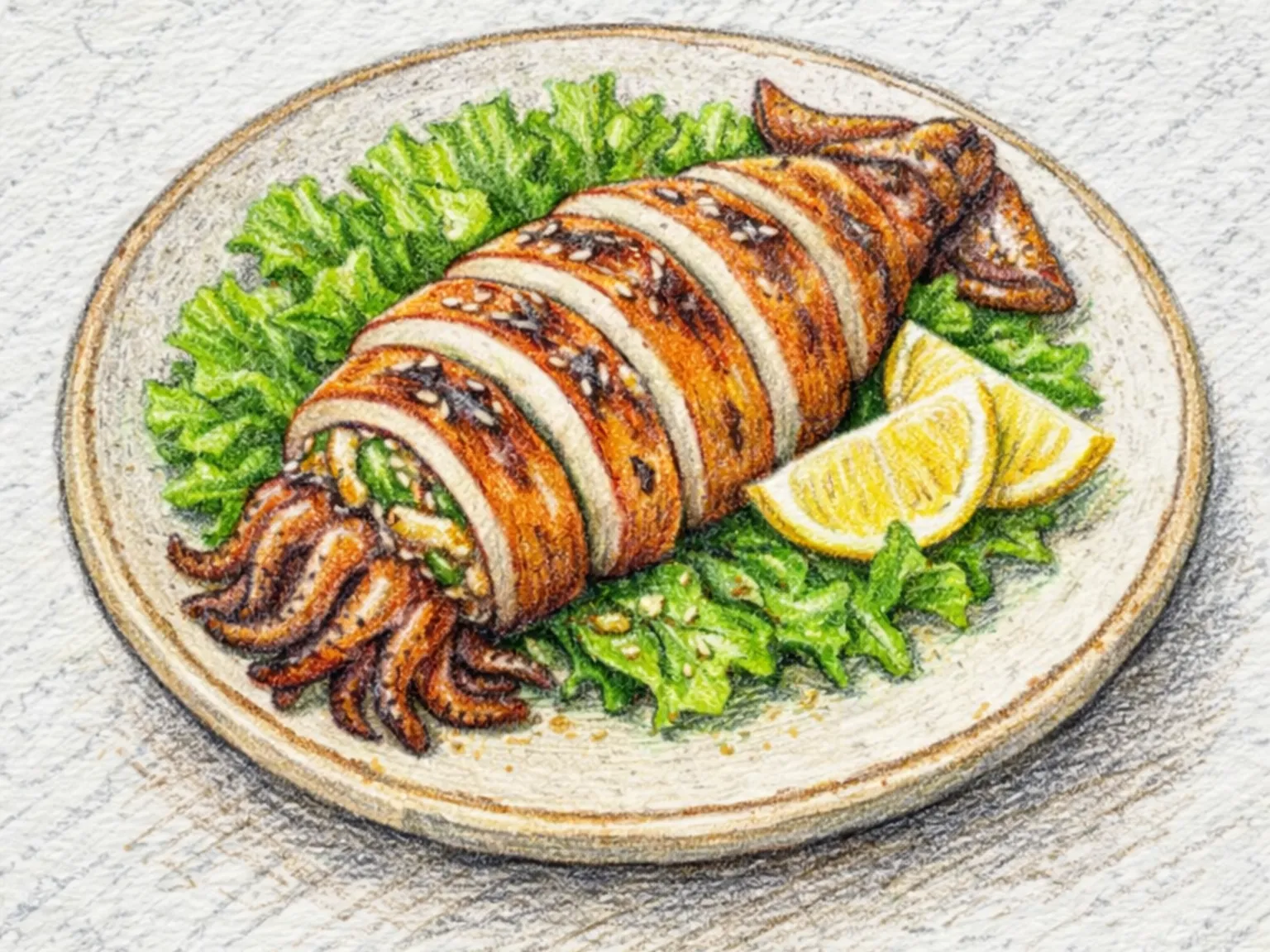
Ojingeo-sun-gui is grilled stuffed squid, a Korean dish where cleaned squid tubes are filled with a mixture of soaked glutinous rice, crumbled tofu, diced carrot, soy sauce, and sesame oil, sealed with toothpicks, and grilled over medium heat with frequent turning. The glutinous rice needs at least three hours of soaking to cook through evenly inside the squid cavity, and the tofu must be pressed dry in cheesecloth to prevent the filling from becoming waterlogged and falling apart. Filling only seventy to eighty percent of each tube is essential because the rice expands as it cooks, and overstuffed squid will burst on the grill. When sliced into 1.5-centimeter rounds after grilling, each piece reveals concentric layers in cross section: the chewy squid exterior, a sticky ring of glutinous rice, and a soft tofu core at the center. The seasoning built into the filling with soy sauce and sesame oil is sufficient on its own, so no dipping sauce is required.

Korean Braised Short Ribs
Galbi-jjim is one of Korea's most celebrated braised dishes, built around thick-cut beef short ribs that simmer for well over an hour in a deeply seasoned liquid of soy sauce, Asian pear juice, sugar, garlic, and sesame oil. Before braising, the ribs are soaked in cold water to purge the blood, then briefly blanched in boiling water to remove impurities; skipping either step results in a cloudy, less refined sauce. The long, low cook breaks down the collagen in the connective tissue until the meat offers no resistance, sliding off the bone with the lightest pull. As the liquid reduces it clings to each rib in a thick, glossy dark-brown glaze that is simultaneously sweet, salty, and intensely savory. Daikon radish and carrot chunks absorb the braising liquid and soften into something almost buttery, becoming a substantial side dish in their own right. Chestnuts and jujubes, traditionally added for Chuseok and Lunar New Year celebrations, lend a gentle sweetness and lift the visual festivity of the platter. A single spoonful of the finished sauce over plain steamed rice is enough to make an entire bowl disappear.

Korean Tuna & Perilla Leaf Fritters
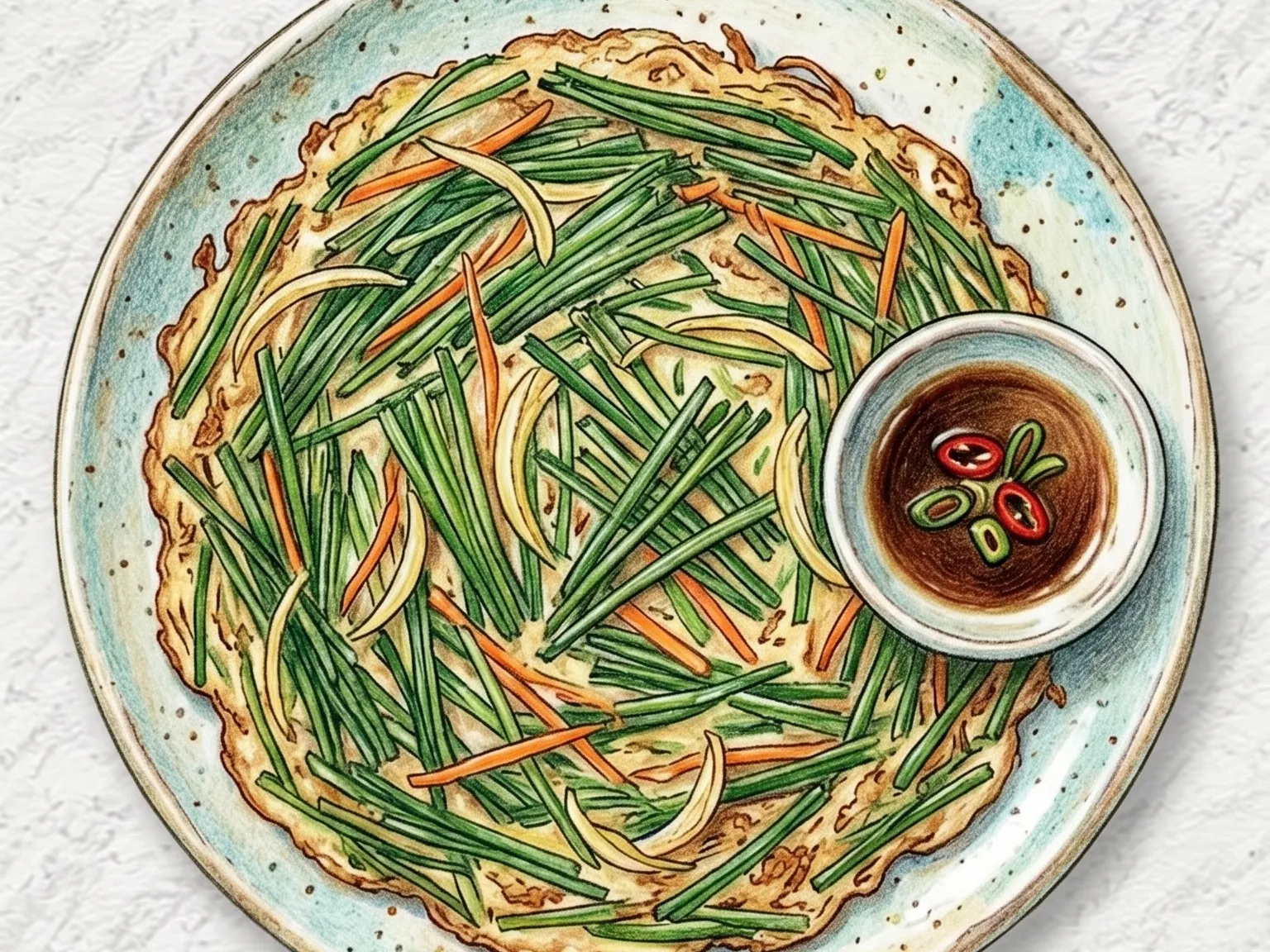
Chamchi-kkaennip-jeon is a Korean pan-fried pancake made with canned tuna and perilla leaves. The oil is drained from the tuna before mixing, which keeps the batter from becoming greasy. Perilla leaves, chopped into the batter, contribute their distinctive herbal fragrance - sharp and slightly anise-like - which cuts through the brininess of the tuna and gives the pancake its character. The combination lands somewhere between a vegetable pancake and a fish cake: more substantial than the former, lighter than the latter. Egg binds the batter and produces a smooth, even surface when cooked. Onion and carrot are finely diced so the pancake spreads thin and cooks through uniformly, rather than leaving thick raw patches at the center. Adequate oil in the pan and medium heat produce a thin, crisp exterior without burning. The pancake holds its texture reasonably well at room temperature, making it a practical lunchbox side dish. A soy-based dipping sauce brings out the perilla fragrance more clearly when eaten alongside.

Korean Spicy Braised Chicken
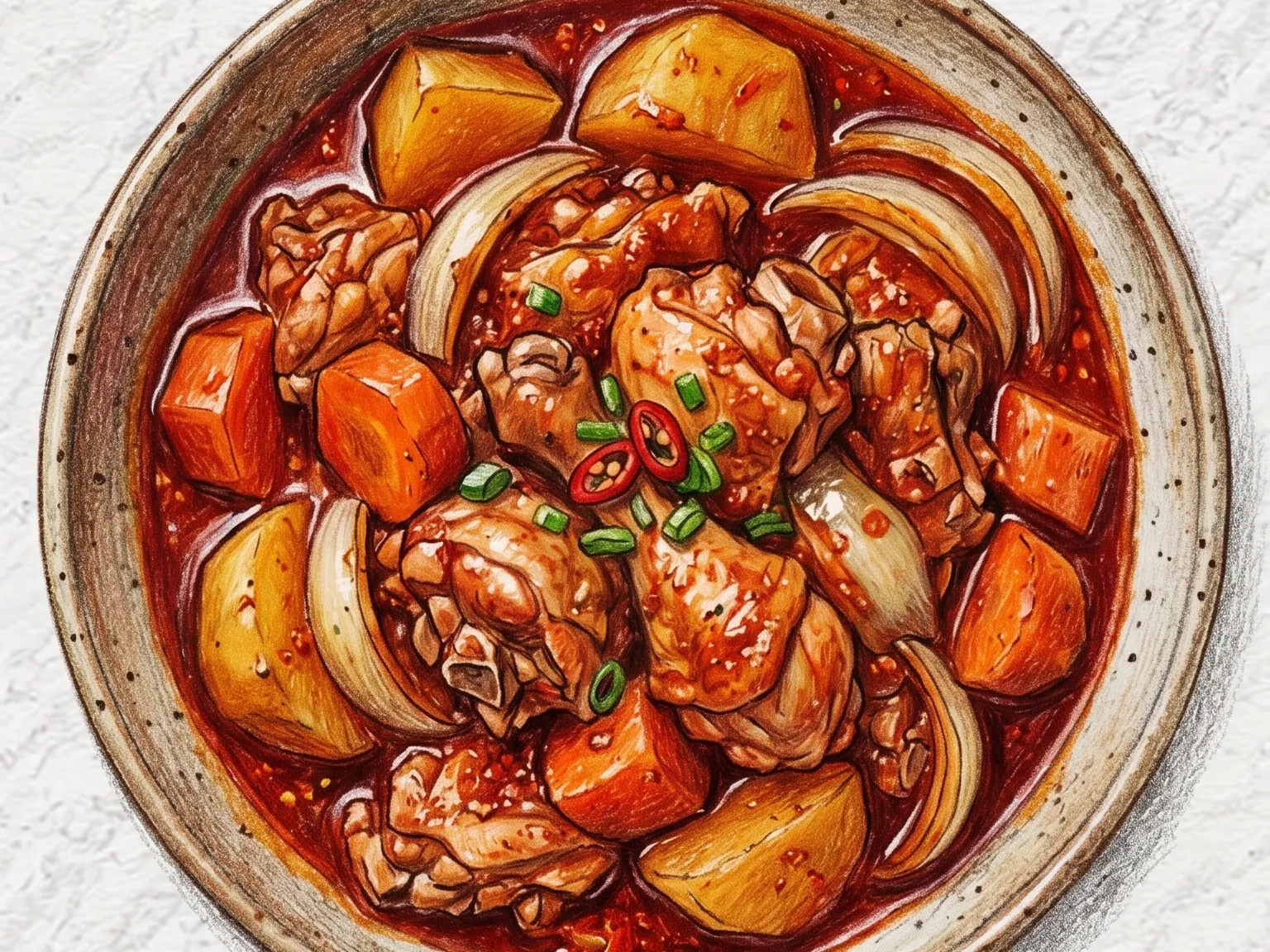
Dakdoritang is a Korean braised chicken dish where bone-in pieces are simmered with potato, carrot, and onion in a sauce built from gochujang, gochugaru, soy sauce, garlic, and sugar. As the chicken cooks, it releases juices into the sauce that blend with the gochujang to create a thick, glossy braising liquid that coats every surface it touches. The potato breaks down gradually over the cooking time, adding starch that thickens the sauce further without any additional effort. Carrot and onion absorb the braising liquid and take on its full flavor, making them as central to the meal as the chicken itself. Sugar moderates the sharp heat of the chilies into a warm, rounded spice that lingers rather than burns. A finishing touch of sesame oil and sliced green onion added just before serving adds a nutty fragrance and fresh brightness that lifts the richness of the braise.

Korean Andong Braised Chicken
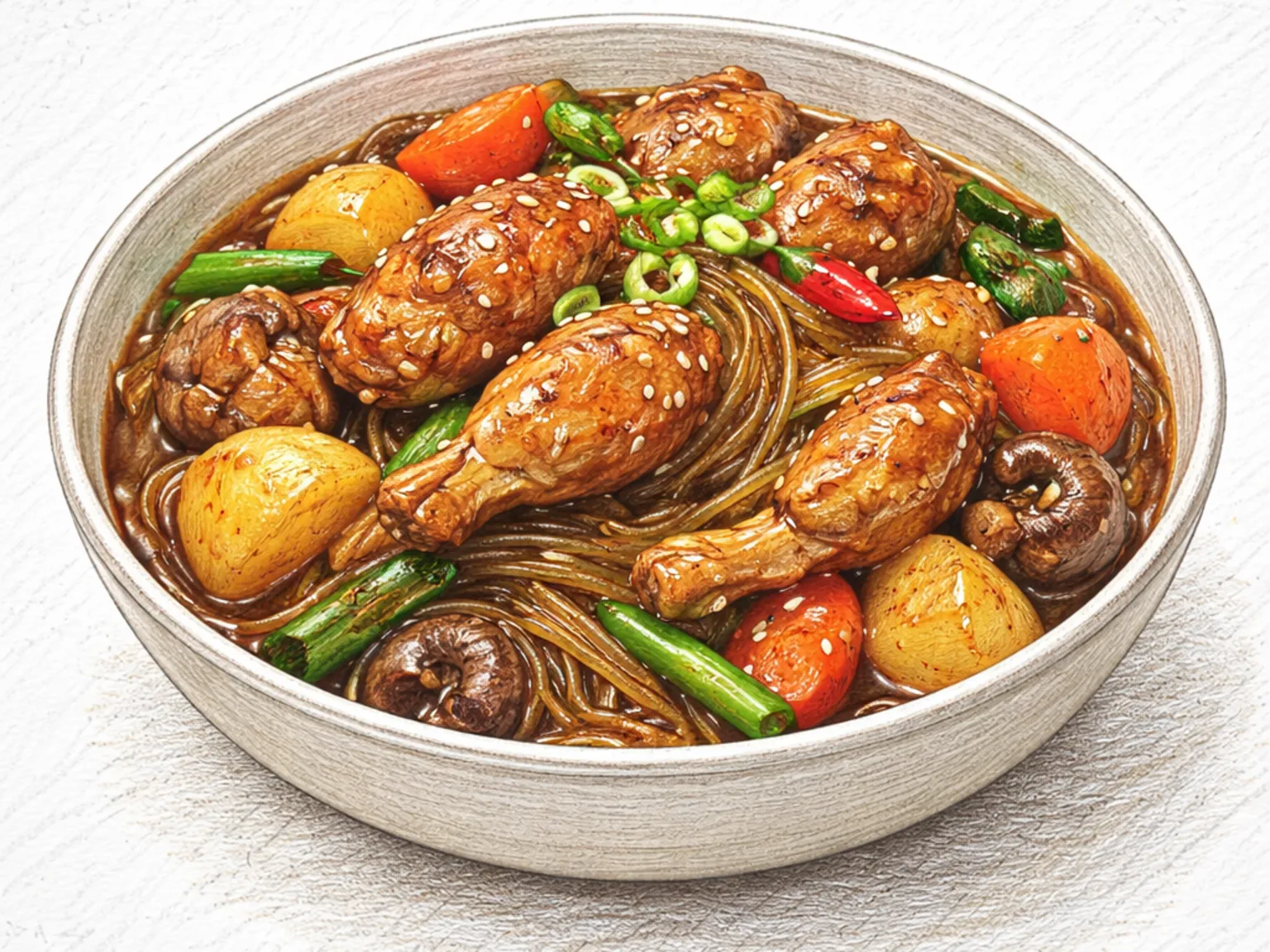
Andong jjimdak is said to have taken its modern form in Andong's old market during the 1980s, though soy-braised chicken has been a Gyeongsang Province tradition for far longer. Chicken pieces braise in a concentrated sauce of soy sauce, sugar, gochugaru, garlic, and ginger until the meat nearly separates from the bone. Glass noodles, dangmyeon, are added toward the end and absorb the braising liquid until they turn translucent and deeply stained with the sauce, becoming the most sought-after component. Potatoes and carrots provide bulk and sweetness, while dried red chilies and sliced cheongyang pepper build a layered heat that develops gradually. The finished dish arrives at the table in a wide, shallow pot, every component coated in the reduced soy glaze. It became a nationwide phenomenon in the early 2000s and remains one of Korea's most popular communal dishes, typically shared between two or three people over steamed rice.

Korean Bok Choy Kimchi (Gochugaru Fermented Quick)
Cheonggyeongchae kimchi is a bok choy kimchi prepared by halving the heads lengthwise, salting them for twenty minutes, and coating each leaf layer with a paste of gochugaru, salted shrimp, anchovy fish sauce, and sweet rice paste. Keeping the salting time short preserves the crisp snap of the stems, while the leaves soften just enough to hold the seasoning. Julienned scallions and carrot add color and textural variety, and adjusting the fish sauce quantity based on the salted shrimp salinity keeps the overall salt level balanced. After four hours of room-temperature fermentation followed by refrigeration, this kimchi is ready within a day and offers a lighter, crunchier character than traditional napa cabbage kimchi.

Vietnamese Grilled Pork Vermicelli
Charcoal-grilled pork is placed over cold rice vermicelli and eaten mixed with nuoc cham in this southern Vietnamese noodle bowl. The pork marinates in fish sauce, sugar, and garlic before grilling, so direct heat caramelizes the surface sugars into a deep brown crust while the interior holds its moisture. Fresh mint, cilantro, and coarsely crushed roasted peanuts are scattered on top, layering herbal fragrance with crunch. Nuoc cham, built from lime juice, sugar, fish sauce, and chili, is the sweet-sour-salty binding agent that pulls together the warm meat, cool noodles, and raw herbs into a single coherent bowl. The temperature contrast between hot pork and chilled vermicelli is central to the eating experience. Pickled daikon and carrot add a final note of acidity that keeps each bite clean. No broth is needed; the bowl is filling and bright.

Galbijjim Lasagna (Korean Braised Short Rib and Bechamel Lasagna)
Galbi-jjim lasagna is a fusion dish that layers a Korean-style braised short rib ragu between lasagna sheets with bechamel and mozzarella before baking. The beef short rib is diced and marinated in soy sauce, Asian pear puree, and minced garlic, then sauteed with onion and carrot before simmering in beef stock for twenty-five minutes until the meat becomes fall-apart tender. Asian pear puree acts as a natural enzymatic tenderizer and introduces a subtle fruit sweetness that, combined with the salty depth of soy sauce, reproduces the characteristic sweet-savory balance of traditional galbijjim. The extended simmer reduces the braising liquid into a concentrated, glossy sauce that soaks into every pasta sheet as the lasagna bakes, distributing the Korean umami through each layer. Bechamel moderates the intensity of the soy-based filling and adds a smooth creaminess between layers, while Parmesan crisps on the top surface during baking for textural contrast. The ragu can be prepared in advance, after which assembly and baking take under thirty minutes, making this an impressive centerpiece dish that draws on both Korean and Italian technique.

Brown Rice Buddha Bowl
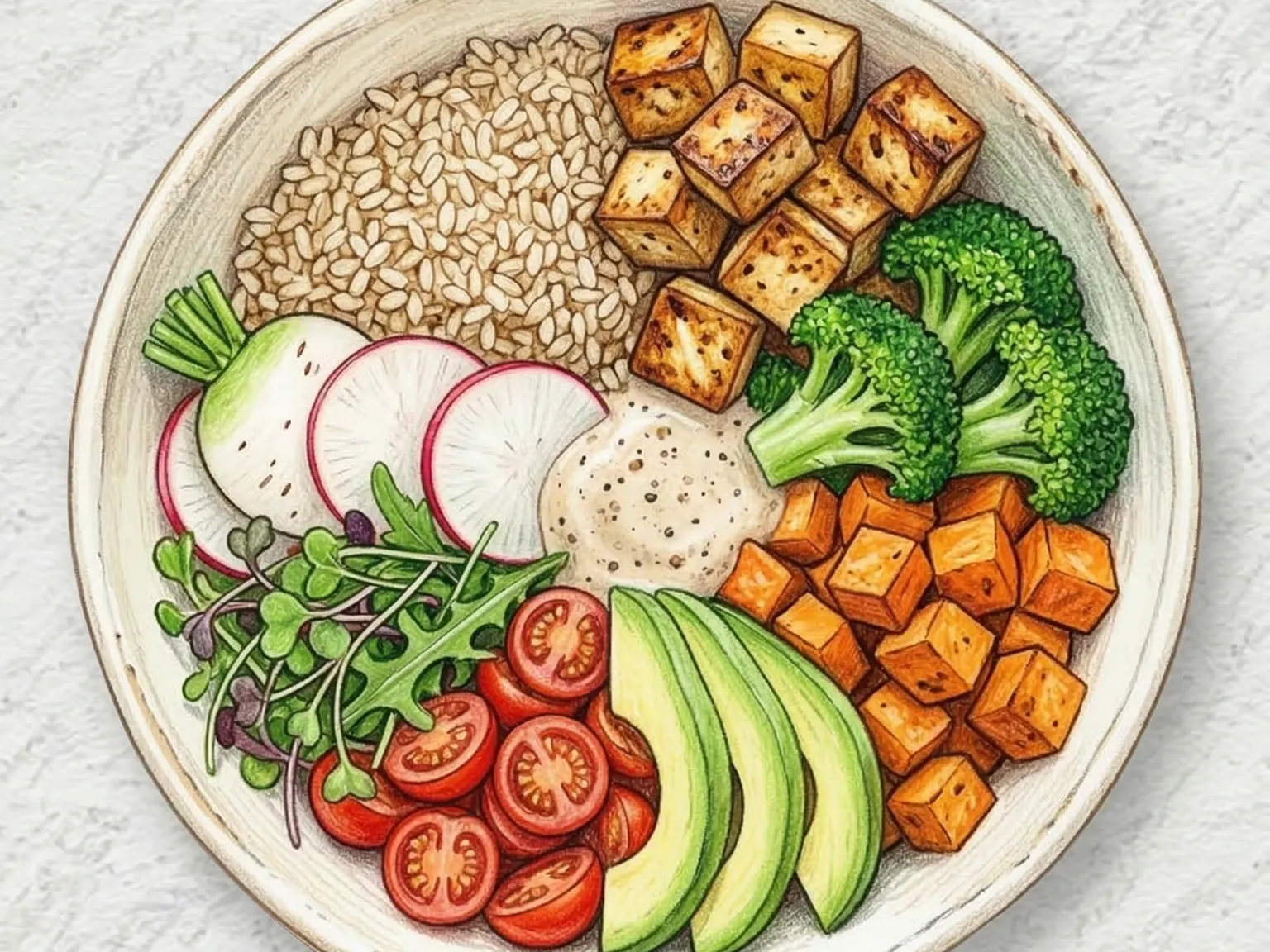
Brown rice Buddha bowl builds on a base of cooked brown rice, with pan-seared tofu and an arrangement of broccoli, carrot, red cabbage, and avocado placed in separate sections across the bowl. Brown rice has a coarser texture and a more pronounced, nutty grain flavor than white rice, and the chew brings out a mild sweetness that increases the longer it is worked. The tofu is pressed dry before searing so the exterior crisps properly in the pan while the center stays soft, giving a dual texture that holds up under the weight of the toppings. A soy and sesame oil dressing pulls the disparate ingredients together under a single Asian flavor profile, and the avocado contributes creamy fat that smooths out the drier components like the grain and the seared tofu. Keeping each ingredient in its own section preserves the visual contrast and lets each one hold its texture; mixing is done at the table according to the eater preference. The bowl covers protein, carbohydrates, and vegetables in a single serving.

Beef Barley Soup
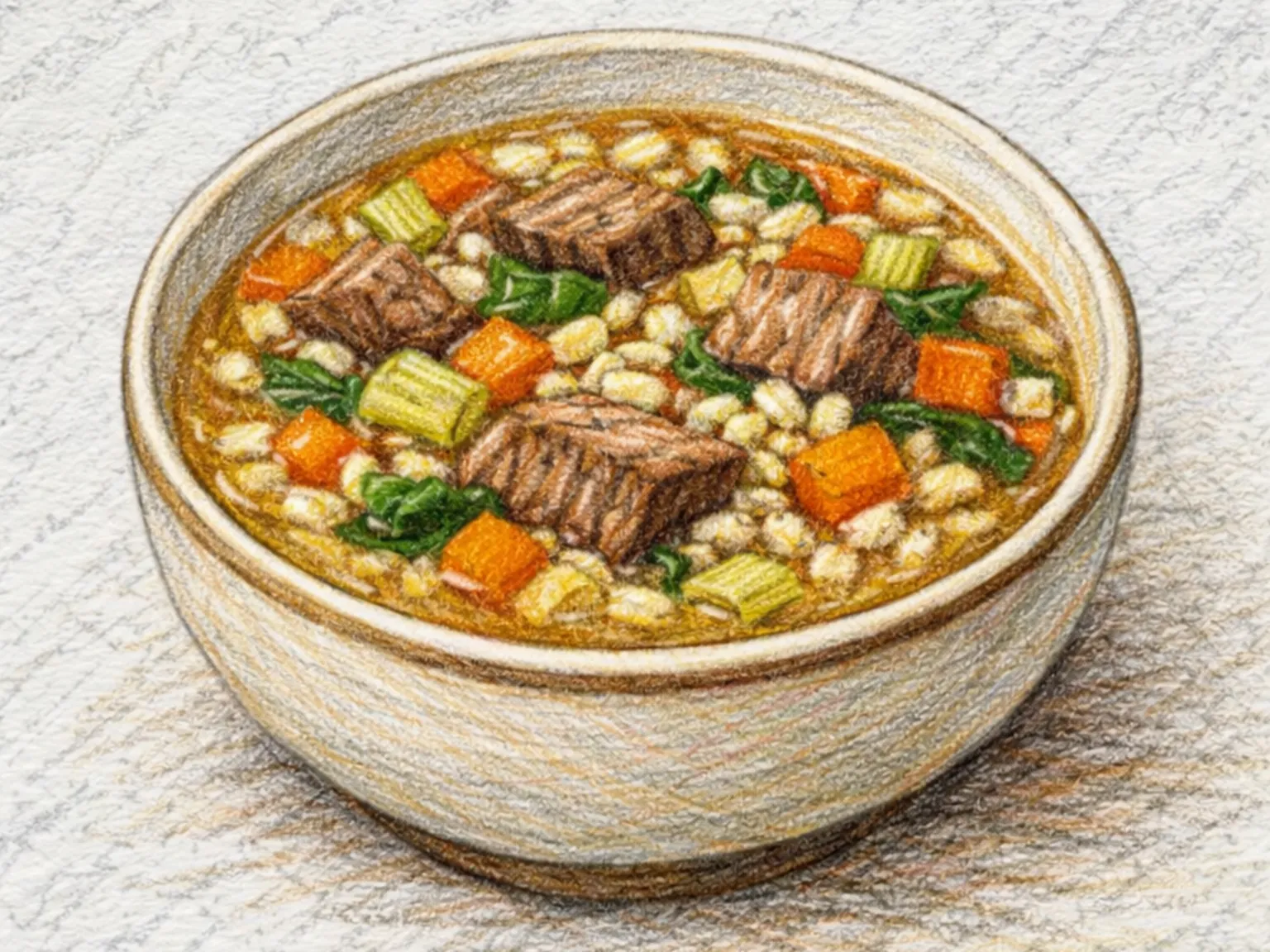
Beef barley soup begins with stew beef cut into one-inch cubes and seared in batches over high heat. Crowding the pan steams the meat instead of browning it, so working in batches is important to get the caramelized crust that forms the flavor base of the broth. Once the beef is browned, aromatics go in, followed by beef stock, pearl barley, diced carrots, celery, and onion. The soup simmers for over an hour on low heat, giving the barley time to absorb liquid and release its starch slowly, which naturally thickens the broth to a consistency between soup and stew. Long cooking also coaxes sweetness out of the carrots and celery and softens the beef until it breaks apart with light pressure. Bay leaves and dried thyme simmer with the soup from the beginning, building a quiet herbal layer through the base. Because the barley continues to absorb liquid as it sits, starting with more stock than seems necessary prevents the finished soup from becoming too dense. A bowl alongside crusty bread makes a complete, filling meal on a cold day.

Bihun Goreng (Indonesian Stir-Fried Rice Vermicelli with Sweet Soy)
Bihun goreng is fried rice vermicelli sold at street stalls and warung throughout Indonesia and Malaysia from early morning through midnight. Thin rice noodles soaked just until pliable go into a wok heated until it smokes, alongside garlic, shallots, and a generous spoonful of sambal that sizzles the moment it hits the surface. Kecap manis, the thick Indonesian sweet soy sauce, caramelizes rapidly against the hot metal and wraps each strand in a dark, sticky glaze that is the defining characteristic of the dish. Cabbage, bean sprouts, and sliced carrot are added quickly so they retain their crunch against the softness of the noodles. The technique requires constant lifting and turning to prevent the noodles from breaking or clumping while they absorb the sauce. A fried egg laid on top, its edges lacy from being cooked in very hot oil, is the standard finish. The flavor of bihun goreng rests on four layers stacked one over another: the sweetness of kecap manis, the smokiness from the wok, the heat of the sambal, and the salt of a dash of fish sauce added at the end. The ratio shifts from vendor to vendor but the underlying structure holds across regions.

Korean Mushroom Japchae (Shiitake Glass Noodle Stir-Fry)
Beoseot japchae replaces beef with shiitake mushrooms as the primary source of savory depth, making it a staple of Buddhist temple cuisine and vegetarian tables alike. Sweet potato noodles are soaked and boiled, then rinsed in cold water immediately to lock in a firm, springy texture. Shiitake, spinach, carrot, and onion are each cooked separately - their moisture levels and heat tolerances differ enough that combining them prematurely flattens every component. Soy sauce, sugar, minced garlic, and sesame oil bring the noodles and vegetables together, and the finished dish rests for ten minutes so the seasoning penetrates the noodles evenly. The result is a japchae where the mushroom carries genuine umami weight without any meat.

Korean Tuna Fried Rice (Quick Canned Tuna Stir-Fried Rice)
Chamchi bokkeumbap is a staple Korean home-style fried rice made by stir-frying canned tuna together with its oil alongside diced onion, carrot, and green onion, then folding in cooked rice and seasoning with soy sauce and sesame oil. The tuna oil distributes through the rice during frying, coating each grain and building a savory, nutty richness that needs little else to feel complete. It is the kind of meal that comes together from pantry and fridge staples with no advance planning: one can of tuna plus whatever vegetables are on hand covers the whole recipe. Cold leftover rice works better than freshly cooked because lower moisture content keeps the grains separate and gives the fried rice its characteristic loose texture. Maintaining high heat throughout prevents clumping and develops a slight char on the rice that adds depth.

Korean Stir-fried Mung Bean Jelly
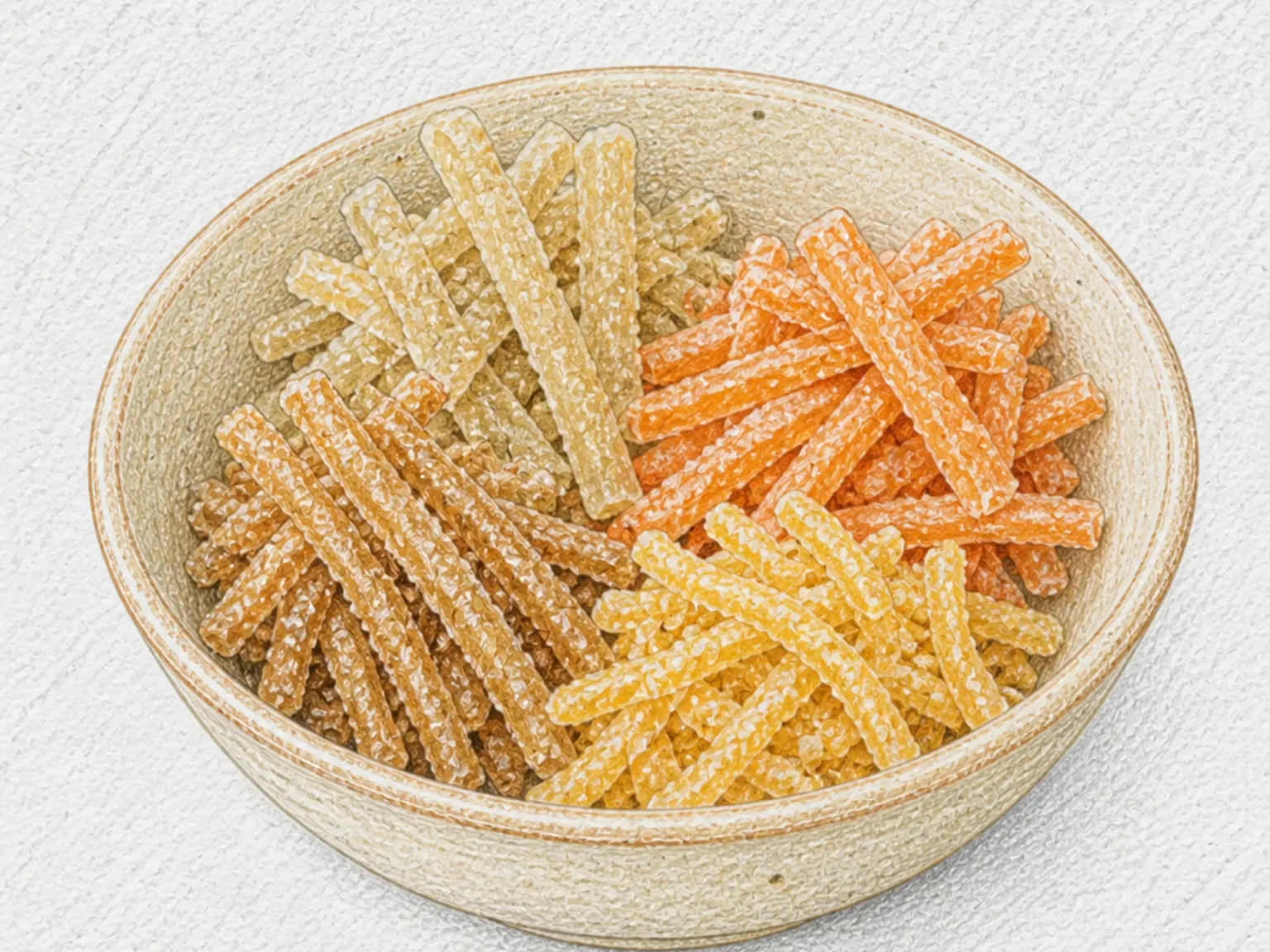
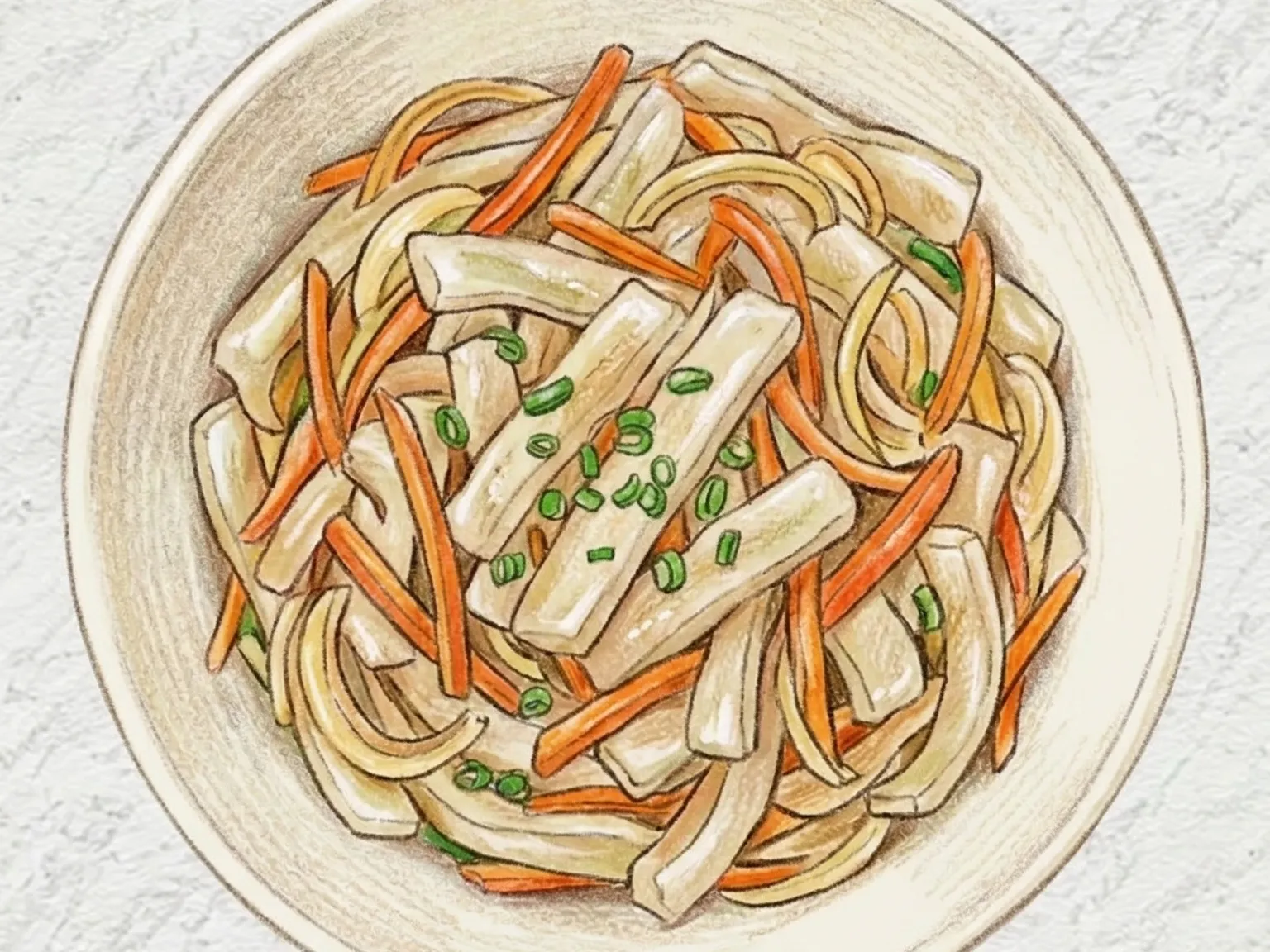
Mung bean jelly is cut into thick strips, blanched for thirty seconds to remove surface starch, then stir-fried gently with julienned carrot and onion in a soy sauce seasoning. The brief blanch firms up the jelly's exterior just enough to survive the tossing in the pan without crumbling, and washing away the starch allows the jelly to absorb the flavors of its companion vegetables more readily. Low heat and a careful hand are non-negotiable; aggressive stirring breaks the strips into shapeless lumps. The carrot contributes a faint natural sweetness, and the onion releases a light caramel note as it softens, both of which fill in the jelly's inherently neutral taste with understated warmth. Chopped green onion added at the very end lifts the dish with a sharp, fresh bite. One tablespoon of sesame oil swirled in after the flame is off coats everything in a glossy sheen and a final wave of nuttiness. At 180 calories and 9 grams of fat, this is a low-calorie side with enough fiber to sit gently in the stomach. The pale yellow color of mung bean jelly - a signature of the ingredient - comes through clearly on the finished plate, giving the dish a clean, orderly appearance that matches its delicate flavor.

Cabbage Ham Korean Street Toast
Cabbage ham street toast is a Korean griddled sandwich built by stacking a thin shredded cabbage-and-carrot egg omelet and pan-seared ham between slices of bread toasted golden in butter. The bread develops a crisp outer surface while staying soft inside, and the egg layer holds the vegetables in place, giving both structure and textural contrast to every bite. Sprinkling sugar directly onto the bread before assembly is the signature detail that defines Korean street toast, and when combined with ketchup and mayonnaise it produces the sweet-savory balance the dish is known for. The ingredients are simple and the preparation is fast enough for a weekday breakfast or an impromptu snack.

Korean Shredded Sweet Potato Fritter
Sweet potato is cut into thin strips and pan-fried with julienned carrot and onion in a tempura-style batter. The overlapping sweet potato strands crisp up at the edges during frying, while the centers stay soft and carry the vegetable's natural sweetness. Using cold water to mix the batter keeps it light and loose, preserving the crunch of each strand after cooking. Black sesame seeds scattered over the top add a nutty note and visual contrast. The jeon is best eaten immediately off the pan, when the edges are at peak crispness. A soy-vinegar dipping sauce alongside balances the natural sweetness of the vegetables with a clean, sharp note.

Royal Korean Hot Pot (Court-Style Beef & Tofu Banquet)
Sinseollo is a traditional Korean royal court hot pot featuring ground beef, tofu, shiitake mushrooms, carrot, and napa cabbage arranged in a rich beef broth. Seasoned with soup soy sauce and finished with beaten egg, the broth develops a velvety body. Historically served in a brass charcoal-heated vessel at the royal table, each ingredient is placed with care to showcase its color and shape. The layered umami from the diverse ingredients creates a remarkably complex flavor.

Japanese Braised Chicken and Root Vegetables
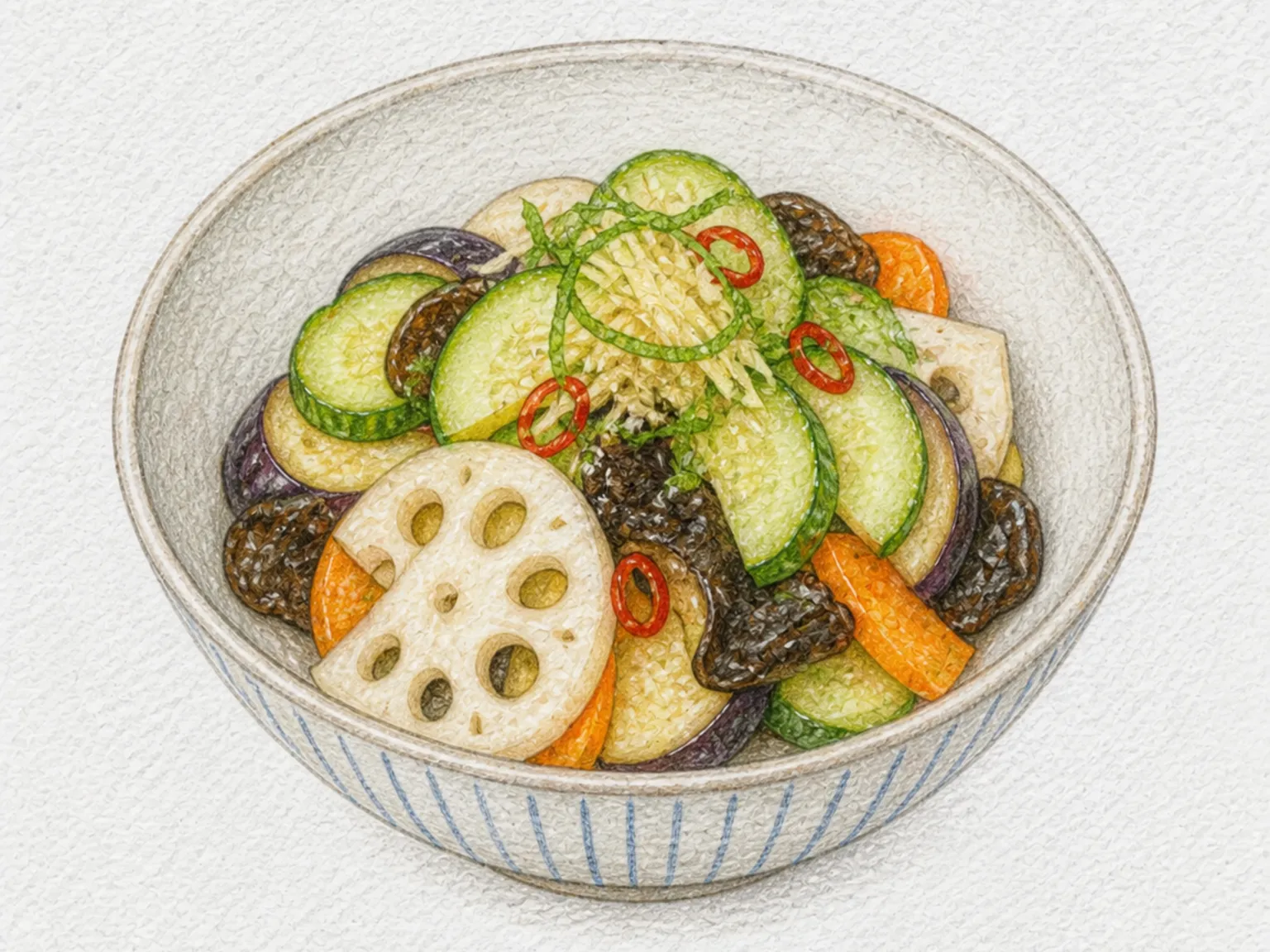
Chikuzenni is a Japanese-style braise of chicken thigh with lotus root, burdock, and carrot simmered in dashi seasoned with soy sauce and mirin. The thigh is seared first to render its fat, which coats each root vegetable piece as they braise together, building savory depth in the broth. Lotus root holds its firm bite through the cook, while burdock develops an earthy, nutty quality that intensifies with chewing. Mirin's restrained sweetness rounds out the soy, producing a side dish that stays satisfying across multiple meals of steamed rice.

Korean Soy-Vinegar Carrot Pickles
Danggeun jangajji is a Korean pickled carrot made by cutting carrots into uniform half-centimeter sticks and layering them with onion, halved Cheongyang chili, and whole garlic in a sterilized jar, then covering with a boiled brine of soy sauce, vinegar, water, and sugar. Keeping the carrot sticks the same thickness ensures they pickle at an even rate for consistent crunch in every bite. The brine must be boiled until the sugar and salt dissolve completely, then cooled before pouring; adding hot liquid can make the vegetables go soft, and undissolved solids cause uneven seasoning and shorten shelf life. The carrot's natural sweetness plays against the soy's salinity and the vinegar's tartness, producing three distinct flavors in each piece. After cooling completely at room temperature and refrigerating, the pickle is ready in twenty-four hours. If the brine turns cloudy after a few days, reboiling and cooling it before pouring it back extends the shelf life considerably. Served alongside fatty meat dishes, the acidity and snap of the pickle cut through the richness and leave the palate clean.