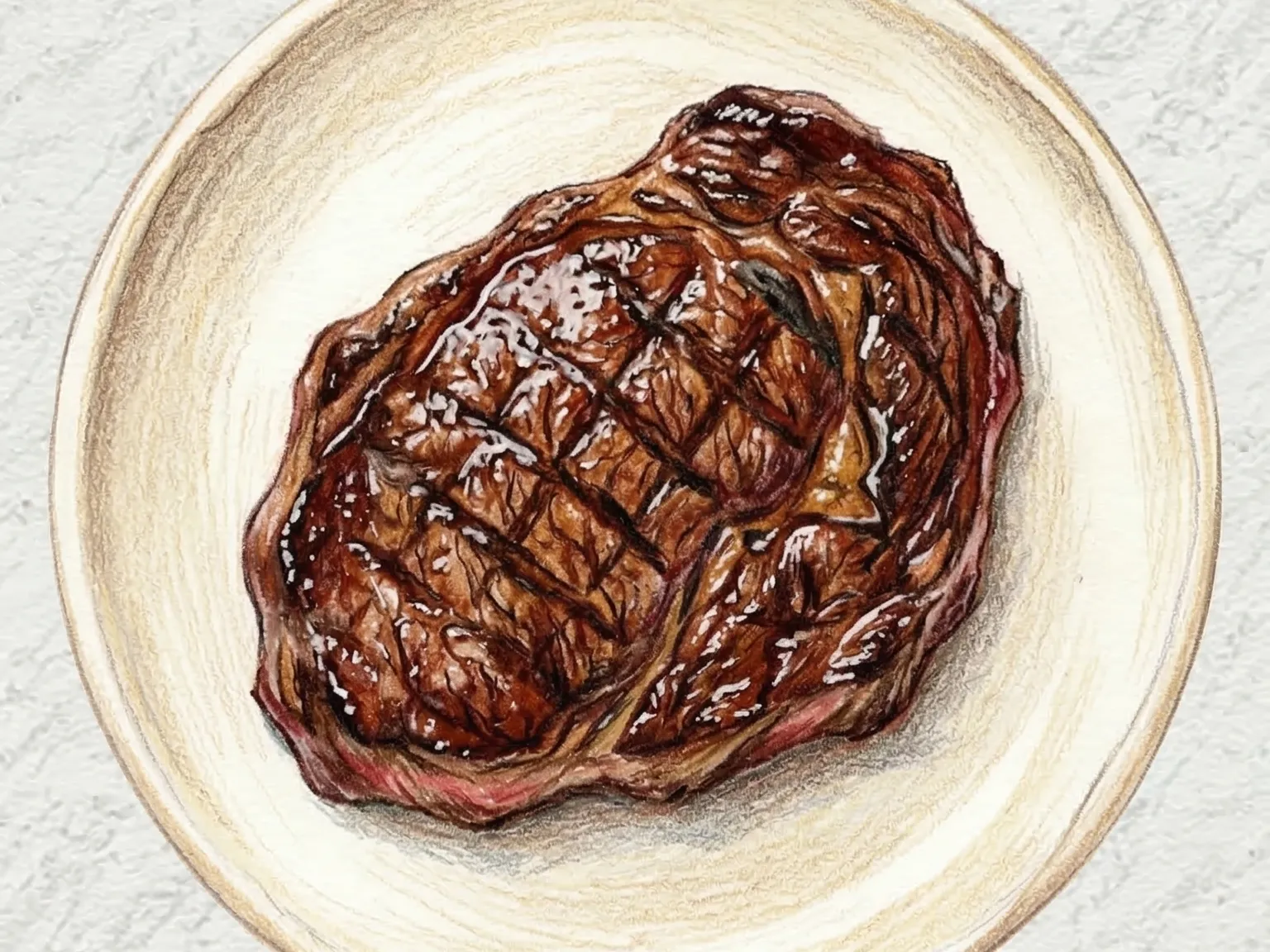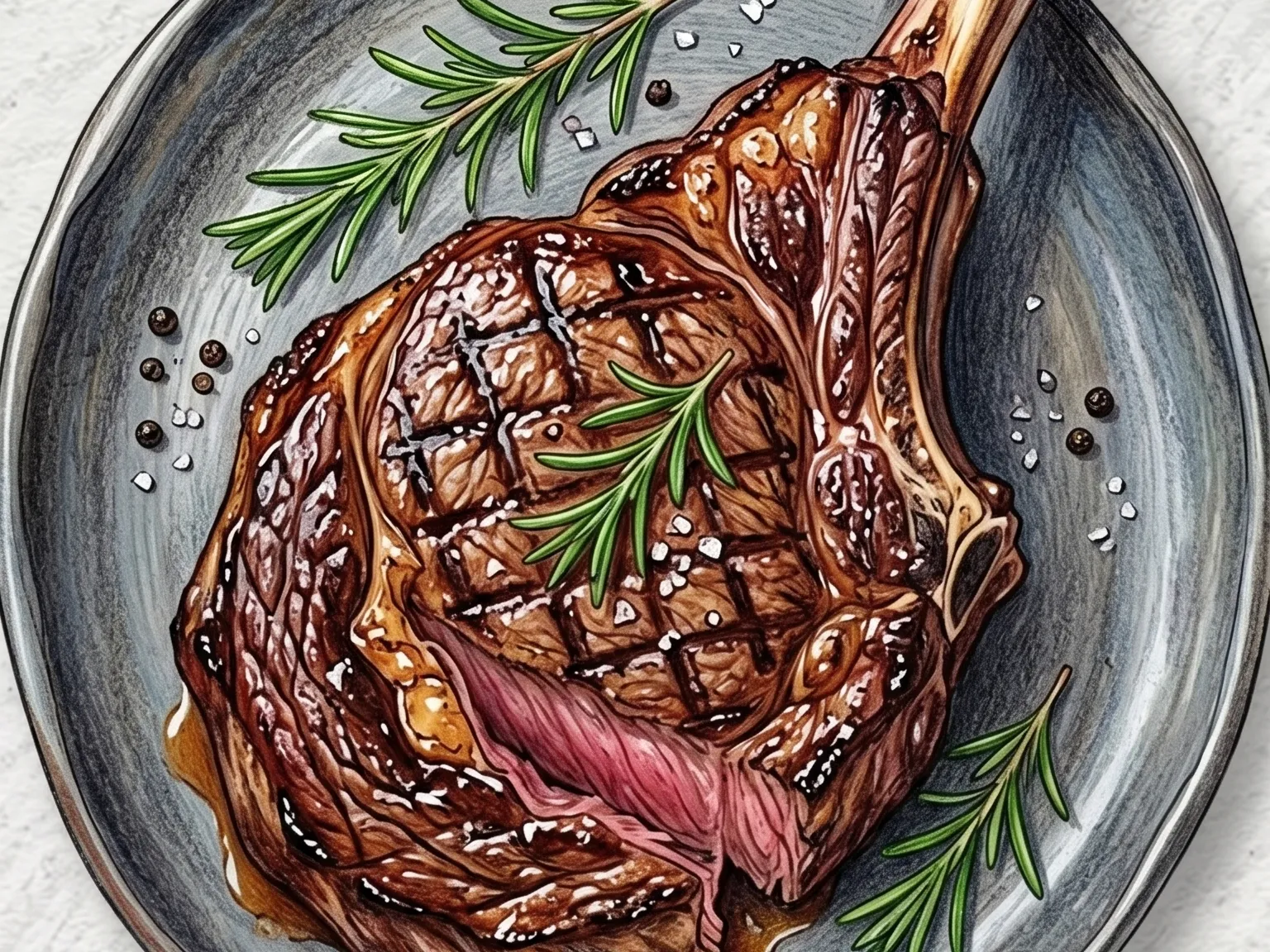
Grilled Tomahawk Steak
Quick answer
A juicy Tomahawk steak with an overwhelming visual, perfect for home parties.
- Tomahawk-steak-gui relies on a room temperature rest to develop a deep Maillard crust during the sear.
- 1-hour rest at room temp builds a deep Maillard crust when seared
Key ingredients
Core cooking flow
- 1 Take the meat out of the fridge 1 hour before cooking and pat dry with paper towels.
- 2 Season generously with salt, pepper, and olive oil on all sides, including the edges.
- 3 Sear the steak in a very hot pan for 2-3 minutes per side to create a deep crust.
A juicy Tomahawk steak with an overwhelming visual, perfect for home parties.
What Makes This Special
- Tomahawk-steak-gui relies on a room temperature rest to develop a deep Maillard crust during the sear.
- 1-hour rest at room temp builds a deep Maillard crust when seared
- Arrosage coats the surface repeatedly with rosemary-infused butter
- 10-minute rest after 54°C core equalizes juices across the thick cut
Instructions
- 1
Take the meat out of the fridge 1 hour before cooking and pat dry with paper towels.
- 2
Season generously with salt, pepper, and olive oil on all sides, including the edges.
- 3
Sear the steak in a very hot pan for 2-3 minutes per side to create a deep crust.
- 4
Lower heat, add butter, rosemary, and crushed garlic, then baste the meat with the melted butter.
- 5
Remove once the internal temperature reaches your preference (54°C for medium) and rest for 10 minutes.
Tips
Nutrition (per serving)
Recipes to Cook Together
More Grilled →Serve with this
Loco Moco Rice Bowl (Hawaiian Beef Patty Gravy Rice Bowl)
Ground beef is mixed with minced onion, shaped into patties, and pan-seared for four to five minutes per side until a crisp crust forms outside while the center stays moist. The same pan - still coated with beef drippings - gets butter, the remaining onion, and flour to build a quick roux, then water and Worcestershire sauce transform it into a smooth, glossy gravy that captures all the fond. Assembly is straightforward: rice on the bottom, patty on top, gravy ladled over, and a sunny-side egg crowning the bowl. Breaking the runny yolk into the gravy creates a rich, velvety sauce that ties the Hawaiian-born dish together into a hearty, deeply satisfying plate.
Refreshing Spicy Mulhoe Broth
A golden ratio recipe for a refreshing, spicy, and sweet-and-sour Mulhoe broth.
Shredded Chili Pickle
Spicy and sour shredded chili pickles, perfect for grilled meats.
Authentic Jeolla-style Kimchi
Authentic Southern-style kimchi with rich fish sauce and rice paste for deep umami.
Similar recipes
Korean Salt-Grilled Beef Chuck Flap
Salchisal sogeum-gui is a Korean salt-grilled beef chuck flap tail, a well-marbled cut from behind the shoulder that is rested at room temperature for ten minutes, seasoned with coarse salt and pepper only, then seared for ninety seconds per side in a smoking-hot pan. The heavy marbling keeps this cut moist even under intense, brief heat, and thoroughly drying the surface beforehand is what triggers rapid Maillard browning into a deep brown crust. After searing, butter, garlic cloves, and a rosemary sprig are added to the pan, and the foaming butter is spooned over the meat for one final minute to layer herbal and garlic aromas onto the crust. A three-minute rest before slicing allows the muscle fibers to relax and reabsorb their juices, so the plate stays clean when served alongside asparagus grilled in the same pan.
Pan-Seared Steak
Pan-seared steak starts with bringing the beef to room temperature for 30 minutes and patting the surface completely dry with paper towels - residual moisture prevents the Maillard reaction that builds the deep brown crust responsible for both flavor and juice retention. Seasoning is kept to salt and pepper so the beef's own character leads. The pan must be heated until it smokes before the oiled steak goes in, and each side sears for two to three minutes without moving the meat. Reducing the heat and adding butter, garlic, and rosemary creates an aromatic basting liquid that infuses the surface as it cooks to the target doneness. Resting the steak off heat for a full five minutes lets the muscle fibers relax and reabsorb their juices - skipping this step means the liquid pools on the plate instead of staying inside the meat.
Snow Crab Boiling Seafood
A Southern American-style seafood boil featuring snow crab and seafood in spicy Cajun sauce.
Chaekkeut Seuteikeu (Sirloin Steak)
Sirloin steak is seasoned simply with salt and pepper, then seared in a smoking-hot pan for two to three minutes per side to build a deep brown crust through the Maillard reaction. Bringing the steak to room temperature for twenty minutes before cooking and patting the surface completely dry are both essential - cold, wet meat steams rather than sears, producing a pale, soft exterior instead of a caramelized shell. Once the crust is set, the heat is lowered and butter, crushed garlic, and rosemary are added to the pan for basting, which layers aromatic richness onto the already flavorful surface. Resting the steak on a cutting board for five minutes after cooking allows the muscle fibers to relax and reabsorb their juices, so slicing produces clean cuts rather than a pool of liquid on the plate.
Grilled Cheese Sandwich
Grilled cheese sandwich is made by buttering the outer sides of bread slices, filling them with cheddar and mozzarella cheese, and toasting both sides in a pan until golden and crisp. Combining cheddar's sharp saltiness with mozzarella's stretchy pull gives the sandwich both depth of flavor and satisfying texture. A thin layer of Dijon mustard spread on the inner bread adds a subtle, peppery bite that cuts through the richness of the melted cheese. Cooking over medium-low heat is essential - it gives the cheese enough time to melt completely before the bread surface burns. Pressing the sandwich lightly while flipping ensures the bread and cheese bond tightly, producing a clean cross-section when the sandwich is sliced in half.
Pulled Pork Sandwich
Pulled pork sandwich starts with pork shoulder rubbed in salt and paprika, then slow-cooked for two and a half to three hours with onion and garlic until the connective tissue converts to gelatin and the meat shreds effortlessly with two forks. The low-and-slow method delivers a tenderness that faster cooking cannot replicate. Tossing the shredded meat in barbecue sauce layers smoky sweetness and tang over the deep pork flavor, while lightly toasted buns provide a crisp contrast to the moist filling. Making the pork a day ahead and refrigerating it lets the sauce penetrate deeper into the fibers, intensifying the overall taste.