Rokubei (Extruded Sweet Potato Noodles)
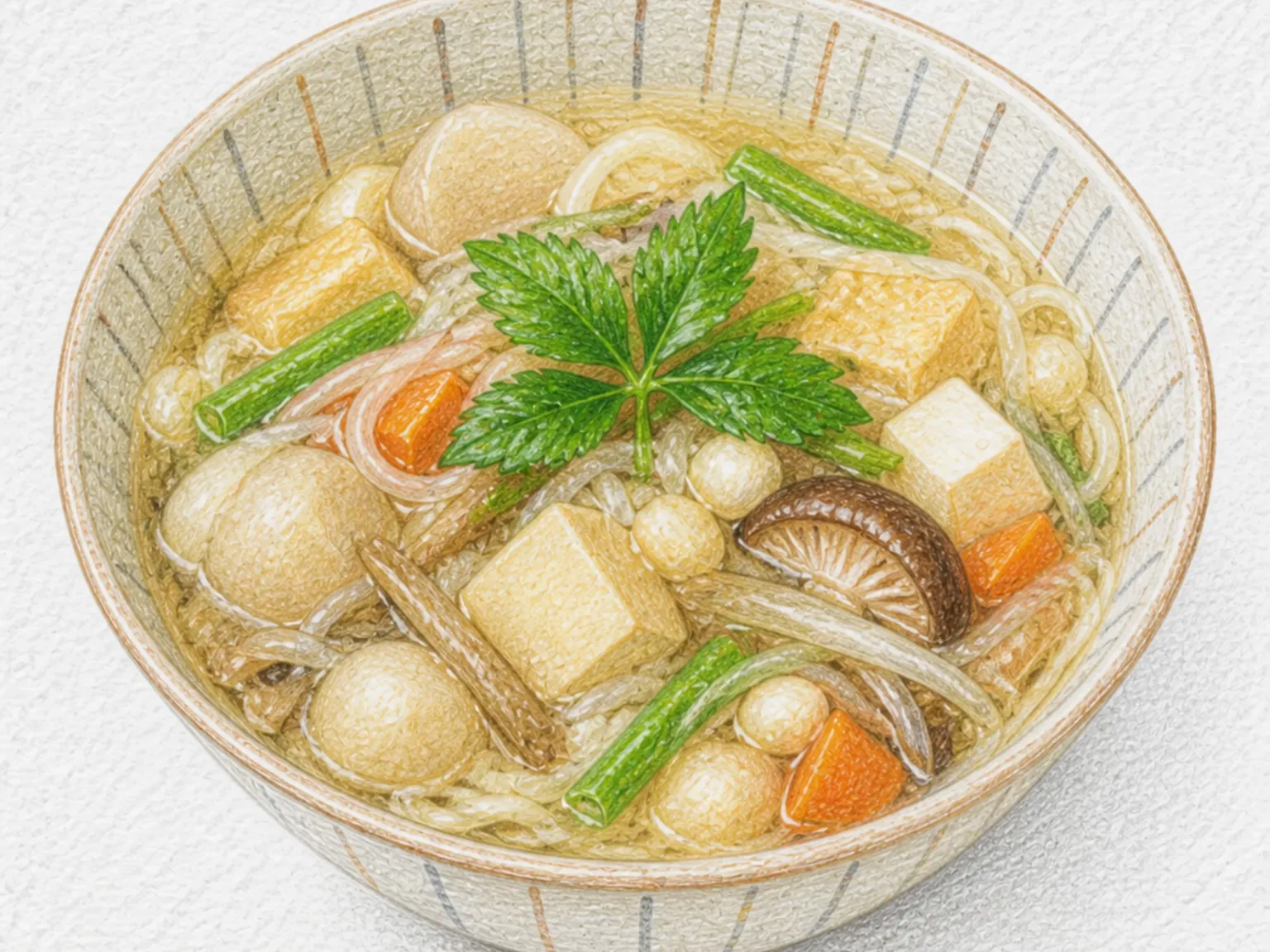
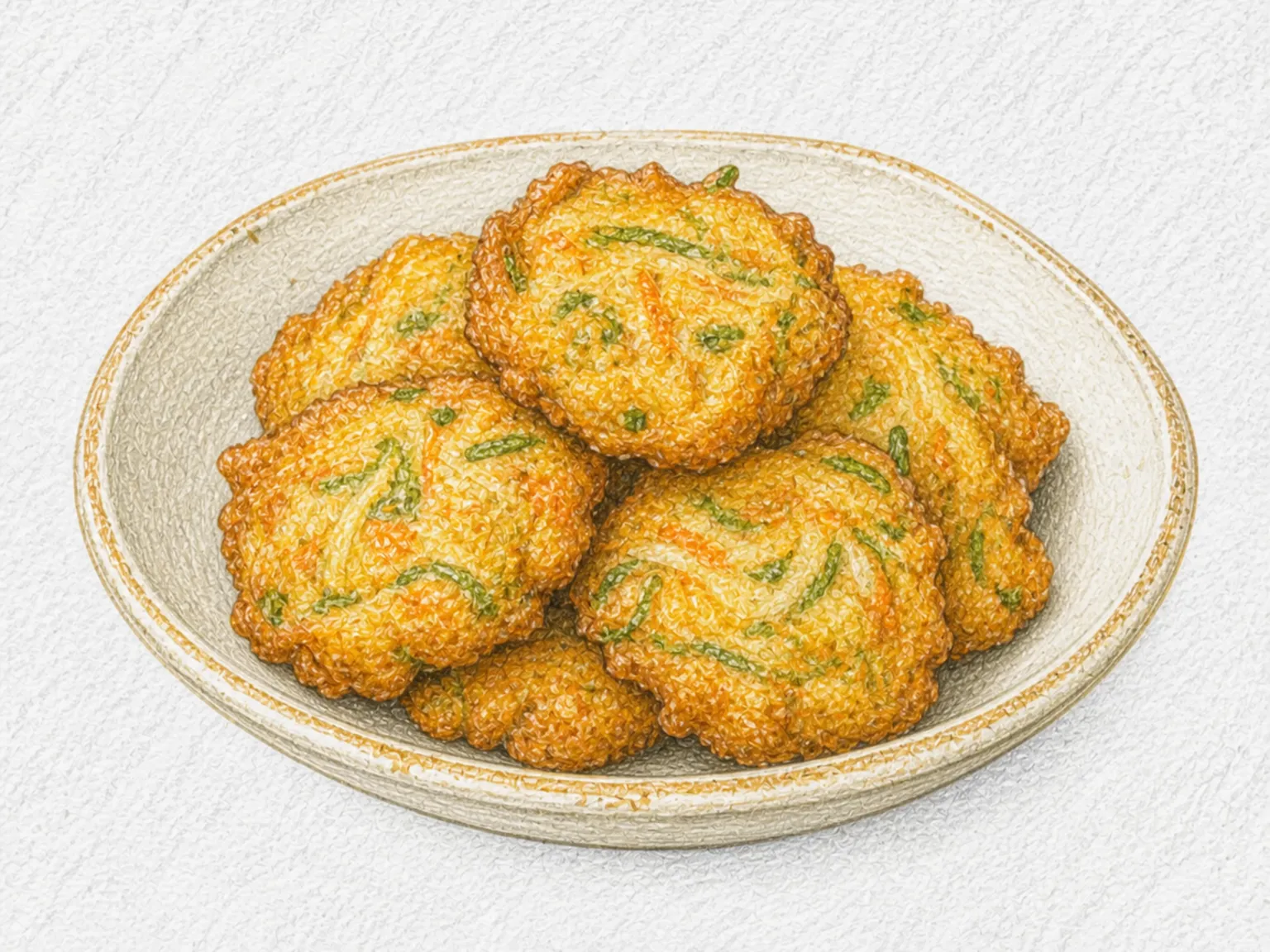
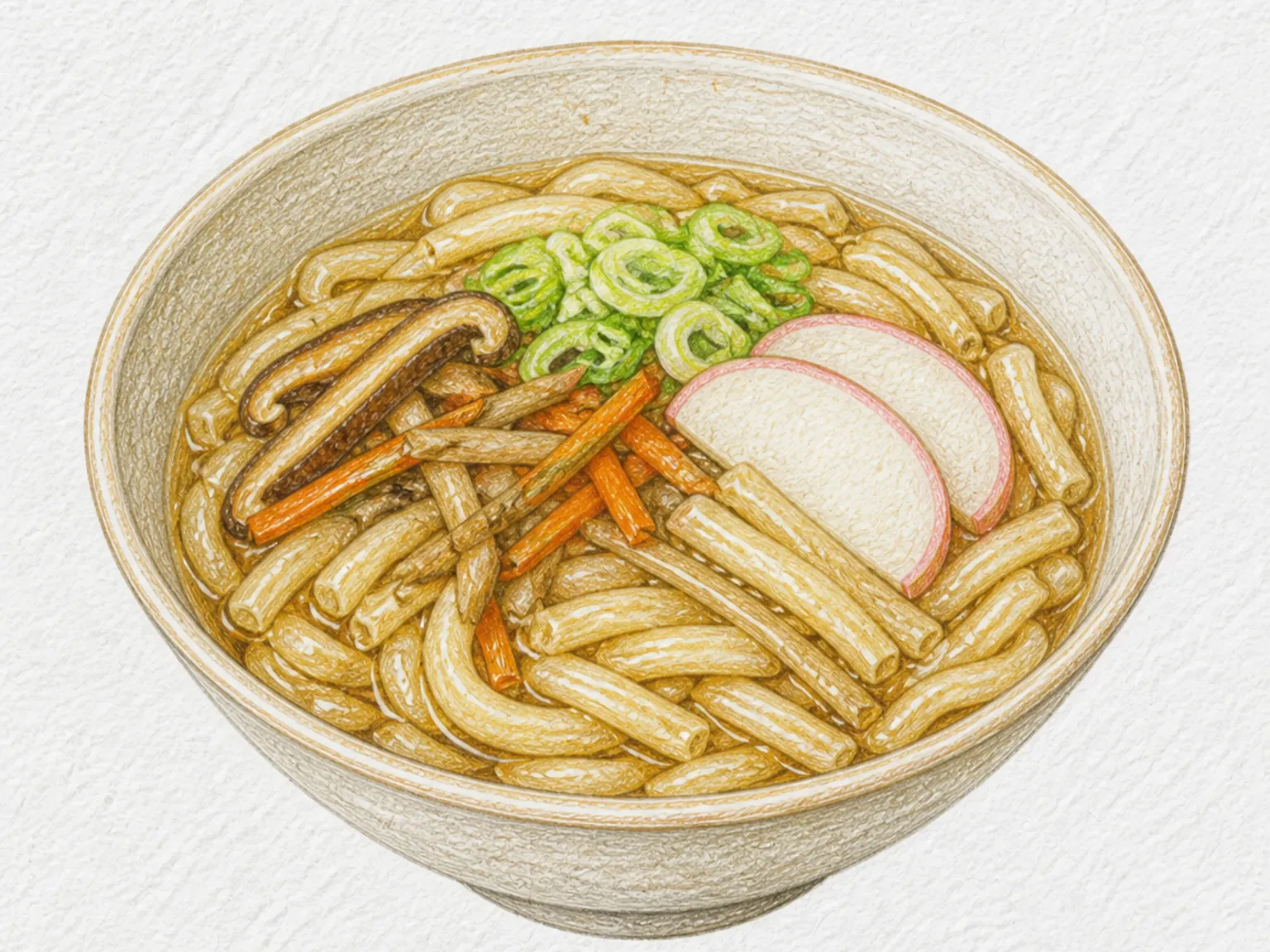
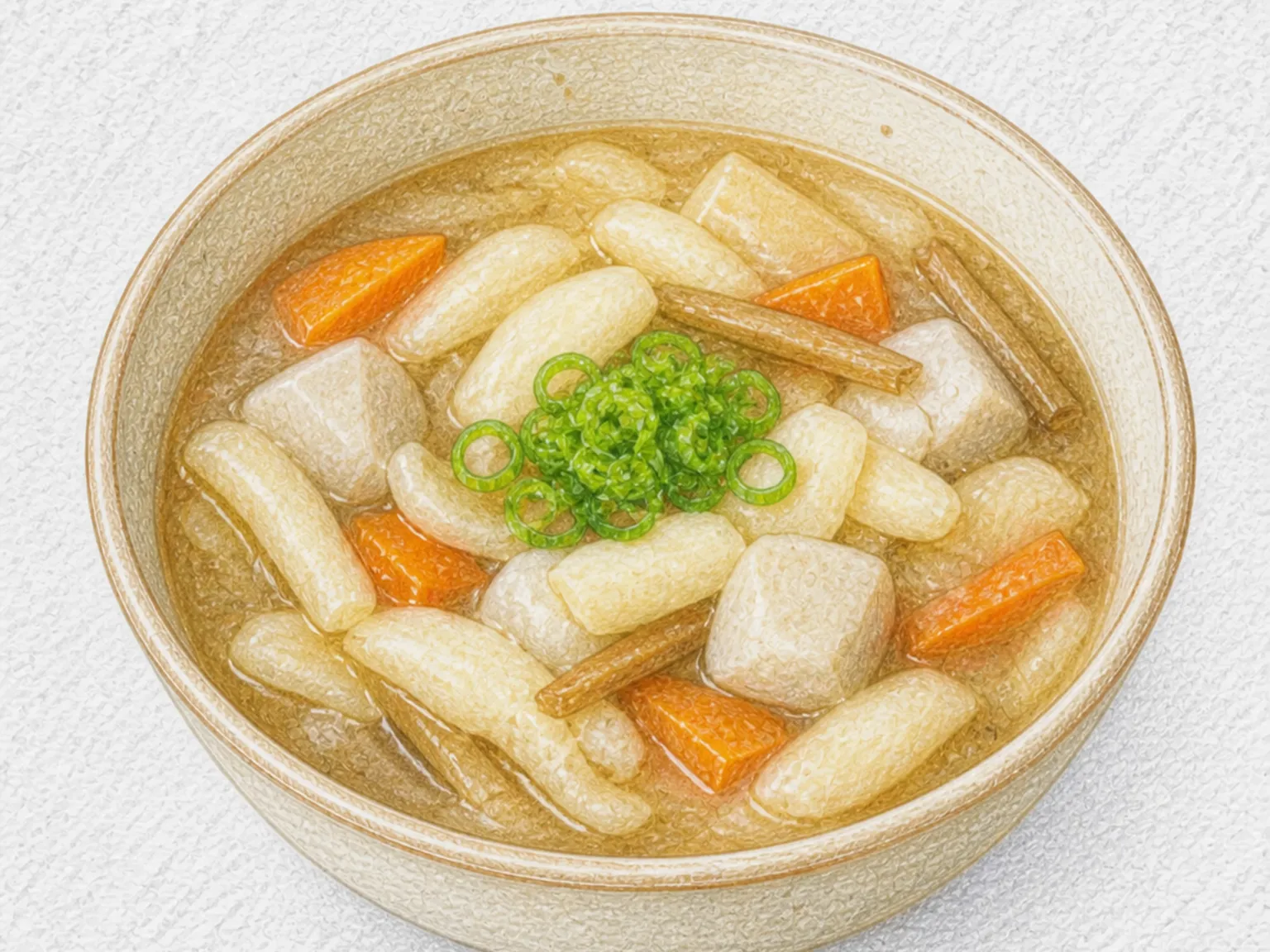
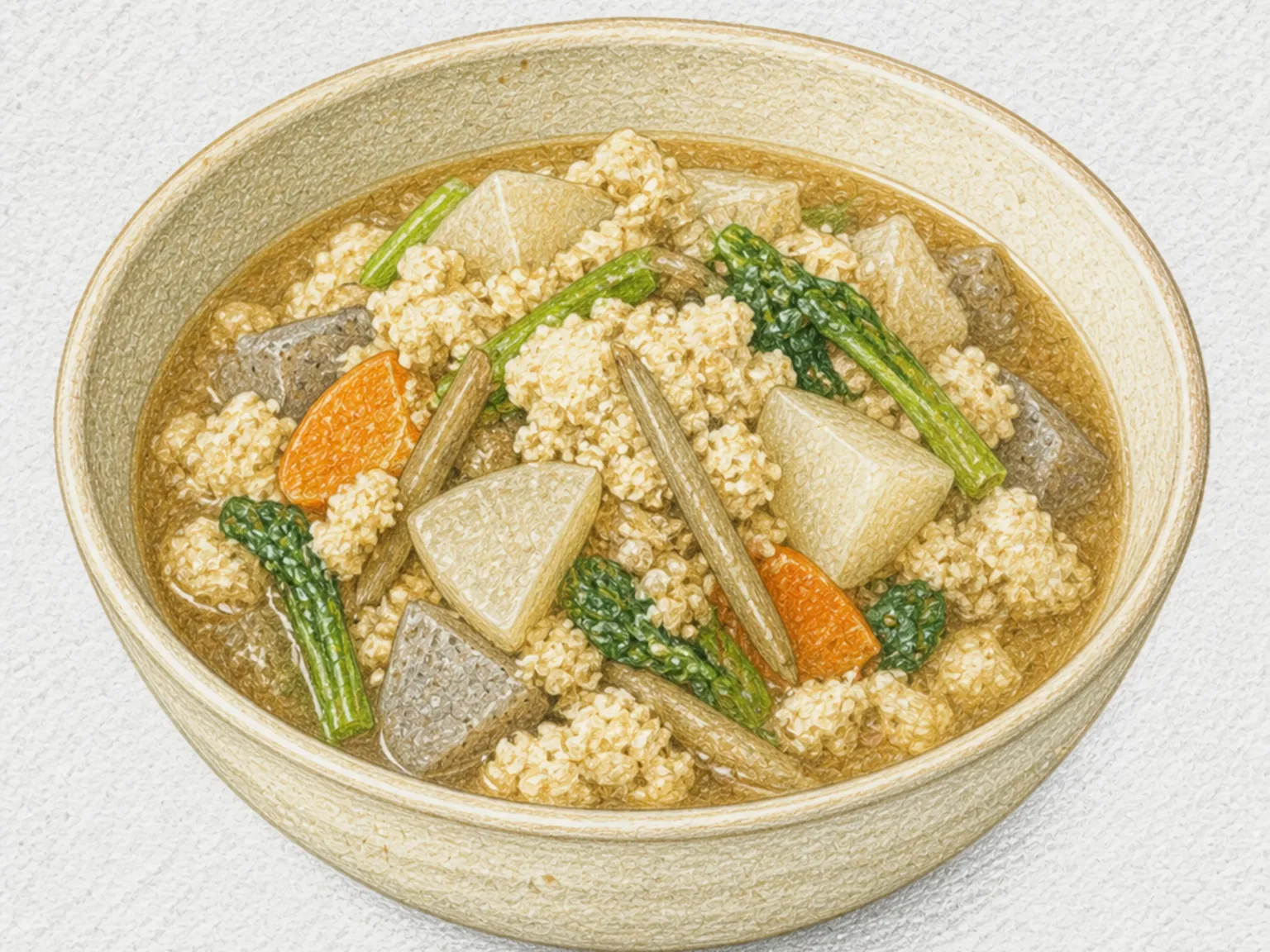
Rokubei is a sweet-potato noodle dish passed down since the Edo period in Shimabara and Tsushima, Nagasaki Prefecture. Sendango, made from the local preserved sweet-potato product called sen, is crumbled and kneaded with warm water. The smooth dough is formed into softball-size balls, briefly boiled, broken apart, and kneaded again. Small portions are pressed through the holes of a rokubei-segi directly into boiling water, producing short, thick strands rather than long wheat noodles. After the pot returns to a boil, the noodles cook for 2 to 3 minutes, then are cooled and rinsed to remove surface harshness. A clear soup is made with burdock, carrot, rehydrated shiitake, dashi, sake, light soy sauce, dark soy sauce, and salt. The drained noodles are served in the soup with sliced kamaboko and green onion, giving a smooth exterior, chewy center, and faint sweet-potato taste.
Narae (Seven-Ingredient Vinegar Salad)
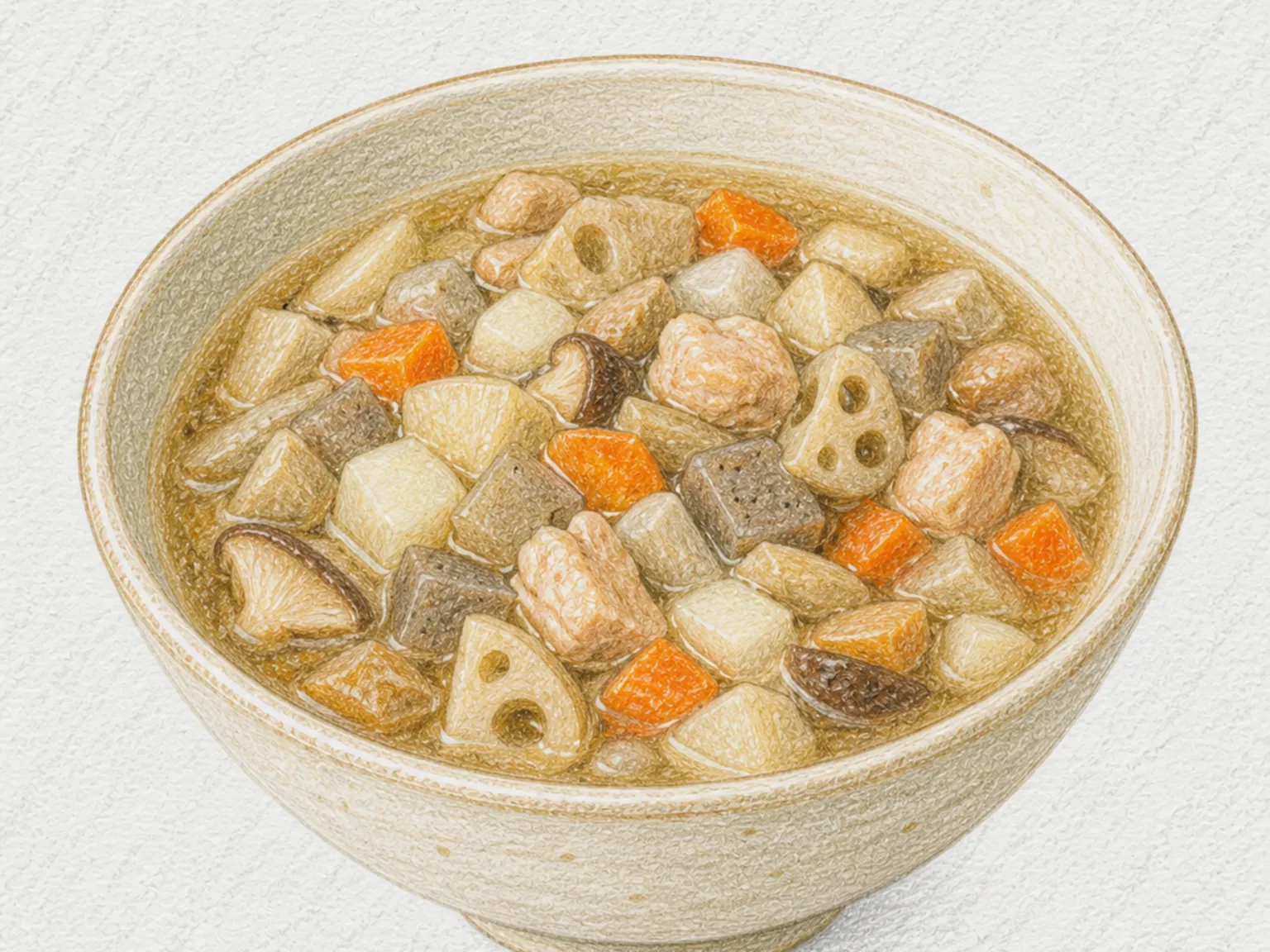
Narae is a Tokushima salad that cooks seven ingredients separately before dressing them in a sweet seasoned vinegar: daikon, carrot, dried shiitake, fried tofu, lotus root, burdock, and koya tofu. Daikon, carrot, lotus root, mushroom, and fried tofu simmer in shiitake soaking liquid; burdock is boiled on its own; and koya tofu absorbs a lightly sweet soy broth. Once all three groups are thoroughly drained, they are tossed with rice vinegar, sugar, light soy sauce, mirin, and sake and left to take on the seasoning. Sesame and yuzu peel finish a dish served at memorials and equinox observances, and now also eaten at home and in school meals.
Korean Stir-Fried Burdock Root
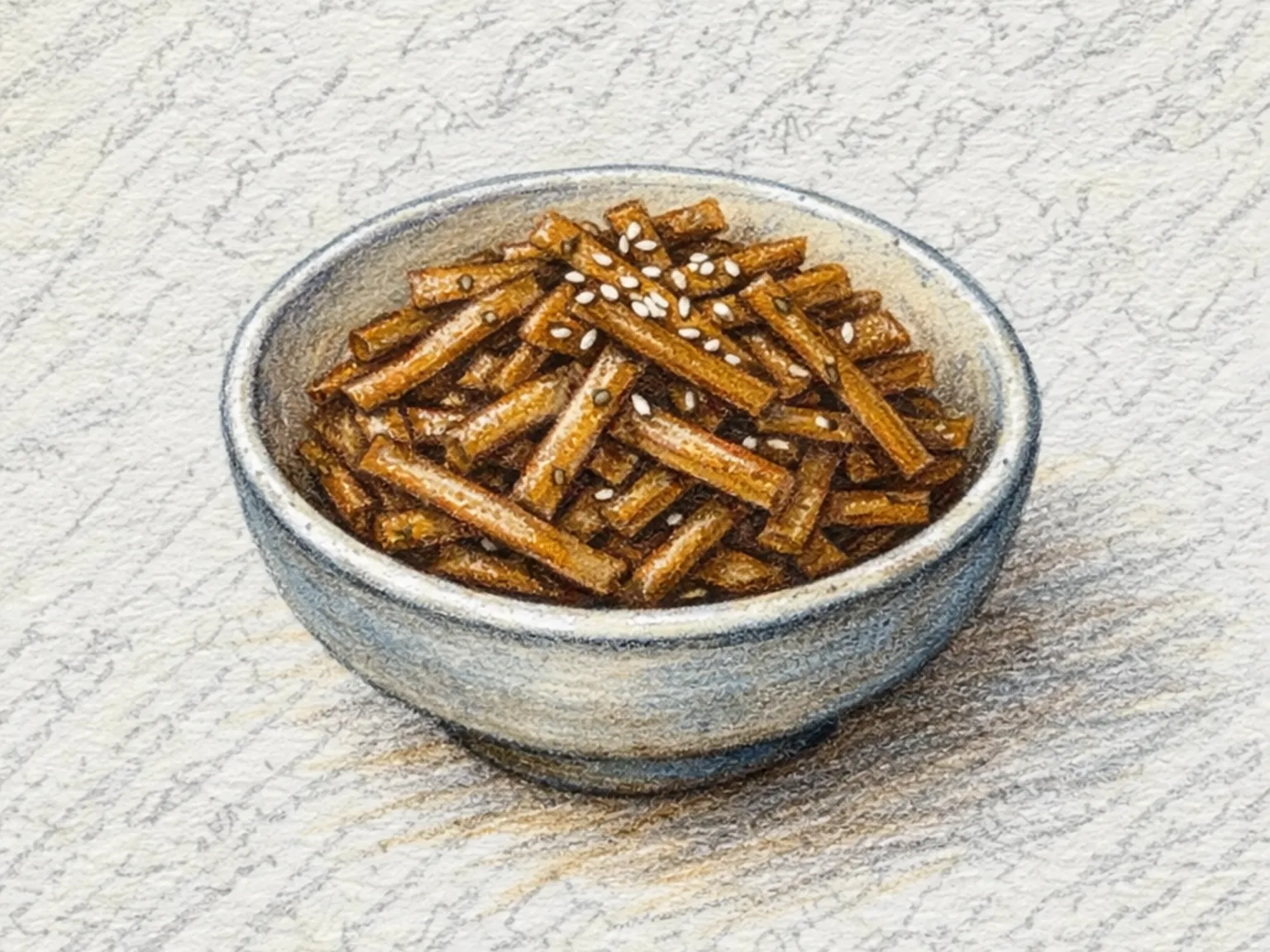
Burdock root is julienned into thin strips and stir-fried with soy sauce and Korean grain syrup until each piece is coated in a glossy, sweet-salty glaze. Burdock carries an earthy, almost woody flavor unique among root vegetables, and soaking the cut strips in vinegared water before cooking prevents oxidation and keeps the color clean. A quick initial fry in oil seals the surface and drives off moisture, preserving the root's natural crunch. Adding soy sauce and grain syrup transforms the pan into a bubbling reduction that clings to every strand as it thickens. The grain syrup's gentle sweetness softens the soy sauce's salinity into a balanced, caramelized coating, while the heat converts burdock's raw earthiness into a toasted, nutty aroma. Reducing the sauce completely yields a chewy, almost candy-like texture; leaving a trace of moisture produces a crunchier, more succulent result. The finished banchan stores well under refrigeration for a week or more, making it a practical side to prepare in bulk.
Hiruzen Okowa
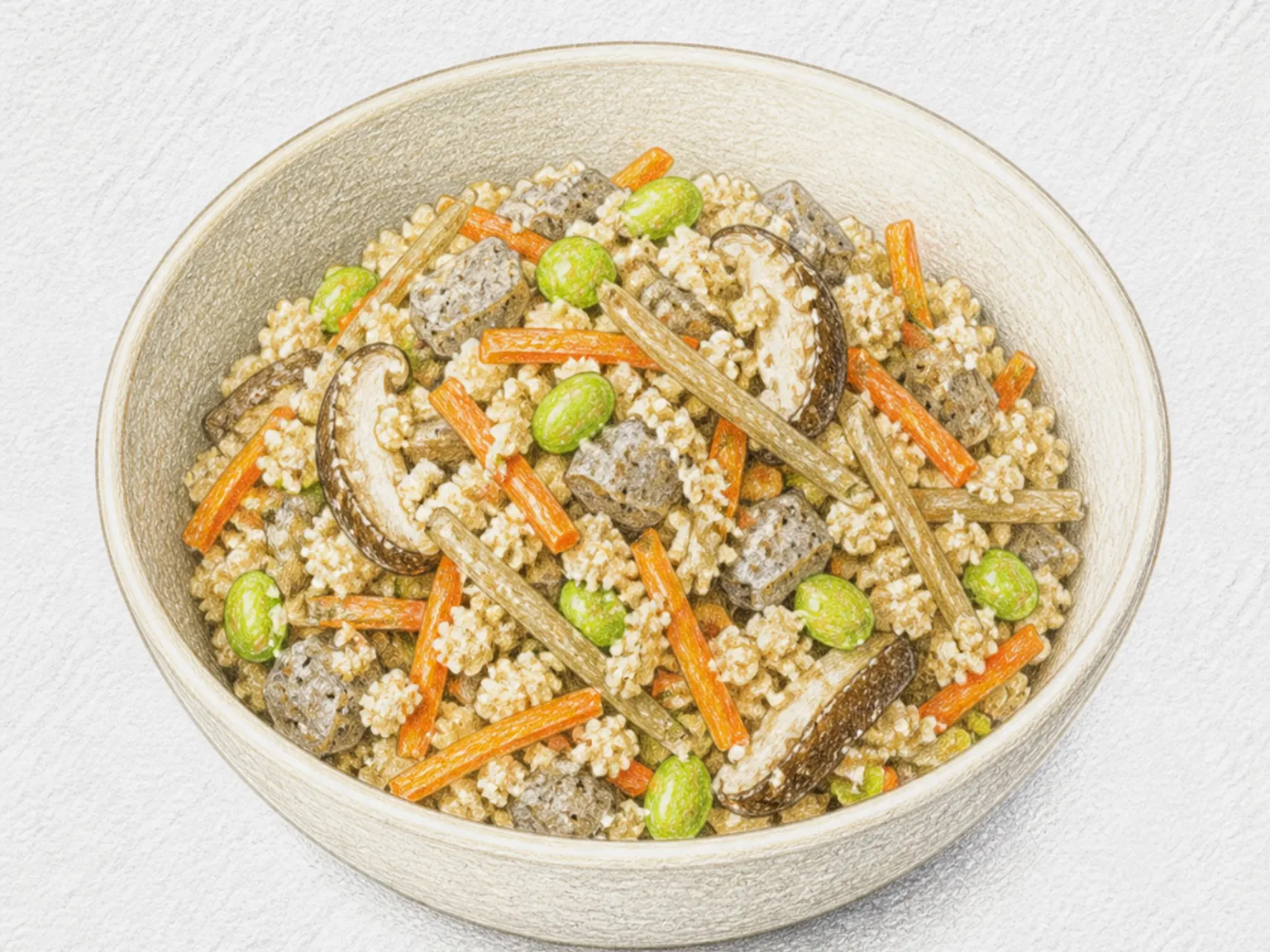
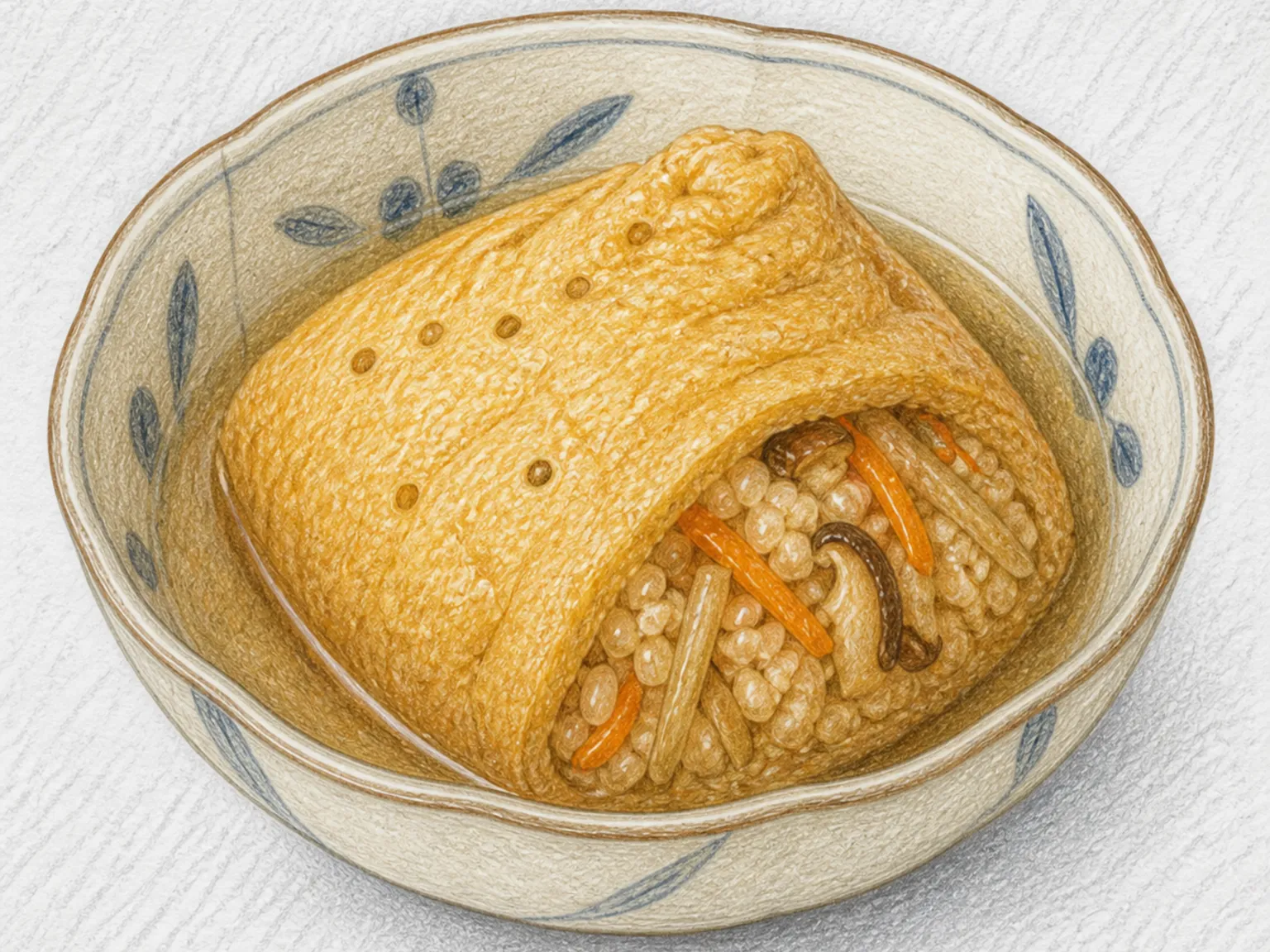
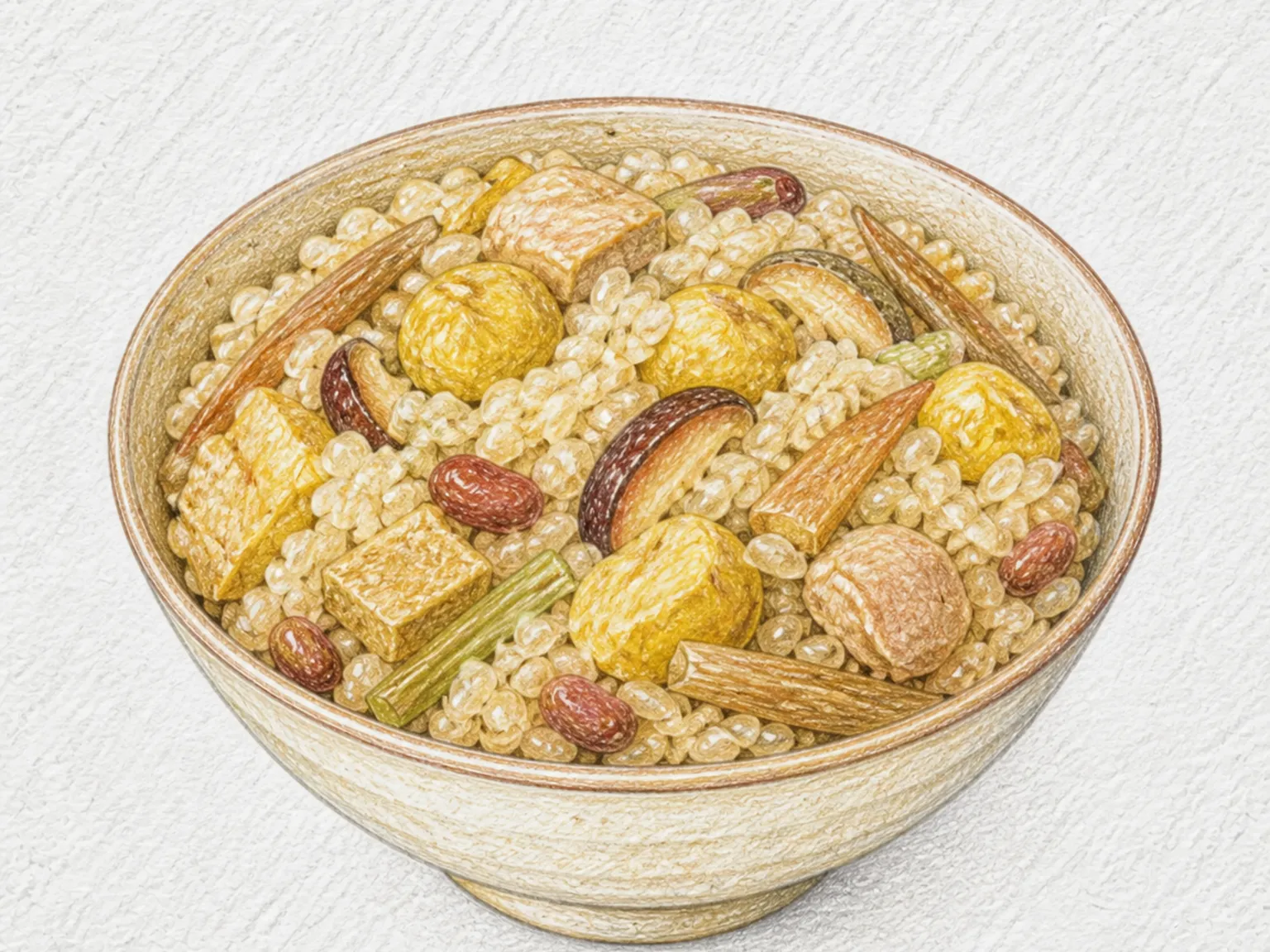
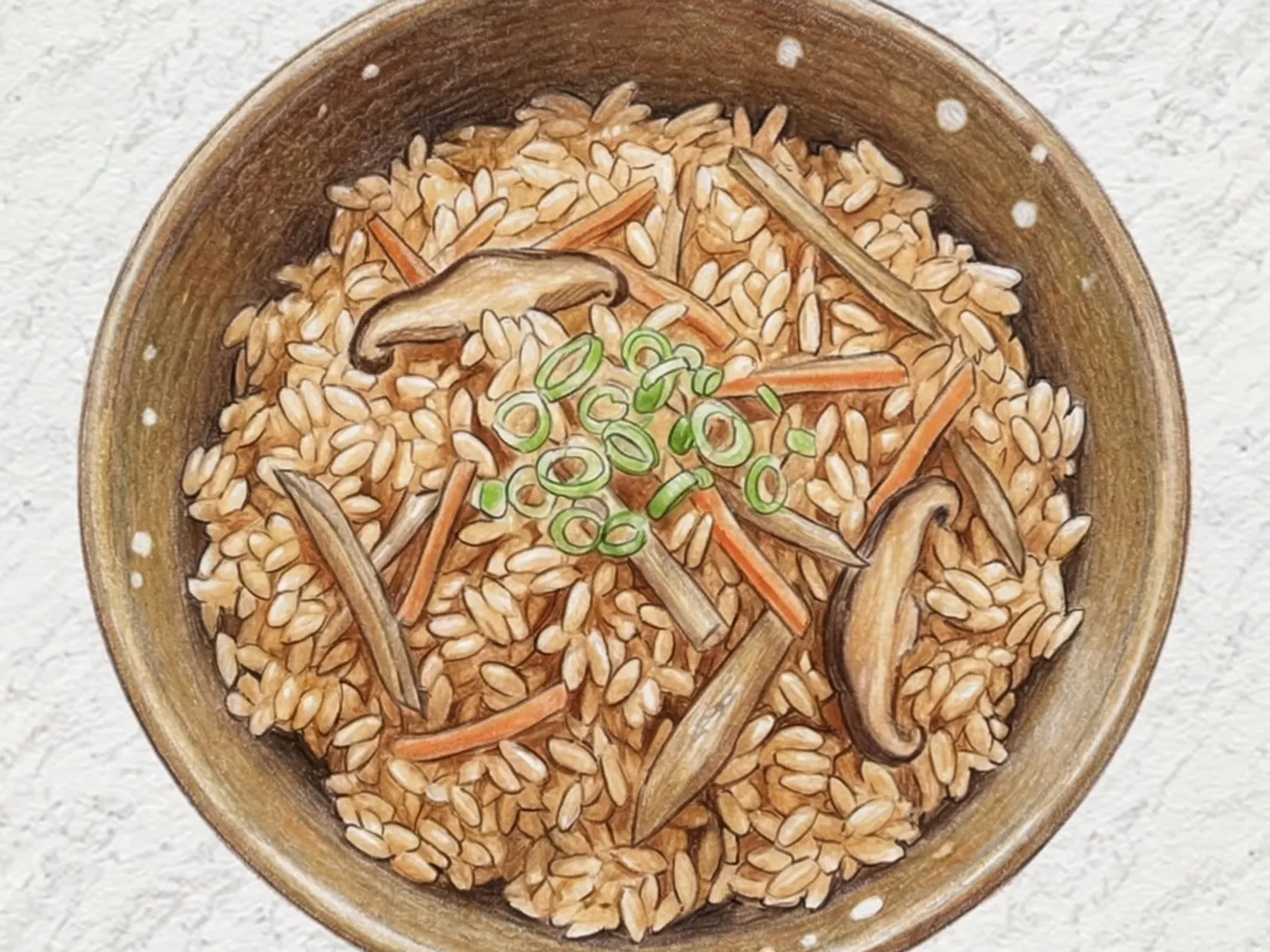
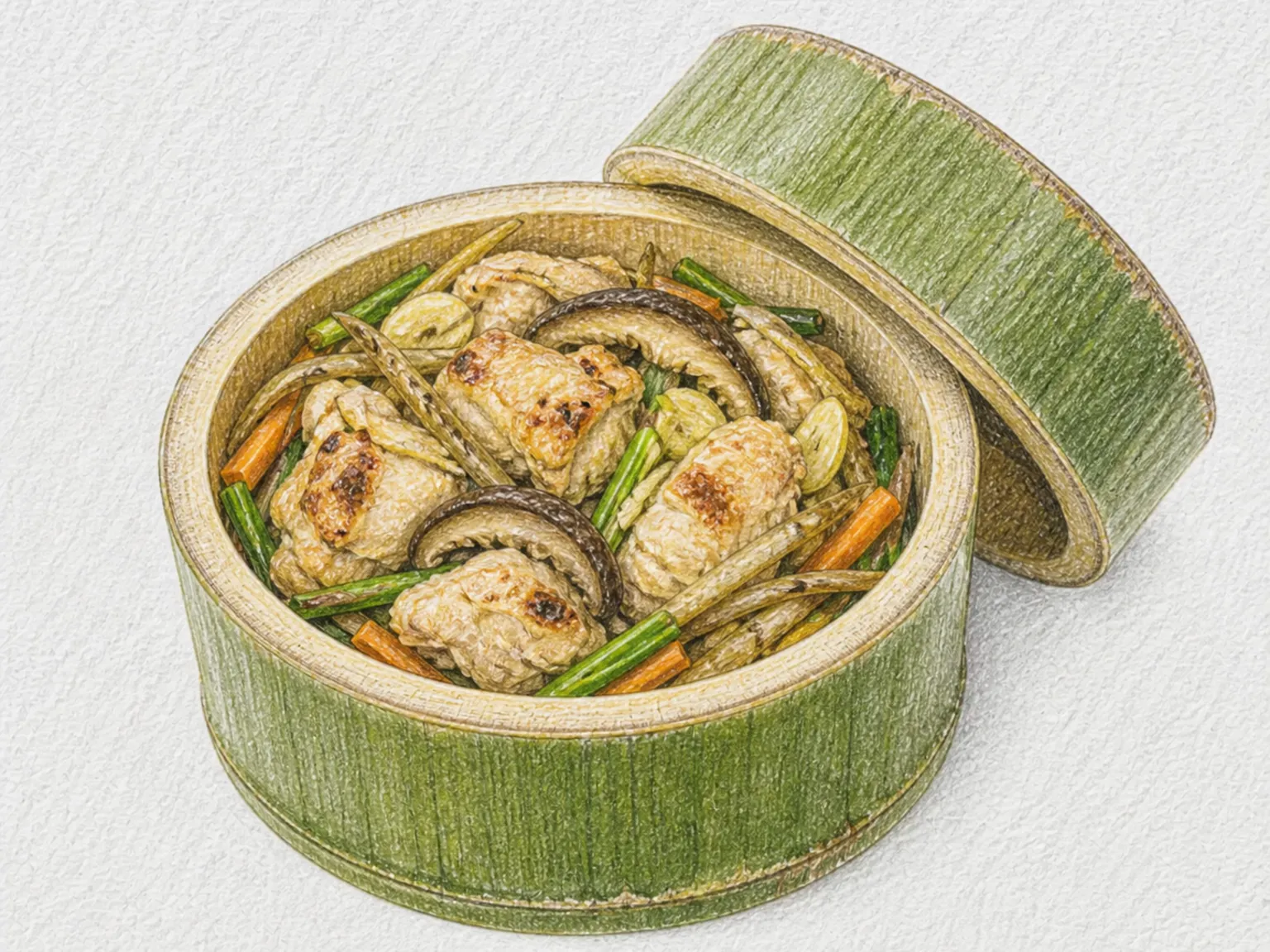
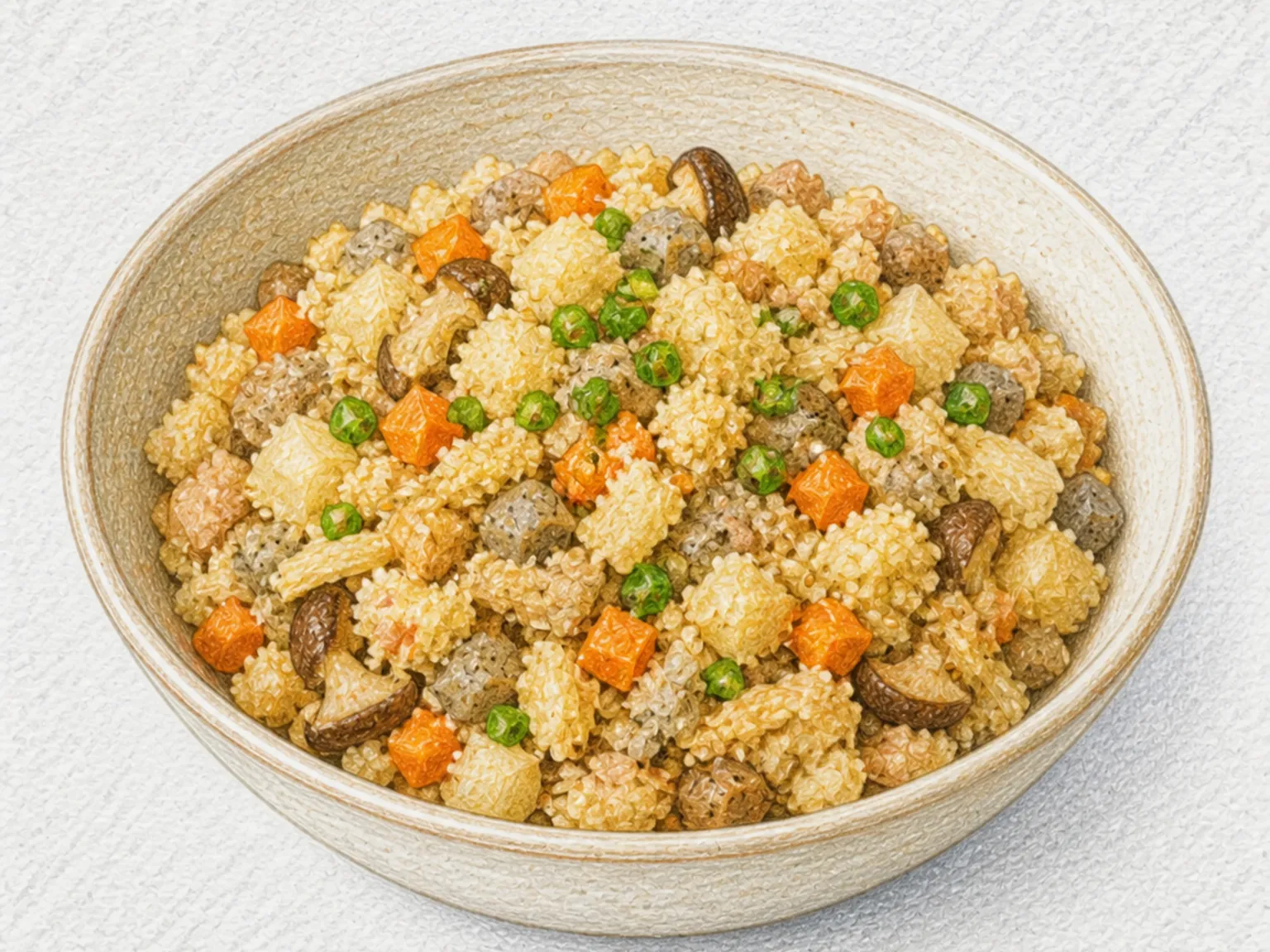
Hiruzen okowa is a steamed mixed glutinous-rice dish from Maniwa in Okayama, combining sticky rice and barley with chicken, chestnuts, burdock, fuki, dried shiitake, and fried tofu. It developed after Daisen okowa crossed into the Hiruzen area, and barley became part of the local version through community nutrition programs from the 1950s. Families served it for New Year, seasonal celebrations, festivals, and household gatherings. Its defining method is to sauté and simmer the filling, reserve the seasoned cooking liquid, and sprinkle that liquid over the grains during steaming. Soaked grains and briefly dried chestnuts become glossy and pleasantly chewy, while blanched green beans added at the end preserve a fresh green accent.
Korean Braised Burdock and Beef
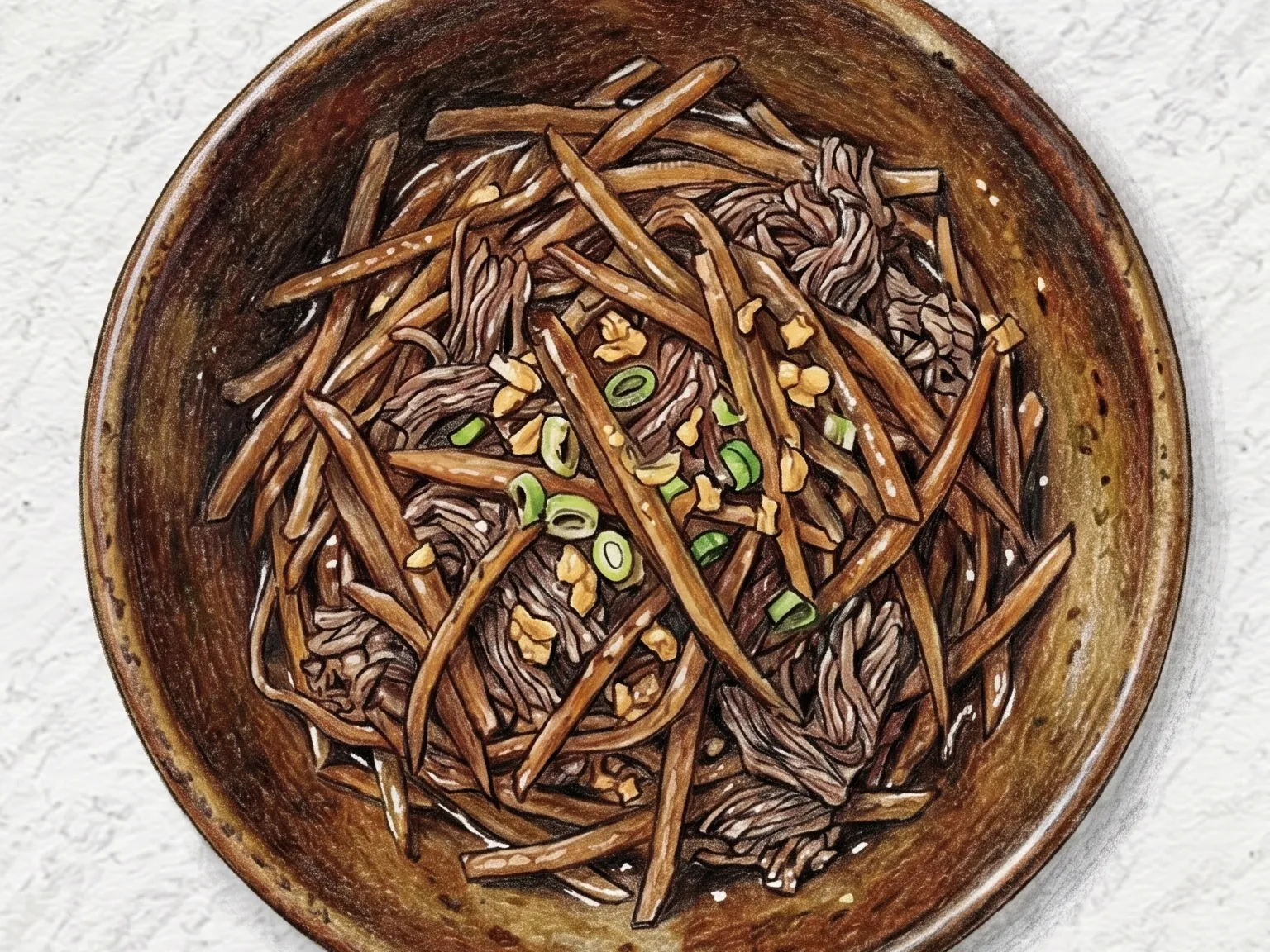
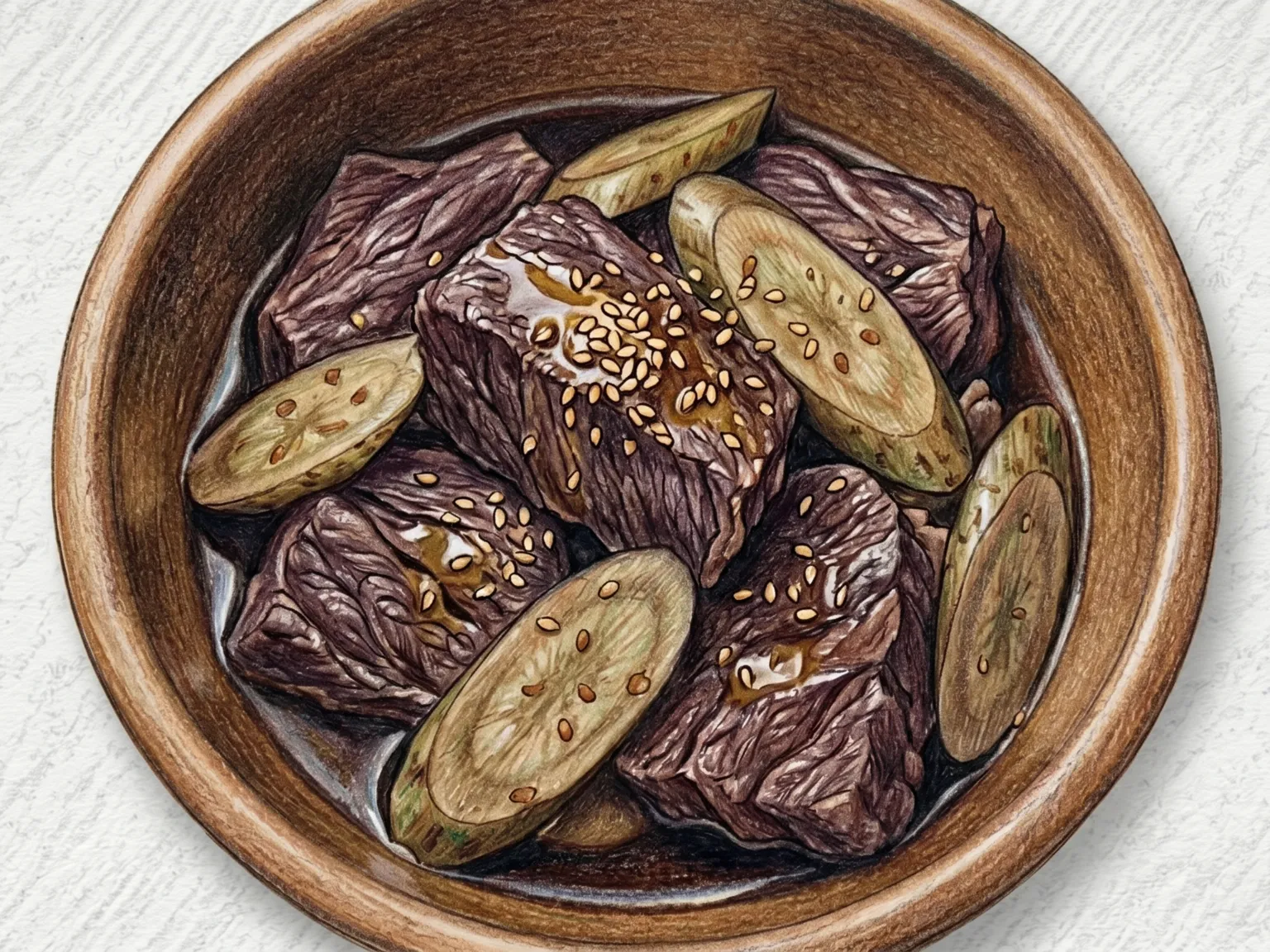
Ueong-soegogi-jorim is a Korean braised side dish of julienned burdock root and beef simmered in soy sauce, sugar, cooking wine, and garlic until the liquid nearly evaporates. The burdock is soaked in vinegar water beforehand to prevent browning, then cooked with beef and water before the braising seasonings are added. As the dish reduces, the burdock absorbs the soy sauce and develops its characteristic earthy sweetness, while thin beef strips distribute meaty flavor throughout. Finished with sesame oil and stored well under refrigeration, it serves as a make-ahead banchan that lasts several days.
Korean Seaweed Rice Roll
Gimbap is a Korean seaweed rice roll made by spreading sesame-oil-and-salt-seasoned rice over a sheet of gim, then lining up individually prepared fillings such as spinach namul, sauteed carrot, egg strip, ham, pickled radish, and braised burdock before rolling tightly. Each filling is cooked separately so distinct flavors and textures meet in every bite. The rice must cool before spreading, because hot rice releases steam that softens the seaweed and breaks the roll's structure. When sliced, the cross-section reveals concentric rings of color, and a final brush of sesame oil over the finished roll deepens the nuttiness of the seaweed while giving the surface a slight sheen. The combination of fillings can shift with the season or personal preference, which is part of why gimbap remains a staple from picnic lunches to neighborhood snack bars.
Dago-jiru (Hand-Stretched Dumpling Soup)
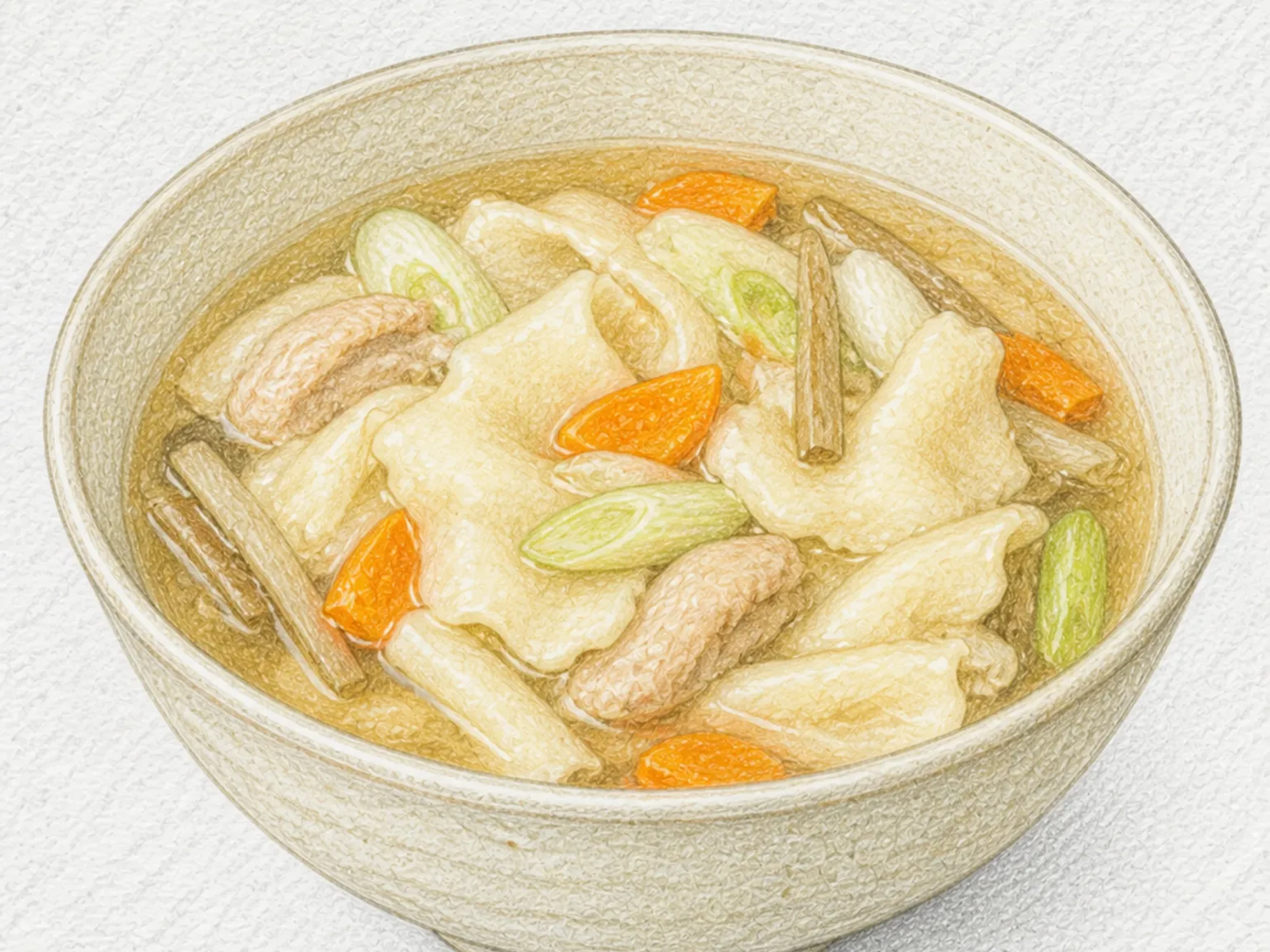
Dago-jiru is a regional soup from Kumamoto made with a niboshi and dried-shiitake broth, earthy burdock, taro, carrot, and pieces of wheat dough stretched by hand just before cooking. In the local name, dago refers to dumplings or rustic torn dough, a filling use of flour associated with meals eaten between farm tasks. Glutinous rice flour gives the pieces a tender edge and pleasantly chewy center, while starch from the dough lightly thickens the clear broth. Usukuchi soy sauce keeps the seasoning pale and restrained, and sliced green onion is added only after every dumpling has cooked through.
Ishikari Nabe Salmon Miso Hotpot
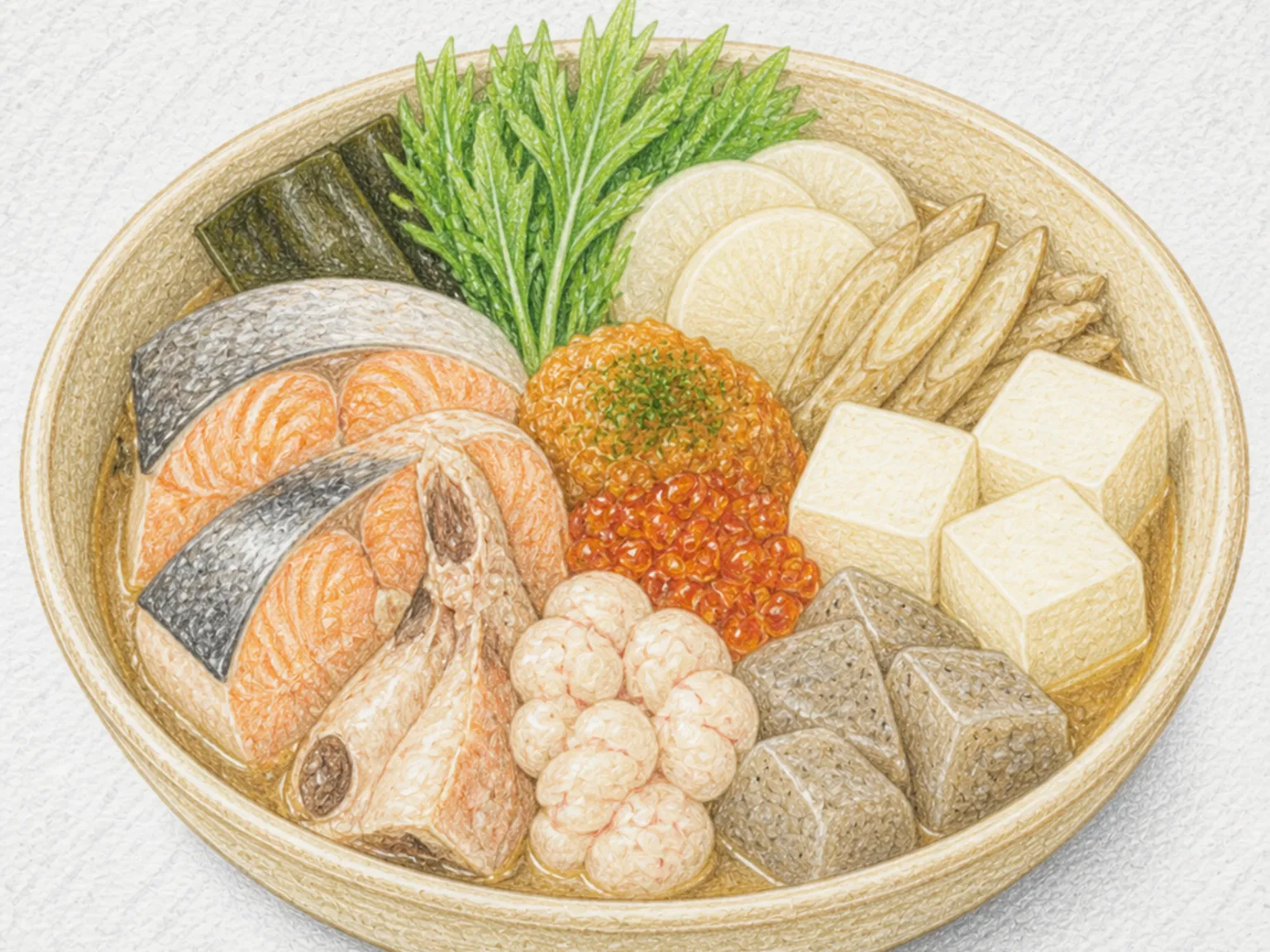
Ishikari nabe is a salmon miso hotpot from the Ishikari region of Hokkaido. Chunks of salmon with skin and bony parts, milt, loose roe, tofu, konnyaku, daikon, burdock, mushrooms, and leafy vegetables cook together in kombu broth, with ground sansho added at the finish. The dish is said to come from fishermen near the mouth of the Ishikari River, where salmon fishing had flourished since the Edo period. To celebrate a large catch, they put pieces and bony parts of fresh salmon directly into a pot of miso soup. Kombu lines the pot, seasoned miso sits in the center, and the ingredients cook around it for a hot winter meal now common in homes.
Funankogui (Kombu-Wrapped Crucian Carp in Miso)
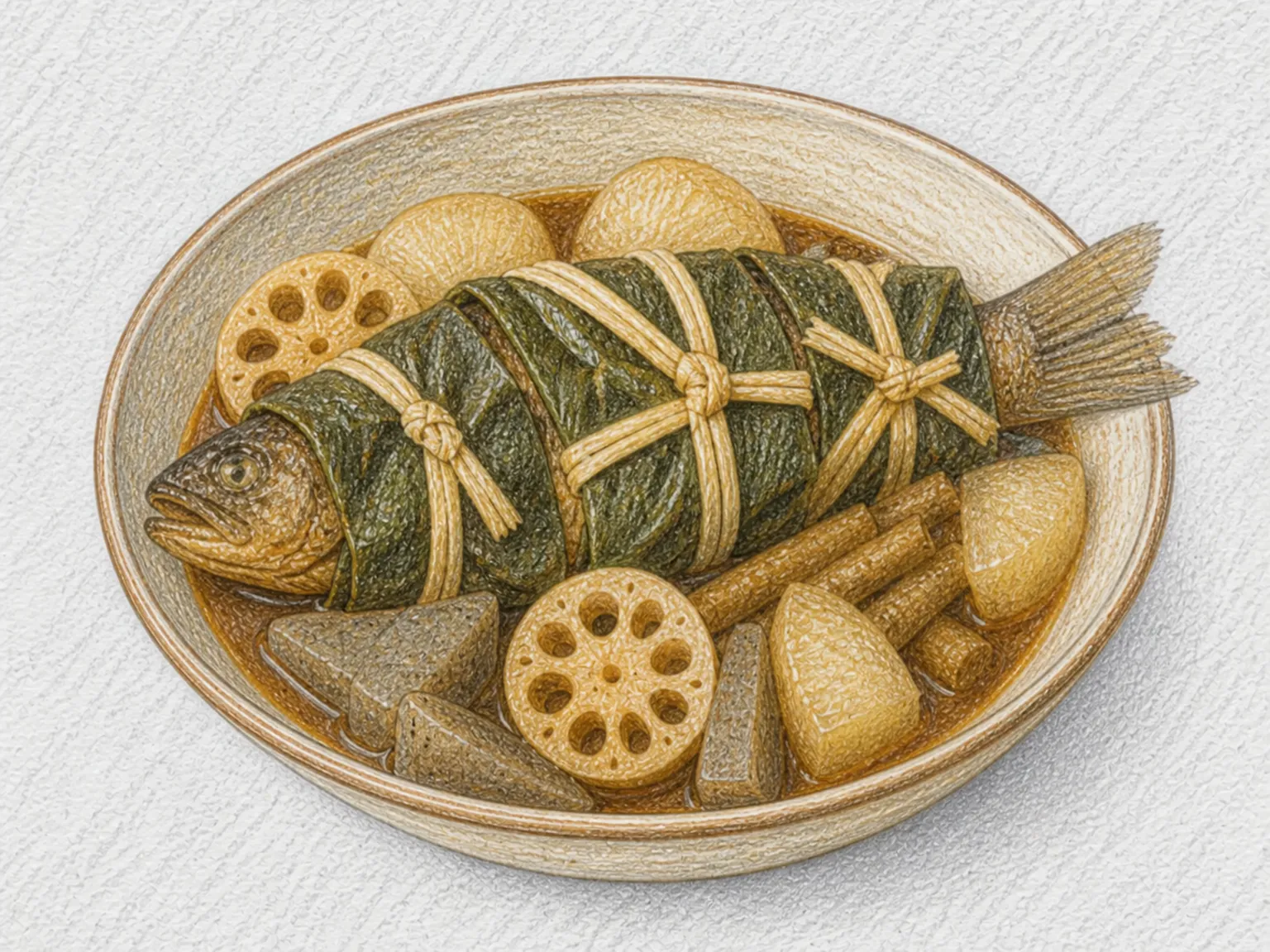
Funankogui is a long-simmered dish from Kashima in Saga. Cleaned crucian carp are wrapped tightly in whole kombu, tied with kanpyo, set over daikon, konnyaku, lotus root, and burdock, and cooked for about 10 hours in strained red-miso liquid with brown sugar, white sugar, starch syrup, and soy sauce. The goal is fish so tender that even the bones can be eaten, but they must be checked before serving. Crucian carp from rivers and Saga Plain creeks supplied winter protein when Ariake Sea fishing slowed. In Kashima, the dish is offered to Ebisu on January 20, and ingredients have been sold at a Funa Market with more than three centuries of history.
Uchikomi-Jiru (Fresh Noodle Miso Soup)
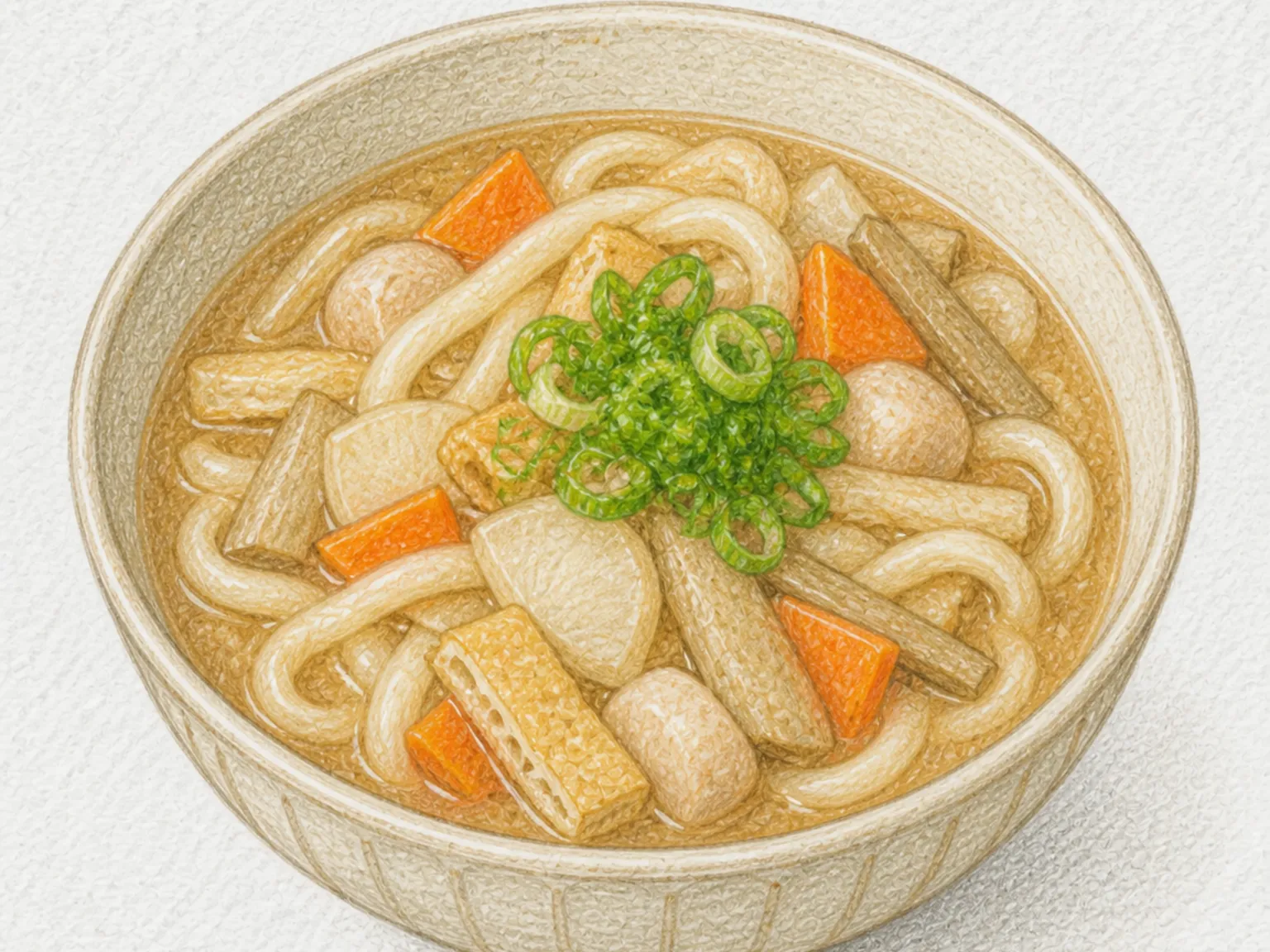
Uchikomi-jiru is a Kagawa winter noodle soup in which unsalted fresh noodles made only from wheat flour and water are cooked directly in miso broth rather than boiled separately. While the dough rests, daikon, carrot, burdock, taro, and fried tofu are cut and simmered first in dried-sardine stock. The dough is rolled and cut slightly thicker than ordinary udon, then dropped into the boiling soup for 7 to 8 minutes. Flour clinging to the raw noodles disperses into the pot and gives the broth its characteristic body. Medium miso is dissolved only after the noodle centers are cooked, and green onion completes the dish. Unlike handmade udon served for special occasions, this was a quick everyday evening meal in rural areas during cold winters. Kagawa's dry climate suited wheat production, while anchovies from the Seto Inland Sea supplied the stock.
Tsushima (Crumbled Tofu and Vegetable Salad)
This tofu and vegetable salad combines dry-cooked crumbled tofu with shiitake, carrot, burdock, and konjac simmered in dashi and finished with a vinegar dressing. Crumble 400g tofu into a pan and dry-fry over medium heat for 8 to 10 minutes. When moisture has emerged and the tofu is loose, drain in a sieve and cool completely. Combine the shiitake, carrot, burdock, konjac, 100ml dashi, 4g simmering sugar, and 6ml simmering soy sauce. Cook about 10 minutes until nearly dry, spread out, and cool. Mix the fully cooled tofu and simmered vegetables in a large bowl. Pour over the vinegar dressing, toss gently, fold in the green beans, and serve or chill.
Korean Braised Burdock Root
Julienned burdock root is simmered in soy sauce, sugar, and corn syrup with enough water to submerge the strips, then reduced slowly until the liquid thickens into a concentrated glaze. Unlike stir-fried burdock, this braised version cooks under a lid at moderate heat, giving the tough fibers time to soften while retaining a pleasantly chewy core. Soy sauce penetrates deep into the root during the extended simmer, establishing a salty foundation that the corn syrup then balances with a mellow sweetness. As the braising liquid reduces, the sugars begin to caramelize, darkening the color and adding a layer of complexity to burdock's naturally earthy, woody flavor. The dish is done when nearly all the liquid has evaporated and each strip glistens with a thick, lacquered coating. Vinegar added at the start prevents the burdock from discoloring and contributes a faint tartness that keeps the sweetness in check. Stored in a sealed container, the jorim remains good in the refrigerator for close to ten days.
Korean Ueong Dak Juk (Burdock Chicken Porridge)
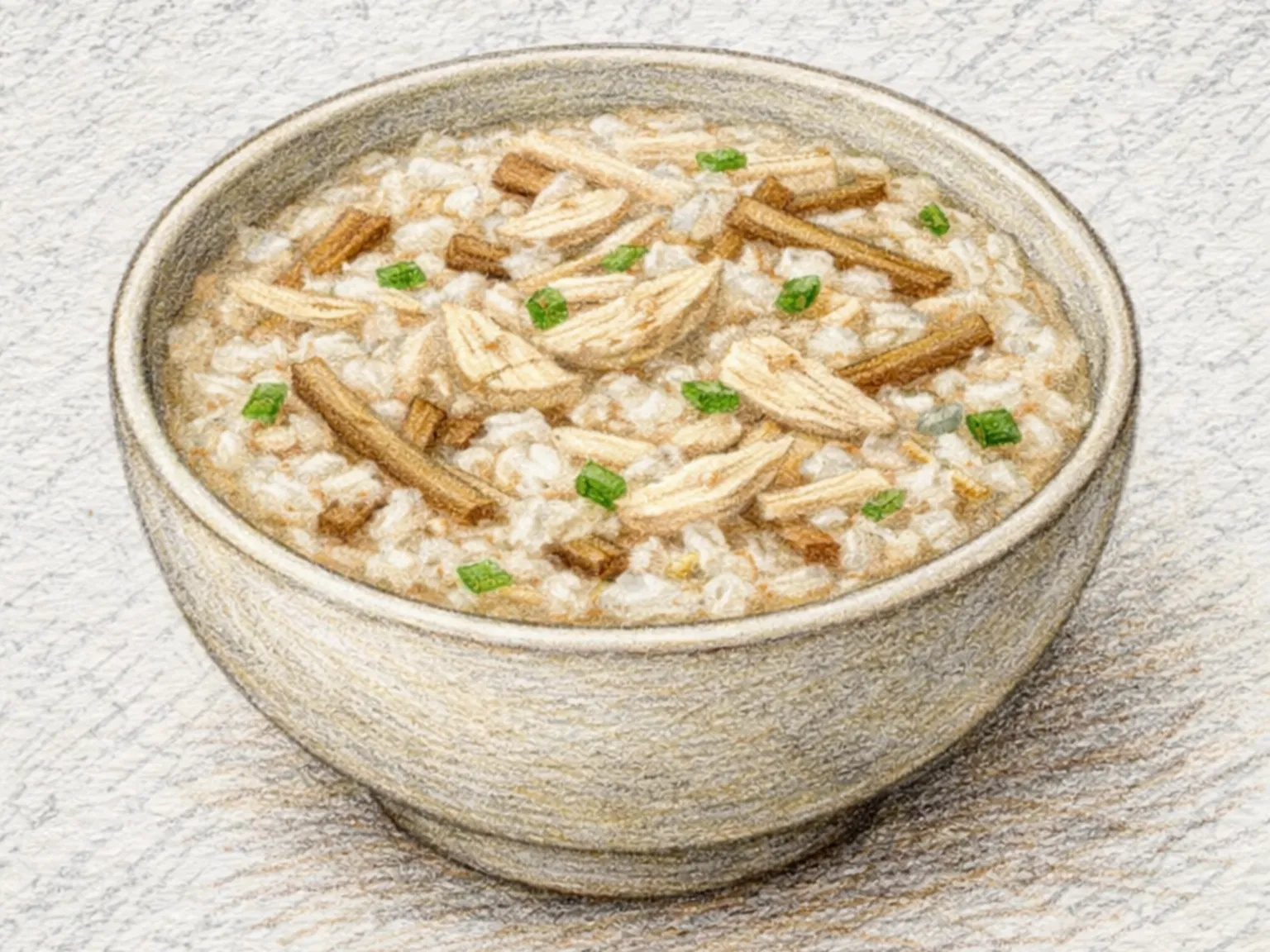
Shredded chicken tenderloin and julienned burdock root are simmered together in a long, slow cook until the porridge turns thick and smooth. The chicken releases a clean, mild broth that forms the base flavor, while the burdock contributes a subtle earthy aroma and slight crunch that adds dimension. Toasting the rice in perilla oil before adding liquid deepens the nuttiness and gives the porridge a silkier body. The result is a gentle, nourishing bowl that sits easy on the stomach. The main ingredients are Short-grain rice, Chicken tenderloin, Burdock root, and Carrot, and the recipe depends on careful handling of rice moisture and the order of toppings.
Urakami Soboro (Pork and Burdock Stir-Fry)
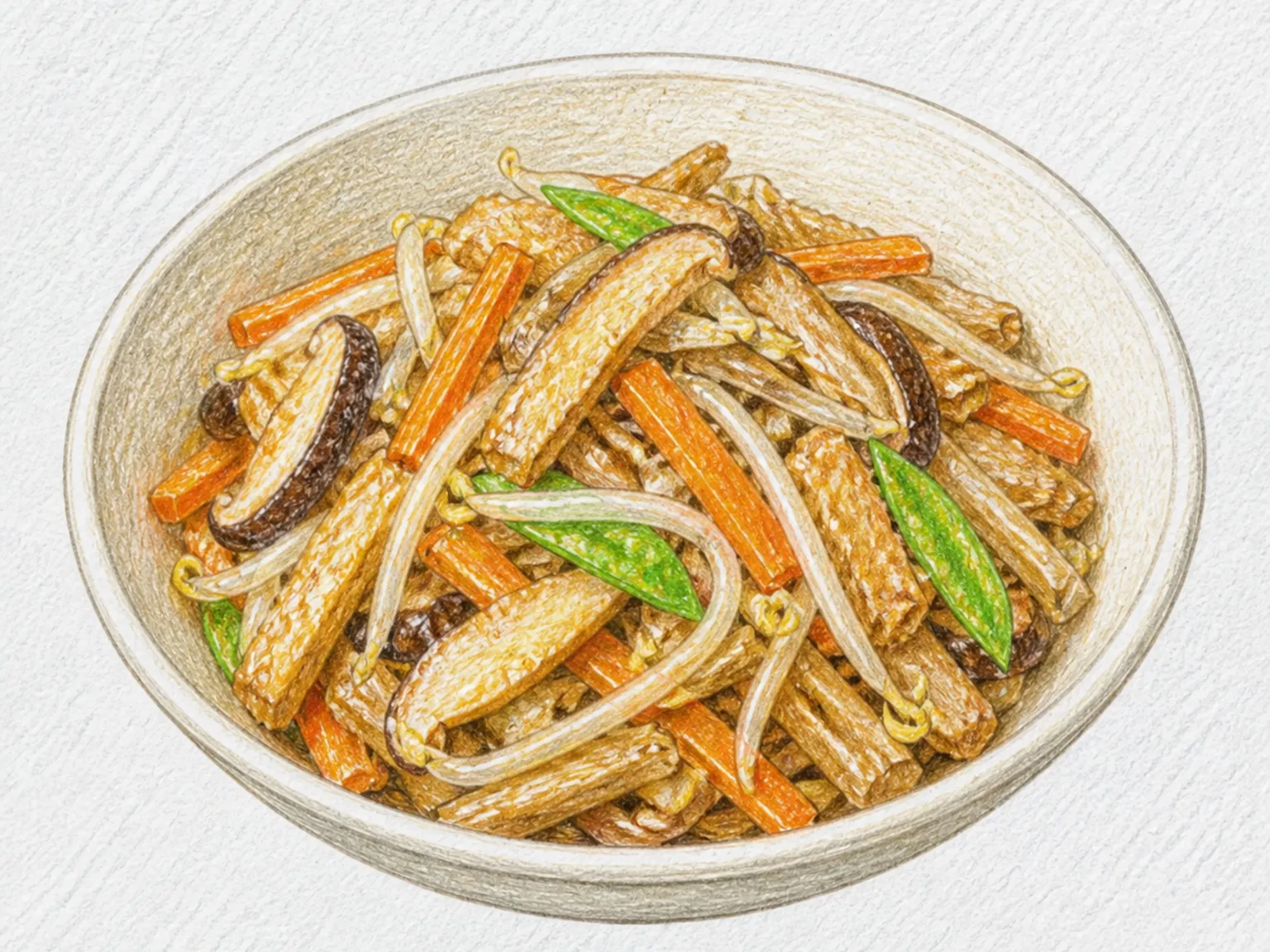
Urakami soboro is a home-style dish from the Urakami area of Nagasaki City. Thick strips of pork belly are stir-fried with fried fish cake, konnyaku, bean sprouts, carrot, burdock, and shiitake, then briefly simmered in shiitake soaking liquid with light soy sauce, sugar, and sake. Despite soboro in the name, no minced meat is used; the ingredients are cut into sturdy strips. A local account traces it to Portuguese missionaries in the late sixteenth century, followed by a household style that reduced the pork and increased the vegetables. Bean sprouts and blanched green beans go in last to keep their bite and color.
Dojo-jiru Loach and Udon Soup
Dojo-jiru is a Kagawa summer soup from the Chusan region and part of Tosan, simmering whole loach with burdock, eggplant, taro, fried tofu, leek, and fresh udon in miso broth. After rice planting, men once caught loaches from ponds and rivers and cooked them in large cauldrons to share with neighbors, making the dish part of communal work and gatherings. Thoroughly simmered fish that can be eaten with its fine bones and noodles cooked directly in the broth create a substantial bowl. Raw freshwater fish can carry parasites and environmental contaminants. Never use self-caught fish; obtain only farmed, professionally purged and processed cooking-grade loach from a licensed supplier, cook it the same day, separate raw-fish tools, and heat every fish completely in the soup.
Korean Burdock Perilla Seed Stew
Ueong-deulkkae-jjigae is a Korean stew built on burdock root, potatoes, and oyster mushrooms simmered in an anchovy-kelp broth and thickened with perilla seed powder. The burdock root holds a firm, earthy crunch through the cooking while the potatoes soften and begin to break at the edges, and the oyster mushrooms add a pulling, fibrous chew that makes the stew feel substantial without any meat. Anchovy-kelp broth forms a clean, savory base, and a generous measure of perilla seed powder stirred in at the end creates a creamy, nutty consistency that coats every piece of vegetable and makes each spoonful feel round and warming. Soaking the burdock in cold water before cooking draws out bitterness and prevents the cut surfaces from darkening, which keeps the broth clear. Adding the potatoes after the burdock has partly cooked prevents them from collapsing entirely. Perilla seed powder should go in just before the heat is turned off so the toasted, nutty fragrance stays sharp rather than cooking away.
Jabu (Simmered Chicken, Tofu, and Vegetables)
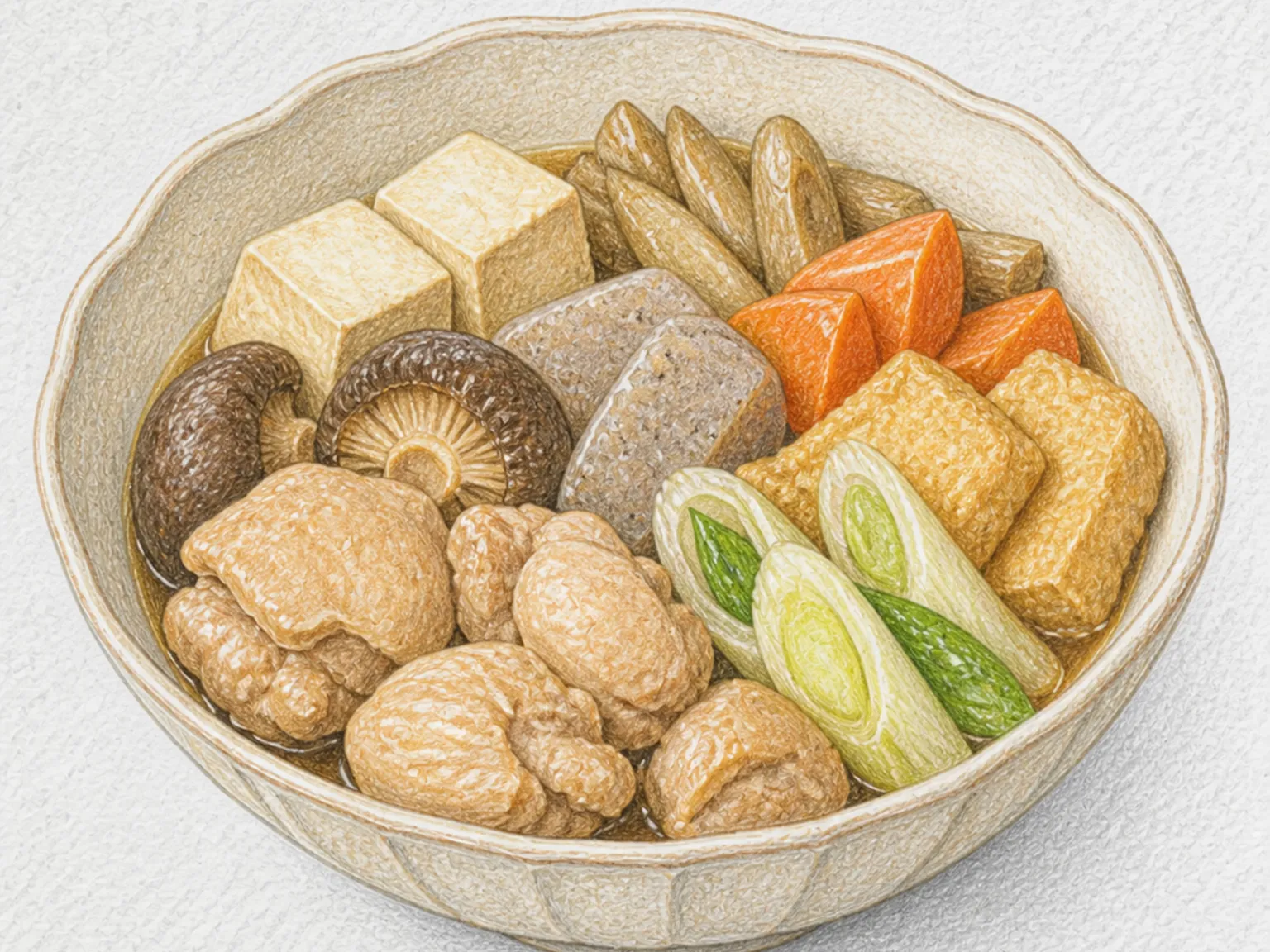
Jabu is a Tottori simmer of chicken, tofu, burdock, carrot, shiitake, aburaage, konjac, and Japanese leek cooked together in a modest amount of soy-seasoned dashi. Its name is associated with the liquid released as tofu and vegetables simmer, but the finished dish is served with the solids foremost rather than as soup. Brown the chicken first, cook firm vegetables until nearly tender, and add delicate tofu and leek later so they keep their shape.
Korean Burdock Beef Pot Rice
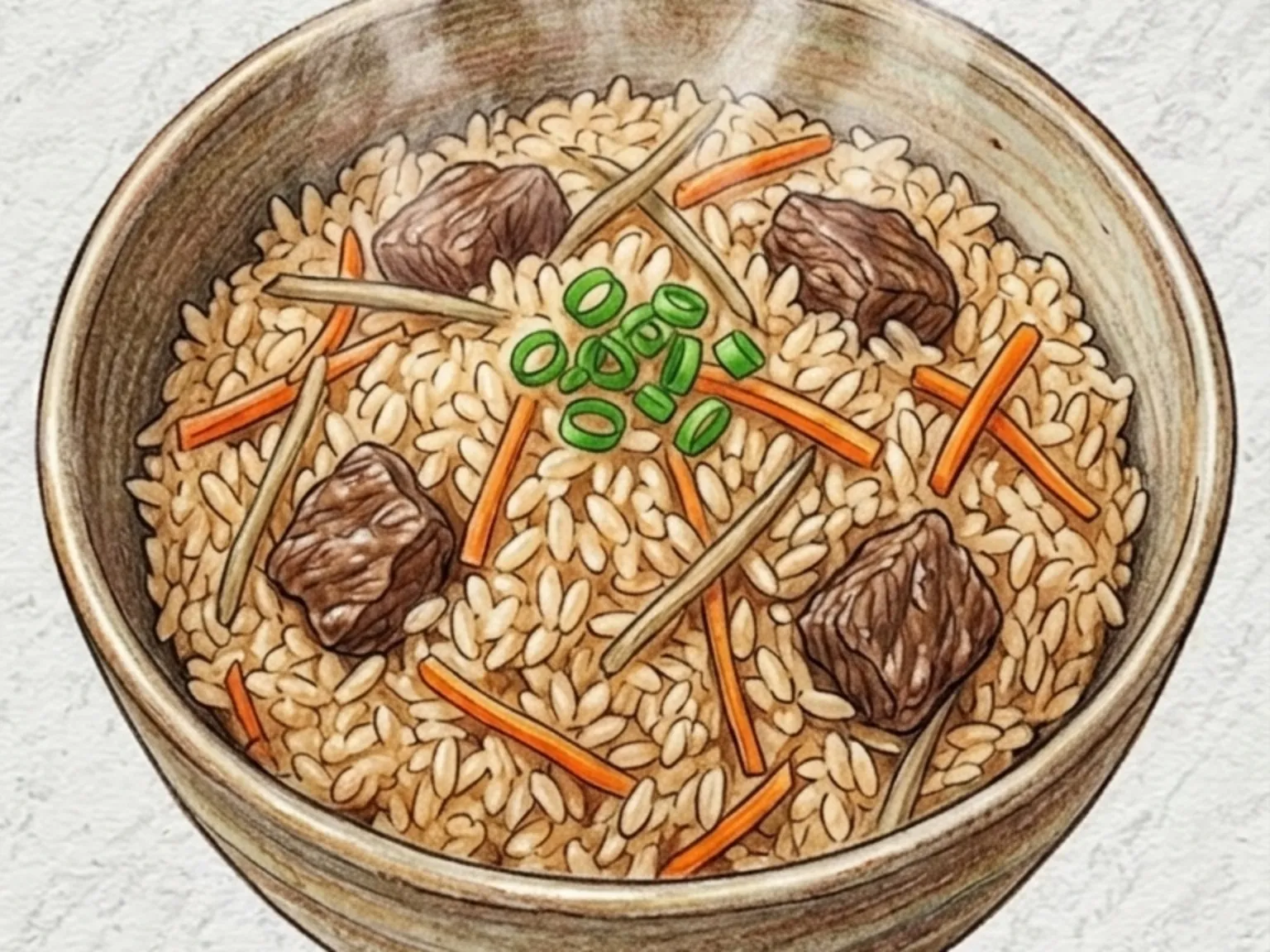
Beef is marinated in soy sauce to build savory depth, then placed on top of rice with crisp-cut burdock root and cooked together in a heavy pot. The marinated beef releases its juices during cooking, and they soak into the rice so each grain carries flavor without any extra sauce. Burdock retains its firm texture even after pot-cooking, releasing an earthy sweetness with every chew. Adding carrot brings a gentle sweetness and color that rounds out the bowl. Adding seasoning in stages makes it easier to adjust saltiness, sweetness, and heat without covering the base ingredients.
Hittsumi (Hand-Torn Wheat Dumpling Soup)
Hittsumi is a local soup from southern Aomori. A rested bread-flour dough is stretched thin with the fingers, torn directly into dashi simmering with chicken, burdock, carrot, and green onion, and cooked until springy. Its name is associated with the pulling and pinching motion rather than rolling and cutting noodles. Keeping the edge thin and the center slightly thicker gives both tender and chewy textures in one bowl. Cook the chicken through first, then continue simmering the floating dumplings until no raw flour remains before serving the soup piping hot.
Yanagawa Nabe (Loach, Burdock, and Egg Hot Pot)
Yanagawa nabe is a shallow Tokyo hot pot of cleaned, boned loach and shaved burdock simmered in dashi seasoned with soy sauce, mirin, and sugar, then bound with beaten egg. Unlike marunabe, which cooks whole loach, Yanagawa uses opened fish and gains a gentler finish from the egg. This version avoids handling live loach and begins with fish professionally gutted, boned, and kept refrigerated. The loach is cooked through in the simmering broth before the egg is poured in two stages.
Kagoshima Tonkotsu (Pork Ribs Simmered with Barley Miso)
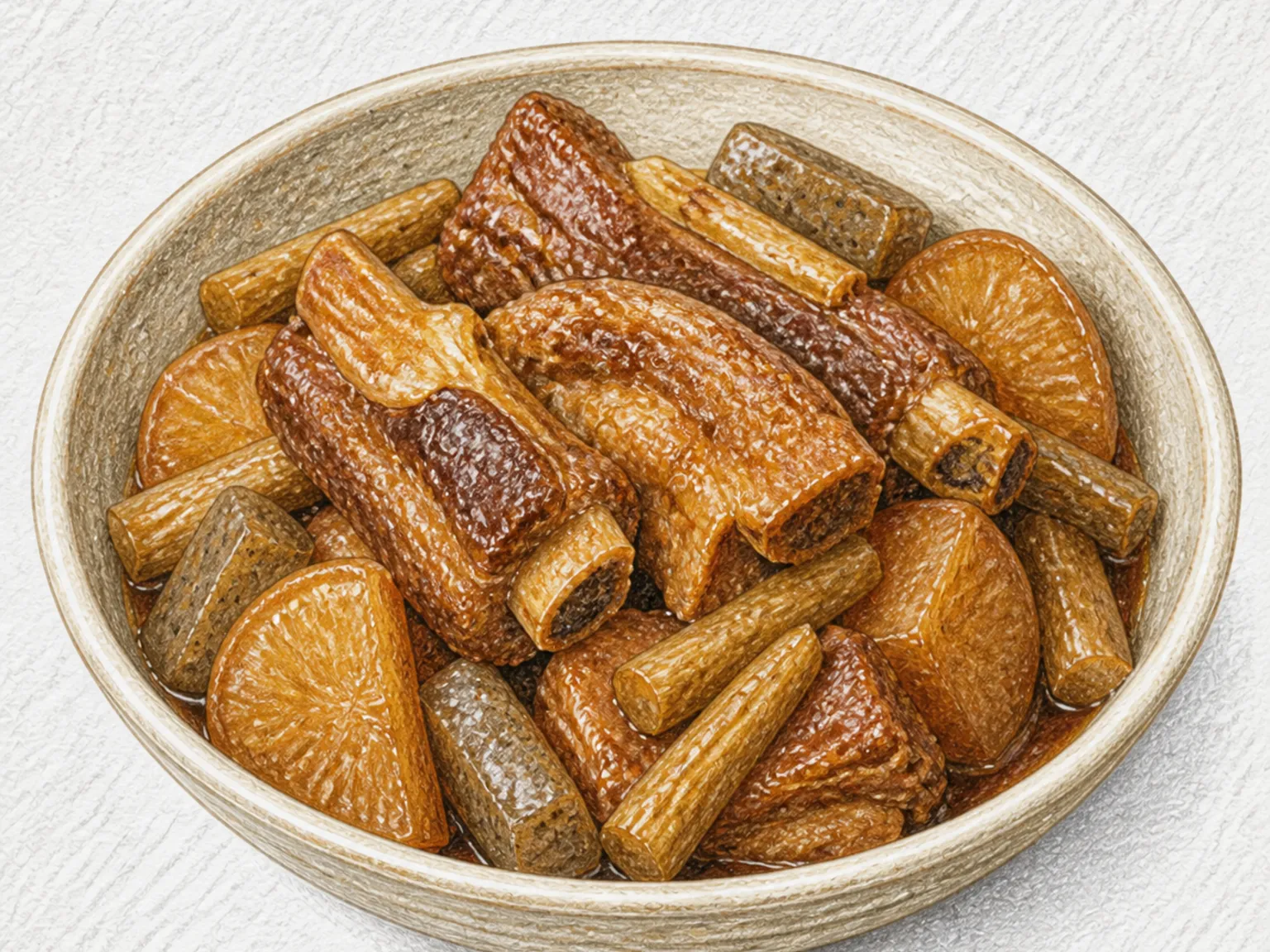
Kagoshima tonkotsu browns bone-in pork ribs deeply, splashes them with sweet-potato shochu to remove strong pork aromas, and simmers them slowly with daikon, burdock, konnyaku, barley miso, and brown sugar. Kagoshima's sweet, relatively low-salt barley miso, brown sugar, shochu, and celebrated black pork meet in one pot. The dish is said to have begun as outdoor cooking by Satsuma warriors at hunting grounds and battlefields, and local accounts identify Saigo Takamori as an admirer. The four-serving quantities below are therefore an executable reconstruction restricted to the ingredients and sequence named by that source. The practical doneness test is meat tender enough to release easily from the bone.
Iwate Kenchin-jiru
Iwate kenchin-jiru is a substantial soup in which firm cotton tofu is roughly crushed and fried in generous oil until most of its cloudy moisture cooks away. Daikon, carrot, burdock, konjac, preserved mountain vegetables, fried tofu, and bamboo shoot are then fried with it before a kombu, dried-sardine, and bonito broth is added. Unlike versions elsewhere, the northern Iwate style contains no meat and emphasizes tofu cooked into loose, crumbly pieces. It was prepared at the end of autumn farm work and for New Year, especially in large batches during the Little New Year period so women could rest and reheat it. An overnight rest lets the soy-seasoned broth penetrate the many vegetables more deeply.
Kuchizoko no Nitsuke (Saga-Style Simmered Sole)
Kuchizoko no nitsuke is a fish dish from the Ariake Sea coast of Saga, where sole is locally called kuchizoko. A whole cleaned fish is scored along the backbone and simmered briefly in a generous mixture of sake, soy sauce, mirin, sugar, and water. Keeping the scored side facing up helps the thin flesh stay intact while the liquid reaches the cut. Ginger juice is added near the end, then the glossy broth is spooned over the fish several times. Burdock cooks in the same liquid and absorbs its sweet and savory seasoning. Sole cooks quickly, so checking the thickest part and lifting the fish as soon as it is done preserves its tender texture.
Kenojiru (Tsugaru Root Vegetable and Soybean Soup)
Kenojiru is a Tsugaru Little New Year soup from Aomori. Daikon, carrot, burdock, prepared bracken and butterbur, aburaage, freeze-dried tofu, soybeans, and kombu are diced to about 5mm so the pieces resemble grains of rice, then simmered with red miso. Part of the cooked soybeans is mashed into zunda, giving the broth gentle body. Cook firm roots first, cool the large batch promptly, and reheat only the portion being served.