Fruit Cottage Cheese Bowl
Quick answer
This high-protein bowl requires no cooking and comes together in under five minutes.
What makes this special
- Fruit Cottage Cheese Bowl pairs high-protein curds with fresh strawberries and blueberries.
- Cottage cheese curds contrast the juicy fruit with a distinct grainy texture
- Chia seeds swell into a soft gel within minutes, adding unexpected bounce
Key ingredients
Core cooking flow
- 1 Keep the 300 g cottage cheese cold, then divide it between two bowls, 150 g per bowl.
- 2 Hull the 120 g strawberries and slice them thinly, about 2 to 3 mm.
- 3 Rinse the 80 g blueberries briefly in cold water, then drain them well.
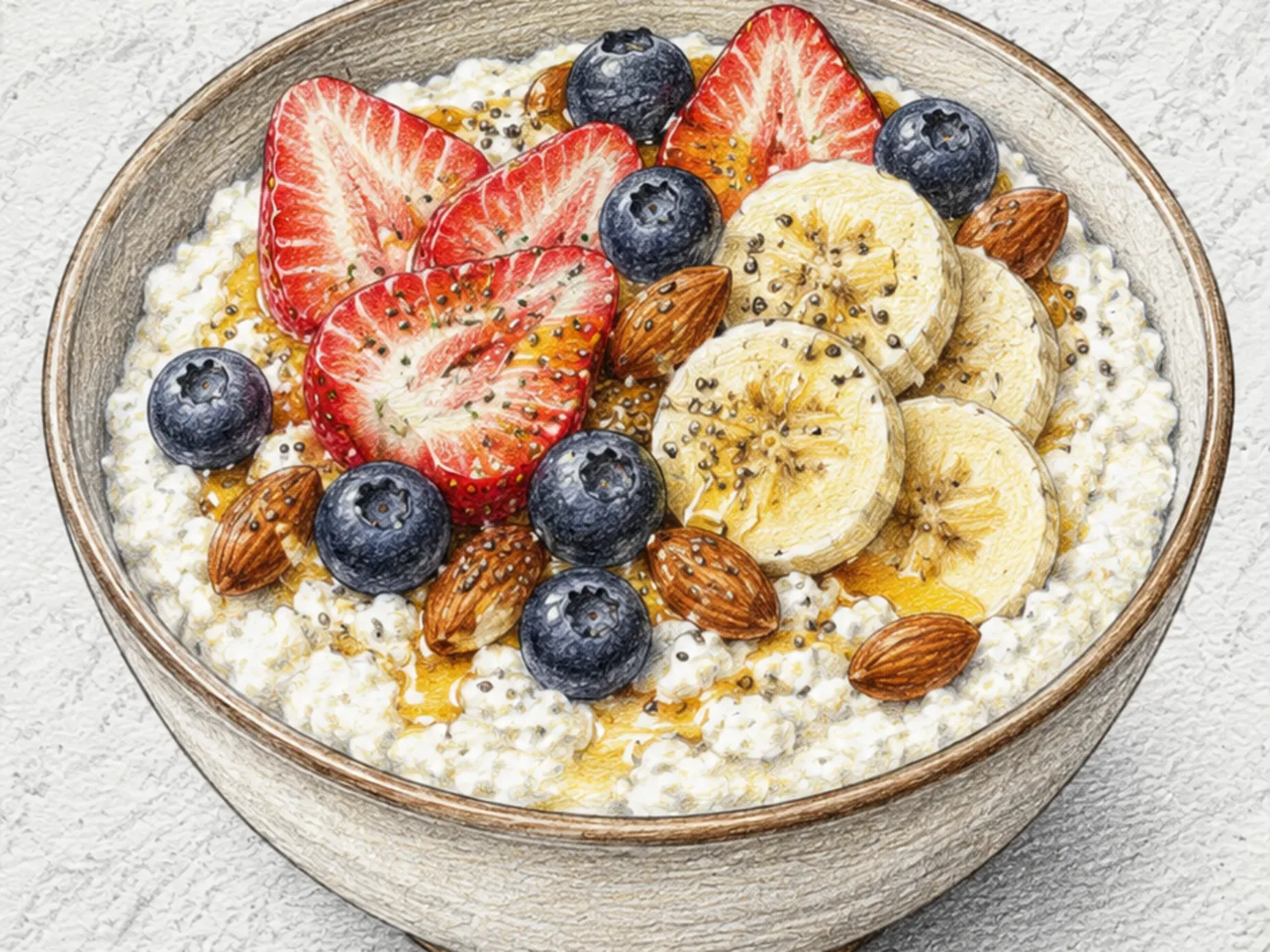
This high-protein bowl requires no cooking and comes together in under five minutes. A generous scoop of cottage cheese forms the base, and fresh strawberries, blueberries, and banana are arranged on top in whatever combination looks appealing. The cheese's mild, lactic saltiness pairs naturally with the fruit's sweetness without needing any added dressing or seasoning. Sliced almonds contribute crunch and a layer of healthy fats, while chia seeds provide omega-3s and a subtly gel-like texture once they have had a moment to absorb the moisture around them. A light drizzle of honey brings all the components together with a unifying sweetness. The simplicity of the bowl makes it a practical choice for a quick breakfast or a post-workout meal when protein matters but time is short.
Instructions
Read the steps as a cooking flow: prep, heat, seasoning, doneness control, and finish.
- 1Step
Keep the 300 g cottage cheese cold, then divide it between two bowls, 150 g per bowl.
Press and smooth the surface with the back of a spoon so the fruit sits evenly on top.
- 2Prep
Hull the 120 g strawberries and slice them thinly, about 2 to 3 mm.
Cut the banana into 0.7 cm rounds just before assembling so it stays firm and does not brown too quickly.
- 3Step
Rinse the 80 g blueberries briefly in cold water, then drain them well.
Pat them dry with a towel if needed, because excess water will loosen the cottage cheese and dilute the bowl.
- 4Step
Arrange the strawberries, banana rounds, and blueberries over the cheese in alternating sections.
Avoid piling all the heavier fruit in one spot, and leave a small rim around the bowl to prevent overflow.
- 5Step
Break the 30 g almonds into rough pieces by hand and scatter them over the fruit.
Keep the pieces chunky enough to stay crisp, since very fine bits soften quickly against the cheese and fruit.
- 6Finish
Sprinkle 1 tablespoon chia seeds evenly, then drizzle 2 teaspoons honey in a thin stream.
Serve right away for a fresh texture, or chill for 10 minutes so the chia softens slightly into a gel-like finish.
After the steps
Pick a recipe that fits this dish.
Continue with shared ingredients, meal pairings, or a similar method.
Recipes That Go Well With This
More Salads →Based on shared ingredients and meal pairing
Granola Yogurt Bowl
Granola yogurt bowl is a composed breakfast or snack that starts with a thick base of Greek yogurt and builds upward with sliced banana, kiwi, and blueberries, finished with granola, chia seeds, and a drizzle of honey. Greek yogurt differs from regular yogurt in that most of its liquid whey has been strained away, leaving a denser, higher-protein base that holds its shape in the bowl rather than pooling around the fruit. The tang of the yogurt meets the juicy sweetness of the fruit and creates a balanced flavor that needs no additional sauce or dressing. Granola begins absorbing moisture the moment it contacts the yogurt, so adding it immediately before eating is the only way to keep its crunch intact through the meal. Chia seeds undergo a visible transformation within about five minutes of sitting in moisture, their outer layer swelling into a gel that adds a springy, slightly resistant bite unlike anything else in the bowl. Using unsweetened yogurt puts control of sweetness entirely in the hands of the person eating it, since the honey can be measured to taste, and rotating the fruit with whatever is in season gives a different combination each time without changing the structure of the dish.
Fruit Yogurt Salad
Apple, banana, strawberry, and blueberry are cut into bite-sized pieces and folded into plain yogurt for a fruit salad where the dressing serves as background rather than centerpiece. The yogurt provides gentle acidity that anchors the sweetness of the fruit without overwhelming it. Honey softens the sharper edge of the yogurt, and a squeeze of lemon juice does double duty: it slows the browning of cut apple and banana while leaving a clean citrus note on the finish. Roughly chopped walnuts scattered over the top introduce a crunchy, slightly bitter contrast to the soft fruit and smooth yogurt, breaking the monotony of texture. Swapping in seasonal fruit makes the recipe adaptable year-round without adjusting the base formula - peaches and melon in summer, persimmon and pear in autumn all work within the same yogurt, honey, and lemon framework. Light enough for a morning meal and refreshing enough after a heavy dinner, it sits comfortably in either role.
Blackened Chicken Caesar Salad
Blackened chicken Caesar salad starts with chicken breast coated thickly in paprika, cayenne, garlic powder, onion powder, and dried herbs before hitting a very hot, dry pan. The spice coating undergoes rapid charring at high temperature, forming a dark, smoky crust that seals in moisture and concentrates the spice aromatics on the surface of the meat. The interior of the chicken stays juicy because the charred crust acts as an insulating barrier, provided the pan is hot enough from the start. Creamy Caesar dressing, made with anchovy paste, egg yolk, lemon, and Parmesan, wraps around the cold, crisp romaine and the sliced hot chicken alike, moderating the cayenne heat without erasing the spice character entirely. Shaved Parmesan adds sharp, salty depth throughout, while croutons introduce a crunchy textural break against the tender chicken and limp lettuce. Because blackening generates substantial smoke, proper ventilation or an outdoor cooking setup is strongly recommended. The dish functions as a full main course rather than a starter salad.
Chicken Quinoa Power Salad
Chicken quinoa power salad brings together pan-seared chicken breast, quinoa simmered for 12 minutes then cooled, romaine lettuce, cucumber, and bell pepper in a single bowl built for a complete, balanced meal. Resting the chicken for three minutes after searing gives the juices time to redistribute inward so every slice stays moist rather than losing liquid at the cut surface. Rinsing the quinoa before cooking removes saponins that leave a bitter residue even after boiling. A dressing of Greek yogurt, lemon juice, and olive oil provides creamy tartness at a low calorie count, and the fermented tang of the yogurt complements the raw vegetables without overpowering them. Bell pepper's natural sweetness adds color and brightness alongside the lean chicken, and the combination of textures - crisp lettuce, tender grain, firm seared meat - makes each forkful more satisfying than its ingredients suggest individually.
Serve with this
Kimchi Bacon Mac and Cheese
Kimchi bacon mac and cheese layers aged kimchi's lactic tang and smoky bacon into a classic American cheddar cheese sauce over elbow macaroni. A butter-flour roux forms the base, with milk whisked in to build a béchamel before cheddar is melted into a thick, clinging sauce. Crisp bacon pieces add salt and crunch throughout, while chopped ripe kimchi introduces fermented acidity that counteracts the richness of the cheese. A pinch of gochugaru runs underneath with mild, warming heat. The tubular macaroni shape traps sauce inside and out, ensuring each forkful carries the full spectrum of creamy, tangy, and smoky flavors.
Grilled Tomahawk Steak
Grilled Tomahawk Steak is prepared by cooking a thick, bone-in ribeye cut to achieve a seared exterior and juicy interior. The steak must be taken out of refrigeration one hour before cooking to ensure the core reaches room temperature, which prevents uneven cooking. After patting the surface dry, the meat is seasoned with salt, black pepper, and olive oil. Searing the steak in a preheated hot pan creates a deep Maillard crust. The heat is then reduced to add butter, rosemary, and crushed garlic. Continuous spooning of the melted butter over the meat coats the surface with aromatics. Due to the thickness of the cut, the steak is finished in the oven and then rested for ten minutes to allow the juices to redistribute evenly before slicing.
Japanese Shrimp with Mayo
Ebi mayo was invented by Hong Kong-born chef Chou Yuanji while working in Japan, fusing Cantonese prawn cookery with the rich creaminess of Japanese mayonnaise. Shrimp are coated in cornstarch and deep-fried until the shell crackles, then tossed in a sauce of mayonnaise, condensed milk, and lemon juice. The condensed milk tempers the mayo's tang and adds a gentle sweetness. Japanese Kewpie mayonnaise, made with egg yolks only rather than whole eggs, is denser and more umami-rich than Western varieties, and this difference is what gives ebi mayo sauce its distinctive body. The crispy starch coating absorbs the thick sauce on the surface while the shrimp beneath stays springy, creating a two-layered texture -- creamy on first contact, then bouncy when the teeth reach the center. Ebi mayo is a staple of izakaya menus and Chinese restaurants in Japan, and has crossed into convenience-store bento boxes and onigiri fillings as one of the country's most ubiquitous fusion flavors.
Similar recipes
Three Bean Salad
Three bean salad consists of kidney beans, chickpeas, and fresh green beans that are prepared by blanching. The green beans undergo a brief cooking process in boiling water for three minutes, which ensures they retain a bright appearance and a snappy texture. In contrast, the kidney beans and chickpeas used are canned varieties that only require thorough rinsing and draining to remove any excess starch from their surface. The recipe includes red onions that have been thinly sliced and then soaked in cold water. This soaking step is used to remove the sharp, raw bite of the onion, resulting in a mild sweetness that integrates well with the other components. The dressing for this salad is a combination of olive oil, apple cider vinegar, and Dijon mustard. The apple cider vinegar contributes a soft acidity to the mixture, while the mustard introduces a sharp and peppery element that provides flavor to the beans. Storing the assembled salad in the refrigerator overnight is an important step because it allows the dressing to soak into the beans and the green beans. This waiting period makes the dish a suitable option for individuals looking to prepare their meals ahead of time.
Oatmeal Raisin Cookies
Rolled oats give these cookies a coarse, chewy grain that sets them apart from the uniform smoothness of standard drop cookies. Brown sugar drives the flavor, providing a molasses-tinged depth and keeping the interior moist days after baking. Cinnamon - just enough to warm the nose without dominating - threads through every bite. The raisins shrink slightly in the oven as their moisture evaporates, concentrating their fruity sweetness into small, chewy bursts scattered through the oat-studded crumb. Chilling the dough before baking allows the oats to hydrate, which results in a chewier, denser cookie rather than a crisp one. The finished cookies are sturdy enough for a lunch bag or a road trip and only improve when dunked in cold milk, which softens the oat flakes and amplifies the cinnamon.