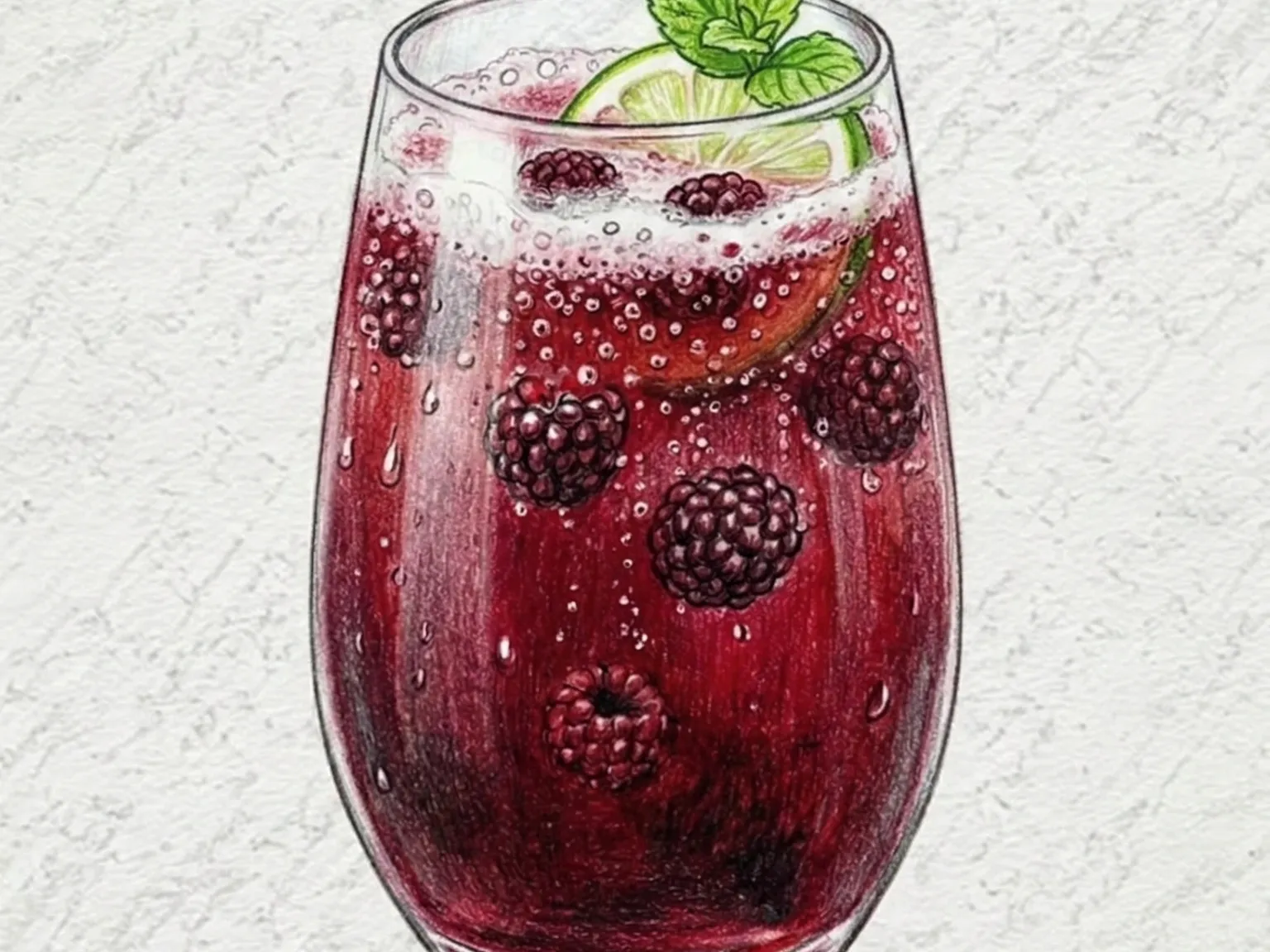
Korean Black Raspberry Ade
Quick answer
Bokbunja ade starts by combining black raspberry concentrate with lime juice and honey to build a tart-sweet base before anything else is assembled.
What makes this special
- Bokbunja ade layers black raspberry concentrate against sparkling water for a purple gradient.
- Thick bokbunja concentrate layers against sparkling water in a vivid purple gradient
- Frozen berries act as ice and slowly release deeper fruit aroma as they thaw
Key ingredients
Core cooking flow
- 1 Keep 450 ml of sparkling water cold until the moment you pour it.
- 2 Divide 1.5 cups of ice and 60 g of frozen berries between the two glasses.
- 3 In a small container, combine 120 ml black raspberry concentrate, 1 tablespo...
Bokbunja ade starts by combining black raspberry concentrate with lime juice and honey to build a tart-sweet base before anything else is assembled. That base is poured over a cup packed with ice and frozen berries, then topped with sparkling water. The deep purple concentrate sinking through the clear carbonation creates a vivid color gradient in the glass that holds until stirred. Lime juice amplifies the berry aroma rather than masking it, and if the concentrate runs particularly strong, extra sparkling water brings it back into balance. Frozen berries function as both cooling agent and slow flavor release - as they thaw, the fruit intensity in the drink gradually deepens.
Instructions
Read the steps as a cooking flow: prep, heat, seasoning, doneness control, and finish.
- 1Prep
Keep 450 ml of sparkling water cold until the moment you pour it.
Prepare two clear glasses, and make sure they are clean, dry, and not warm so the drink stays cold longer.
- 2Step
Divide 1.5 cups of ice and 60 g of frozen berries between the two glasses.
Tuck the berries among the ice instead of piling them on top, so they thaw slowly and cool the drink evenly.
- 3Prep
In a small container, combine 120 ml black raspberry concentrate, 1 tablespoon lime juice, and 1 tablespoon honey.
Stir until the honey no longer sticks to the bottom and the base looks evenly glossy.
- 4Step
Pour half of the black raspberry base into each glass slowly.
Let it run down the inside of the glass instead of splashing directly onto the ice, which helps keep a clear deep-purple layer.
- 5Step
Divide the cold sparkling water between the glasses, pouring along the side.
If foam rises too quickly, pause for a few seconds before continuing so the carbonation stays lively and the glass does not overflow.
- 6Finish
Just before serving, stir only once or twice to combine the tart base with the sparkling water without flattening the bubbles.
If the flavor is too strong, add a little more sparkling water and serve immediately.
After the steps
Pick a recipe that fits this dish.
Continue with shared ingredients, meal pairings, or a similar method.
Recipes That Go Well With This
More Drinks →Based on shared ingredients and meal pairing
Korean Kiwi Mint Ade
Kiwi mint ade is a sparkling fruit drink built from a base of muddled fresh kiwi, sugar, and lemon juice, finished with well-chilled sparkling water poured in just before serving. The bright, almost tart acidity of ripe kiwi plays against the cool green note of lightly bruised mint leaves, producing a layered freshness that wakes the palate from the first sip. Floating thin rounds of sliced kiwi on top adds a visual element and gives the drink bursts of fruit texture between sips of carbonated liquid. Mint should be pressed gently rather than crushed hard, since breaking the leaves too aggressively extracts bitter compounds that muddy the clean kiwi flavor. Serving over plenty of ice keeps the carbonation lively and the overall impression as crisp as possible.
Korean Sparkling Green Plum Ade
Maesil sparkling ade is a Korean effervescent drink that pairs green plum syrup with lemon juice and sparkling water poured slowly over ice. The plum syrup delivers a tangy-sweet depth that carbonation lifts and brightens with every bubble. Lemon slices and fresh mint leaves layered in the glass add citrus fragrance and visual freshness. Adjusting the ratio of syrup to sparkling water lets you dial the sweetness up or down to match the meal.
Gotgam Cream Cheese Roll (Dried Persimmon Rolls)
Gotgam cream cheese roll is a no-cook Korean dessert that requires nothing more than a knife, a bowl, and a refrigerator. Dried persimmons are slit open and flattened into thin sheets, each one acting as the outer wrapper. The filling is cream cheese mixed with honey and fresh lemon juice to balance its natural richness with acidity, and finely chopped walnuts are folded in throughout to add a crunchy, nutty element to every bite. The filling is spread across the opened persimmon, which is then rolled tightly and wrapped in plastic wrap. Twenty minutes in the refrigerator firms the roll enough to slice cleanly. Dipping the knife in warm water and wiping it dry before each cut produces the smoothest cross-sections. The finished slices reveal clearly defined layers: the chewy, caramel-sweet dried persimmon on the outside, the tangy cream cheese in the middle, and flecks of walnut distributed throughout. The combination makes it a natural pairing with wine or a polished addition to a traditional holiday table.
Korean Cactus Fruit Ade (Prickly Pear Citrus Sparkling Drink)
Baeknyeoncho ade is a chilled Korean fruit beverage prepared by combining a syrup made from the fruit of the prickly pear cactus with fresh lemon juice and grapefruit juice, eventually topped with carbonated water. The cactus fruit syrup is characterized by its intense magenta color and a flavor profile that resembles berries, though it also contains an earthy sweetness and a particular thickness that is unique to this specific fruit. The sharp acidity of the lemon and the characteristic bitter notes of the grapefruit juice work together to neutralize the sweetness of the syrup, ensuring the finished drink is fruity and balanced rather than syrupy or cloying. A small amount of salt is added to the mixture to function as a flavor enhancer rather than a seasoning, which makes the various fruit acids more prominent to the taste buds. During preparation, the sparkling water is added last and stirred only slightly after the syrup and ice have already been combined in the glass to preserve as much carbonation as possible. A single sprig of apple mint is placed on the surface to provide a subtle herbal aroma that the drinker notices with every sip, which helps to increase the cooling effect of the beverage. This prickly pear cactus grows in wild conditions on Jeju Island and across the southern coastal areas of Korea, where both the round fruits and the flat, paddle-shaped stems are harvested for culinary use. The fruit is notably rich in betacyanin pigment, a natural substance that retains its vivid coloration even when subjected to heat, making it a valuable source for natural food coloring. When presented in a clear glass vessel, the saturated magenta liquid creates a visual appearance that is as striking as the refreshing nature of the drink itself.
Serve with this
Korean Avocado Gimbap (Creamy Avocado Crab Seaweed Rice Roll)
Avocado gimbap is a contemporary Korean roll that emerged in the 2010s as avocado shifted from a specialty import to a common supermarket staple in Korea. The timing of Korean avocado adoption is traceable: consumption roughly doubled between 2014 and 2018, driven by cafe culture and wellness trends, and this gimbap variant followed directly from that availability. Where traditional gimbap - danmuji, ham, spinach, carrot, egg - delivers discrete, clearly differentiated flavors in each bite, avocado gimbap works differently. The avocado at the center is buttery and neutral, its creaminess binding the other ingredients rather than competing with them. Selecting the right avocado matters considerably: the fruit must be ripe enough to yield when bitten without resistance, but firm enough to hold a clean slice. Underripe avocado is hard and flavorless; overripe avocado collapses when cut and turns the cross-section muddy. The rice is seasoned simply with sesame oil and salt, and the sheet of dried laver wrapping everything contributes a roasted, oceanic note. Crab stick placed lengthwise in the center, alongside julienned cucumber and a strip of egg jidan, creates the characteristic cross-section: concentric rings of green, white, and yellow that have made this version one of the most photographed gimbap in Korean food media. The avocado begins oxidizing and browning within an hour of cutting, so the roll is best eaten soon after assembly. It has become one of the highest-selling items in Korean convenience store gimbap sections, and a standard offering at gimbap specialty restaurants.
Korean Seasoned Sea Grapes Salad
Kkosiraegi-muchim is a tangy, low-calorie banchan made from kkosiraegi, a red algae seaweed whose thin, noodle-like strands snap with a distinctive crunch that no other seaweed can replicate. Blanching must not exceed twenty seconds, as anything longer collapses the characteristic texture, so a timer is essential. The seaweed goes straight from the boiling water into cold water to stop the heat and lock in elasticity. The dressing brings together gochugaru, soup soy sauce, vinegar, maesil-cheong, garlic, and sesame oil; the green plum extract layering in a fruity acidity that lifts the dish beyond simple sour-spicy flavoring. Julienned cucumber threaded through the seaweed strands provides a crisp, garden counterpoint to the oceanic depth. At roughly 72 kilocalories per serving with high dietary fiber content, this banchan appears frequently in Korean diet meal plans because it satisfies without adding much to the calorie count. Eating it promptly after seasoning prevents the cucumber from releasing water and diluting the dressing. Served cold in summer, it doubles as a refreshing side that pairs well with grilled meat or plain rice.
Dasik (Korean Honey-Pressed Roasted Grain Confection)
Dasik is a traditional Korean pressed confection made by kneading roasted grain or nut powders with honey and pressing the mixture into carved wooden molds. Unlike baked goods, dasik holds its shape entirely through the binding power of honey, with no heat applied during preparation. This technique produces a texture that is slightly resistant at first contact, then dissolves gently at body temperature in a way that releases the full aroma of the main ingredient. Roasted soybean powder yields a nutty version, black sesame produces a deeply aromatic one, and additions of pine nut powder or cinnamon develop the flavor in different directions. The wooden molds carve decorative patterns into the surface of each piece, giving dasik a visual refinement that matches its restrained sweetness. For centuries, dasik has been a standard offering at Korean tea gatherings, and its subtle flavor remains a natural match for the gentle bitterness of green tea.
Similar recipes
Korean Mulberry Sparkling Ade
Preparing a concentrated syrup from frozen mulberries involves simmering the fruit with sugar and water over low heat for six minutes. As the berries break down during this process, they release a dark purple liquid filled with natural sweetness. Adding fresh lemon juice immediately after removing the mixture from the heat provides a sharp acidity that balances the sugar and improves the overall profile. Passing the cooled syrup through a fine-mesh sieve removes small seeds and pulp, leaving a smooth liquid. To serve, pour this base into a glass filled with ice and slowly add chilled sparkling water down the side. This technique keeps the carbonation intact and creates a clear visual contrast between the heavy purple syrup at the bottom and the clear bubbles on top. Clapping apple mint leaves between the palms before placing them on the rim releases essential oils, providing an aromatic herbal scent before the first sip. This mulberry syrup stays fresh for up to one week when stored in a sealed container in the refrigerator. Using tonic water instead of regular sparkling water introduces a slight bitterness, resulting in a finish similar to a non-alcoholic cocktail. Since mulberries reach their peak in May and June, purchasing a large amount during this window and freezing them allows for year-round preparation.
Korean Black Raspberry Jelly
Bokbunja jelly cups are a chilled Korean dessert made by setting bokbunja, the Korean black raspberry, with gelatin sheets and a measured addition of lemon juice for acidity balance. The process requires dissolving the bloomed gelatin sheets into sugar syrup that has been removed from the heat; adding gelatin to boiling liquid breaks down its protein chains and compromises its setting ability. A single pass through a fine strainer removes air bubbles and sediment, producing a perfectly smooth surface that lets the deep purple of the bokbunja come through cleanly and without distortion. Topping each cup with fresh blueberries and a mint leaf reinforces the berry flavor while providing a sharp visual contrast against the dark jelly beneath. Bokbunja is well known in Korea as a traditional medicinal ingredient and as the base of the country's signature fruit wine; these jelly cups translate its tartness and intense pigmentation into a simple refrigerator dessert that can be prepared ahead and served straight from the cold. The result is a bright, clean finish that sits light on the palate.
Sweet Rice Punch (Traditional Korean Malted Barley Grain Drink)
Sikhye is a traditional Korean sweet rice punch made by steeping malted barley powder in lukewarm water, straining the liquid, adding cooked rice, and holding the mixture at around 60 degrees Celsius for one hour until the rice grains float to the surface. The amylase enzymes in the malt break down the rice starch, producing a distinctly malty, clear sweetness with grain depth that no sugar alone can replicate. Only the clear top liquid is used after settling -- discarding the sediment keeps the punch from turning cloudy. Simmering with sugar and sliced ginger for 20 minutes rounds the sweetness and adds a gentle, spiced warmth to the finish. Served well chilled with the reserved floating rice grains and pine nuts on top, the cold temperature sharpens the malty aroma and makes each sip crisp. Temperature control during the steeping stage is critical: if the mixture exceeds 70 degrees Celsius, the amylase denatures and the grains will not float, so keeping a steady 60-degree hold determines whether the preparation succeeds.