Brown Rice Buddha Bowl
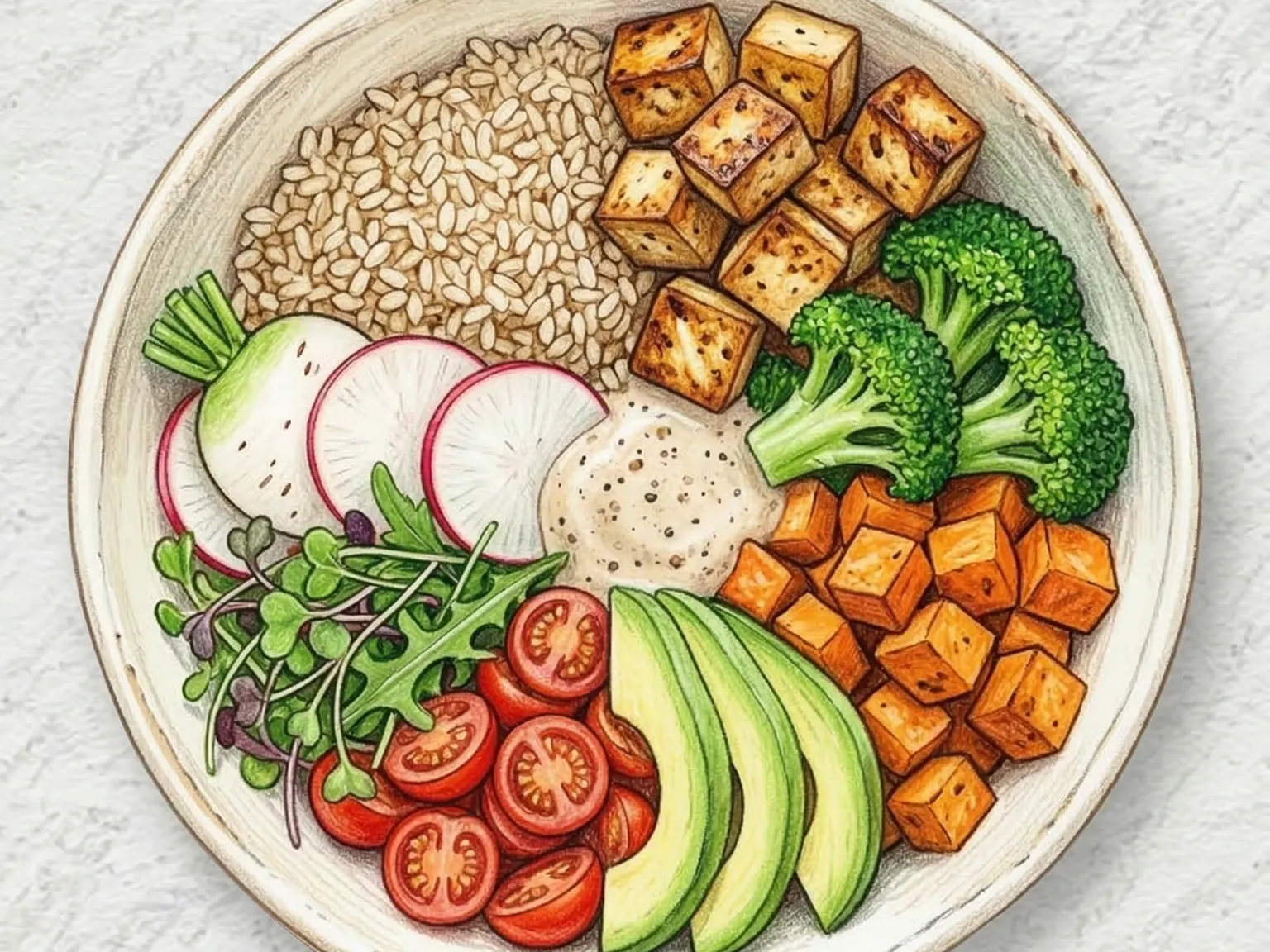
Brown rice Buddha bowl starts with a bed of cooked brown rice and arranges pan-seared tofu alongside broccoli, carrot, red cabbage, and avocado in distinct sections within a single bowl. The brown rice's coarse, nutty grain character grounds the lighter vegetables, and the tofu - pressed dry and seared until golden - contributes a crisp shell over its soft interior along with the protein the bowl needs. A soy-sesame dressing ties the disparate ingredients together with a cohesive Asian flavor thread, and avocado adds a creamy fat that smooths out the drier components. Keeping each ingredient in its own section rather than tossing everything together preserves the visual contrast and lets each element hold its own texture.
Adjust Servings
Instructions
- 1
Cube tofu and pan-sear until golden.
- 2
Blanch broccoli briefly to keep it crisp.
- 3
Julienne carrot and red cabbage.
- 4
Add brown rice to bowls and arrange vegetables, tofu, and avocado in sections.
- 5
Drizzle sesame dressing and serve.
As an Amazon Associate, we may earn from qualifying purchases.
Tips
Nutrition (per serving)
More Recipes

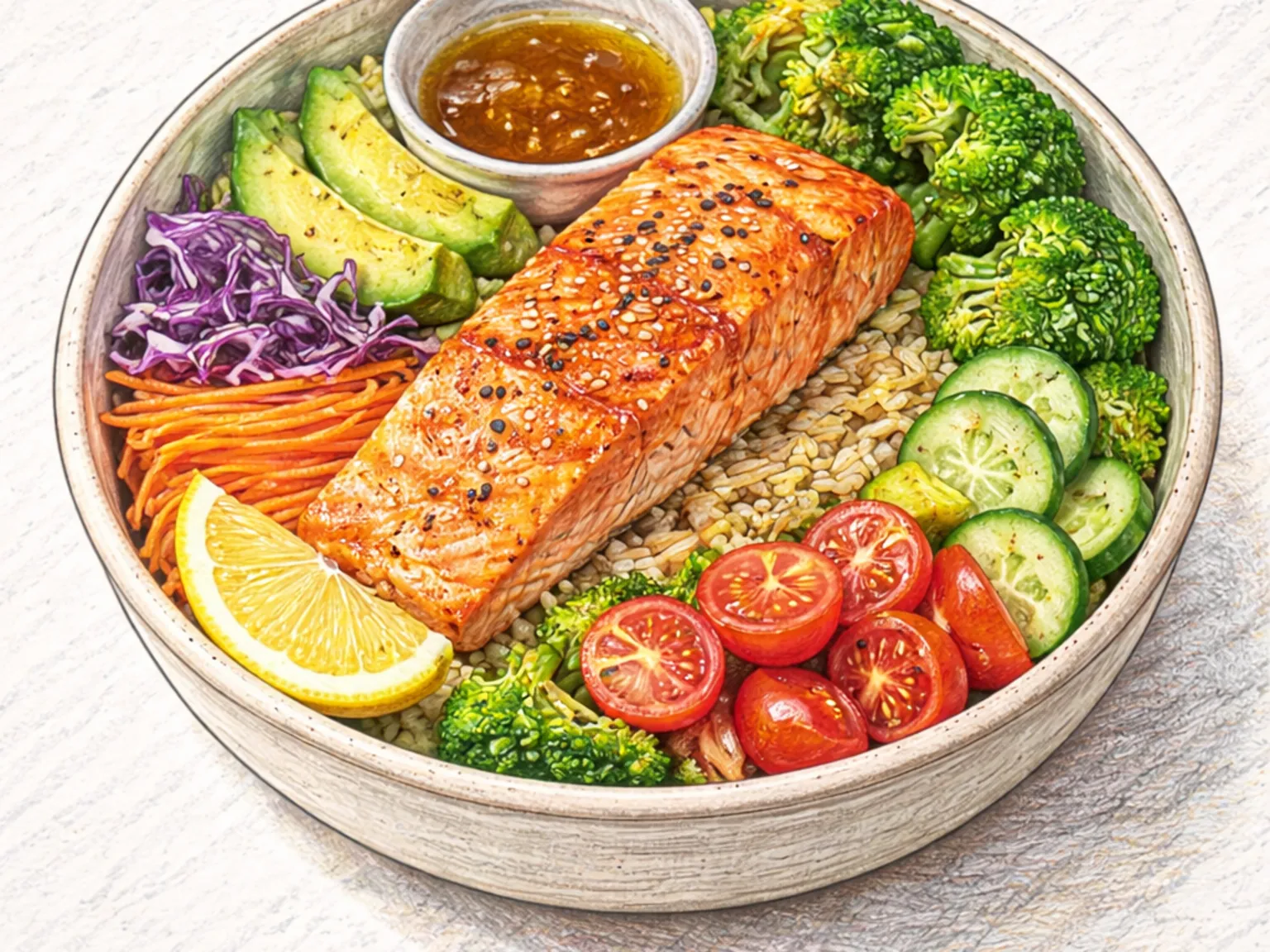
Salmon Brown Rice Power Bowl
Salmon brown rice power bowl sears a salmon fillet four to five minutes per side until the skin crisps and the interior stays moist, then plates it over cooked brown rice with blanched spinach, julienned carrot, and sliced avocado. A sauce of soy sauce, lemon juice, and sesame oil layers umami depth, citrus brightness, and nutty aroma into a single drizzle that ties the mild grain to the rich fish. Brown rice's firm, chewy texture contrasts with the tender salmon flesh, and avocado fills the gap with a smooth, fatty creaminess. Pulling the salmon from heat while the center is still slightly translucent preserves moisture - overcooking causes the proteins to contract and squeeze out the juices.

Barley Grain Salad
Barley grain salad builds on the chewy, nutty character of well-cooked pearl barley by tossing it with diced bell pepper, cucumber, and red onion in a lemon-herb dressing. Olive oil brings a rounded richness that pairs naturally with the grain's earthy flavor, while fresh lemon juice lifts the whole bowl with bright acidity. The raw vegetables contribute moisture and crunch that break up the density of the barley, keeping each forkful interesting. High in fiber and naturally filling, this Mediterranean-inspired salad works as a standalone light meal or as a substantial side next to grilled meat or fish.

Chicken Quinoa Power Salad
Chicken quinoa power salad combines pan-seared chicken breast with quinoa simmered for 12 minutes and cooled, then layers them over romaine, cucumber, and bell pepper for a balanced one-bowl meal. Resting the chicken for three minutes after cooking redistributes its juices so slicing yields moist pieces rather than a dry surface. Rinsing the quinoa before cooking removes saponins that can leave a bitter coating. A dressing of Greek yogurt, lemon juice, and olive oil delivers creamy tanginess with a low calorie count, and the bell pepper's natural sweetness adds color and flavor alongside the lean chicken.

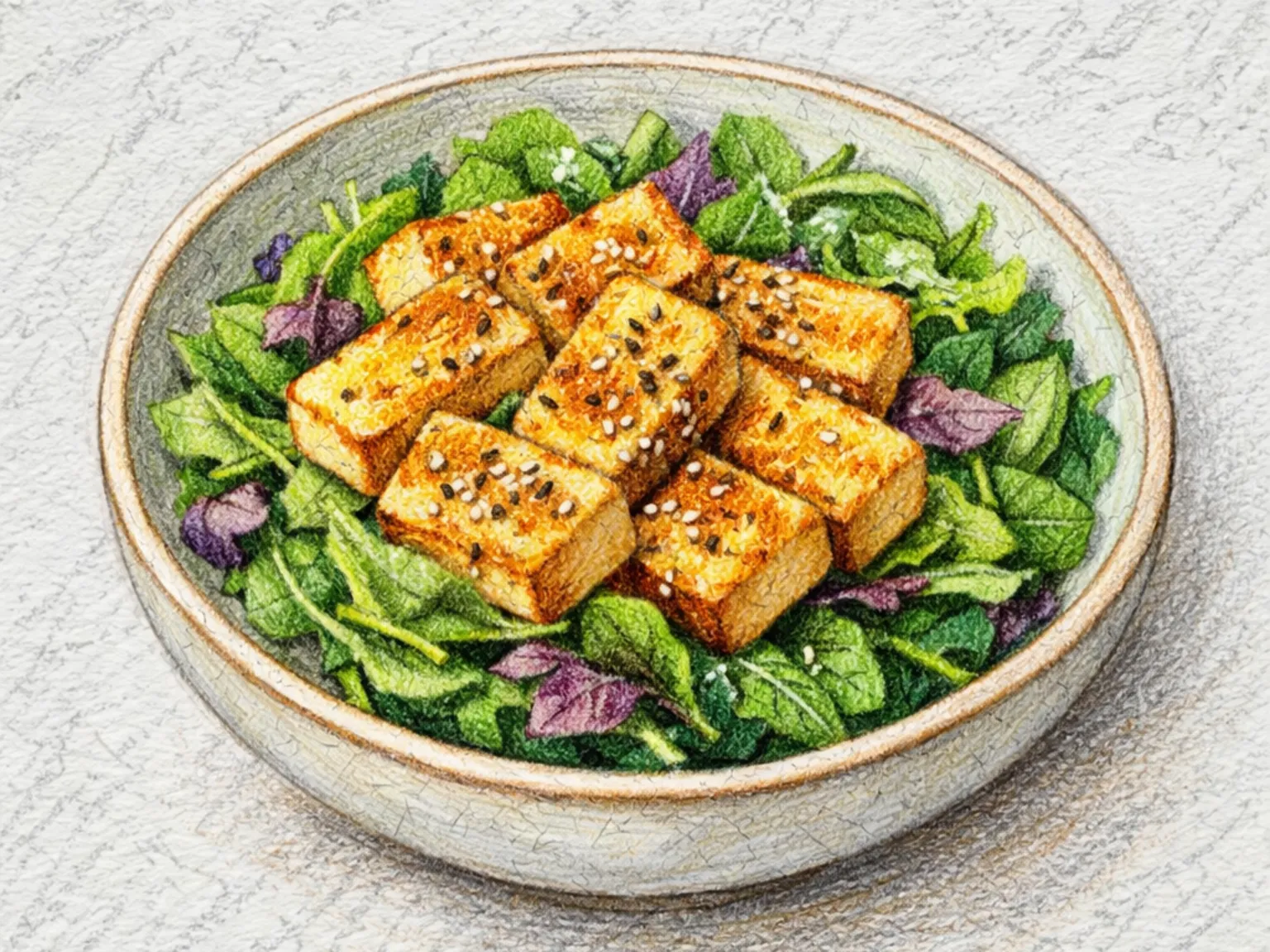
Tofu Sesame Salad (Chilled Tofu with Roasted Sesame Dressing)
Tofu sesame salad starts with firm tofu cubes seared until golden on all sides, then placed over baby greens, shredded red cabbage, and julienned carrot, finished with a sesame-soy dressing. Pressing the tofu in paper towels for ten minutes removes enough moisture for the pan to produce a sizzling, nutty crust rather than steaming the surface. This crust absorbs the soy from the dressing while the soft interior provides a contrasting texture. The dressing - soy sauce, sesame oil, and vinegar - balances salt, richness, and acidity, tying the mild tofu and raw vegetables into a cohesive bowl. Tossing only half the dressing with the greens first prevents them from wilting before serving, and a final sprinkle of toasted sesame seeds releases a nutty fragrance with each bite.

Korean Mountain Herb Bibimbap
Sanchae bibimbap arranges individually seasoned mountain vegetables - fernbrake, bellflower root, and chwi-namul - over rice, then brings everything together with a spoonful of gochujang. Each wild green carries a distinct character: fernbrake is stir-fried in sesame oil until tender, bellflower root is salted and squeezed to remove bitterness before being left crunchy, and chwi-namul is blanched briefly to preserve its herbal fragrance. Julienned carrot adds a bright visual contrast. When mixed at the table, the spicy-sweet chili paste ties together the earthy, grassy, and slightly bitter notes into a cohesive, satisfying bite. This is a dish rooted in Korean mountain temple cuisine, where foraged greens and simple grains form the foundation of a nourishing, plant-based meal.

Korean Braised Tofu Rice Bowl
Dubu jorim deopbap places soy-braised tofu over a bowl of steamed rice, letting the glaze soak down into the grains. Firm tofu is sliced, patted dry, and pan-fried until a golden crust forms on both sides, then simmered in a sauce of soy sauce, sugar, minced garlic, and water until the liquid reduces to a sticky, mahogany-colored glaze. Sliced onion cooks alongside the tofu, softening into the sauce and contributing natural sweetness. A cheongyang chili cut on the bias adds a sharp kick, and green onion goes in at the end for fragrance. The braising sauce pools around the rice and seeps into each grain, ensuring that flavor carries through from the first bite to the last. Despite its simplicity, the dish provides a satisfying amount of plant protein and stands well on its own without additional side dishes.