Taiwanese Ham and Cheese Sandwich
Quick answer
An addictive combination of soft bread, sweet condensed milk, salty ham, and cheese.
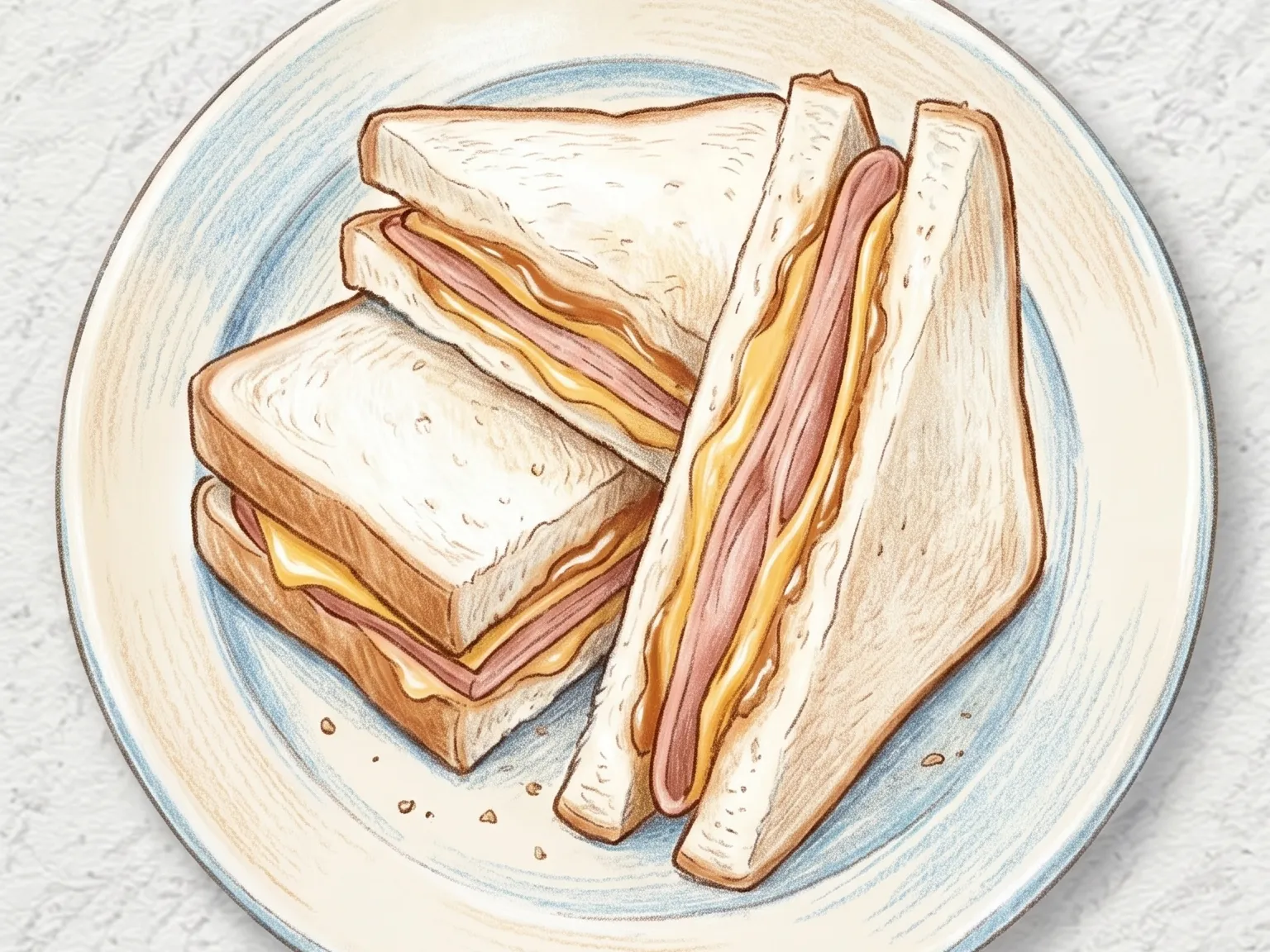
- Condensed milk mayo between egg sheet, ham, and cheddar, pressed and cut diagonally for salty-sweet layers.
- Equal parts condensed milk and mayo create a salty-sweet creamy spread
Key ingredients
Core cooking flow
- 1 Whisk the eggs, fry them into thin sheets, and cut them to fit the bread size.
- 2 Mix condensed milk and mayonnaise in a 1:1 ratio to create the sweet sauce.
- 3 Using 4 slices of bread per sandwich, spread the sauce thinly on each surface.
An addictive combination of soft bread, sweet condensed milk, salty ham, and cheese.
What Makes This Special
- Condensed milk mayo between egg sheet, ham, and cheddar, pressed and cut diagonally for salty-sweet layers.
- Equal parts condensed milk and mayo create a salty-sweet creamy spread
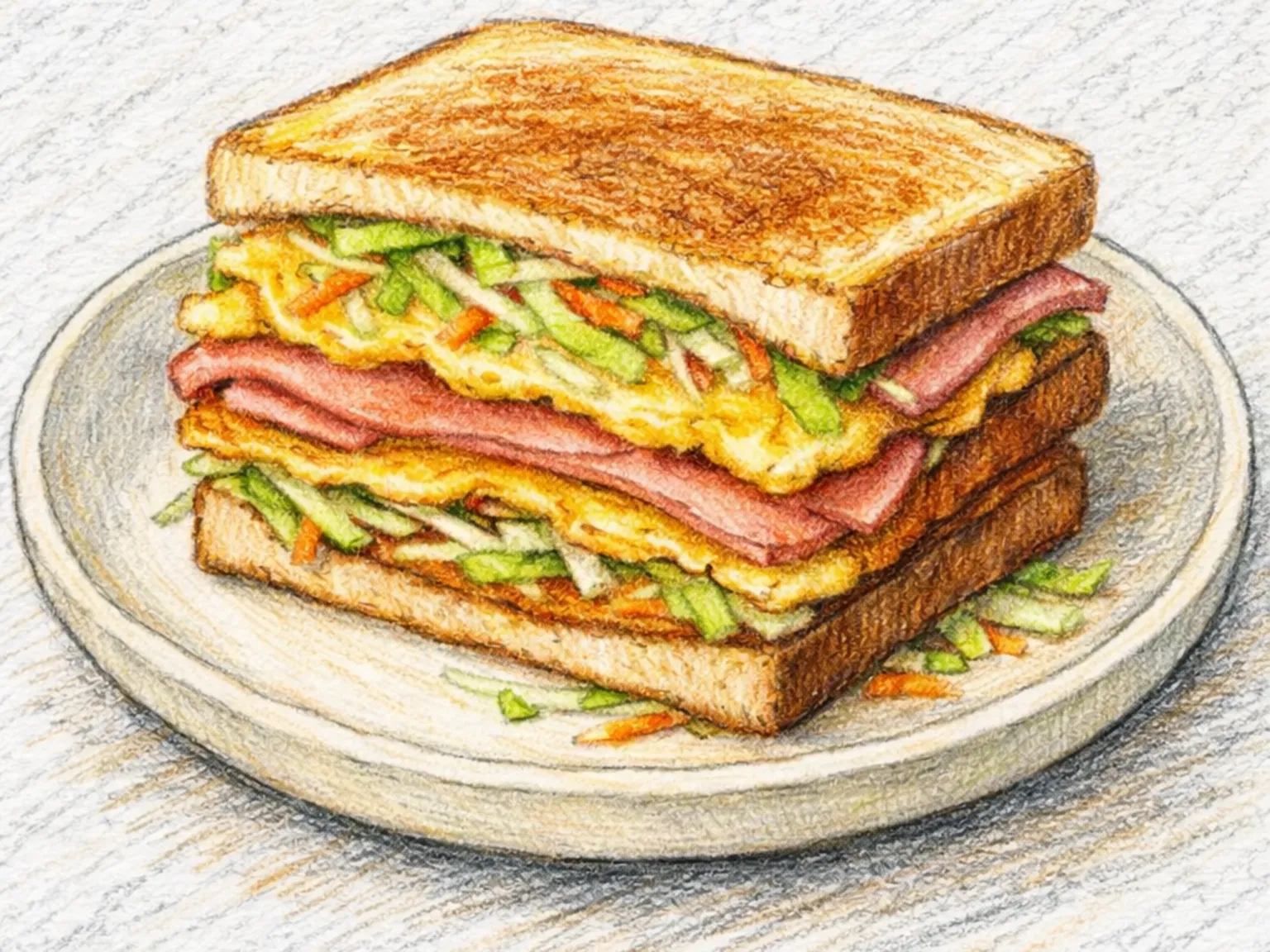
- Egg sheet, ham-cheese, egg sheet triple stack shows clean layers when cut
- Crust removed and pressed in wrap locks filling before diagonal slicing
Instructions
- 1
Whisk the eggs, fry them into thin sheets, and cut them to fit the bread size.
- 2
Mix condensed milk and mayonnaise in a 1:1 ratio to create the sweet sauce.
- 3
Using 4 slices of bread per sandwich, spread the sauce thinly on each surface.
- 4
Layer egg sheet on the 1st tier, ham and cheese on the 2nd, and another egg sheet on the 3rd.
- 5
Trim the crusts off the bread and cut diagonally into two pieces.
Tips
Nutrition (per serving)
Recipes to Cook Together
More Western →Serve with this
Chia Seed Yuja Dressing Tofu Salad
A healthy salad with refreshing yuja dressing and crunchy chia seeds.
Black Sugar Tapioca Pearl Milk Tea
Enjoy chewy tapioca pearls and sweet black sugar syrup milk tea at home.
Crispy Glutinous Rice Nurungji Crackers
A sweet and salty glutinous rice snack with an excellent crispy yet chewy texture.
Soy Butter Steak Garlic Spaghetti
Thick-cut sirloin seared at high heat, then glazed in soy sauce and butter, forms the base of this steak pasta. The fond left in the pan gets deglazed with soy sauce and butter, then emulsified with pasta water into a thin, shiny coating that clings to each strand without turning greasy. Generous garlic browned in olive oil beforehand builds a deep, roasted-garlic base that runs through the entire sauce, and tsuyu -- a Japanese seasoning concentrate made from kombu and bonito -- adds the round umami depth of dashi without any extra steps. The steak is best cooked to medium-rare and sliced against the grain before laying over the pasta; resting the meat first keeps the juices from running out when cut. Black pepper and sliced scallions cut through the richness at the end. The full cook time is about 20 minutes, and pasta water volume controls the final sauce consistency.
Similar recipes
Korean Street Ham & Cheese Toast
Gilgeori ham cheese toast is a variation on the classic Korean street toast that adds a slice of processed cheese to the standard layered sandwich. The base formula is the same: butter-toasted bread, a pan-fried egg-cabbage-carrot omelet, and sliced ham, finished with ketchup and a pinch of sugar. The cheese sits between the ham and the top slice of bread, where the trapped heat from the just-toasted bread and the warm fillings slowly melts it from the edges inward. As it melts, the cheese does two things. It binds the fillings together, preventing the layers from sliding apart when the sandwich is picked up and bitten. And it introduces a creamy, milky fat layer between the saltiness of the ham below and the sweet-tangy ketchup above, softening the contrast between those two flavors rather than letting them clash. The cabbage and carrot in the omelet stay slightly crunchy even after cooking, contributing a fresh texture that contrasts with the softness of the melted cheese and the tenderness of the egg. The combination of bread, egg, cheese, and ham provides a meaningful amount of protein and carbohydrate in a single compact package, which is why this style of street toast remains a popular breakfast and quick meal option in Korea.
Gua Bao (Steamed Bun with Braised Pork)
Gua bao, sometimes called the Taiwanese hamburger, is a traditional snack that traces its origins to a ceremonial food eaten during Lunar New Year pig slaughter, though it has since become one of the most recognizable symbols of Taiwan night market street food culture. The steamed bun, called he ye bao, is made from fermented wheat dough that must be soft and pillowy on the inside, smooth on the surface, and elastic enough to fold cleanly in half without tearing before the filling is placed inside. The pork belly filling is braised for over an hour in soy sauce, five-spice powder, and rock sugar until the meat breaks apart along its grain at the lightest touch of chopsticks. Three garnishes work together to cut through the richness of the braised pork from different angles: pickled mustard greens bring sharp fermented acidity, crushed peanut powder adds a sandy sweetness, and fresh cilantro contributes bright herbal fragrance. The bun is sized to hold in one hand, yet the flavor complexity it contains rivals a full plated dish. This compression of layered depth into a single handheld bite is precisely what defines the spirit of Taiwan night market cooking.
Cuban Sandwich
Cuban sandwich splits a baguette lengthwise and spreads Dijon mustard on both cut sides before layering roast pork, sliced ham, Swiss cheese, and thin pickle slices inside. Butter goes on the outer crust, and the assembled sandwich is pressed in a skillet or sandwich press over medium heat for four to five minutes per side. The sustained pressure flattens the bread into a crisp, golden shell while the Swiss cheese melts and binds the fillings into a cohesive unit. Pickles provide a tart acidity and mustard adds a sharp, pungent bite that cut through the salty richness of the two meats, keeping each mouthful balanced rather than heavy. A heavy cast-iron pan placed on top works as well as a dedicated press when equipment is limited. The traditional pork is lechon, a Cuban-style roast marinated in garlic, cumin, and sour orange juice, though tightly grained pork belly or chashu makes a serviceable substitute. This sandwich was developed by Cuban immigrants in Tampa and Miami, where it became a daily staple rather than an occasional indulgence. Deceptively simple in appearance, it is a study in balance: every ingredient serves a specific purpose and the whole is noticeably better than the sum of its parts.
Grilled Cheese Sandwich
Grilled cheese sandwich is made by buttering the outer sides of bread slices, filling them with cheddar and mozzarella cheese, and toasting both sides in a pan until golden and crisp. Combining cheddar's sharp saltiness with mozzarella's stretchy pull gives the sandwich both depth of flavor and satisfying texture. A thin layer of Dijon mustard spread on the inner bread adds a subtle, peppery bite that cuts through the richness of the melted cheese. Cooking over medium-low heat is essential - it gives the cheese enough time to melt completely before the bread surface burns. Pressing the sandwich lightly while flipping ensures the bread and cheese bond tightly, producing a clean cross-section when the sandwich is sliced in half.
Jambon-Beurre (Classic Butter and Ham Baguette)
The jambon-beurre is a staple French sandwich designed for daily consumption, consisting of a baguette, butter, and ham. Because the recipe uses only three primary ingredients, the specific characteristics of each component are fundamental to the assembly. A traditional version utilizes a baguette characterized by a crust that breaks easily and a crumb that provides a chewy texture. The butter chosen is typically a cultured unsalted variety. It is necessary to bring the butter to room temperature to ensure it is soft enough to spread across the bread without damaging the soft interior. The ham used is jambon blanc, which is prepared in thin slices to build the layers of the sandwich. A light application of Dijon mustard on one side of the bread provides a sharp and peppery flavor profile. This ingredient serves to balance the heavy fat content of the butter against the natural saltiness found in the ham. Sliced cornichons are included inside the bread to add a level of tart acidity. These pickles help to reduce the overall weight of the sandwich ingredients and maintain a consistent balance of flavors in every bite.
Cheese Fondue
Cheese fondue melts grated Gruyere and Emmental into warmed white wine to create a thick, glossy cheese dip served with cubed baguette. Rubbing the inside of the pot with a halved garlic clove lays down a gentle garlic base before the wine goes in. Tossing the grated cheese with cornstarch before adding it gradually to the warm wine is what prevents the proteins from clumping and keeps the texture smooth and flowing. A small amount of lemon juice cuts through the richness of the cheese, and the wine's acidity balances the salt from the aged cheeses. The heat must stay low throughout - high flame causes the fat to separate from the protein almost immediately, turning the fondue grainy and unappetizing. If the sauce thickens too much, a small addition of warm wine brings it back. Originating in the Alpine regions of Switzerland and France as a winter method for using hardened cheese, fondue has become a communal dish shared around the table and is now enjoyed worldwide.