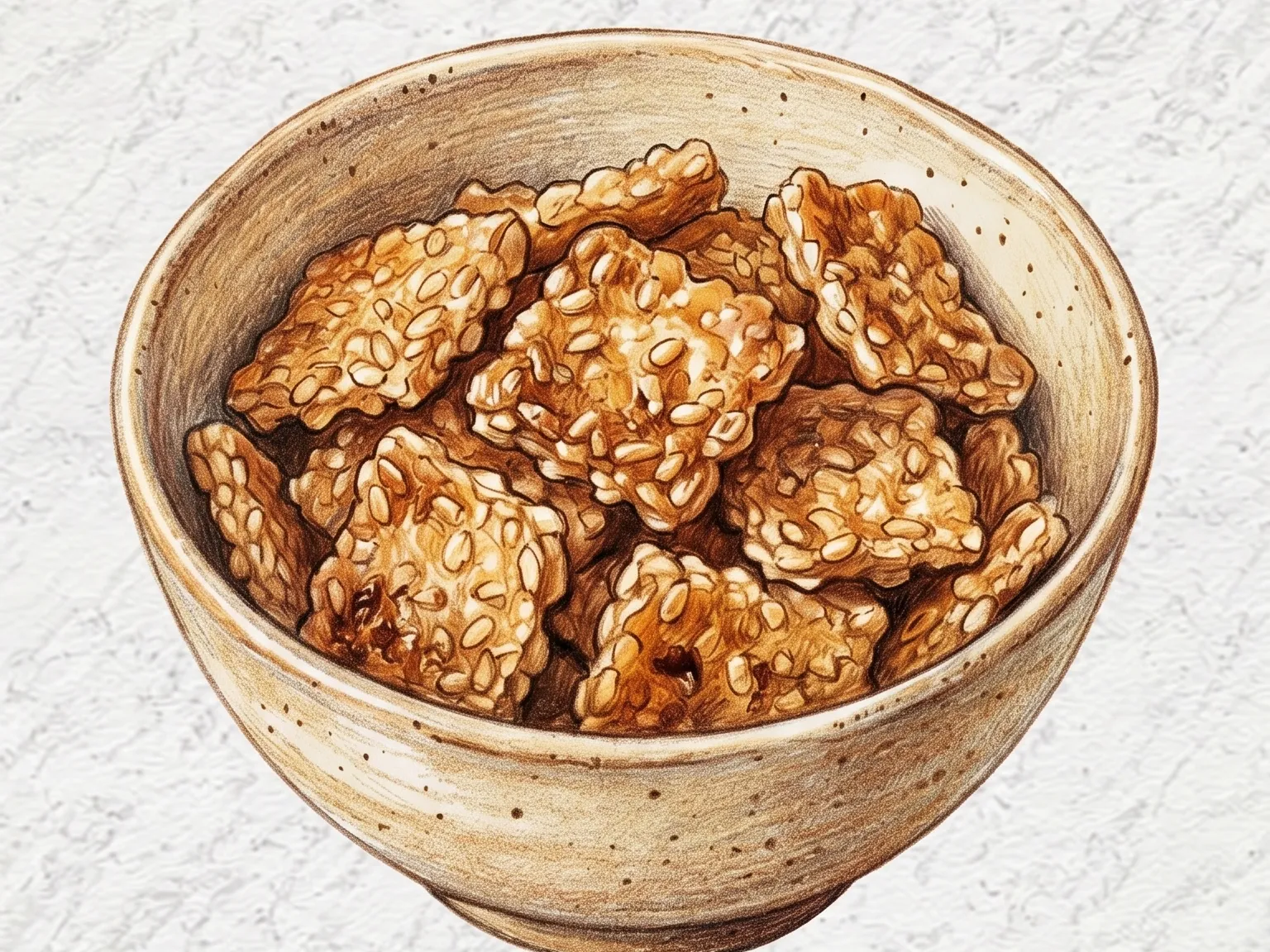
Crispy Glutinous Rice Nurungji Crackers
Quick answer
Crispy Glutinous Rice Nurungji Crackers are a traditional-style snack made from cooked glutinous rice mixed with black sesame seeds.
What makes this special
- A glossy glass-like shell of cooled rice syrup coats these crispy, chewy Chapssal Nurungji crackers.
- Rice syrup and sugar coating cools into a glass-like glossy shell
- Glutinous rice nurungji releases a nutty sweetness with each chew
Key ingredients
Core cooking flow
- 1 Mix 210g cooked glutinous rice with 1 teaspoon black sesame seeds until even...
- 2 Coat a pan with 1 tablespoon oil over low heat, add the rice sheet, and cook...
- 3 Break the crisped rice cracker by hand into bite-sized pieces about 4 to 5cm across and set aside.
Crispy Glutinous Rice Nurungji Crackers are a traditional-style snack made from cooked glutinous rice mixed with black sesame seeds. The mixture is pressed thin and pan-fried over low heat until golden and crunchy. Chewing the crackers releases the natural nutty sweetness of the rice, while the embedded black sesame adds toasty flavor and visual contrast. The nurungji is broken into bite-sized pieces and tossed in a warm syrup of grain syrup and sugar. This coating cools into a glossy, glass-like shell that locks in the crisp texture. Cinnamon powder is dusted at the end for aroma. The crackers are cooled apart on a tray to prevent sticking. You can also bake them in an air fryer at 180 C for fifteen minutes for a leaner finish, or sprinkle extra sugar before cooling for a traditional market-style taste.
Instructions
Read the steps as a cooking flow: prep, heat, seasoning, doneness control, and finish.
- 1Heat
Mix 210g cooked glutinous rice with 1 teaspoon black sesame seeds until evenly distributed, then press flat on a piece of plastic wrap to a uniform 0.5cm thickness.
- 2Control
Coat a pan with 1 tablespoon oil over low heat, add the rice sheet, and cook 4 to 5 minutes per side, pressing occasionally, until both surfaces are golden and crispy.
- 3Step
Break the crisped rice cracker by hand into bite-sized pieces about 4 to 5cm across and set aside.
- 4Control
Add 1 tablespoon corn syrup and 2 tablespoons sugar to a clean pan over low heat and cook until bubbles form and the syrup turns a light amber color.
- 5Step
Add the rice cracker pieces to the syrup and toss quickly within 30 seconds to coat, then dust with 0.5 teaspoon cinnamon powder.
- 6Step
Spread on a wide tray with space between pieces and cool completely to maintain crunch before serving.
After the steps
Pick a recipe that fits this dish.
Continue with shared ingredients, meal pairings, or a similar method.
Recipes That Go Well With This
More Desserts →Based on shared ingredients and meal pairing
Chewy Potato Bread
This recipe creates potato-shaped bread rolls filled with a sweet and savory mashed potato filling enclosed in a chewy dough. The filling is made by mashing hot boiled potatoes with sugar, salt, and mayonnaise. For the dough, tapioca starch and glutinous rice flour are kneaded with egg, melted butter, and corn syrup, which ensures the bread retains its signature chewy texture even after cooling. Each portion of dough is flattened to wrap the potato filling, then shaped by hand to mimic the irregular form of a real potato. Rolling the shaped dough in roasted soybean powder or black sesame powder replicates the color and texture of dirty potato skin. Indentations are poked with a chopstick to resemble potato eyes before baking at 170 degrees Celsius for twenty minutes. The result is a crisp exterior with a moist filling.
Korean Jjajang Tteokbokki
Jjajang tteokbokki simmers chewy rice cake sticks in a sauce of black bean paste (chunjang) stir-fried with ground pork, onion, and cabbage. The critical first step is pre-frying the chunjang in a generous amount of oil before adding any other ingredients: raw black bean paste carries a flat, slightly bitter taste, but several minutes of stirring in hot oil transforms it, removing the harsh edge and developing the characteristic deep, roasted sweetness that defines the dish. As the sauce reduces and thickens, it clings heavily to each rice cake, delivering an intense hit of savory black bean flavor with every bite. Unlike gochujang-based tteokbokki, there is no chili heat present at all, making this a version accessible to those who find standard tteokbokki too spicy. The ground pork renders fat into the sauce as it cooks, adding richness and making the sauce glossier and heavier in body. Julienned cucumber scattered on top at serving provides a fresh, crunchy contrast that cuts through the richness of the black bean sauce and brightens the overall flavor of the bowl.
Korean Chestnut Tea Latte Recipe
This Korean chestnut tea latte, also called bam latte, blends boiled chestnuts with milk for a warm cafe-style drink. The chestnuts are pureed with water until smooth, then heated gently with milk so the drink stays creamy instead of grainy. Maple syrup adds caramel sweetness over the mild, starchy chestnut flavor, while cinnamon and vanilla give the latte a warmer finish. Blend the chestnuts longer for a silkier drink, or leave a little texture for a thicker porridge-like consistency. The full preparation takes about twenty minutes, making it a practical homemade version of the seasonal chestnut latte served in Korean cafes each autumn.
Pan-Fried Sweet Rice Cake
Bukkumi is a traditional Korean pan-fried rice cake made from glutinous rice flour dough filled with sweet red bean paste seasoned with cinnamon and sugar. Using hot water to form the dough partially gelatinizes the starch, creating a pliable skin that stretches without cracking - though the dough must stay covered with a damp cloth throughout assembly to prevent the surface from drying out. Folding the dough into half-moon shapes seals in a cinnamon-laced bean paste filling that lifts the dense sweetness of the red bean with a warm spice note. Pan-frying on low heat builds a golden crust on each side while keeping the filling warm and molten at the center. A light drizzle of honey or a pinch of sugar right after frying adds a final layer of sweetness.
Similar recipes
Glutinous Rice Cake with Soybean Powder
Injeolmi is a Korean glutinous rice cake made by kneading rice flour dough with hot water, steaming it for fifteen minutes, then pounding or beating it vigorously for at least five minutes to develop the characteristic elasticity. The pounding step determines the final texture: insufficient working produces a weak dough that cracks apart, while thorough pounding yields the signature stretchy, chewy pull that injeolmi is known for. The finished dough is stretched out, cut into bite-sized pieces, and rolled in a mixture of roasted soybean powder and sugar, which coats each piece in a fragrant, toasted-grain aroma. Applying a thin layer of sesame oil to both hands and knife before cutting prevents the dough from sticking, and the soybean powder coating is best applied immediately before serving to keep the surface dry and powdery rather than absorbing moisture. Injeolmi appears regularly at ancestral rites, first birthday celebrations, and traditional ceremonies across Korea.
Honey-Filled Rice Cakes (Steamed Glutinous Rice with Brown Sugar Syrup)
Kkultteok are bite-sized Korean rice cakes made by kneading glutinous rice flour with hot water, wrapping each 20-gram round of dough around a filling of dark brown sugar, ground cinnamon, and chopped walnuts, then steaming for eight to ten minutes. After steaming, a light brush of sesame oil gives the surface a sheen and keeps the pieces from sticking together, and a final roll in roasted soybean powder adds a dry, nutty outer coating. Biting through the soft, chewy shell releases a pool of melted brown sugar syrup with cinnamon warmth, while the walnut fragments provide crunch against the sticky interior. The most critical step is pinching the dough seam shut as tightly as possible: if the seal fails during steaming, the molten brown sugar syrup leaks out and the rice cake ends up hollow and dry.
Three-Color Sweet Rice Balls
Samsek gyeongdan are traditional Korean rice cake balls made from glutinous rice flour dough divided into three colors: plain white, green from mugwort powder, and pink from prickly pear powder, then rolled into small spheres and boiled. The dough must be kneaded with hot water to fully activate the starch's sticky quality; water that is too cool makes the dough prone to cracking when shaped. The balls need one extra minute of cooking after they float to ensure the centers turn fully translucent, and pulling them out immediately after floating often leaves a dense, undercooked core. The mugwort batch carries an herbal, grassy note, and the prickly pear version offers a faint fruity tang, so three distinct flavors emerge from the same base recipe. Transferring the cooked balls immediately to cold water stops carryover cooking and preserves the springy, bouncy texture. Rolling them in a mixture of roasted soybean powder or black sesame powder with sugar coats each ball in nuttiness, and a light brush of sesame oil prevents the balls from sticking together while giving the surface a subtle sheen.
Korean Sweet Glutinous Rice
Glutinous rice is soaked, steamed, and dressed with a mixture of soy sauce, sesame oil, and honey, then studded with jujubes, chestnuts, and pine nuts before a second steaming. The double-steaming process gives the rice a dense, chewy stickiness while the soy sauce penetrates each grain and tints it a deep amber. Jujubes lend a natural caramel-like sweetness, chestnuts add a crumbly, starchy contrast, and pine nuts contribute a subtle oiliness that enriches the overall taste. Traditionally prepared for the first full moon festival, yakbap is equally enjoyable as an everyday snack or packed lunch.
Handmade Scorched Rice
This recipe guides you to make handmade scorched rice, called nurungji, using leftover cooked rice. The process starts by warming cold rice in the microwave to soften the grains, allowing them to spread smoothly into a thin sheet. After placing the rice on a preheated pan, a small amount of water is sprinkled over the surface to act as an adhesive, ensuring the grains bind together firmly instead of crumbling. The rice is cooked over low heat for several minutes without disturbance until the edges dry and the bottom develops a golden color. After checking the color with a spatula, the sheet is flipped to toast the other side. Once both sides are crispy and toasted, the sheet is cooled and broken into bite-size pieces. It can be eaten as a snack with sugar or boiled in water to make a traditional sungnyung beverage.