Jambon-Beurre (Classic Butter and Ham Baguette)
Quick answer
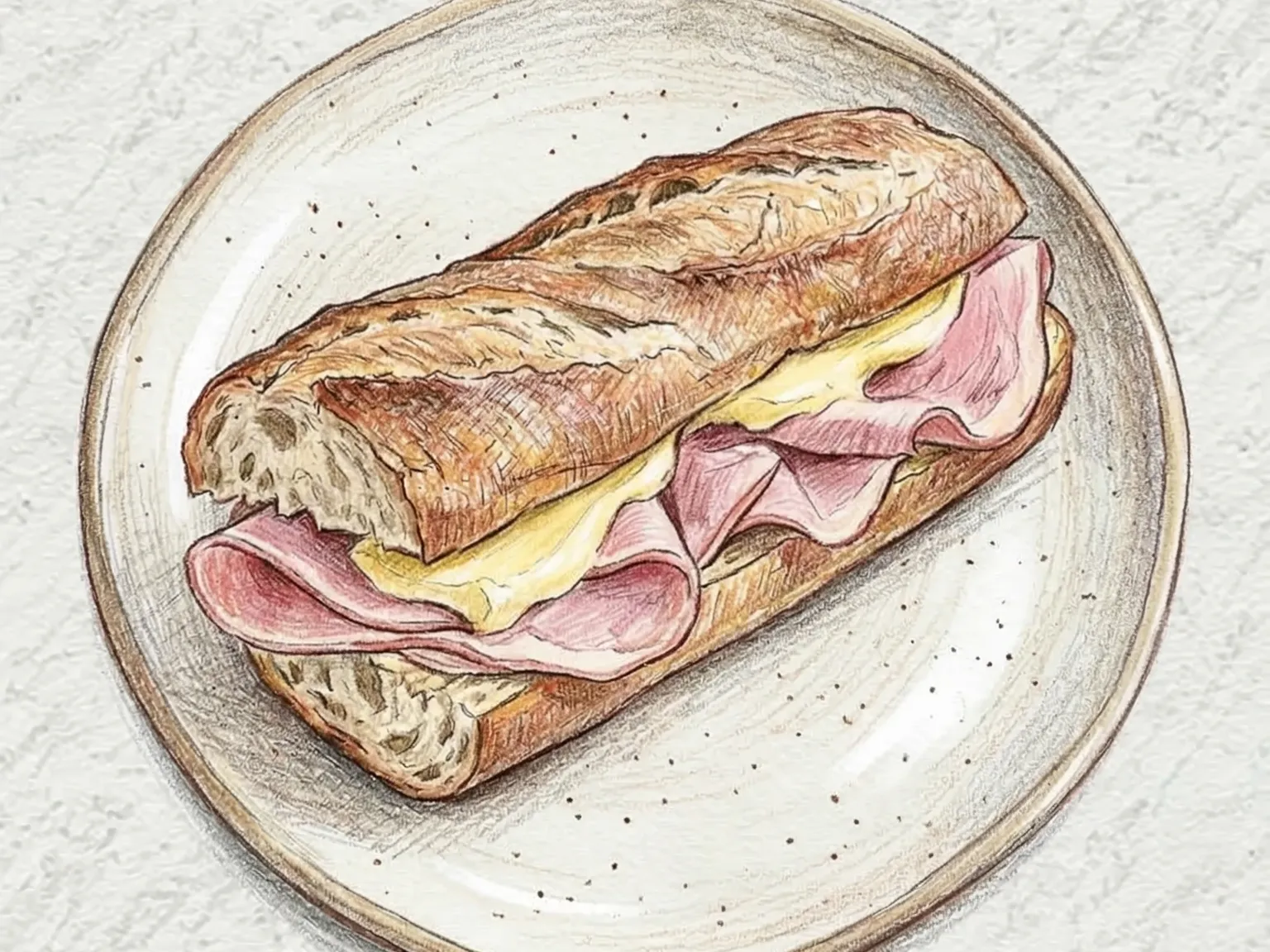
The jambon-beurre is a staple French sandwich designed for daily consumption, consisting of a baguette, butter, and ham.
What makes this special
- Fermented butter and quality ham define this classic three-ingredient French baguette.
- Quality of three ingredients, baguette, fermented butter, and jambon blanc, defines the result
- Properly softened room-temperature butter spreads without tearing the crumb
Key ingredients
Core cooking flow
- 1 Leave 50 g unsalted butter at room temperature until a finger presses into it easily.
- 2 Set the baguette flat and split it lengthwise with the knife held low and steady.
- 3 Spread the softened butter evenly over both cut sides of the bread.
The jambon-beurre is a staple French sandwich designed for daily consumption, consisting of a baguette, butter, and ham. Because the recipe uses only three primary ingredients, the specific characteristics of each component are fundamental to the assembly. A traditional version utilizes a baguette characterized by a crust that breaks easily and a crumb that provides a chewy texture. The butter chosen is typically a cultured unsalted variety. It is necessary to bring the butter to room temperature to ensure it is soft enough to spread across the bread without damaging the soft interior. The ham used is jambon blanc, which is prepared in thin slices to build the layers of the sandwich. A light application of Dijon mustard on one side of the bread provides a sharp and peppery flavor profile. This ingredient serves to balance the heavy fat content of the butter against the natural saltiness found in the ham. Sliced cornichons are included inside the bread to add a level of tart acidity. These pickles help to reduce the overall weight of the sandwich ingredients and maintain a consistent balance of flavors in every bite.
Instructions
Read the steps as a cooking flow: prep, heat, seasoning, doneness control, and finish.
- 1Season
Leave 50 g unsalted butter at room temperature until a finger presses into it easily.
Slice the 4 cornichons lengthwise into thin pieces, then pat them dry so they do not make the baguette soggy.
- 2Step
Set the baguette flat and split it lengthwise with the knife held low and steady.
Open it gently with your hands, keeping the crumb intact, and brush away only large loose crumbs.
- 3Prep
Spread the softened butter evenly over both cut sides of the bread.
Work in thin passes instead of pushing hard, because cold lumps or heavy pressure can tear the delicate crumb.
- 4Season
Spread 1 teaspoon Dijon mustard very thinly on one buttered side, keeping it even from end to end.
Scatter 0.25 teaspoon black pepper broadly so the sharpness and saltiness do not collect in one spot.
- 5Step
Fold the 120 g jambon ham loosely onto the bread so it forms thin, airy layers rather than a dense stack.
Tuck the cornichons between the ham folds and near the edges for acidity in each bite.
- 6Finish
Close the sandwich and press with your palm for only about 2 seconds to hold the filling in place.
Cut it in half and serve immediately, or if chilled, rest it 10 minutes at room temperature first.
After the steps
Pick a recipe that fits this dish.
Continue with shared ingredients, meal pairings, or a similar method.
Recipes That Go Well With This
More Western →Based on shared ingredients and meal pairing
Croque Monsieur (Béchamel Ham and Cheese Melt)
Croque monsieur is a Parisian café classic built on a smooth béchamel sauce made from a butter-flour roux whisked with warm milk. One slice of white bread is spread with Dijon mustard before being layered with sliced ham and grated Gruyère cheese. The second slice tops the sandwich, which then gets a generous coat of béchamel and more cheese on the upper surface. Baking at 200 degrees Celsius for ten minutes melts the interior filling, and a brief three-minute broil creates a golden, bubbling crust on top. The mustard's pungent sharpness balances the salty richness of ham and cheese, keeping the overall flavor clean.
Galette Complete (Buckwheat Crêpe with Ham Cheese Egg)
Galette complete is a savory Breton buckwheat crepe made from a thin batter of buckwheat flour, water, eggs, and salt that rests for fifteen minutes to let the grain hydrate and the rough particles smooth out. A lightly buttered crepe pan gets a thin spread of batter that cooks until the edges turn crisp and lacy. Ham and grated Gruyere cheese are placed in the center, a whole egg is cracked on top, and the edges fold inward to form a square frame around the filling. The galette finishes cooking just until the white sets while the yolk stays runny, which is the traditional result. Buckwheat's earthy, slightly bitter character pairs naturally with the salty ham and nutty melted cheese, and the crisp folded border contrasts with the soft, custard-like center. Spreading the batter as thinly as possible is important because a thick crepe loses the light, delicate texture that defines the dish. A lid placed briefly over the pan after folding can set the white faster without overcooking the yolk.
Apple Fennel Walnut Salad
This salad pairs three ingredients whose textures and flavors run in different directions - crisp apple, anise-scented fennel, and bitter walnuts - and unifies them with a honey-lemon dressing. Thinly sliced fennel bulb contributes a licorice-like fragrance that is more aromatic than sweet, while its celery-crisp texture holds a firm contrast against the apple's softer flesh. Toasted walnuts add a crunchy, tannic bitterness that anchors the lighter elements and keeps the salad from reading as merely sweet. The dressing is deliberately minimal - fresh lemon juice, honey, a small amount of olive oil, and a pinch of salt - so the ingredients carry the flavor rather than the sauce. Assembling just before serving prevents the apple from browning. Salads of this type appear on autumn and winter tables in France and Italy when local apples and fennel come into season together, and can be served as a standalone starter or alongside roasted poultry, where the anise note in the fennel cuts through the meat's richness. Fennel has a long association with digestive support in Mediterranean cooking, which is partly why it has traditionally been served alongside fatty meats, and this salad draws on the same pairing logic.
Pan Bagnat (Nicoise Olive Oil Soaked Tuna Sandwich)
Pan bagnat is a traditional tuna sandwich from Nice in southern France, defined by bread that is thoroughly soaked in olive oil and red wine vinegar before being filled. A small baguette is halved and hollowed slightly, then drizzled generously with extra virgin olive oil and layered with canned tuna, boiled eggs, sliced tomato, red onion, anchovy fillets, and black olives. After assembly, the sandwich is wrapped tightly and pressed under weight for at least thirty minutes to two hours in the refrigerator, allowing the oil and vinegar to penetrate the bread and meld the flavors into a cohesive whole. The anchovies contribute deep umami, the olives add brine, and the tomato brings acidity - together they make additional condiments unnecessary. Originally packed by fishermen heading out to sea, this is a sandwich that genuinely improves with time.
Serve with this
Schisandra Fruit Punch (Korean Cold-Brewed Berry Fruit Bowl)
Omija hwachae is a traditional Korean fruit punch made by cold-infusing dried schisandra berries in water for at least two hours to extract a vivid red liquid, then sweetening with honey. Cold extraction is not optional: hot water pulls excess astringency from the berries and makes the liquid harsh rather than bright. Only a small portion of the infusion is gently warmed to dissolve the honey before the two are combined. Scooped balls of Korean pear and watermelon sit submerged in the chilled omija broth, so each spoonful delivers a crisp, juice-filled bite against the tart-sweet liquid. Pine nuts floated on the surface add a mild fatty richness that tempers the sharpness of the schisandra acid, and serving the hwachae over generous ice keeps every component at its most vivid.
Gochu Oil Tuna Puttanesca Spaghetti
The foundation of this Gochu oil tuna puttanesca spaghetti is established by integrating the olive oil reserved from a can of tuna with a secondary portion of chili oil. This combined oil serves as the medium for sautéing sliced garlic and whole anchovy fillets over a consistently low heat. The process continues until the anchovies have fully dissolved into the warm fat, a step that allows their natural saltiness to permeate the base while eliminating any lingering traces of fishiness. Crushed tomatoes are then introduced to the pan and left to simmer for six minutes over medium heat. This period of simmering reduces the liquid content, which in turn concentrates the flavors and makes the natural acidity of the tomatoes more prominent. After this reduction, capers and black olives are added to provide distinct layers of brine and a characteristic hint of bitterness to the mixture. The solid pieces of tuna are folded in during the final two minutes of cooking. This short duration ensures that the tuna maintains its structure and provides a firm texture instead of disintegrating into the liquid. The cooked spaghetti and a small quantity of starchy pasta water are then combined with the sauce over high heat. This rapid tossing emulsifies the fats and liquids into a glossy coating that adheres uniformly to every surface of the pasta. To finish the dish, a handful of chopped parsley is scattered on top to introduce a fresh herbal quality that lightens the dense and salty profile of the sauce. Red chili flakes can be included at any stage of the process to allow for the precise adjustment of heat levels.
Tomato Basil Juice
Tomato basil juice is a cold savory drink made by blending ripe tomatoes with fresh basil leaves and straining the result through a fine sieve to remove seeds and skins. The ripeness of the tomato determines much of the flavor: fully ripe tomatoes carry free glutamates that produce a natural umami depth, whereas underripe fruit tastes predominantly sour without the sweetness and savory body that makes the juice satisfying. Basil should be added to the blender immediately before blending rather than sitting cut or torn, because the volatile oils that produce its aroma begin oxidizing quickly once the leaves are damaged. After blending to a smooth consistency, passing the juice through a fine-mesh strainer or cheesecloth removes the solids and produces a texture smooth enough to drink without resistance. Salt and black pepper season the juice, and fresh lemon juice raises the acidity in a way that brightens the overall flavor rather than making it sour. A small addition of olive oil emulsifies into the juice and activates fat-soluble aromatic compounds in both the tomato and the basil, producing a fuller, rounder flavor than the unstrained version. The juice must be thoroughly chilled before serving, as warmth mutes the herbal freshness. It works well as a brunch drink, a light non-alcoholic aperitif, or a base for savory cocktails.
Similar recipes
French Baguette
A baguette is a traditional French bread made from only four ingredients: bread flour, water, yeast, and salt. Because the formula strips away every variable beyond technique, the final quality is determined almost entirely by the precision of fermentation management and the confidence of the baker at each stage. A hydration level of seventy percent or higher is required to develop the open, irregular crumb structure that defines the interior; dough that is too dry will close up in the oven and produce a dense, uniform crumb with none of the characteristic airy pockets. A long first fermentation builds layers of acidity and deep wheat flavor that a short rise simply cannot provide, and during shaping the dough should be handled with restraint, using only gentle folds that preserve the large gas bubbles rather than pressing them out. Scoring lines, known as coupes, cut along the top surface control the direction of oven spring; the blade must be sharp enough and the movement decisive enough that the dough does not drag and tear beneath it. Introducing steam into the oven during the first ten to fifteen minutes of baking prevents the crust from setting prematurely, giving the loaf room to expand fully before the surface dries and crisps into its signature crackling shell. A well-made baguette crackles audibly when squeezed and, when sliced, reveals an interior cross-section showing holes of varied sizes scattered unevenly through the crumb. The day it is baked is the day it should be eaten; once the crust begins to soften as it cools, something irreplaceable is lost.
Garlic Butter Mussels
Garlic butter mussels are steamed in a fragrant broth of sauteed garlic, melted butter, and white wine. Onion and garlic are cooked in butter and olive oil until softened, then white wine is added and boiled briefly to drive off the alcohol while keeping the acidity and fruit notes intact. Once the mussels go in and the lid is sealed, the shells open within four to five minutes, releasing briny juices that meld with the butter-wine base into a rich, savory broth. Mussels that remain closed after cooking must be discarded. Finishing with chopped parsley and black pepper adds color and a mild sharpness, and tearing crusty baguette into the bowl to soak up the broth is the traditional way to enjoy every drop.
French Macarons
French macarons are small, round almond meringue sandwich cookies that demand precision at every single step of the process. The shells are made from finely ground almond flour, powdered sugar, and a meringue base, mixed using a technique called macaronage, which means folding the batter until it flows slowly off the spatula like lava and forms a smooth, glossy ribbon when piped. A properly baked macaron has a smooth domed top, a ruffled ring called the foot at its base, and a thin crisp shell that gives way to a chewy, lightly moist interior. The filling between the shells, whether buttercream, ganache, or fruit curd, carries the primary flavor of each variety. Classic options include vanilla and pistachio, while modern interpretations extend to raspberry, salted caramel, yuzu, and matcha. After assembly, macarons must rest in the refrigerator for at least twelve hours, during which moisture from the filling gradually softens the shells into a unified, melt-in-the-mouth texture that is impossible to achieve straight out of the oven. In Parisian patisseries, the quality of a single macaron shell is considered a reliable indicator of the entire shop's technical standard.