Chia Seed Yuja Dressing Tofu Salad
Quick answer
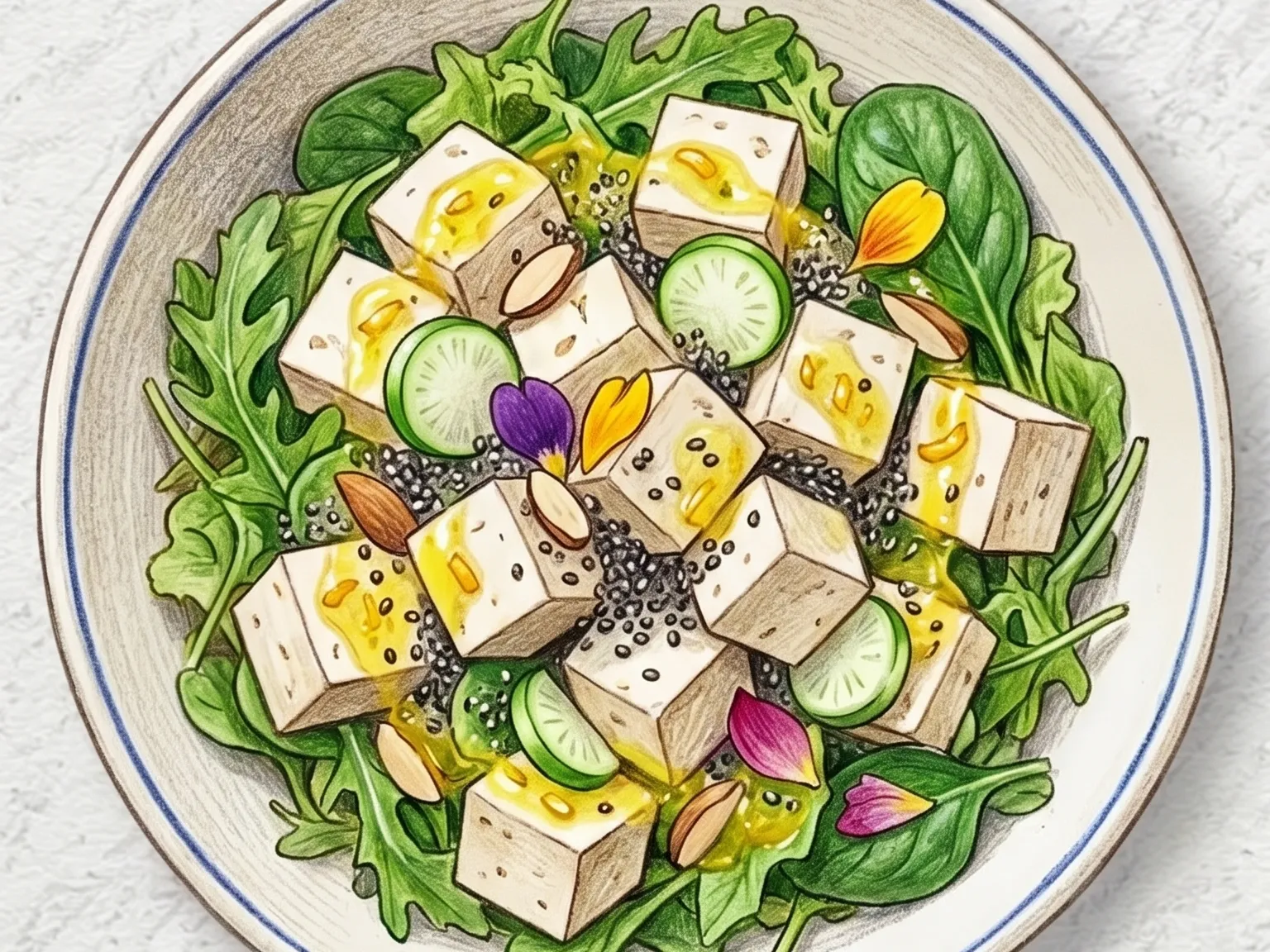
A healthy salad with refreshing yuja dressing and crunchy chia seeds.
- Chia seeds soaked in citrus juice form a textured gel that carries the yuja aroma into every bite.
- Chia seeds soaked in lemon juice form gel beads inside the dressing
Key ingredients
Core cooking flow
- 1 Soak 2 tbsp chia seeds in 1 tbsp lemon juice mixed with 2 tbsp water for at...
- 2 Cut 300 g soft tofu into 3 cm pieces and set on a paper towel for 1 to 2 min...
- 3 Halve 8 cherry tomatoes. Soak 100 g baby greens in cold water for 5 minutes...
A healthy salad with refreshing yuja dressing and crunchy chia seeds.
What Makes This Special
- Chia seeds soaked in citrus juice form a textured gel that carries the yuja aroma into every bite.
- Chia seeds soaked in lemon juice form gel beads inside the dressing
- Yuja-cheong rind and pulp release citrus layers into olive oil
- Soft silken tofu absorbs dressing at the cut face with each bite
Instructions
- 1
Soak 2 tbsp chia seeds in 1 tbsp lemon juice mixed with 2 tbsp water for at least 10 minutes until the seeds swell to a gel 8 to 10 times their size.
- 2
Cut 300 g soft tofu into 3 cm pieces and set on a paper towel for 1 to 2 minutes to absorb surface moisture gently.
- 3
Halve 8 cherry tomatoes. Soak 100 g baby greens in cold water for 5 minutes, then drain and dry completely on a rack.
- 4
Combine 2 tbsp yuja-cheong, 1 tbsp vinegar, 2 tbsp olive oil, 0.5 tbsp soy sauce, and 1 tbsp lemon juice in a small bowl and whisk until smooth.
- 5
Add the soaked chia seeds to the dressing base and stir well until the seeds are evenly distributed throughout.
- 6
Spread baby greens and cherry tomatoes on a wide plate. Gently place the soft tofu in the center. Handle the tofu carefully to keep it from breaking.
- 7
Spoon the chia seed yuja dressing evenly over everything right before eating. Dressing ahead of time will soften the greens.
Tips
Nutrition (per serving)
Recipes to Cook Together
More Salads →Serve with this
Salt-Grilled Dokdo Shrimp
Luxury Dokdo shrimp salt-grilled to preserve its naturally sweet and rich flavor.
Soy Butter Steak Garlic Spaghetti
Thick-cut sirloin seared at high heat, then glazed in soy sauce and butter, forms the base of this steak pasta. The fond left in the pan gets deglazed with soy sauce and butter, then emulsified with pasta water into a thin, shiny coating that clings to each strand without turning greasy. Generous garlic browned in olive oil beforehand builds a deep, roasted-garlic base that runs through the entire sauce, and tsuyu -- a Japanese seasoning concentrate made from kombu and bonito -- adds the round umami depth of dashi without any extra steps. The steak is best cooked to medium-rare and sliced against the grain before laying over the pasta; resting the meat first keeps the juices from running out when cut. Black pepper and sliced scallions cut through the richness at the end. The full cook time is about 20 minutes, and pasta water volume controls the final sauce consistency.
Soybean Paste Stew with Clams
Doenjang jjigae with clams is one of the most frequently made stews in Korean households, built on the combination of fermented soybean paste's deep, earthy flavor and the clean briny umami of manila clams. The clams are purged of sand before being added to a pot of doenjang-laced broth, where they open and release their salty, seawater-flavored liquor directly into the soup. The result transforms the base from something merely savory into something distinctly oceanic and complex. Zucchini softens in the bubbling broth and contributes a natural sweetness as it breaks down, while blocks of soft tofu act as sponges, soaking up the seasoned liquid and releasing it in a burst of hot, flavorful broth when bitten into. Sliced cheongyang chili peppers are added to interrupt the heaviness of the fermented paste and sharpen the overall flavor. The stew is typically served in an earthenware pot while still bubbling, alongside rice. Many Koreans ladle the broth directly over their bowl of rice. The recipe adapts to any season: assembled with leftover summer vegetables from the refrigerator for a lighter version, or cooked piping hot in a stone pot through winter.
Taiwanese Ham and Cheese Sandwich
An addictive combination of soft bread, sweet condensed milk, salty ham, and cheese.
Similar recipes
Tofu Salad (Pan-Seared Tofu on Fresh Greens)
Dubu salad is made by pressing firm tofu to remove excess moisture, then pan-searing it until the outside turns golden and crisp while the inside stays soft and tender. The seared tofu is placed over a bed of baby greens, sliced cucumber, and cherry tomatoes. Wrapping the tofu in two layers of paper towels and setting a weight on top for twenty to thirty minutes draws out enough water so the surface browns properly in the pan without steaming. A dressing of soy sauce, sesame oil, lemon juice, and olive oil moves easily between Korean and Western flavor profiles. The salad is high in plant protein and low in fat, making it a practical and satisfying option when a light, clean-tasting meal is the goal.
Tofu Avocado Salad (Silken Tofu and Avocado Sesame Bowl)
Tofu avocado salad pairs pan-seared firm tofu with ripe avocado over a bed of mixed greens, dressed in soy sauce, sesame oil, and lemon juice. Pressing the tofu thoroughly before searing allows the surface to develop a golden Maillard crust that holds its shape even after tossing with the dressing. The avocado's creamy fat contrasts with the burst of juice from halved cherry tomatoes, creating textural variety in every bite. The dressing layers three dimensions - soy sauce for salinity, sesame oil for nuttiness, and lemon juice for acidity - giving depth to otherwise mild ingredients. Cutting the avocado just before serving prevents oxidation and keeps the color clean.
Crown Daisy & Tofu Yuzu Salad
Crown daisy and tofu yuzu salad presses firm tofu dry, sears it in a pan for six to eight minutes until the surface develops a golden crust, and pairs it with crown daisy, half-moon cucumber slices, and thinly sliced red onion in a yuzu marmalade dressing. The yuzu's bright citrus fragrance and subtle bitterness meet crown daisy's bold herbal aroma, and the two botanical notes amplify each other rather than compete. Soy sauce and sesame oil anchor the dressing with fermented depth and nuttiness, preventing the floral top notes from floating untethered. The tofu's soft, creamy interior contrasts with the fibrous crown daisy stems, and cucumber's cool moisture keeps the overall impression light. Avoiding frequent flipping during searing lets a proper crust form on the tofu's surface.
Water Parsley Shrimp Salad
This Korean salad combines pan-seared shrimp with water parsley (minari) in a doenjang yogurt dressing that brings Korean fermented soybean paste together with plain yogurt in a lighter, creamier form than the paste alone. The shrimp are cooked just until opaque and springy - overcooking at this stage toughens them and diminishes their clean sweetness, which is the primary flavor note in the dish. Thinly sliced cucumber adds cool moisture and a fresh crunch throughout, and red onion soaked in cold water for at least ten minutes loses its raw harshness while keeping a pleasant mild sharpness. The dressing ratio technique matters: coating all the ingredients with two-thirds of the dressing first establishes a baseline seasoning, then tasting and adjusting with the remaining third ensures every component is evenly flavored without oversalting. Doenjang varies in salt intensity by brand and age, so tasting the dressing before assembling and balancing with extra yogurt or lemon juice prevents the final dish from being too salty. Sesame seeds scattered on top contribute a nutty finish that ties the Korean pantry elements together.
Korean Tofu Yuja Salad (Pan-Fried Tofu Citrus Dressing)
Dubu yuja muchim brings an uncommon citrus dimension to Korean tofu banchan by using yuja-cheong - a preserve of yuzu-like Korean citrus rind in honey or sugar. Soft tofu is blanched briefly to warm through and firm up slightly, then cut into bite-sized pieces and dressed while still warm so the pores open to absorb the vinaigrette. The dressing blends yuja-cheong with soy sauce, vinegar, and sesame oil - the citrus peel's fragrant bitterness cutting through the tofu's blandness in a way that soy sauce alone cannot achieve. Yuja has been cultivated on Korea's southern coast - especially Goheung and Namhae - since the Joseon era. The dish sits in a category between Korean and Western salad sensibilities, light enough to serve as a starter. Best eaten cold or at room temperature within a few hours of assembly, as the tofu's texture begins to soften with prolonged marination. The transparent sweetness of the yuja-cheong combined with the sharp edge of vinegar transforms tofu into something with an entirely different flavor register.
Oriental Soy Protein Noodle Salad
A light and healthy meal featuring low-calorie soy protein noodles with fresh vegetables and oriental dressing.