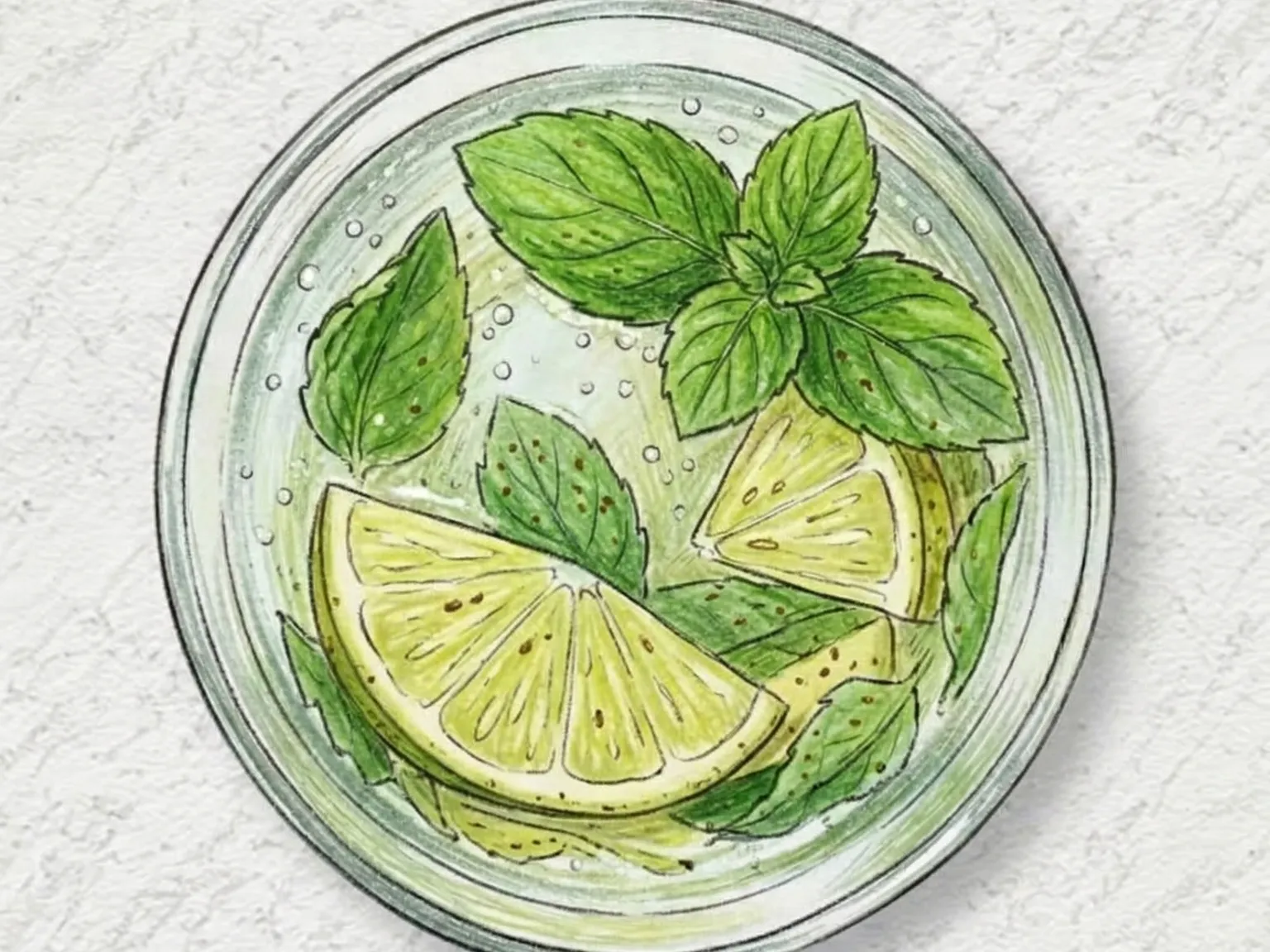
Virgin Mojito
Virgin mojito is a non-alcoholic cocktail built by gently muddling lime wedges and fresh mint leaves in a glass with simple syrup, then filling with sparkling water and ice. The muddling must be light enough to press the essential oils from the leaves without breaking the stems, since bruised stems release a bitter flavor that takes over the drink. One lime is cut into wedges for muddling while a second is juiced separately, which gives the drink both the textural element of pulp and the clean, sharp acidity of fresh juice. A pinch of salt added before muddling amplifies the lime's tartness in a way that simply adding more lime cannot replicate. The carbonation from the sparkling water carries mint aroma upward as it rises, so the first sip delivers fragrance before the liquid even reaches the palate. Larger ice cubes melt more slowly than crushed ice, preserving the balance of the drink for longer. A second option is to clap a few mint leaves between the palms to wake up the aroma before placing them in the glass, which extracts fragrance without any muddling at all.
Adjust Servings
Instructions
- 1
Cut one lime into wedges and juice the other.
- 2
Muddle lime wedges, mint, and syrup gently in each glass.
- 3
Add lime juice and a pinch of salt.
- 4
Fill glasses with ice.
- 5
Top with sparkling water, stir lightly, and serve.
As an Amazon Associate, we may earn from qualifying purchases.
Tips
Nutrition (per serving)
Goes Well With

Gotgam Cream Cheese Roll (Dried Persimmon Rolls)
Gotgam cream cheese roll is a no-cook Korean dessert that requires nothing more than a knife, a bowl, and a refrigerator. Dried persimmons are slit open and flattened into thin sheets, each one acting as the outer wrapper. The filling is cream cheese mixed with honey and fresh lemon juice to balance its natural richness with acidity, and finely chopped walnuts are folded in throughout to add a crunchy, nutty element to every bite. The filling is spread across the opened persimmon, which is then rolled tightly and wrapped in plastic wrap. Twenty minutes in the refrigerator firms the roll enough to slice cleanly. Dipping the knife in warm water and wiping it dry before each cut produces the smoothest cross-sections. The finished slices reveal clearly defined layers: the chewy, caramel-sweet dried persimmon on the outside, the tangy cream cheese in the middle, and flecks of walnut distributed throughout. The combination makes it a natural pairing with wine or a polished addition to a traditional holiday table.

Dasik (Korean Honey-Pressed Roasted Grain Confection)
Dasik is a traditional Korean pressed confection made by kneading roasted grain or nut powders with honey and pressing the mixture into carved wooden molds. Unlike baked goods, dasik holds its shape entirely through the binding power of honey, with no heat applied during preparation. This technique produces a texture that is slightly resistant at first contact, then dissolves gently at body temperature in a way that releases the full aroma of the main ingredient. Roasted soybean powder yields a nutty version, black sesame produces a deeply aromatic one, and additions of pine nut powder or cinnamon develop the flavor in different directions. The wooden molds carve decorative patterns into the surface of each piece, giving dasik a visual refinement that matches its restrained sweetness. For centuries, dasik has been a standard offering at Korean tea gatherings, and its subtle flavor remains a natural match for the gentle bitterness of green tea.

Korean Grilled Chicken Heart Skewers
Dak-yeomtong-kkochi starts by soaking trimmed chicken hearts in milk for fifteen minutes to remove any off-flavors, then threading them onto skewers for direct grilling. A glaze of soy sauce, gochujang, sugar, garlic, and cooking wine is applied in stages during grilling, building up a salty-sweet coating with gentle heat. Unlike regular chicken meat, hearts have a firm, springy chew that deepens in nuttiness the more you bite into them. The milk soak combined with garlic and cooking wine in the glaze cleanly removes any organ taste, so the finished skewers carry only the char from the grill and the layered seasoning. A common sight at street stalls and pojangmacha tents, these skewers work equally well as a quick snack eaten on the spot or as drinking food alongside a cold beer.

Korean Green Onion Salad (Doenjang-Dressed Grilled Meat Side)
Jjokpa-muchim dresses thin, tender Korean chives in doenjang and gochujang, functioning as a supporting banchan that almost invariably accompanies grilled samgyeopsal or pan-roasted fish. Jjokpa is milder and naturally sweeter than regular green onion, which is what makes it suitable for eating raw: the gentle sharpness cuts through the fat of grilled pork without overwhelming the palate. The fermented, earthy depth of doenjang and the spicy kick of gochujang layer over the chive's natural pungency, building complex flavor from three uncomplicated ingredients. The essential rule is to dress the chives immediately before serving, because the salt in both pastes begins drawing moisture from the jjokpa within minutes, collapsing the crisp snap that defines the dish. Cut to four-centimeter lengths and gently tumbled in the sauce, the preparation takes under five minutes. Spring jjokpa is the most tender and sweet of the year, making it the best season to make this banchan. A few drops of sesame oil folded in at the end add a toasty fragrance, and a pinch of minced garlic sharpens the overall aroma. Perilla oil can substitute for sesame oil and delivers a deeper, more distinctive nuttiness.
More Recipes

Korean Watermelon Mint Juice
Watermelon mint juice blends seedless watermelon flesh with honey and lime juice, then pulses in mint leaves for just five seconds to capture their fragrance without extracting bitterness. Straining the blend removes excess pulp, producing a light, clear-textured drink. The juice is poured over a full glass of ice and finished with sparkling water, whose bubbles amplify both the watermelon's sweetness and the mint's cooling sensation. Lime juice cuts through the melon's one-note sweetness with a bright acidity, and a sprig of fresh mint on top releases aroma with each sip.

Korean Soju Tonic (Soju Lime Cucumber Highball)
Soju tonic is a Korean highball-style drink that pairs soju with tonic water and lime, layering the spirit's clean, neutral body with the bitter quinine edge of tonic and the bright acidity of fresh citrus. Lime juice goes in first along with soju and a touch of simple syrup, and the tonic water is poured last and slowly to keep the carbonation intact as long as possible. Cucumber slices over ice add a vegetal freshness that makes the drink especially cooling in hot weather, and omitting the syrup produces a drier version with more pronounced bitterness. The lightweight character of soju makes this highball less heavy than gin or vodka equivalents, pairing well with rich, oily bar food.

Korean Mixed Fruit Punch
Modum hwa-chae is a Korean fruit punch assembled by dicing several types of fruit into similar-sized cubes and submerging them in honey water and sparkling water. Apple and pear contribute a firm, satisfying crunch, while green grapes add a burst of sweet juice when the skin breaks between the teeth. Cutting everything to a consistent size matters because it ensures each spoonful carries a balanced mix of textures rather than any single fruit overwhelming the others. Honey dissolved in cold water merges with the natural juices released by the fruit, building a sweetness that feels integrated rather than applied. Sparkling water is added last, its bubbles threading up through the fruit pieces to give the punch its characteristic effervescence, so the drink is best served before the carbonation fades. Generous ice keeps the bowl thoroughly cold and prevents the fruit from softening, which preserves the sharpness of each variety's flavor. The combination of fruits shifts freely with the seasons, making this one of the most adaptable summer refreshments in Korean home cooking.

Korean Yuja Pear Sparkling Drink
Yuja-bae sparkling is a Korean non-alcoholic drink that pairs the bright, bittersweet citrus character of yuja marmalade with the gentle, round fruit sweetness of Korean pear juice, finished with sparkling water for a refreshing effervescence. The base is assembled by thoroughly mixing yuja marmalade, pear juice, lemon juice, and honey until the marmalade dissolves completely, then divided into ice-filled glasses. Sparkling water is poured on last, slowly and down the side of the glass to keep as much carbonation intact as possible. Lemon juice lifts the floral fragrance of the yuja and makes the citrus notes more vivid, while pear juice neutralizes excess tartness and leaves a clean, smooth finish on the palate. Pouring the sparkling water before adding the other ingredients collapses the bubbles immediately, so the order matters. A sprig of rosemary tucked into the glass releases a herbal aroma that drifts upward with the carbonation and pairs naturally with the citrus base, adding visual appeal at the same time. The sweetness can be adjusted by varying the amount of honey depending on how concentrated the yuja marmalade is.

Picadillo Cubano (Cuban Ground Beef with Olives and Raisins)
Picadillo Cubano is a cornerstone of Cuban home cooking, made by browning ground beef and simmering it with crushed tomatoes, green olives, and raisins. The identity of the dish lies in the interplay between the briny, savory olives and the subtle sweetness of the raisins, creating a sweet-salty balance within a single pan. The beef must be spread in a single layer over high heat so moisture evaporates quickly and the meat develops brown caramelization - crowding the pan causes it to steam and turn gray. Cumin and oregano contribute the earthy, warm spice profile characteristic of Latin cooking, while diced bell pepper adds a crisp freshness. Served over white rice in the most traditional fashion, it becomes a complete Cuban plate when accompanied by black beans and fried plantains.

Korean Zucchini Kimchi (Summer Fresh Gochugaru Quick)
Hobak kimchi represents a seasonal Korean vegetable preparation specifically associated with the summer months. This timing is chosen because domestic aehobak reach their peak levels of natural sweetness and maintain a particularly tender internal structure during this time of year. To prepare the zucchini for seasoning, the vegetable is typically sliced into thin half-moon shapes or uniform rectangular pieces. The salting stage for these slices is kept intentionally brief. This limited salting time serves a specific functional purpose in the recipe by preventing the extraction of excessive moisture from the vegetable cells. If the zucchini remains in salt for an extended period, the individual slices tend to lose their structural integrity and collapse, which eliminates the characteristic crispness that defines the quality of the finished dish. Once the brief salting process is complete, the zucchini pieces are rinsed in cold water and squeezed firmly by hand to remove as much residual liquid as possible. The seasoning phase involves thoroughly tossing the prepared slices with a combination of red chili flakes known as gochugaru, fish sauce, and finely minced garlic. Rather than utilizing refined sugar for seasoning, this recipe relies on the addition of plum extract. The extract provides a balanced and rounded natural sweetness to the profile of the dish without the need for processed additives. Fresh garlic chives are integrated into the mixture to contribute an aromatic and grassy quality that connects the different flavor elements together. Thinly sliced onions are also added to provide a subtle savory depth in the background. This particular variety is a no-fermentation kimchi, meaning it is designed to be consumed on the same day it is made or within two days at the most. Beyond this forty-eight hour window, the texture of the zucchini softens significantly and the initial freshness of the ingredients begins to dissipate. To maintain the best possible quality during this short period, the kimchi should be kept in a tightly sealed container and stored in the refrigerator.