Korean Grilled Shishito with Doenjang
Kkwarigochu-doenjang-gui is a Korean grilled shishito pepper dish where the peppers are first dry-blistered in a hot pan until their skins wrinkle and char, then quickly tossed with a sauce of doenjang, gochujang, oligosaccharide syrup, and minced garlic. Blistering the peppers without oil first drives off moisture, removes the raw grassy taste, and concentrates their natural sweetness before any sauce is introduced. Pricking each pepper with a fork before cooking lets the seasoning penetrate the interior and prevents them from ballooning and bursting from steam. The sauce goes in only for the final two minutes so the fermented soybean paste keeps its full aroma, and a drizzle of sesame oil with toasted seeds at the end adds a roasted nuttiness.

Korean Spicy Blue Crab Soup
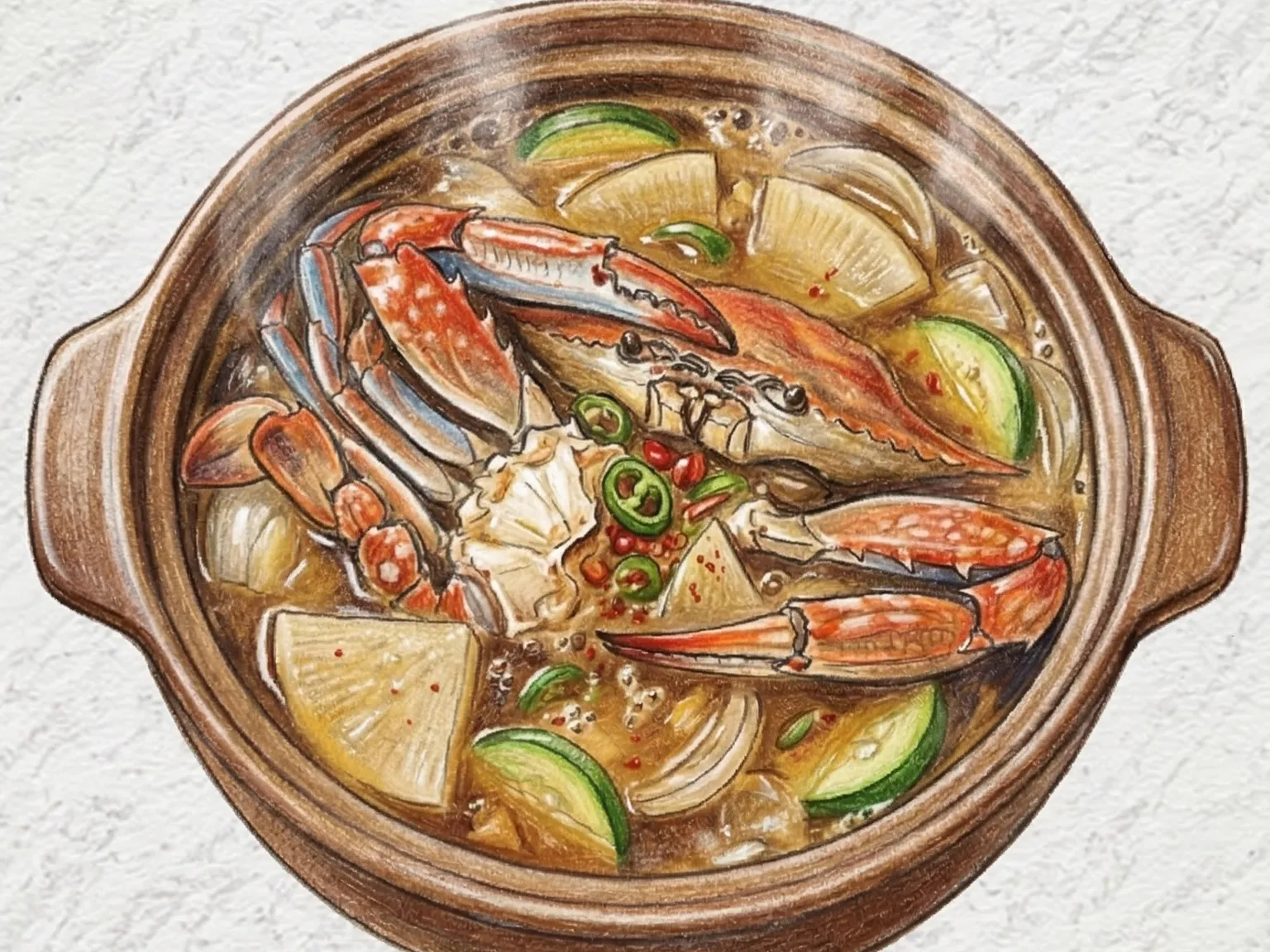
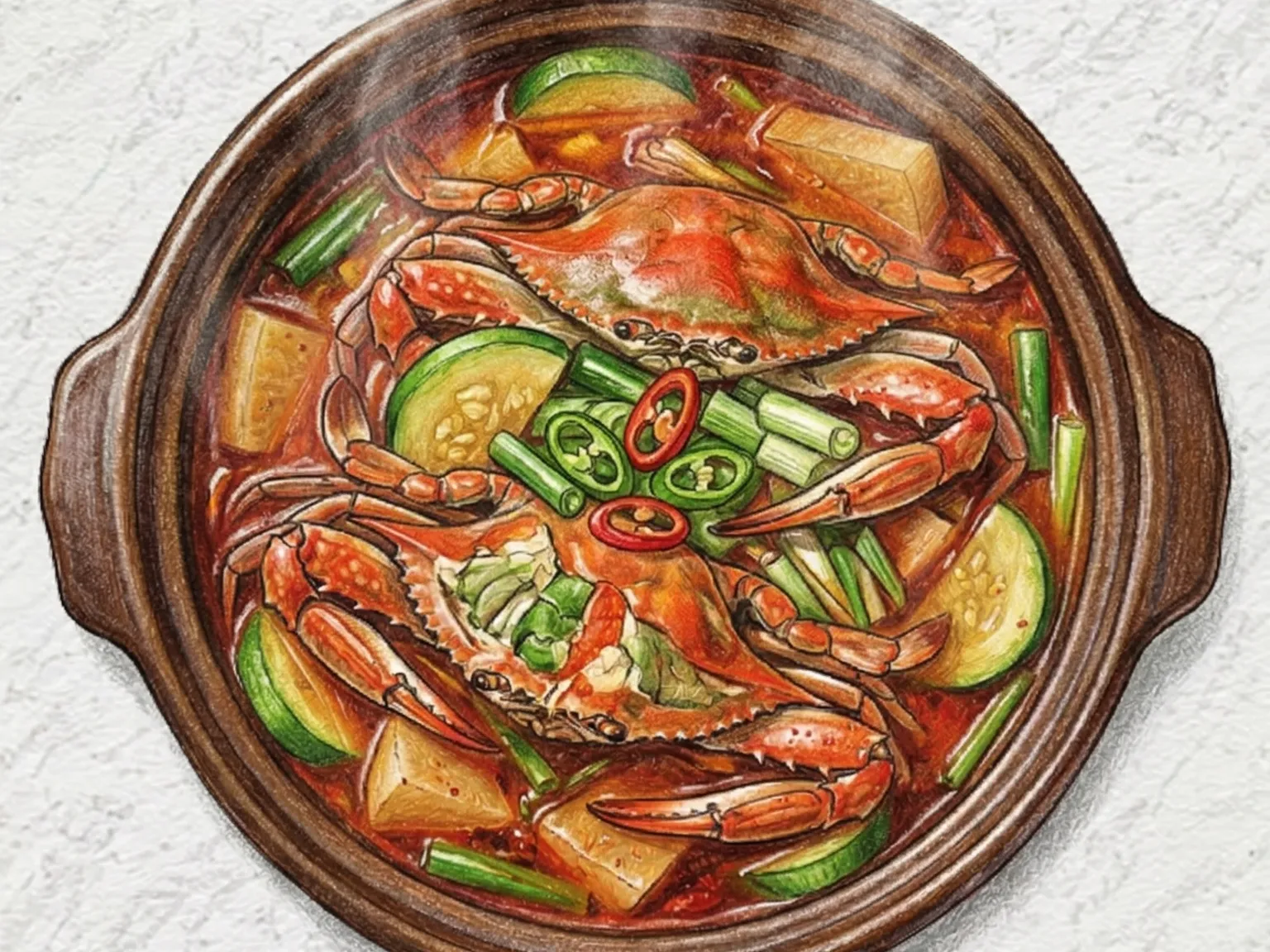
Ggotge-tang is a spicy Korean crab soup built around whole blue crabs that infuse the broth with a concentrated, briny seafood depth. The shells release their marine richness as they crack apart during simmering, forming the structural foundation of the pot. Doenjang dissolved into the broth adds fermented complexity, while gochugaru delivers a persistent heat that compounds with each spoonful. Radish chunks sweeten and clarify the liquid, and zucchini with green onion fill the bowl with color and contrasting texture. Before cooking, the crabs should be scrubbed clean under cold water and cleaned of their sand pouches and gills, which eliminates any off-flavors. Scoring the claws lightly with the back of a knife before the pot goes on the heat makes extracting the claw meat easier at the table. Female crabs in season carry bright orange roe inside the top shell that dissolves into the broth and intensifies its richness. The real reward at the end of the meal is mixing leftover rice directly into the crab's top shell with the residual roe and braising juices, a practice Korean diners regard as the true finish of the meal. Blue crab season peaks in spring and autumn.

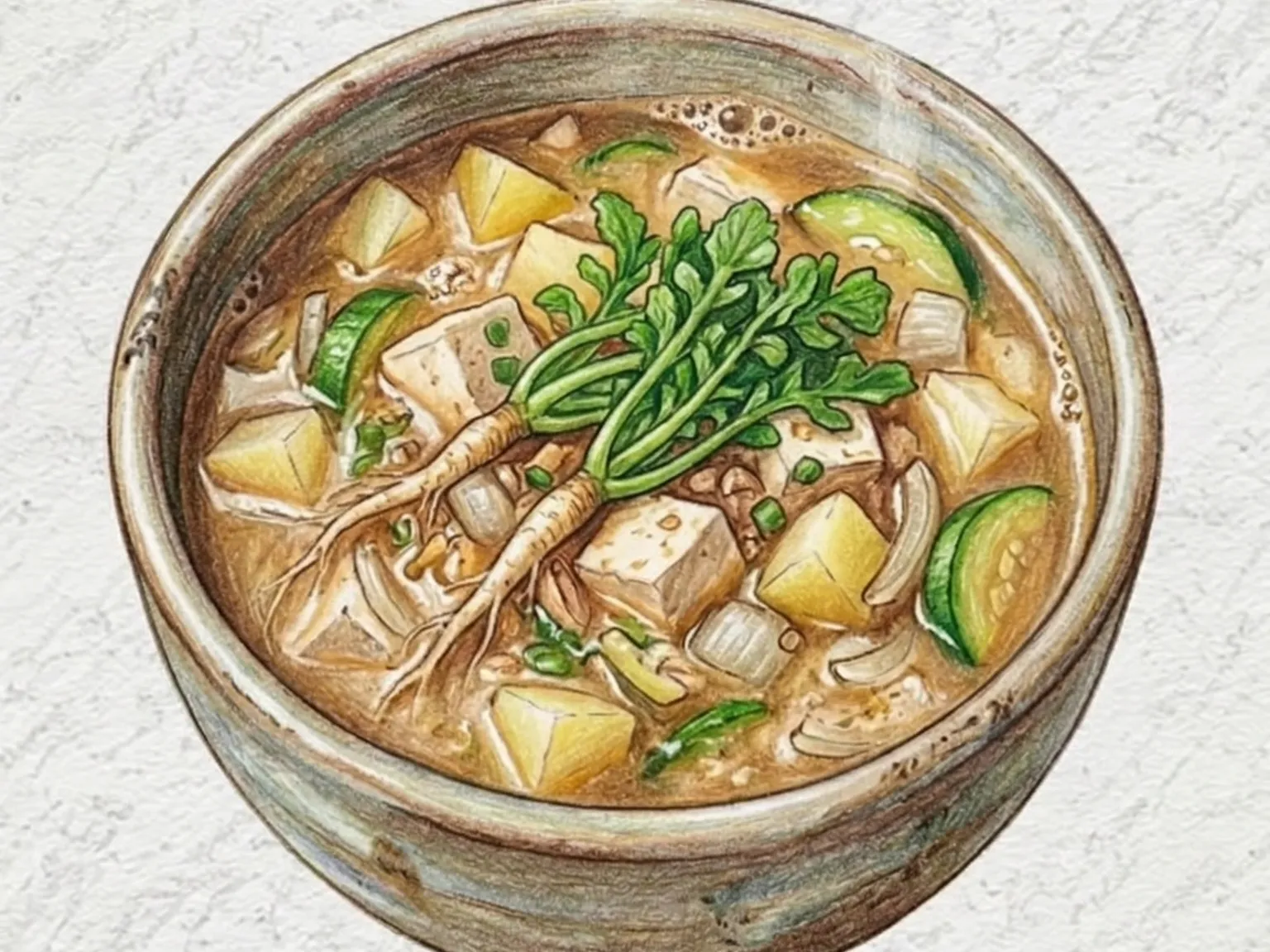
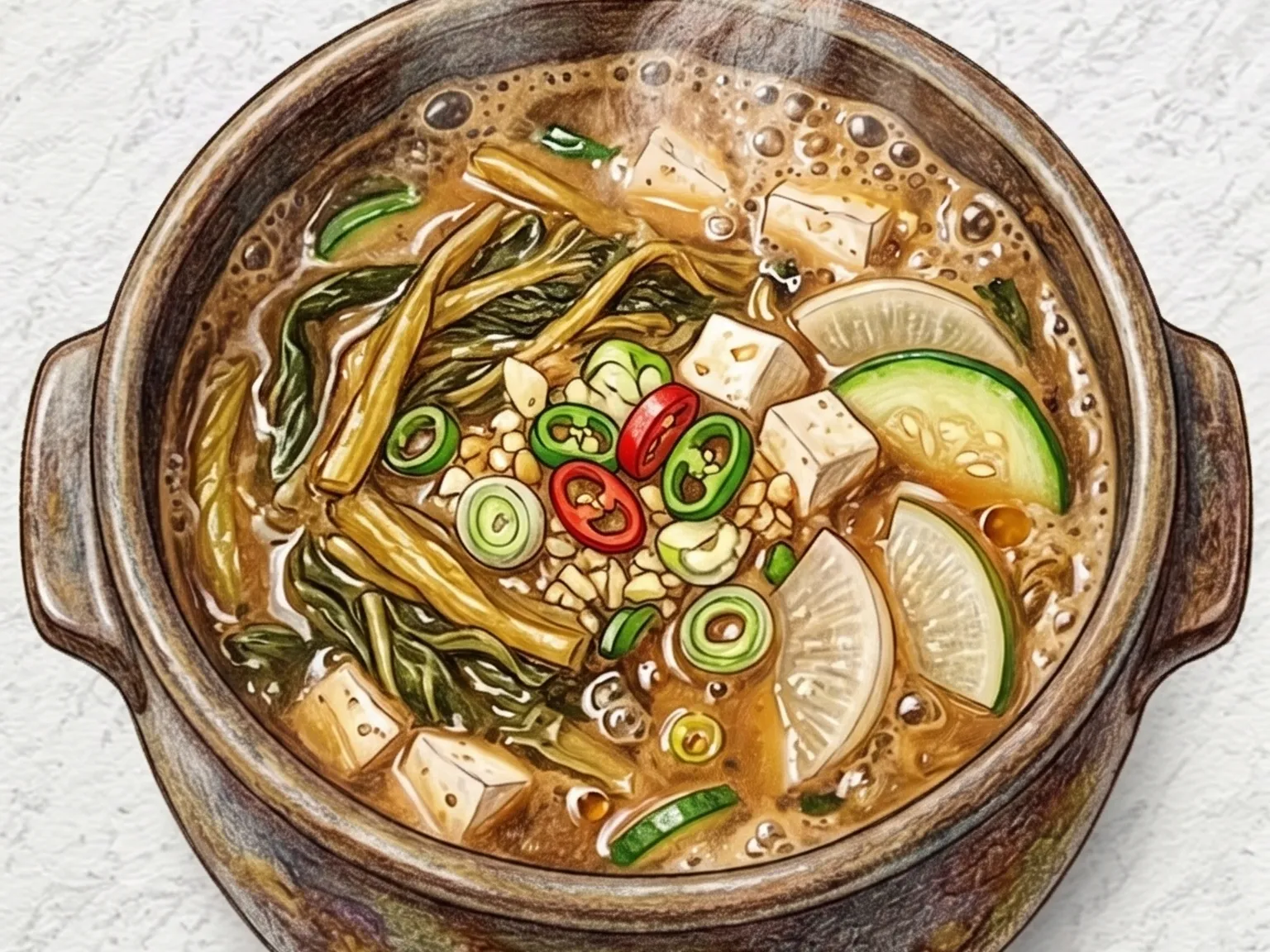
Korean Thick Soybean Paste Stew
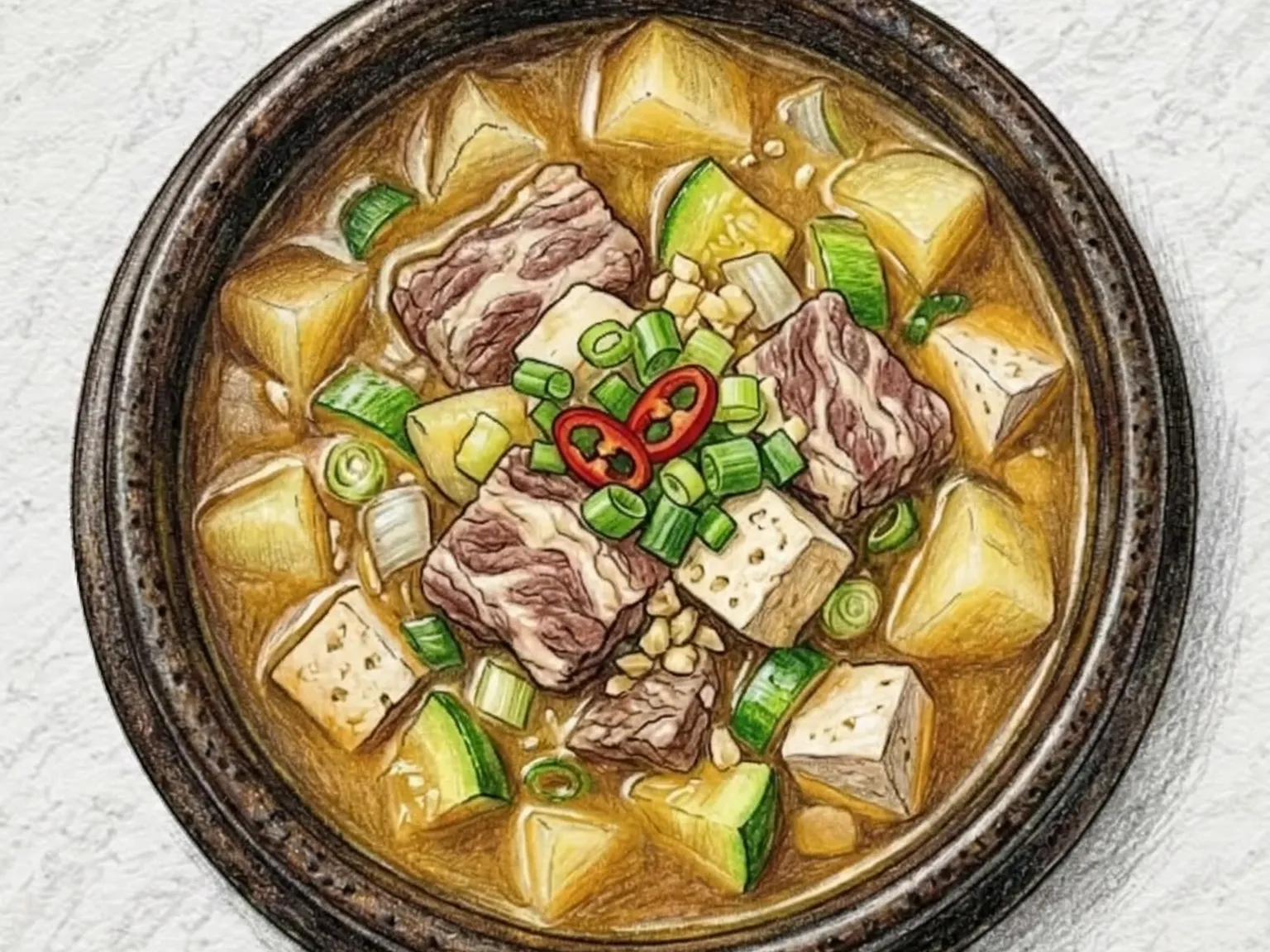
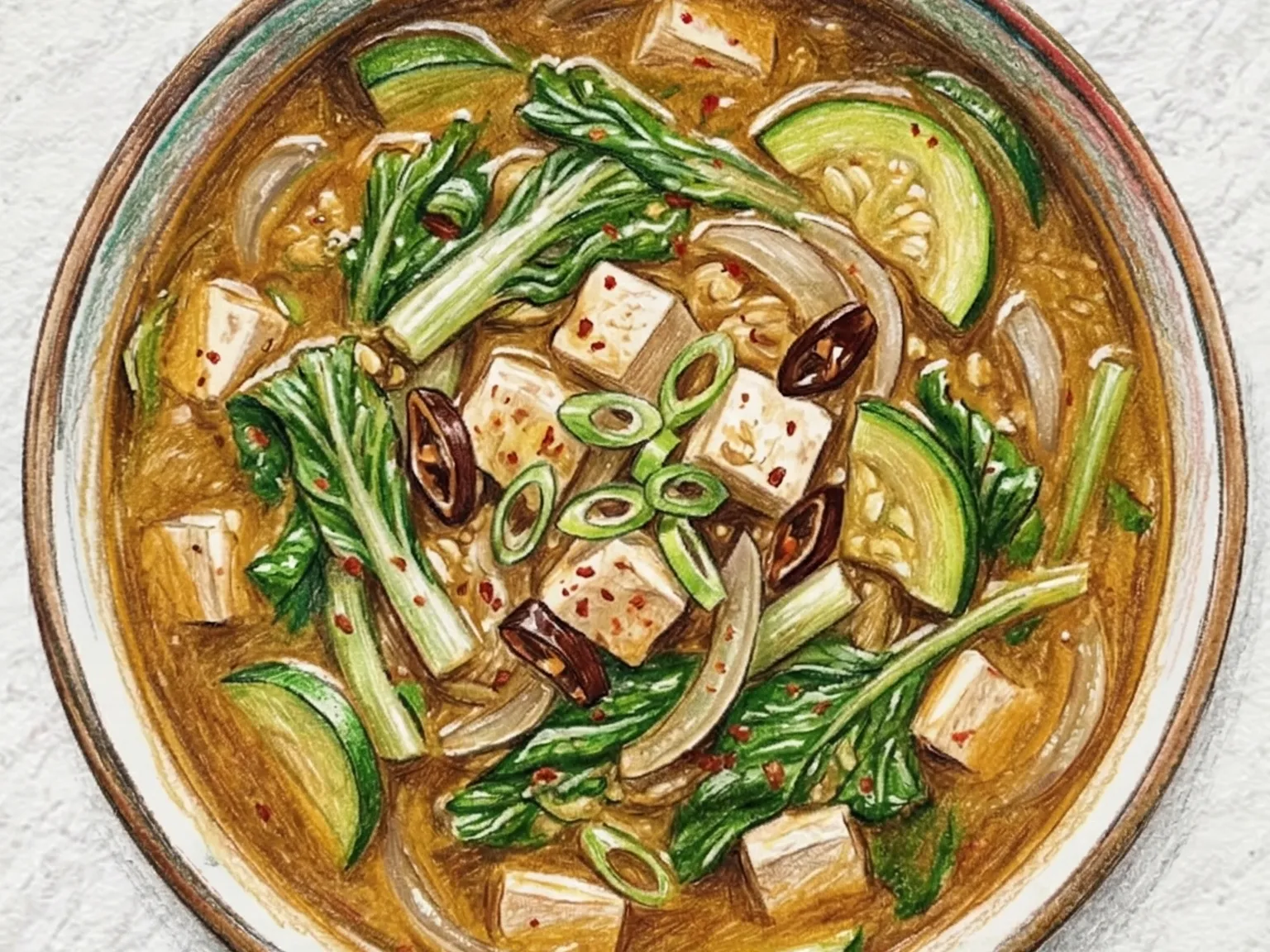
Gangdoenjang jjigae is a concentrated Korean soybean paste stew that combines doenjang with a measure of gochujang, pushing the base into a richer, sharper register than standard doenjang jjigae. Ground beef stirred into the paste mixture amplifies the savory depth from the start, while cubed firm tofu and zucchini slices provide soft, yielding textures that absorb the bold seasoning. The anchovy-kelp stock beneath the paste keeps the overall flavor clean and well-defined rather than muddy. A single Cheongyang chili, added whole or sliced, threads a steady, moderate heat through the broth without dominating it. Because the stew is intentionally thicker and more intensely flavored than most Korean soups, it pairs naturally with ssam-bap: wrapped in lettuce leaves with rice, it functions as both dipping sauce and main component in one.

Korean Doenjang-Grilled Pork Jowl
Hangjeongsal doenjang-gui is a Korean doenjang-marinated pork jowl dish where the meat is sliced five millimeters thick, coated in a mixture of doenjang, minced garlic, sesame oil, cooking wine, honey, and black pepper for fifteen minutes, then grilled three minutes per side over medium-high heat. Pork jowl carries more evenly distributed intramuscular fat than loin or shoulder, so it renders its own cooking oil from the moment it hits a dry pan without any added fat. As that fat melts across the hot surface, it merges with the fermented savoriness of the doenjang, building a concentrated, layered umami coating on every grilled face. Starting with a conservative tablespoon of doenjang and adjusting to taste prevents oversalting, since the paste's sodium concentrates further as moisture evaporates during grilling. The honey contributes a faint sweetness while encouraging a glossy caramelized crust that catches the eye and holds the seasoning. After the edges brown, reducing to medium-low for a final two minutes cooks the center through without scorching the glaze, and a finish of sliced green onion adds a sharp, fresh contrast that lifts the richness. The doenjang marinade suppresses any gamey undertone in the pork while simultaneously deepening the umami, delivering the paste's complexity through a grilling method that differs entirely from the way doenjang performs in a stew.

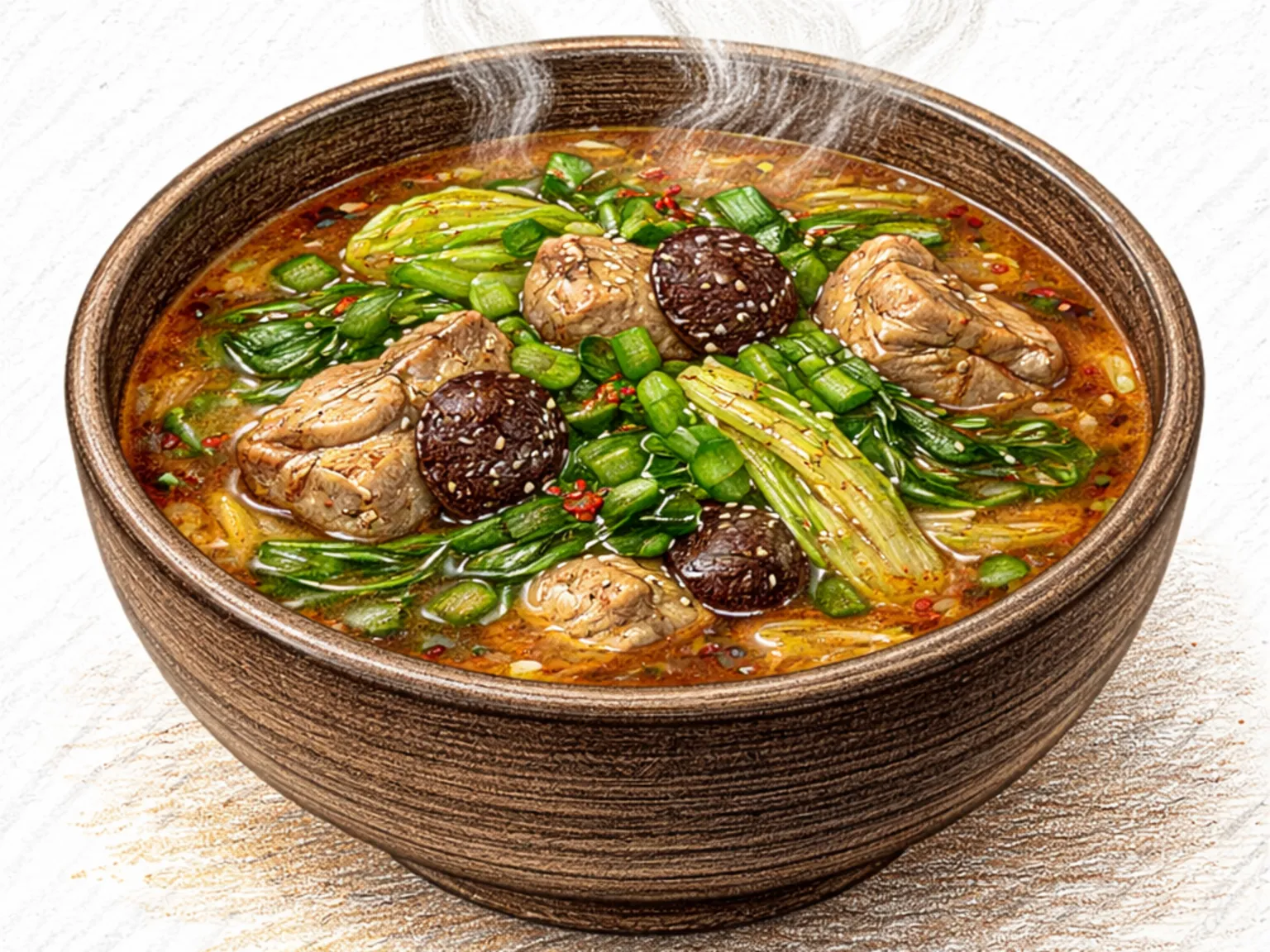
Korean Young Napa Beef Soup
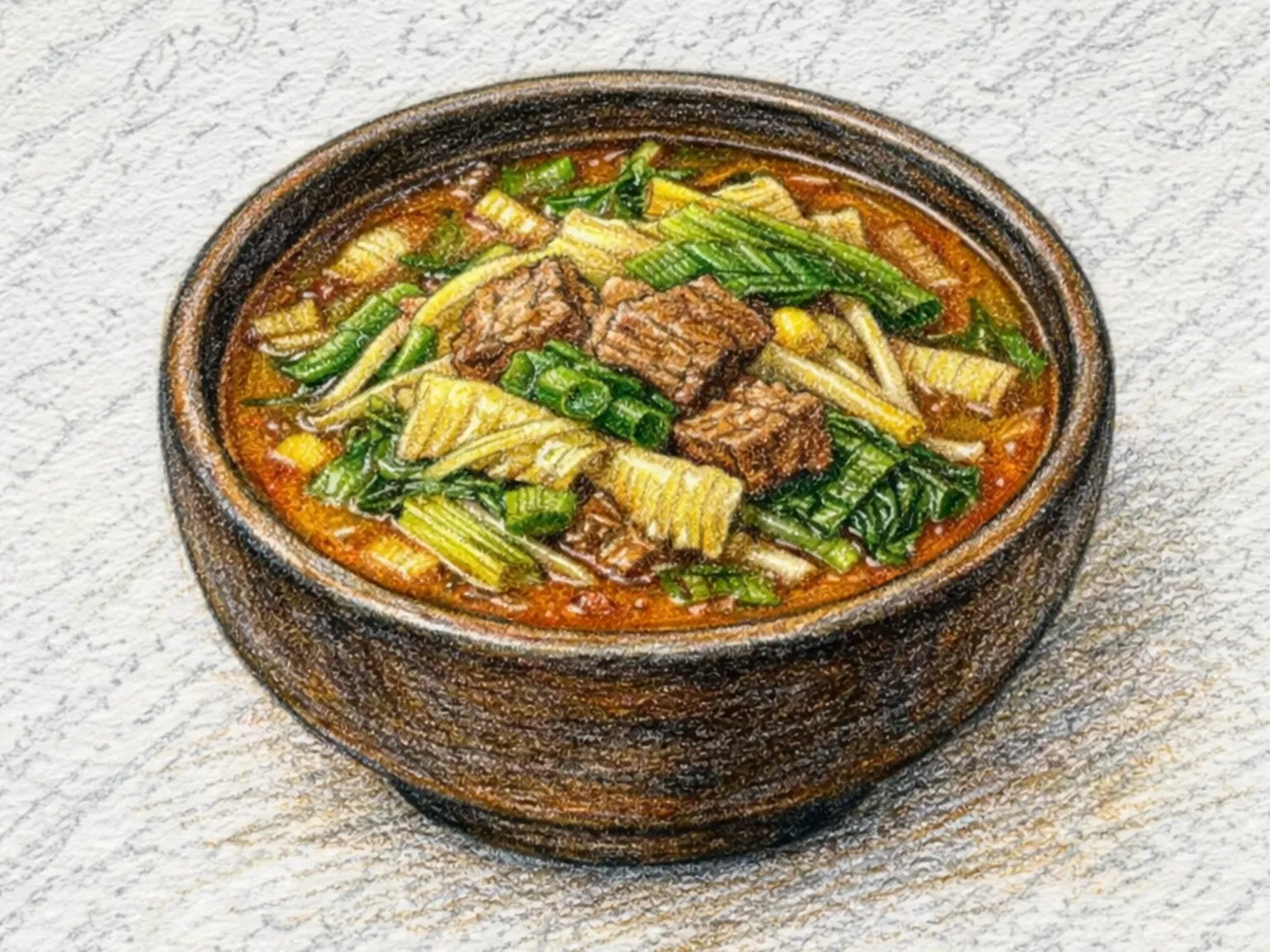
This Korean soup begins by blanching young napa cabbage leaves, then thoroughly tossing them with doenjang, gochujang, dried chili flakes, and minced garlic before any liquid is added. Pre-seasoning the greens is the foundational technique: the paste coats every surface of the cabbage and later dissolves into the broth, giving the soup a fermented, layered depth that simply adding the condiments to the pot cannot replicate. The beef component is handled separately - simmered in water from cold, skimmed clean of foam, and left to cook for fifteen minutes until a clear, savory stock develops. Once the stock is ready, the pre-seasoned greens are added and the pot returns to a gentle boil for twelve minutes, long enough for the beef umami to saturate the cabbage fibers. Soup soy sauce provides the final salt adjustment, and sliced green onion goes in last, contributing a sharp, fresh lift that cuts through the dense, earthy base of the broth.

Korean Seasoned Radish Greens Namul
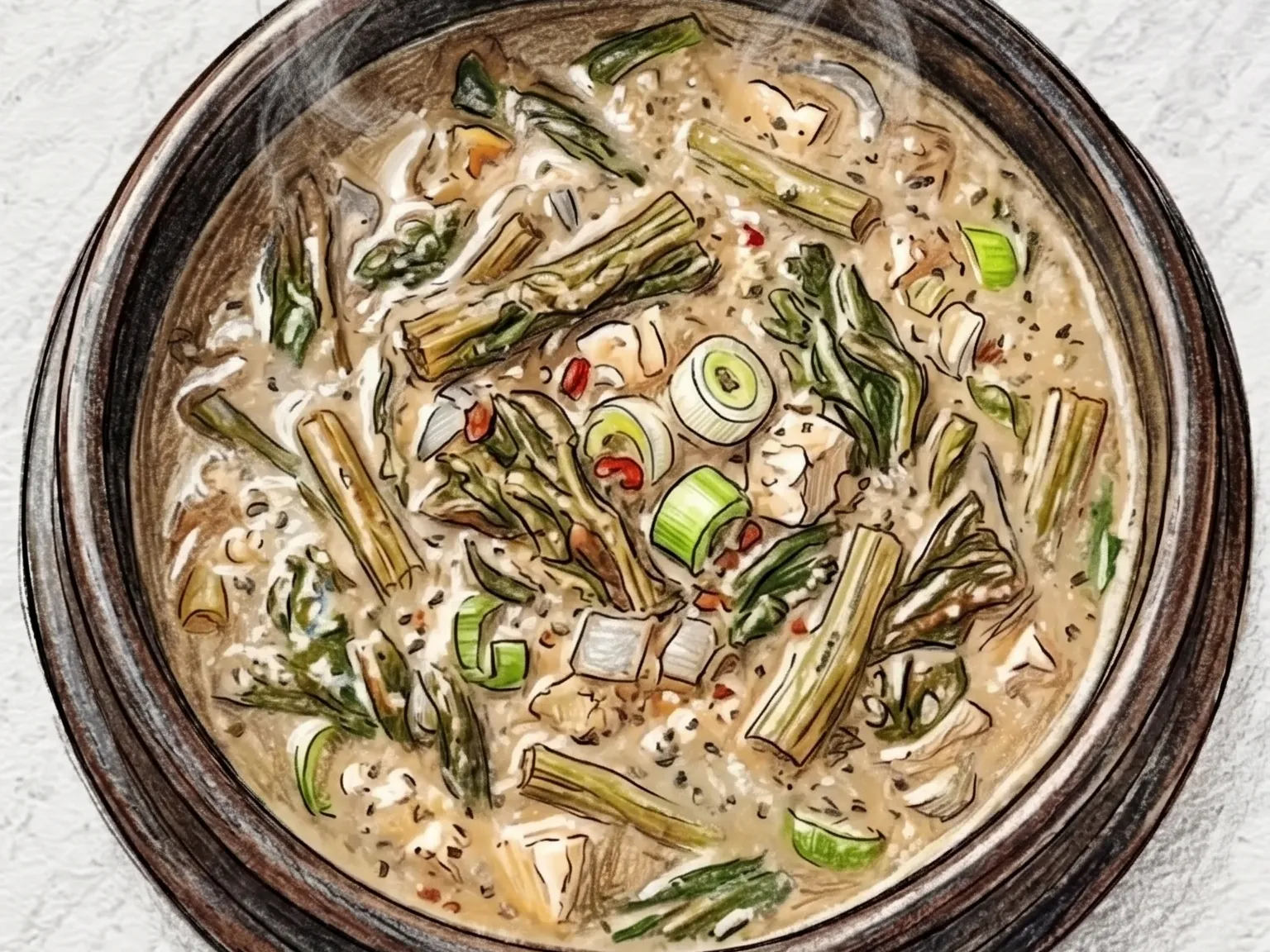
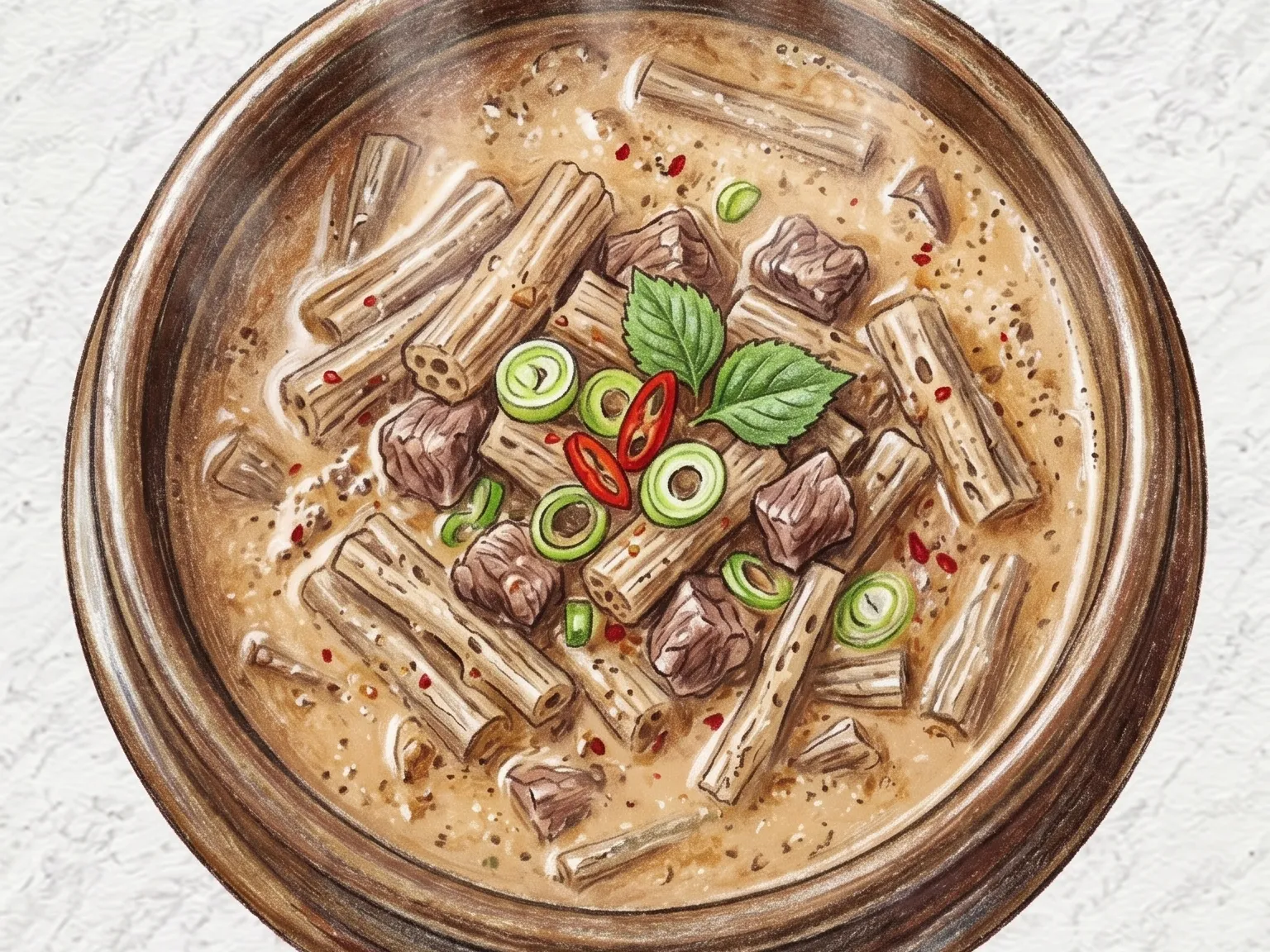
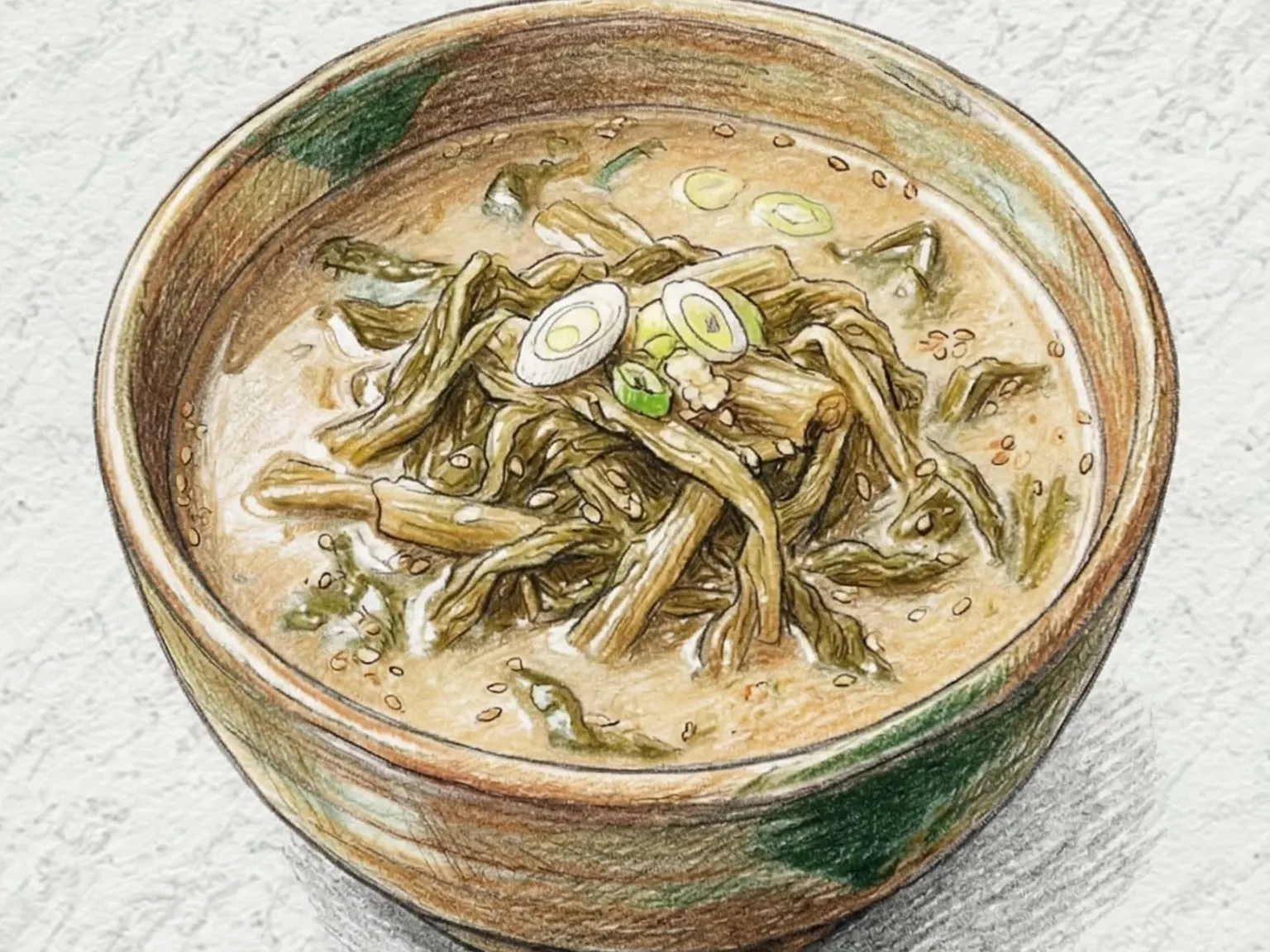
Dried radish greens are soaked, boiled until pliable, and dressed in a seasoning anchored by doenjang and ground perilla seeds. The drying process concentrates the fiber in the greens, giving them a satisfying chew that persists even after boiling: the outer layer turns silky while the inner stem retains a springy resistance. Doenjang supplies the salty, fermented backbone, and ground perilla seeds melt into a creamy coating that softens the roughness of the greens on the palate. A generous pour of perilla oil ties the dressing together, adding a glossy sheen and a rich, nutty fragrance. Minced garlic and chopped green onion introduce a sharp aromatic layer that cuts through the heaviness. Each bite releases more of the siraegi's own deep, vegetal flavor, a taste that builds rather than fades. Paired with steamed rice, the doenjang's salinity and the perilla's richness draw out the natural sweetness of the grain.

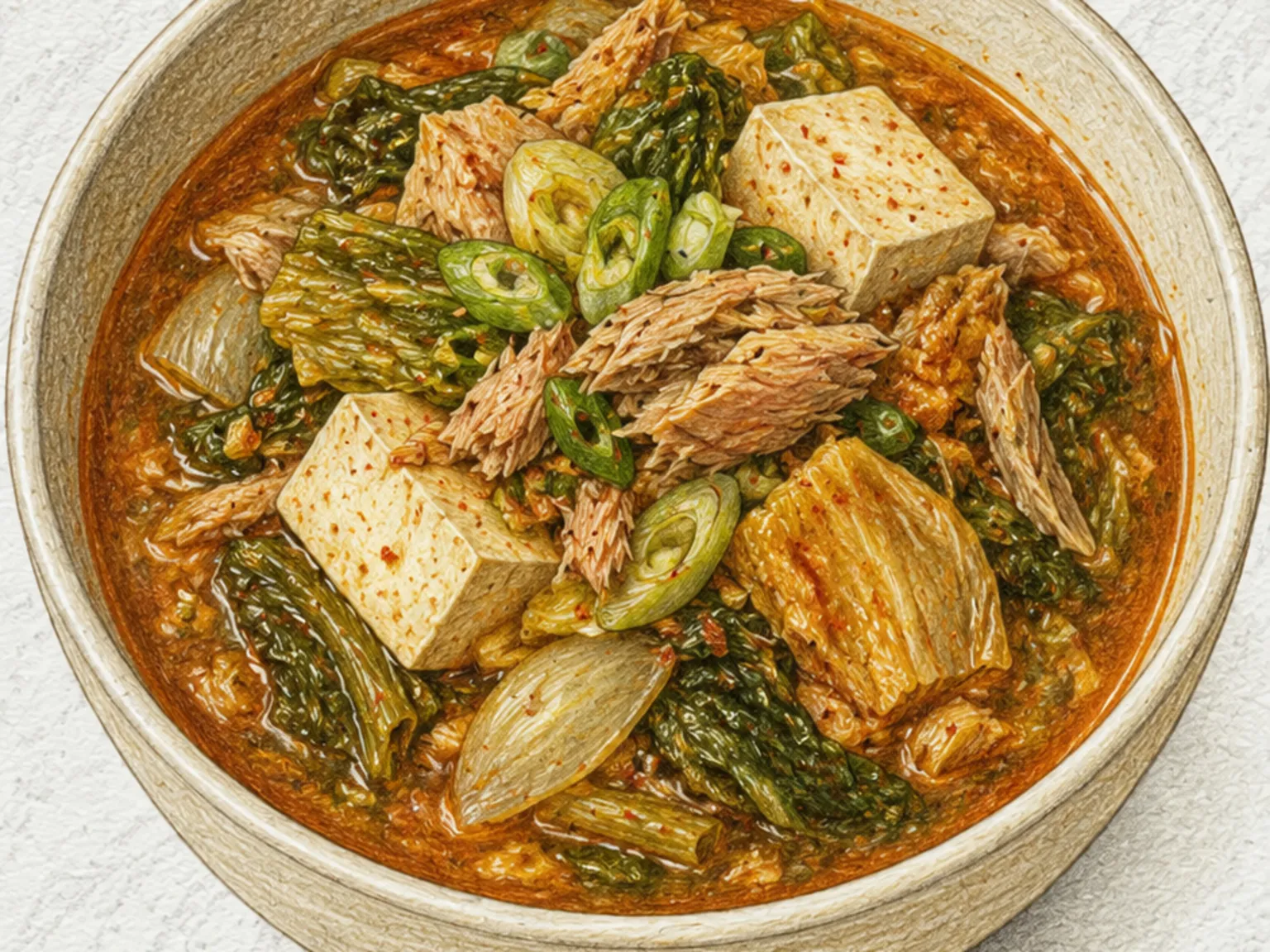
Korean Napa Leaf & Tuna Stew
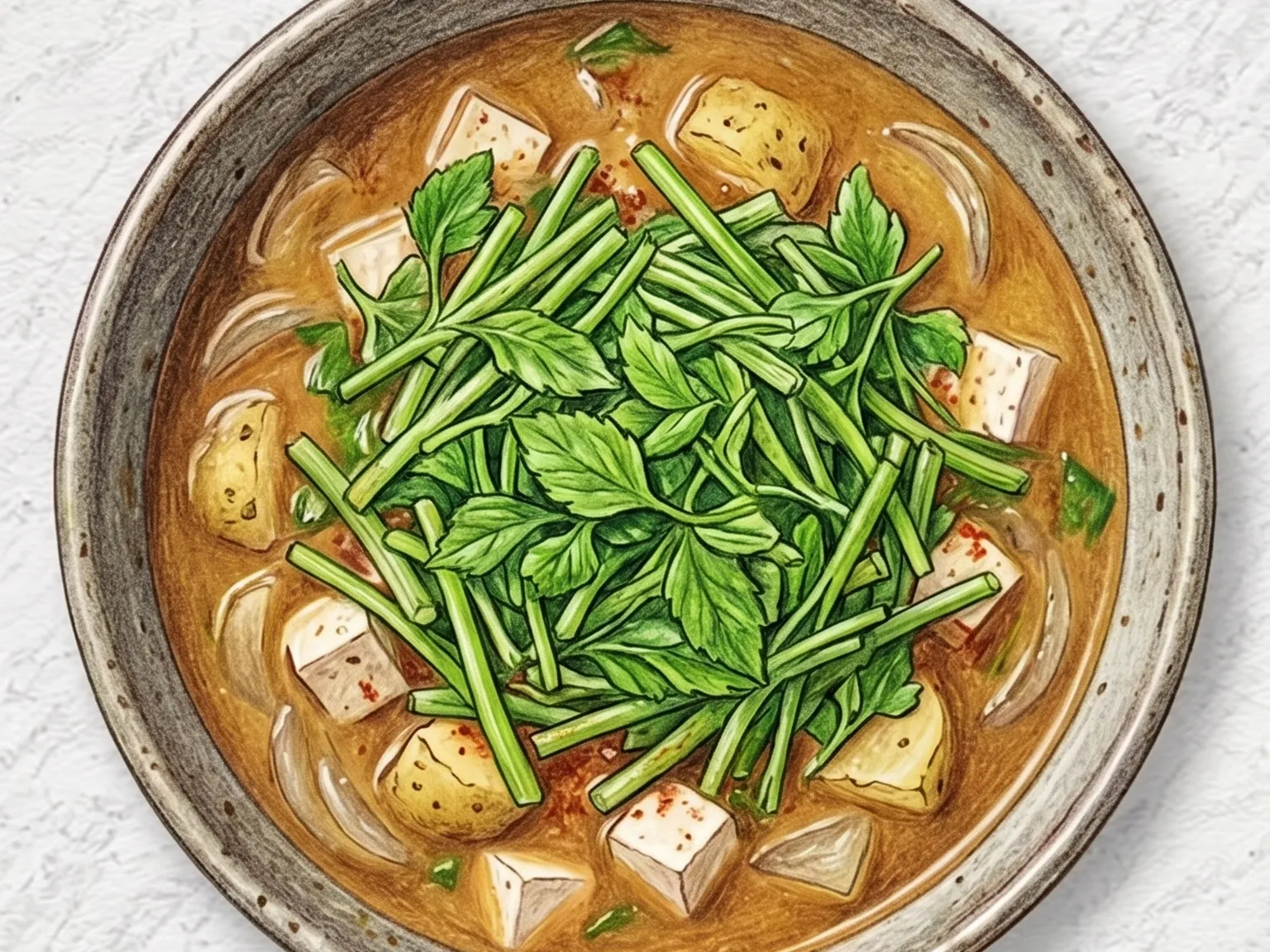
Blanched napa cabbage outer leaves and canned tuna come together in this doenjang-based stew. The ugeoji leaves have a rough, hearty texture that soaks up the salty richness of the tuna and fermented soybean paste. Tofu and onion round out the stew with mild sweetness, while gochugaru adds a gentle kick. Built on anchovy stock with garlic and green onion, this is a quick, home-style stew meant to be eaten over a bowl of steamed rice.

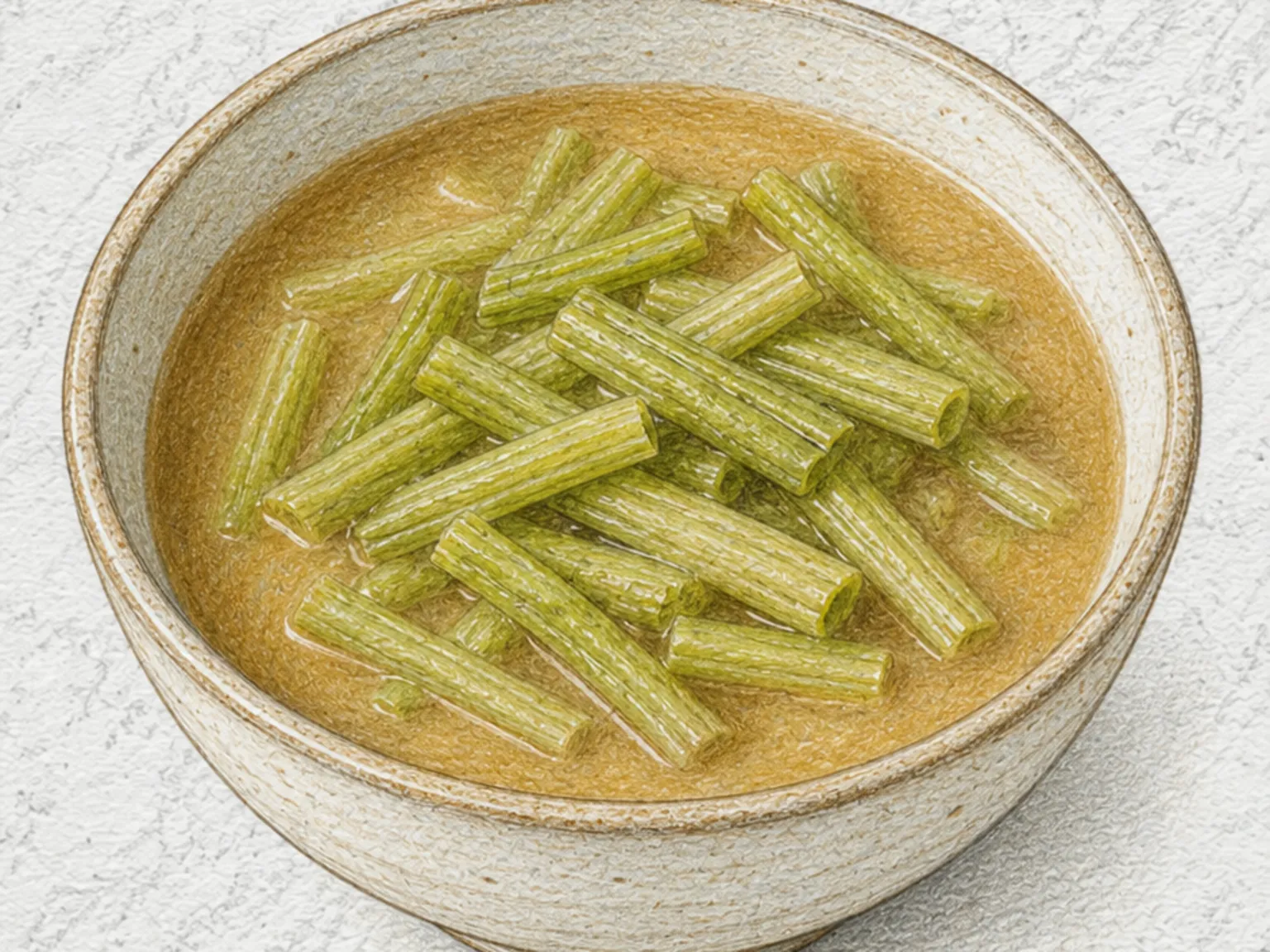
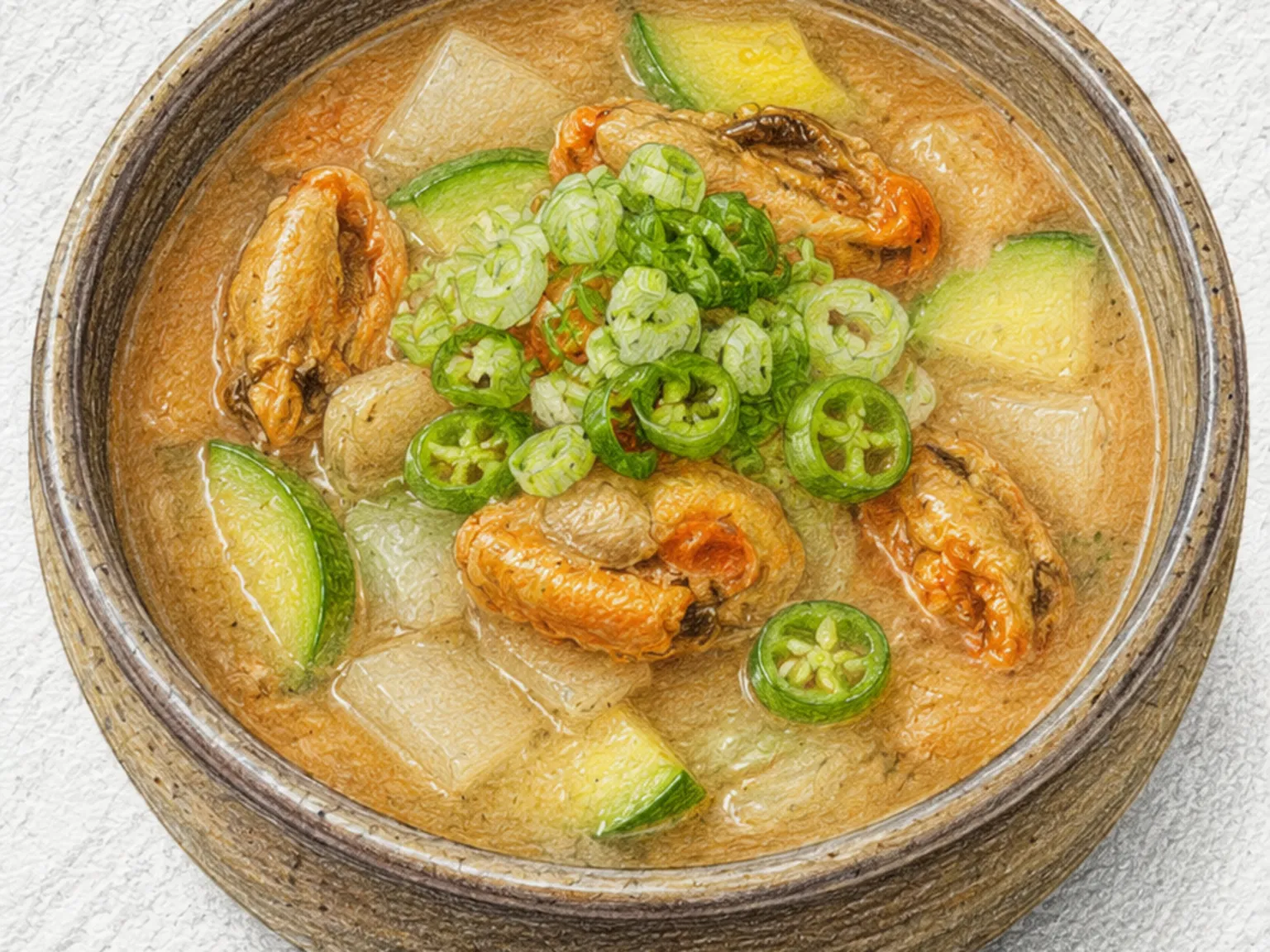
Korean Apple Snail Doenjang Stew
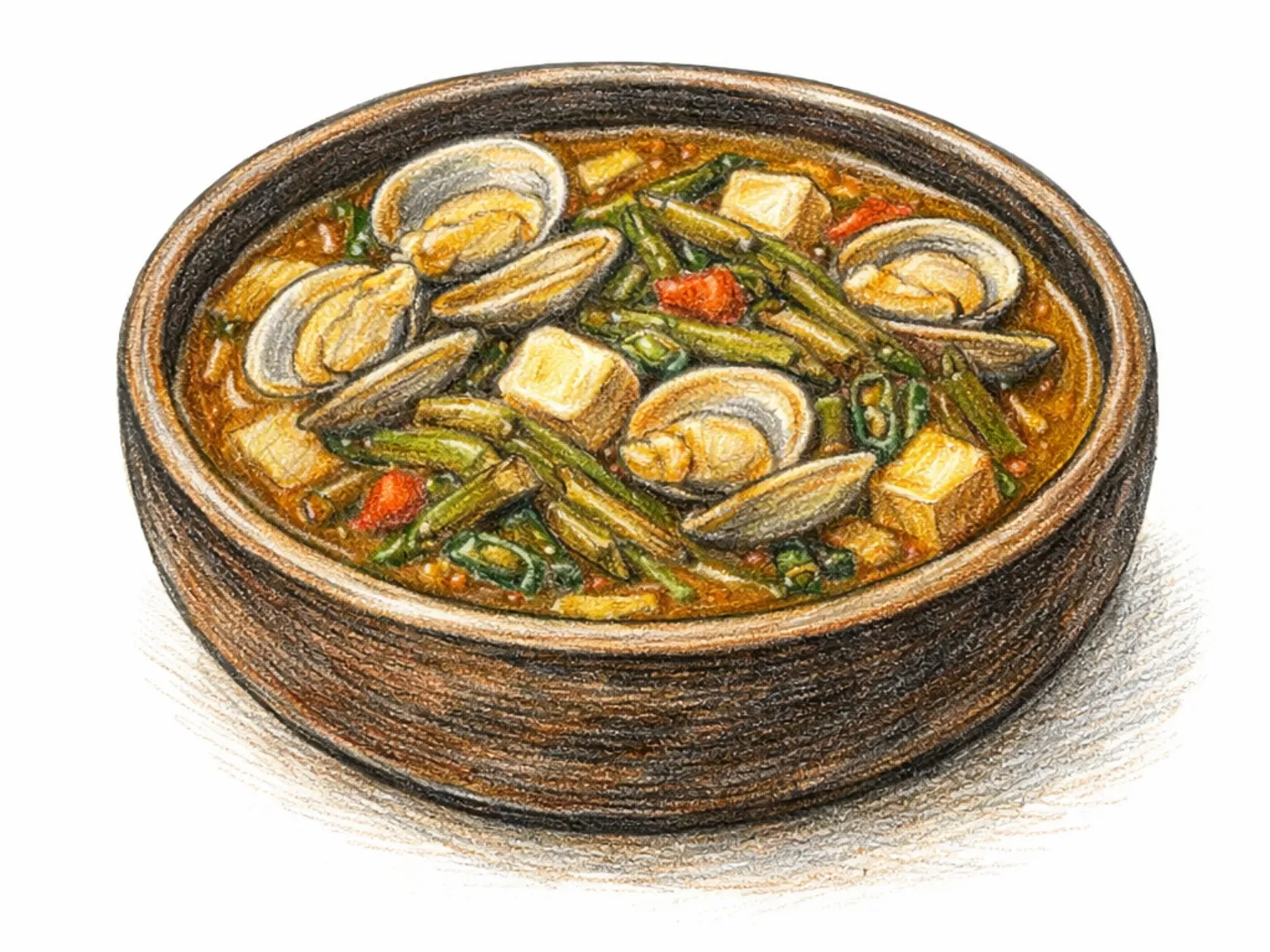
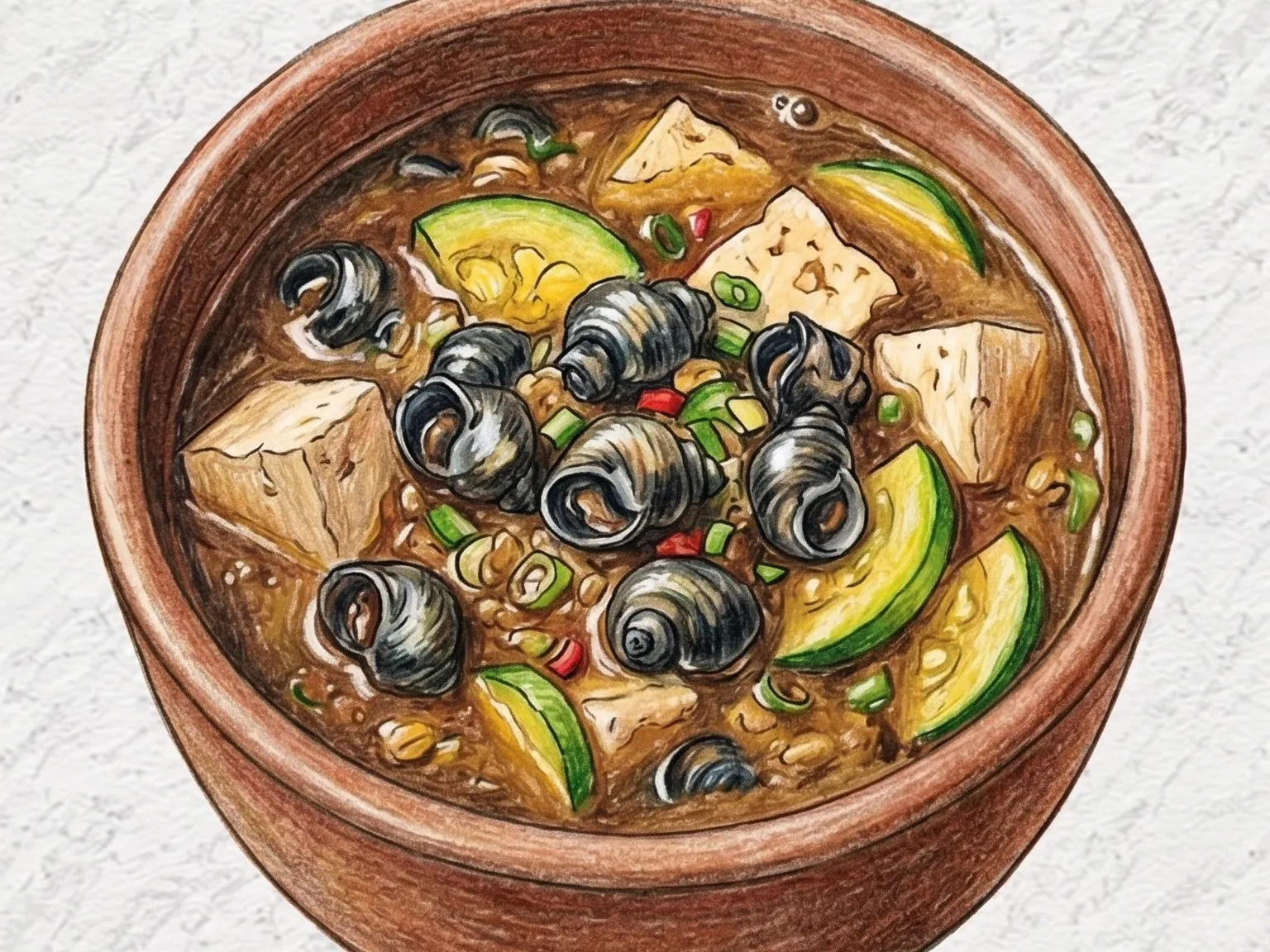
This doenjang stew features apple snails simmered with fermented soybean paste in an anchovy broth. The snails have a mild, slightly chewy texture that pairs well with the bold, earthy flavor of doenjang. Tofu and zucchini add softness and gentle sweetness to the stew. Rooted in Korean rural cooking where snails gathered from rice paddies were a common protein source, this is a rustic, deeply flavored stew.