Korean Stir-fried Bottle Gourd Namul
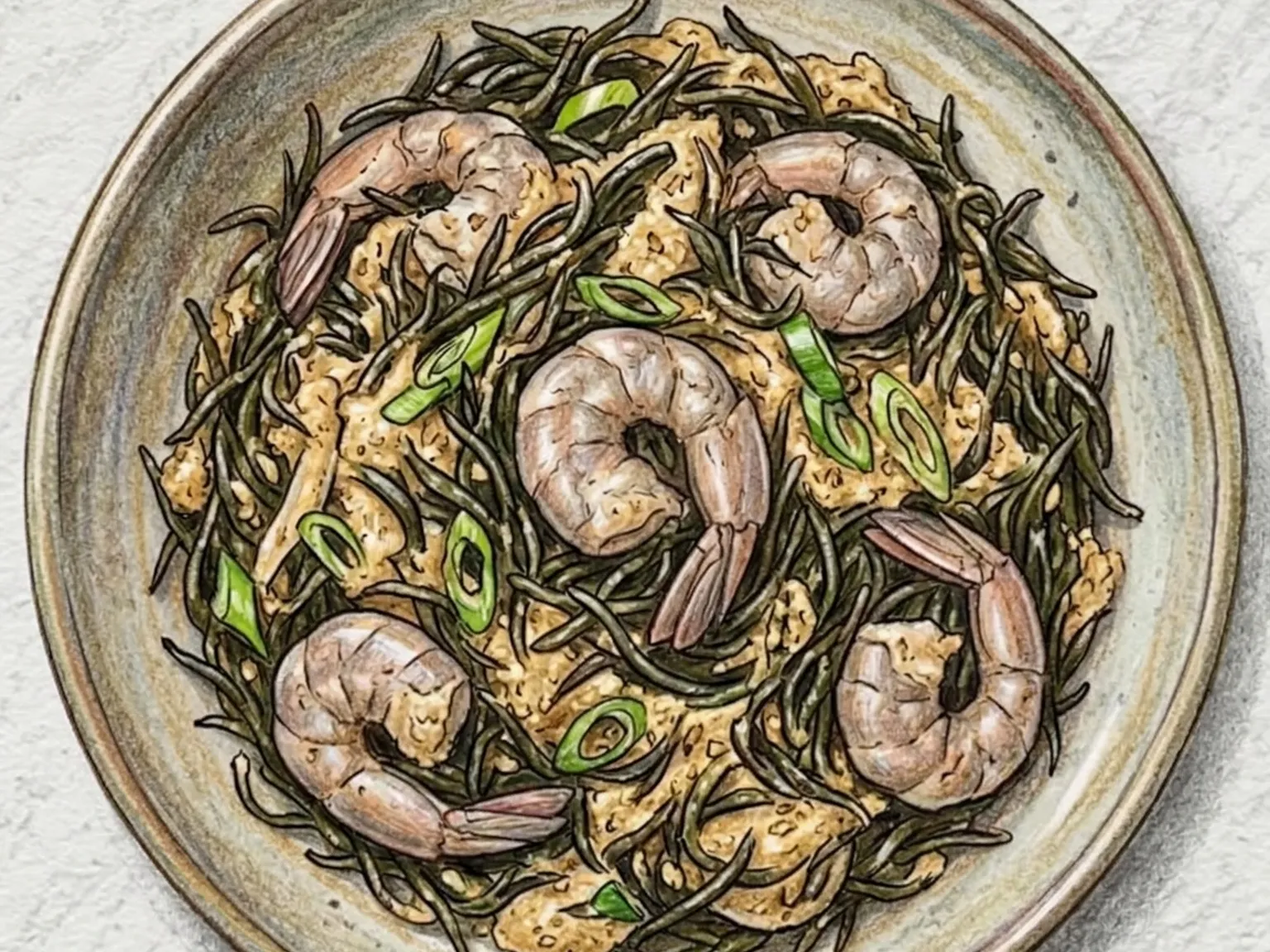
Bottle gourd - bak - is a summer vegetable Koreans have stir-fried as namul for centuries. Peeled, seeded, and sliced thin, it is salted briefly to draw out excess moisture before cooking. Garlic and green onion go into the pan first to build a fragrant base, then the gourd is added and cooked with a small splash of water that steams the slices until they turn nearly translucent, releasing a clean, melon-like sweetness. Ground perilla seed stirred in at the end thickens the remaining liquid into a nutty glaze that clings to each piece. The result is a mild, lightly savory namul that makes plain rice disappear on the hottest summer days.

Korean Beef and Taro Stem Soup
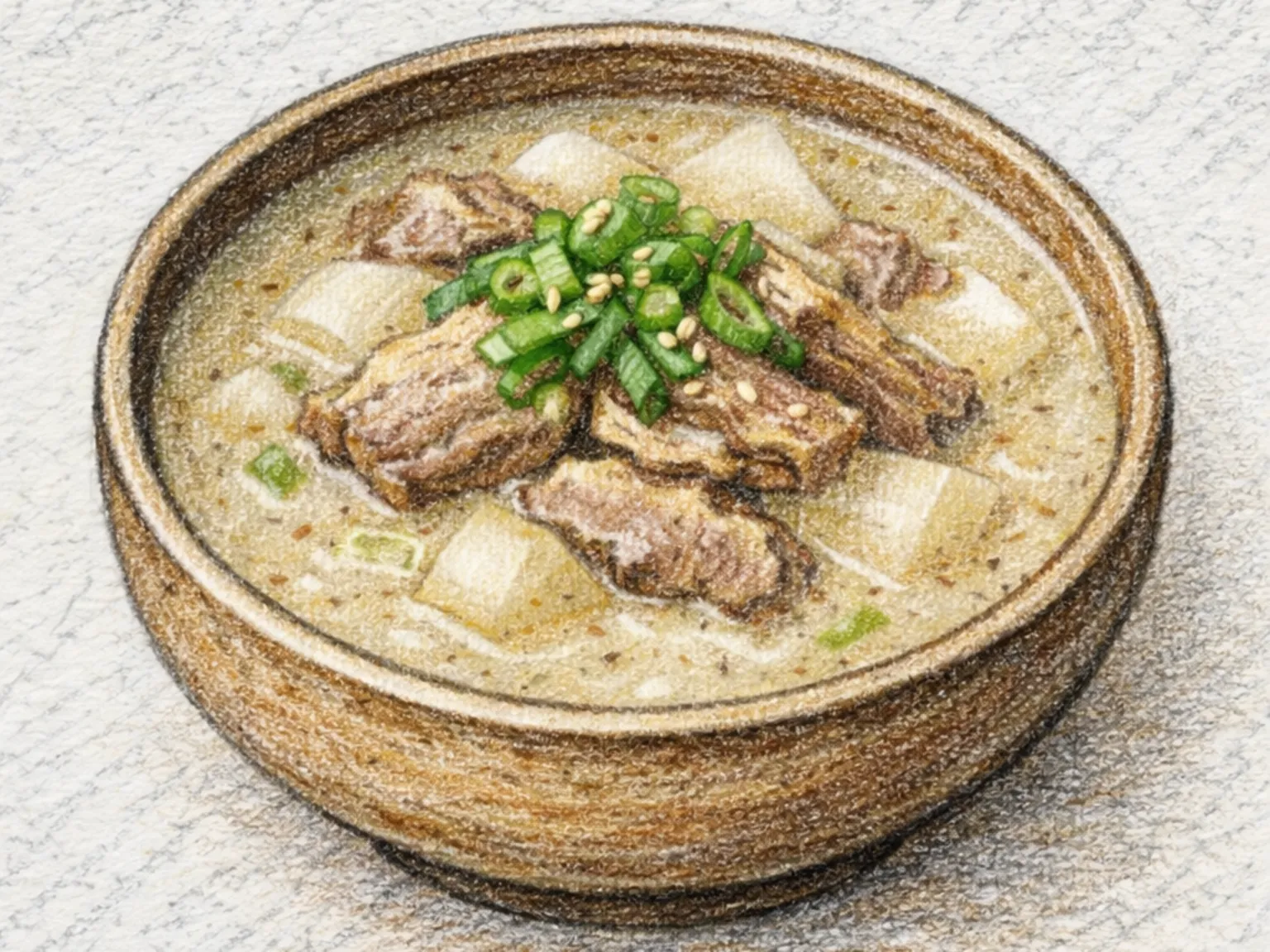
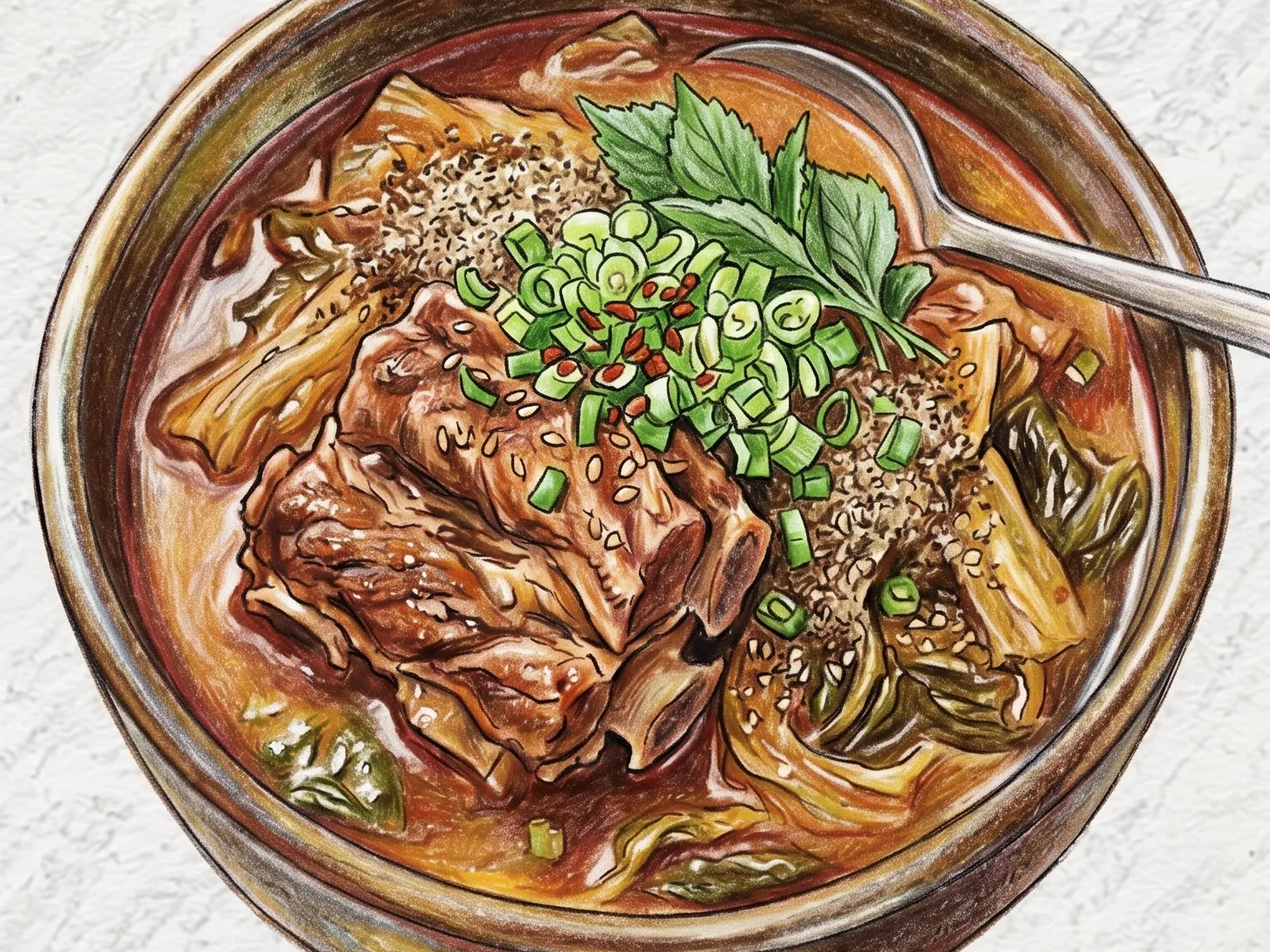
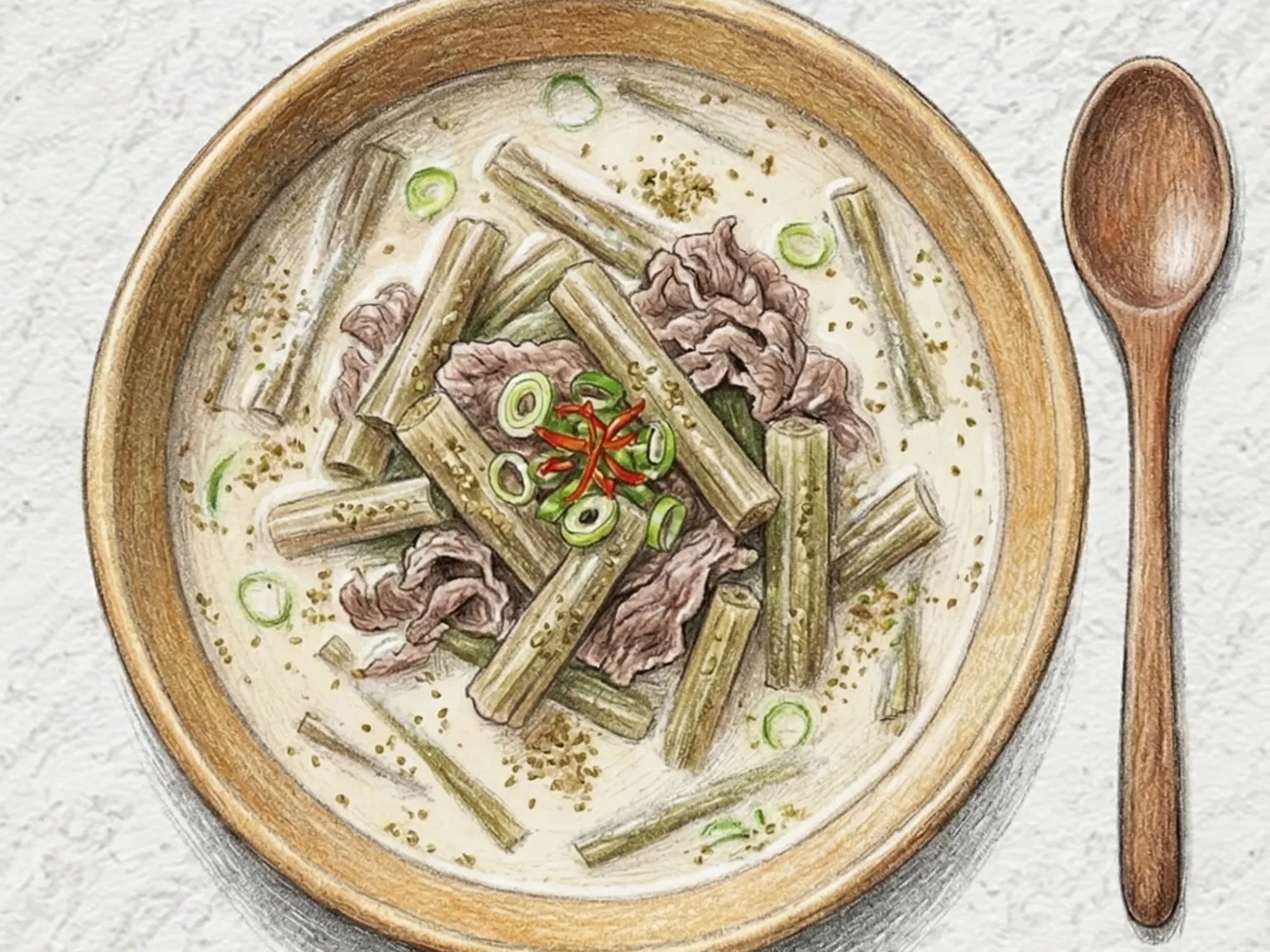
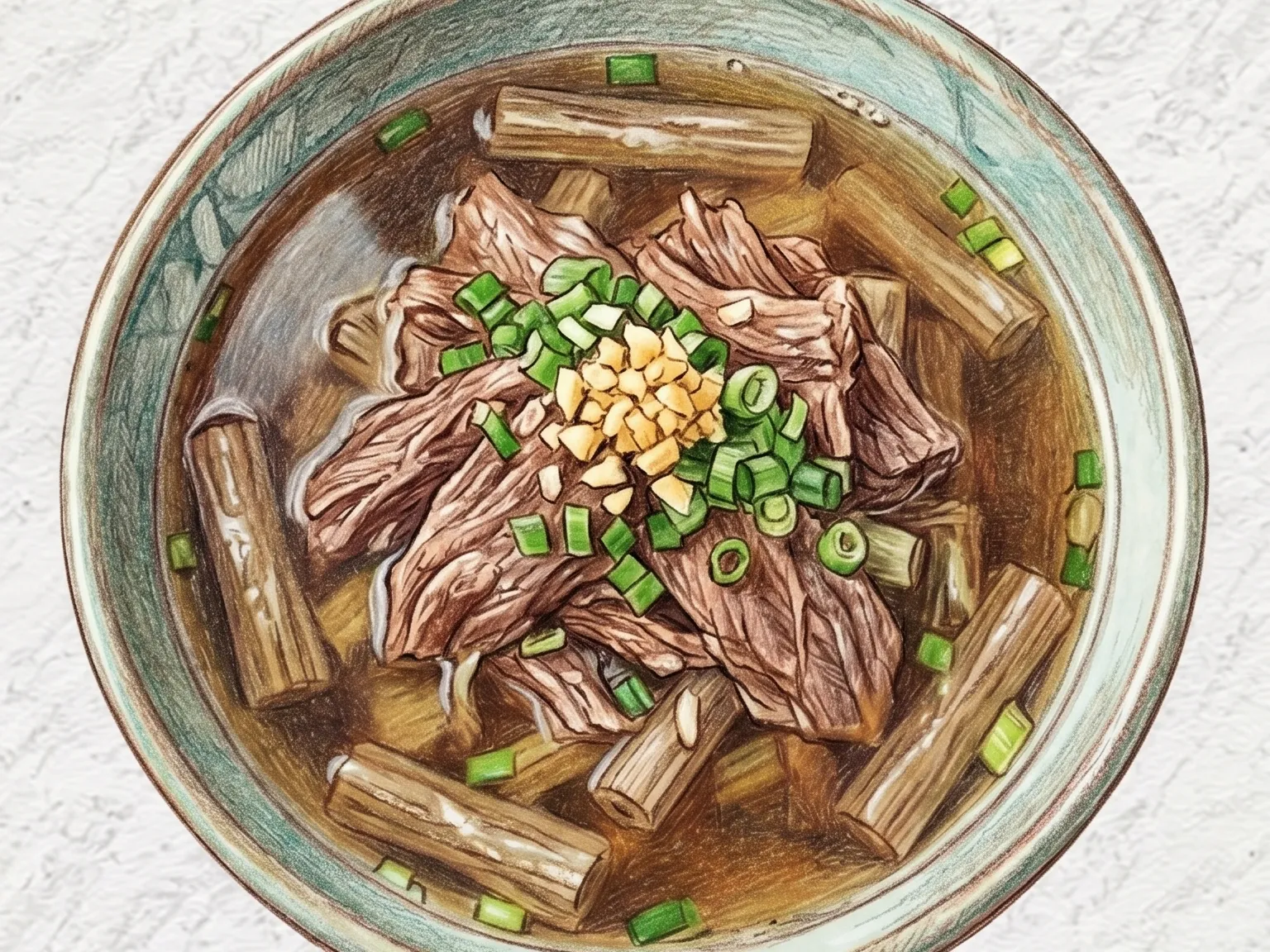
Torandae soegogi-guk pairs rehydrated taro stems with beef brisket in a clear, soy-seasoned broth. The brisket is simmered until it yields a clean yet deeply flavored stock, with surface fat skimmed periodically to keep the liquid transparent. Taro stems, soaked until pliable, are added to the broth and cooked until they drink in the beefy liquid - each bite releases a rush of savory juice, while the stems' stubborn fibers maintain a chewy resistance that contrasts with the fork-tender meat. Soup soy sauce tints the broth a light amber and adds umami without heaviness, and minced garlic provides a quiet warmth in the background. Sliced scallion goes in at the end for freshness. The shredded brisket is typically arranged on top as a garnish, so each bowl delivers a balanced combination of tender meat, textured stems, and aromatic broth. It is a homestyle soup that benefits from simplicity, letting the interplay between the two main ingredients speak for itself.

Korean Stir-Fried Dried Napa Cabbage Leaves
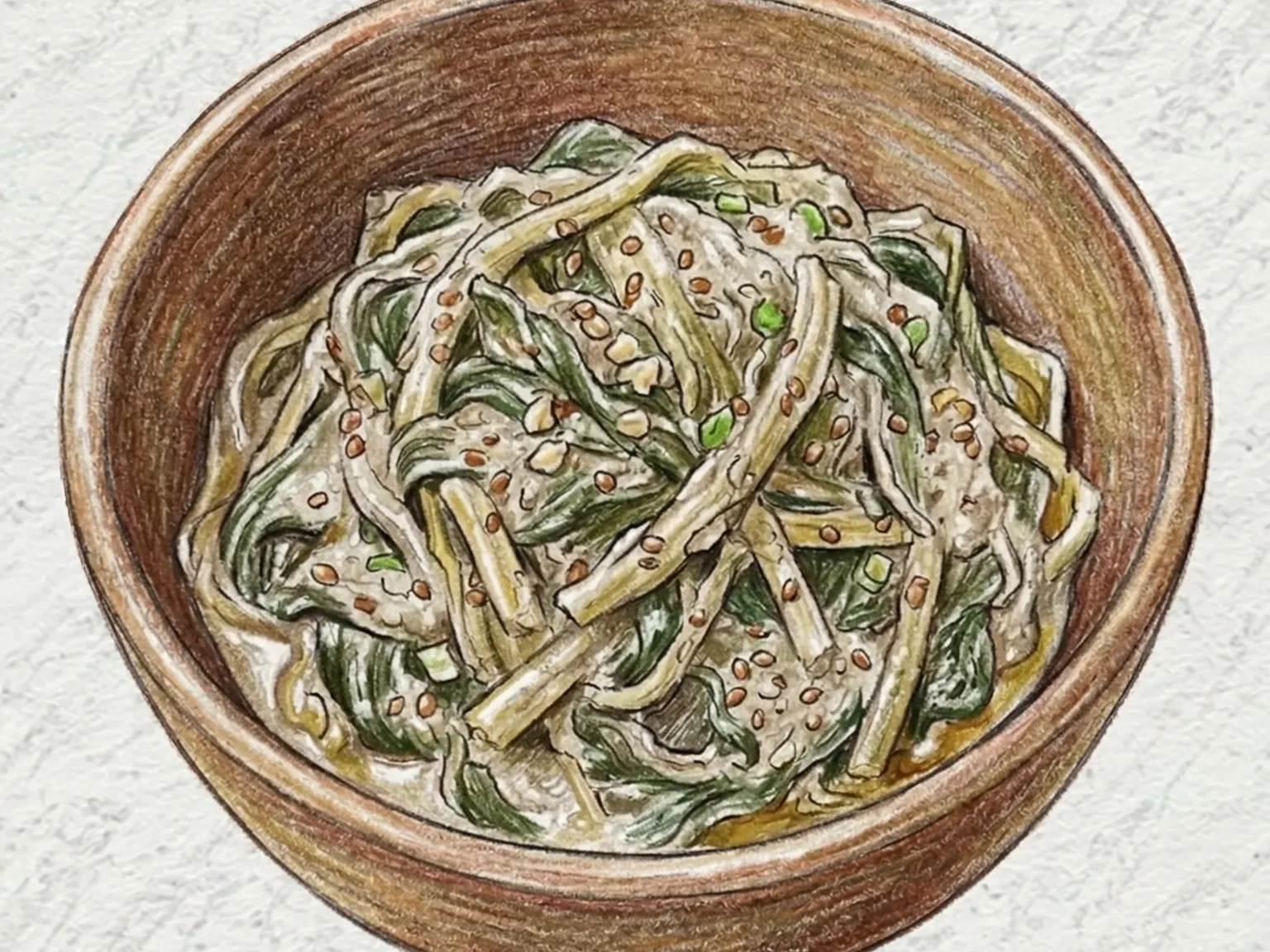
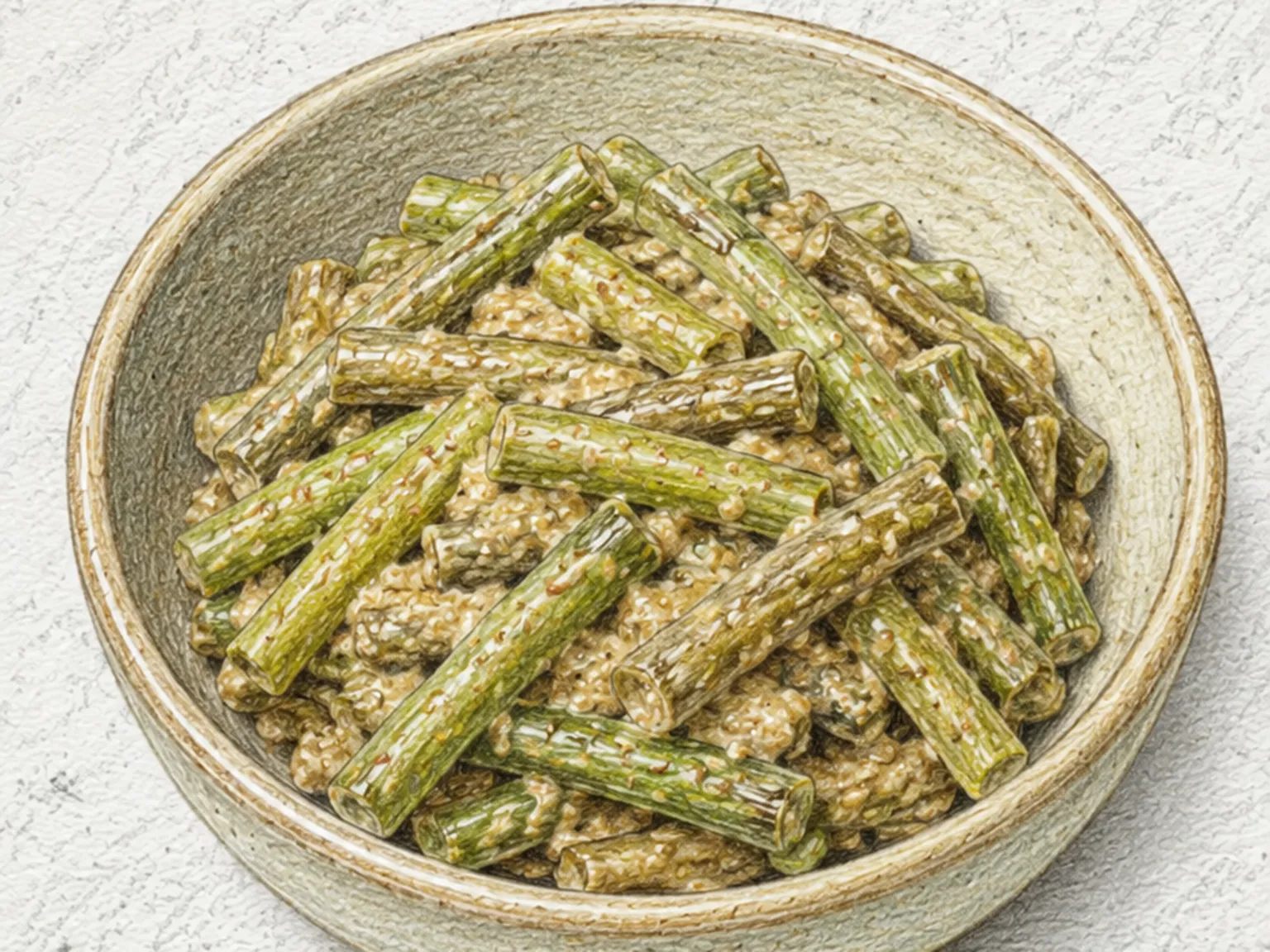
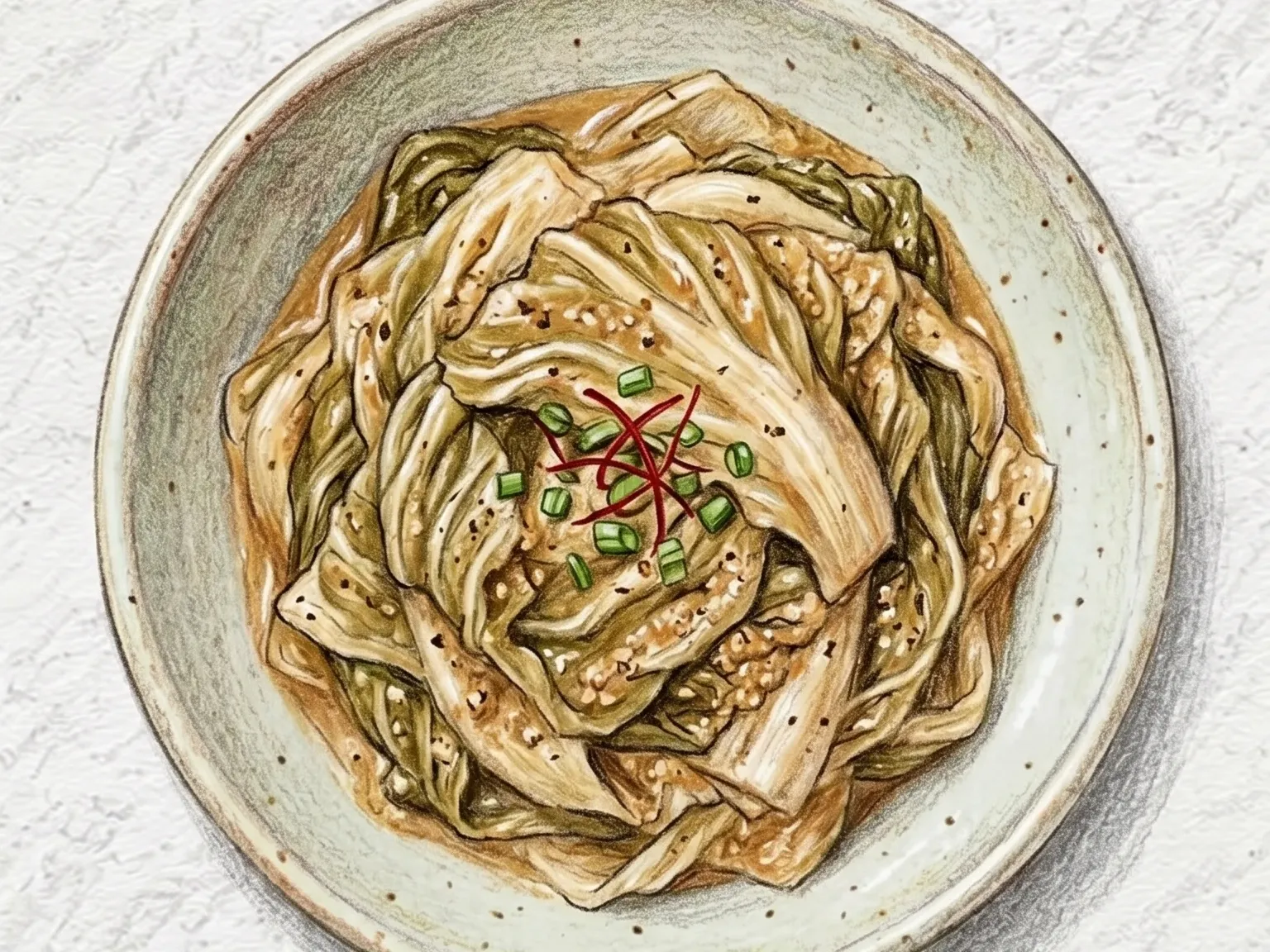
Dried outer leaves of napa cabbage, known as ugeoji, are rehydrated, boiled, and stir-fried with doenjang and ground perilla seeds to create a deeply savory banchan. These tough outer leaves, too coarse to eat fresh, develop a satisfying chewy texture once dried and reconstituted, offering a bite that ordinary cabbage cannot match. Doenjang introduces its fermented umami during the stir-fry, layering complexity onto the cabbage's otherwise neutral flavor. Ground perilla seeds dissolve into the residual moisture, forming a creamy, pale coating that enriches every strand with a nutty warmth. A small amount of anchovy and kelp stock added mid-cook creates just enough liquid for the seasonings to soak into the fibrous leaves before evaporating. Perilla oil used as the cooking fat establishes a fragrant base from the first moment the pan heats, and minced garlic stirred in partway through adds a sharp accent that cuts through the richness. The finished dish pairs naturally with a bowl of steamed rice and a hot soup.

Korean Stir-Fried Taro Stems
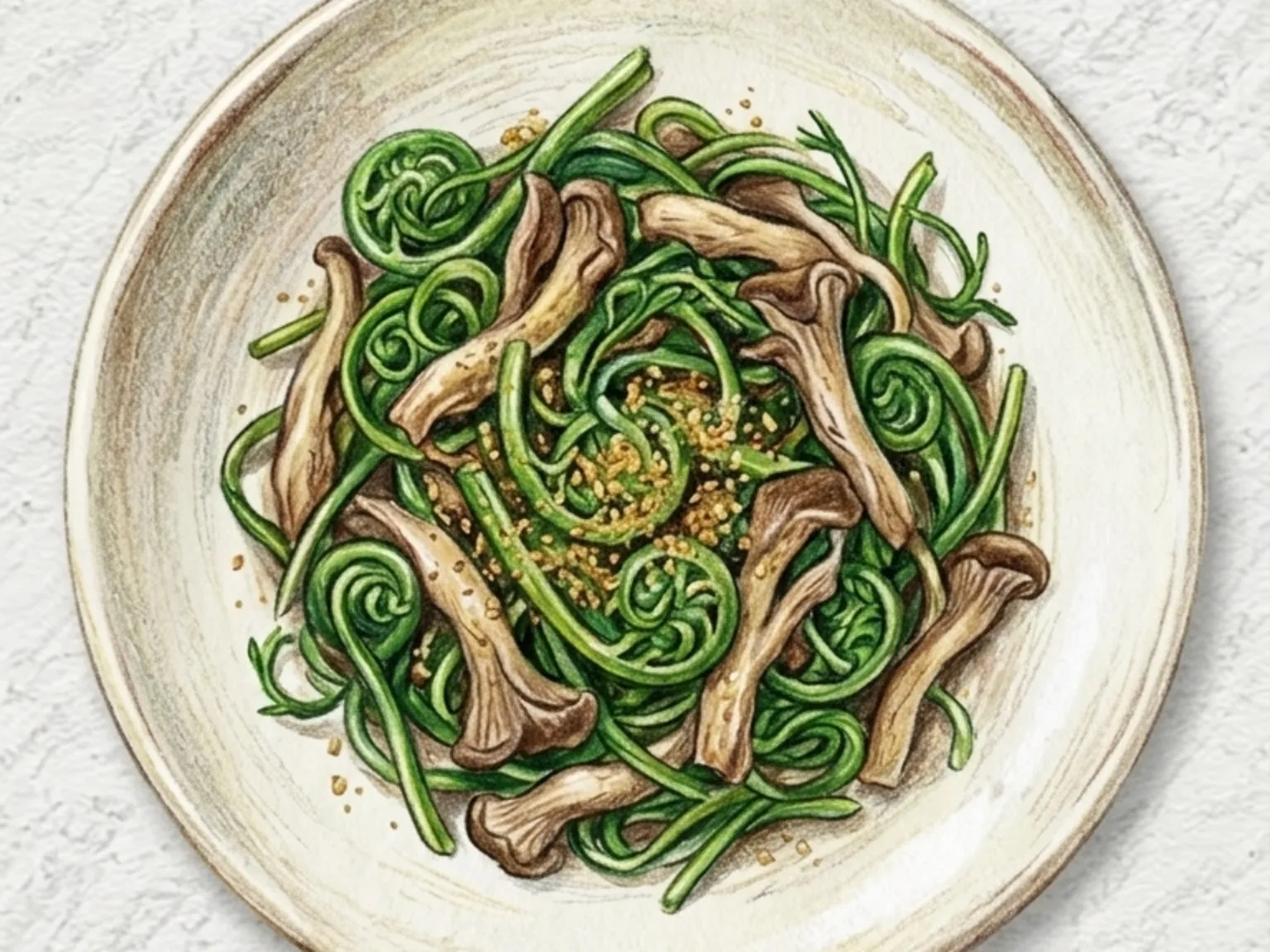
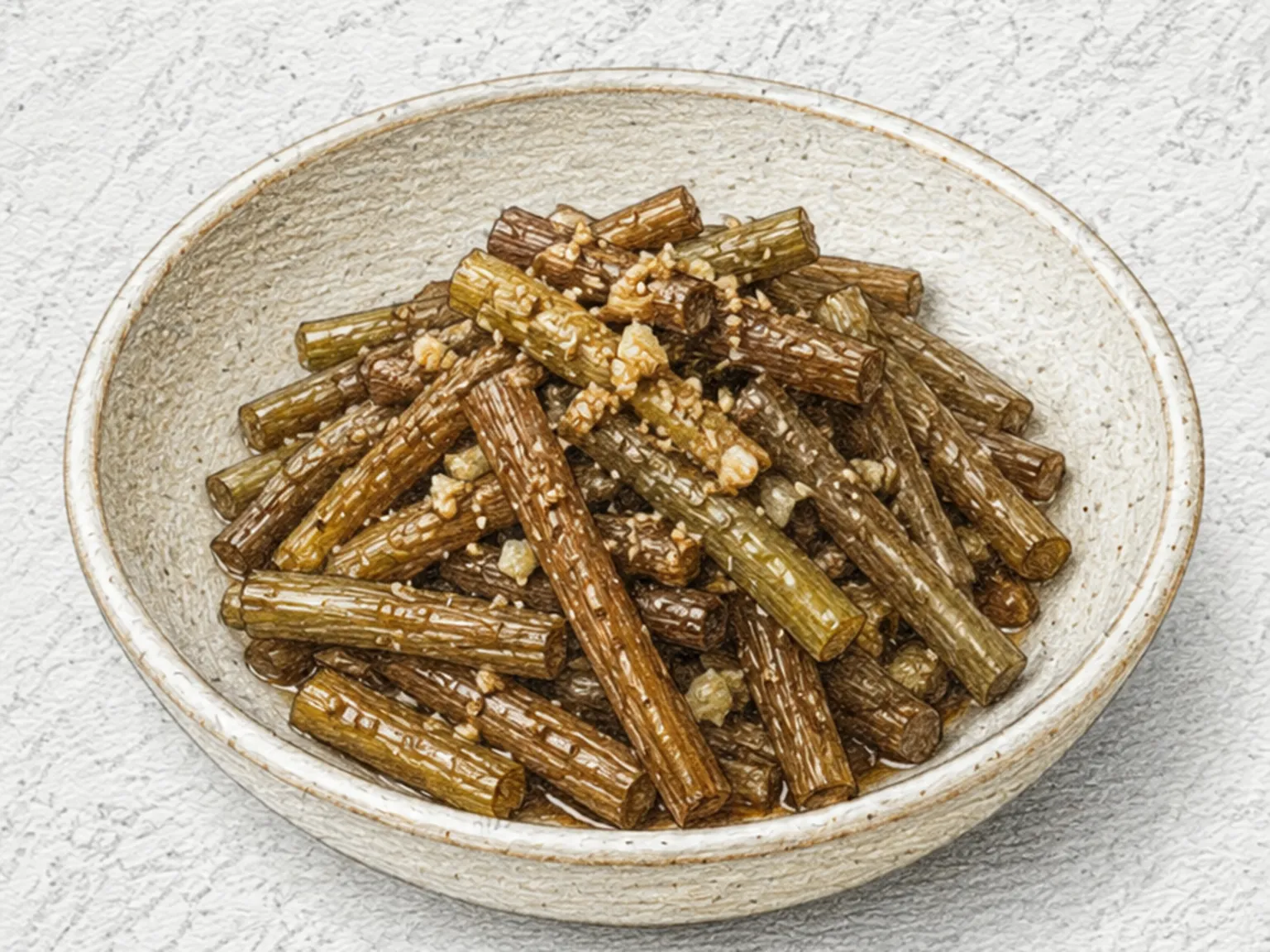
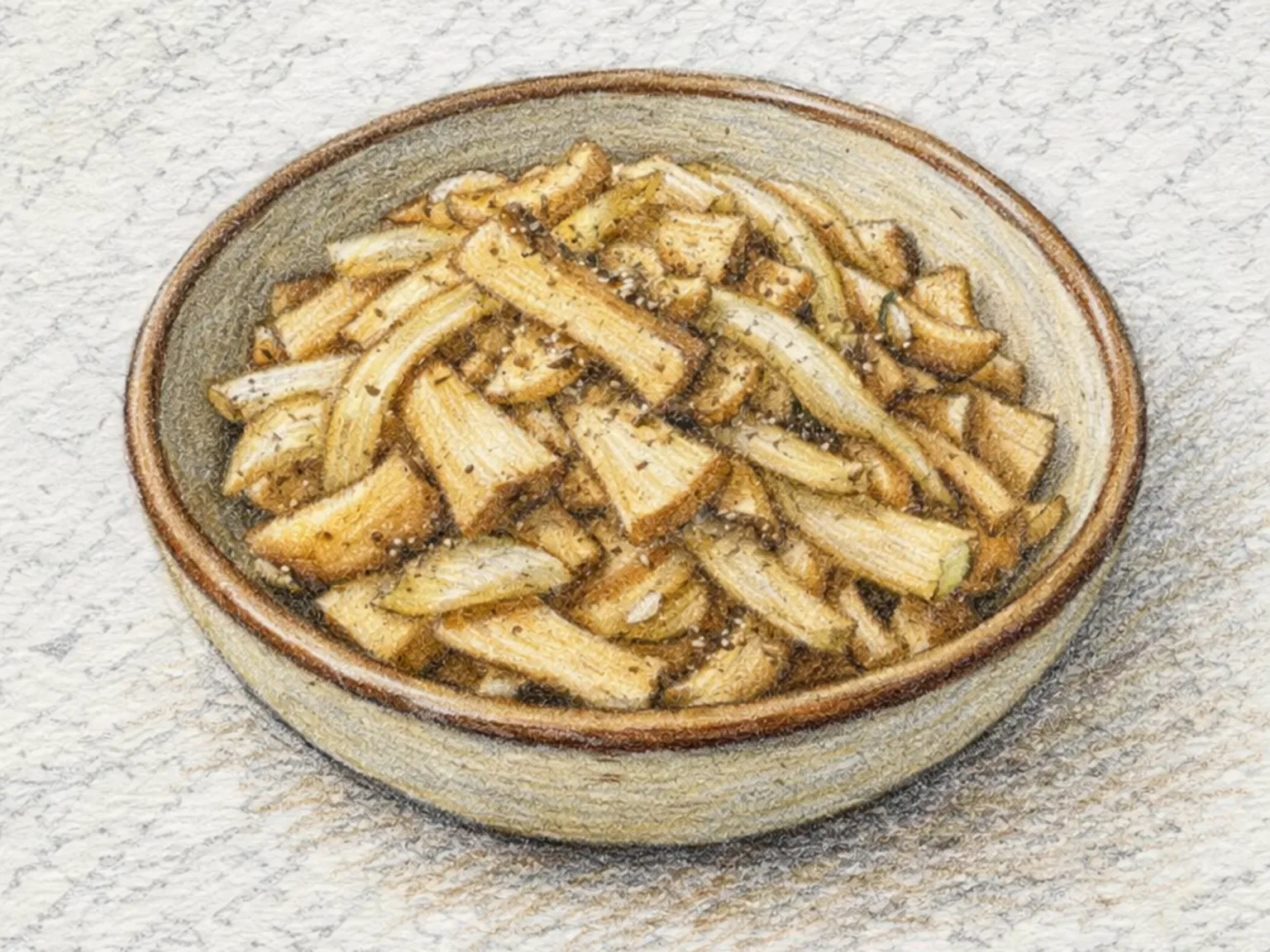
Boiled taro stems are stir-fried in perilla oil with soy sauce and garlic to create a banchan prized for its uniquely chewy texture. Dried taro stems, once soaked and simmered, lose their rawness but retain a springy, almost rubbery bite along the center of each stalk, setting them apart from softer namul greens. Stir-frying in perilla oil first builds a nutty base note, and soy sauce with minced garlic layers savory depth onto the stems' neutral flavor. A splash of stock added mid-cook allows the seasoning to penetrate the fibrous interior during a brief simmer. Sliced green onion introduces a fresh aromatic accent, and a finishing spoonful of ground perilla seeds dissolves into the residual moisture, creating a creamy coating that clings to each piece. Mixed into a bowl of steamed rice, the chewy stems provide satisfying resistance with every bite, and their mild character lets them complement bolder dishes like doenjang jjigae without competing for attention.

Korean Perilla Seed Hand-torn Noodle Soup
Deulkkae sujebi is a Korean hand-torn noodle soup made by pulling rested wheat dough into thin, rough-edged pieces and simmering them in an anchovy-kelp broth enriched with ground perilla seeds. Resting the dough for at least thirty minutes relaxes the gluten and is what allows it to be stretched thin by hand without snapping back; the thinner each piece, the more quickly it cooks through in the hot broth while still retaining a satisfying, elastic chew. Potato simmers alongside the dough and slowly breaks down, releasing starch that gives the broth a natural body without any thickener added. Zucchini contributes a mild sweetness and a soft texture that contrasts with the chewy dough pieces. When the ground perilla powder is stirred into the broth, it dissolves to form a milky, opaque liquid with a roasted, nutty depth that coats the tongue in every spoonful. The dish is a staple of Korean home cooking on rainy days and cold winter evenings, prized for the warmth it delivers and for the hands-on simplicity of tearing the dough directly into the pot.

Deulkkae Gamja Focaccia (Perilla Potato Focaccia)
Mashed potato is kneaded into a yeasted dough enriched with olive oil and ground perilla seed, then stretched into a pan, dimpled, and baked into a golden Italian flatbread. The potato keeps the interior exceptionally moist and chewy long after cooling, while the perilla adds a nutty undertone that sets this focaccia apart from conventional versions. Rosemary sprigs and thin garlic slices pressed into the dimples before baking contribute herbal fragrance and visual appeal. Olive oil pooling in the finger indentations crisps those spots into pockets of crunch surrounded by soft, airy crumb. Mashing the potato while still hot ensures it integrates smoothly into the dough without lumps. A full sixty-minute first rise at warm room temperature develops large, open air pockets that define good focaccia.

Korean Seasoned Butterbur Stems
Meoui-namul-muchim is a seasonal spring namul made by blanching butterbur stems and dressing them with doenjang and ground perilla seeds. Butterbur grows wild along hillsides and stream banks throughout Korea. The stems are the edible part; the leaves contain pyrrolizidine alkaloids and are generally not consumed. Peeling the tough outer skin from each stem before cooking is a required preparation step, since unpeeled stems leave unchewable fibers in the mouth even after blanching. The blanching process drives off about half of the plant's inherent bitterness, leaving a subtle astringent quality that creates a layered interplay between the earthy savoriness of doenjang and the nutty richness of perilla seed powder. Adding perilla generously softens the bitter edge and makes the dish more approachable. March through April is peak season, when fresh butterbur appears briefly at Korean markets. Dried butterbur rehydrated in water is available year-round as a substitute but cannot replicate the fragrance and texture of the fresh spring harvest. The faint bitterness and herbal aroma typical of spring greens make this namul a classic palate-awakening side dish.

Korean Seasoned Radish Greens Namul
Dried radish greens are soaked, boiled until pliable, and dressed in a seasoning anchored by doenjang and ground perilla seeds. The drying process concentrates the fiber in the greens, giving them a satisfying chew that persists even after boiling: the outer layer turns silky while the inner stem retains a springy resistance. Doenjang supplies the salty, fermented backbone, and ground perilla seeds melt into a creamy coating that softens the roughness of the greens on the palate. A generous pour of perilla oil ties the dressing together, adding a glossy sheen and a rich, nutty fragrance. Minced garlic and chopped green onion introduce a sharp aromatic layer that cuts through the heaviness. Each bite releases more of the siraegi's own deep, vegetal flavor, a taste that builds rather than fades. Paired with steamed rice, the doenjang's salinity and the perilla's richness draw out the natural sweetness of the grain.

Korean Taro Soup (Autumn Taro in Nutty Perilla Seed Broth)
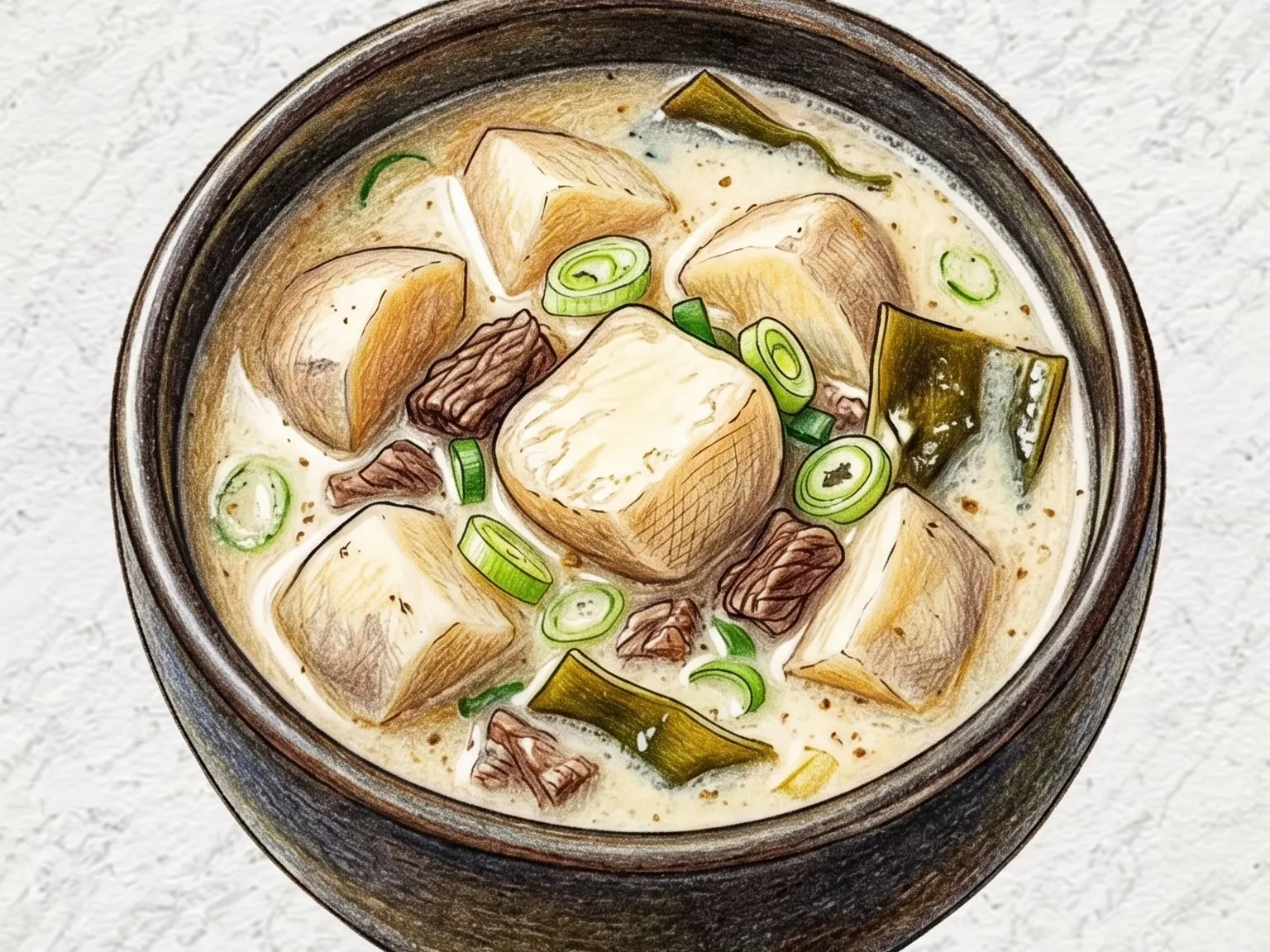
Toran-guk is an autumn soup centered on taro root, which is first parboiled to remove its slippery mucilage, then simmered in a broth thickened with ground perilla seeds. The taro pieces cook to a texture that falls somewhere between potato and chestnut - they crumble softly on the tongue yet retain a subtle stickiness that gives each bite a gentle cling. Ground perilla dissolves into the liquid and turns it opaque and creamy, layering a nutty richness over the taro's mild, earthy flavor. Beef is often added for depth, its rendered fat and juices rounding out the broth, while an anchovy-kelp base underneath sharpens the umami. The soup is closely associated with Chuseok, the Korean harvest festival, when taro is freshly dug and at its peak sweetness. Cooking the taro just long enough to soften without disintegrating is the key challenge - underdone pieces are chalky and irritate the throat, while overcooked ones dissolve into the broth and lose their identity. Served hot with steamed rice, toran-guk is one of those seasonal dishes that Koreans anticipate all year and miss the moment autumn ends.

Korean Seasoned Radish Greens
Mucheong-namul is a Korean banchan made from the leafy stems attached to daikon radish, blanched and dressed with doenjang and perilla oil. Unlike fully dried siraegi, fresh or semi-dried mucheong retains a grassy vitality that carries through to the finished dish. Radish greens emerge as a byproduct of the autumn kimjang harvest, when whole radishes are pulled from the ground, and rural Korean kitchens have long turned these tops into namul or hung them to dry for winter. Fresh mucheong requires at least five minutes of boiling to break down its tough stem fibers so they soften properly. A thorough rinse in cold water follows, washing away the bitter, astringent edge that develops during cooking. Seasoning with doenjang and soup soy sauce layers the fermented paste's earthy depth over the greens' faintly bitter, grassy character, creating a contrast that makes each bite more interesting than either ingredient alone. Perilla oil is preferred over sesame because its lighter, quieter fragrance complements the greens' natural flavor rather than overpowering it. Stirring in ground perilla seeds at the end thickens the dressing and wraps each strand of mucheong in a nutty coating, producing a noticeably deeper-flavored version than mucheong-namul made without them. A hearty, clean-tasting winter banchan tied to the rhythm of the radish harvest.

Korean Namdo-Style Loach Soup
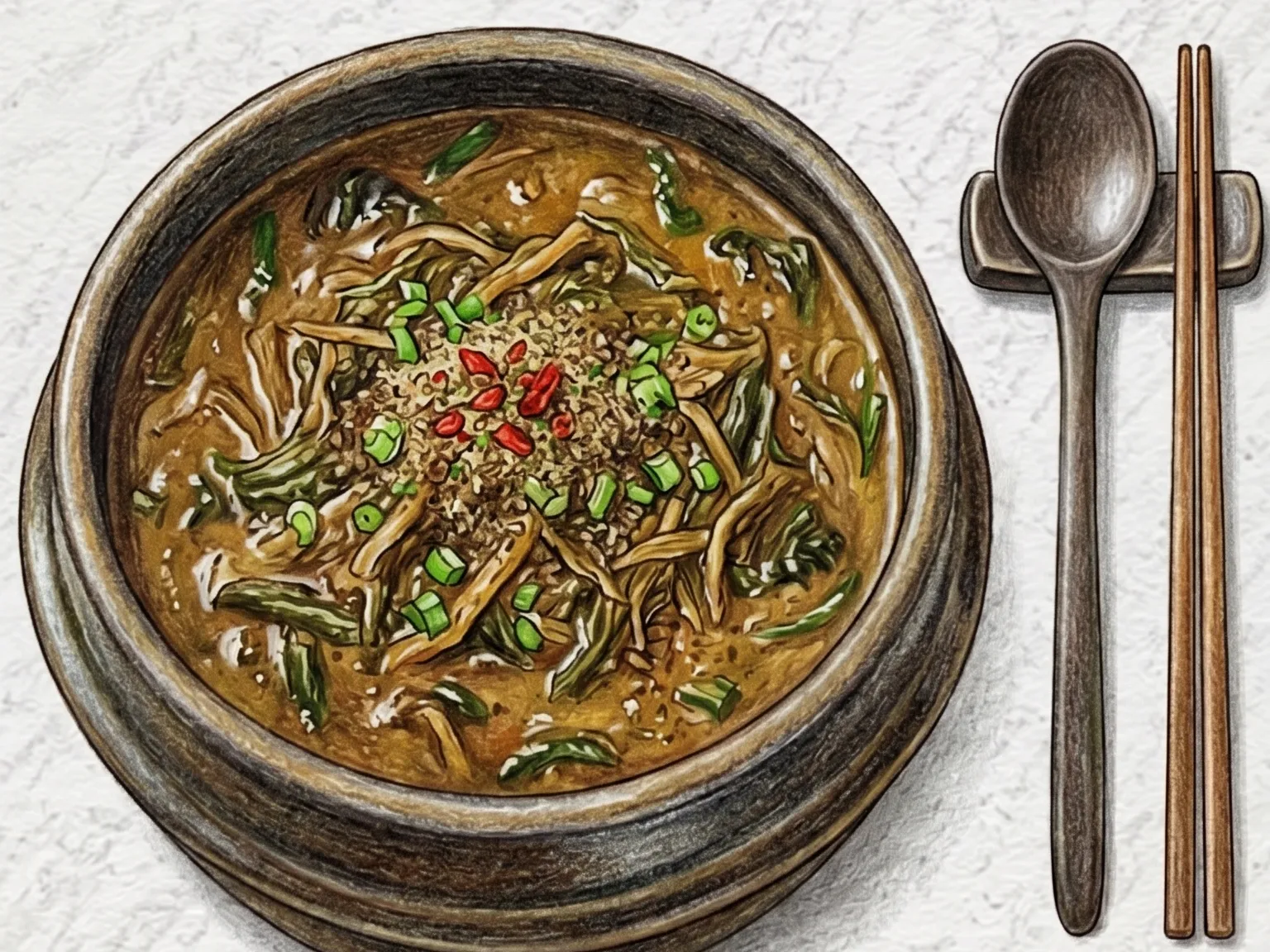
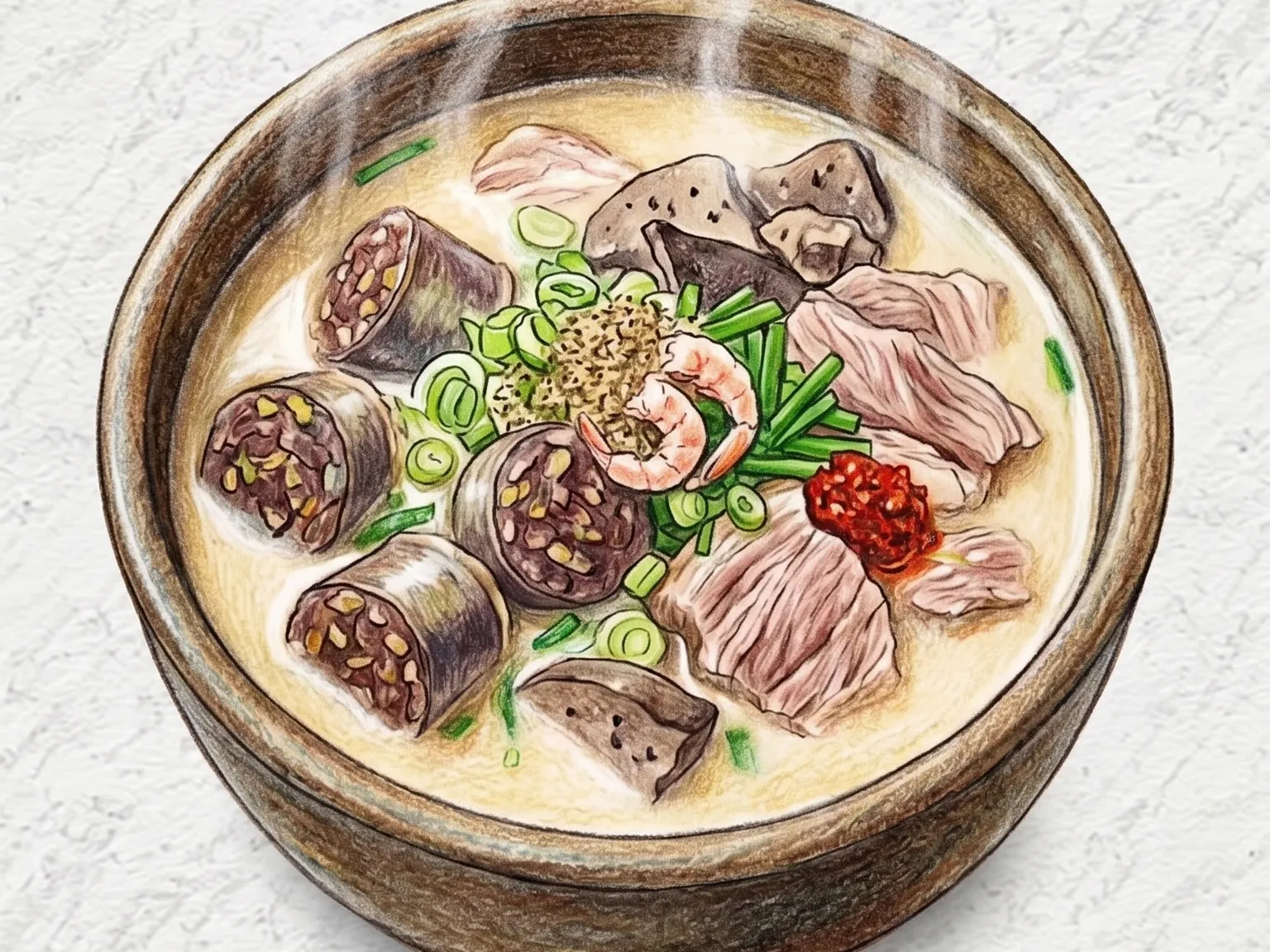
Namdo-chueotang is the southern Korean take on loach soup, distinguished from other regional versions by grinding the entire loach - bones and all - into a thick, porridge-like broth. The loaches are first boiled until completely soft, then blended and strained to produce a dense, opaque base packed with protein and calcium. Dried radish greens simmer in this liquid, contributing a rustic, earthy backbone. Doenjang and gochujang season the soup with fermented depth and moderate heat, while a generous addition of perilla seed powder lends a nutty richness that rounds out the heavy flavors. A final dusting of sancho pepper tames any lingering fishiness and adds a tingling, aromatic kick. This is restorative cooking at its most direct - a thick, warming bowl meant to rebuild energy during the colder months.

Korean Dried Radish Greens Perilla Stew
This stew simmers rehydrated dried radish greens in rice-rinse water thickened with a generous four tablespoons of perilla seed powder. A small amount of doenjang and gochujang provides savory depth, and using rice-rinse water instead of plain water adds a natural starchiness that helps the perilla powder integrate into the broth more smoothly. The perilla powder creates a creamy, nutty soup with a pale beige hue, and the chewy, fibrous texture of the radish greens contrasts with the richness of the liquid. The radish greens need to be fully rehydrated and pre-boiled so they absorb the broth evenly during cooking rather than remaining tough. Onion and green onion add layers of sweetness and fragrance, and seasoning gradually while the stew cooks produces a more balanced result than adding everything upfront. Served bubbling in an earthenware pot on cold days, this is one of the most comforting staples in Korean winter home cooking.