Penne all'Arrabbiata (Spicy Tomato and Garlic Pasta)
Arrabbiata, meaning angry in Italian, is a Roman pasta sauce whose heat comes from dried peperoncino chili flakes used in generous quantity. The sauce descends from the cucina povera tradition of Lazio, where tomatoes, garlic, olive oil, and chili were the four ingredients a working kitchen could reliably afford. Garlic is sliced thin and cooked in olive oil over moderate heat until fragrant and very lightly golden, then the chili flakes bloom in the hot fat for a matter of seconds, infusing the oil with their heat before crushed tomatoes are added. The sauce simmers uncovered for fifteen to twenty minutes, reducing until concentrated enough to coat each tube of penne without sliding off. The heat is slow-building rather than immediate: the first bite registers as mild, but the warmth accumulates with each subsequent forkful and persists at the back of the throat long after eating. Fresh parsley scattered at the end introduces a green, herbal brightness that modulates the lingering chili heat without diminishing it. In the purist version there is no cream and no cheese, only the clean interplay of tomato acidity, garlic depth, and chili fire. The sauce traces its origins to the villages outside Rome in the early twentieth century and reflects Southern Italian cooking's preference for restraint, directness, and heat over the dairy richness characteristic of the north.

Classic Beef Burger
A classic beef burger shapes seasoned ground beef into a thick patty and sears it over high heat until a deep brown crust forms on the outside while the interior stays juicy. The Maillard reaction on the hot surface concentrates the beef flavor into that crust, and a slice of cheddar melted on top adds a salty, creamy layer. Crisp lettuce and a thick tomato slice bring moisture and freshness, while pickle slices cut through the richness with vinegar acidity. A brioche bun absorbs the rendered juices and condiments without falling apart, holding the stack together so every bite delivers all the components at once.

Salade Niçoise
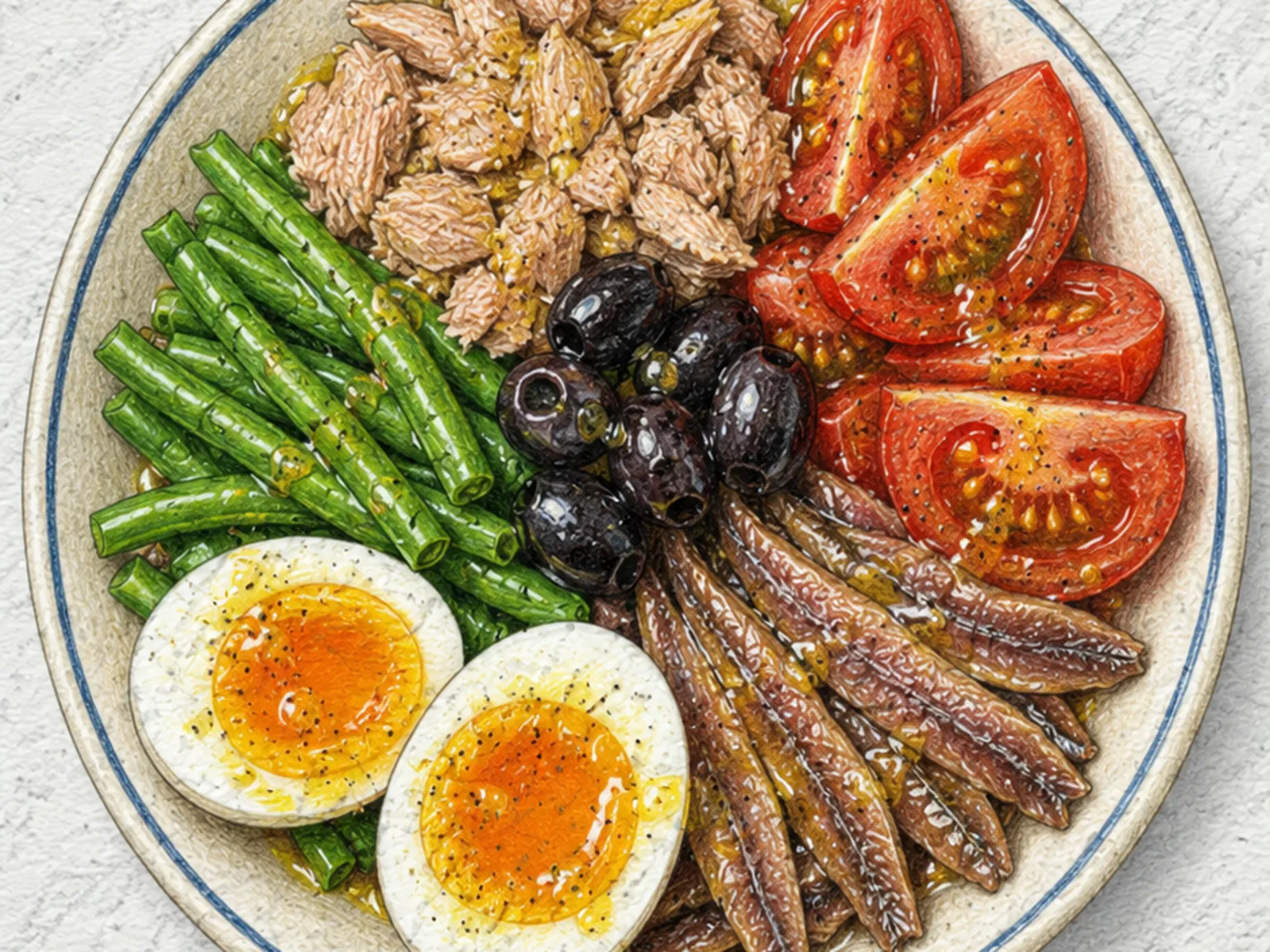
Salade Nicoise is a classic salad from Nice in southern France that arranges tuna, soft-boiled eggs, olives, anchovies, tomatoes, and blanched green beans in separate sections on a plate, finished with a vinaigrette of olive oil, lemon juice, and Dijon mustard. The traditional presentation keeps each ingredient in its own zone rather than tossing everything together. Soft-boiling the eggs for six minutes yields a runny yolk that acts as a natural dressing when broken. The salty depth of anchovies and the oily richness of olives add complexity over the mild tuna, while the mustard vinaigrette brightens and ties the whole plate together with its acidity.

Cretan Dakos Salad (Barley Rusk with Tomato & Feta)
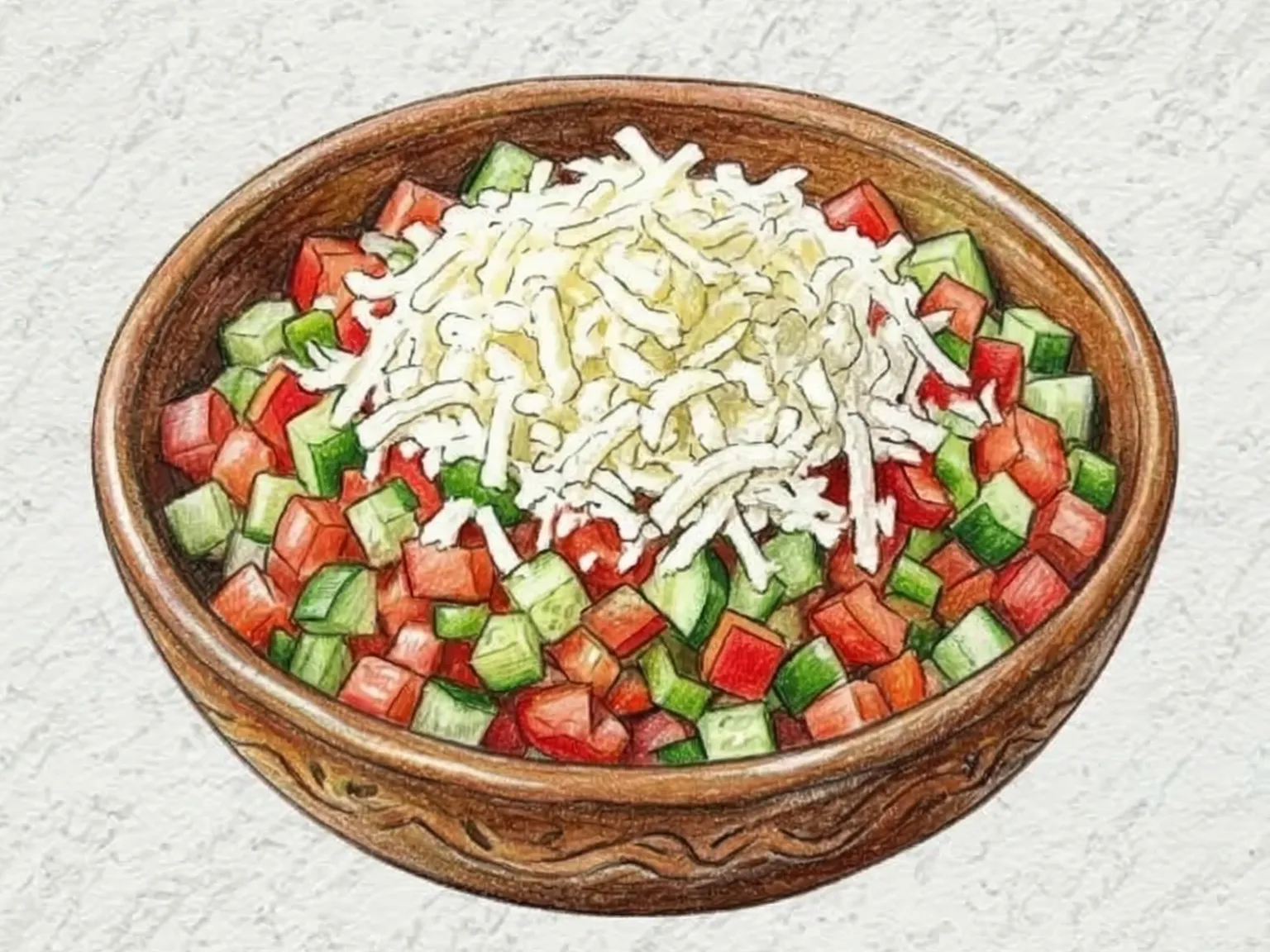
Dakos is a traditional salad from the Greek island of Crete, built on a base of dried barley rusks - thick, twice-baked rounds of bread that have been air-dried to a deep crunch. Ripe tomatoes are grated directly onto the rusk surface rather than sliced, so their juice immediately begins to soften the bread from the inside while the outer rim retains its crunch, creating a textural contrast of crisp edges and a moistened, dense center. Crumbled feta cheese piled on top adds a salty, tangy richness that balances the tomato's acidity, and a generous pour of good olive oil ties the components together. Dried oregano and whole or halved olives complete the dish. Dakos functions simultaneously as a bread course and a salad, and has been part of Cretan summer eating for centuries - a light, satisfying meal that requires no cooking and uses ingredients that thrive in the Mediterranean climate.

Ratatouille
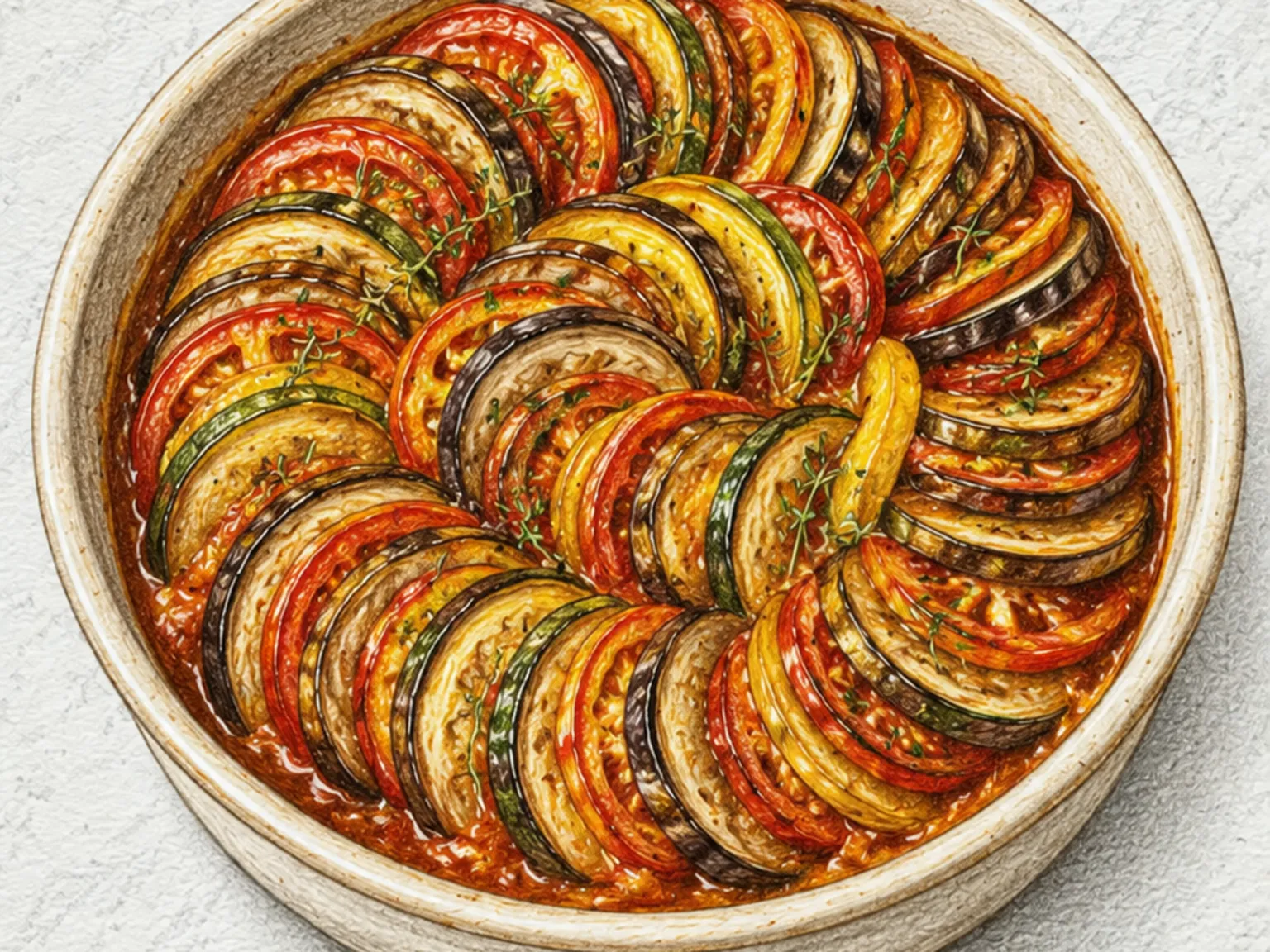
Ratatouille is a vegetable dish originating from the Provence region of France. It consists of eggplant, zucchini, tomato, and bell pepper, all of which are sliced into thin rounds. These vegetables are layered in overlapping circular patterns on top of a prepared sauce base before being placed in an oven for slow baking. The foundational sauce for this preparation begins by sauteing a combination of onion, garlic, and finely diced bell pepper in olive oil. As the dish cooks in the oven, the moisture that is naturally released from the layered vegetables combines with this sauteed base. This process results in the formation of a sauce that thickens naturally without the need for additional agents. Ensuring that every vegetable is cut to a precise and uniform thickness is a critical part of the preparation process. When the slices are inconsistent in size, the cooking results will be uneven, causing some thinner pieces to become overly soft or mushy while thicker pieces remain insufficiently cooked. The addition of thyme provides a subtle herbal quality that serves to enhance the inherent sweetness found in the various vegetables. While the dish can be eaten immediately, placing it in the refrigerator overnight and reheating it the following day allows the vegetable juices to integrate more thoroughly with the sauce. This resting period leads to a significant deepening of the overall flavor profile as the components merge together.

Chicken Gyro
Chicken gyro is a Greek pita wrap in which chicken thigh is marinated in olive oil, lemon juice, salt, pepper, and dried oregano before being grilled or pan-seared until the skin side develops a golden, crisp char. Chicken thigh withstands high-heat cooking far better than breast because its higher fat content keeps the meat moist and tender even when the exterior is well caramelized. Tzatziki is made by squeezing excess water out of grated cucumber and mixing it into plain Greek yogurt with minced garlic, fresh dill, a small pour of olive oil, and a pinch of salt. Its cold, sharp acidity is the necessary counterweight to the richness of the grilled meat, cooling every bite. Thinly sliced red onion adds a pungent crunch while halved cherry tomatoes or diced tomato bring bright juiciness inside the wrap. The pita should be warmed on a dry pan or grill for about thirty seconds per side immediately before assembling so it stays soft and pliable enough to wrap without cracking under the filling. Assembled and eaten immediately, the contrast between the hot, charred chicken and the cold sauce defines the dish.

Ropa Vieja (Cuban Shredded Beef in Tomato Sauce)
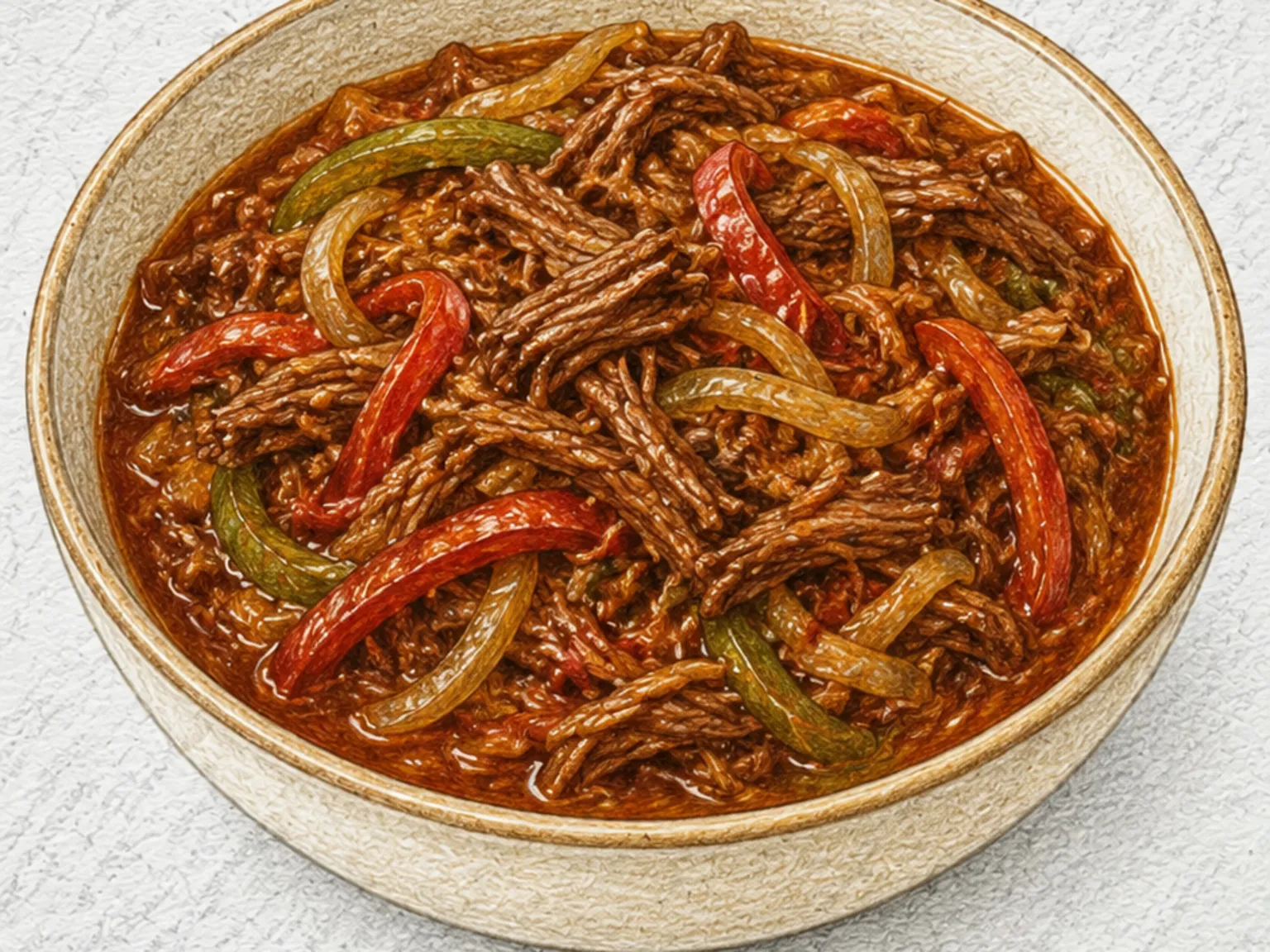
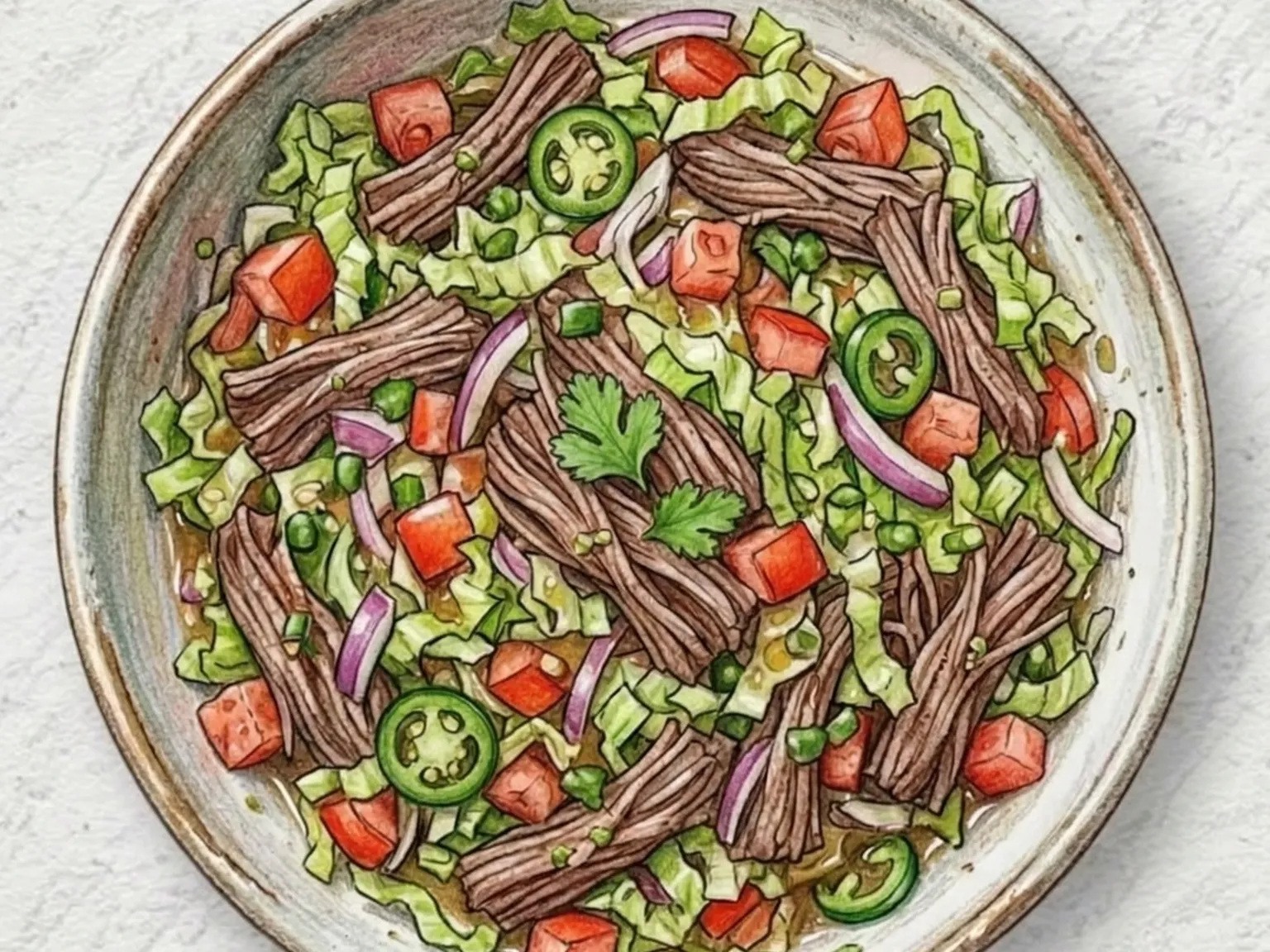
Ropa vieja is a traditional Cuban dish in which beef chuck is boiled whole until tender enough to shred with forks, then simmered in a sauce of sauteed onion, bell pepper, crushed tomatoes, and paprika powder. The name means 'old clothes' in Spanish, a reference to the shredded meat's resemblance to torn fabric. Cooking the beef long enough is essential - undercooked chuck resists shredding and turns out tough and stringy. Simmering the shredded meat in the tomato-pepper sauce for twenty-five minutes drives the savory, slightly smoky flavor deep between the fibers. Served over rice or alongside bread, the sauce absorbs into the starch for a satisfying, complete meal.

Korean Shrimp Tomato Knife-Cut Noodles
Saeu tomato kalguksu is a Korean fusion noodle soup that simmers fresh knife-cut noodles and shrimp in a tomato-based broth. Blanched and diced tomatoes are cooked down with garlic and onion in olive oil to build a naturally sweet, acidic base before water is added. Shrimp go in near the end of cooking to stay plump and springy. A light dusting of Parmesan over the finished bowl bridges Korean and Mediterranean flavors.

Club Sandwich
A club sandwich is built across three slices of buttered, golden-toasted bread with sliced chicken breast, crisp bacon, fresh lettuce, and tomato arranged in two distinct layers. The salty crunch of bacon meets the lean, mild protein of chicken breast, and juicy tomato slices and crisp lettuce introduce freshness and textural contrast throughout. Mayonnaise spread on each bread layer functions as a binder that smooths each bite and brings the savory components into balance. Drying the lettuce completely before assembly is essential - any residual moisture will soften the toast within minutes. Securing all layers with cocktail picks and cutting diagonally produces clean cross-sections and keeps the layers from sliding during eating. The order of fillings and the degree of toasting both affect the final texture noticeably.

Chicken Paprikash (Hungarian Paprika Chicken Stew with Sour Cream)
Chicken paprikash is a Hungarian stew that starts by browning chicken thighs in a hot pan to develop color and fond, then builds a sauce around slowly cooked onion, sweet paprika, and tomato before finishing with sour cream. The onion is cooked low and slow until completely soft and sweet, and only then is the paprika added over reduced heat to bloom its color and release its earthy, lightly smoky aroma without any risk of scorching. Paprika forms the entire foundation of the sauce's flavor and its characteristic deep red hue, while tomato contributes the acid needed to balance the richness of dark meat through a 25-minute gentle simmer. The chicken stays submerged in the sauce throughout cooking, absorbing the paprika-infused liquid and becoming very tender. Sour cream must be added at the very end with the heat turned low; stirring it in while the pot is still at a boil causes it to curdle, whereas adding it gently over low heat integrates it into a smooth, creamy sauce with a mild tang. The traditional presentation ladles the sauce over wide egg noodles or spaetzle, whose tender chew is well suited to catching and holding the rich, paprika-scented sauce.