Charim

2686 Korean & World Recipes

2686+ Korean recipes, clean and organized. Ingredients to instructions, all at a glance.

Recipes with vinegar

11 recipes

Buy vinegar
Mung Bean Jelly Apple Chojang Salad
SaladsEasy

Mung Bean Jelly Apple Chojang Salad

Cheongpomuk apple chojang salad combines blanched mung bean jelly sticks with crisp apple and cucumber, dressed in a chojang sauce of gochujang, vinegar, and green plum syrup. Blanching the jelly for only twenty seconds in boiling water removes the surface sliminess that fresh mung bean jelly develops while preserving the soft, slippery texture that defines it. Rinsing immediately in cold water and draining well prevents the chojang from becoming watery and losing its spicy-sour punch. The chojang layers spicy gochujang heat with the sweet-tart acidity of vinegar and plum syrup, lifting the otherwise neutral flavor of the jelly into something brighter. Shredded red cabbage adds a vivid color contrast and a slight bitterness that balances the sweetness. Roasted seaweed flakes contribute a briny crunch. Sesame oil and ground sesame seeds finish the bowl with a nutty note, keeping the dish light and oil-free. Any unused blanched cheongpomuk should be stored submerged in cold water to prevent the surface from drying out and becoming tough before serving.

🥗 Light & Healthy Quick
Prep 18minCook 2min4 servings
Korean Cold Vinegar Mustard Chicken Soup
SoupsMedium

Korean Cold Vinegar Mustard Chicken Soup

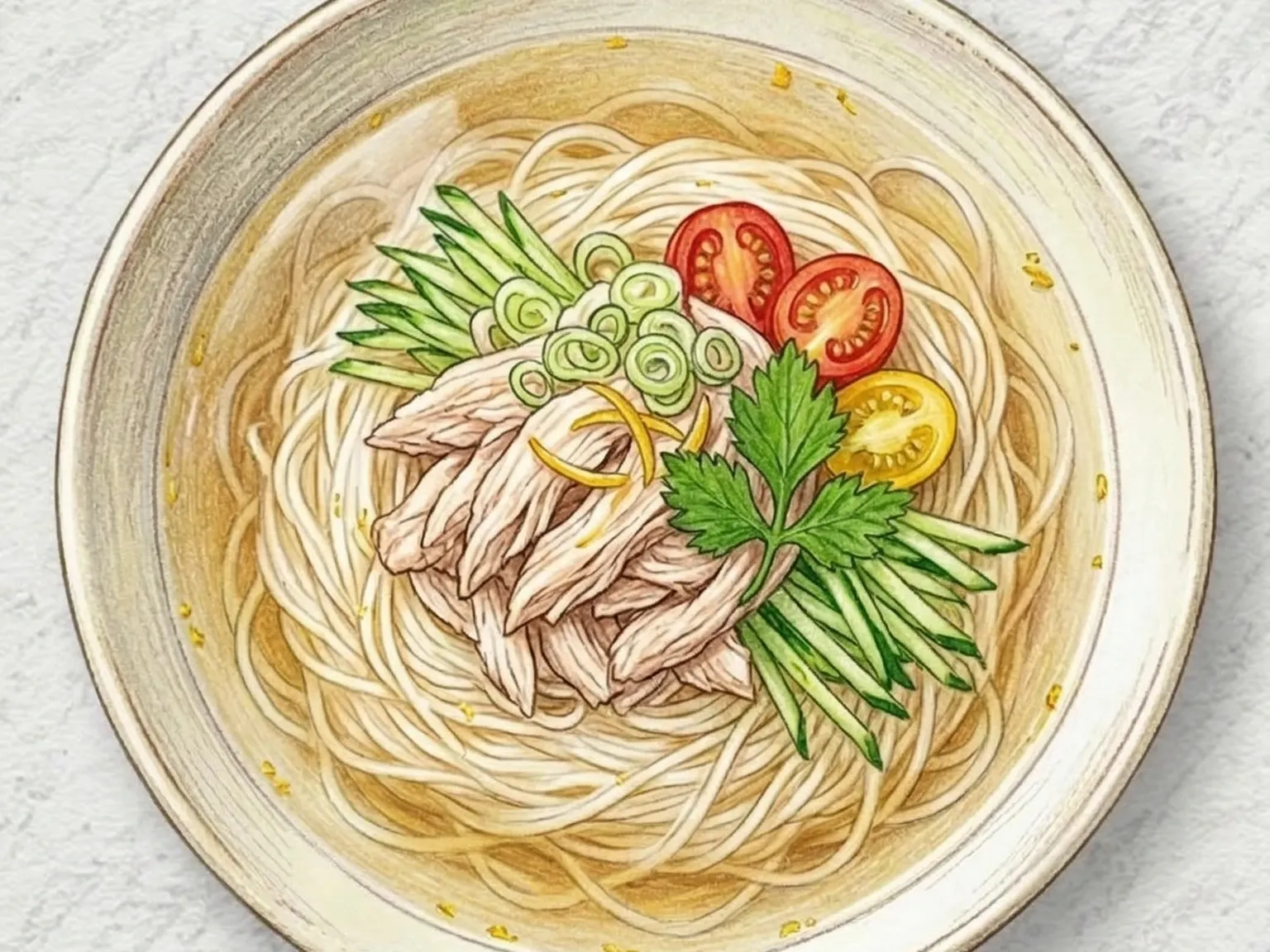
Chogye-tang is a chilled Korean chicken soup where boiled, shredded breast meat sits in an ice-cold broth sharpened with rice vinegar and hot mustard paste. The broth must be thoroughly refrigerated before seasoning and serving - at a warm temperature the mustard loses its sharp bite and the vinegar's acidity becomes dull, collapsing the defining tang that makes the dish what it is. Shredding the chicken along its grain rather than chopping it allows the cold, pungent broth to soak into every fiber rather than sitting on the surface of the meat. Julienned cucumber layered on top provides a crisp, cooling contrast to the shredded meat. The flavor logic mirrors that of Pyongyang-style cold noodles - sour, spicy, and bracingly cold - but replaces starch with lean protein, making it a lighter and more protein-forward meal. Historically associated with royal court cuisine as a restorative summer dish, it continues to be eaten in the same cold format during the hottest months.

🏠 Everyday
Prep 35minCook 40min4 servings
Korean Seasoned Wild Chive
Side dishesEasy

Korean Seasoned Wild Chive

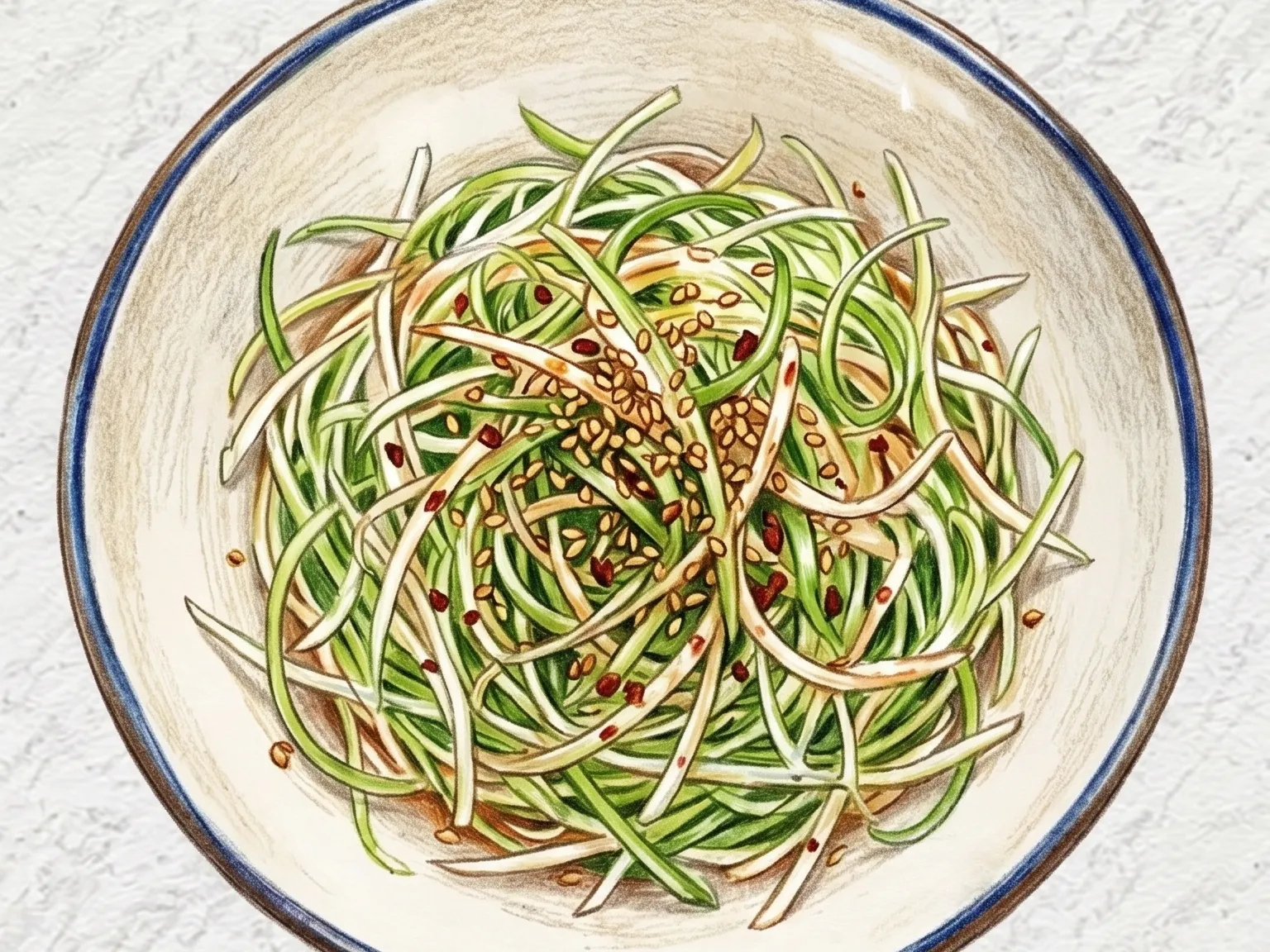
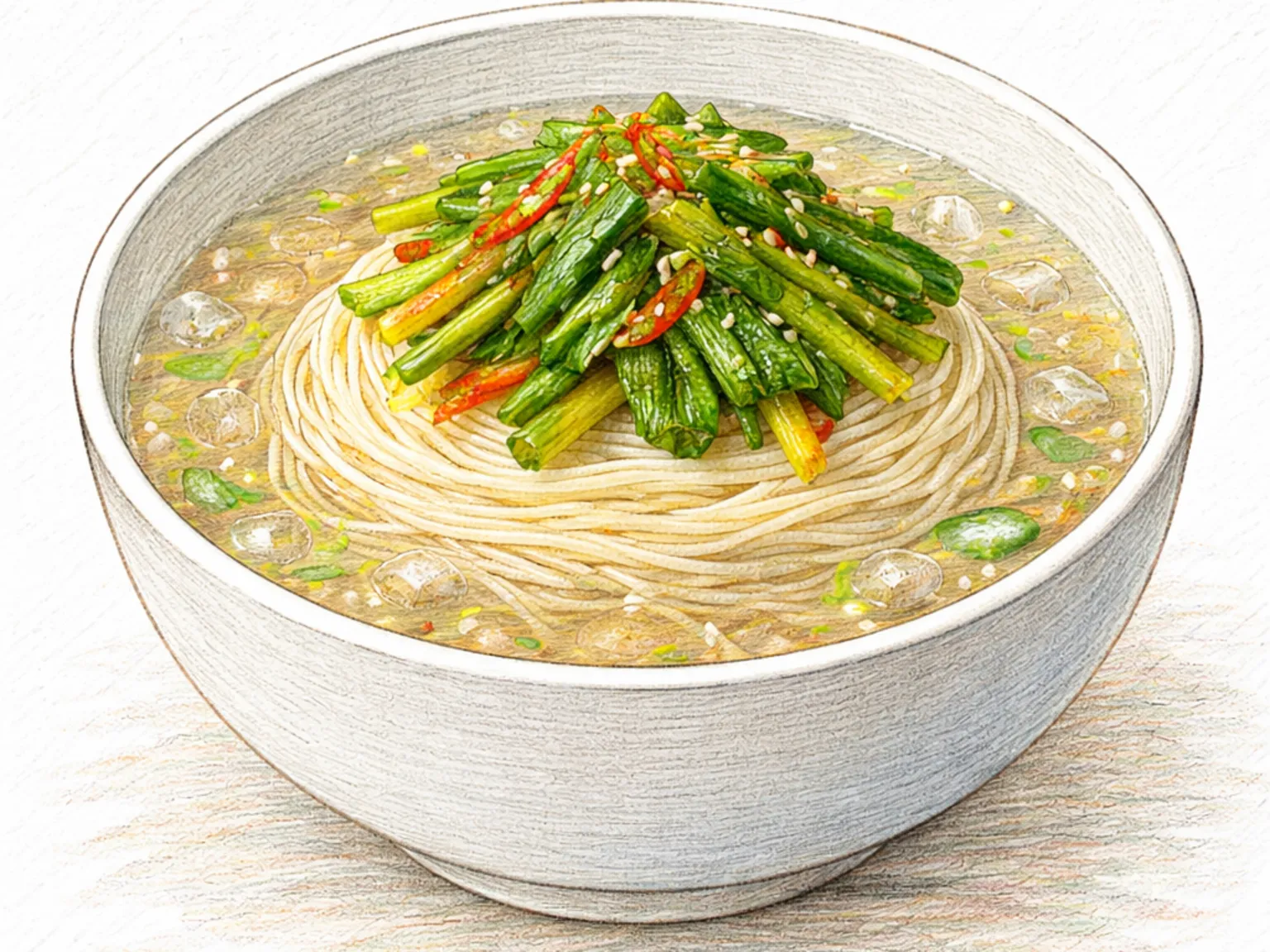
Dallae-muchim is a raw spring side dish made from Korean wild chives dressed in soy sauce, gochugaru, vinegar, sugar, and sesame oil -- one of the clearest markers that spring has arrived. Dallae emerges from hillsides in March, finer in stem than cultivated chives and carrying an intensely sharp, garlic-like aroma that vanishes almost immediately when cooked, which is why the herb is always used raw. The small bulbs and slender leaves are washed root-and-all, cut to three or four centimeters, and tossed in the seasoning just before serving. The result is a pungent, nose-clearing mouthful that contrasts directly with the deep, fermented warmth of doenjang-jjigae when the two are eaten together. The season for dallae is brief -- a few weeks in early spring -- making this banchan one of the more fleeting pleasures of the Korean table.

🏠 Everyday🍱 Lunchbox
Prep 10min4 servings
Korean Soy-Marinated Soybean Leaves
Side dishesMedium

Korean Soy-Marinated Soybean Leaves

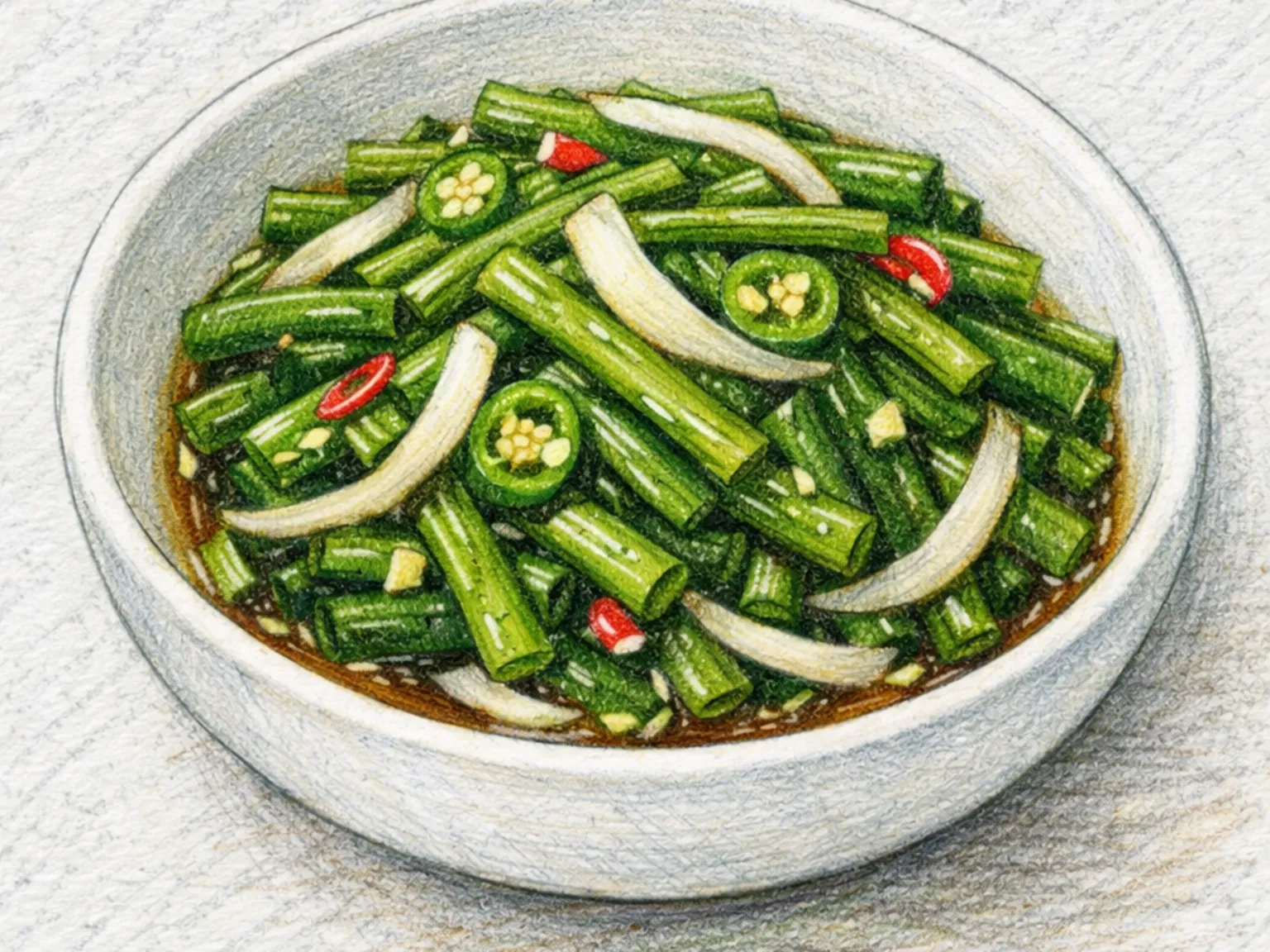
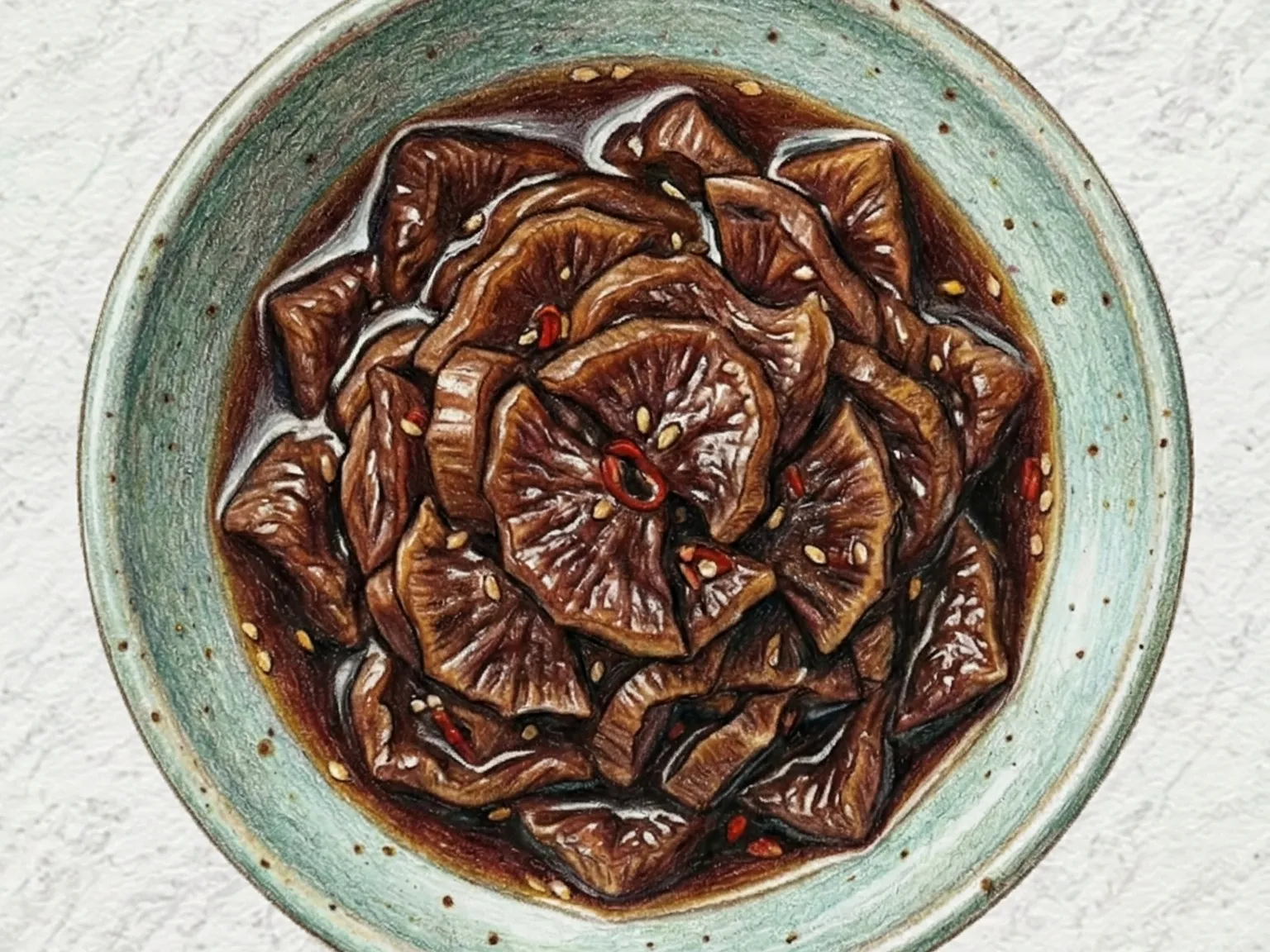
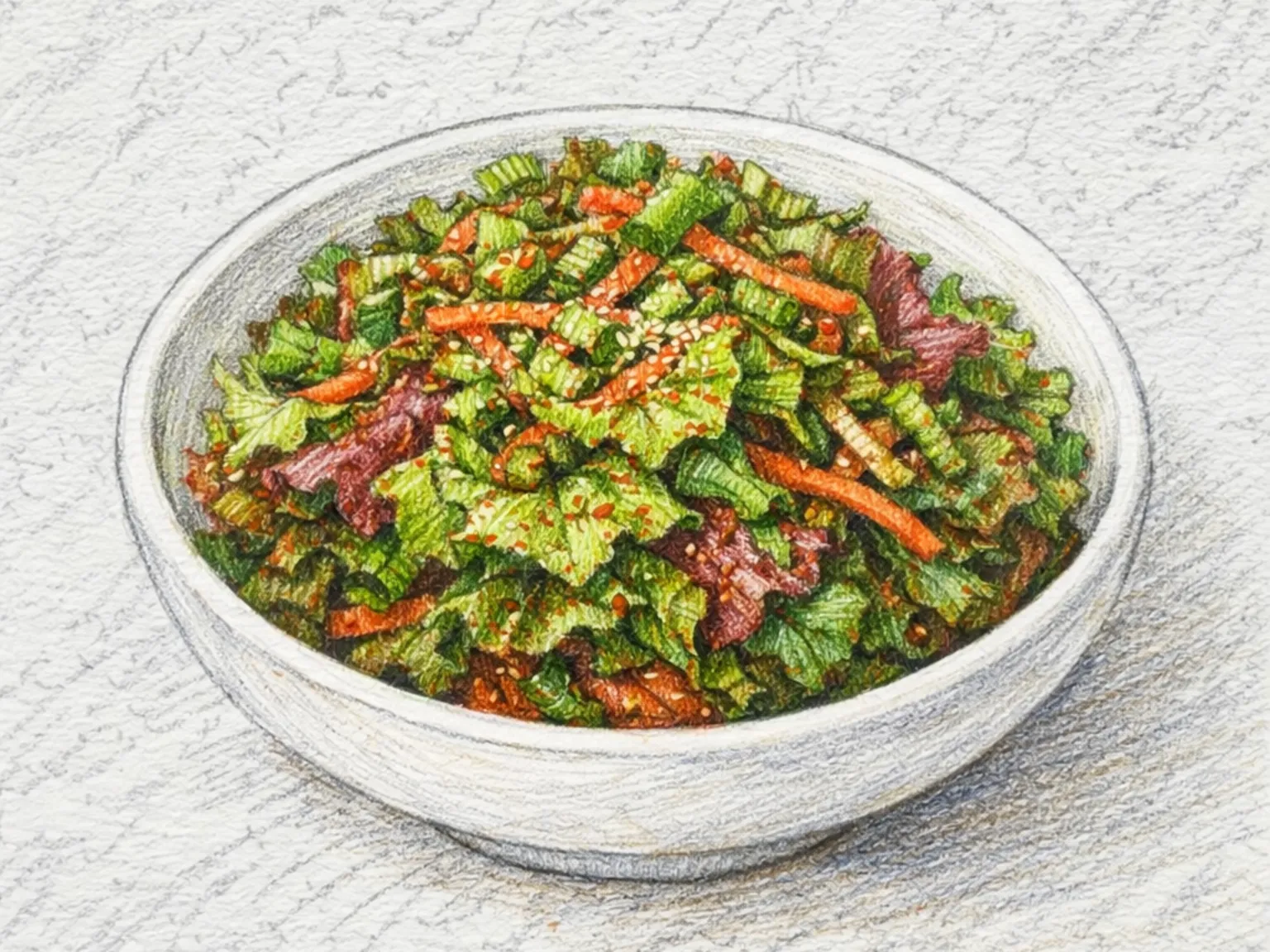
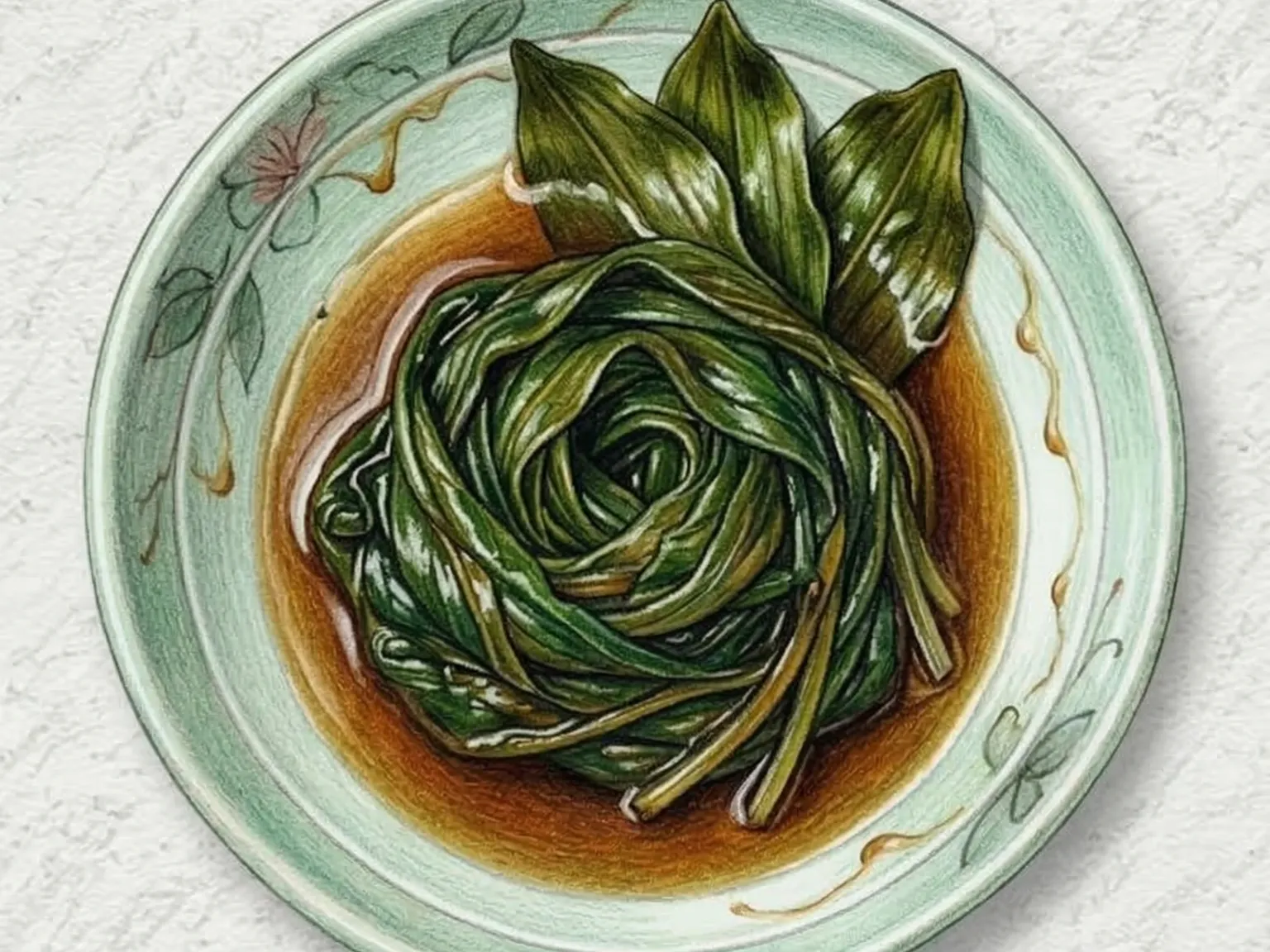
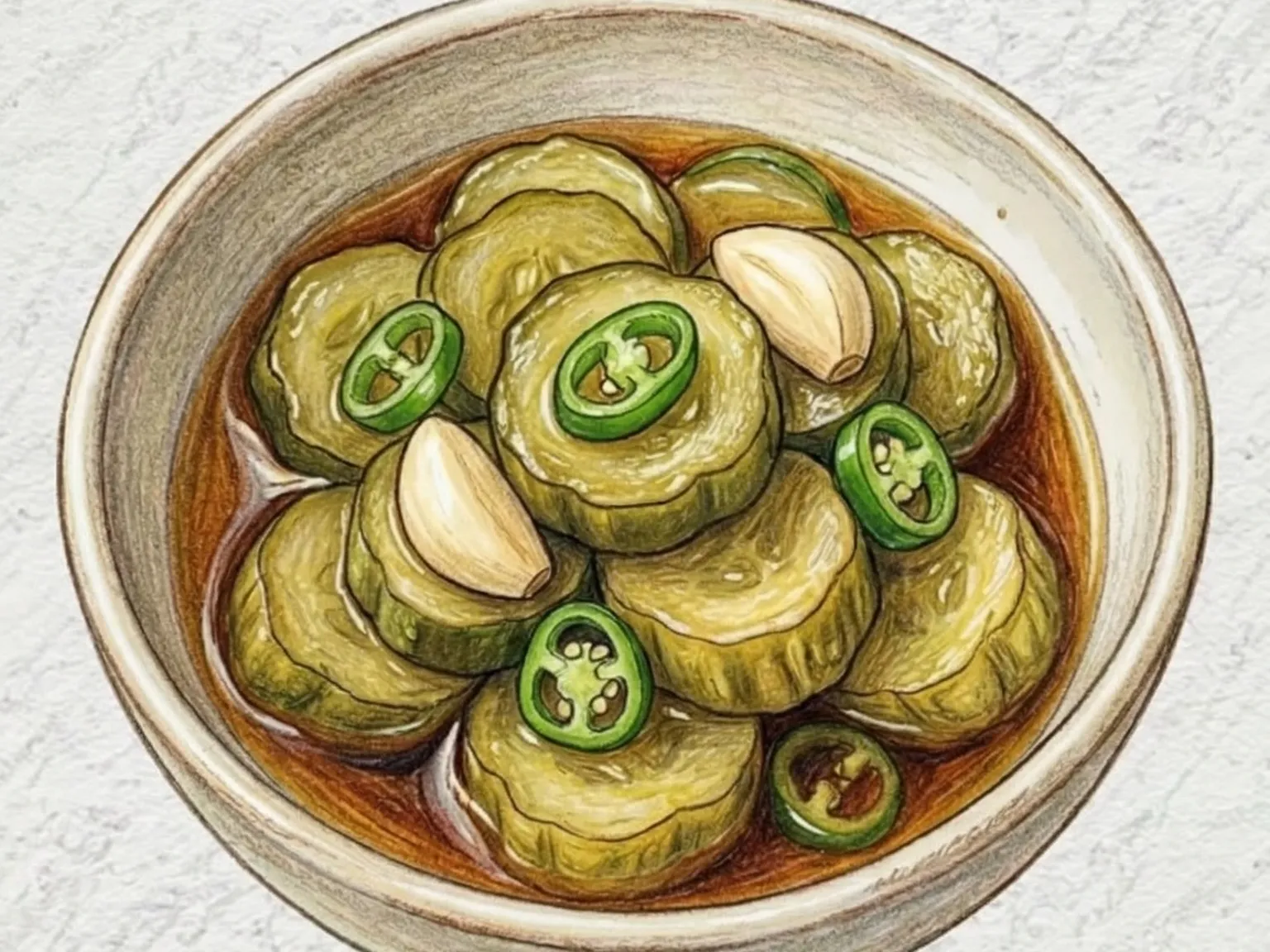
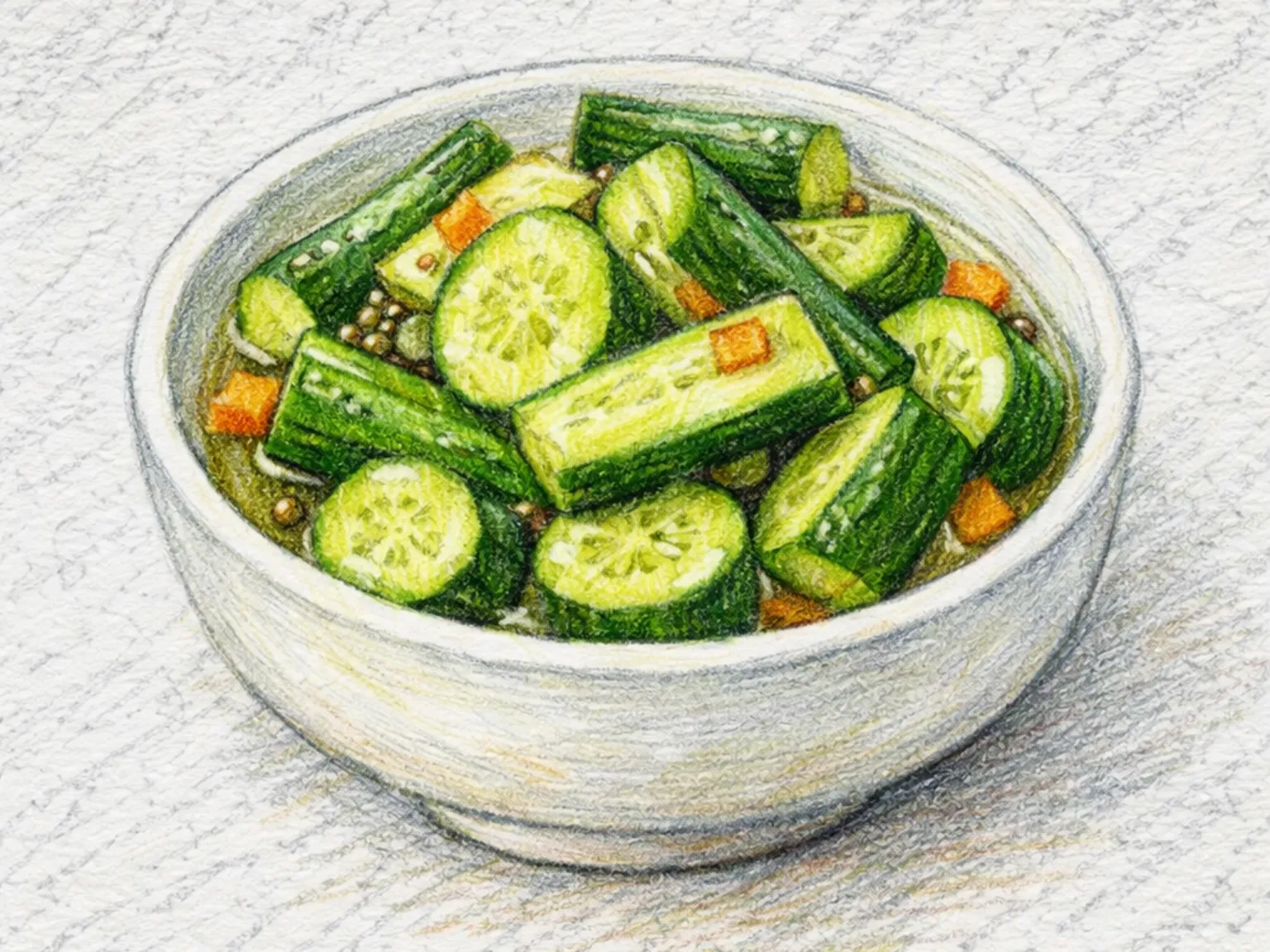
Kongnip-jangajji is soybean leaves preserved in a seasoned soy brine - one of the two major leaf jangajji traditions alongside perilla leaf (kkaennip) jangajji. Soybean leaves are larger and thicker than perilla leaves, taking longer to absorb the pickling liquid but offering a more substantial chew, with each leaf large enough to wrap around a spoonful of rice. The brine - soy sauce, water, vinegar, and sugar boiled together - must cool completely before pouring over the leaves; hot liquid softens them into a limp state, destroying the desired texture. Garlic cloves, cheongyang chili, and onion slices added to the jar infuse the brine with aromatic complexity during the curing process, producing a more layered flavor than plain soy. A minimum of two days of refrigerated aging is needed for the seasoning to reach the leaf interior, and flipping the layers once daily ensures even penetration. The most common way to eat it is draped over hot steamed rice, ssam-style.

🏠 Everyday🍱 Lunchbox
Prep 15minCook 10min4 servings
Korean Octopus Chogochujang Buckwheat Noodles
NoodlesMedium

Korean Octopus Chogochujang Buckwheat Noodles

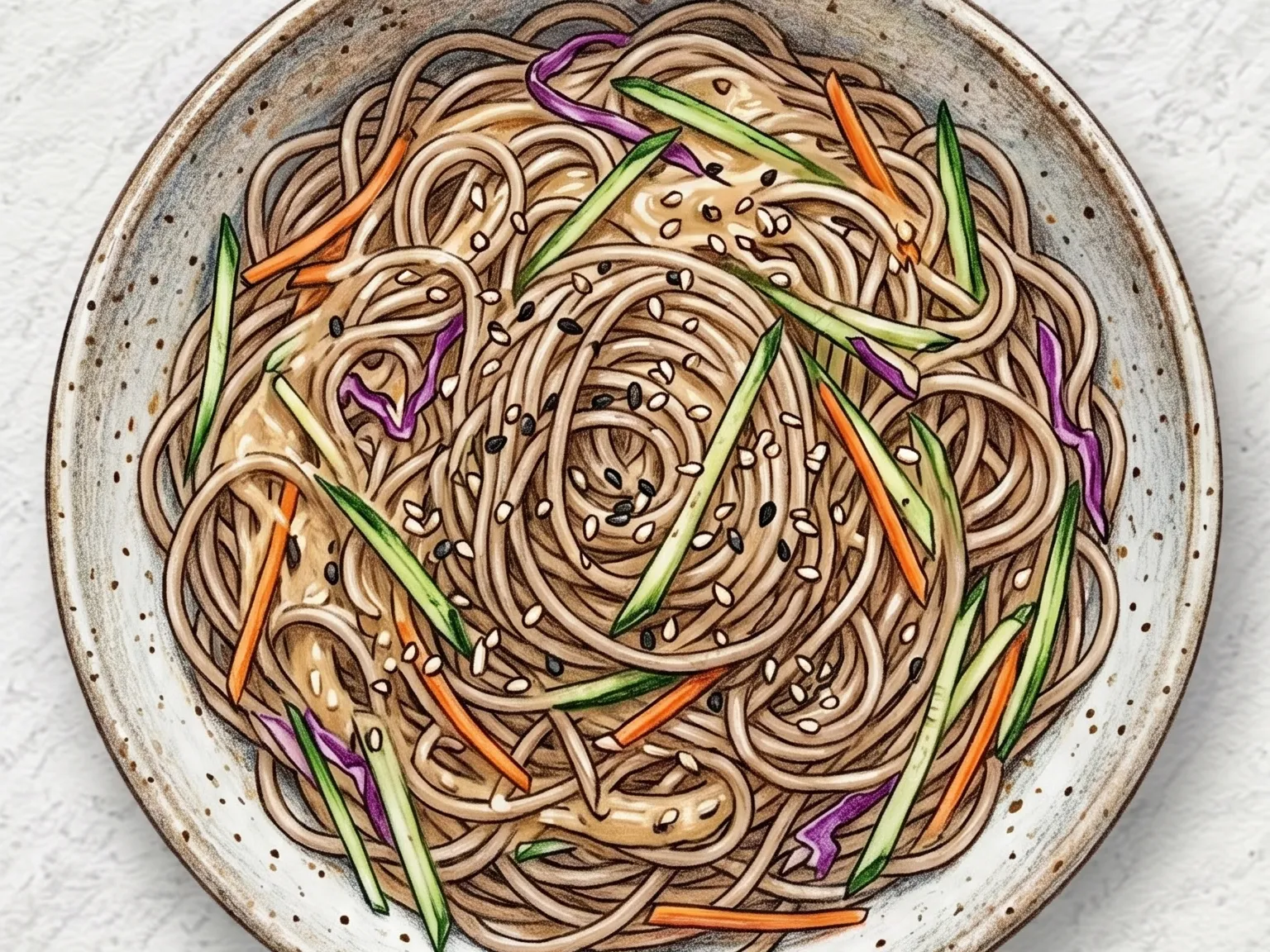
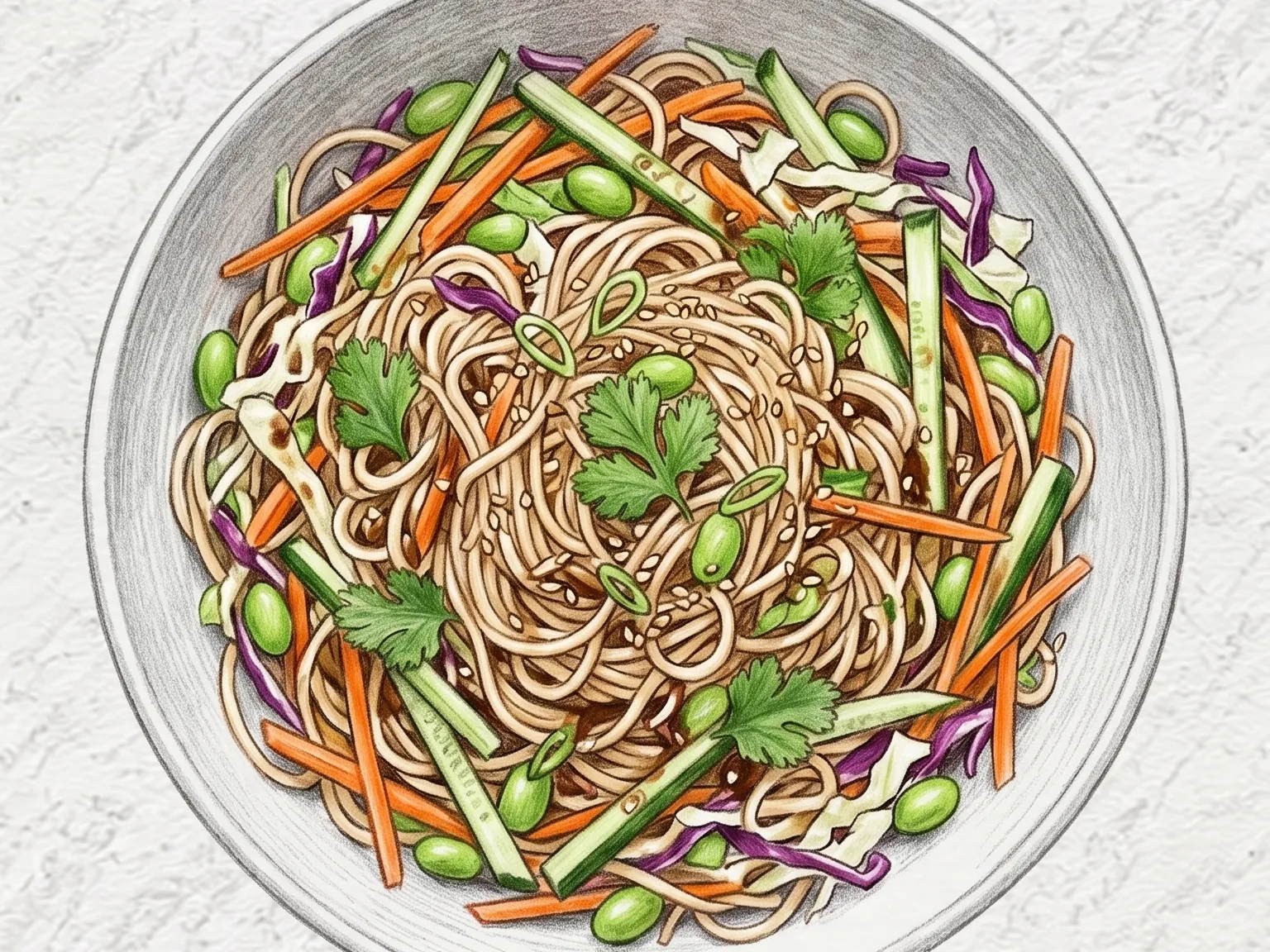
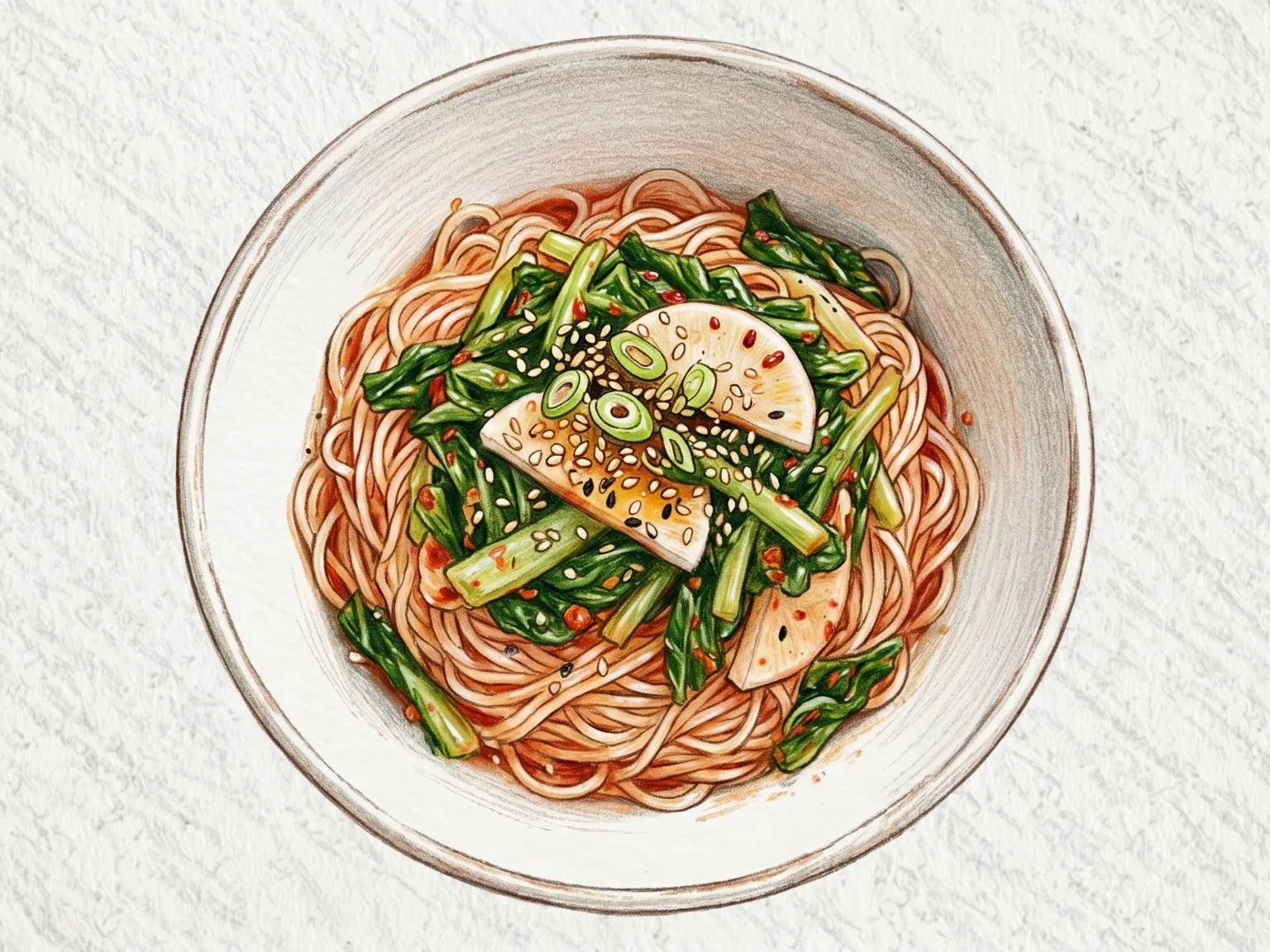
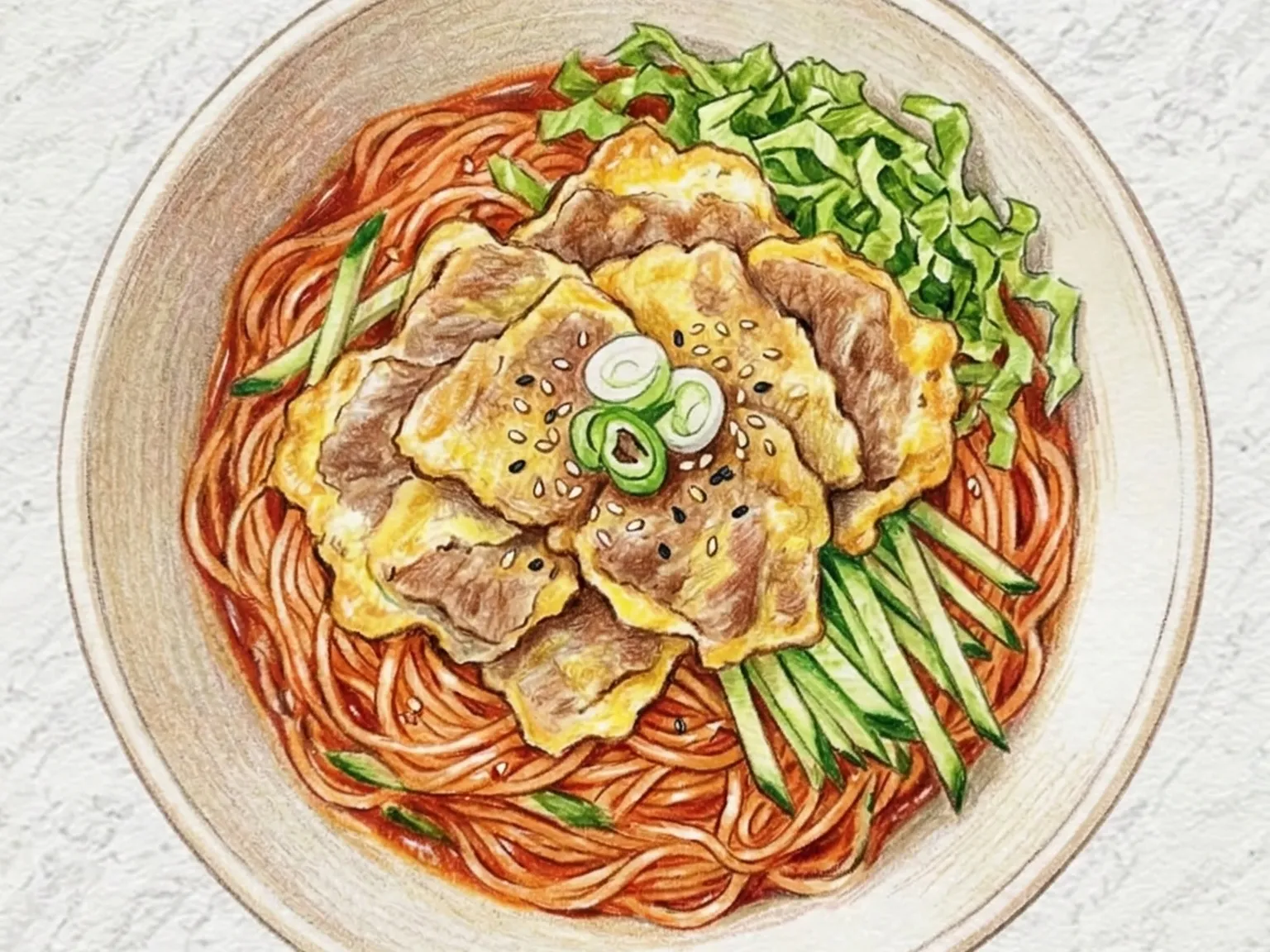
Muneo chogochujang memilmyeon is a Korean cold noodle dish featuring thinly sliced boiled octopus on chilled buckwheat noodles, dressed in chogochujang - a sauce made by combining gochujang with vinegar, sugar, garlic, and sesame oil. Patting the octopus dry after boiling helps the sauce adhere to each slice, and cooking the buckwheat noodles thirty seconds under the package time prevents them from breaking during the cold water rinse. The sweet-sour tang of the chogochujang complements the mild, clean flavor of the octopus without overpowering it. Shredded cabbage and perilla leaves contribute crunch and herbal fragrance, while a finishing sprinkle of sesame seeds adds nuttiness that ties the cold noodles and seafood together.

🍺 Bar Snacks🎉 Special Occasion
Prep 25minCook 10min2 servings
Naengi Doenjang Mushroom Salad
SaladsEasy

Naengi Doenjang Mushroom Salad

Naengi is blanched for about thirty seconds in boiling water to remove its raw grassy edge while keeping the earthy, faintly sweet spring aroma that makes it distinctive. Oyster mushrooms go onto a dry, well-heated pan with no oil, pressed gently as they cook, so the moisture evaporates and the surfaces caramelize to a light golden color, concentrating their savory depth. The dressing is made by dissolving doenjang in yuja marmalade, rice vinegar, and sesame oil, producing a layered flavor that is nutty and fermented at the base with a bright citrus lift. Baby greens spread across the plate as a soft, neutral bed, and halved cherry tomatoes add bursts of juice that cut through the weight of the fermented paste. A few drops of sesame oil and toasted sesame seeds add a roasted, nutty finish, and minced garlic folded into the dressing contributes a quiet warmth that ties the individual flavors together without dominating. Using freshly foraged naengi in early spring gives the salad a vivid seasonal character that dried or stored greens cannot replicate.

🥗 Light & Healthy
Prep 15minCook 10min2 servings
Korean Aged Kimchi Mackerel Bibim Noodles
NoodlesHard

Korean Aged Kimchi Mackerel Bibim Noodles

Pan-searing mackerel until golden and pairing it with stir-fried aged kimchi creates a multi-layered Korean noodle bowl. Sprinkling salt over the fish for ten minutes draws out excess moisture to minimize any fishy scent. Once the fillet is crispy and flaked, the meat integrates easily into the noodles without the hindrance of bones. Stir-frying the aged kimchi for two minutes mellows its sharp acidity while anchoring the fermented profile of the dish. The dressing uses a base of gochujang and gochugaru, balanced with plum syrup, vinegar, and sesame oil to provide spicy, sweet, and tangy elements in every bite. Adding a touch of doenjang strengthens the connection to the fermented kimchi and builds a solid base of flavor. Draining the wheat noodles completely ensures the sauce stays concentrated and clings to each strand. Sliced cucumber and roasted seaweed flakes add texture and a hint of the sea to cut through the mackerel's natural oils, while julienned perilla leaves contribute a refreshing herbal scent. Mixing hot rice into the sauce remaining at the bottom of the bowl provides a final way to finish the meal.

🎉 Special Occasion
Prep 25minCook 15min2 servings
Korean Seasoned Glasswort Salad
Side dishesEasy

Korean Seasoned Glasswort Salad

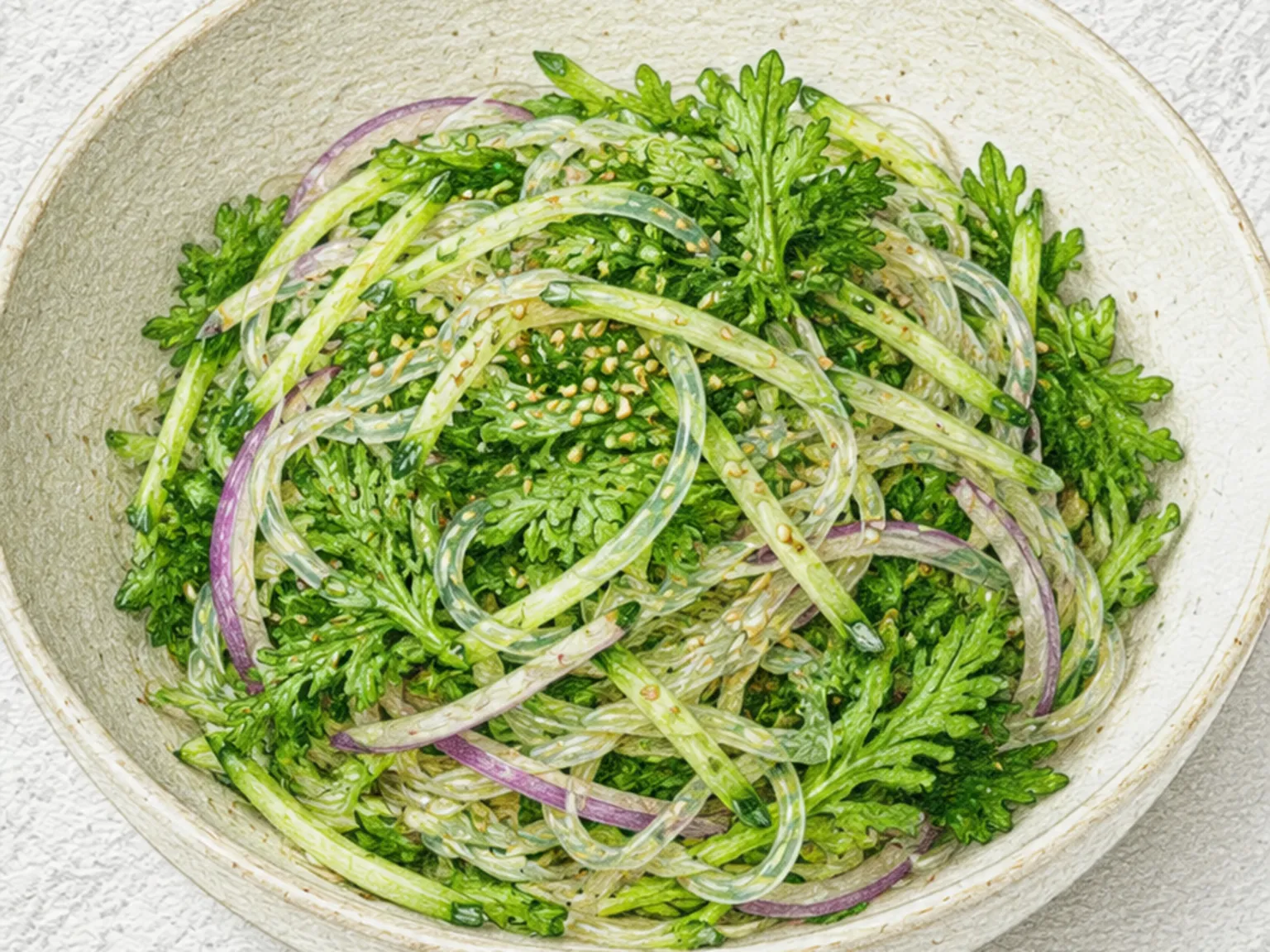
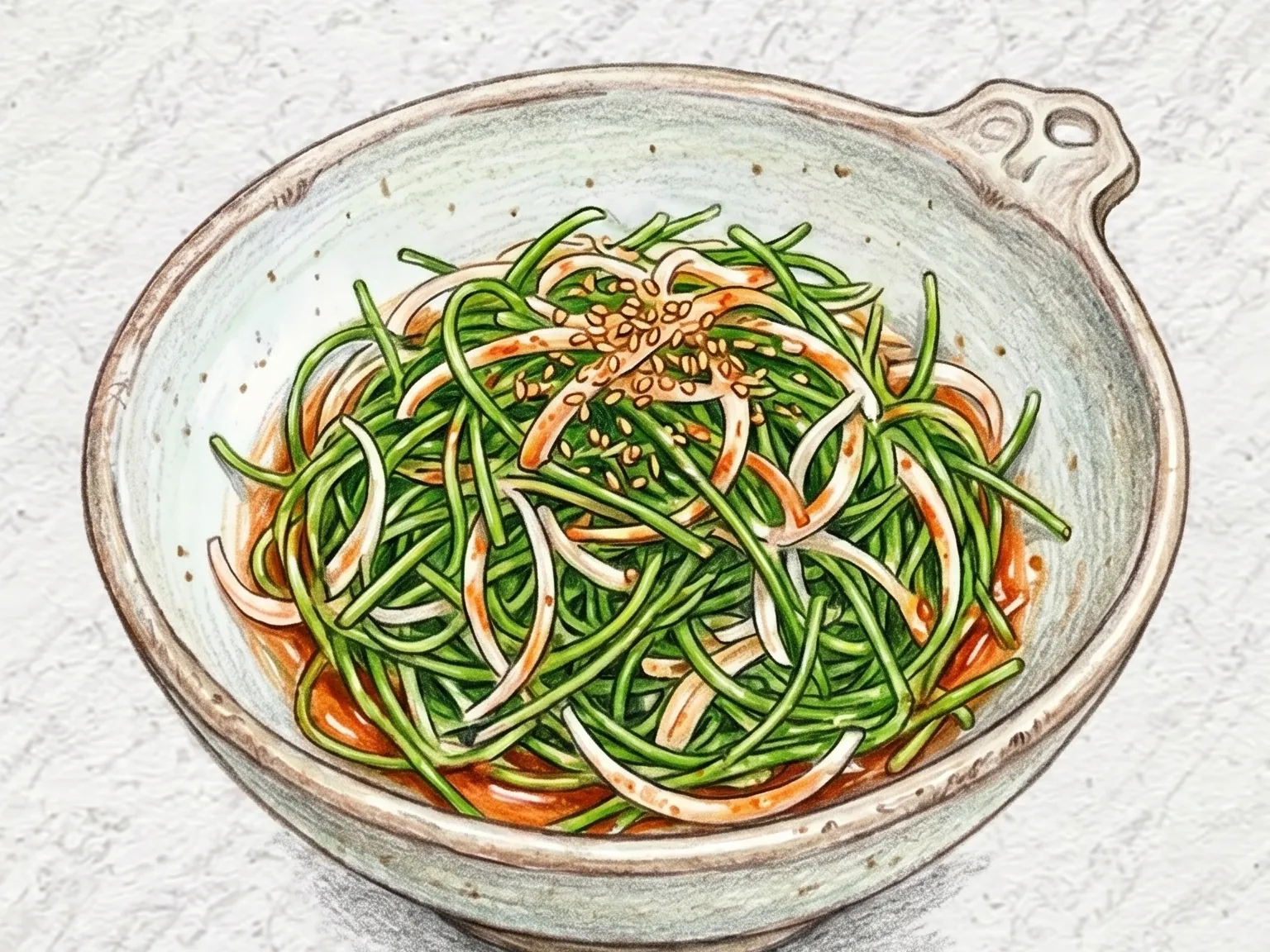
Sebalnamul-muchim features 220 grams of glasswort, a succulent coastal plant that carries a natural salinity from the tidal flats where it grows. A 10-second blanch in boiling water is enough to barely soften the thin stems while preserving their distinctive pop when bitten. The dressing of gochugaru, vinegar, plum extract, and sesame oil coats the tender shoots without masking their inherent briny flavor. Thinly sliced onion adds a sweet crunch, and the plum extract mellows the vinegar's sharpness into a rounded tartness. Because no additional salt is needed, the final seasoning relies entirely on the balance between acid, sweetness, and the glasswort's own minerality.

🥗 Light & Healthy🏠 Everyday
Prep 8minCook 1min4 servings
Korean Chive Salad with Doenjang Dressing
Side dishesEasy

Korean Chive Salad with Doenjang Dressing

Garlic chives -- buchu -- carry a sharper, more pungent bite than Western chives, and this banchan keeps them raw to preserve every bit of that intensity. Chives are cut into short segments, rinsed in cold water to crisp up the cell walls, then tossed for no more than twenty seconds in a dressing of doenjang, vinegar, and gochugaru. Going beyond that window draws out moisture from the leaves, leaving the whole dish limp and waterlogged before it even reaches the table. The fermented paste locks onto the flat surface of each blade, releasing a salty, umami-heavy punch with every bite. Vinegar cuts through the richness of the doenjang with a light acidity that keeps the finish clean, and the gochugaru adds a dry, lingering heat. Best assembled minutes before serving and eaten alongside a bowl of rice.

🏠 Everyday🍱 Lunchbox
Prep 8minCook 2min2 servings
Danggam Jogae Naengchae Salad (Persimmon Clam Chilled Salad)
SaladsMedium

Danggam Jogae Naengchae Salad (Persimmon Clam Chilled Salad)

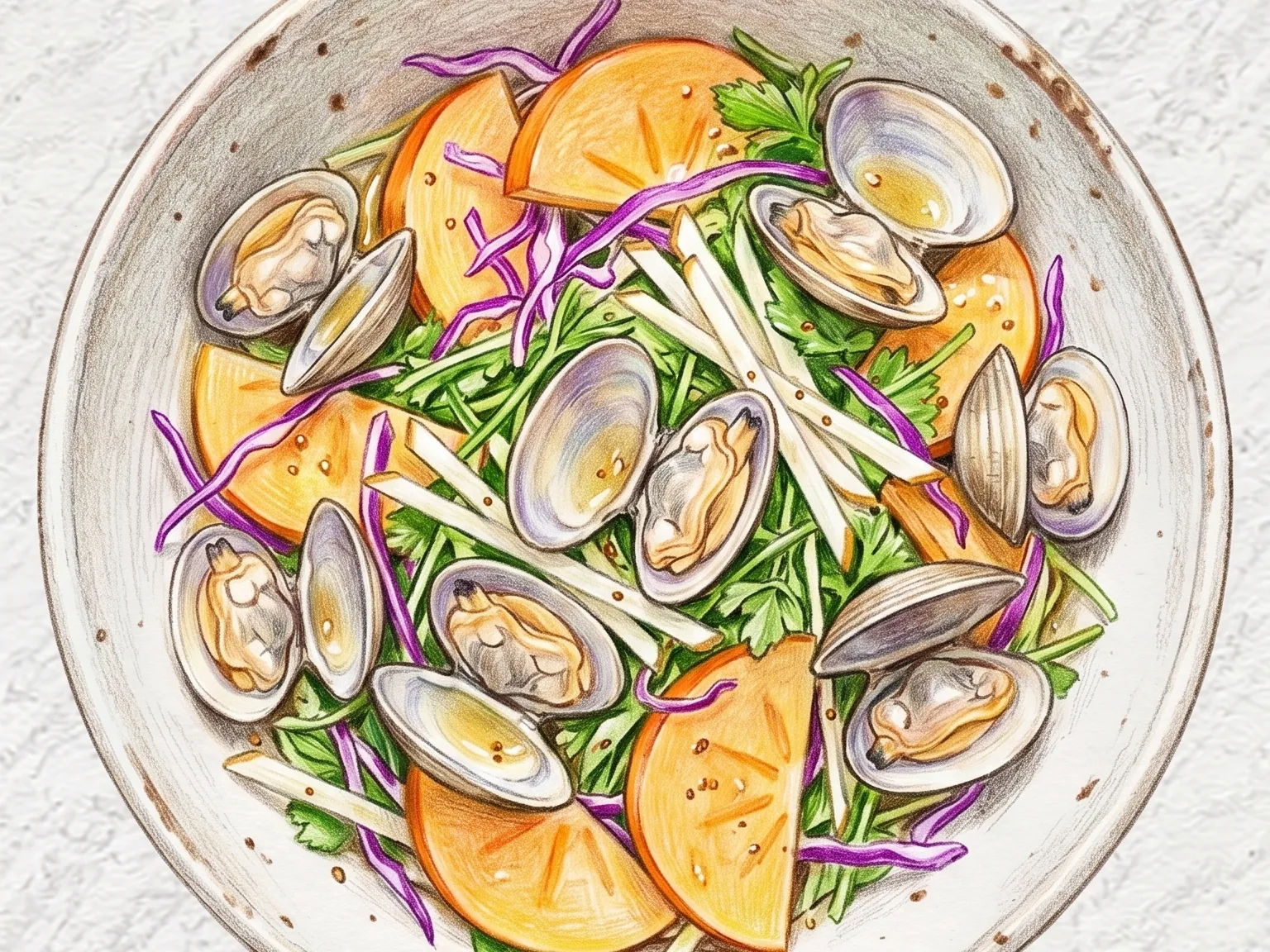
Persimmon jogae naengchae salad blanches clam meat just long enough to bring out its briny ocean flavor, then layers it with thinly sliced sweet persimmon whose honeyed taste creates an unexpected counterpoint to the shellfish. Minari, Korean water parsley, contributes a grassy bitterness that holds the sweet and salty elements in balance, while shredded red cabbage adds firm crunch and a vivid purple color that keeps the dish visually striking. Julienned Korean pear releases generous juice as it sits with the other ingredients, acting as a natural dressing that coats everything without the need for added oil. A final seasoning of vinegar and hot mustard paste brings sharp acidity and a piercing nasal heat that complete the clean, bracing aftertaste that defines a well-made Korean chilled salad. The layered interplay of color, fragrance, and texture makes this a fitting seasonal starter for a formal spread. Surf clams or pollock fillet can replace the manila clams without any change to the method.

🥗 Light & Healthy
Prep 20minCook 6min4 servings
Korean Tofu Yuja Salad (Pan-Fried Tofu Citrus Dressing)
Side dishesEasy

Korean Tofu Yuja Salad (Pan-Fried Tofu Citrus Dressing)

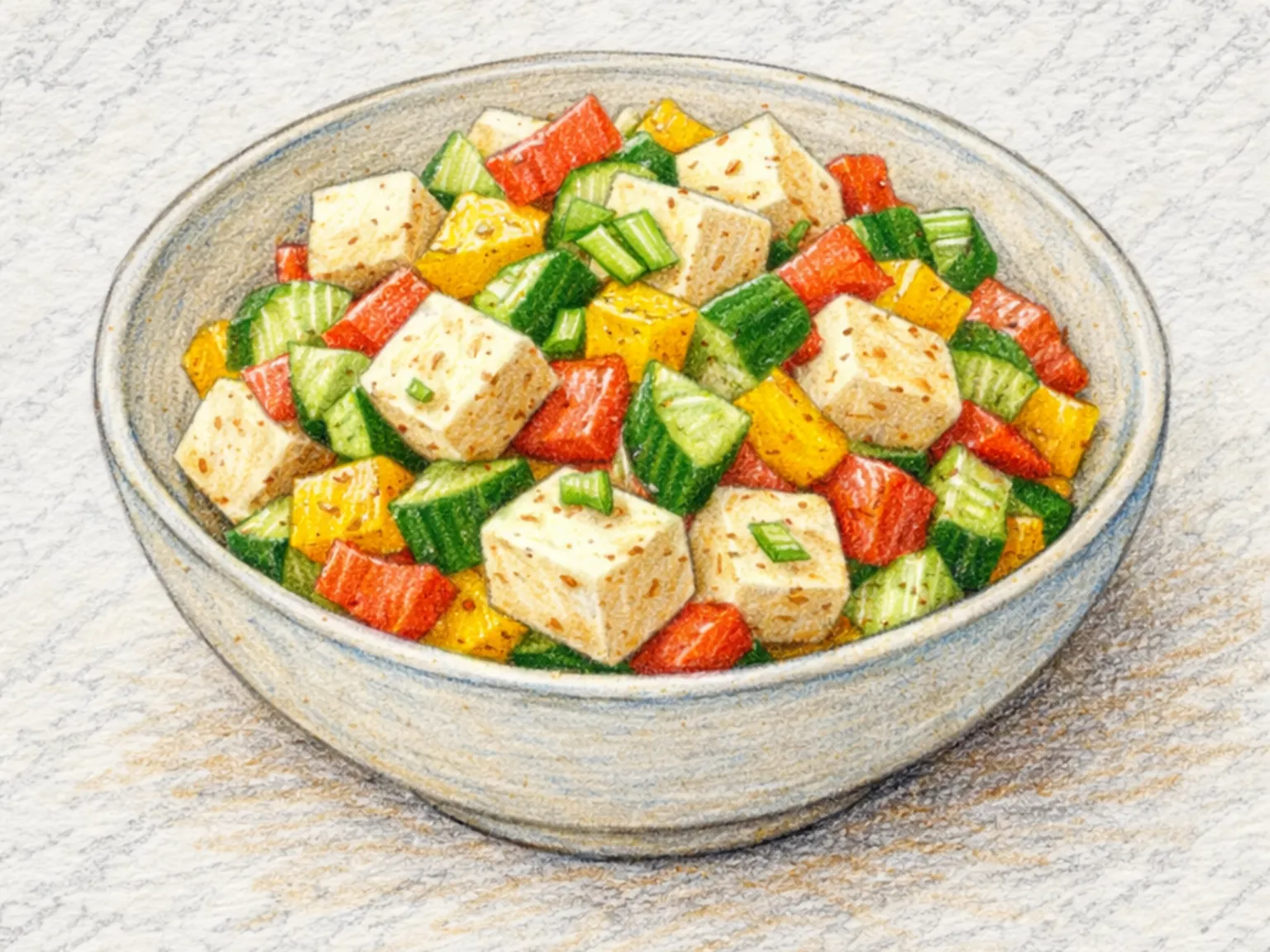
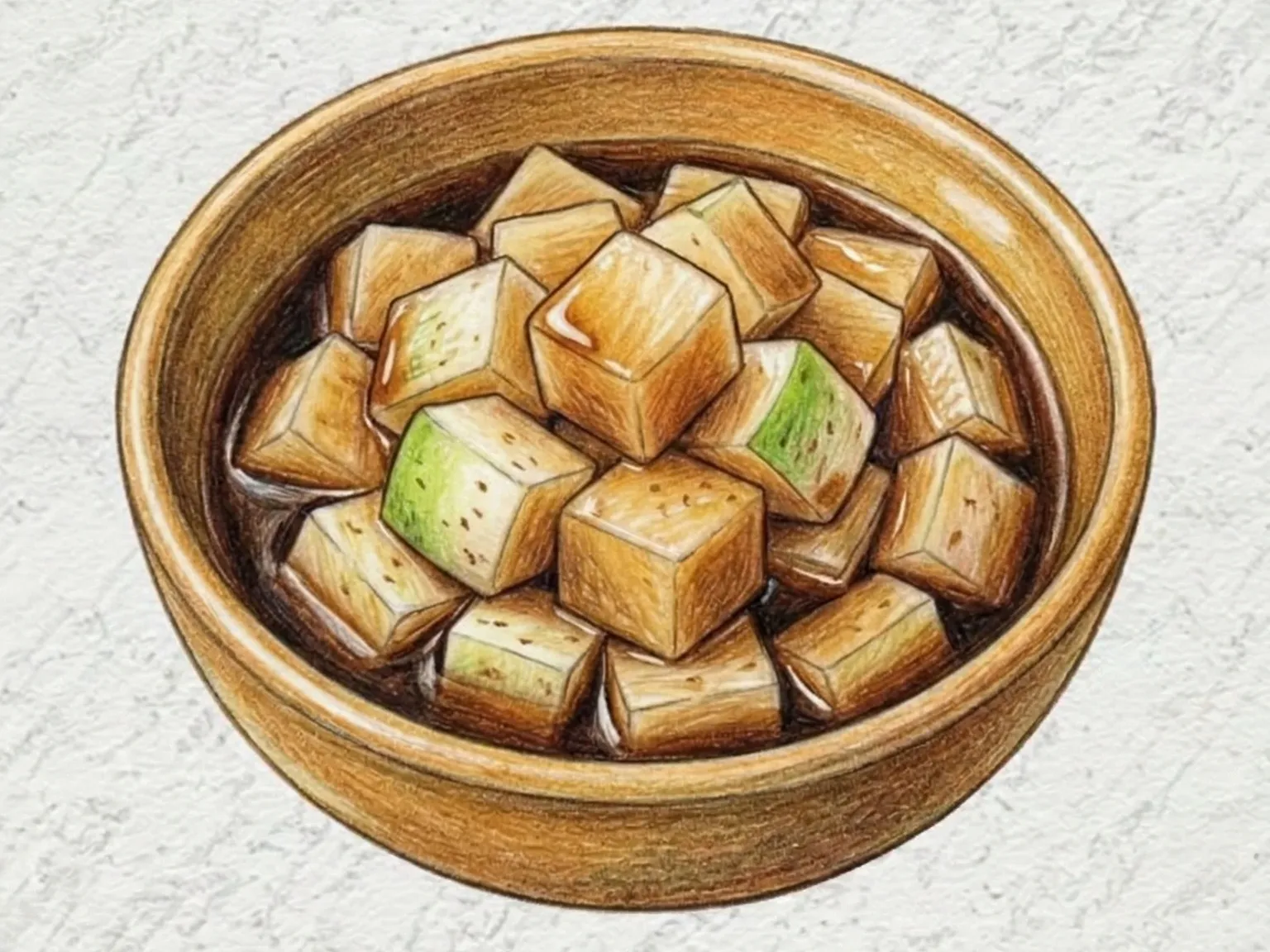
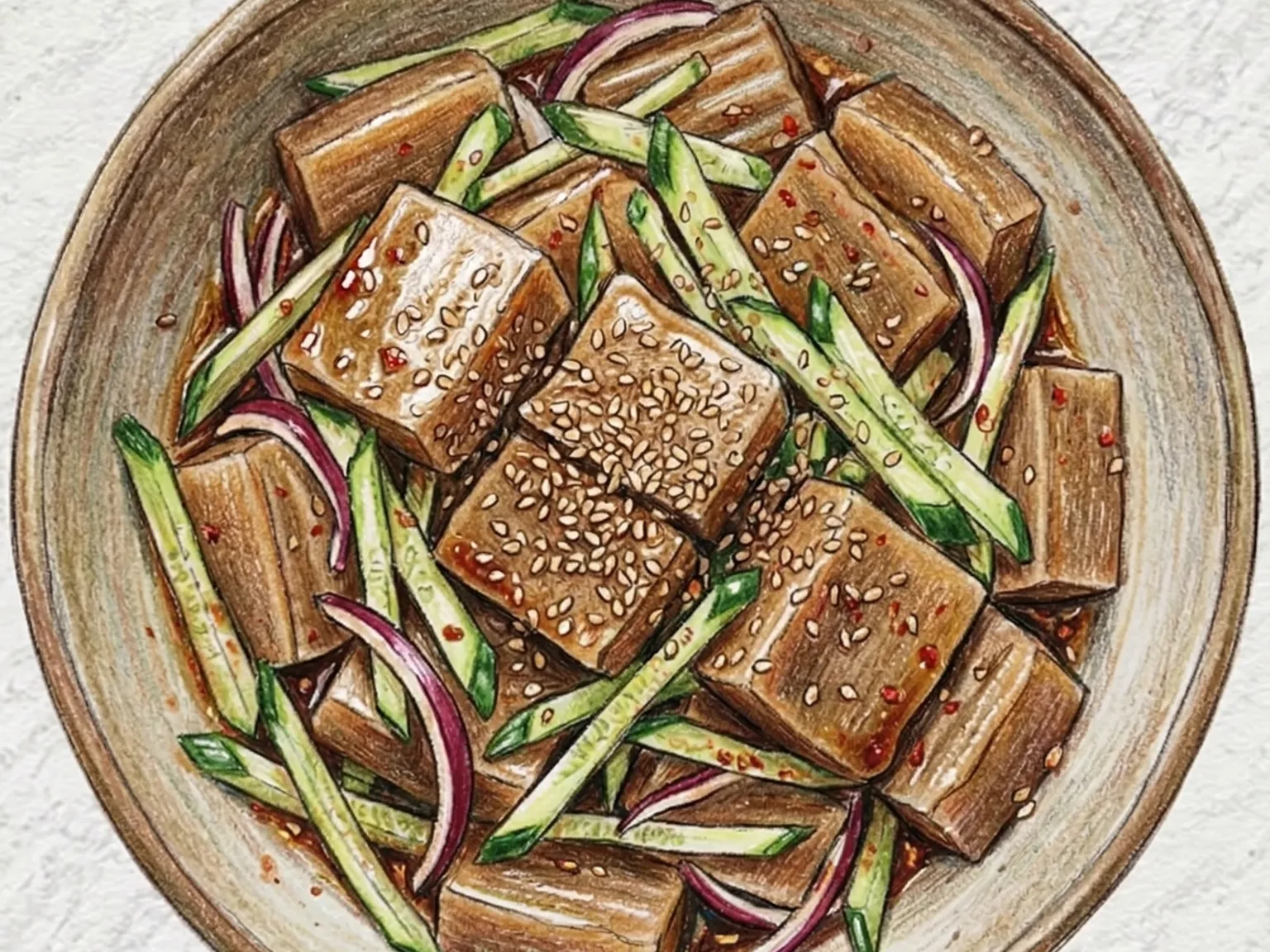
Dubu yuja muchim brings an uncommon citrus dimension to Korean tofu banchan by using yuja-cheong - a preserve of yuzu-like Korean citrus rind in honey or sugar. Soft tofu is blanched briefly to warm through and firm up slightly, then cut into bite-sized pieces and dressed while still warm so the pores open to absorb the vinaigrette. The dressing blends yuja-cheong with soy sauce, vinegar, and sesame oil - the citrus peel's fragrant bitterness cutting through the tofu's blandness in a way that soy sauce alone cannot achieve. Yuja has been cultivated on Korea's southern coast - especially Goheung and Namhae - since the Joseon era. The dish sits in a category between Korean and Western salad sensibilities, light enough to serve as a starter. Best eaten cold or at room temperature within a few hours of assembly, as the tofu's texture begins to soften with prolonged marination. The transparent sweetness of the yuja-cheong combined with the sharp edge of vinegar transforms tofu into something with an entirely different flavor register.

🏠 Everyday🍱 Lunchbox
Prep 12minCook 5min2 servings