Bruschetta
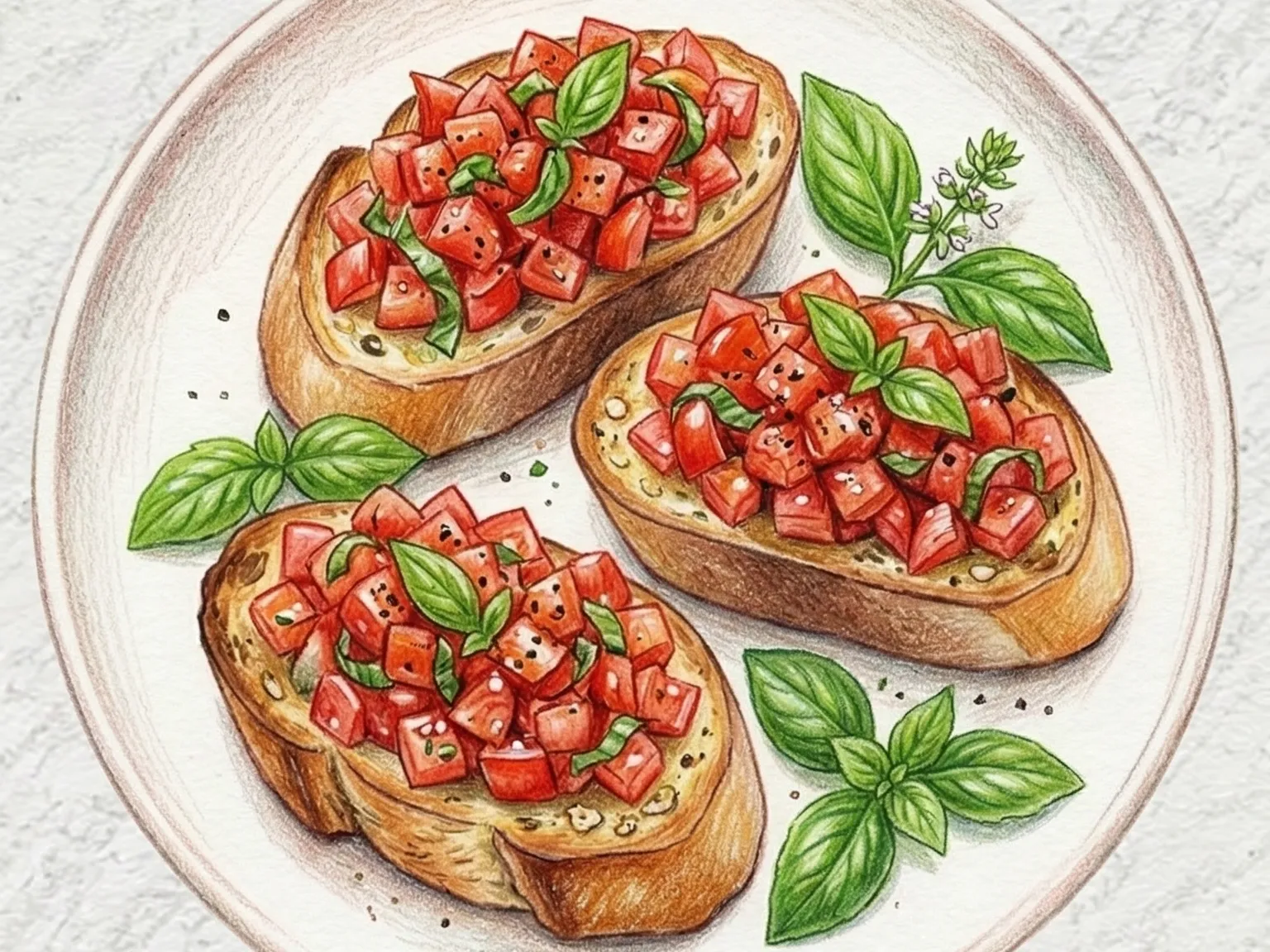
Bruschetta is an Italian appetizer where baguette slices cut 1.5 cm thick are brushed with olive oil, toasted until crisp in the oven or on a grill, then rubbed with a cut garlic clove to embed its aroma into the warm surface. The topping - diced tomatoes with seeds removed, mixed with olive oil, salt, balsamic vinegar, and torn basil - benefits from fifteen minutes of marinating, which draws out excess moisture and concentrates the flavor. The contrast between the hot, crunchy bread and the cool, bright tomato mixture is the defining experience of the dish. Basil provides a fresh herbal finish, and the topping must go on immediately before serving - left sitting, the bread absorbs the juices and turns soggy.
Adjust Servings
Instructions
- 1
Slice baguette and toast until golden in a pan or oven.
- 2
Dice tomatoes and chiffonade the basil.
- 3
Mix tomatoes, basil, 2 tbsp olive oil, and salt in a bowl.
- 4
Rub cut garlic over warm toasted bread.
- 5
Top each toast with tomato mixture and finish with a little more olive oil.
As an Amazon Associate, we may earn from qualifying purchases.
Tips
Nutrition (per serving)
More Recipes

Tomato Basil Soup
Tomato basil soup sautés onion and garlic in olive oil, adds canned whole tomatoes crushed by hand, simmers with vegetable stock for 15 minutes, then blends until smooth and finishes with cream and fresh basil. Crushing and cooking the tomatoes for the first five minutes before adding stock concentrates their natural sugars and reduces raw acidity, building a sweeter, deeper base. The 15-minute simmer lets the flavors merge without overcooking, and blending produces a velvety texture that cream enhances without masking the tomato. Basil is heat-sensitive - its volatile oils dissipate within minutes of cooking - so it goes in only after the heat is off, releasing its fragrance through residual warmth alone. A tablespoon of tomato paste can be stirred in during the sauté stage for a more intense tomato flavor if desired.

Stuffed Mushrooms
Stuffed mushrooms remove the stems from large mushroom caps, chop and sauté them with garlic, then mix the cooked stems with cream cheese, breadcrumbs, Parmesan, and parsley to create a savory filling that goes back into the caps before baking. Wiping the mushrooms with a paper towel rather than rinsing them is important - mushrooms act like sponges, and absorbed water releases during baking, preventing the caps from crisping. Using the chopped stems in the filling doubles the mushroom flavor and means nothing is wasted. The breadcrumbs serve a structural role, absorbing excess moisture from the cream cheese so the filling holds its shape rather than melting into a puddle. At 190 degrees Celsius for 18 to 20 minutes, the filling turns golden on top while the cream cheese inside becomes molten and savory.

Pesto Genovese Pasta
Pesto Genovese pasta originates from Genoa in the Ligurian coast of Italy, where fresh basil leaves are ground with pine nuts, garlic, Parmesan cheese, and extra virgin olive oil to create an uncooked sauce. Basil oxidizes and darkens quickly when exposed to heat, so the pesto must be prepared either in a mortar and pestle or pulsed briefly in a food processor to avoid raising the temperature. Toasting the pine nuts in a dry pan before grinding intensifies their nutty flavor, and the olive oil must be extra virgin to contribute the grassy, fruity notes that complement the basil. When tossing the pesto with hot pasta, a splash of starchy pasta water emulsifies the sauce and helps it coat every strand evenly. The sauce should be warmed only by the residual heat of the pasta - direct heat would dull the vivid green color and diminish the fresh herbal aroma.

Spaghetti Aglio e Olio (Garlic and Olive Oil Pasta)
Spaghetti aglio e olio is among the oldest recipes in the Italian pasta canon, documented in cookbooks as early as the 19th century. The dish is a study in restraint - five core ingredients, no sauce in the traditional sense, and a total cooking time under twenty minutes. Extra virgin olive oil heated gently with sliced garlic and dried chili flakes becomes the medium that carries flavor to every strand of pasta. The critical step is adding starchy pasta water to the pan and tossing aggressively over high heat, which emulsifies the oil and water into a glossy, clinging coat. Parmesan - not strictly traditional but widely adopted - adds a salty, crystalline crunch when shaved on top. The finished plate should look barely dressed, each strand glistening with oil rather than drowning in sauce. It is the dish that separates cooks who understand heat control from those who do not.

Pasta alla Norma (Sicilian Fried Eggplant Tomato Pasta)
Pasta alla Norma originates from Catania in Sicily and combines fried eggplant cubes with a simple tomato passata sauce. Salting the eggplant beforehand draws out moisture and bitterness, resulting in firmer pieces that absorb less oil during cooking. Garlic provides aromatic depth, while fresh basil added off-heat preserves its fragrance. The dish is named after Vincenzo Bellini's opera Norma, a tribute to its status as a Sicilian culinary masterpiece.

Caprese Salad
Caprese salad arranges ripe tomato, fresh mozzarella, and basil leaves in alternating slices, relying on just three main ingredients dressed with extra virgin olive oil and salt. Because the recipe involves no cooking, the tomato's ripeness and the mozzarella's milky freshness determine the entire flavor profile. A thin drizzle of balsamic glaze adds concentrated grape-vinegar sweetness that contrasts with the cheese's fat, while basil's volatile aromatics release directly on the plate. Dressing the salad right before serving minimizes the moisture that tomatoes release when salted in advance.