Caprese Salad

Caprese Salad

Quick answer

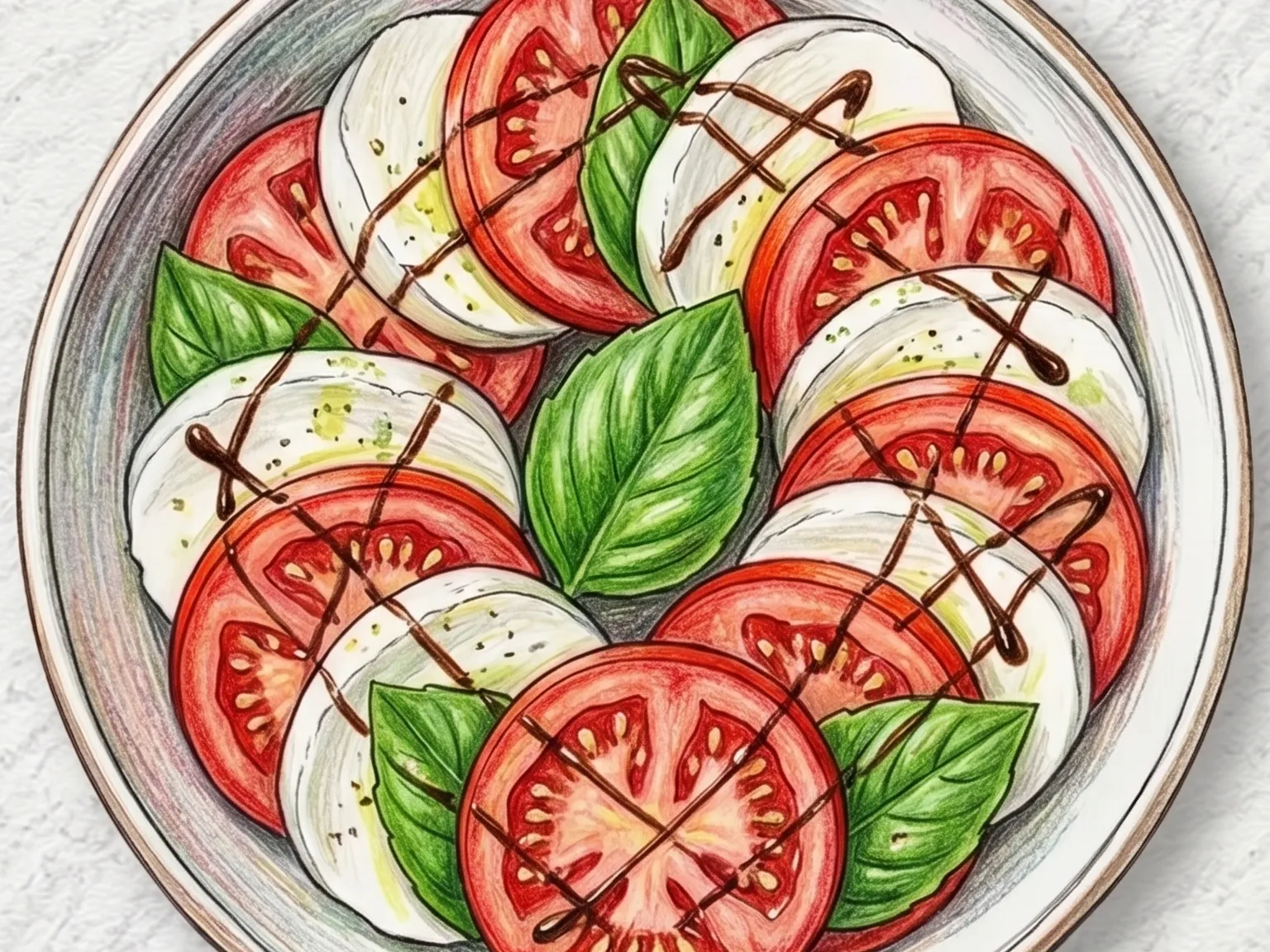
Caprese salad alternates slices of ripe tomato, fresh mozzarella, and basil leaves of equal thickness, dressing them with nothing more than extra virgin olive oil and salt.

What makes this special

  • Fresh mozzarella and ripe tomato rely on high-quality olive oil to highlight their clean, milky fats.
  • Only three ingredients; tomato sweetness and mozzarella milk-fat decide everything
  • Balsamic glaze's concentrated grape acidity contrasts the milky richness
Total time
10 min
Level
Easy
Servings
2 servings
Ingredients
6
Calories
340 kcal
Protein
15 g

Key ingredients

tomatoesfresh mozzarellafresh basilextra virgin olive oilbalsamic glaze

Core cooking flow

  1. 1 Prepare 250 g tomatoes by removing the stems and lightly drying the surface.
  2. 2 Slice the tomatoes and 180 g fresh mozzarella into 0.8 to 1 cm rounds.
  3. 3 Arrange tomato, mozzarella, and 20 g fresh basil alternately on a wide plate...

Caprese salad alternates slices of ripe tomato, fresh mozzarella, and basil leaves of equal thickness, dressing them with nothing more than extra virgin olive oil and salt. The recipe excludes cooking entirely, so the tomato's ripeness and the mozzarella's fresh, milky quality carry the entire flavor of the dish - substituting underripe tomatoes or low-moisture mozzarella changes the result significantly. A thin drizzle of balsamic glaze over the top introduces a concentrated grape-vinegar sweetness that contrasts directly with the cheese's fat, while basil's volatile aromatic compounds release on contact with the oil rather than surviving any heat. Dressing the salad at the last possible moment prevents the salt from drawing moisture out of the tomatoes ahead of time, which dilutes the oil on the plate. The dish originates from the island of Capri and is recognized by the green, white, and red color arrangement that mirrors the Italian flag.

Prep 10min 0 2 servings
Recipes by ingredient → tomato

Instructions

Read the steps as a cooking flow: prep, heat, seasoning, doneness control, and finish.

6 steps
  1. 1
    Prep

    Prepare 250 g tomatoes by removing the stems and lightly drying the surface.

    Even ripe tomatoes can collapse if handled roughly, so support each one as you move and slice it.

  2. 2
    Prep

    Slice the tomatoes and 180 g fresh mozzarella into 0.8 to 1 cm rounds.

    Keep the thickness consistent so the layers sit evenly, and cut the cheese slowly to avoid squeezing it out of shape.

  3. 3
    Finish

    Arrange tomato, mozzarella, and 20 g fresh basil alternately on a wide plate, overlapping them on a slight angle.

    Leave enough of each color visible so the green, white, and red pattern stays clear.

  4. 4
    Season

    Just before serving, sprinkle 0.5 tsp salt evenly over the tomatoes and cheese.

    Do not salt early, because the tomatoes will release more liquid and the dressing will taste diluted.

  5. 5
    Finish

    Drizzle 2 tbsp extra virgin olive oil in a thin zigzag over the arranged salad.

    Let it stand for 1 to 2 minutes so the basil aroma meets the oil without making the plate watery.

  6. 6
    Finish

    Finish with 1 tbsp balsamic glaze in the thinnest thread possible.

    Avoid pooling it in one spot because the sweet acidity can dominate, then serve immediately while the tomato slices still look fresh.

After the steps

Pick a recipe that fits this dish.

Continue with shared ingredients, meal pairings, or a similar method.

Recipes That Go Well With This

More Salads →

Based on shared ingredients and meal pairing

Grilled Peach Burrata Basil Salad
Shared ingredient: basil Salads

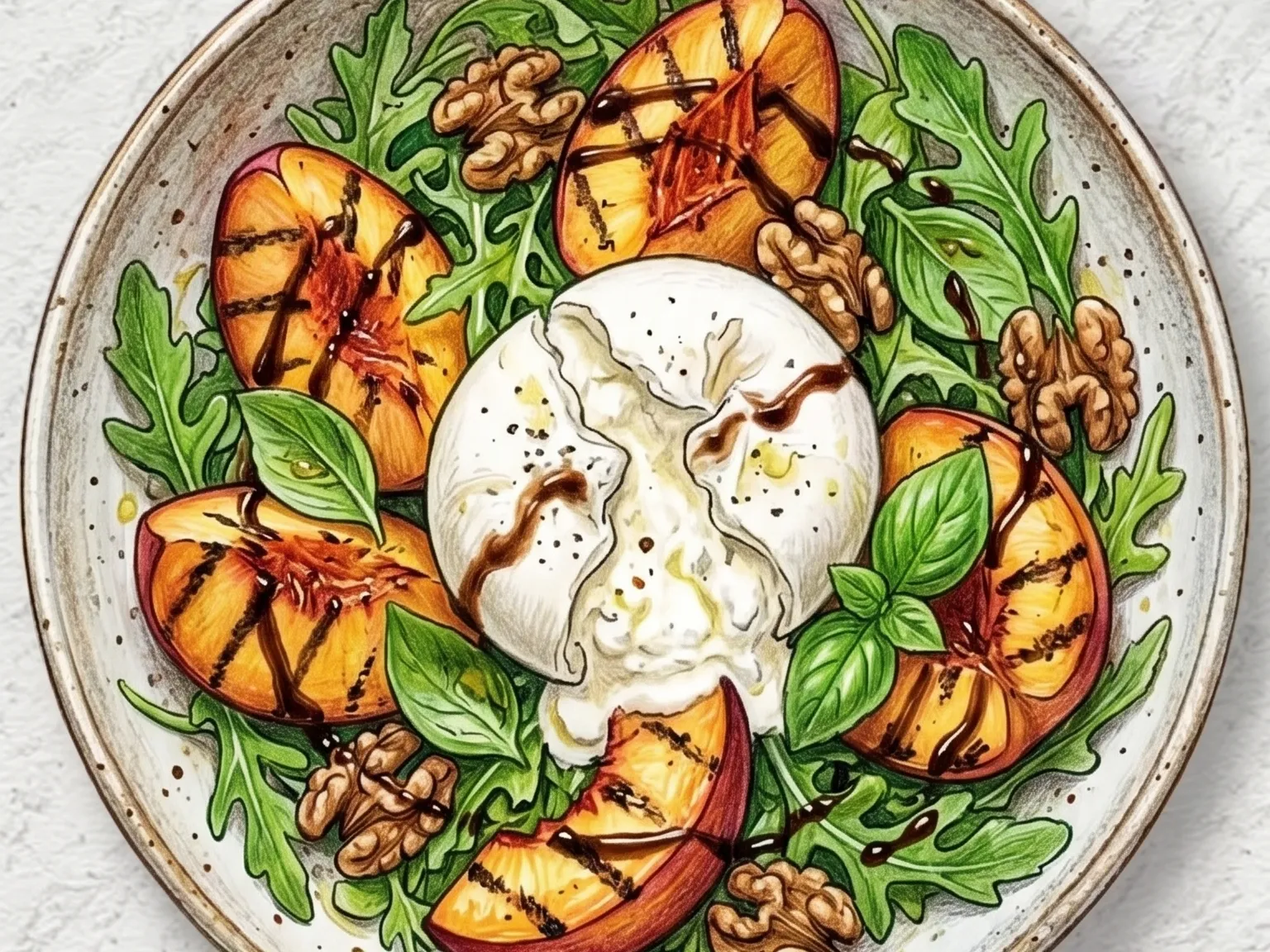
Grilled Peach Burrata Basil Salad

The peaches are sliced into wedges and brushed with a thin layer of olive oil before they are placed into a grill pan. Each side requires between one and two minutes of contact with the heat to develop a charred surface. This method draws out a caramelized sweetness and a subtle smoky quality that is not present in raw fruit. The application of direct heat to the cut surfaces of the peaches concentrates their natural sugars, which results in a deeper flavor profile and a savory quality that supports the other ingredients. Preparation of the burrata involves removing it from the refrigerator ten minutes prior to assembly. This pause allows the cheese to lose its chill so that the creamy interior can soften. When the cheese is eventually torn apart and placed over the peaches, the center should be loose enough to flow freely, which ensures the full milky richness is distributed throughout the salad. The assembly includes a base of warm grilled peaches topped with the torn burrata, fresh arugula, and basil leaves. Arugula is chosen for its peppery bitterness, which provides a functional balance to the sweet peaches and the heavy cream of the cheese, preventing the dish from becoming one-dimensional. Lightly toasted walnuts are added to provide a specific textural contrast and a roasted nuttiness that complements the softer components. Finally, a thick balsamic glaze with a sweet and tart profile is drizzled over the top to bring the different elements together into a single cohesive dish. This salad is best prepared during the summer when peaches are at their peak ripeness and sweetness.

Panzanella Salad (Italian Ciabatta Bread Salad)
Shared ingredient: tomato Salads

Panzanella Salad (Italian Ciabatta Bread Salad)

Stale ciabatta is torn into rough chunks, drizzled with olive oil, and toasted in the oven until the exterior is crisp while the interior remains slightly chewy. Ripe tomatoes are cut into large pieces and salted briefly to draw out their juice, and that released liquid soaks into the bread and becomes the sweet-tart flavor that defines the dish. Cucumber and red onion add crunch and pungency, while torn basil leaves release their fragrance across the plate. A vinaigrette of red wine vinegar and good olive oil binds everything together. The salad reaches its best point after resting fifteen to twenty minutes, once the bread has absorbed enough dressing and tomato juice to soften slightly without going completely soggy, a balance that is the defining characteristic of a well-made panzanella. Using genuinely stale bread matters here: fresh bread soaks through too quickly and disintegrates, while properly dried ciabatta holds its structure and provides a textural contrast with the juicy tomatoes and crisp vegetables. Panzanella originated as a practical summer dish in Tuscany, where leftover bread was too valuable to discard, and it remains most rewarding when made with ripe summer tomatoes at the peak of the season.

Spaghetti Aglio e Olio (Garlic and Olive Oil Pasta)
Serve together Western

Spaghetti Aglio e Olio (Garlic and Olive Oil Pasta)

Spaghetti aglio e olio appears in Italian cookbooks as far back as the 19th century, making it one of the oldest documented pasta preparations in the canon. The restraint is the point: five ingredients, no sauce made separately, and the whole dish done in under twenty minutes. Thinly sliced garlic goes into extra virgin olive oil over low heat, slowly transferring its flavor into the fat - the temperature must stay low enough that the garlic turns golden but never brown, since browning brings bitterness. Dried chili flakes follow, infusing a second layer of heat into the oil. The technical turning point is adding starchy pasta water and tossing the pan hard over high heat: the starch links the oil and water into an emulsion that clings to every strand rather than pooling at the bottom. Skip this step and the dish separates on the plate. Parmigiano is not traditional but has become near-universal; shaved over the top, it adds a salty, crystalline crunch. The finished pasta should look barely coated, each strand glistening rather than swimming in sauce. Getting that result consistently is what separates people who understand the dish from people who have simply followed the ingredient list.

Antipasto Salad
Similar recipe Salads

Antipasto Salad

Antipasto - literally 'before the meal' in Italian - is a first course of cured meats, cheeses, olives, and preserved vegetables, and this salad compresses that entire tradition into a single composed bowl. Crisp romaine or iceberg forms the base, layered with sliced salami, capicola, provolone, marinated artichoke hearts, roasted red peppers, and briny Kalamata olives. A red wine vinegar dressing built with dried oregano and minced garlic draws the components together with a sharp, herbal acidity that cuts through the fat of the cured meats. The salami is rolled into loose cylinders and the provolone cut into thick chunks so both hold their presence against the dressed greens rather than disappearing into the mix. The reason the salad works is the contrast in salt levels and textures: heavily cured meat against mild cheese, smoky-sweet pepper against bitter greens, silky olive against crunchy romaine - no two bites taste the same. Italian-American delis in New York and New Jersey popularized this format in the mid-twentieth century, and it has since become a reliable fixture of catered lunches, potlucks, and family gatherings across the United States.

Serve with this

Yuja Burrata Cherry Tomato Spaghetti
Pasta Easy

Yuja Burrata Cherry Tomato Spaghetti

Yuja burrata cherry tomato spaghetti builds its base by slowly infusing olive oil with sliced garlic over low heat, then cooking cherry tomatoes on medium until they burst and release their juices into a loose, bright sauce. Yuja marmalade and yuja juice are stirred in for only 30 seconds to preserve the citrus volatiles before they are driven off by heat. The marmalade's considerable sweetness is balanced against the tomato's acidity and added gradually to taste. Tossing al dente spaghetti with a splash of reserved pasta water binds the starch into the sauce for a smooth, even coat on each strand. Burrata is torn open and placed on top just before serving so its creamy, milky interior melts across the hot pasta, producing a clear contrast between the sharp citrus and the rich dairy fat. The distinctive fragrance of yuja combined with the bright tomato sauce gives this Italian-format pasta a recognizably Korean sensibility.

🎉 Special Occasion ⚡ Quick
Prep 10min Cook 14min 2 servings
Jianbing (Chinese Savory Breakfast Crepe)
Asian Medium

Jianbing (Chinese Savory Breakfast Crepe)

Jianbing is a northern Chinese street breakfast crepe assembled on a flat griddle within minutes. A thin batter of mung bean flour and wheat flour is spread into a wide circle, then an egg is cracked directly on top and smeared across the surface while still liquid. Chopped scallion is scattered over the egg before the crepe is flipped briefly to set the other side. Sweet bean sauce and chili sauce are brushed on, followed by fresh cilantro and a crispy fried wonton sheet that provides the signature crunch. The mung bean flour gives the batter a distinctive nutty flavor and slightly crisp edge that plain wheat flour cannot replicate. The whole assembly is folded into a neat rectangle meant to be eaten by hand. Timing is critical for the wonton cracker, which should be added last to prevent sogginess, creating a layered contrast of soft crepe, runny egg, sharp sauce, and shattering crunch.

🏠 Everyday ⚡ Quick
Prep 20min Cook 15min 2 servings
Korean Pan-Fried Tofu with Soy Dipping Sauce
Grilled Easy

Korean Pan-Fried Tofu with Soy Dipping Sauce

Firm tofu is sliced 1.5 cm thick, patted thoroughly dry with paper towels, and lightly salted before going into an oiled pan for four to five minutes per side. Removing surface moisture is the critical step - dry tofu does not splatter and develops an even golden crust. A dipping sauce of soy sauce, Korean chili flakes, chopped green onion, and sesame oil accompanies the fried slices, and the crisp exterior absorbs just enough sauce to add flavor while the soft interior stays mild. With minimal ingredients, this dish is entirely about the textural contrast between the crunchy shell and the silky center.

🍺 Bar Snacks ⚡ Quick
Prep 10min Cook 15min 2 servings

Similar recipes

Mushroom Spinach Warm Salad
Salads Easy

Mushroom Spinach Warm Salad

Button mushrooms are seared over high heat for a deep caramelized crust, then spinach is added just long enough to barely wilt in the residual heat of the pan. Garlic bloomed in olive oil at the start ensures the entire pan is fragrant before the other ingredients are added. Once the mushrooms go in, leaving them untouched for one to two minutes is the critical step: stirring immediately causes them to steam and release water, which prevents browning and dilutes the flavor. Balsamic vinegar deglazed in at the end lifts the pan with a balance of sweetness and acidity, and grated parmesan melts into the warm greens for a salty, nutty finish. The salad should be eaten immediately: the spinach holds its vivid green and the mushrooms retain their firm, springy bite only while everything is hot. The entire dish comes together in under ten minutes, making it a reliable choice for a quick weeknight side or a no-effort addition to a wine table.

🥗 Light & Healthy ⚡ Quick
Prep 10min Cook 10min 2 servings
Chicken Parmesan
Western Medium

Chicken Parmesan

Chicken Parmesan coats pounded chicken breast in a mixture of breadcrumbs and grated Parmesan, pan-fries it until golden on both sides, then tops it with tomato sauce and mozzarella before baking until the cheese melts and browns at the edges. The preparation begins by pounding the breast to a uniform thickness of no more than 1.5 centimeters - consistent thickness is what allows both sides to reach the same golden color in the pan without one side burning while the other stays underdone. After breading, the cutlet should rest for about five minutes before going into the hot pan. This brief rest allows the coating to bind to the surface of the meat, so it remains intact when sauce and cheese are layered on top and the dish goes into the oven. The cross-section of a finished piece shows the layered structure clearly: a crisp breadcrumb shell, the lean white meat beneath, the bright acidity of tomato sauce, and the pull of melted mozzarella. Ten to twelve minutes at 200 degrees Celsius is enough for the mozzarella to melt completely and develop light caramelization at its edges while leaving the chicken inside moist rather than dried out.

🎉 Special Occasion 🧒 Kid-Friendly
Prep 20min Cook 25min 2 servings
Tomato Basil Soup
Western Easy

Tomato Basil Soup

Tomato basil soup sautés onion and garlic in olive oil, adds canned whole tomatoes crushed by hand, simmers with vegetable stock for 15 minutes, then blends until smooth and finishes with cream and fresh basil. Crushing and cooking the tomatoes for the first five minutes before adding stock concentrates their natural sugars and reduces raw acidity, building a sweeter, deeper base. The 15-minute simmer lets the flavors merge without overcooking, and blending produces a velvety texture that cream enhances without masking the tomato. Basil is heat-sensitive - its volatile oils dissipate within minutes of cooking - so it goes in only after the heat is off, releasing its fragrance through residual warmth alone. A tablespoon of tomato paste can be stirred in during the sauté stage for a more intense tomato flavor if desired.

🏠 Everyday 🧒 Kid-Friendly
Prep 10min Cook 30min 4 servings

Tips

Use ripe tomatoes for better sweetness.
Dress right before serving to avoid excess moisture.

Nutrition (per serving)

Calories
340
kcal
Protein
15
g
Carbs
9
g
Fat
27
g