Tomato Basil Juice
Quick answer
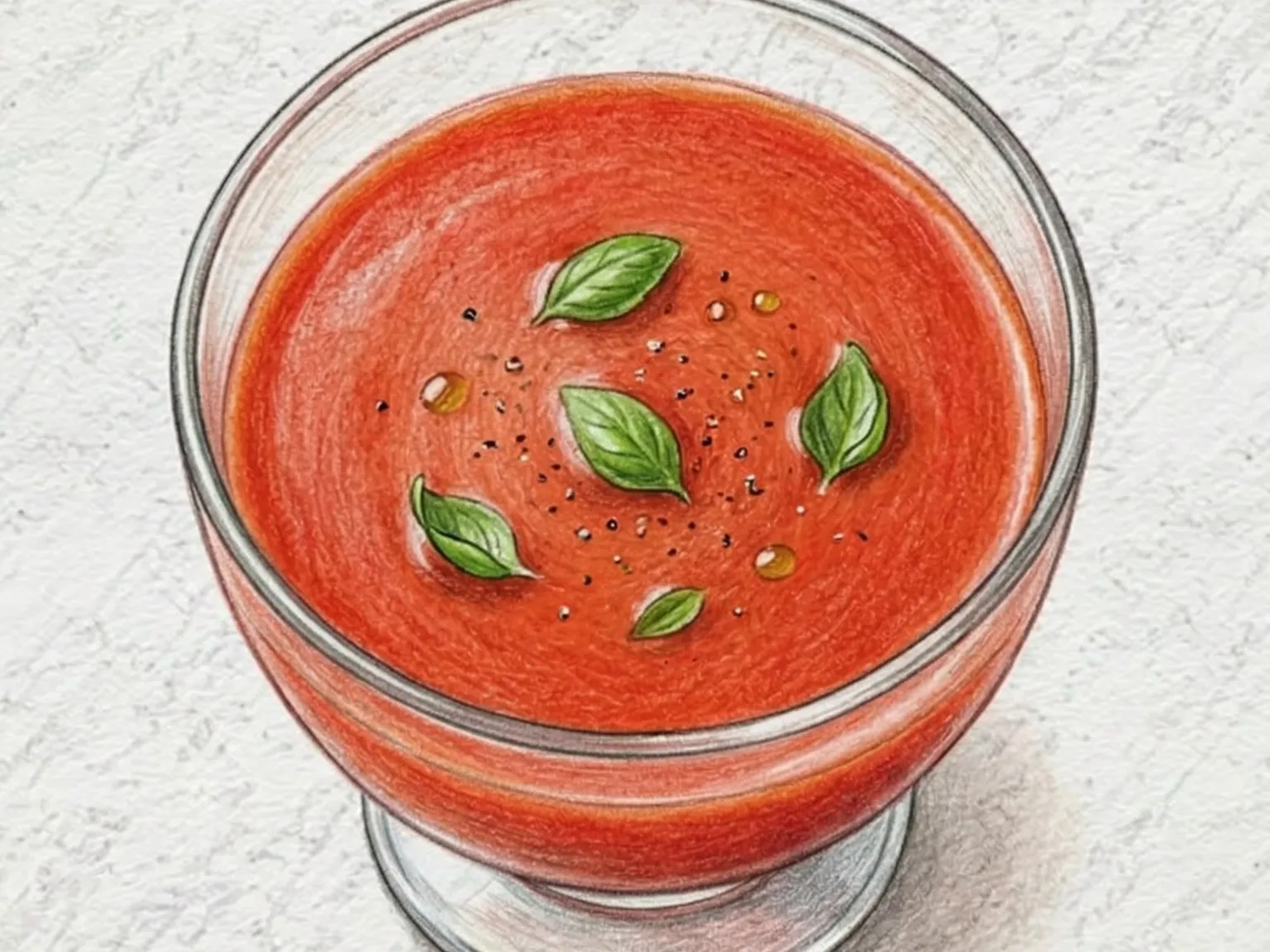
Tomato basil juice is a cold savory drink made by blending ripe tomatoes with fresh basil leaves and straining the result through a fine sieve to remove seeds and skins.
What makes this special
- Tomato-basil-juice blends fully ripe fruit with fresh herbs for a savory, aromatic cold-pressed beverage.
- Fully ripe tomatoes maximize glutamate while basil added last prevents oxidation
- A drop of olive oil dissolves fat-soluble aroma compounds for richer flavor
Key ingredients
Core cooking flow
- 1 Thoroughly wash 400g of ripe tomatoes and remove the green cores before roug...
- 2 Place the prepared tomato chunks and 8 fresh basil leaves into the blender a...
- 3 Pour the blended mixture through a fine mesh strainer into a clean pitcher...
Tomato basil juice is a cold savory drink made by blending ripe tomatoes with fresh basil leaves and straining the result through a fine sieve to remove seeds and skins. The ripeness of the tomato determines much of the flavor: fully ripe tomatoes carry free glutamates that produce a natural umami depth, whereas underripe fruit tastes predominantly sour without the sweetness and savory body that makes the juice satisfying. Basil should be added to the blender immediately before blending rather than sitting cut or torn, because the volatile oils that produce its aroma begin oxidizing quickly once the leaves are damaged. After blending to a smooth consistency, passing the juice through a fine-mesh strainer or cheesecloth removes the solids and produces a texture smooth enough to drink without resistance. Salt and black pepper season the juice, and fresh lemon juice raises the acidity in a way that brightens the overall flavor rather than making it sour. A small addition of olive oil emulsifies into the juice and activates fat-soluble aromatic compounds in both the tomato and the basil, producing a fuller, rounder flavor than the unstrained version. The juice must be thoroughly chilled before serving, as warmth mutes the herbal freshness. It works well as a brunch drink, a light non-alcoholic aperitif, or a base for savory cocktails.
Instructions
Read the steps as a cooking flow: prep, heat, seasoning, doneness control, and finish.
- 1Prep
Thoroughly wash 400g of ripe tomatoes and remove the green cores before roughly chopping them into medium sized pieces that will fit easily into your blender or food processor.
- 2Prep
Place the prepared tomato chunks and 8 fresh basil leaves into the blender and process at high speed until the mixture becomes completely smooth and colorful red in color.
- 3Prep
Pour the blended mixture through a fine mesh strainer into a clean pitcher, using a spoon to press down and extract every bit of juice while discarding seeds and skins.
- 4Season
Stir in 1 tablespoon of fresh lemon juice, 0.5 teaspoons of salt, and 0.25 teaspoons of black pepper to the strained liquid to enhance the natural savory profile of tomatoes.
- 5Step
Add 1 teaspoon of high quality olive oil to the juice and stir gently to incorporate, which not only adds a silky texture but also helps absorb the tomato nutrients.
- 6Finish
Place the finished juice in the refrigerator until thoroughly chilled, then pour into serving glasses and garnish with extra basil leaves if desired for a refreshing and healthy drink.
After the steps
Pick a recipe that fits this dish.
Continue with shared ingredients, meal pairings, or a similar method.
Recipes That Go Well With This
More Drinks →Based on shared ingredients and meal pairing
Tomato Basil Soup
Tomato basil soup sautés onion and garlic in olive oil, adds canned whole tomatoes crushed by hand, simmers with vegetable stock for 15 minutes, then blends until smooth and finishes with cream and fresh basil. Crushing and cooking the tomatoes for the first five minutes before adding stock concentrates their natural sugars and reduces raw acidity, building a sweeter, deeper base. The 15-minute simmer lets the flavors merge without overcooking, and blending produces a velvety texture that cream enhances without masking the tomato. Basil is heat-sensitive - its volatile oils dissipate within minutes of cooking - so it goes in only after the heat is off, releasing its fragrance through residual warmth alone. A tablespoon of tomato paste can be stirred in during the sauté stage for a more intense tomato flavor if desired.
Pasta alla Norma (Sicilian Fried Eggplant Tomato Pasta)
Pasta alla Norma originates from Catania in Sicily and combines fried eggplant cubes with a simple tomato passata sauce. Salting the eggplant beforehand draws out moisture and bitterness, resulting in firmer pieces that absorb less oil during cooking. Garlic provides aromatic depth, while fresh basil added off-heat preserves its fragrance. The dish is named after Vincenzo Bellini's opera Norma, a tribute to its status as a Sicilian culinary masterpiece. It can be served as a noodle dish, with simple accompaniments chosen to match the sauce, broth, or topping.
Affogato
Affogato means drowned. A scoop of vanilla gelato, one shot of espresso pulled fresh, and that is the recipe. Its origins are placed in Milan's coffee bars around the mid-20th century, though the logic behind it is older - hot poured over frozen, bitter cut with sweet. What makes it work is physics as much as flavor: near-boiling espresso hits frozen cream and immediately begins melting the contact layer, creating a rapidly shifting border where coffee and vanilla blend before the temperatures equalize. The window for that state - two things at once, neither fully dominant - lasts roughly two minutes. The espresso must be poured at the table while the crema is still intact and the heat at its peak; a shot left sitting a minute loses both. Dark chocolate shaved on top introduces a dry cocoa note. Toasted almond slices give a crunch that holds briefly before the melting ice cream claims them too. Once everything is warm and uniform, it has become a coffee drink. The dessert lives in the transition.
Korean Pear Juice
Korean pear juice is a clean, naturally sweet fruit drink made by blending ripe Korean pear with cold water and straining out the pulp through a fine mesh or cheesecloth. The pear delivers a mild, floral sweetness without any assertive acidity, and adding a tablespoon of lemon juice alongside a small amount of ginger juice sharpens the finish with a crisp, slightly spicy edge. Honey can be adjusted to the ripeness of the pear, and a fully ripe specimen usually needs none. Using partially frozen pear chunks produces a thicker, slushier consistency that holds its chill longer. Soaking peeled pear pieces in cold water for twenty minutes before blending slows oxidation and keeps the juice a brighter, cleaner white.
Serve with this
Omija Panna Cotta (Italian Cream Set with Schisandra Berry Sauce)
Omija panna cotta tops a classic Italian gelatin-set cream dessert with a sauce made from Korean schisandra berry syrup. The cream and milk mixture is heated just until small bubbles form at the edges before the bloomed gelatin is stirred in, ensuring a smooth, even set. Three hours of refrigeration produces a custard that wobbles gently when lifted with a spoon. A sauce of omija syrup mixed with lemon juice adds a tart, berry-forward acidity that cuts through the richness of the cream and forms a vivid red layer on the surface. Mixed berries served alongside burst with juice, contrasting the silky body of the panna cotta beneath. Omija berries carry five distinct tastes, sour, sweet, bitter, salty, and pungent, making them a natural counterweight to the cream's sweetness rather than a simple topping.
Korean Spicy Octopus Skewers
Blanched octopus is cut into bite-sized pieces, threaded onto skewers, and grilled on a pan or open flame while being basted repeatedly with a spicy sauce of gochujang, soy sauce, sugar, minced garlic, and sesame oil. Octopus toughens dramatically with prolonged heat, so high-temperature, quick grilling is essential. Adding a slice of ginger to the blanching water removes any fishiness before the octopus hits the grill. The layered sauce builds up with each basting: gochujang contributes heat, sugar balances it with sweetness, soy sauce deepens the umami, and sesame oil finishes with a nutty fragrance. Keeping the heat at medium-high and turning the skewers frequently prevents the sugar in the glaze from burning while still achieving light char marks. The result has a caramelized, sticky crust over a chewy, springy center. Equally at home as street food or as bar snacks alongside cold beer or soju, these skewers are a reliable crowd-pleaser.
Korean Seasoned Glasswort Salad
Sebalnamul-muchim features 220 grams of glasswort, a succulent coastal plant that carries a natural salinity from the tidal flats where it grows. A 10-second blanch in boiling water is enough to barely soften the thin stems while preserving their distinctive pop when bitten. The dressing of gochugaru, vinegar, plum extract, and sesame oil coats the tender shoots without masking their inherent briny flavor. Thinly sliced onion adds a sweet crunch, and the plum extract mellows the vinegar's sharpness into a rounded tartness. Because no additional salt is needed, the final seasoning relies entirely on the balance between acid, sweetness, and the glasswort's own minerality.
Similar recipes
Korean Minari Apple Juice
Minari apple juice is a Korean green juice made by blending fresh water dropwort, apple, and cucumber with cold water until smooth. Water dropwort carries a sharp, herbaceous bite that anchors the drink in clean, green territory, while the apple's natural juice sweetens the blend without any added sugar. Cucumber brings lightness and hydration, softening the overall texture so each sip goes down easily. A small piece of fresh ginger adds quiet warmth underneath the green notes, and lemon juice keeps water dropwort's grassy edge in check while honey rounds out the tart finish. Drinking the blended mixture straight gives a fuller, fiber-rich texture, but straining through cheesecloth or a fine-mesh sieve transforms it into a clear, polished juice with a noticeably smoother feel. Spring water dropwort harvested at peak season delivers the most concentrated herbal fragrance, and choosing a tart apple variety prevents the sweetness from overpowering the other ingredients.
Korean Lotus Root Tea (Warm Herbal Root Brew)
Yeongeun-cha is a Korean lotus root tea prepared by simmering peeled, thinly sliced lotus root with jujube, ginger, and a cinnamon stick over low heat for twenty-five minutes. As the root cooks, its natural starch gradually dissolves into the water, producing a tea that is clear but carries a subtle, silky body unlike most herbal brews. Jujubes contribute the primary sweetness; adding a small spoonful of honey and a single pinch of salt develops the flavor further without making it sugary. Cinnamon and ginger stay in the background, leaving a gentle warmth that lingers in the finish and makes the tea feel comforting without being sharp or medicinal. Soaking the lotus root slices in lightly acidulated water for ten minutes before cooking prevents oxidative browning and keeps the finished tea pale and clear. The flavor holds up equally well served hot in a ceramic cup or cooled down and poured over ice as a refreshing cold drink.
Korean Watermelon Mint Juice
Watermelon mint juice blends seedless watermelon flesh with honey and lime juice, then pulses in mint leaves for just five seconds to capture their fragrance without extracting bitterness. Straining the blend removes excess pulp, producing a light, clear-textured drink. The juice is poured over a full glass of ice and finished with sparkling water, whose bubbles amplify both the watermelon's sweetness and the mint's cooling sensation. Lime juice cuts through the melon's one-note sweetness with a bright acidity, and a sprig of fresh mint on top releases aroma with each sip.