Buckwheat Avocado Salad
Quick answer
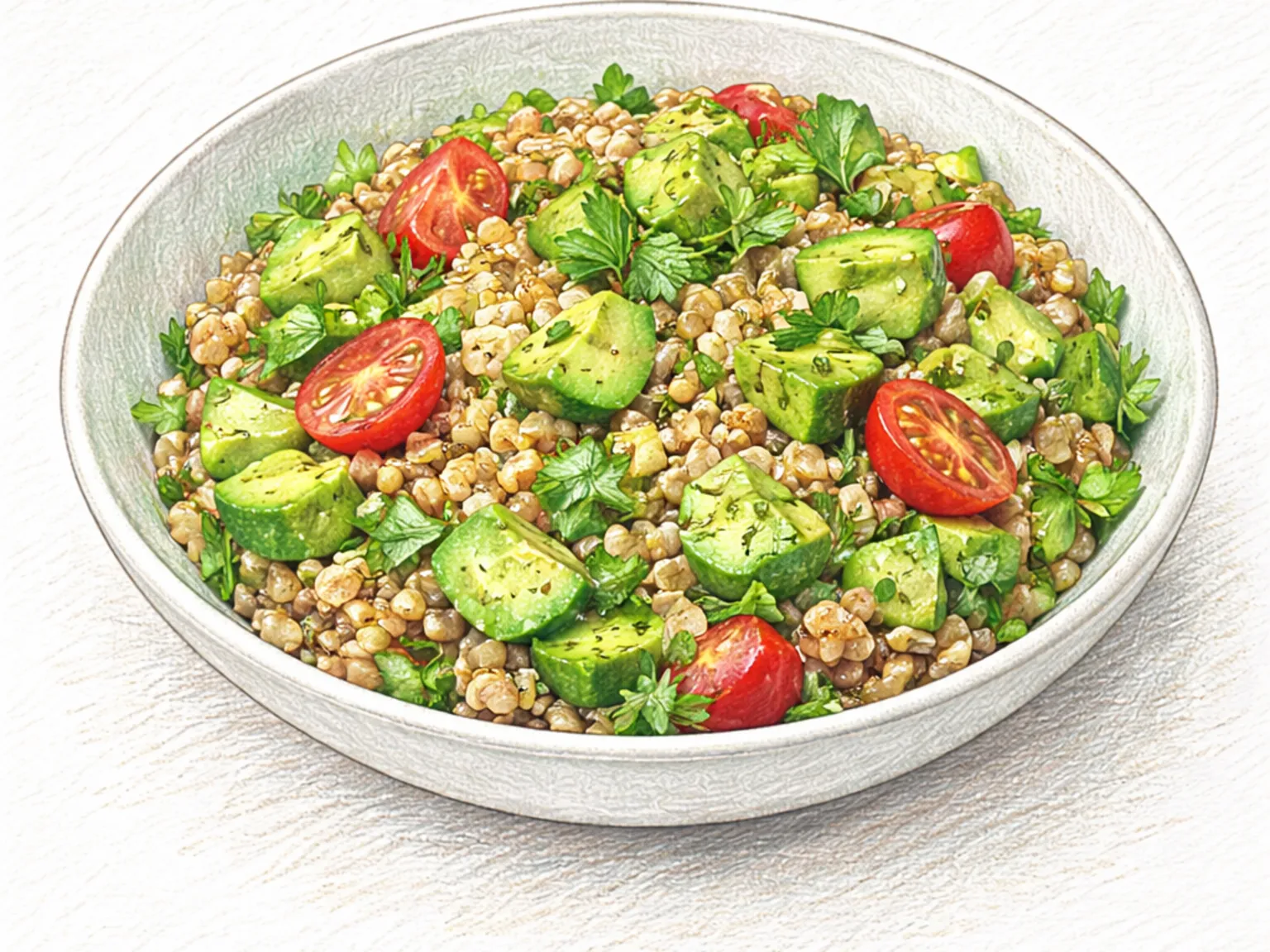
Buckwheat groats are cooked until chewy, rinsed in cold water, and tossed with ripe avocado, cherry tomatoes, cucumber, and fresh dill in a lemon-olive oil dressing.
What makes this special
- Nutty buckwheat groats paired with ripe avocado offer a contrast between earthy grains and rich fats.
- Buckwheat's nutty, slightly bitter grain aroma pairs with avocado's fat
- Lemon acid lifts the heavy grain base with brightness
Key ingredients
Core cooking flow
- 1 Place 140 g buckwheat groats in a sieve and rinse under cold running water for at least 30 seconds.
- 2 Bring a generous pot of water to a boil, add the rinsed buckwheat, and cook...
- 3 Drain the buckwheat in a sieve and rinse it briefly with cold water to stop the cooking.
Buckwheat groats are cooked until chewy, rinsed in cold water, and tossed with ripe avocado, cherry tomatoes, cucumber, and fresh dill in a lemon-olive oil dressing. The buckwheat's earthy, faintly bitter grain character pairs with the avocado's smooth fat, each compensating for the other's shortcoming. Lemon juice's sharp acidity lifts the heavy grain base, while dill's cool, anise-edged fragrance reduces the overall weight that grain salads can carry. Cucumber introduces a crisp, watery contrast that varies the texture within a single bowl. High in dietary fiber and genuinely filling, this Eastern European-inspired salad holds up as a standalone light meal. The dressing quantity and herb selection can be adjusted without changing the basic structure of the dish.
Instructions
Read the steps as a cooking flow: prep, heat, seasoning, doneness control, and finish.
- 1Control
Place 140 g buckwheat groats in a sieve and rinse under cold running water for at least 30 seconds.
Shake and rub them lightly with your hand until the cloudy runoff and surface bitterness are reduced.
- 2Control
Bring a generous pot of water to a boil, add the rinsed buckwheat, and cook over medium-high heat for 10-12 minutes.
Start tasting at 10 minutes and stop when the grains are tender with a slight bite.
- 3Heat
Drain the buckwheat in a sieve and rinse it briefly with cold water to stop the cooking.
Shake off excess water firmly, then let it cool for about 5 minutes so the dressing does not turn watery.
- 4Season
Cut the avocado into 1.5 cm cubes and slice 100 g cucumber into 0.7 cm half-moons.
Halve 120 g cherry tomatoes, and check for excess juice so the salad stays crisp instead of soggy.
- 5Season
In a small bowl, combine 1.5 tbsp lemon juice, 1 tbsp olive oil, and 0.5 tsp salt.
Stir until the salt dissolves and the surface looks lightly glossy, so the seasoning coats the grains evenly.
- 6Season
Add the buckwheat, cucumber, tomatoes, and 2 tbsp dill to a large bowl, then fold in only half the dressing first.
Add the avocado last, mix gently, and adjust with more dressing after checking the seasoning.
After the steps
Pick a recipe that fits this dish.
Continue with shared ingredients, meal pairings, or a similar method.
Recipes That Go Well With This
More Salads →Based on shared ingredients and meal pairing
Millet Herb Salad
Millet herb salad is a grain salad built around cooked millet tossed generously with finely chopped flat-leaf parsley and fresh mint, dressed simply with lemon juice and olive oil. The millet is simmered until each grain is tender and separate, then spread to cool completely before anything else is added. Mixing warm millet with the herbs wilts them immediately and turns the texture of the finished salad dense and gluey rather than light and distinct. Once cooled, the grains fluff easily with a fork and provide a neutral, faintly earthy base that carries the herb flavor without competing with it. Diced cucumber and halved cherry tomatoes add moisture, color, and a contrasting freshness against the denser grain. The dressing is intentionally minimal, just enough lemon juice to keep the herbs bright and enough olive oil to coat without saturating. Parsley stems should be removed before chopping since the fibrous texture distributes unevenly, and mint should be measured with restraint as it can dominate quickly. Adding the dressing immediately before serving prevents the millet from absorbing too much liquid and clumping. The salad travels and holds well at room temperature, making it a practical choice for packed lunches and outdoor meals. Prepared the day before and refrigerated, the grain absorbs the dressing overnight and the flavors integrate more evenly.
Black Bean Corn Avocado Salad
Black bean corn avocado salad is a Mexican-style bowl that combines cooked black beans, charred sweet corn, and ripe avocado in a lime dressing. Black beans form the starchy, mildly nutty base, while corn charred in a dry pan brings a caramelized sweetness and a burst of texture against the softer ingredients. Ripe avocado contributes a dense creaminess that absorbs the lime's sharp acidity and rounds the dressing's edges. Fresh cilantro scatters a bright herbal note, and ground cumin or chili powder can deepen the spice dimension. The combination delivers plant protein, dietary fiber, and healthy fats in a single bowl substantial enough to serve as a light meal. Tortilla chips on the side turn it into a dip. Because none of the components require hot cooking, the salad can be assembled in minutes from pre-prepared ingredients and keeps well in the refrigerator for a day or two without the avocado browning significantly if dressed just before serving.
Blackened Chicken Caesar Salad
Blackened chicken Caesar salad starts with chicken breast coated thickly in paprika, cayenne, garlic powder, onion powder, and dried herbs before hitting a very hot, dry pan. The spice coating undergoes rapid charring at high temperature, forming a dark, smoky crust that seals in moisture and concentrates the spice aromatics on the surface of the meat. The interior of the chicken stays juicy because the charred crust acts as an insulating barrier, provided the pan is hot enough from the start. Creamy Caesar dressing, made with anchovy paste, egg yolk, lemon, and Parmesan, wraps around the cold, crisp romaine and the sliced hot chicken alike, moderating the cayenne heat without erasing the spice character entirely. Shaved Parmesan adds sharp, salty depth throughout, while croutons introduce a crunchy textural break against the tender chicken and limp lettuce. Because blackening generates substantial smoke, proper ventilation or an outdoor cooking setup is strongly recommended. The dish functions as a full main course rather than a starter salad.
Barley Grain Salad
Barley grain salad is a Mediterranean-inspired dish built around the chewy, nutty character of well-cooked pearl barley. The grain is boiled until tender but with a slight resistance, then cooled completely before it is tossed with diced bell pepper, cucumber, and red onion. Cooling the barley fully before adding the vegetables is important; warm grain draws moisture out of the fresh vegetables and dilutes the dressing. Olive oil forms the base of the lemon-herb dressing, providing a rounded richness that complements the earthy depth of the barley, while fresh lemon juice cuts through and lifts the whole bowl with clean, bright acidity. The raw vegetables add crunch and moisture, breaking up the density of the grain with each bite. Red onion contributes a sharp edge that sharpens the overall flavor profile. High in dietary fiber, the salad is genuinely filling for its size and works equally well as a standalone light meal or as a substantial side alongside grilled meat or fish.
Serve with this
Kimchi Tofu Alfredo Farfalle (Creamy Kimchi Bow-Tie Pasta)
Kimchi tofu Alfredo farfalle is a fusion pasta that counters the richness of a cream-and-Parmesan Alfredo sauce with the lactic acidity of well-fermented kimchi. Garlic bloomed in butter forms the aromatic base, then cream, milk, and Parmigiano are combined into the classic Alfredo sauce, after which chopped kimchi is folded in to introduce fermented tang and a layer of umami that a standard Alfredo lacks. Firm tofu cut into cubes and pan-fried until each side is golden provides a mild, neutral protein element with direct textural contrast against the smooth sauce. Farfalle's pinched center holds pockets of sauce against each piece of pasta, delivering a consistent hit of creaminess in every bite, and freshly ground black pepper draws a sharp line through the richness at the finish. The entire dish moves from pan to plate in about 15 minutes.
Miso Soup
Miso soup, or miso shiru, is a staple of Japanese home cooking, traditionally served alongside daily meals. The soup features a base of dashi stock made from bonito flakes and kelp, which provides a savory umami foundation. Standard additions include cubed silken tofu and rehydrated wakame seaweed, finished with thinly sliced green onions. The preparation requires heating the dashi stock gently without letting it boil rapidly, then warming the tofu. To preserve the delicate aroma of the miso paste, it is dissolved in a ladle with a bit of hot broth before being stirred into the pot, and the heat is turned off immediately. Home cooks can choose between mild, slightly sweet white miso or a more savory, salty red miso to adjust the flavor. It is a light and comforting soup designed to complement other dishes.
Korean Pan-fried Oyster Jeon
Gul-jeon is a Korean dish featuring oysters that are pan-fried in a delicate coating of flour and egg. The preparation starts with fresh seasonal oysters that are rinsed carefully in a mild salt water solution to ensure they are clean. Once the rinsing is complete, it is necessary to pat each oyster until it is thoroughly dry. This particular step is crucial because residual water leads to oil splattering during the frying process and prevents the flour from adhering to the surface in a uniform manner. The intended result is a very thin layer of flour, as a thick coating will muffle the natural oceanic brine of the oyster. After the light dusting of flour, the oysters are submerged in beaten egg. This egg batter serves as an insulating layer that conducts heat slowly into the center of the seafood. This specific cooking method keeps the interior of the oyster plump and moist while the exterior reaches a soft golden color. As the oysters cook, they release a distinct mineral aroma associated with fresh seafood. Adding finely chopped garlic chives shortly before the cooking is finished provides a sharp, garlicky contrast that emphasizes the natural mineral profile of the dish. It is important to cook the oysters over a steady medium flame for approximately two minutes on each side. If the heat is set too high, the egg exterior will scorch before the inside is sufficiently warmed through. When flipping the oysters, you should do so carefully and avoid pressing down on them with a spatula. In instances where the oysters are exceptionally large, pressing them into a flatter shape prior to the start of the cooking process will facilitate more even heat distribution throughout the piece.
Similar recipes
Farro Harvest Salad
Farro is an ancient Italian wheat variety that retains a satisfying chew even after boiling, making it a reliable foundation for grain salads that need to hold their texture over time. Roasting root vegetables such as butternut squash, beets, or sweet potatoes at high heat caramelizes their natural sugars and creates slightly crisp edges that contrast with the soft grain below. Toasted walnuts or pecans layered in add crunch and nutty depth. Bitter greens like arugula or kale interrupt the sweetness of the vegetables and prevent the salad from becoming one-dimensional. A dressing of apple cider vinegar, olive oil, and a small amount of honey ties the components together while allowing each ingredient to remain distinct. The salad carries enough fiber and protein to serve as a complete meal rather than a side. Farro's dense structure absorbs dressing gradually without turning soft, so the salad holds well in the refrigerator for two days, making it a practical choice for meal preparation.
Caesar Salad
Caesar salad is built on romaine lettuce torn into rough, generous pieces and tossed in a dressing made from mayonnaise, lemon juice, garlic, and anchovy. The anchovy does not taste fishy in the finished dressing; it dissolves into the fat of the mayonnaise and functions as a deep umami foundation that keeps the salad interesting beyond its creamy surface. Lemon juice cuts through the richness of the mayo base, so the dressing coats the lettuce heavily without feeling cloying. Croutons are cubed bread toasted in olive oil until the outside turns crisp and golden but the inside stays slightly soft and chewy, giving them enough structure to absorb dressing without going immediately soggy. Wide, thin shavings of Parmesan add a dry, salty intensity that contrasts with the watery crunch of the romaine. With a short ingredient list, the quality of the dressing balance and the texture of the croutons determine the final outcome.
Korean Roasted Buckwheat Tea
Memil-cha is a traditional Korean beverage prepared from roasted buckwheat groats. To make this tea, the groats are toasted and then simmered in water, followed by a ten-minute steeping period over a low flame. The initial roasting process is critical because it caramelizes the exterior of the buckwheat, which releases a profound and earthy grain fragrance. This aroma gradually transfers into the liquid during the steeping stage. Incorporating dried jujubes and a thin strip of lemon peel provides a subtle sweetness along with a light citrus undertone. These additions help to complete the flavor profile while ensuring that the distinct natural character of the buckwheat remains the primary focus. Because the infusion contains no caffeine, it serves as a suitable drink for the late evening or for times when a gentle option is preferred for the digestive system. The addition of a single spoonful of honey and a very small amount of salt functions to define the various tastes more clearly and brings the entire beverage into a stable balance. This tea is versatile enough to be enjoyed as a hot drink during the colder winter months or as a cold beverage served over ice when the weather is warm in the summer. Such flexibility allows it to remain a consistent staple on the dining table throughout the entire year.