Tamarind Fish Noodle Soup
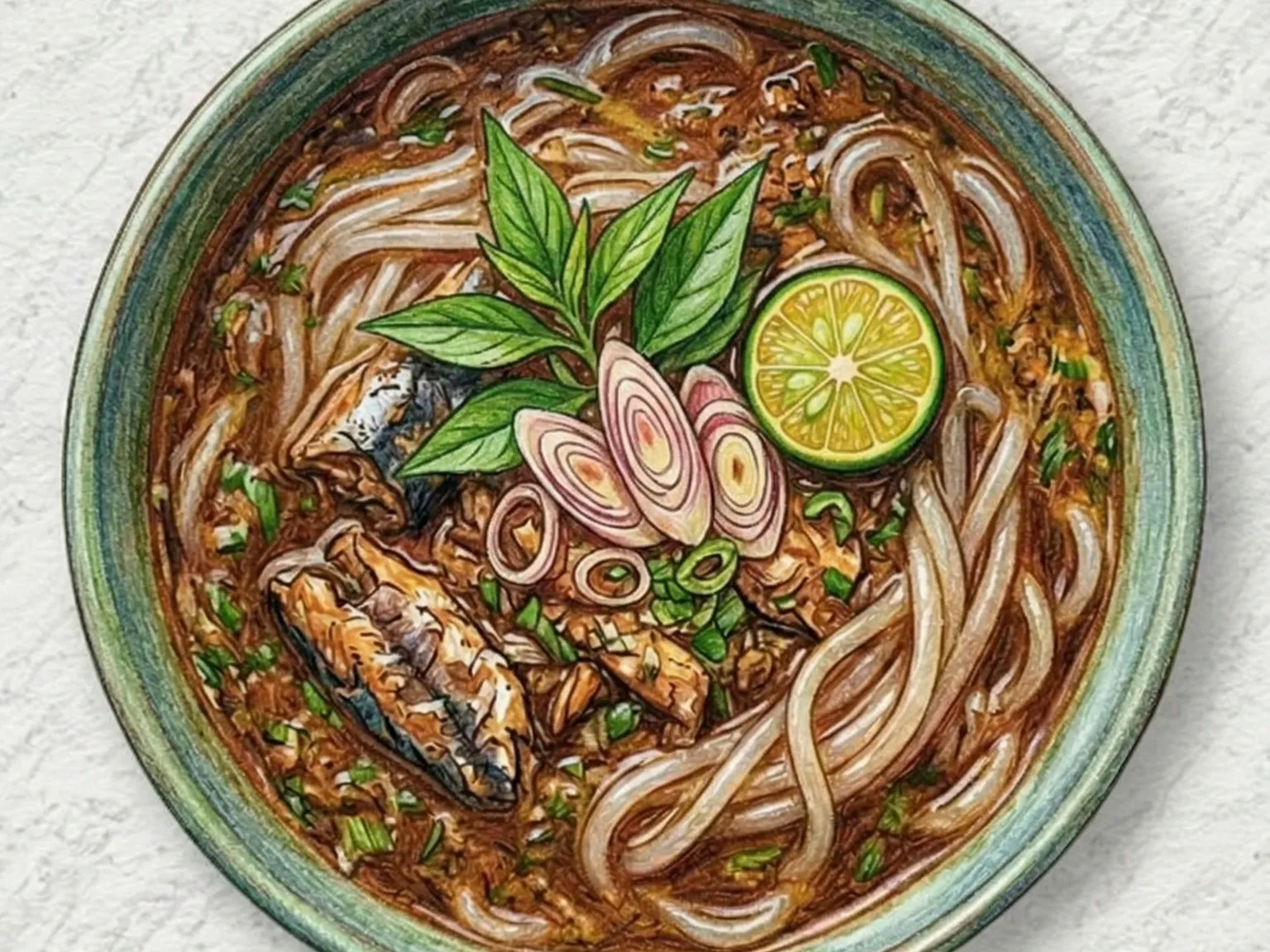
Asam laksa is Penang's defining noodle soup, recognized by UNESCO as one of Malaysia's intangible cultural heritage items. Where Singapore's curry laksa builds its richness on coconut milk, this version draws its entire character from a tamarind-soured fish broth that is tart, briny, and aggressively aromatic in a way that coconut-based versions never are. Whole mackerel is poached until it flakes, then removed and broken apart by hand; the remaining liquid is blended with torch ginger flower, lemongrass, and galangal pounded into a coarse paste to build the broth's layered fragrance. Tamarind sourness arrives first and dominates the initial impression, followed by a slow build of chili heat and the ocean depth of fish sauce. Thick rice noodles sit at the bottom of the bowl, their chewy resistance offering physical contrast to the sharp, lean broth that pours over them. The table condiments - julienned cucumber, fresh mint leaves, thinly sliced onion, and a spoonful of belacan-enriched prawn paste - are not optional garnishes but integral components: the fermented prawn paste in particular adds a dimension of umami that rounds the broth's acidity into something far more complex. Every hawker stall in Penang has its own spice ratios handed down through family lines, which is why no two bowls taste exactly alike.

Korean Seasoned Kelp Strips
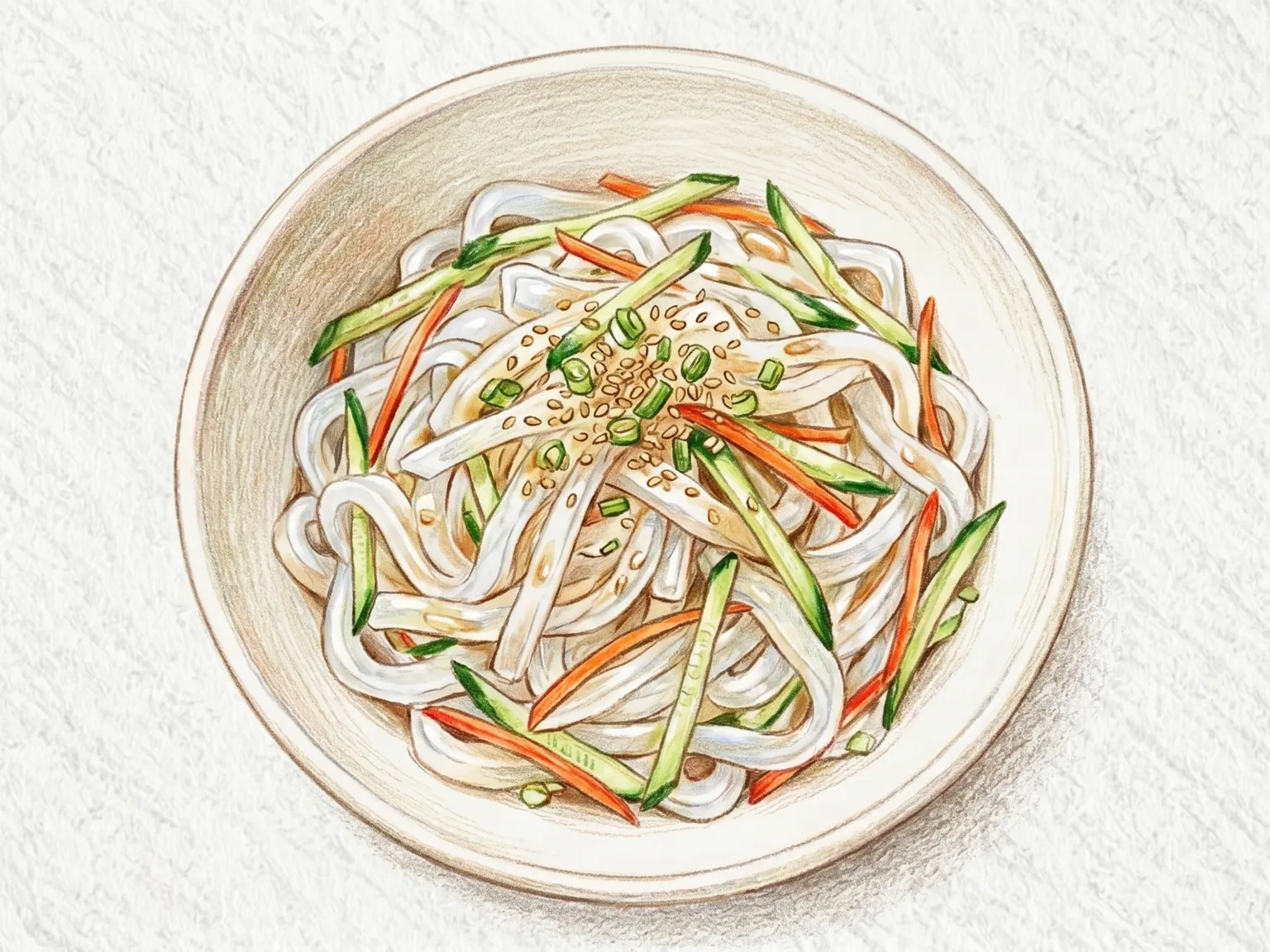
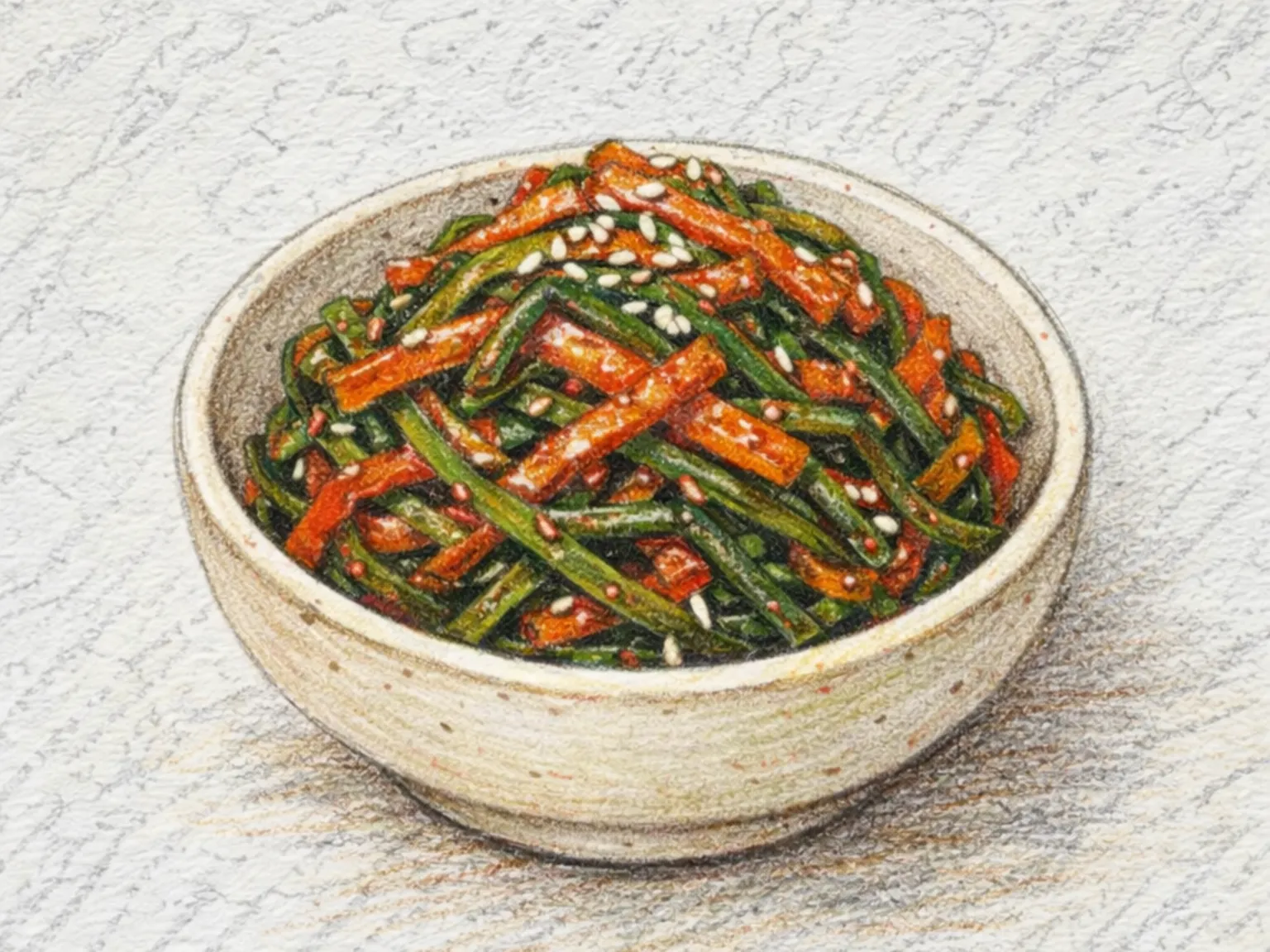
Kelp strips are soaked in cold water for ten minutes to draw out excess salt, then blanched for twenty seconds, just long enough to turn them pliable without losing their snap. The strips are dressed with gochugaru, vinegar, soy sauce, sugar, and garlic while julienned cucumber adds a cool, refreshing contrast. The seasoning sits over the mineral-dense ocean flavor of the kelp, layering a bright, acidic kick onto each bite. Sesame oil and whole sesame seeds finish the dish. The strips keep a satisfying resistance between the teeth that sets them apart from softer Korean seaweed preparations. Best served cold; the texture and flavor hold up well in packed lunches. Blanching beyond twenty seconds causes the kelp to soften and lose the chew that defines this banchan.

Korean Young Radish Barley Bibimbap
Barley-mixed rice has a hearty, popping texture and a nutty flavor that pairs naturally with the crisp, tart bite of freshly made young radish kimchi. The crunchy stems of the kimchi contrast with the chewy barley grains, and stirring in gochujang ties the tangy, spicy, and sweet elements together into a cohesive bowl. A spoonful of sesame oil folded in at the end adds a roasted fragrance that lifts the overall depth of flavor. This bibimbap is especially refreshing in the summer months as a cooling, appetite-stimulating meal.

Korean Oi Dubu Bokkeum (Cucumber Tofu Stir-fry)
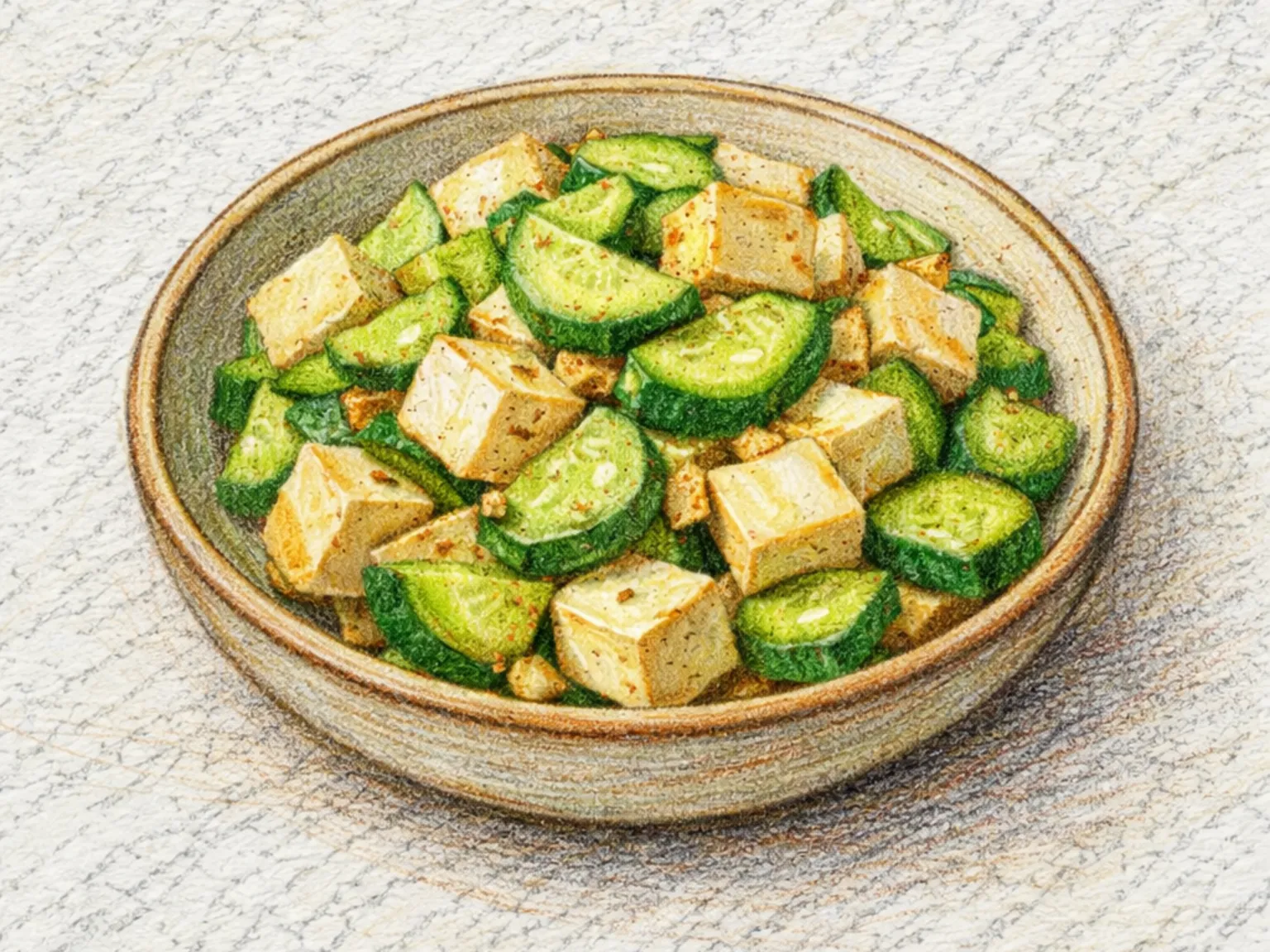
Oi-dubu-bokkeum stir-fries half-moon cucumber slices and cubed firm tofu with soup soy sauce, garlic, and a light touch of Korean chili flakes. The tofu is pan-fried to golden first to prevent crumbling, then set aside while garlic and onion build flavor in the same pan. Cucumber goes in for just 90 seconds - long enough to warm through but short enough to stay crisp and juicy. The tofu returns for a final toss with sesame oil, creating a dish defined by the contrast between cool, crunchy cucumber and warm, soft tofu under a clean soy-based seasoning.

Korean Avocado Gimbap (Creamy Avocado Crab Seaweed Rice Roll)
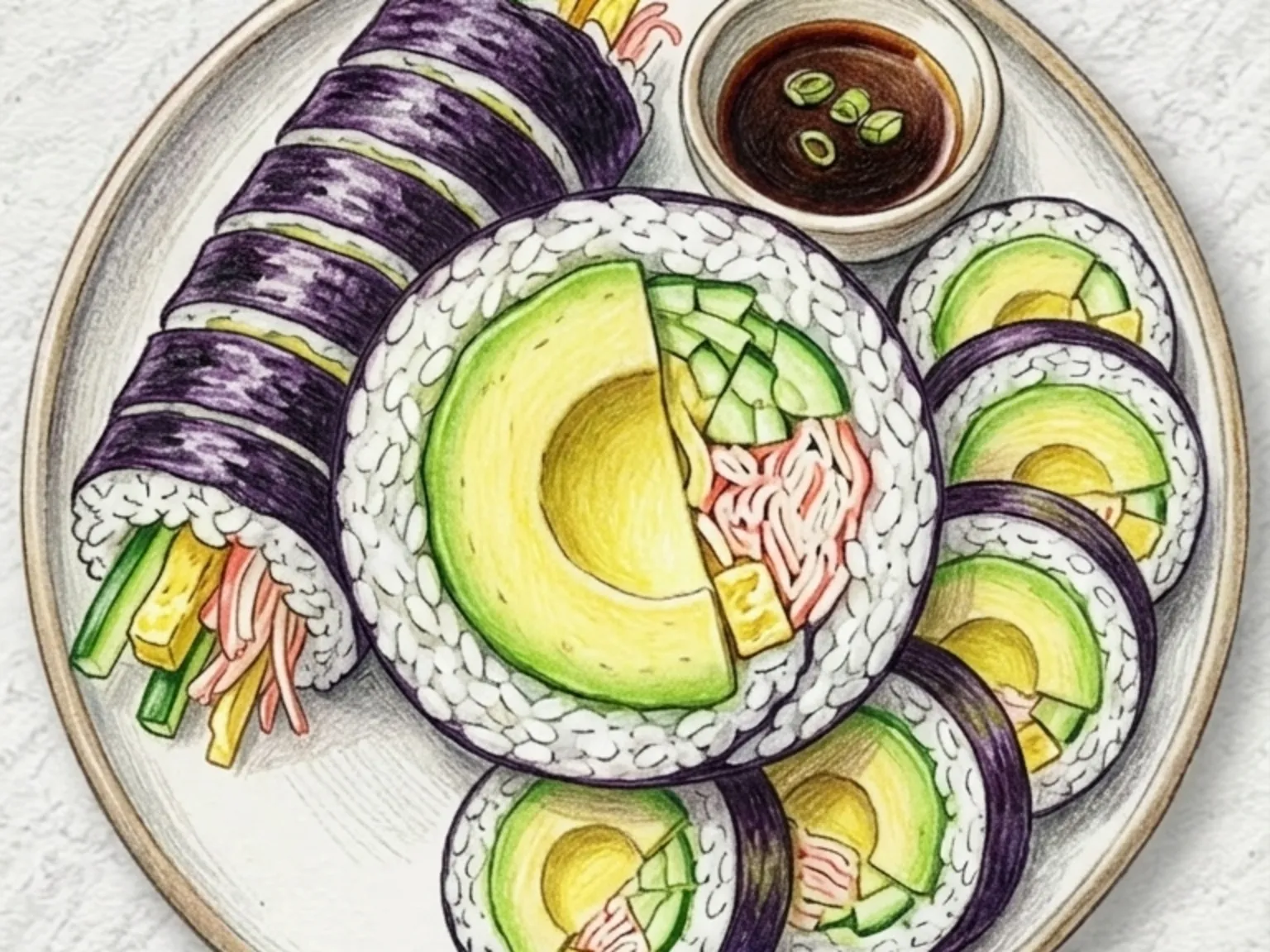
Avocado gimbap is a contemporary Korean roll that emerged in the 2010s as avocado shifted from a specialty import to a common supermarket staple in Korea. The timing of Korean avocado adoption is traceable: consumption roughly doubled between 2014 and 2018, driven by cafe culture and wellness trends, and this gimbap variant followed directly from that availability. Where traditional gimbap - danmuji, ham, spinach, carrot, egg - delivers discrete, clearly differentiated flavors in each bite, avocado gimbap works differently. The avocado at the center is buttery and neutral, its creaminess binding the other ingredients rather than competing with them. Selecting the right avocado matters considerably: the fruit must be ripe enough to yield when bitten without resistance, but firm enough to hold a clean slice. Underripe avocado is hard and flavorless; overripe avocado collapses when cut and turns the cross-section muddy. The rice is seasoned simply with sesame oil and salt, and the sheet of dried laver wrapping everything contributes a roasted, oceanic note. Crab stick placed lengthwise in the center, alongside julienned cucumber and a strip of egg jidan, creates the characteristic cross-section: concentric rings of green, white, and yellow that have made this version one of the most photographed gimbap in Korean food media. The avocado begins oxidizing and browning within an hour of cutting, so the roll is best eaten soon after assembly. It has become one of the highest-selling items in Korean convenience store gimbap sections, and a standard offering at gimbap specialty restaurants.

Korean Spicy Sea Snail Salad
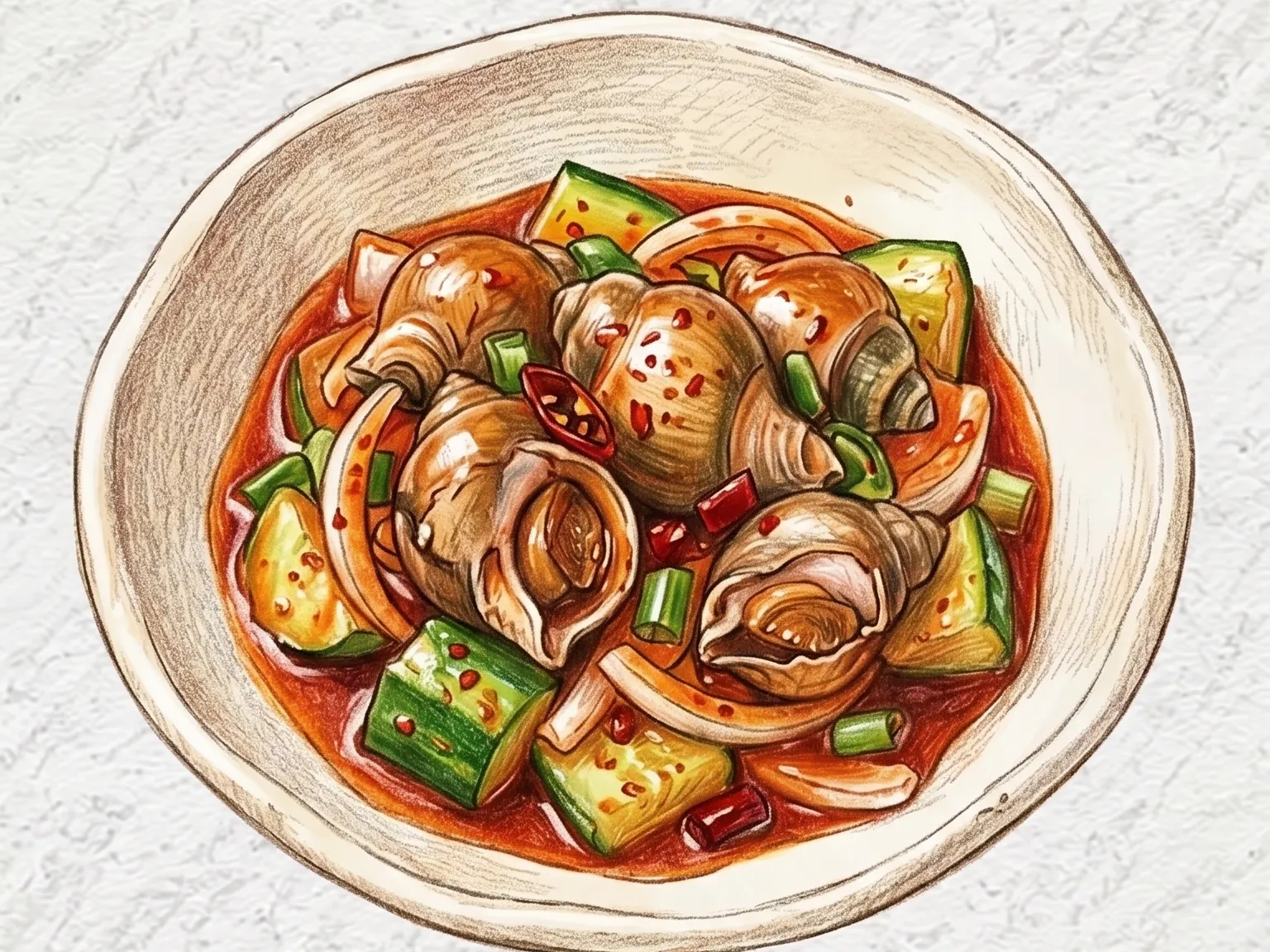
Golbaengi-muchim is a Korean spicy sea snail salad made with canned sea snails drained thoroughly and tossed with sliced cucumber, onion, and green onion in a sauce of gochujang, gochugaru, rice vinegar, and sugar. The snails are firm and bouncy with a dense chew that stands apart from almost every other seafood in Korean cooking, and the sharpness of the gochujang-vinegar dressing cuts through their richness without overpowering the texture. Soaking the sliced onion in cold water for five minutes removes its harsh pungency, leaving it with a milder sweetness that integrates more smoothly into the dressing. Cucumber and green onion bring contrasting crunch and freshness. Sesame oil and sesame seeds are added at the end, coating everything in a nutty fragrance that softens the heat slightly. The dish must be served immediately after mixing, before the salt in the dressing draws moisture from the vegetables and turns the whole thing wet and limp. Laying a bed of thin somyeon noodles in the bowl before spooning the dressed snails on top produces golbaengi-somyeon, a preparation that shifts the dish from a snack into a more substantial accompaniment that works as both drinking food and a light meal. The noodles absorb the dressing and become coated in the gochujang-sesame sauce.

Korean Acorn Jelly Cold Broth Bowl
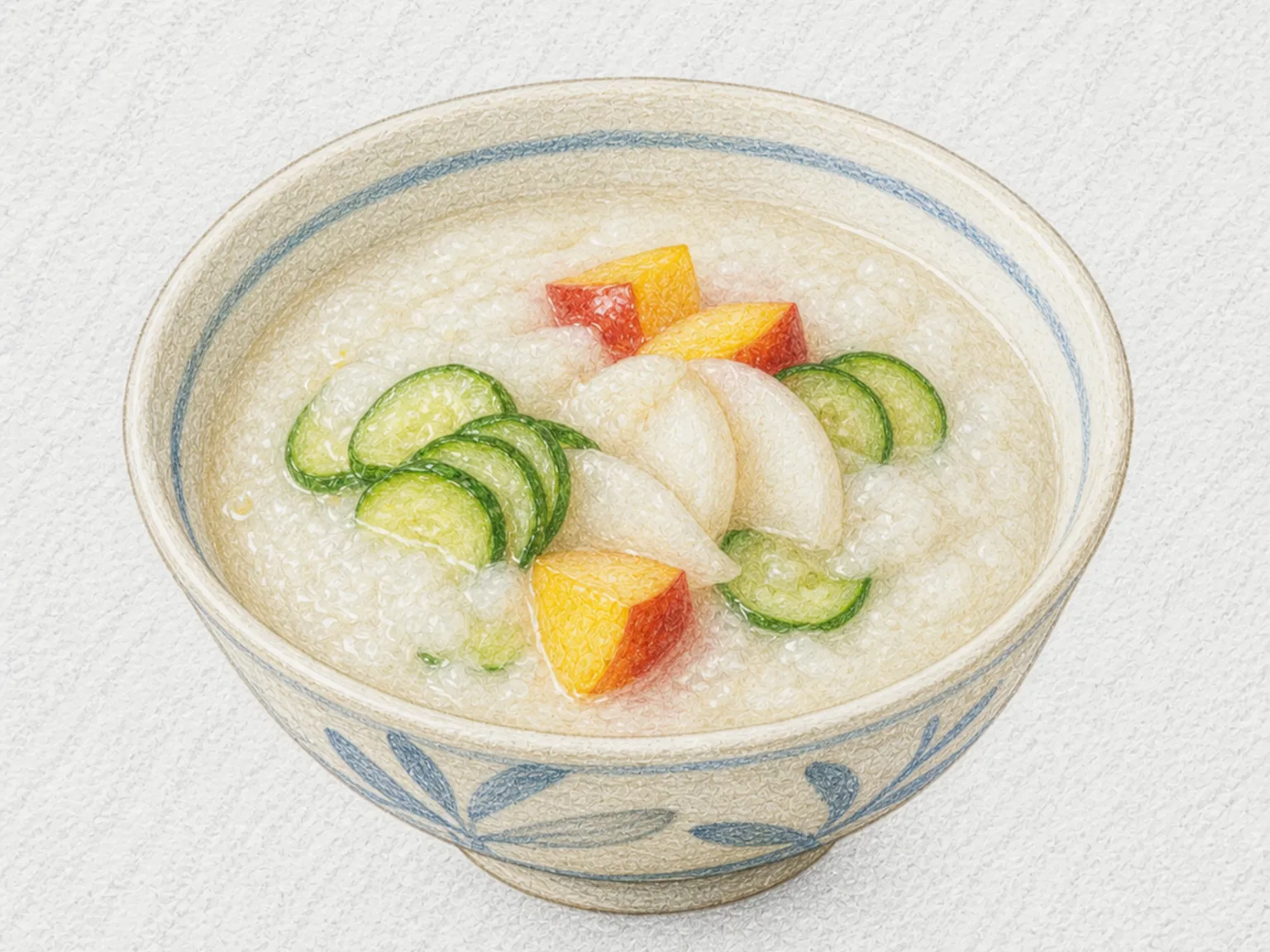
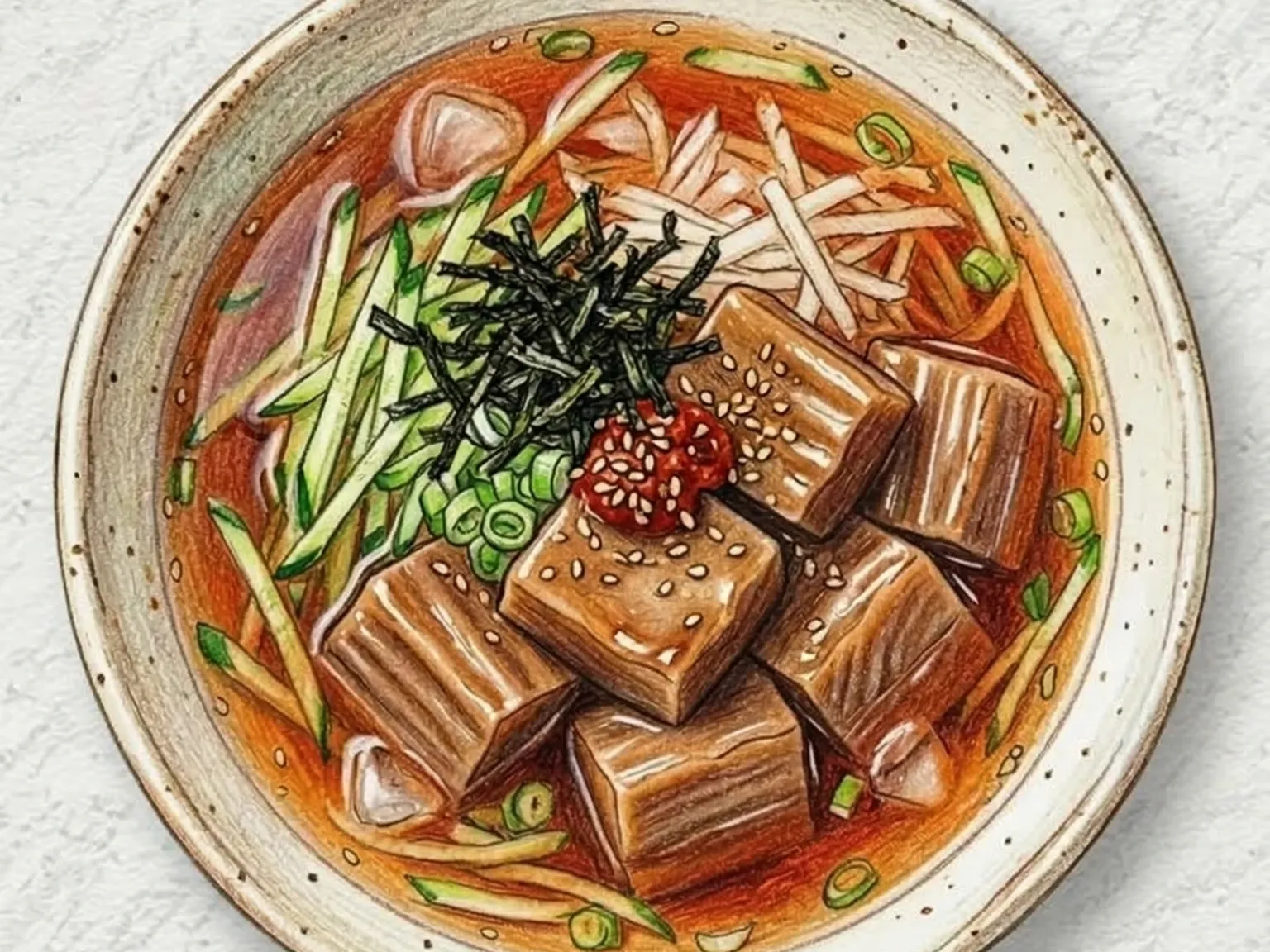
Dotori-muksabal is a chilled Korean acorn jelly broth bowl where thinly sliced acorn jelly sits in a cold, tangy-sweet seasoned broth. Acorn jelly carries a distinctly earthy, mildly astringent aftertaste and a firm, bouncy texture that becomes noticeably more pronounced once it has chilled thoroughly. The broth, a mixture of stock seasoned with soy sauce, vinegar, and sugar, must be cold before pouring over the jelly to keep that cool snap alive from the first bite to the last. Chopped kimchi adds fermented heat and a pungent sourness, while julienned cucumber contributes a clean crunch, and both ingredients cut through the jelly's neutral flavor with sharp contrasts that make the bowl far more lively than its simple appearance suggests. A spoonful of gochugaru-spiked seasoning ties the components together. The dish is notably low in calories and rich in dietary fiber, making it an appealing light meal on hot days.

Korean Stuffed Fish Steam
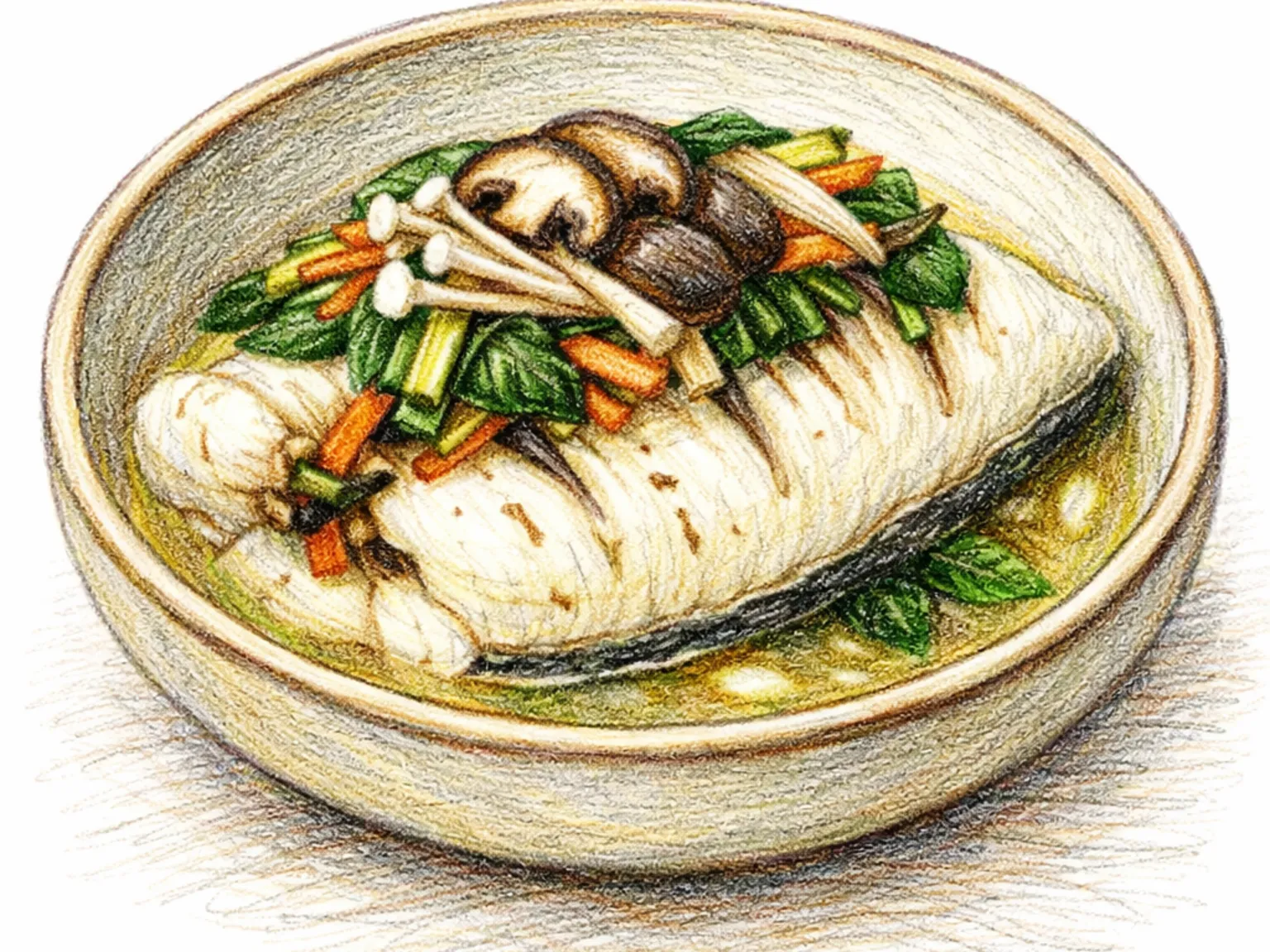
Eoseon-jjim is a traditional Korean court dish in which sea bream fillet is topped with julienned oyster mushrooms, cucumber, and carrot, then wrapped in a thin egg crepe and steamed. Steaming keeps the fish flesh moist throughout while the vegetables hold a slight bite. A light seasoning of soy sauce and vinegar accents the mild sea bream with delicate acidity without overpowering it. Sesame oil is brushed on at the end for fragrance. The cross-section, when cut, reveals layered colors of vegetable and egg, making this dish as visually deliberate as it is carefully seasoned.

Korean-Style Cucumber Pickle
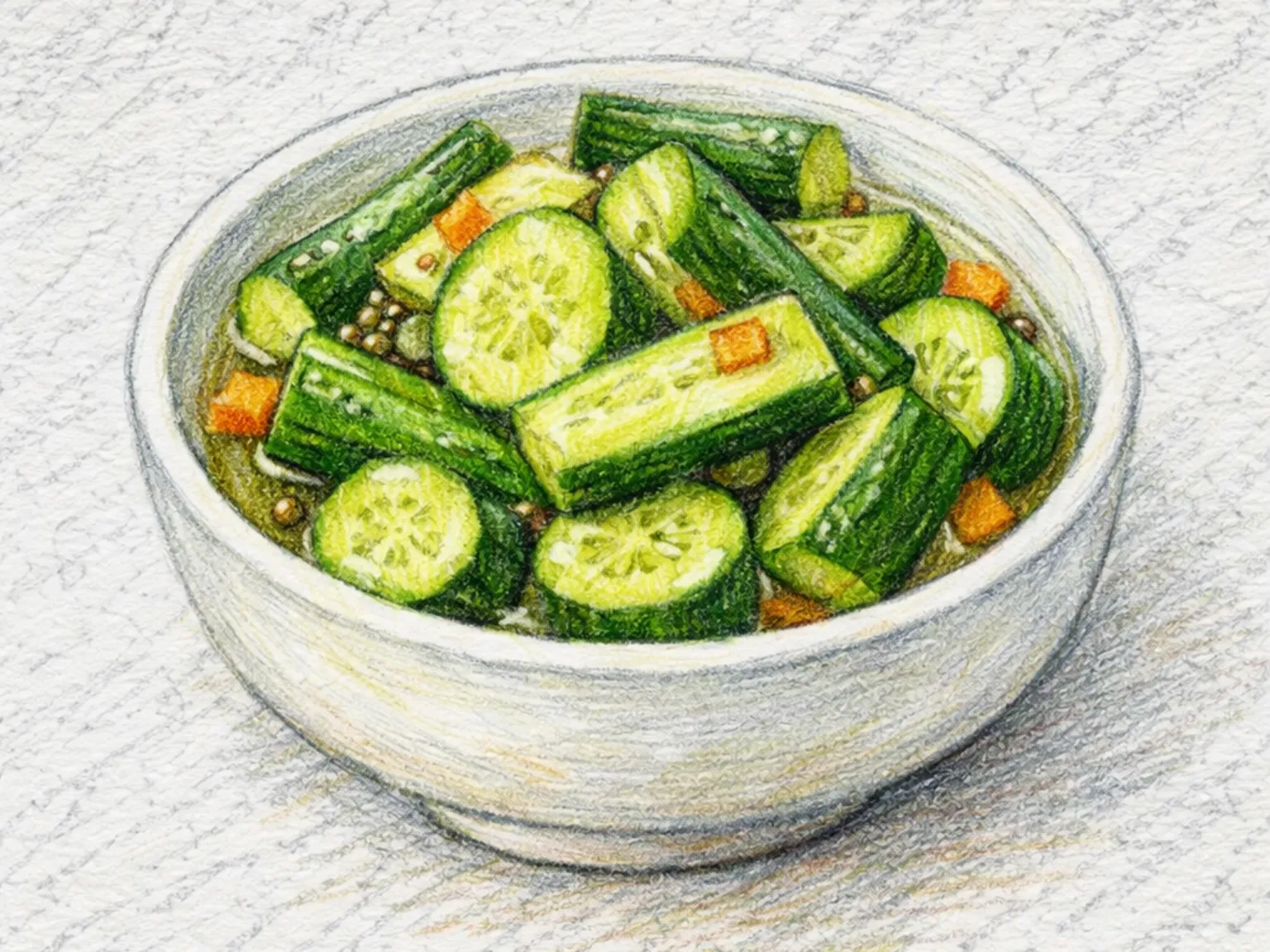
Oi pickle is a vinegar-brined cucumber pickle where one-centimeter-thick rounds are briefly salted to draw out surface moisture, then submerged in a hot brine of vinegar, water, sugar, salt, bay leaf, and whole black peppercorns. Pouring the hot brine directly over the salted cucumbers contracts their cell structure on contact, locking in a crunch that persists through multiple days of refrigeration. As the pickles rest, the sharp acidity of the vinegar softens and blends with the sugar into a balanced sweet-sour profile rather than a single piercing note. Bay leaf contributes a low, herbal background, and the peppercorns leave a faint heat at the finish that gives depth beyond plain vinegar sourness. The pickles are ready after twelve hours of chilling and keep well in a sealed container in the refrigerator for up to two weeks. Served alongside fried or fatty dishes, the clean acidity cuts through richness and refreshes the palate between bites.

Korean Spicy Mixed Wheat Noodles
Bibim guksu is a chilled Korean noodle dish in which boiled and cold-rinsed somyeon wheat noodles are tossed in a sauce of gochujang, chili flakes, plum syrup, vinegar, soy sauce, and sesame oil. The heat from the gochujang, the sweetness of plum syrup, and the brightness of vinegar stack into a multi-dimensional flavor in every bite. Rinsing the noodles thoroughly in cold water removes excess starch, giving them a bouncy texture and allowing the sauce to cling evenly. Torn lettuce and julienned cucumber folded in at the end add crunch and release moisture that loosens the thick sauce just enough. A tablespoon of noodle cooking water can thin the sauce if needed. For 100 g of somyeon, a starting ratio of 1 tablespoon gochujang, 1 tablespoon plum syrup, and 1 teaspoon vinegar provides a reliable base to adjust from.

Chogochujang Kkotge Cold Capellini (Spicy-Sour Crab Angel Hair)
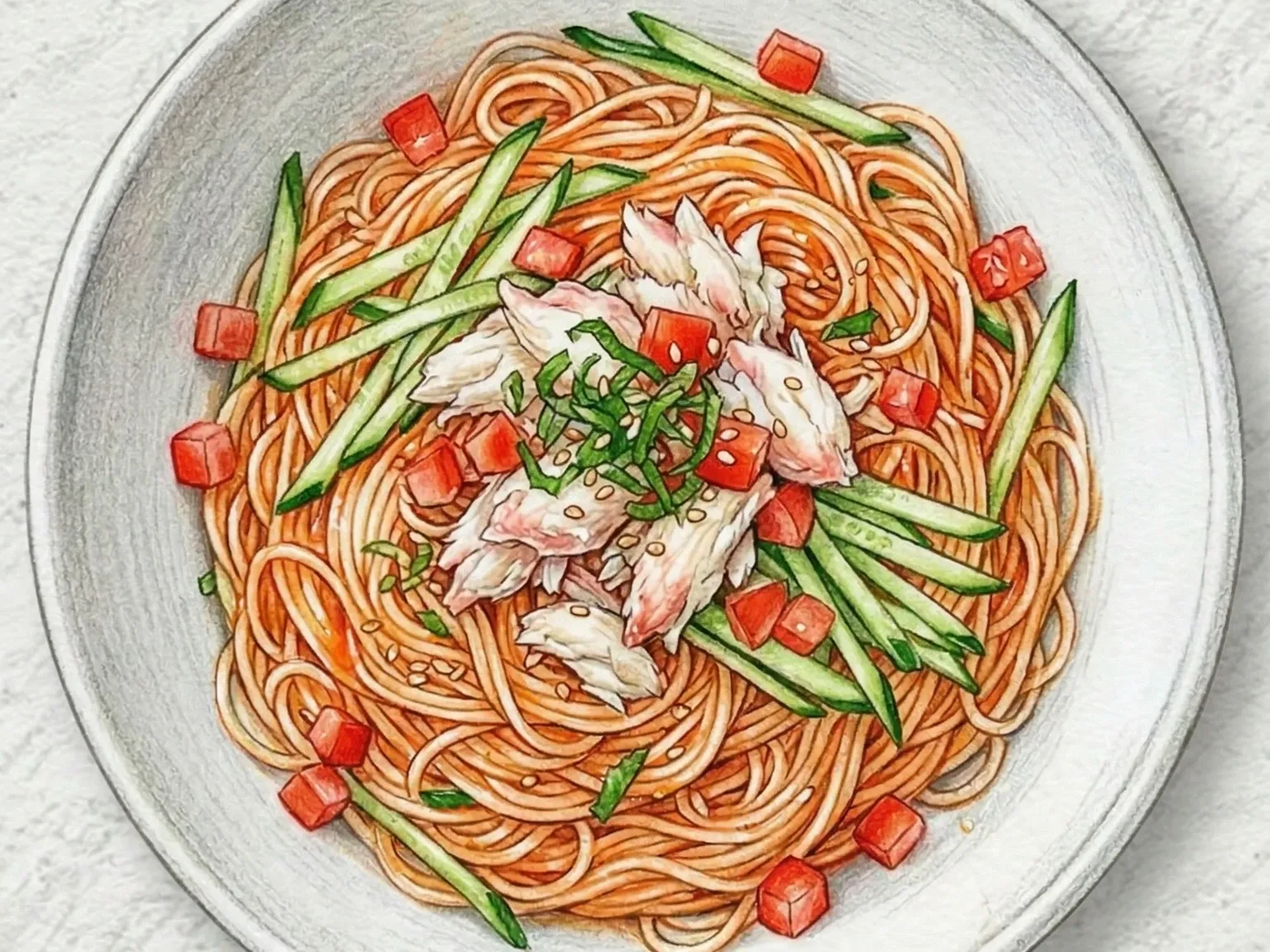
Chogochujang crab cold capellini is a chilled pasta dressed with chogochujang, a Korean condiment made by blending gochujang with rice vinegar and sugar until the paste becomes a pourable, sweet-tart, spicy dressing. The sauce layers capsaicin heat beneath an acidic brightness that makes it exceptionally well-suited to cold noodles, cutting through any residual starchiness and keeping each strand distinct. Blue crab meat contributes a delicate natural sweetness and a salinity that anchors the entire dish, while julienned cucumber adds crisp, water-rich crunch that lightens the overall texture. Capellini is among the finest pasta shapes available, measuring roughly 0.9mm in diameter, which means it overcooks almost instantly and must be shocked in ice water the moment it finishes boiling to halt cooking and preserve its springy elasticity. At room temperature, the strands begin to clump within minutes, so keeping them submerged in ice water until just before plating is the standard approach. Fresh tomato adds a burst of cool acidity that tempers the dense chogochujang dressing and prevents the dish from feeling heavy, making this a well-balanced warm-weather plate.

Abalone Seaweed Salad
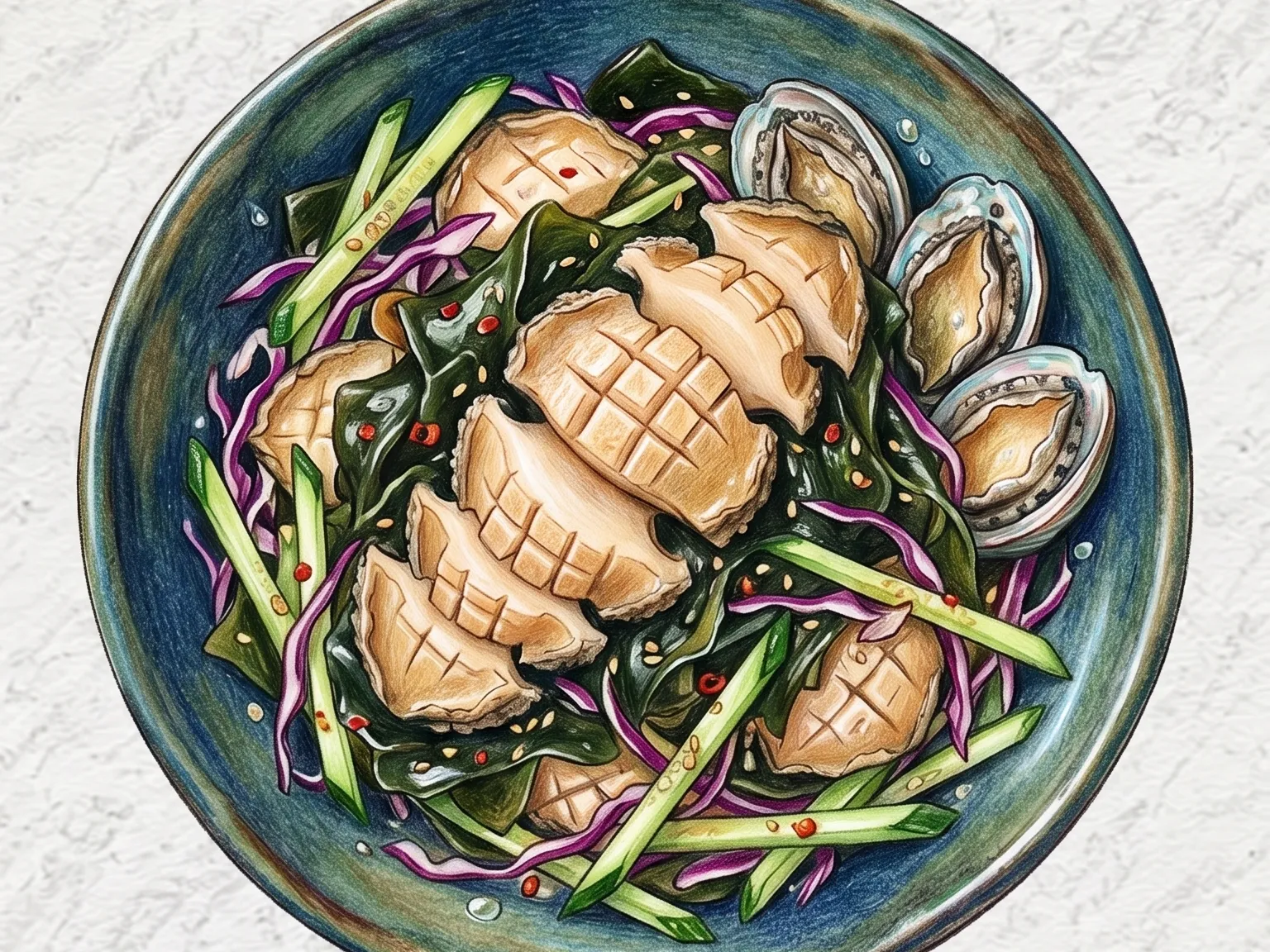
This salad centers on abalone, the shellfish that haenyeo - Jeju Island's female free-divers - have harvested by hand for centuries, descending without oxygen tanks to pry the mollusks from the sea floor. The abalone is blanched for just 40 seconds, a precise window that preserves its springy texture and keeps the delicate sweetness and ocean flavor intact. Overcooked abalone turns tough quickly, so the short blanching time is more technique than convenience. Rehydrated sea mustard, thinly sliced cucumber, and red cabbage round out the bowl. The dressing - lemon juice, plum syrup, soup soy sauce, and a touch of vinegar - is calibrated to support the seafood's natural brininess rather than cover it. The combination of chewy abalone, slippery seaweed, and crunchy raw vegetables creates three distinct textures throughout, which sustains interest from first bite to last. Serve cold as a light appetizer before grilled dishes, or as a standalone side during summer. The quality of the abalone shows plainly with so few ingredients around it.

Gazpacho
The secret to an authentic gazpacho lies in the interaction between stale bread and fresh garden vegetables. While tomatoes, cucumbers, and red bell peppers form the base, the addition of water-soaked bread creates a thick, velvety consistency that distinguishes this Andalusian specialty from a simple puree. Blending these ingredients with red onion, garlic, extra virgin olive oil, and red wine vinegar produces a smooth texture where the oil emulsifies the vegetable juices and the vinegar sharpens the natural sugars of the tomatoes. Patience is required after the blending is complete; the soup must rest in the refrigerator for at least two hours to allow the flavors to settle and integrate, a process that does not occur effectively at room temperature. Serving requires a final touch of drizzled olive oil and a handful of finely diced vegetables to create a crisp contrast against the liquid base. For the most refined results, passing the mixture through a fine-mesh sieve ensures a silky finish. Using fully ripened summer tomatoes provides the ideal acidity levels, and storing the leftovers in the fridge for a day or two often leads to a more developed profile.

California Roll
The California roll was developed in the early 1970s, most likely by Japanese chefs working in Vancouver or Los Angeles who needed to make sushi approachable for North American diners unfamiliar with raw fish. The inside-out construction - rice on the outside, nori hidden within - was a deliberate inversion designed to conceal the dark seaweed that Western eaters initially found off-putting. Imitation crab (surimi), ripe avocado, and cucumber form the filling, delivering a mild, creamy, and crunchy combination that requires no acquired taste to appreciate. The rice is seasoned with vinegar, sugar, and salt, then rolled so the grains hold together without being compacted into a dense cylinder. Tobiko or sesame seeds pressed into the outer rice layer add visual appeal and a subtle pop of texture with each bite. Though dismissed by sushi traditionalists, the California roll served as a gateway that brought millions of Westerners into Japanese cuisine and laid the foundation for the global sushi market. Today it remains the single most ordered sushi roll in North America.

Korean Potato Salad (Creamy Mashed Potato Ham Cucumber)
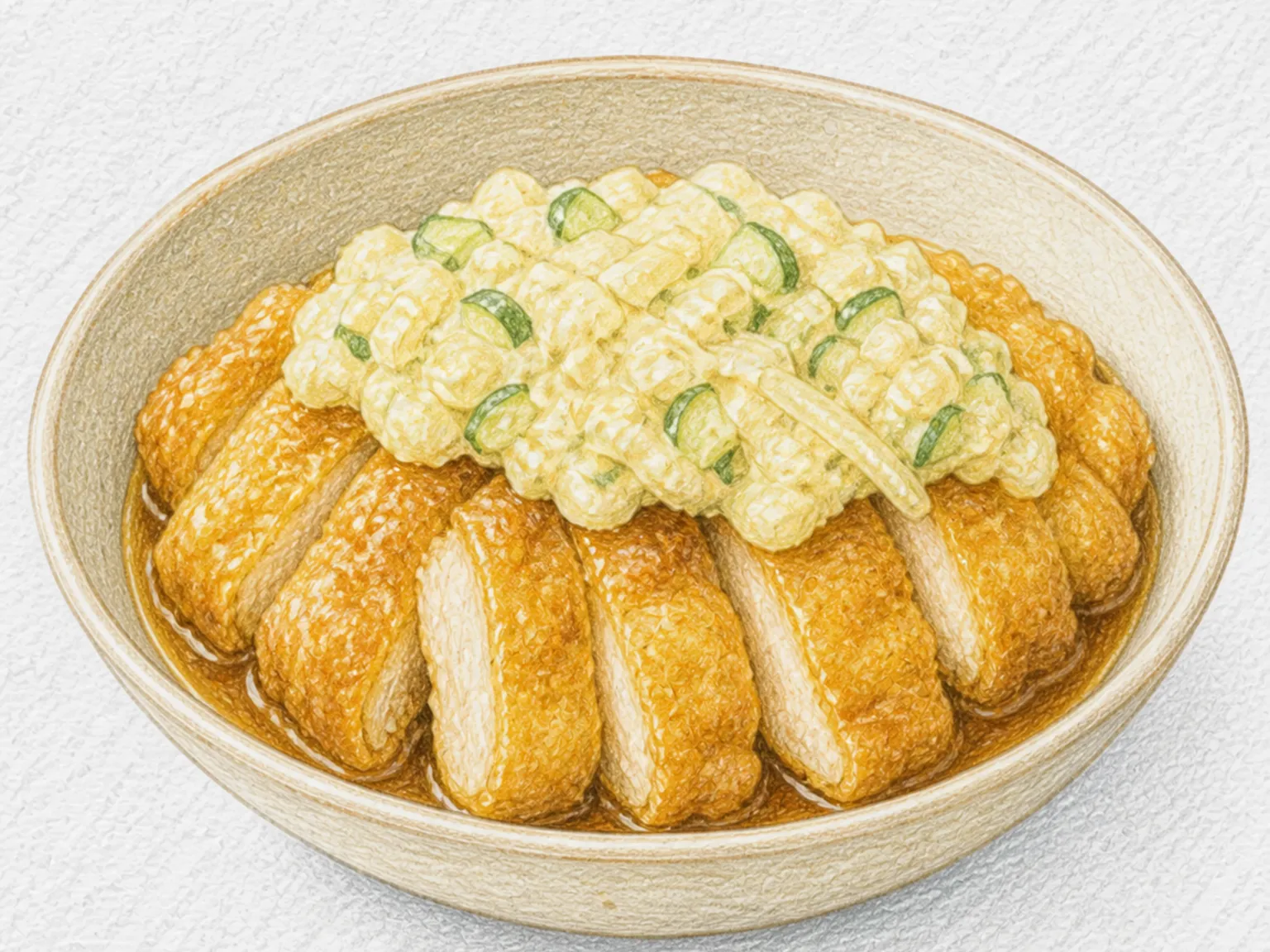
Korean potato salad arrived through Japan's yoshoku tradition but developed its own distinct identity in Korean home kitchens. Potatoes are boiled until tender and mashed while still hot, but not to a perfectly smooth consistency - leaving some lumps gives the salad a dual texture of creamy mashed potato and soft, intact chunks that hold together when eaten. Diced ham is pan-seared briefly to render out excess fat before being incorporated, preventing the finished salad from becoming greasy. Cucumber is salted and squeezed to remove water, which keeps the salad from turning watery as it sits. Boiled carrot is mixed in for color and a mild sweetness. The dressing is mayonnaise adjusted with sugar and salt, resulting in a distinctly sweet-creamy profile that is noticeably different from Western versions of the dish. Chilling the assembled salad for at least one hour before serving allows the seasoning to equalize throughout the mixture, improving the flavor considerably compared to eating it straight away. The salad is served as a banchan alongside rice, and it is also commonly spread inside sandwiches.

Korean Seasoned Tofu Pouch Sushi (Yubu Chobap)
Yubu chobap fills sweet-savory braised tofu pockets with vinegared sushi rice. The tofu skin absorbs the braising liquid, so each bite releases a light burst of seasoned juice. Finely diced carrot and cucumber mixed into the rice add crunch and color. Sesame oil and whole sesame seeds boost the nuttiness of the rice filling. Each piece is bite-sized and easy to eat by hand, which has made it a long-standing favorite for packed lunches, snacks, and picnic spreads in Korea.

Bibim Dangmyeon (Spicy Glass Noodles)
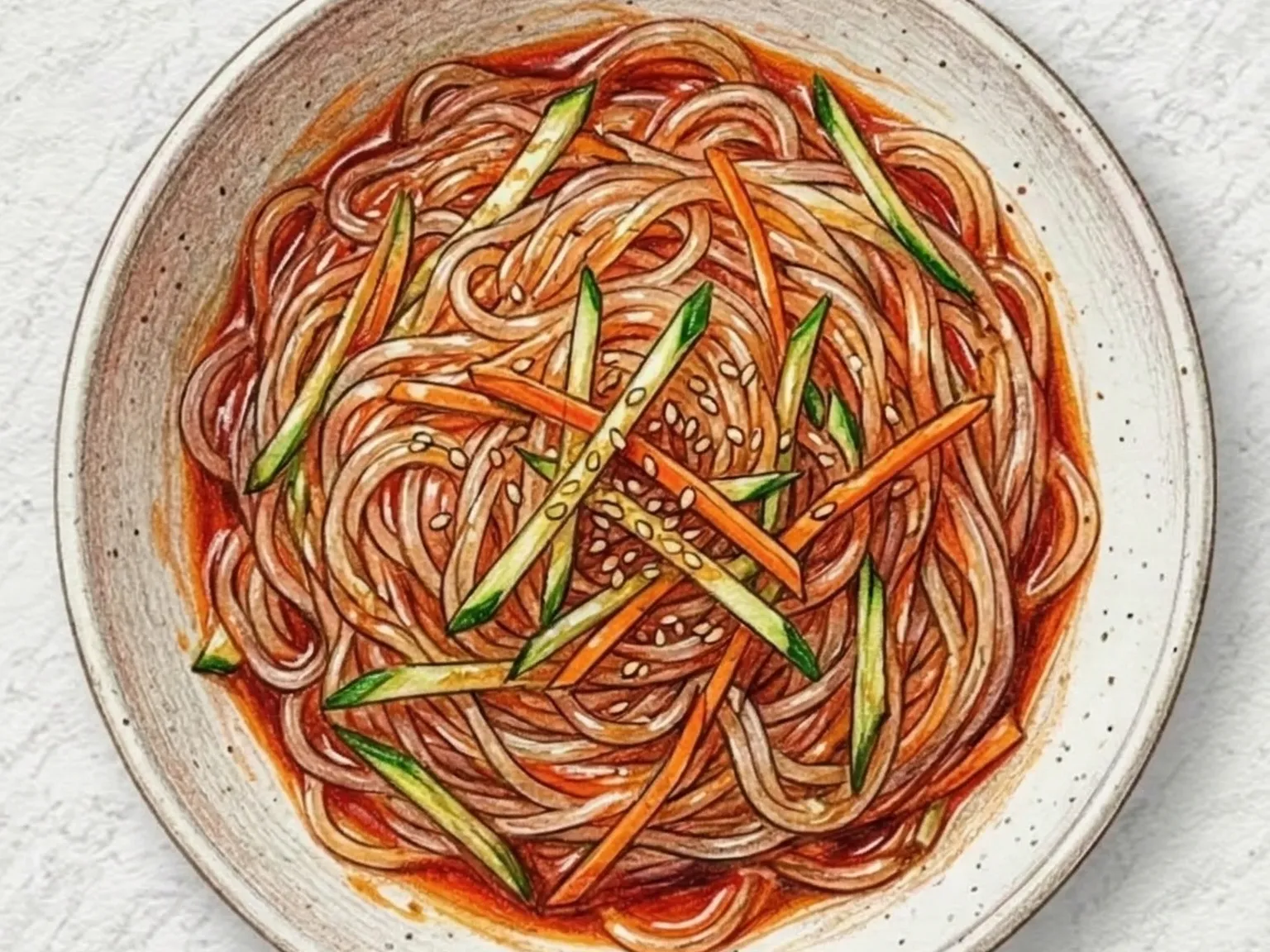
Bibim dangmyeon is a Korean bunsik dish of boiled sweet potato starch noodles tossed together with vegetables in a dressing of gochujang, vinegar, and sugar. The noodles are cooked in boiling water until just tender, then drained and rinsed thoroughly in cold water. The cold rinse is the step that determines the final texture of the entire dish. Skipping it leaves the noodles hot and continuing to soften in their own residual heat, and they eventually stick together in a clump. Running cold water over them immediately halts the cooking, sets the starch, and produces the transparent, chewy, springy texture that defines a well-made dangmyeon. Julienned cucumber and carrot add crunch and visual contrast in the bowl. A pan-fried egg sliced into thin strips and placed on top contributes a mild, rich note and completes the visual presentation. The dressing is a balance of three distinct flavor elements: the heat and fermented depth of gochujang, the acidity of vinegar, and the sweetness of sugar. All three need to coat every strand of noodle evenly, which requires thorough tossing rather than a light fold. Sesame oil added at the end prevents the noodles from sticking together as they sit while also contributing a warm, nutty finish. Because the noodles continue absorbing the dressing over time, the dish is best eaten immediately after preparation when the texture is at its most distinct. The dressing can be made in advance and refrigerated, and garlic chives or perilla leaves can substitute for the cucumber and carrot. Adding thinly sliced bulgogi or a soft-boiled egg provides protein without disrupting the overall balance of the dish.

Korean Jellyfish Salad (Chilled Mustard Vinegar Dressed Cold Dish)
Haepari-naengchae begins with salted jellyfish rinsed multiple times in cold water to remove as much of the brine as possible, then blanched in boiling water for roughly ten seconds to firm up and set its characteristic texture before being plunged immediately into ice water to stop the cooking. The jellyfish is sliced into thin strips along its natural grain and combined with julienned cucumber and bell pepper, then tossed in a dressing of rice vinegar, sugar, and Korean mustard, a sauce that hits in two distinct waves, first the sharp nasal heat of the mustard and then the clean sourness of the vinegar, creating a bracing, stimulating layered flavor. A small drizzle of sesame oil added at the end rounds the dish out with a warm, nutty gloss. Serving the naengchae cold is essential rather than optional: the jellyfish loses its springy, snappy bite as it warms, softening in a way that undermines the dish entirely, so it should be eaten immediately after dressing. It is most often presented as an appetizer at Korean-Chinese restaurants, but it is straightforward to prepare at home with salted jellyfish purchased from Korean grocery stores.

Imja-sutang (Royal Chilled Pine Nut Soup)
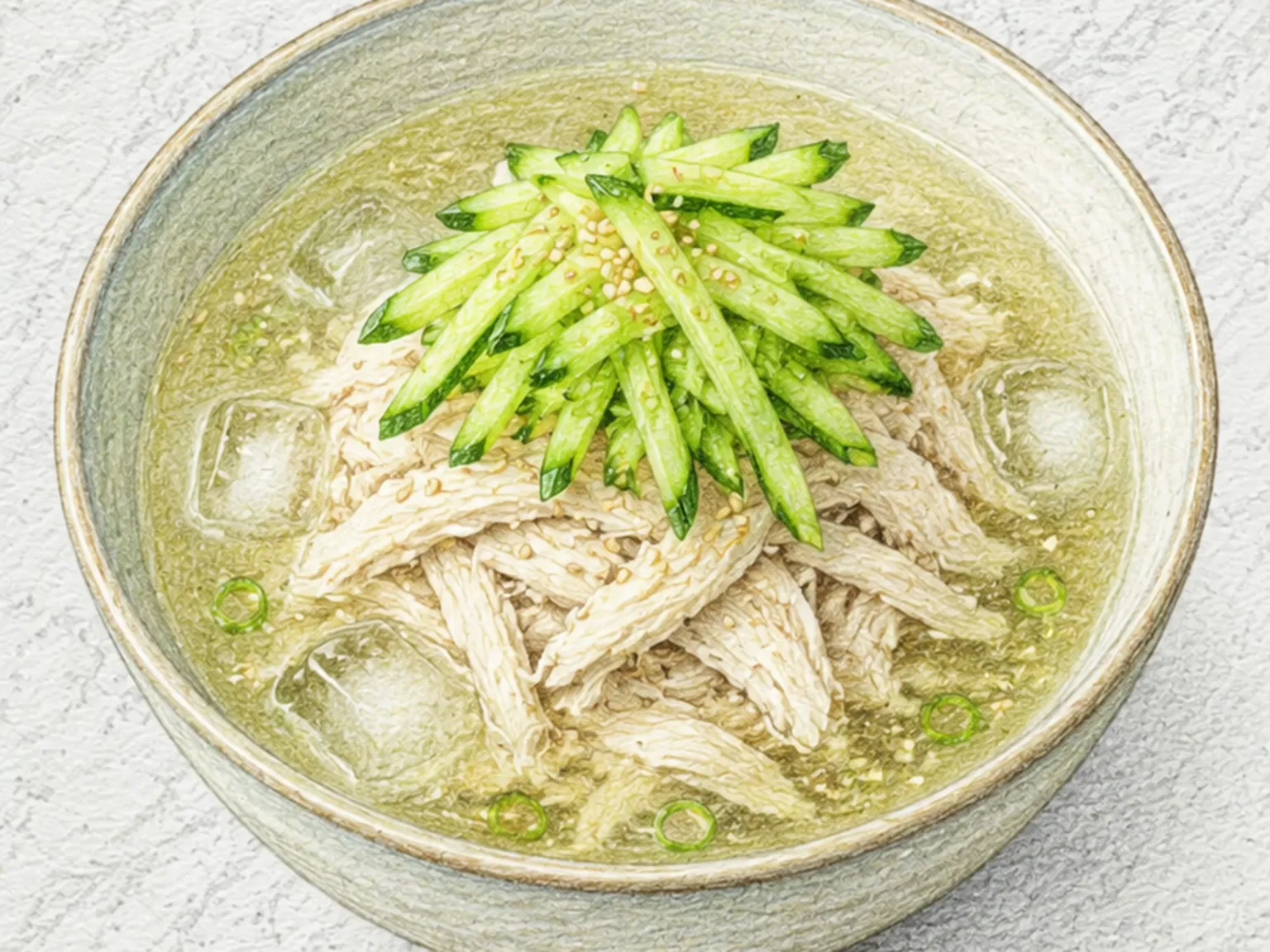
Imja-sutang is a royal Korean chilled soup that combines finely ground pine nuts and sesame seeds with chicken broth to create an opaque, creamy liquid of remarkable richness. The nut paste is blended with cooled chicken stock and a touch of milk until smooth, producing a porridge-like consistency that coats the palate with a gentle, lingering nuttiness. Poached chicken breast is shredded along the grain and submerged in the broth, and thin slices of cucumber are sometimes added for a cool, crisp contrast. The soup is traditionally served cold or at room temperature, making it especially refreshing in summer. Seasoning is minimal - just salt - because the natural oils in the pine nuts and sesame provide all the depth the dish needs. Imja-sutang traces its origins to Joseon dynasty court cuisine, where it was prepared for royal banquets, and it retains an air of elegance that elevates any table it appears on.

Korean Stuffed Steamed Cucumber
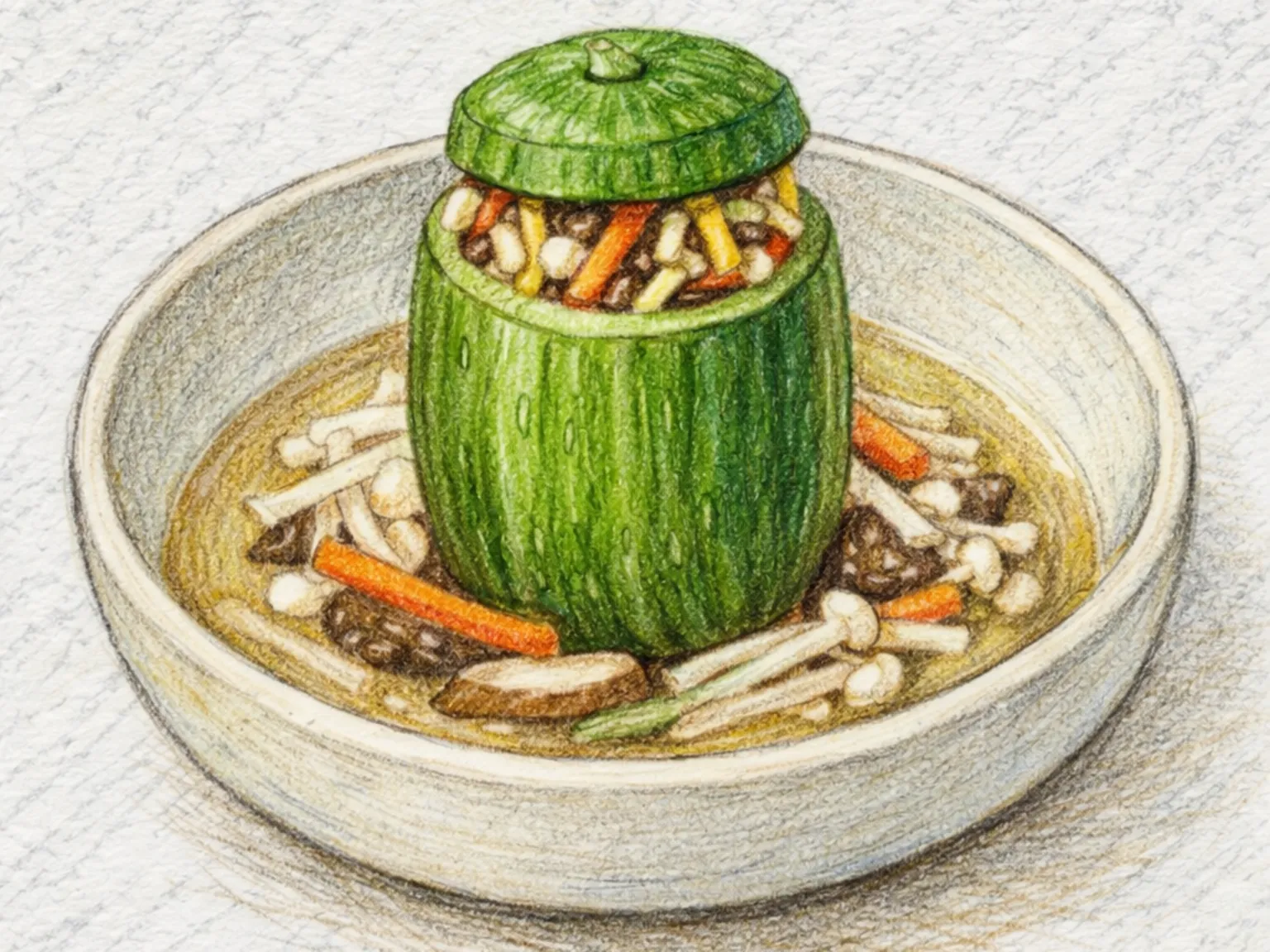
Oiseon is a traditional Korean court-style dish in which cucumber sections are hollowed out, stuffed with a filling of ground chicken, crumbled tofu, and finely julienned carrot, then steamed until the filling is just cooked through. The filling is seasoned only with soy sauce, garlic, and sesame oil, keeping it savory and lightly fragrant without competing with the clean flavor of the cucumber itself. Each piece delivers two distinct textures at once: the crisp, cool resistance of the cucumber shell against the soft, moist filling packed inside. Steaming rather than frying or sauteing preserves the cucumber's fresh green aroma and keeps the dish entirely oil-free, letting the natural character of each ingredient come forward without interference. The dish can be served warm directly from the steamer or chilled, at which point the flavors settle into a precise, refreshing clarity that works well in warmer seasons. A small dipping sauce of mustard sauce or light vinegar soy sauce sharpens the profile further. The careful preparation and restrained seasoning make oiseon appropriate for formal Korean table settings and guest entertaining, representing the kind of cooking where technique and balance speak louder than bold flavors.

Korean Stuffed Cucumber Kimchi
Oi sobagi is a Korean stuffed cucumber kimchi made by salting whole cucumbers, cutting them crosswise to within a centimeter of the base to create four attached wedges, and packing the cavity with a filling of garlic chives, onion, gochugaru, anchovy fish sauce, and plum syrup. When bitten, the cucumber's cool moisture meets the spicy, fragrant stuffing inside, releasing a burst of layered juice, and the firm crunch of the flesh contrasts cleanly with the softer chive filling. Salting for exactly thirty minutes is the critical window -- less time leaves the cucumber too firm to absorb the seasoning properly, while longer breaks down the cell structure and causes the flesh to go limp, which makes the stuffed pieces fall apart when cut. The filling ingredients should be mixed quickly without over-handling, because overworking the chives releases water and dilutes the seasoning. After stuffing, the cucumbers sit at room temperature for four hours to begin fermentation, then move to the refrigerator, where lactic acid development continues slowly overnight. By the second day the flavor is brighter and more complex with a distinct tangy edge. Cutting the portions just before serving, rather than in advance, keeps the flavorful interior juices from running out. Cucumbers of uniform thickness salt most evenly, and if substituting sugar for plum syrup, use a smaller quantity to keep the sweetness in check.

Korean Spicy Mixed Cold Noodles
Cold, chewy naengmyeon noodles are tossed in a sauce of gochujang, chili flakes, vinegar, sugar, and sesame oil. The noodles' characteristically tough, springy texture grips the bold sauce rather than letting it slide off, which creates an intensely textured bite. The single most critical preparation step is rinsing the boiled noodles thoroughly under cold water multiple times - removing the surface starch and squeezing out excess moisture keeps the sauce from diluting as it sits. Julienned cucumber and thin-sliced Korean pear cut through the heat, bringing refreshing crunch and a light fruitiness to each mouthful. Half a boiled egg placed on top tempers the chili's sharpness and brings the overall balance into line.

Kongguksu-Style Cold Linguine
Kongguksu-style cold linguine reinterprets Korea's chilled soy noodle soup using Italian linguine in place of traditional wheat noodles. Unsweetened soy milk is blended with toasted sesame seeds and peanut butter into a thick, nutty cold broth poured directly over the pasta at serving. The linguine is cooked al dente and immediately shocked in ice water to firm up the texture and chill it completely before the broth goes on. Julienned cucumber and halved cherry tomatoes scatter on top for fresh crunch and color. Salt and sugar are adjusted at the end to balance the broth's natural bean flavor against the richness from the peanut butter. The full preparation takes about ten minutes, with stovetop time limited strictly to boiling the pasta, which makes it one of the more practical cold dishes to assemble in summer heat. Adding more peanut butter thickens the broth further, while extra sesame seeds push the nuttiness higher.

Antipasto Salad
Antipasto - literally 'before the meal' in Italian - is a first course of cured meats, cheeses, olives, and preserved vegetables, and this salad compresses that entire tradition into a single composed bowl. Crisp romaine or iceberg forms the base, layered with sliced salami, capicola, provolone, marinated artichoke hearts, roasted red peppers, and briny Kalamata olives. A red wine vinegar dressing built with dried oregano and minced garlic draws the components together with a sharp, herbal acidity that cuts through the fat of the cured meats. The salami is rolled into loose cylinders and the provolone cut into thick chunks so both hold their presence against the dressed greens rather than disappearing into the mix. The reason the salad works is the contrast in salt levels and textures: heavily cured meat against mild cheese, smoky-sweet pepper against bitter greens, silky olive against crunchy romaine - no two bites taste the same. Italian-American delis in New York and New Jersey popularized this format in the mid-twentieth century, and it has since become a reliable fixture of catered lunches, potlucks, and family gatherings across the United States.