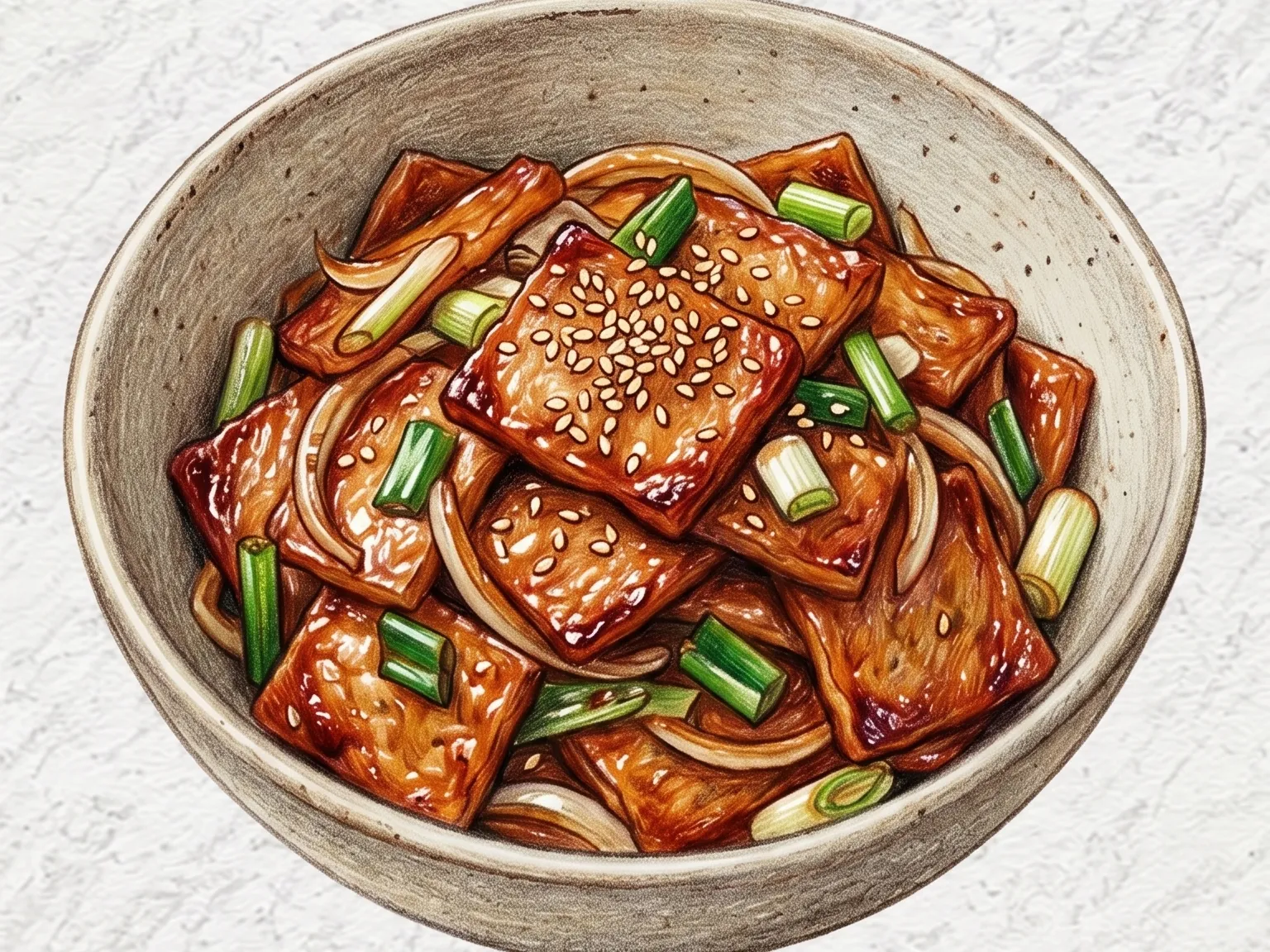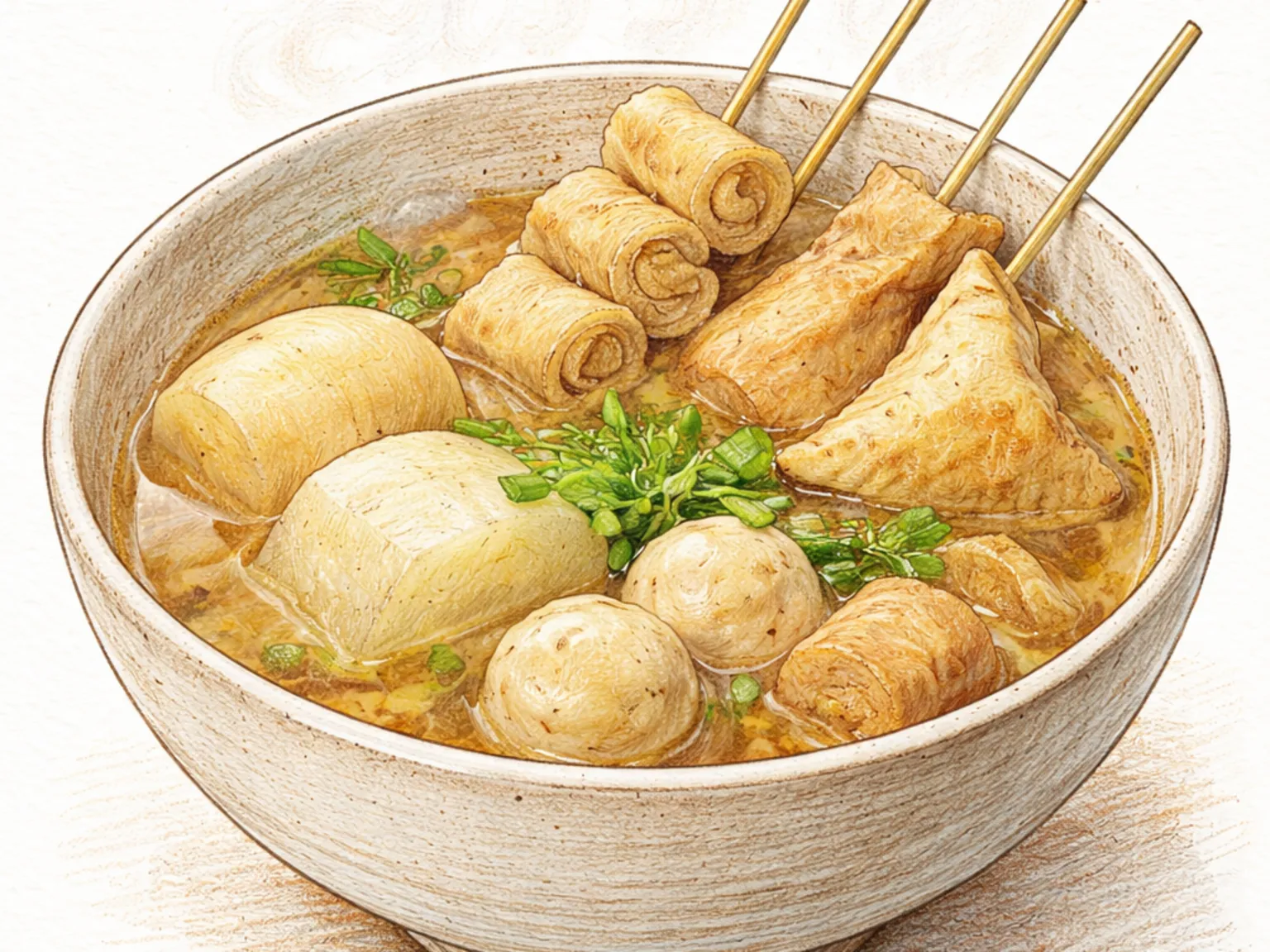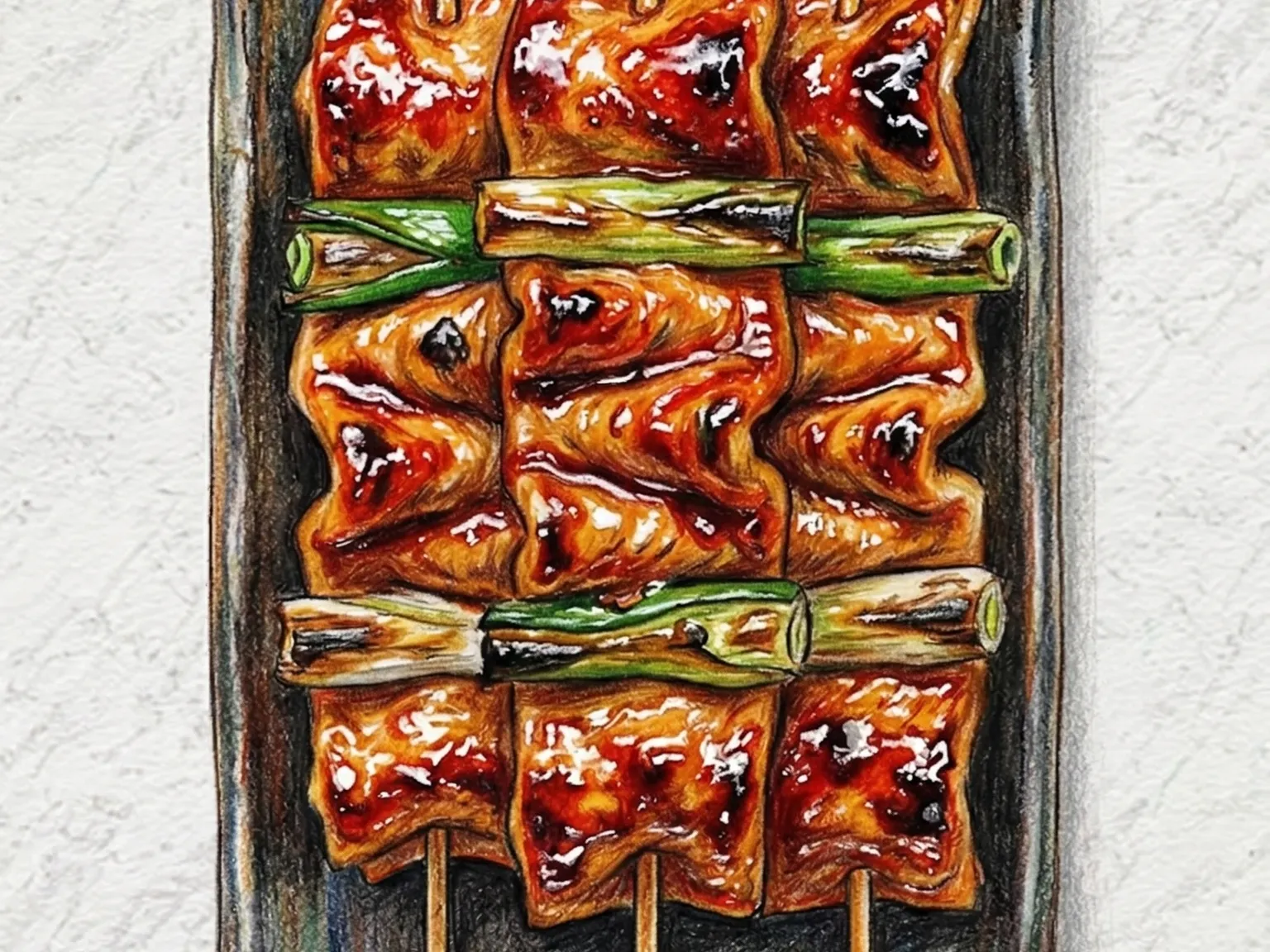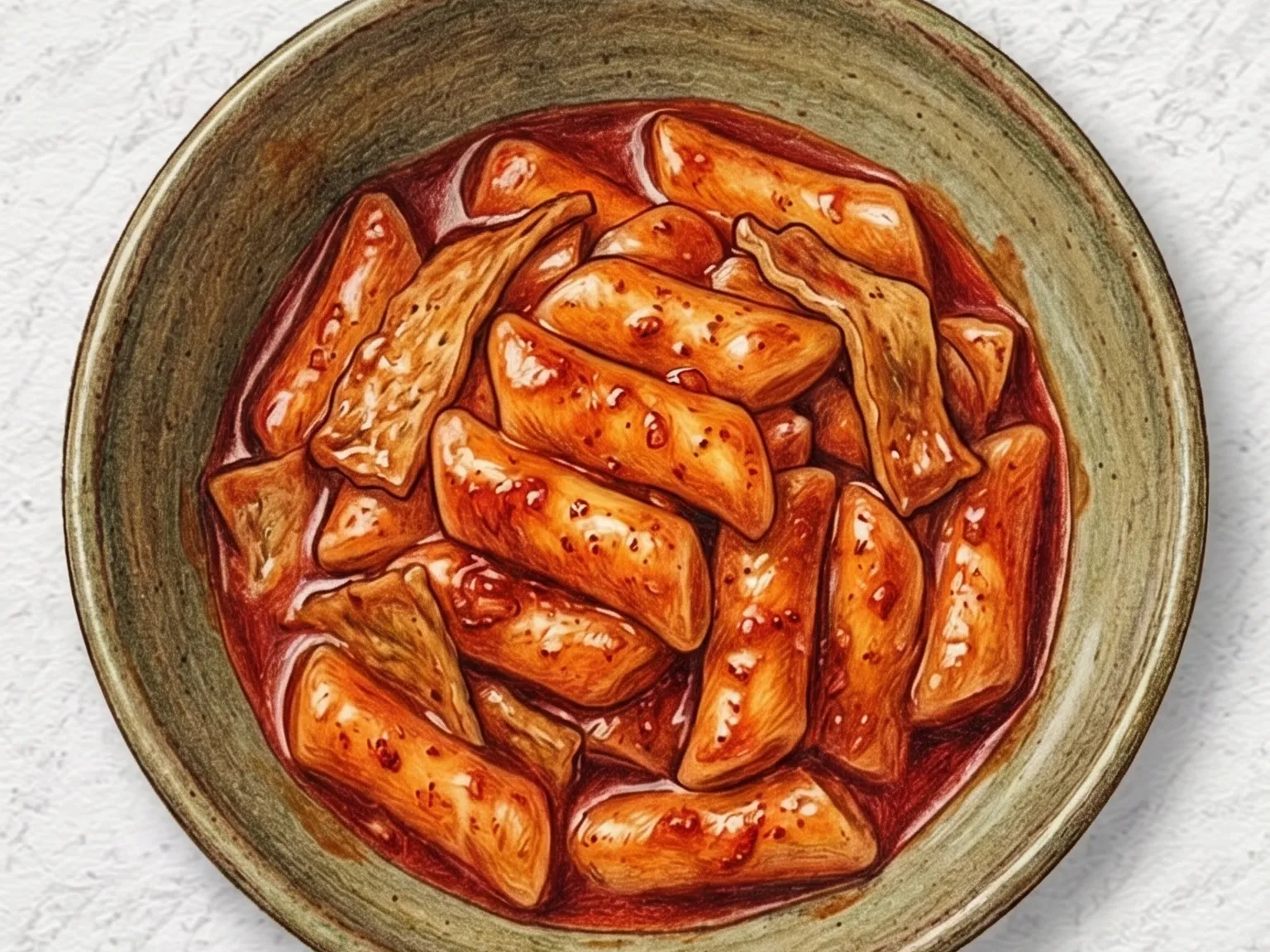
Old-school Wheat Tteokbokki
Quick answer
A nostalgic sweet and spicy tteokbokki featuring chewy wheat rice cakes perfectly soaked in sauce.
- Old-school wheat tteokbokki serves soft wheat cakes that soak up the spicy gochujang sauce.
- Wheat tteok absorbs the gochujang sauce deeper than rice tteok would
Key ingredients
Core cooking flow
- 1 Soak wheat rice cakes in cold water for 10 minutes and separate them.
- 2 Cut fish cakes into bite-sized pieces and slice green onions diagonally into large pieces.
- 3 Pour water into a pan and mix in gochujang, gochugaru, sugar, soy sauce, and garlic.
A nostalgic sweet and spicy tteokbokki featuring chewy wheat rice cakes perfectly soaked in sauce.
What Makes This Special
- Old-school wheat tteokbokki serves soft wheat cakes that soak up the spicy gochujang sauce.
- Wheat tteok absorbs the gochujang sauce deeper than rice tteok would
- 10-minute cold-water soak controls how much the tteok swells during cooking
- Fish cake's starchy broth thickens the sauce as it simmers down
Instructions
- 1
Soak wheat rice cakes in cold water for 10 minutes and separate them.
- 2
Cut fish cakes into bite-sized pieces and slice green onions diagonally into large pieces.
- 3
Pour water into a pan and mix in gochujang, gochugaru, sugar, soy sauce, and garlic.
- 4
When the liquid starts to boil, add the wheat cakes and simmer over medium heat until they puff up.
- 5
Once the cakes have puffed, add fish cakes and green onions, simmering until the sauce thickens.
- 6
When the cakes are well-seasoned, turn off the heat and serve in a bowl.
Tips
Nutrition (per serving)
Recipes to Cook Together
More Street food →Serve with this
Crispy Glutinous Rice Nurungji Crackers
A sweet and salty glutinous rice snack with an excellent crispy yet chewy texture.
Chicken Cabbage Wraps
Simple chicken tenderloin and cabbage wraps, ideal for a diet-friendly side dish.
Oriental Soy Protein Noodle Salad
A light and healthy meal featuring low-calorie soy protein noodles with fresh vegetables and oriental dressing.
Korean Jujube Tea (Simmered Dried Jujube Ginger Brew)
Daechucha is prepared by boiling pitted dried jujubes and sliced ginger in water over medium heat for thirty minutes, then removing the jujubes and pressing them through a strainer so only the smooth pulp returns to the pot. This technique gives the tea a naturally thick, sweet body without any added thickener. Ginger provides a quiet warmth underneath the jujube's dominant sweetness, and honey is stirred in off the heat to preserve its aroma. A few pine nuts floated on top contribute a subtle oily richness that extends the finish. The result is a warming, amber-colored tea served on cold days and during recovery from illness in Korean households.
Similar recipes
Korean Spicy Rice Cakes (Gochujang Braised Chewy Tteok with Fish Cake)
Simmering cylindrical rice cakes and thin fish cake sheets in a spicy base of gochujang, red chili flakes, sugar, and soy sauce creates a sticky, glossy coating. The starch released from the rice cakes as the liquid reduces acts as a natural thickener, ensuring the sauce clings tightly to each ingredient. While the fish cakes soak up the heat from the surrounding liquid, they release a subtle seafood essence into the pan, and the addition of green onions at the final stage provides a crisp contrast to the underlying sweetness. Preparing a stock from dried anchovies and kelp rather than using plain water establishes a solid savory foundation for the entire dish. It helps to start with only half the seasoning paste, adding the remainder gradually to manage the final intensity and texture as the volume decreases. If the liquid evaporates too quickly, adding small amounts of water prevents the sugars in the sauce from scorching before the rice cakes reach the desired softness. For rice cakes that have been chilled or feel exceptionally firm, a short soak in cool water or a quick blanch in boiling water helps them cook through evenly. Serving the finished dish with boiled eggs, blood sausage, or assorted fried items replicates the setup found at traditional street stalls. This recipe scales easily into different versions by incorporating heavy cream or tomato-based sauces, resulting in the rose and cream variations often found in modern snack shops.
Korean Ramen Tteokbokki (Spicy Rice Cake and Ramen Noodle Stir-Fry)
A sauce of gochujang, red pepper flakes, soy sauce, and sugar is dissolved in water and brought to a boil, then rice cakes are cooked for five minutes before ramen noodles and fish cake are added for three more minutes. The ramen noodles absorb the spicy tteokbokki sauce, producing a more concentrated flavor than tteokbokki alone, and the dish is finished with green onion and halved boiled eggs once the broth has thickened. Adding half a packet of ramen seasoning powder boosts the overall umami.
Korean Rosé Cup Tteokbokki
A base of equal parts water and milk is whisked together with gochujang, red chili flakes, sugar, and minced garlic, then brought to a simmer before rice cakes and fish cake are added. The sauce cooks over medium-low heat long enough for the rice cakes to absorb the seasoned liquid and turn glossy. Milk fat wraps around the capsaicin in the chili paste, softening the raw heat while keeping the fermented depth of gochujang intact. Mozzarella cheese is stirred in at the very end, off the heat or with the flame nearly out, so it melts smoothly into the sauce rather than turning stringy and tough. Keeping a consistently moderate flame is the single most important technique here, because high heat causes the milk to break and the sauce to turn grainy. Serving it in a cup format means the portion cooks and cools evenly, and the open top allows excess moisture to evaporate so the final consistency is thick and coating.
Korean Soupy Tteokbokki (Rice Cakes in Spicy Gochujang Broth)
Gukmul-tteokbokki is a soup-forward version of tteokbokki in which cylindrical rice cakes and fish cakes are simmered in a kelp-anchovy broth seasoned with gochujang, gochugaru, soy sauce, and sugar. Unlike dry or stir-fried versions, the generous broth saturates each rice cake from the outside in, while the fish cakes release their own savory juices into the liquid as they cook, building the stock to a richer baseline. Eight to ten minutes of medium-heat simmering leaves the exterior of each rice cake soft and yielding while the core stays chewy. Scallions go in at the end to cut through the heat with a bright, grassy note. The broth left over after the rice cakes and fish cakes are gone is widely regarded as the most prized part of the dish: regulars stir in a bowl of rice or drop in ramyeon noodles to make sure none of it goes to waste.
Korean Sotteok-Sotteok Skewers
Cylinder-shaped rice cakes and mini sausages are skewered in alternating order, then pan-grilled for six to seven minutes until the surfaces turn golden. A glaze made from gochujang, ketchup, soy sauce, oligosaccharide syrup, and minced garlic is brushed on and cooked for two to three more minutes until glossy and sticky. Each skewer delivers a contrast between the dense chew of rice cake and the snappy bite of sausage, unified by the sweet-spicy coating. Originally a Korean street-food staple, sotteok-sotteok is also popular for camping trips and can be made quickly in an air fryer.
Korean Tteok Kkochi Yangnyeom Gui (Grilled Rice Cake Skewers)
Cylinder rice cakes are threaded onto skewers, lightly brushed with oil, and rolled on a grill pan over medium heat for six to seven minutes until the exterior turns golden. A sauce of gochujang, ketchup, oligosaccharide syrup, soy sauce, and minced garlic is applied in two rounds, building a glossy red glaze that clings to the surface. The outer layer develops a slight crispness while the inside remains stretchy and dense - that textural duality is the hallmark of this dish. A light dusting of cheese powder turns it into a kid-friendly snack, and it stands as one of the most iconic items in Korean street-food culture.