Churros
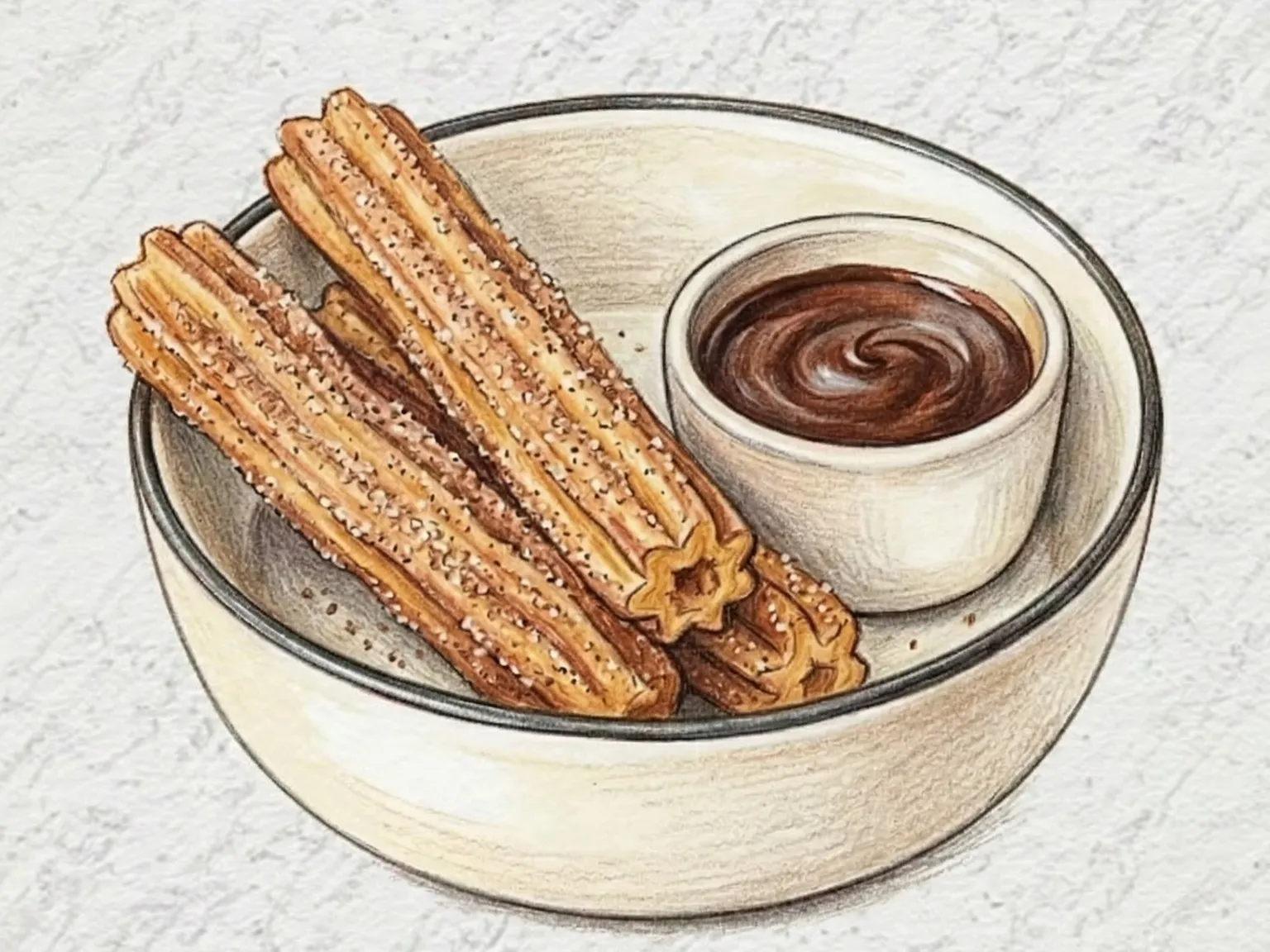
Churros are fried dough sticks made from a simple paste of water, flour, salt, and sometimes a touch of sugar. The dough is piped through a star-shaped tip, which creates ridges along the length - these ridges increase the surface area exposed to hot oil, producing maximum crunch across every inch while the interior stays soft and pillowy. Straight from the fryer, they are rolled in cinnamon sugar, which clings to the warm, oily surface and creates a sweet, spiced crust. The traditional pairing is thick Spanish hot chocolate - closer to a warm ganache than a drink - into which the churros are dipped. The bitterness of the chocolate and the sweetness of the cinnamon sugar play off each other, and the contrast between the crisp dough and the dense liquid makes each dip satisfying. Churros wait for no one: they are at their best within ten minutes of frying, after which the crispness fades as residual oil migrates inward.
Adjust Servings
Instructions
- 1
Bring water, butter, and salt to a boil.
- 2
Reduce heat and stir in flour until a smooth dough forms.
- 3
Cool slightly, then mix in eggs one at a time until glossy.
- 4
Pipe dough through a star tip into hot oil and fry until golden.
- 5
Drain well and coat in cinnamon sugar.
- 6
Serve warm with chocolate sauce if desired.
As an Amazon Associate, we may earn from qualifying purchases.
Tips
Nutrition (per serving)
More Recipes

Churros with Chocolate Sauce
Churros are made from a choux-style dough of boiled water, butter, and flour, enriched with eggs and piped through a star tip directly into hot oil. Frying at 175 to 180 degrees Celsius produces a crisp, ridged exterior with a chewy, slightly hollow interior. Rolling the hot churros in cinnamon sugar adds a fragrant sweetness that complements the fried dough. The accompanying dipping sauce melts dark chocolate into warm milk, creating a thick, bittersweet contrast to the sugared pastry. Controlling the batter consistency by adjusting the egg amount is essential - too loose and the churros lose their defined ridges during frying.

Caramel Flan
Caramel flan is a baked custard dessert built on the interplay between smooth egg custard and bittersweet caramel. Sugar is cooked in a dry pan until it reaches a deep amber, then poured into the bottom of a mold where it hardens into a glassy layer. The custard - eggs, milk, sugar, and vanilla - is poured on top and the whole assembly bakes in a water bath at gentle heat to prevent curdling. The slow, even cooking produces a texture that is perfectly smooth, without bubbles or grainy patches. Once chilled and unmolded, the caramel reliquefies into a flowing sauce that coats the pale custard in amber streaks. The flavor is a study in contrasts: the custard is milky and gently sweet, while the caramel adds a roasted, slightly bitter edge that prevents the dish from becoming cloying. It is served cold, and the clean wobble of a well-set flan is a point of pride.

Croquetas de Jamon (Crispy Ham Béchamel Bites)
Croquetas de jamón begin with a roux of butter and flour cooked for two minutes, followed by milk added gradually while whisking to form a thick béchamel. Finely chopped jamón serrano is folded into the sauce along with a pinch of salt, and the mixture is refrigerated until firm enough to shape. Chilling thoroughly is critical because soft filling will not hold its oval form during breading. Each croqueta is dipped in beaten egg and rolled in breadcrumbs - double-coating helps prevent splitting in the hot oil. Fried at medium heat until deep golden, the exterior shatters into the creamy, ham-laced center with every bite.

Basque Burnt Cheesecake
Basque burnt cheesecake is a crustless cheesecake originating from La Vina bar in San Sebastian, Spain, defined by its deliberately charred exterior and custardy interior. Cream cheese, sugar, eggs, heavy cream, and a small amount of flour are blended into a smooth batter and baked at high temperature - above 220 degrees Celsius - until the top develops deep, dark caramelization. This blackened surface contributes a bittersweet complexity that offsets the richness beneath. The center remains intentionally underset, yielding a texture closer to a dense custard than a traditional cheesecake. The cake is best served at room temperature, when the contrast between the firm caramelized shell and the soft center is most pronounced.

Yuja Basque Cheesecake (Korean Citrus Burnt Cheesecake)
Cream cheese batter is infused with yuja marmalade and zest, then baked at very high heat until the surface blisters into a dark, almost burnt crust while the interior remains a barely set, spoonable cream. The yuja - a Korean citrus prized for its intense fragrance - lifts the dense richness of the cream cheese with a bright, floral acidity that lingers on the palate. This citrus note distinguishes the cake from standard Basque cheesecake, which relies solely on dairy richness. Oven temperature must reach at least 230 degrees Celsius to achieve the rapid caramelization on the outside before the center has time to firm. Crumpled parchment lining the pan creates the characteristic wrinkled edges. After baking, the cake is cooled and then refrigerated, which gradually thickens the center from a flowing custard to a dense, mousse-like consistency. Served cold, each slice holds its shape on the plate while still feeling creamy and yielding on the fork.

Gazpacho
Gazpacho is a cold soup from Andalusia made by blending ripe tomatoes, cucumber, red bell pepper, red onion, and garlic with extra virgin olive oil and red wine vinegar. Soaking stale bread in water and blending it into the mixture releases starch that gives the soup its characteristic body and velvety texture. The olive oil wraps around the fresh vegetable flavors, while the vinegar sharpens the natural sweetness of the tomatoes into a balanced acidity. Chilling the blended soup for at least two hours allows the flavors to marry and deepen. Just before serving, a drizzle of olive oil and finely diced cucumber and pepper on top provide a textural contrast against the smooth, cold base.