Herbed Orzo Salad
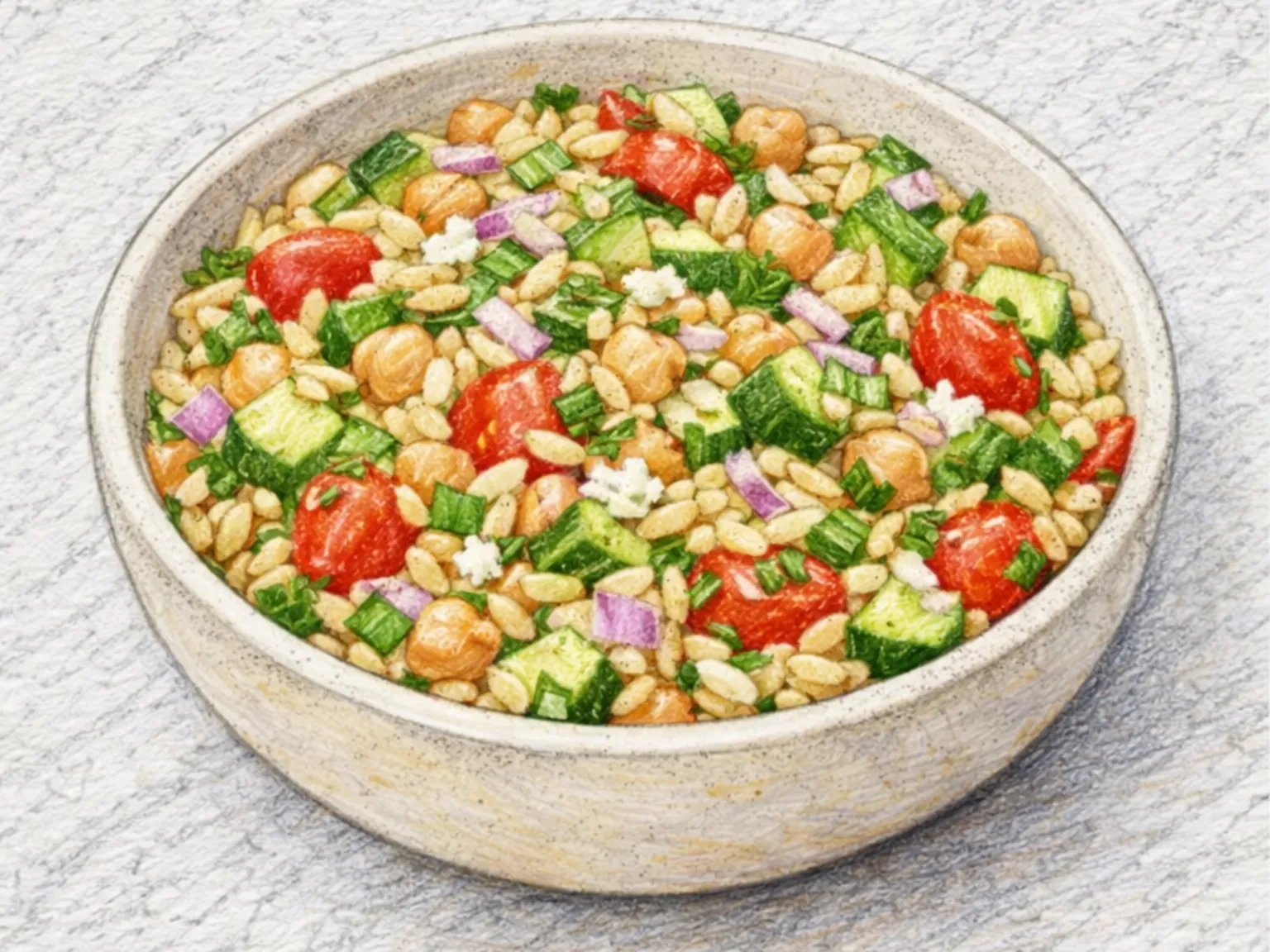
Herbed orzo salad cooks rice-shaped orzo pasta to al dente in salted water, cools it, then tosses it with diced cucumber, halved cherry tomatoes, chopped parsley and mint, and crumbled feta cheese in a lemon and olive oil dressing. Pulling the orzo from the water one minute before the package time is essential - the pasta continues to cook as it sits and absorbs dressing, so even slight overcooking results in a mushy texture by the time the salad is served. A small amount of olive oil stirred into the drained orzo while still warm prevents the pieces from clumping into a mass. The two-ingredient dressing of lemon juice and olive oil is deliberately bare, designed to let the bright herbal aroma of the parsley and mint come forward while cutting through the starchy weight of the pasta. Crumbling feta by hand rather than slicing it scatters uneven pockets of salty, creamy fat throughout the salad, so the flavor shifts slightly from one forkful to the next. The salad holds its texture and flavor when stored cold, making it well suited for packed lunches and advance preparation several hours ahead of serving.
Adjust Servings
Instructions
- 1
Cook orzo in salted water, drain, and cool.
- 2
Dice cucumber and tomatoes, and chop herbs.
- 3
Whisk lemon juice and olive oil for dressing.
- 4
Toss orzo with vegetables and herbs in the dressing.
- 5
Crumble feta on top and mix gently.
As an Amazon Associate, we may earn from qualifying purchases.
Tips
Nutrition (per serving)
Goes Well With

Spaghetti alla Puttanesca
Spaghetti alla puttanesca melts anchovy fillets into olive oil with sliced garlic over low heat, creating a deeply savory base before any tomato is added. Hand-crushed whole tomatoes, halved black olives, capers, and red pepper flakes go in next and simmer for eight minutes, during which the sauce reduces and the briny, salty, and spicy elements fuse into a bold, cohesive flavor. The anchovies dissolve completely, leaving no trace of fish but contributing an intense umami backbone. Because capers and anchovies are already heavily salted, seasoning is adjusted only at the very end by taste. The spaghetti is pulled one minute short of al dente and finished in the sauce pan with a splash of pasta water, which allows the starch to bind the sauce tightly to each strand.

Heukimja Cream Bacon Rigatoni (Black Sesame Cream Pasta)
Black sesame cream bacon rigatoni is a fusion pasta that earns its crossover status through ingredient logic rather than novelty. Roasted black sesame ground to a fine powder and blended into heavy cream and milk produces a sauce with a deep, slightly bitter nuttiness - closer to a nut butter than a standard cream - with a grey-toned color that signals immediately this is not a conventional cream pasta. Bacon fried until crisp adds salt, smoke, and crunch at regular intervals throughout the dish, which is important because the sauce, however rich, stays uniform in texture without it. Rigatoni is the right format here: the tube shape traps sauce both inside each piece and on the outer ridges, so every forkful delivers the full flavor load. Finishing with grated Parmigiano or Pecorino deepens the salt and umami content, and a final dusting of black sesame powder over the plated dish reinforces the Korean ingredient that anchors the whole concept. The combination works because black sesame and cream are both fat-forward and round - they do not fight each other.

Korean Salt-Grilled Sea Bass
Nongeo sogeum-gui is a Korean salt-grilled sea bass where scored fillets are seasoned only with coarse salt and black pepper, then seared skin-side down in olive oil infused with garlic and fresh thyme. Sea bass has firm, low-odor white flesh that takes well to minimal seasoning, and pressing the skin against the hot pan for a full five minutes drives out moisture and renders the thin fat layer underneath into a crisp, shattering crust. After flipping, the aromatic oil pooled in the pan is spooned over the flesh for three to four minutes-the fish is done when the center shifts from translucent to opaque white. A squeeze of lemon at the table adds brightness that cleans up any residual richness from the oil-basted cooking.

Gado-Gado (Indonesian Peanut Salad)
Gado-gado means mix-mix in Javanese, and the name describes exactly how the dish is assembled and eaten. Blanched spinach, bean sprouts, cabbage, and boiled potato are arranged on a plate alongside hard-boiled egg, fried tofu, and fried tempeh, then drenched generously with a thick peanut sauce before being mixed together at the table. The sauce is made by pounding freshly roasted peanuts in a mortar and mixing them with chili, garlic, tamarind, palm sugar, and kecap manis. The result is a complete flavor system in a single condiment -- nutty, spicy, sour, and sweet all at once -- so no additional seasoning is required. Street vendors pound the peanuts to order for each customer, and the smell of toasting nuts fills the air around their carts. Crushed kerupuk, the shrimp cracker common across Indonesian cooking, is scattered on top to add a shattering crunch that contrasts with the soft vegetables and protein. As the crackers absorb the sauce over the course of the meal they soften and swell, and that textural transition is considered part of the eating experience rather than a flaw. The dish adapts easily: built from vegetables alone it becomes a complete vegan meal, and loaded generously with egg and tofu it provides substantial protein. In Indonesia, gado-gado is eaten at any hour of the day with no particular seasonal or mealtime association, appearing at roadside carts and home tables with equal frequency.
More Recipes

Gochu Oil Tuna Puttanesca Spaghetti
The foundation of this Gochu oil tuna puttanesca spaghetti is established by integrating the olive oil reserved from a can of tuna with a secondary portion of chili oil. This combined oil serves as the medium for sautéing sliced garlic and whole anchovy fillets over a consistently low heat. The process continues until the anchovies have fully dissolved into the warm fat, a step that allows their natural saltiness to permeate the base while eliminating any lingering traces of fishiness. Crushed tomatoes are then introduced to the pan and left to simmer for six minutes over medium heat. This period of simmering reduces the liquid content, which in turn concentrates the flavors and makes the natural acidity of the tomatoes more prominent. After this reduction, capers and black olives are added to provide distinct layers of brine and a characteristic hint of bitterness to the mixture. The solid pieces of tuna are folded in during the final two minutes of cooking. This short duration ensures that the tuna maintains its structure and provides a firm texture instead of disintegrating into the liquid. The cooked spaghetti and a small quantity of starchy pasta water are then combined with the sauce over high heat. This rapid tossing emulsifies the fats and liquids into a glossy coating that adheres uniformly to every surface of the pasta. To finish the dish, a handful of chopped parsley is scattered on top to introduce a fresh herbal quality that lightens the dense and salty profile of the sauce. Red chili flakes can be included at any stage of the process to allow for the precise adjustment of heat levels.

Antipasto Salad
Antipasto - literally 'before the meal' in Italian - is a first course of cured meats, cheeses, olives, and preserved vegetables, and this salad compresses that entire tradition into a single composed bowl. Crisp romaine or iceberg forms the base, layered with sliced salami, capicola, provolone, marinated artichoke hearts, roasted red peppers, and briny Kalamata olives. A red wine vinegar dressing built with dried oregano and minced garlic draws the components together with a sharp, herbal acidity that cuts through the fat of the cured meats. The salami is rolled into loose cylinders and the provolone cut into thick chunks so both hold their presence against the dressed greens rather than disappearing into the mix. The reason the salad works is the contrast in salt levels and textures: heavily cured meat against mild cheese, smoky-sweet pepper against bitter greens, silky olive against crunchy romaine - no two bites taste the same. Italian-American delis in New York and New Jersey popularized this format in the mid-twentieth century, and it has since become a reliable fixture of catered lunches, potlucks, and family gatherings across the United States.

Couscous Herb Salad
Couscous is hydrated in hot water for five minutes until each grain separates and fluffs up, then mixed with a generous quantity of flat-leaf parsley, diced cucumber, and halved cherry tomatoes. The dressing is intentionally sparse - lemon juice, olive oil, salt, and pepper - letting the grain absorb the citrus brightness without competing flavors getting in the way. Because herbs make up a significant portion of the volume, this reads more like a tabbouleh than a heavy grain salad, with a clean freshness that makes it easy to eat in large portions. Couscous holds its texture at room temperature better than most grains, meaning the salad does not go soggy in a packed lunch container or on a picnic spread. Adding fresh mint, a handful of chopped cilantro, or a pinch of lemon zest shifts the flavor toward something sharper and more aromatic, while crumbled feta adds a salty, creamy contrast that transforms it into a more substantial dish.

Citrus Fennel Salad (Orange & Shaved Fennel with Arugula)
Fennel is shaved thin to highlight its anise-scented crunch, then paired with segmented orange for juicy acidity. Arugula contributes a peppery bite that offsets the citrus sweetness, and sliced almonds add a toasted crunch. The dressing stays minimal - olive oil and white wine vinegar - so the raw ingredients come through clearly without interference. Dressing should be added just before serving to prevent the fennel from wilting. The salad works well before rich meat or fish courses, since the citrus and fennel combination opens the palate rather than dulling it.

Farro Harvest Salad
Farro is an ancient Italian wheat variety that retains a satisfying chew even after boiling, making it a reliable foundation for grain salads that need to hold their texture over time. Roasting root vegetables such as butternut squash, beets, or sweet potatoes at high heat caramelizes their natural sugars and creates slightly crisp edges that contrast with the soft grain below. Toasted walnuts or pecans layered in add crunch and nutty depth. Bitter greens like arugula or kale interrupt the sweetness of the vegetables and prevent the salad from becoming one-dimensional. A dressing of apple cider vinegar, olive oil, and a small amount of honey ties the components together while allowing each ingredient to remain distinct. The salad carries enough fiber and protein to serve as a complete meal rather than a side. Farro's dense structure absorbs dressing gradually without turning soft, so the salad holds well in the refrigerator for two days, making it a practical choice for meal preparation.

Spaghetti Carbonara
Carbonara is a Roman pasta built on four core ingredients: guanciale, egg yolks, Pecorino Romano, and black pepper. The guanciale is rendered until crisp, and its fat becomes the base of the sauce. Off the heat, a mixture of yolks and grated cheese is tossed with the hot pasta and starchy cooking water to form a glossy emulsion - no cream involved. The dish takes under 25 minutes from start to finish, though temperature control at the sauce stage is critical to avoid scrambling the eggs.