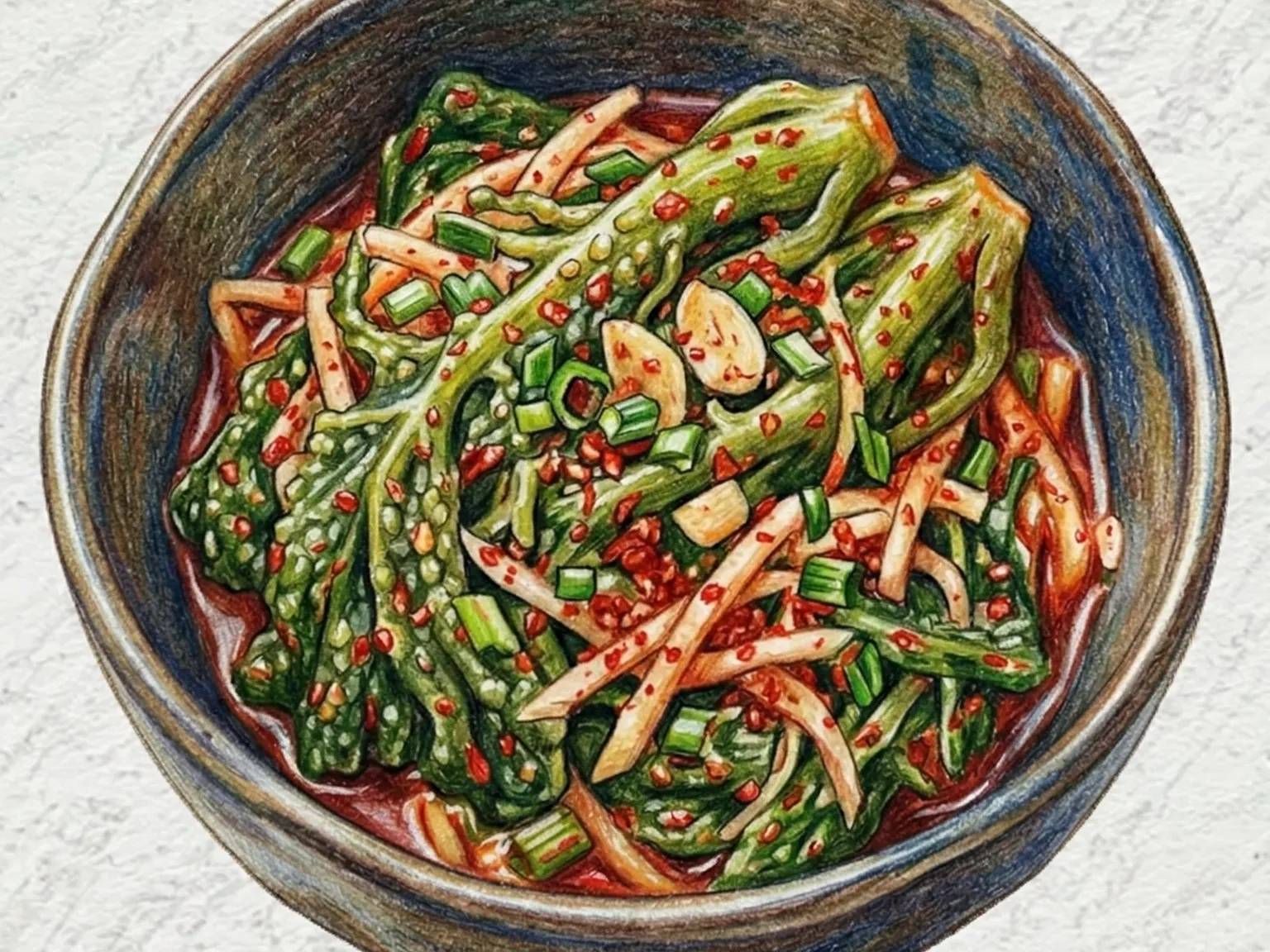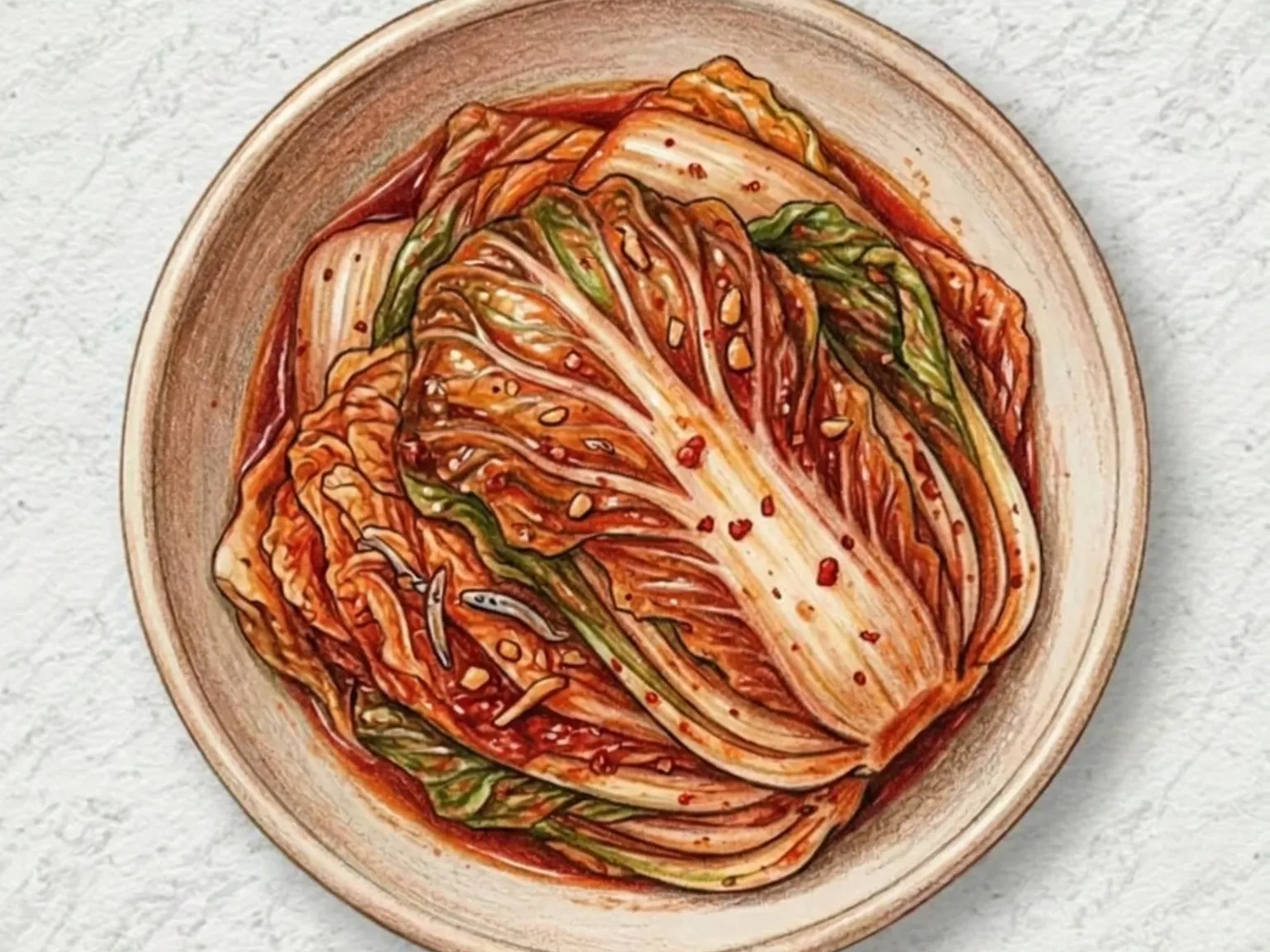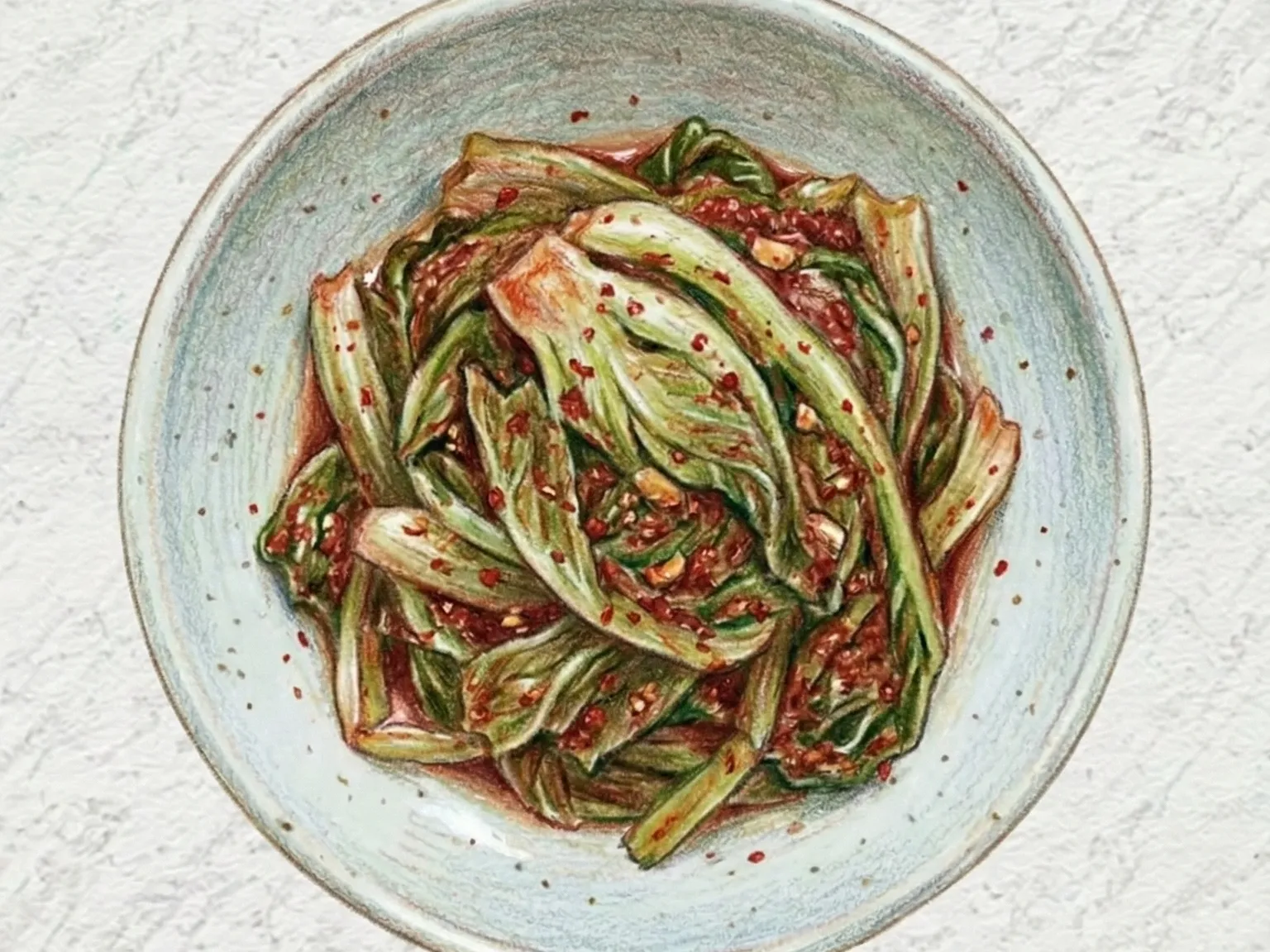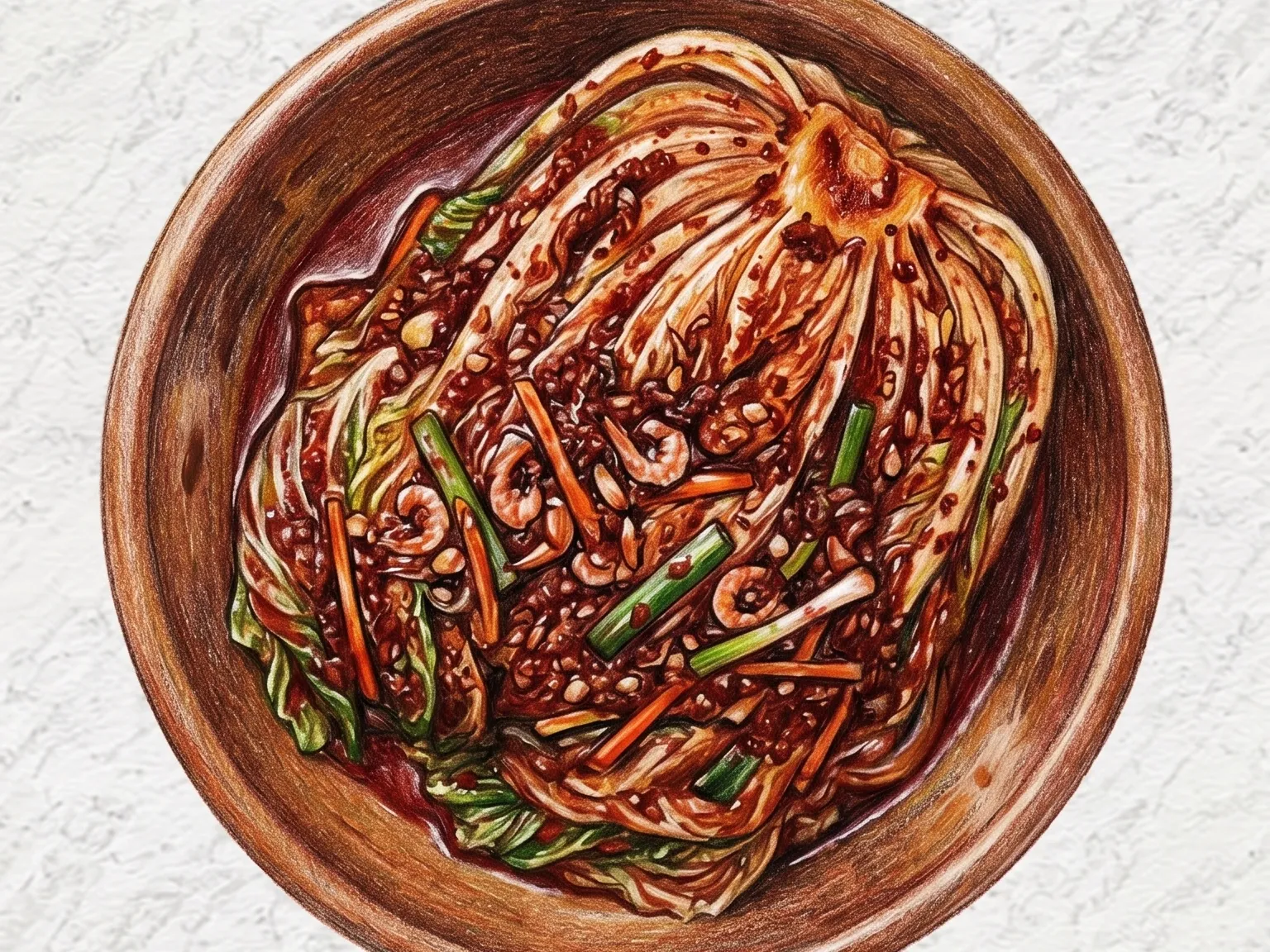
Authentic Jeolla-style Kimchi
Quick answer
Authentic Southern-style kimchi with rich fish sauce and rice paste for deep umami.
- Fermented yellow corvina and anchovy sauce define the deep umami of Jeolla-baechu-kimchi.
- Combination of yellow corvina jeot and anchovy fish sauce builds the Jeolla depth
Key ingredients
Core cooking flow
- 1 Wash 50g of sea staghorn thoroughly 2 to 3 times under cold running water, d...
- 2 Combine 1 cup of rich anchovy fish sauce with 0.5 cup of savory yellow croak...
- 3 Add 2 cups of chili flakes to 1 cup of glutinous rice paste and let it bloom...
Authentic Southern-style kimchi with rich fish sauce and rice paste for deep umami.
What Makes This Special
- Fermented yellow corvina and anchovy sauce define the deep umami of Jeolla-baechu-kimchi.
- Combination of yellow corvina jeot and anchovy fish sauce builds the Jeolla depth
- Finely chopped sea staghorn seeps a cooling seaweed note through fermentation
- Blooming chili in glutinous rice paste simultaneously fixes color and stickiness
Instructions
- 1
Wash 50g of sea staghorn thoroughly 2 to 3 times under cold running water, drain well, and then finely chop into 0.5cm pieces. This ingredient provides the signature refreshing umami characteristic of authentic Jeolla-style kimchi.
- 2
Combine 1 cup of rich anchovy fish sauce with 0.5 cup of savory yellow croaker sauce, mixing until the deep and nutty aroma of fermented fish rises. This base establishes the intense flavor profile unique to Southern-style kimchi.
- 3
Add 2 cups of chili flakes to 1 cup of glutinous rice paste and let it bloom until the color turns red, then mix in 0.5 cup of minced garlic and the chopped sea staghorn. Blooming the chili flakes ensures a bright and even color.
- 4
Fold 1 cup of shredded radish and scallions cut into 4cm lengths into the seasoning paste, tossing lightly to keep the vegetables crisp. Avoid over-mixing to prevent the radish from developing a raw, grassy smell.
- 5
Spread the stuffing generously between each leaf of the 2 salted cabbage heads, then wrap the entire head tightly with the outer leaves to keep everything in place. Ensure every layer is seasoned well to prevent uneven fermentation.
- 6
Pack the seasoned cabbage tightly into a kimchi jar or container, pressing down firmly to remove air pockets, then ferment in a cool shaded area or kimchi refrigerator. Minimizing air contact prevents odors and ensures a clean taste.
Tips
Nutrition (per serving)
Recipes to Cook Together
More Kimchi →Serve with this
Grilled Chicken Heart Skewers
A recipe for chewy and nostalgic street-style grilled chicken heart skewers.
Steamed Female Blue Crab with Soy Sauce
A premium dish of egg-filled female blue crab steamed with a secret soy seasoning.
Diet Konjac Fried Rice
A light and delicious konjac fried rice to enjoy without calorie worries.
Country-style Soybean Paste Stew
A traditional stew featuring the deep, earthy flavor of country-style fermented soybean paste.
Similar recipes
Jeolla-style Green Onion Kimchi
Deep-flavored green onion kimchi with rich fish sauce and spicy seasoning.
Korean Mustard Leaf Kimchi
Gat kimchi is a Jeolla-province kimchi made from salted mustard greens (gat) fermented with gochugaru, anchovy fish sauce, garlic, and plum extract. The brassica oils in the leaves transform during fermentation into a sharp, nose-tingling pungency distinctly different from standard napa cabbage kimchi. Anchovy fish sauce lays down deep umami while plum extract softens the acidity, balancing the aggressive aroma against the pronounced saltiness. Served alongside fatty pork or soup-rice bowls, it cuts through richness and refreshes the palate forcefully between bites. Dolsan gat, grown on Dolsando Island in Yeosu, is considered the most aromatic variety, and the kimchi reaches its ideal balance of pungency and fermentation tang after two to three days of resting rather than immediately after preparation.
Korean Beoseot Kimchi (Mushroom Kimchi)
Blanching oyster and shiitake mushrooms before mixing them with gochugaru and fish sauce creates a side dish that bypasses the long fermentation usually associated with Korean kimchi. This boiling process removes the sharp raw scent of the mushrooms and softens their structure so the seasoning coats every surface evenly. Tearing the oyster mushrooms by hand along their natural grain allows the spicy and salty sauce to penetrate deeply while maintaining a natural bite. The thick caps of the shiitake mushrooms provide a firm, chewy element that lasts throughout the meal. Using fish sauce introduces a concentrated saltiness and a fermented profile that distinguishes this from basic seasoned vegetables. Fresh garlic chives contribute a clean, grassy aroma that balances the heavier spices. Since it does not require aging, this preparation is ready to eat immediately and reaches its peak flavor on the day it is made. Swapping chives for scallions provides a more delicate scent, and adding king oyster or enoki mushrooms introduces different physical textures. Including finely chopped squid or octopus transforms the dish into a seafood version with flavors from the ocean. Because mushrooms release water and lose their firm texture after a few days in the refrigerator, preparing small batches for immediate consumption ensures the highest quality.
Korean Salt-Fermented Tiny Shrimp
Saeujeot is a Korean salt-fermented tiny shrimp condiment made by mixing small shrimp evenly with sea salt, packing the mixture tightly into a sterilized jar, and fermenting under refrigeration for a minimum of two weeks. Salt draws moisture from the shrimp and initiates enzymatic breakdown of the proteins, gradually transforming the raw fishiness into concentrated amino acids and the deep, savory umami that forms the backbone of kimchi seasoning and Korean stew bases. Rice wine and ginger juice are added to suppress the off-flavors that develop during the early, volatile stages of fermentation before the lactic acid bacteria have established dominance. A small amount of chili flakes contributes a faint background warmth. The most critical step before salting is removing as much surface moisture as possible after rinsing the shrimp, since excess water dilutes the brine concentration and creates conditions for spoilage bacteria. The salt ratio should fall between 20 and 25 percent of the shrimp's weight: too high and the result is harsh and one-dimensional, too low and safety becomes a concern during the long cure. Only clean, dry utensils should ever touch the jar to prevent contamination that would undermine months of careful fermentation. Saeujeot fermented for six months or longer develops a rounded complexity absent in younger batches. In Korea, the harvest season determines the name and character of the product: ojot from May, yukjeot from June, and chujeot from autumn each carry a distinct flavor profile suited to different culinary uses.
Korean Kimchi Jjigae (Kimchi Stew)
Kimchi jjigae is a well-loved Korean home-cooked stew, built on well-fermented kimchi and pork belly simmered together until the flavors fully meld. The kimchi's sharp acidity breaks down the richness of the pork fat, producing a broth that is simultaneously tangy, spicy, and deeply savory. A spoonful of doenjang adds another layer of fermented complexity, while tofu blocks absorb the fiery liquid. Finished with a drizzle of sesame oil, it is the definitive comfort food served with steamed rice.
Korean Kimchi Porridge (Fermented Kimchi Pork Rice Porridge)
Well-fermented napa kimchi is chopped into small pieces and stir-fried with ground pork in sesame oil first, building a savory, aromatic base before the soaked rice and water go in for a slow, gentle simmer of thirty minutes. The extended cooking time is what fundamentally changes the character of the dish: the raw, sharp edge of the chili fades and the fermentation tang disperses through the porridge evenly, becoming deep and mellow rather than assertive, while the pork contributes a rich savory backbone that plain kimchi alone could not provide. Soup soy sauce is added toward the end to adjust the salt, and sesame seeds scattered over the finished bowl add a final nutty aroma. The more sour and deeply fermented the kimchi used, the more complex and layered the finished juk becomes -- bright red in color and bold in flavor. This is a traditional Korean porridge associated with recovery and comfort, eaten warm when the stomach is unsettled, appetite has gone quiet, or the cold calls for something deeply nourishing. Diced silken tofu added during the last few minutes of simmering introduces a new texture and adds protein without disrupting the clean, porridge-like consistency.