Steamed Female Blue Crab with Soy Sauce

Steamed Female Blue Crab with Soy Sauce

Quick answer

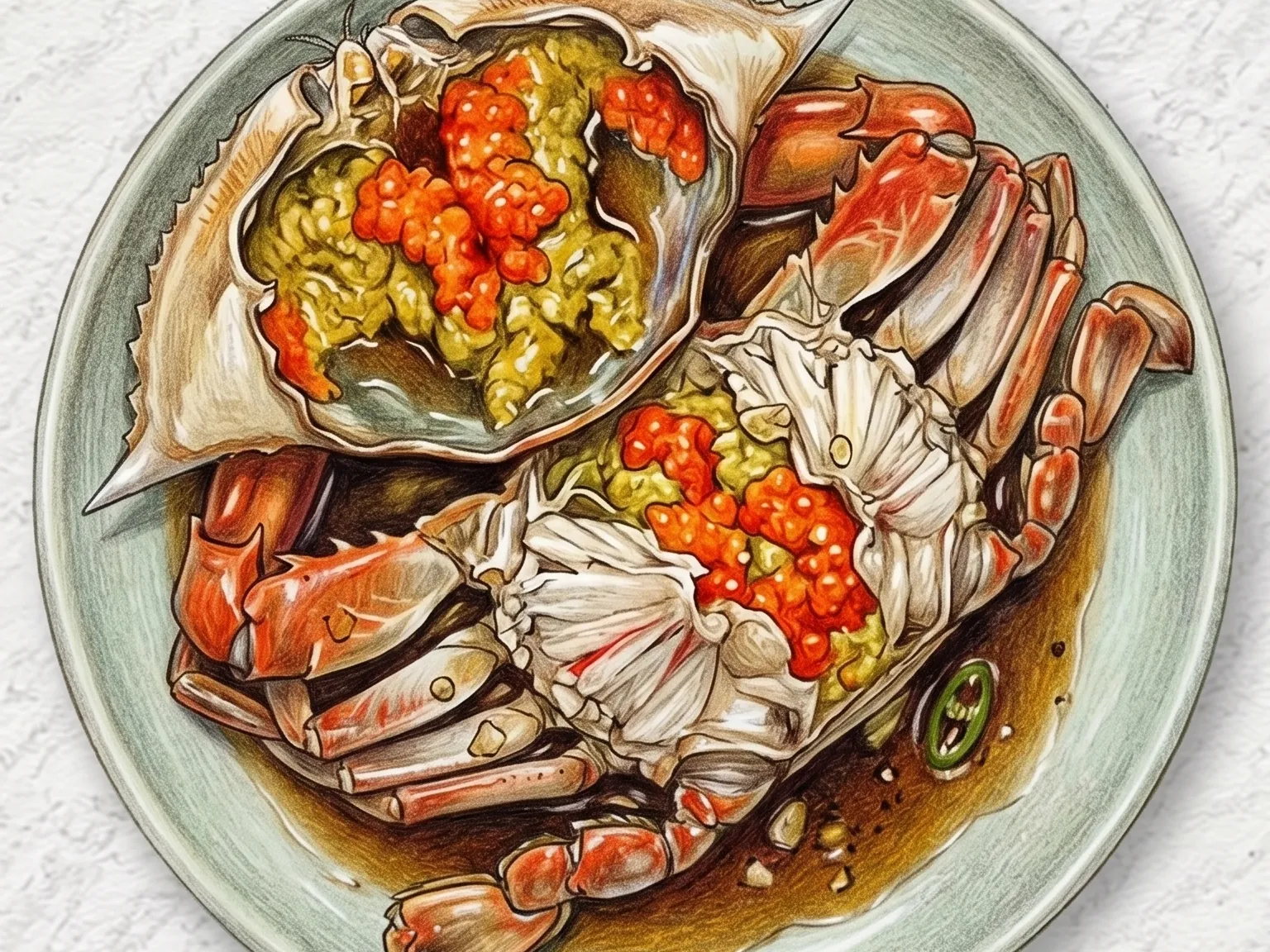
This dish features female blue crabs filled with roe steamed in a seasoned soy sauce mixture along with onions and ginger.

What makes this special

  • Steamed female blue crab is cooked belly-up to keep the rich roe and tomalley in place.
  • Belly-up position keeps the female crab's roe and tomalley in place
  • Ginger slices and onion on the base eliminate fishiness as fragrant steam rises
Total time
45 min
Level
Hard
Servings
2 servings
Ingredients
8
Calories
210 kcal
Protein
25 g

Key ingredients

Female Blue CrabDark Soy SauceOligosaccharideRefined Rice WineSliced Ginger

Core cooking flow

  1. 1 Fold back the belly flap of each female blue crab and scrub out the gills and debris with a brush.
  2. 2 Line the pot bottom evenly with half a sliced onion and 10 g ginger slices t...
  3. 3 Place the crabs belly-side up in the pot.

This dish features female blue crabs filled with roe steamed in a seasoned soy sauce mixture along with onions and ginger. Cleaning the crabs requires folding back the belly flap to scrub out the gills while keeping the top shell intact. The crabs must be placed belly-up in the pot to prevent the rich roe and tomalley from leaking out during cooking. Sliced onion and ginger are layered at the bottom of the pot to prevent the crabs from scorching and to emit a fragrant steam that eliminates fishy odors. After pouring a mixture of soy sauce, oligosaccharide, rice wine, and water over the crabs, they are steamed for fifteen to twenty minutes on medium heat. Adhering to this precise timing prevents the tender crab meat from dissolving or turning mushy. Spooning the remaining cooking liquid over the crabs yields a glossy finish, topped with thread chili before serving.

Prep 25min Cook 20min 2 servings
Recipes by ingredient → oligosaccharide onion

Instructions

Read the steps as a cooking flow: prep, heat, seasoning, doneness control, and finish.

6 steps
  1. 1
    Step

    Fold back the belly flap of each female blue crab and scrub out the gills and debris with a brush.

    Keep the top shell intact.

  2. 2
    Prep

    Line the pot bottom evenly with half a sliced onion and 10 g ginger slices to prevent scorching and add aroma.

  3. 3
    Step

    Place the crabs belly-side up in the pot.

    This keeps the crab roe inside the shell as it steams.

  4. 4
    Season

    Mix 3 tbsp dark soy sauce, 1 tbsp oligosaccharide, 2 tbsp rice wine, and 100 ml water, then spoon evenly over the crabs.

  5. 5
    Control

    Cover and steam over medium heat for 15-20 minutes.

    The steam fills the pot as the shells turn bright orange.

  6. 6
    Finish

    Spoon the braising liquid over the crabs 2-3 times to glaze them, then top with thread chili and serve.

After the steps

Pick a recipe that fits this dish.

Continue with shared ingredients, meal pairings, or a similar method.

Recipes That Go Well With This

More Steamed →

Based on shared ingredients and meal pairing

Braised Live Blue Crab in Soybean Paste
Shared ingredient: onion Steamed

Braised Live Blue Crab in Soybean Paste

This dish features live blue crab braised in a savory broth seasoned with Korean soybean paste. Preparing the crab immediately before cooking preserves its natural sweetness and fresh qualities. Straining the soybean paste through a sieve allows it to dissolve evenly in the anchovy stock without leaving lumps. Slices of radish are placed at the bottom of the pot to simmer first, creating a sweet foundation for the sauce. The crab pieces are arranged over the radish and simmered with onions, allowing the flavors to penetrate the sweet crab meat. Cheongyang peppers add a sharp, spicy note, while fresh crown daisy is placed on top at the end to lift the rich aroma of the soybean paste with its light herbal fragrance. It is served warm with rice.

Authentic Jeolla-style Kimchi
Serve together Kimchi

Authentic Jeolla-style Kimchi

Authentic Jeolla-style Kimchi is a traditional Southern-style cabbage kimchi featuring a rich, deep flavor profile. The sauce is built on a base of glutinous rice paste combined with chili flakes, minced garlic, and chopped sea staghorn, which adds a refreshing oceanic note as it ferments. A distinct savory depth is achieved by combining rich anchovy fish sauce with yellow croaker sauce. Shredded radish and green onions are tossed into this paste before stuffing it generously between each leaf of the salted cabbages. The cabbages are then wrapped with their outer leaves to lock in the seasonings. Packing the kimchi tightly into containers to minimize air exposure during fermentation prevents off-odors and ensures a clean, intense flavor profile typical of Southern Korean cuisine.

Korean Spicy Blue Crab Soup
Serve together Soups

Korean Spicy Blue Crab Soup

Ggotge-tang is a spicy Korean crab soup built around whole blue crabs that infuse the broth with a concentrated, briny seafood depth. The shells release their marine richness as they crack apart during simmering, forming the structural foundation of the pot. Doenjang dissolved into the broth adds fermented complexity, while gochugaru delivers a persistent heat that compounds with each spoonful. Radish chunks sweeten and clarify the liquid, and zucchini with green onion fill the bowl with color and contrasting texture. Before cooking, the crabs should be scrubbed clean under cold water and cleaned of their sand pouches and gills, which eliminates any off-flavors. Scoring the claws lightly with the back of a knife before the pot goes on the heat makes extracting the claw meat easier at the table. Female crabs in season carry bright orange roe inside the top shell that dissolves into the broth and intensifies its richness. The real reward at the end of the meal is mixing leftover rice directly into the crab's top shell with the residual roe and braising juices, a practice Korean diners regard as the true finish of the meal. Blue crab season peaks in spring and autumn.

Korean Steamed Blue Crab (Whole Shell Aromatics)
Similar recipe Steamed

Korean Steamed Blue Crab (Whole Shell Aromatics)

Kkotge-jjim is a Korean steamed blue crab dish cooked whole in a steamer with lightly salted water and aromatic vegetables. Steaming retains the natural juices and sweetness locked inside the shell more effectively than boiling or grilling, so the extracted meat delivers a concentrated, briny flavor with each bite. Dipping the pieces in vinegar soy sauce adds acidity that draws out and sharpens the crab's inherent sweetness, creating a clear contrast against the richness of the flesh. Blue crabs caught during their spring and fall peak seasons arrive heavy with roe and thick with tomalley, which means there is far more to eat beyond the white claw and body meat, and the flavor reaches its fullest depth. Cracking the shells by hand, working through each leg joint, and pulling out the meat is an integral part of how this dish is meant to be eaten. For those without a steamer, a shallow layer of water in a pot with a wire rack set above it works as a straightforward substitute.

Serve with this

Korean Mushroom Japchae (Shiitake Glass Noodle Stir-Fry)
Side dishes Medium

Korean Mushroom Japchae (Shiitake Glass Noodle Stir-Fry)

Beoseot japchae replaces beef with shiitake mushrooms as the primary source of savory depth, making it a staple of Buddhist temple cuisine and vegetarian tables alike. Sweet potato noodles are soaked and boiled, then rinsed in cold water immediately to lock in a firm, springy texture. Shiitake, spinach, carrot, and onion are each cooked separately - their moisture levels and heat tolerances differ enough that combining them prematurely flattens every component. Soy sauce, sugar, minced garlic, and sesame oil bring the noodles and vegetables together, and the finished dish rests for ten minutes so the seasoning penetrates the noodles evenly. The result is a japchae where the mushroom carries genuine umami weight without any meat.

🏠 Everyday 🎉 Special Occasion
Prep 20min Cook 15min 4 servings
Diet Konjac Fried Rice
Rice Easy

Diet Konjac Fried Rice

Diet Konjac Fried Rice is a low-calorie alternative to traditional fried rice, featuring chicken breast, eggs, and vegetables. The key step involves rinsing the konjac rice and dry-frying it in a pan without oil. This technique evaporates excess moisture and transforms the wet grains into a firm, chewy texture. To overcome the bland flavor of konjac, the dish uses a small combination of soy sauce and oyster sauce seasoned along the edges of the pan. Chopped green onions and carrots are sautéed in oil before adding chicken breast. Pushing these ingredients to one side to scramble the eggs separately keeps the eggs tender instead of rubbery. Finishing with a pinch of black pepper completes the savory profile. For longer satiety, cooking the konjac grains mixed with regular rice in a one-to-one ratio is recommended.

🔥 Trending Now ⚡ Quick
Prep 10min Cook 15min 2 servings

Similar recipes

Korean Steamed Snow Crab (Whole Crab with Soy Vinegar Dip)
Steamed Easy

Korean Steamed Snow Crab (Whole Crab with Soy Vinegar Dip)

Daege-jjim is steamed snow crab cooked whole in lightly salted water, served with lemon wedges and a vinegar soy dipping sauce. Cracking open the long legs reveals moist, delicate meat with the clean salinity of the sea. A squeeze of lemon brightens and sharpens the natural sweetness of the crab without masking it. The preparation is minimal by design, letting the quality of the crab carry the dish, which makes it well suited as a centerpiece for gatherings or celebratory meals. The best result comes from steaming a live crab right before serving; cooking time runs fifteen to twenty minutes depending on size. Using scissors to cut along the inner shell and then extracting the meat in clean pieces makes for neat eating without losing any of the delicate flesh.

🎉 Special Occasion 🏠 Everyday
Prep 15min Cook 25min 4 servings
Korean Steamed Eel (Soy Ginger Glazed Two-Stage)
Steamed Medium

Korean Steamed Eel (Soy Ginger Glazed Two-Stage)

Jangeo-jjim is Korean steamed eel prepared in two distinct stages that are both essential to the final result. The eel is first steamed with rice wine until cooked through, which simultaneously firms the flesh and neutralizes the fishiness that would otherwise overpower the dish. It is then brushed thoroughly with a glaze made from soy sauce, sugar, ginger juice, and rice wine, topped with green onion, and steamed a second time. The two-stage process matters: the first steam allows fat to render out partially so that the glaze in the second stage penetrates deeper and clings more evenly, while the finished surface develops a glossy sheen. Ginger juice specifically cuts through the eel's natural oiliness, and the sweet-savory soy glaze complements the rich flesh in a way that makes it an ideal match for plain steamed rice. Eel is dense in protein and unsaturated fatty acids, which is why it has been a prized restorative food eaten on the hottest days of the Korean summer since ancient times. The dish is best served hot, straight from the steamer, when the glaze is still moist and aromatic.

🍺 Bar Snacks 🎉 Special Occasion
Prep 20min Cook 22min 2 servings
Korean Blue Crab Soy Stir-Fry
Stir-fry Medium

Korean Blue Crab Soy Stir-Fry

Kkotge ganjang bokkeum is a Korean blue crab stir-fry where halved crabs are lightly dusted with flour, pan-seared until the shells turn deep red, then braised briefly under a lid in a sauce of soy sauce, sugar, garlic, ginger, and gochugaru. The flour coating seals in moisture and helps the sweet-salty sauce cling to the shell surface, leaving a sticky, aromatic glaze that is meant to be licked off the fingers. Ginger neutralizes the briny smell that crabs can carry, while scallion and sesame oil are stirred in at the end to build the final aromatic layer. Using live crabs and cooking them immediately after cleaning ensures the meat stays firm and sweet; frozen crabs lose moisture during thawing and produce a noticeably softer result. Scoring the claws before cooking allows the sauce to penetrate the thicker sections of shell.

🏠 Everyday 🌙 Late Night
Prep 20min Cook 15min 2 servings
Korean Grilled Soy-Marinated Blue Crab
Grilled Medium

Korean Grilled Soy-Marinated Blue Crab

Ganjang-gejang-gui is a Korean grilled blue crab dish where the crab is halved, marinated in soy sauce with garlic, ginger juice, and sesame oil, then cooked on a grill or in an oven until the shell chars and the meat absorbs the salty-sweet seasoning. The key flavor element is the crab's hepatopancreas inside the top shell, which solidifies under heat into a thick, intensely savory paste that acts as a built-in sauce when eaten with the leg and body meat. The sugars in the soy marinade caramelize over high heat, forming a glossy glaze across the shell surface, and a final brush of sesame oil before serving adds a toasted nuttiness over the briny crab flavor. Marinating time matters considerably: a minimum of thirty minutes allows the soy to penetrate the surface, but refrigerating the crab for one to two hours gives the seasoning time to reach the interior flesh, producing noticeably deeper flavor. Placing the grilled crab over a bowl of rice and mixing the shell's concentrated juices and tomalley into the grains makes a complete meal without any additional side dishes.

🍺 Bar Snacks 🥗 Light & Healthy
Prep 20min Cook 15min 2 servings

Tips

Steam with the belly facing up to prevent the roe and innards from leaking.
Do not overcook as the meat can become mushy; strictly follow the timing.

Nutrition (per serving)

Calories
210
kcal
Protein
25
g
Carbs
14
g
Fat
4
g