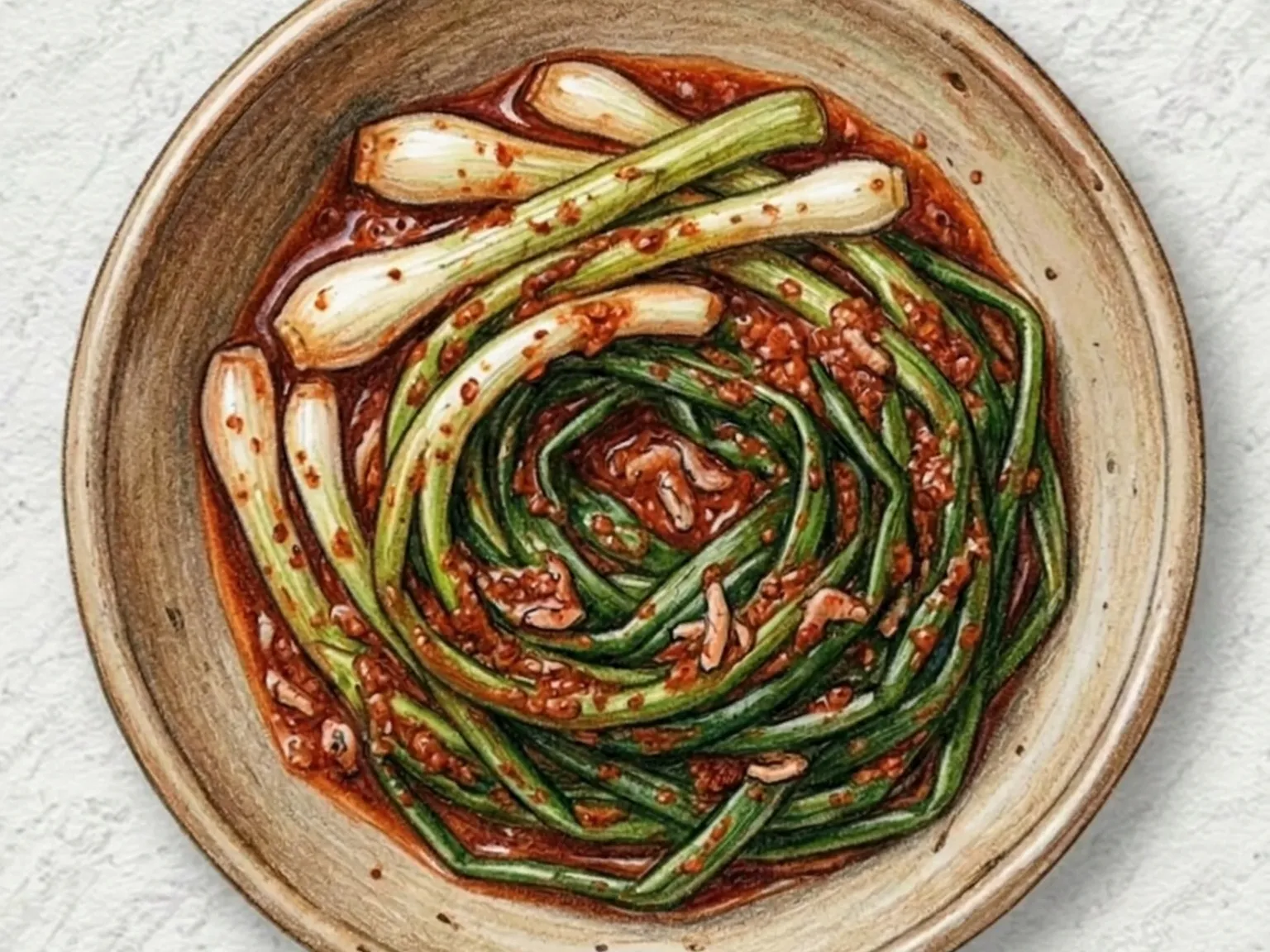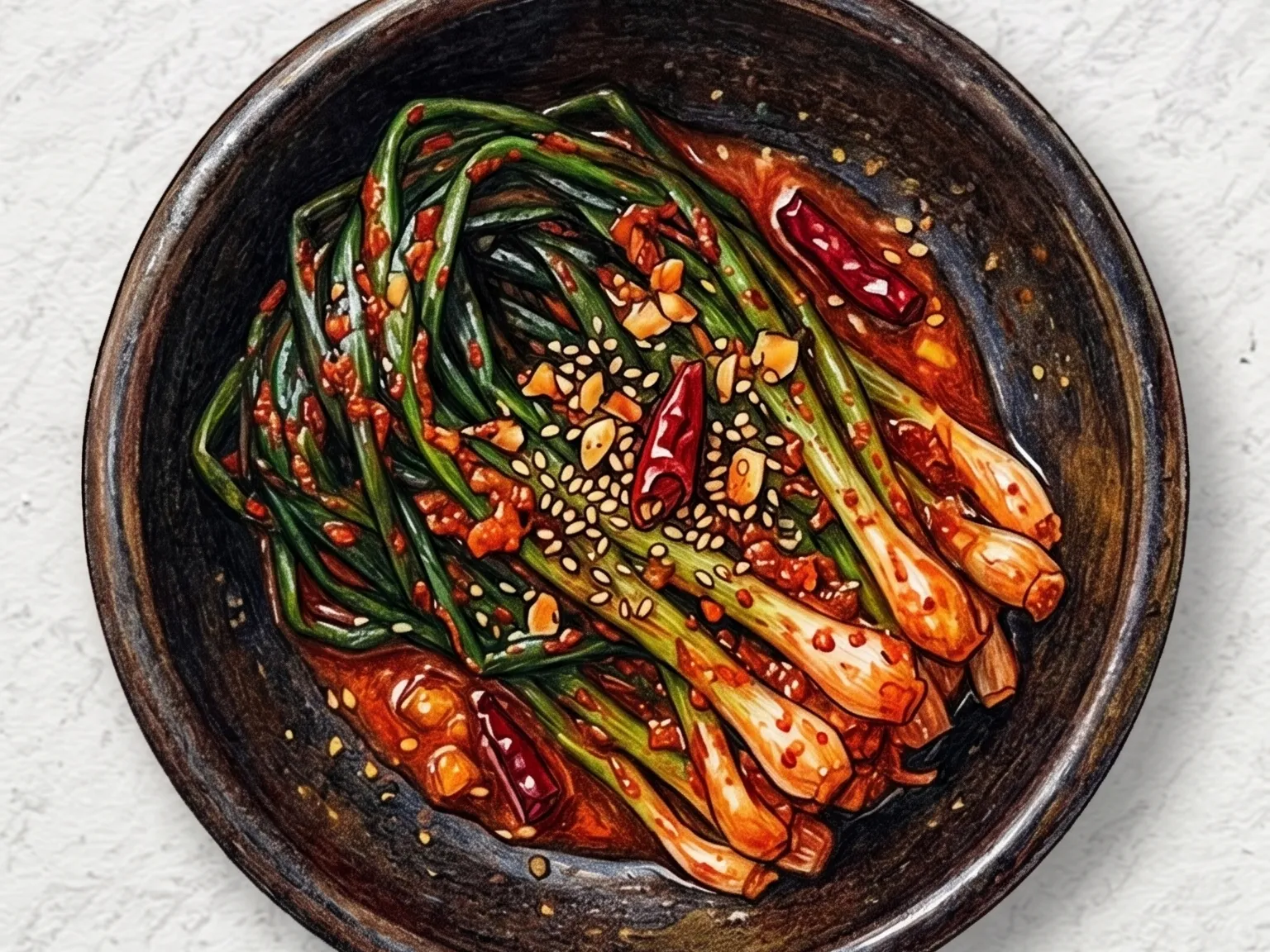
Jeolla-style Green Onion Kimchi
Quick answer
Deep-flavored green onion kimchi with rich fish sauce and spicy seasoning.
- Whole scallions brined in anchovy sauce develop a rich, spicy depth in Jeolla-pa-kimchi.
- White parts of scallion pre-brined with fermented anchovy for 20 minutes without crushing
Key ingredients
Core cooking flow
- 1 Trim 500 g scallions, sprinkle 0.5 cup fermented anchovy sauce on the white...
- 2 Mix 0.5 cup sweet rice paste with 1 cup chili flakes, 2 tbsp salted shrimp...
- 3 Pour off the fish sauce that was used to brine the scallions and stir it int...
Deep-flavored green onion kimchi with rich fish sauce and spicy seasoning.
What Makes This Special
- Whole scallions brined in anchovy sauce develop a rich, spicy depth in Jeolla-pa-kimchi.
- White parts of scallion pre-brined with fermented anchovy for 20 minutes without crushing
- Rolling and stacking tightly in the container reduces air contact for even fermentation
- Pear juice adds sweetness and simultaneously feeds lactic acid bacteria during ferment
Instructions
- 1
Trim 500 g scallions, sprinkle 0.5 cup fermented anchovy sauce on the white parts, and brine for 20 minutes to let them absorb.
- 2
Mix 0.5 cup sweet rice paste with 1 cup chili flakes, 2 tbsp salted shrimp, 2 tbsp minced garlic, 1 tbsp ginger syrup, and 3 tbsp pear juice.
- 3
Pour off the fish sauce that was used to brine the scallions and stir it into the seasoning paste for extra umami.
- 4
Apply seasoning thoroughly to the white root ends first, then lightly coat the softer green leaves.
- 5
Bundle 3 to 4 scallions and roll them up, then stack them neatly in the container without overlapping.
- 6
Ferment at room temperature for one day, then refrigerate; the seasoning penetrates best from day 2 onward.
Tips
Nutrition (per serving)
Recipes to Cook Together
More Kimchi →Serve with this
Salt-Grilled Pork Dwitgogi
Chewy and savory grilled pork Dwitgogi, famously kept by butchers for themselves.
Soy Braised Pork Back Ribs
Tender pork back ribs deeply infused with a sweet and salty soy sauce, a family favorite.
Handmade Scorched Rice
Crispy and savory handmade scorched rice that is easy to make at home.
Nakgopsae (Octopus, Intestine, and Shrimp Stew)
A spicy Busan-style stew with a perfect harmony of octopus, intestines, and shrimp.
Similar recipes
Korean Green Onion Kimchi
Daepa kimchi is made by cutting large green onions into six- to seven-centimeter lengths and coating them in a paste of gochugaru, anchovy fish sauce, soy sauce, plum extract, and glutinous rice paste. The rice paste acts as a binding agent that keeps the seasoning adhered to the onion surfaces through the entire fermentation period rather than pooling at the bottom of the container. Handling the stalks carefully so they do not bend or split is important for keeping each piece intact, and splitting the thicker white portions lengthwise down the center gives the paste more exposed surface area to penetrate. Eight hours of room-temperature fermentation followed by two days in the refrigerator brings the kimchi to its best point, when the sharp bite of the green onion and the deep fermented umami of the fish sauce have worked fully into each stalk. Daepa kimchi is a natural pairing with grilled pork belly or boiled pork, and it also makes a practical use for green onions before they go past their prime.
Korean Scallion Kimchi (Whole Stalk Anchovy Shrimp Paste)
Jjokpa kimchi is a traditional Korean scallion kimchi made by briefly brining whole scallions in coarse salt, then coating them from root to tip with a seasoning paste of anchovy fish sauce, fermented shrimp, gochugaru, and sweet rice flour paste. Using both anchovy fish sauce and salted shrimp together is intentional: the two condiments each carry a different profile of seafood umami, and combining them produces a more complex, layered depth than either alone could achieve. The sweet rice flour paste acts as a binder, adhering the seasoning evenly to the surface of each scallion and keeping it in place as moisture releases during fermentation. Without this paste, the pickling liquid would dilute the coating and the flavor would fade over time. The white bulb sections of the scallion hold their crunch through the brining and fermentation process while absorbing the spice of the gochugaru, and the green tops wilt to a silky texture that releases the scallion's characteristic sweet, pungent aroma. After six hours at room temperature followed by a day of refrigeration, the seasoning has fully penetrated the scallion and the kimchi is ready to eat alongside grilled pork belly or bossam. After three or more days of fermentation, a gentle lactic acidity develops that makes the kimchi equally useful as an ingredient in stews or stir-fries.
Korean Green Onion Kimchi
Pa-kimchi uses whole large green onions, salted for 30 minutes to soften their sharp bite and loosen the fibers so the seasoning can penetrate deeply. The paste - red pepper flakes, fish sauce, and minced garlic - coats each stalk in a layer of spicy, briny flavor. One day of room-temperature fermentation allows the lactic acid bacteria to develop, blending the onion pungency with the umami of the fish sauce into a more rounded profile. After transferring to the refrigerator, the kimchi continues to mature over two to three days, gaining a mild tanginess that intensifies with each passing day.
Korean Mustard Leaf Kimchi
Gat kimchi is a Jeolla-province kimchi made from salted mustard greens (gat) fermented with gochugaru, anchovy fish sauce, garlic, and plum extract. The brassica oils in the leaves transform during fermentation into a sharp, nose-tingling pungency distinctly different from standard napa cabbage kimchi. Anchovy fish sauce lays down deep umami while plum extract softens the acidity, balancing the aggressive aroma against the pronounced saltiness. Served alongside fatty pork or soup-rice bowls, it cuts through richness and refreshes the palate forcefully between bites. Dolsan gat, grown on Dolsando Island in Yeosu, is considered the most aromatic variety, and the kimchi reaches its ideal balance of pungency and fermentation tang after two to three days of resting rather than immediately after preparation.
Korean Scallion Salad (Spicy Green Onion Grilled Meat Side)
Pa-muchim is a julienned green onion salad that serves as a classic accompaniment to Korean grilled meat. The onions are soaked in cold water for 10 minutes to draw out harsh sulfur compounds, leaving only a clean crispness behind. A dressing of soy sauce, red pepper flakes, sugar, vinegar, and sesame oil coats the thin strands, delivering a balance of salty, sweet, sour, and spicy notes in each bite. Toasted sesame seeds scattered on top contribute a lingering nuttiness. The salad should be eaten promptly after tossing, as the onions begin to wilt within minutes; placed on top of grilled pork belly or bulgogi, the sharp freshness cuts through the richness of the meat.
Korean Green Chili Kimchi
Gochu kimchi is a spicy Korean kimchi made with whole or halved green chili peppers that are salted, then dressed in gochugaru, salted shrimp, anchovy fish sauce, and garlic before a short fermentation period. The thick pepper walls retain a firm crunch through salting and fermentation, and the seeds clustered inside deliver a concentrated burst of heat when bitten into. Salted shrimp brings immediate umami even without extended aging, and the pepper's own grassy sweetness supports the seasoning in place of added sugar. Salting the peppers for thirty to forty minutes with coarse salt draws out moisture without making them overly salty, which keeps the finished kimchi well-balanced. Served alongside grilled pork belly or bossam, this kimchi acts as a sharp, refreshing counterpoint that cuts through the richness of fatty meats.