Kachumber Salad (Indian Kachumber salad)
Quick answer
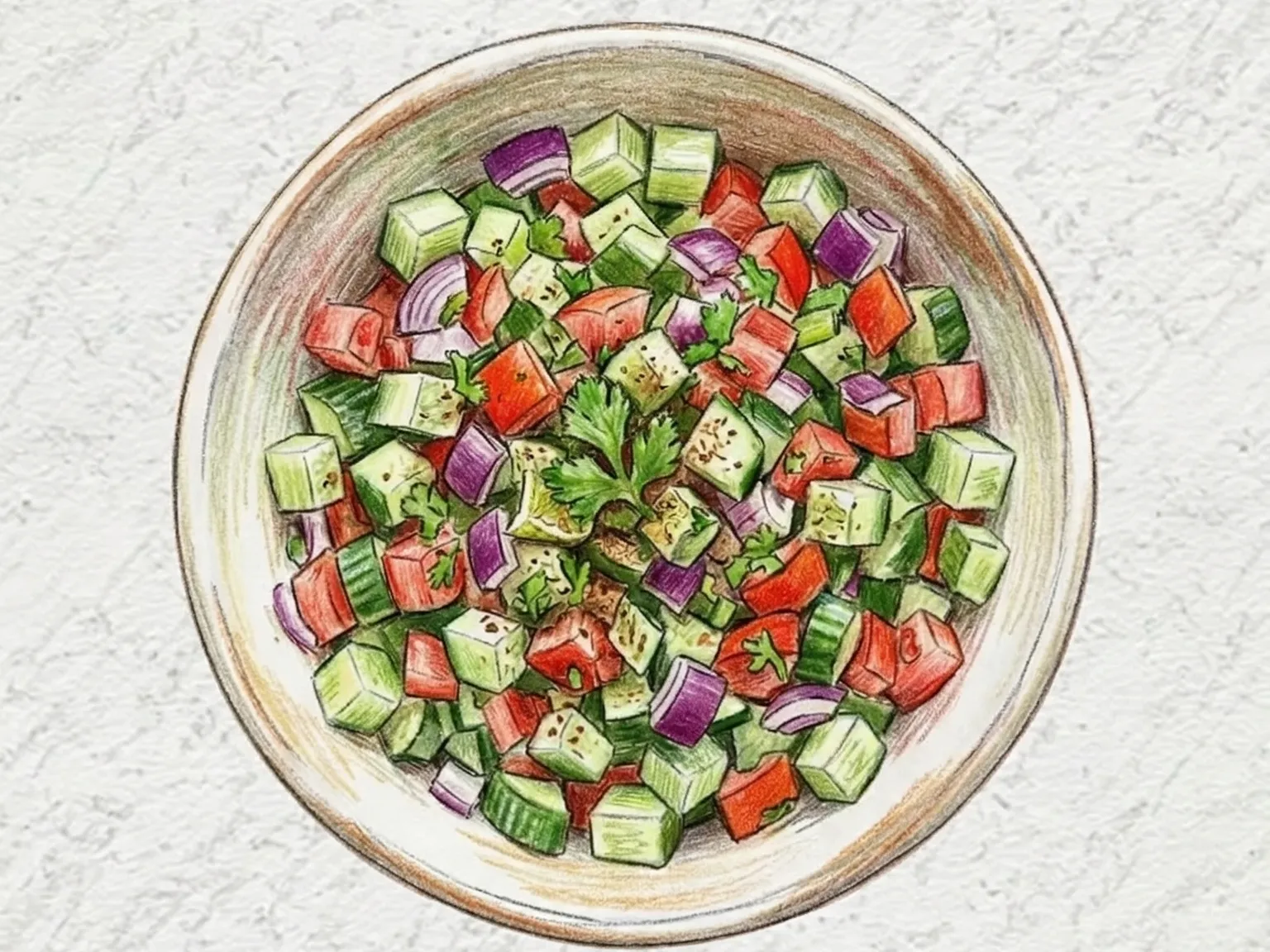
Kachumber salad finely dices cucumber, tomato, and red onion, then tosses them with chopped cilantro, lime juice, ground cumin, chaat masala, and salt in a quick Indian r...
What makes this special
- Kachumber Salad accents diced vegetables with earthy cumin and sour-salty chaat masala spice.
- Cumin's earthy warm base layered under chaat masala's sour-salty complexity is the spice signature
- Removing some seeds from cucumber and tomato reduces moisture so the dressing stays concentrated
Key ingredients
Core cooking flow
- 1 Rinse 180 g cucumber and 160 g tomato, then dry them well.
- 2 Dice the cucumber and tomato into small pieces, about 5 mm if possible.
- 3 Finely chop 70 g red onion and soak it in cold water for 3 minutes.
Kachumber salad finely dices cucumber, tomato, and red onion, then tosses them with chopped cilantro, lime juice, ground cumin, chaat masala, and salt in a quick Indian raw vegetable preparation. Removing some of the seeds from the cucumber and tomato limits excess moisture so the dressing stays concentrated rather than watery. Soaking the diced red onion in cold water for three minutes draws out its harsh sharpness, letting it blend more smoothly with the other ingredients. Ground cumin lays down a warm, earthy undertone, and chaat masala layers a tangy, salty complexity over the lime acidity, lifting a simple combination of vegetables into something distinctly Indian. Chopping cilantro stems together with the leaves releases more of the herb's aromatic oils than leaves alone provide. Letting the dressed salad rest for about fifteen minutes before serving allows the flavors to meld so the final result is noticeably more cohesive.
Instructions
Read the steps as a cooking flow: prep, heat, seasoning, doneness control, and finish.
- 1Season
Rinse 180 g cucumber and 160 g tomato, then dry them well.
Scoop out some of the seed-heavy centers with a spoon so the salad stays crisp and the lime dressing does not turn watery.
- 2Season
Dice the cucumber and tomato into small pieces, about 5 mm if possible.
Keeping the pieces similar in size helps the lime juice, cumin, and chaat masala coat everything evenly.
- 3Prep
Finely chop 70 g red onion and soak it in cold water for 3 minutes.
Drain it in a sieve, but do not squeeze hard, so it loses harshness while keeping a clean, crisp texture.
- 4Season
Finely chop 15 g cilantro, using the leaves and tender stems together.
Discard any thick or tough stem sections, because they can make the raw salad feel coarse instead of fresh.
- 5Season
In a large bowl, first mix 1.5 tablespoons lime juice, 0.5 teaspoon ground cumin, 0.5 teaspoon chaat masala, and 0.3 teaspoon salt.
Stir until the salt starts dissolving before adding the vegetables.
- 6Finish
Add the prepared vegetables and cilantro, then toss gently from the bottom upward.
Let the salad rest for about 15 minutes, toss once more if juices collect, and serve it cool while the vegetables still have bite.
After the steps
Pick a recipe that fits this dish.
Continue with shared ingredients, meal pairings, or a similar method.
Recipes That Go Well With This
More Salads →Based on shared ingredients and meal pairing
Israeli Salad
Israeli salad is the foundational everyday salad of the Middle East, built from tomato, cucumber, red onion, and parsley diced to pieces under 0.5 cm and dressed simply with lemon juice, olive oil, and salt. The uniformly small cut is the defining technique, and it is not merely aesthetic. When every component is the same tiny size, a single spoonful carries equal amounts of tomato juice, cucumber crunch, and the sharp bite of raw onion, so the balance does not shift from one mouthful to the next. The dressing is deliberately kept to two ingredients so that the natural acidity and sweetness of ripe tomatoes can dominate without interference from added vinegar or sweeteners. Resting the salad for about five minutes after tossing draws juice from the cut tomatoes, which merges with the lemon and oil to form a light, self-made brine that deepens the flavor of the entire bowl. Across Israel and throughout the broader Middle East, this salad appears at the breakfast table alongside eggs and bread as commonly as it does beside grilled meats at dinner. Its quality depends entirely on the freshness of the produce rather than any technique or seasoning.
Edamame Avocado Salad
Edamame avocado salad brings together two ingredients with contrasting textures: shelled edamame, which snaps with a firm, slightly starchy bite, and ripe avocado cut into generous chunks that are smooth and buttery. The dressing is a soy-lime combination with a small pour of sesame oil - the lime cuts through the fat in the avocado, the soy adds umami depth, and the sesame oil contributes a roasted, nutty backdrop that pulls the Asian flavor profile together. Thin-sliced cucumber and halved cherry tomatoes fill out the bowl with crunch and bright acidity, keeping the whole thing fresh rather than heavy. Beyond boiling the edamame, no cooking is required: the avocado goes in raw, the dressing is whisked together in under a minute, and the whole salad is assembled cold. Total time from start to table is under 15 minutes, making it a practical option for quick lunches or side dishes.
Baingan Bharta (Punjabi Flame-Roasted Smoky Eggplant Mash)
Baingan bharta begins in Punjab, where whole eggplants are held directly over an open flame until the skin chars completely black and the interior collapses into a smoky, yielding pulp. That charring is not incidental but constitutive: the campfire depth it creates cannot be replicated in an oven or air fryer because the contact with live flame drives pyrolysis compounds deep into the flesh. Once the blackened skin is peeled away, the pulp is roughly mashed and then cooked down with onion, tomato, green chili, and ginger over high heat until every trace of moisture has burned off. The aggressive heat softens the sharp edges of the aromatics while pressing them into the eggplant, and the result is layered rather than uniform. Texture is deliberately coarse: the mash should retain visible chunks and pockets of charred skin that punctuate each bite with a pleasantly bitter contrast. This roughness reflects the dish's origin in the farmhouse kitchens of rural Punjab, where eggplants were pulled straight from clay pots over wood fires. The traditional winter pairing with makki ki roti remains the most honest frame for what the dish is.
Chicken Tikka Masala
Chicken tikka masala marinates chicken overnight in yogurt, curry powder, garlic, and ginger, then grills or broils it at high heat to develop char on the surface before finishing in a sauce of tomato puree, garam masala, and heavy cream. The lactic acid in yogurt gently breaks down surface proteins while acting as a vehicle to drive the spices deeper into the meat. Browning diced onion in butter, then cooking tomato puree with garam masala for at least fifteen minutes allows the sharp, raw edges of the spices to mellow and integrate fully, building a sauce base with genuine depth. Heavy cream added just before serving wraps the tomato acidity and chili heat in a smooth, rich body that unifies the dish. Overnight marination makes a substantial difference compared to a short soak, as the spices have time to penetrate to the center of each piece. Basmati rice or naan bread served alongside is standard, and dragging the bread through the sauce captures the full range of flavor in a single bite.
Serve with this
Caesar Salad
Caesar salad is built on romaine lettuce torn into rough, generous pieces and tossed in a dressing made from mayonnaise, lemon juice, garlic, and anchovy. The anchovy does not taste fishy in the finished dressing; it dissolves into the fat of the mayonnaise and functions as a deep umami foundation that keeps the salad interesting beyond its creamy surface. Lemon juice cuts through the richness of the mayo base, so the dressing coats the lettuce heavily without feeling cloying. Croutons are cubed bread toasted in olive oil until the outside turns crisp and golden but the inside stays slightly soft and chewy, giving them enough structure to absorb dressing without going immediately soggy. Wide, thin shavings of Parmesan add a dry, salty intensity that contrasts with the watery crunch of the romaine. With a short ingredient list, the quality of the dressing balance and the texture of the croutons determine the final outcome.
Kongguksu-Style Cold Linguine
Kongguksu-style cold linguine reinterprets Korea's chilled soy noodle soup using Italian linguine in place of traditional wheat noodles. Unsweetened soy milk is blended with toasted sesame seeds and peanut butter into a thick, nutty cold broth poured directly over the pasta at serving. The linguine is cooked al dente and immediately shocked in ice water to firm up the texture and chill it completely before the broth goes on. Julienned cucumber and halved cherry tomatoes scatter on top for fresh crunch and color. Salt and sugar are adjusted at the end to balance the broth's natural bean flavor against the richness from the peanut butter. The full preparation takes about ten minutes, with stovetop time limited strictly to boiling the pasta, which makes it one of the more practical cold dishes to assemble in summer heat. Adding more peanut butter thickens the broth further, while extra sesame seeds push the nuttiness higher.
Korean Grilled Deodeok Root
Deodeok-gui is a traditional Korean mountain vegetable dish where peeled deodeok roots are pounded flat with a mallet, coated in a paste of gochujang, gochugaru, honey, sesame oil, and garlic, then grilled over high heat. The pounding step is critical: it breaks down the tough fibers so the seasoning absorbs evenly and the root develops a pleasant chewiness instead of remaining stringy. Soaking the peeled deodeok in lightly salted water for about thirty minutes before pounding draws out the sharpest bitterness, leaving only the characteristic mellow, slightly medicinal aroma the root is known for. That bittersweet quality sits in balance between the fermented spice of gochujang and the sweetness of honey. Quick grilling at high temperature chars the glaze just enough to add smokiness while keeping the interior moist; applying the seasoning paste in two stages during grilling builds a thicker, glossier layer on the surface. Toasted sesame seeds scattered on top contribute nuttiness that complements the wild herb's earthy, resinous character.
Similar recipes
Malai Kofta (Indian Paneer Potato Dumplings in Creamy Tomato Sauce)
Malai kofta is a celebratory vegetarian dish from North India in which dumplings made from mashed potato and crumbled paneer are fried until golden-brown, then placed in a velvety tomato-cream gravy. The exterior of each kofta crisps in the oil while the interior remains soft and filled with mild paneer, so that when broken open in the gravy, the cheese spills into the sauce and enriches it further. The gravy is built from a base of slow-cooked onions and tomatoes pureed until smooth, finished with cashew nut paste and heavy cream for a rich, dense texture. Cashew paste is the key technique here, adding a nutty creaminess that coconut milk or plain cream alone cannot replicate. Garam masala and a touch of turmeric contribute warm, fragrant spice without sharp chili heat, keeping the dish approachable and suitable for formal occasions. The koftas should be added to the gravy just before serving, since extended soaking softens the exterior and causes them to break apart. Served alongside naan or basmati rice, malai kofta is a standard centerpiece at Indian wedding feasts and festival gatherings, prized as much for its visual richness as for its flavor.
Broccoli Cranberry Salad
Broccoli cranberry salad blanches broccoli for just thirty seconds in boiling water to set its vivid green color and lock in a satisfying crunch, then combines it with dried cranberries for a tart, jammy sweetness and sunflower seeds that add a dry, toasted texture throughout the bowl. A dressing built on Greek yogurt rather than mayonnaise alone delivers genuine creaminess while keeping the overall dish considerably lighter, and a splash of apple cider vinegar gives the finish a clean acidity that cuts through the richness. A small amount of finely diced red onion is enough to add a mild pungency and give the salad direction without making it assertively sharp. This salad rewards preparation in advance because the dressing gradually penetrates the broccoli florets as they sit in the refrigerator, deepening the flavor in a way that freshly dressed salads cannot achieve. After a few hours the textures settle and the flavors meld into something more cohesive than the sum of its parts, making it an unusually practical choice for packed lunches prepared the night before or party spreads assembled hours ahead of time.
Poha (Indian Spiced Flattened Rice Breakfast with Peanuts)
Poha is a staple Indian breakfast built on flattened rice that has been briefly soaked in water until pliable. The cooking starts with a tempering of mustard seeds and curry leaves in oil, followed by sliced onion, green chili, and turmeric. The soaked flattened rice is folded in gently so the grains stay separate rather than clumping. Turmeric stains everything a warm yellow. Roasted peanuts tossed in at the end provide a crunchy counterpoint to the soft rice, and a generous squeeze of lemon brightens the entire dish. The city of Indore is famous for its poha, where vendors garnish each plate with freshly grated coconut and a handful of sev, a crispy chickpea-flour noodle snack. The dish comes together in under fifteen minutes and sits comfortably in the stomach all morning.