Peach Cobbler
Quick answer
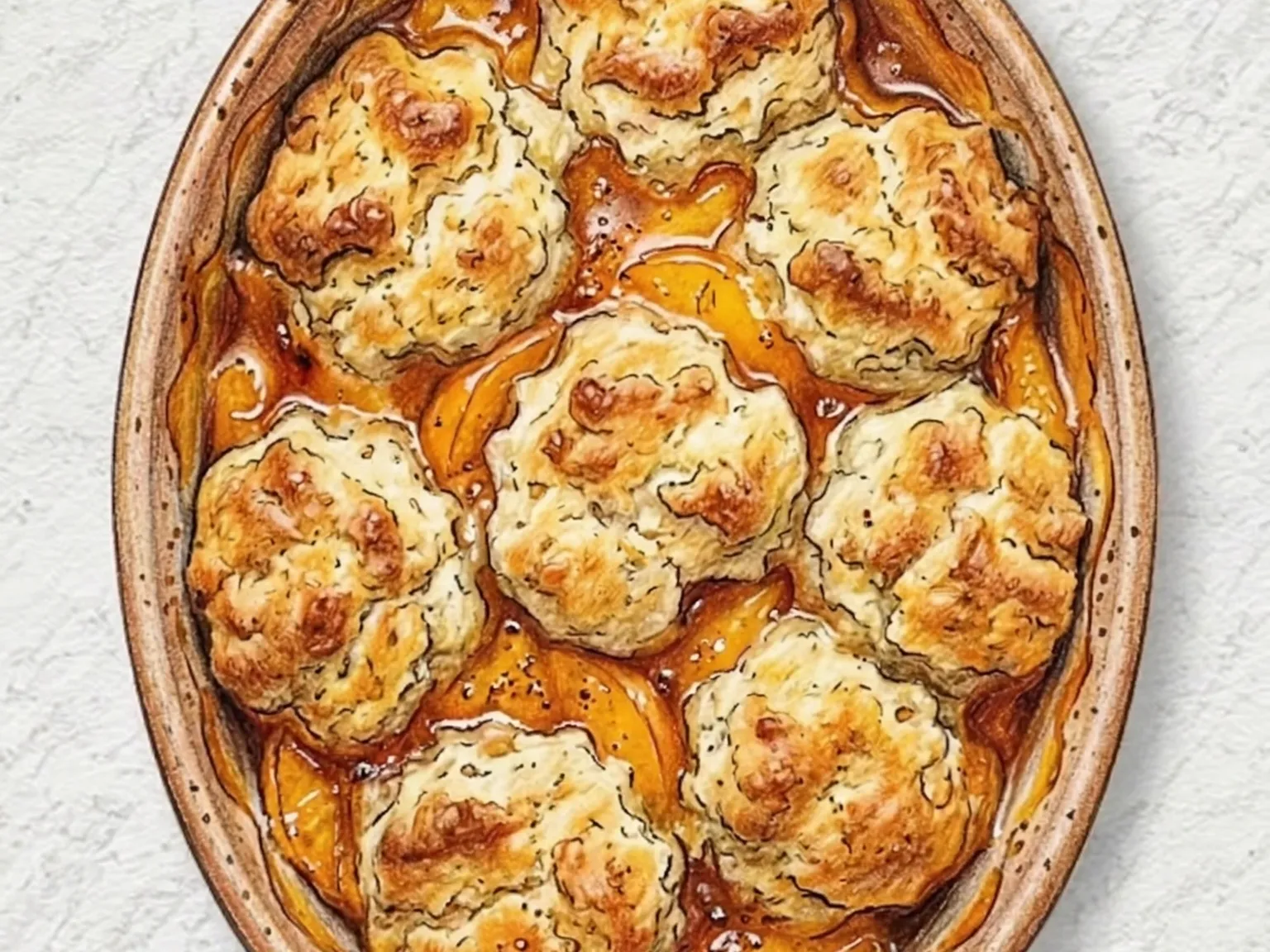
Sliced peaches are tossed with sugar and lemon juice, spread in a baking dish, and covered with spoonfuls of biscuit batter that bakes into a golden, slightly craggy topping.
What makes this special
- Golden biscuit topping covers bubbling fruit juices in this warm, classic Peach Cobbler.
- Peach juices bubble up through the biscuit topping as it bakes
- Lemon juice sharpens the fruit and balances sweetness in the filling
Key ingredients
Core cooking flow
- 1 Preheat the oven to 180C. Slice 500 g peaches into pieces that are not too t...
- 2 Once the peaches release juice, taste them.
- 3 In a bowl, mix 160 g cake flour, 1 teaspoon baking powder, and the remaining sugar.
Sliced peaches are tossed with sugar and lemon juice, spread in a baking dish, and covered with spoonfuls of biscuit batter that bakes into a golden, slightly craggy topping. In the oven, the fruit juices bubble up around the edges and seep into the base of the dough, creating a zone where crisp crust meets soft, fruit-soaked interior. The lemon sharpens the peach flavor and prevents it from tasting flat under all the sugar. If the peaches lack sweetness on their own, an extra tablespoon of sugar in the fruit layer compensates without making the topping heavier. Served warm with a scoop of vanilla ice cream, the contrast between hot cobbler and cold cream is as much a part of the experience as the flavor itself.
Instructions
Read the steps as a cooking flow: prep, heat, seasoning, doneness control, and finish.
- 1Season
Preheat the oven to 180C.
Slice 500 g peaches into pieces that are not too thin, then toss them with part of the sugar and 1 tablespoon lemon juice. Let them stand for 5 minutes to draw out juices.
- 2Season
Once the peaches release juice, taste them.
If they are tart, add 1 extra tablespoon sugar. Spread the fruit evenly in the baking dish, keeping the edges level so the batter can bake evenly.
- 3Season
In a bowl, mix 160 g cake flour, 1 teaspoon baking powder, and the remaining sugar.
Break up visible lumps with your fingertips or a spatula so the topping rises evenly instead of forming dry pockets.
- 4Season
Add 120 ml milk and 70 g melted unsalted butter, then mix gently.
Stop as soon as no dry flour remains, because overmixing makes the biscuit topping tough instead of tender and moist.
- 5Heat
Drop spoonfuls of batter over the peaches, leaving small gaps between them.
Those gaps let the peach juices bubble up, helping the topping bake through instead of becoming soggy underneath.
- 6Finish
Bake for 35-40 minutes, until the top is golden and peach juices are bubbling around the edges.
Let it cool for 10 minutes so the filling settles, then serve warm with vanilla ice cream.
After the steps
Pick a recipe that fits this dish.
Continue with shared ingredients, meal pairings, or a similar method.
Recipes That Go Well With This
More Baking →Based on shared ingredients and meal pairing
Vanilla Cupcakes
Butter and sugar are creamed until pale and fluffy, then eggs, vanilla extract, cake flour, and milk are incorporated to produce the most versatile cupcake in home baking. The creaming step is where the texture is decided: enough air beaten into the butter creates a light, tender crumb, while under-creaming yields a dense, flat result. Each egg is added individually to maintain a stable emulsion, and the low protein content of cake flour keeps the finished cupcake soft rather than chewy. Filling each liner to seventy percent capacity allows a domed rise without overflow, and the oven door should remain closed for the first fifteen minutes to prevent collapse. Once cooled, these cupcakes accept virtually any frosting - buttercream, cream cheese, ganache - without the base flavor competing. The vanilla is warm and present but never dominant, which is exactly what makes this recipe a dependable foundation for countless variations.
Cornbread
Cornbread is a Southern American quick bread made from cornmeal, flour, sugar, baking powder, milk, egg, and melted butter, baked until golden. Mixing the wet and dry ingredients separately and combining them with minimal stirring prevents overdeveloping gluten, which keeps the crumb tender and moist rather than tough. Baking at 200 degrees Celsius for twenty-two to twenty-five minutes produces a crisp exterior with a lightly sweet, nutty interior characteristic of cornmeal. The bread pairs well with stews, chili, and soups; its coarse grain absorbs broth and sauce effectively, making every bite more flavorful the longer it sits in the bowl.
Buffalo Wings
Buffalo wings coat chicken wings in baking powder and roast them at high heat for forty-five minutes, producing a crisp skin without deep-frying. The baking powder raises the skin's pH to accelerate the Maillard reaction and drives out moisture faster, yielding a crunch that rivals the fryer. Straight from the oven, the wings are tossed in a sauce of melted butter and hot sauce - the butter tempers the vinegar-based heat into something that coats the tongue rather than burning it, and a touch of white vinegar at the end sharpens the finish. Blue cheese dipping sauce and celery sticks served alongside provide a cooling, creamy contrast and a crisp palate cleanser between bites.
Chess Pie
Chess pie is a custard pie from the American South made from the shortest possible list of pantry ingredients: butter, sugar, eggs, a small amount of flour, and cornmeal. The simplicity of the ingredients does not predict the complexity of what happens in the oven. As the pie bakes, the top surface splits and forms a thin, crackled crust that shatters underfoot of a fork, while beneath it sits a dense, moisture-heavy custard carrying a deep caramel note. Cornmeal introduces a subtle grittiness and the faint sweetness specific to corn, while a splash of vinegar or buttermilk adds just enough acidity to prevent the sugar from going flat. The filling should be pulled from the oven when the edges have set but the center still trembles slightly; it continues to firm as it cools, eventually reaching a texture close to fudge. Served at room temperature, the custard softens into a smooth, yielding consistency. A spoonful of unsweetened whipped cream alongside cuts the richness without dulling the flavor.
Serve with this
Real Pineapple Sherbet
This refreshing fruit dessert is prepared by scooping out the flesh of a mini pineapple and using its hollowed shell as a serving vessel. The fruit pulp is blended until smooth to prevent icy lumps, then mixed with sugar, lemon juice, and oligosaccharide syrup to achieve a sweet and tangy flavor. After pouring the mixture back into the shell and covering it with the top lid, it is frozen for at least four hours. Stirring the mixture occasionally during freezing breaks up ice crystals, resulting in a smoother texture. The active bromelain enzyme present in the fresh fruit provides a subtle tingly sensation on the tongue. Serving the sherbet directly inside the pineapple skin minimizes juice loss and keeps the dessert cold. Letting it stand for five minutes before scraping and topping with fresh apple mint leaves makes it ready to serve.
Seven Layer Salad
Seven layer salad stacks romaine lettuce, sliced cucumber, halved cherry tomatoes, cooked green peas, chopped boiled egg, and thinly sliced red onion in a clear glass bowl, then seals the top with a smooth layer of Greek yogurt mixed with lemon juice. The yogurt cap acts as a moisture barrier, preventing the lower layers from turning soggy and making the salad suitable for advance preparation. Boiled eggs contribute a mild richness and peas add a starchy sweetness that rounds out the crisp vegetable layers, while red onion's sharp bite creates a contrast against the creamy, tangy dressing. Serving requires scooping deep to the bottom so every portion captures all seven layers at once.
Citrus Espresso Tonic with Orange
Espresso tonic is a carbonated coffee drink built by slowly pouring espresso over chilled tonic water to form two distinct layers. The tonic must be thoroughly cold to maintain stable carbonation throughout; cooling the espresso for about thirty seconds before pouring it over a spoon produces a clean separation between the two liquids. The quinine bitterness in the tonic water meets the espresso's roast bitterness, creating a balanced interplay rather than one-note sharpness. Orange slices and lemon peel garnish the glass, releasing citrus oils that rise with the bubbles. Specialty espresso with pronounced fruit acidity works particularly well here, harmonizing with the tonic's effervescence and lending natural sweetness without added sugar. Pre-chilling the glass with ice before adding the tonic helps preserve carbonation. The drink gained popularity in Scandinavian coffee culture during the 2010s before spreading worldwide.
Similar recipes
Blueberry Banana Bread
Blueberry banana bread is a quick bread that pairs the dense, sweet moisture of ripe bananas with the sharp burst of blueberries. The riper the banana, the more sugar has converted from starch, which means the bread needs less added sweetener while still tasting distinctly sweet. Melted butter enriches the crumb without weighing it down the way oil can, and baking soda creates a fine, tender rise that keeps the interior soft. Blueberries burst during baking and streak the crumb with rivulets of purple juice, making every slice visually distinct as well as flavorful. The most important technique is restraint with the mixing - once the flour is added, stirring just until the dry streaks disappear prevents gluten from over-developing and keeps the crumb moist rather than tough. Because the fruit carries most of the sweetness and moisture, this is a reasonable choice as a daily snack or a healthier baked good. Sliced warm with butter or cream cheese, it works as a simple brunch dish, and it keeps well for several days at room temperature before the crumb begins to dry.
Hallabong Lemon Bars (Jeju Citrus Curd on Shortbread)
Hallabong lemon bars combine the sweet citrus flavor of Jeju hallabong juice with the sharp acidity of fresh lemon juice over a buttery shortbread base. The crust is made by rubbing cold unsalted butter into flour and powdered sugar, then pressing it into a pan to bake until pale golden. A smooth citrus curd, made by gently mixing eggs, sugar, hallabong juice, lemon juice, and cornstarch, is strained and poured over the warm pre-baked crust. Baking the curd just until the edges are set keeps the texture silky. Once baked, the bars are chilled to firm up the curd layer, which can then be sliced cleanly with a hot knife. A light dusting of powdered sugar is added before serving, creating a nice contrast between the soft topping and the buttery crust.
Bananas Foster
Bananas Foster is a New Orleans dessert invented in the 1950s at Brennan's Restaurant, built around the simple technique of caramelizing bananas in butter and brown sugar before serving them over vanilla ice cream. The sauce begins by melting butter in a skillet and stirring in brown sugar until the two combine into a thick, bubbling caramel. Halved bananas go in cut-side down and cook just long enough to absorb the syrup while holding their shape. Ground cinnamon folded into the sauce adds a warm spice layer that keeps the sweetness from reading as flat, and a squeeze of lemon juice sharpens the overall profile. Traditional preparation calls for igniting rum poured into the hot pan - the blue flame burns off the alcohol and concentrates the molasses notes in a few dramatic seconds. The step can be skipped at home without meaningfully altering the result. Spooning the hot caramelized bananas over cold ice cream generates immediate steam, and the contrast between molten caramel and frozen cream defines every bite. The entire dish takes roughly ten minutes.