Pumpkin Pie
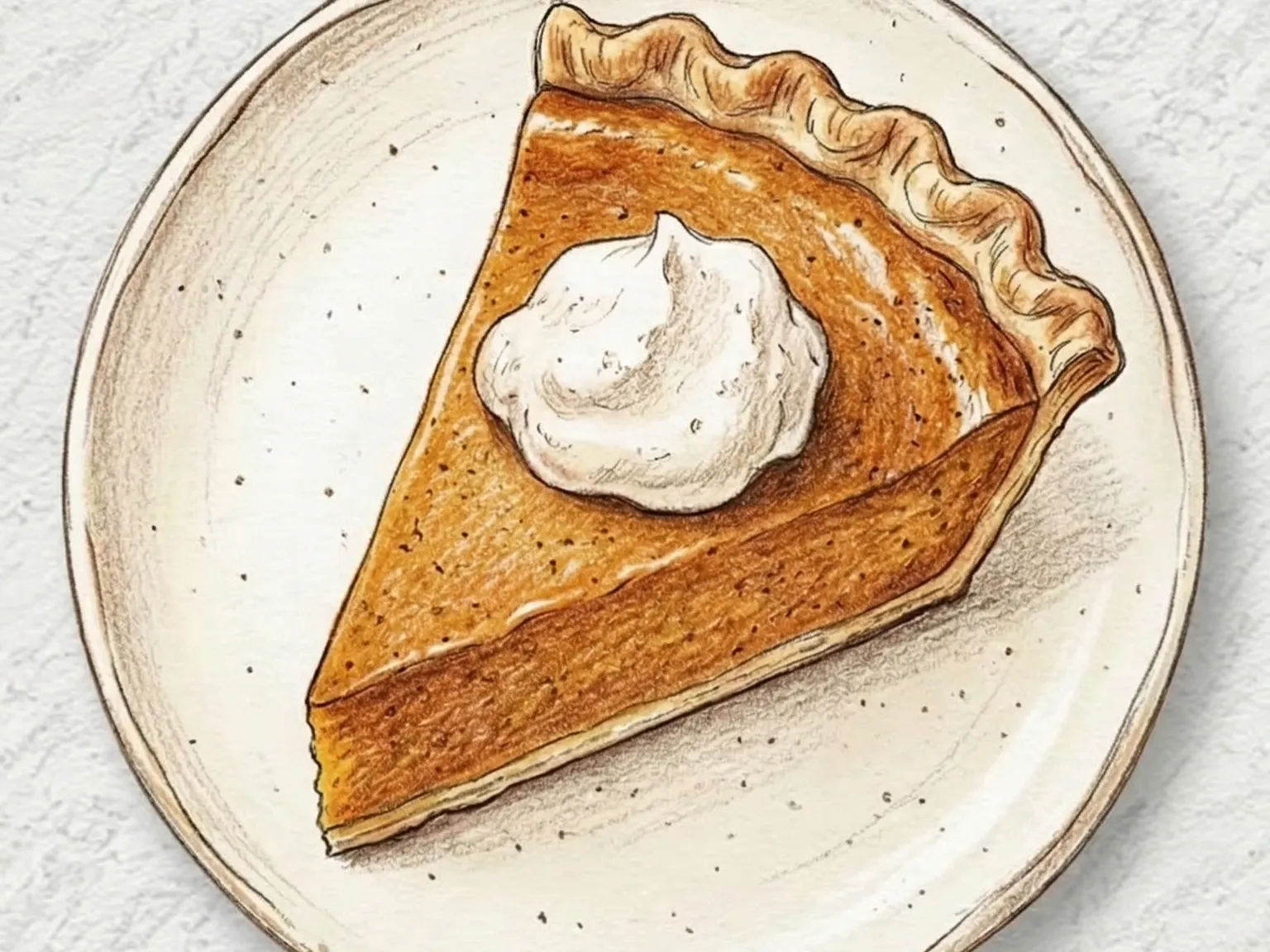
Pumpkin puree is whisked with brown sugar, eggs, heavy cream, cinnamon, and nutmeg, then poured into a flaky pie crust and baked in two stages. An initial burst of high heat sets the crust and begins firming the custard, while a lower temperature for the remaining time cooks the filling gently to avoid cracking. The spices provide a warm, aromatic backbone that transforms the mild sweetness of pumpkin into something distinctly autumnal. Heavy cream in the filling produces a smoother, more luxurious texture than milk alone. The pie slices most cleanly after an overnight chill, which also allows the spice flavors to deepen and integrate. A dollop of lightly sweetened whipped cream on each slice adds contrast in both temperature and texture.
Adjust Servings
Instructions
- 1
Line a pie dish with crust and prick the base with a fork.
- 2
Whisk pumpkin puree, cream, eggs, sugar, and spices.
- 3
Pour filling into the crust and smooth the top.
- 4
Bake at 190C for 15 minutes, then 170C for 35 minutes.
- 5
Cool fully, chill to set, then slice.
As an Amazon Associate, we may earn from qualifying purchases.
Tips
Nutrition (per serving)
More Recipes

Chess Pie
Chess pie is a custard pie from the American South made with the most elemental pantry ingredients: butter, sugar, eggs, a small amount of flour, and cornmeal. Despite this simplicity, the result is rich and complex. During baking, the top develops a crackled, lightly caramelized crust that shatters when a fork breaks through, revealing a dense, gooey custard beneath. Cornmeal contributes a subtle grittiness and a faint corn sweetness, while a splash of vinegar or buttermilk introduces just enough acidity to keep the sweetness from becoming one-dimensional. The filling sets around the edges but stays slightly trembling at the center - a sign that it was pulled from the oven at exactly the right moment. Served at room temperature, the custard softens into an almost fudge-like consistency. It is the kind of pie that proves how few ingredients are needed to produce something deeply satisfying.

Pecan Pie
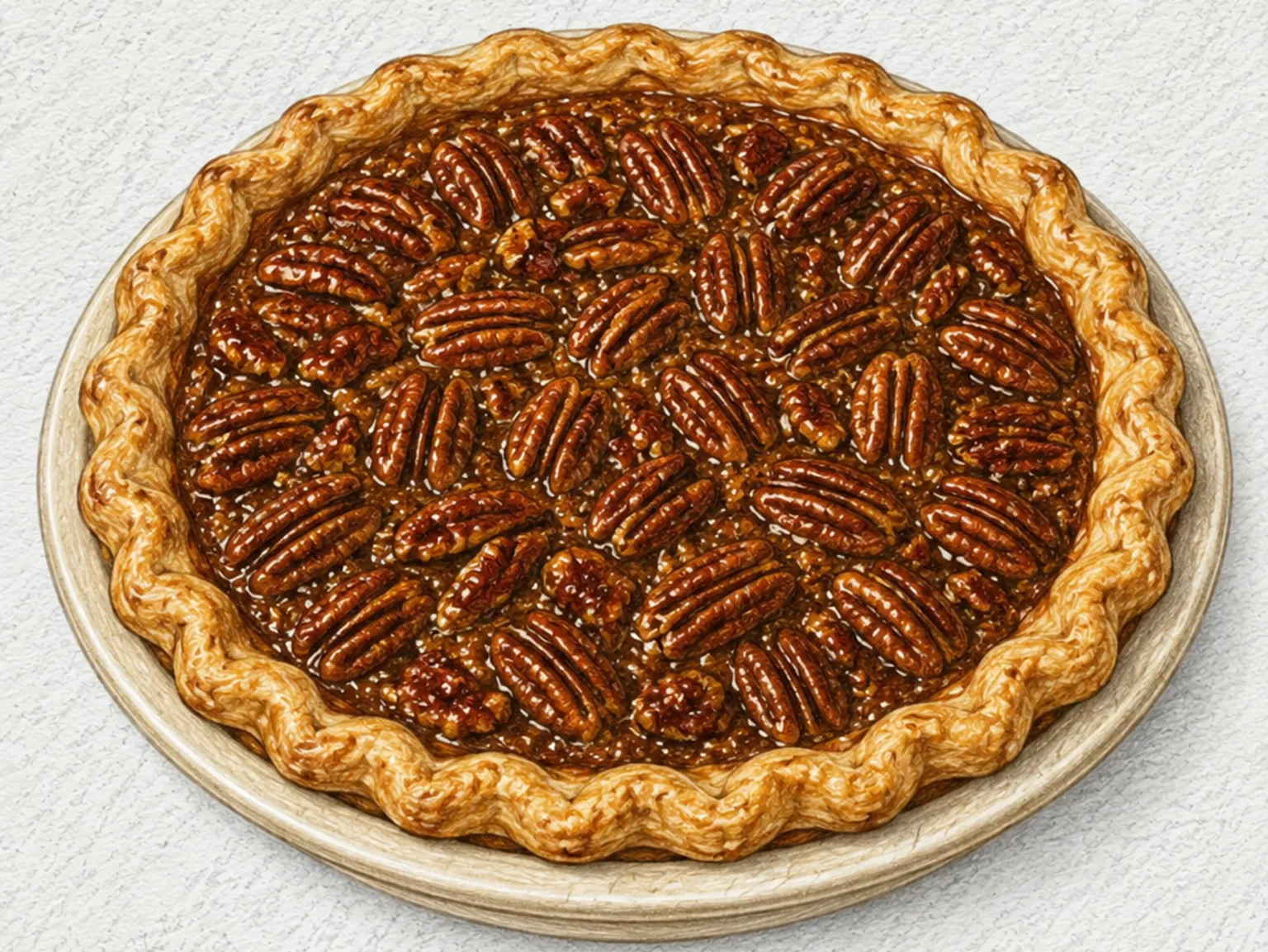
A buttery pie crust holds a filling of pecans suspended in a dark, syrupy custard made from brown sugar, corn syrup, eggs, and melted butter. The filling bakes into a glossy, caramel-like layer that is sticky and dense beneath a top crust of whole pecans. The brown sugar gives a molasses depth that white sugar cannot match, while the corn syrup provides the characteristic gooey texture. When the pie comes out of the oven, the center should still wobble slightly; it firms as it cools to room temperature. If the top browns too quickly, a loose tent of foil placed halfway through baking protects the nuts from burning. Slicing is cleanest after the pie has cooled completely, and a scoop of vanilla ice cream alongside each piece rounds out the richness.

Classic Apple Pie
Apple pie has been baked in America since the colonial era, though its origins lie in 14th-century English and Dutch recipes where apples were enclosed in pastry as a way to cook fruit without a proper oven. The filling is built from tart baking apples - Granny Smith or Braeburn - tossed with sugar, cinnamon, nutmeg, a squeeze of lemon, and a spoonful of flour or cornstarch to thicken the juices as they cook. The double crust is made from cold butter cut into flour until the dough resembles wet sand, producing flaky, shattering layers when baked. As the pie bakes, the apples soften and release their juice, which the starch captures into a syrupy glaze that holds the filling together when sliced. The top crust turns deep golden and pulls away slightly from the filling, creating a hollow where steam escapes. Served warm with a scoop of vanilla ice cream - a la mode - or a slice of sharp cheddar in the New England tradition, apple pie is as much a cultural symbol as it is a dessert.

Coconut Cream Pie
Coconut cream pie fills a blind-baked pastry shell with a thick, silky custard made from coconut milk, whole milk, egg yolks, and cornstarch. The custard is cooked on the stovetop until it thickens enough to coat the back of a spoon, then poured into the cooled crust and refrigerated until firmly set. The coconut flavor is prominent - rich and tropical - without being artificially sweet. A generous layer of whipped cream on top lightens the dense custard, and toasted coconut flakes scattered across the surface provide a crunchy, nutty accent. When sliced, the pie holds its shape cleanly, revealing distinct layers of golden crust, pale custard, and white cream.

Chicken Pot Pie
Chicken pot pie fills a butter pie crust with chicken, carrots, potatoes, and peas bound in a creamy roux-based sauce, then bakes until the top turns golden and the filling bubbles. The roux - butter cooked with flour - thickens into a rich sauce when chicken broth and heavy cream are whisked in, coating every piece of filling. Pre-boiling the carrots and potatoes ensures they cook through evenly within the oven time, while peas go in last to keep their color and slight crunch. Brushing the top crust with egg wash produces a glossy, deeply golden surface during baking. After 35 minutes at 200 degrees Celsius, the filling should be visibly bubbling at the edges, and breaking through the flaky crust reveals the thick cream sauce underneath.

Cornbread
Cornbread is a Southern American quick bread made from cornmeal, flour, sugar, baking powder, milk, egg, and melted butter, baked until golden. Mixing the wet and dry ingredients separately and combining them with minimal stirring prevents overdeveloping gluten, which keeps the crumb tender and moist rather than tough. Baking at 200 degrees Celsius for twenty-two to twenty-five minutes produces a crisp exterior with a lightly sweet, nutty interior characteristic of cornmeal. The bread pairs well with stews, chili, and soups - its coarse grain absorbs broth and sauce effectively.