Sausage Roll
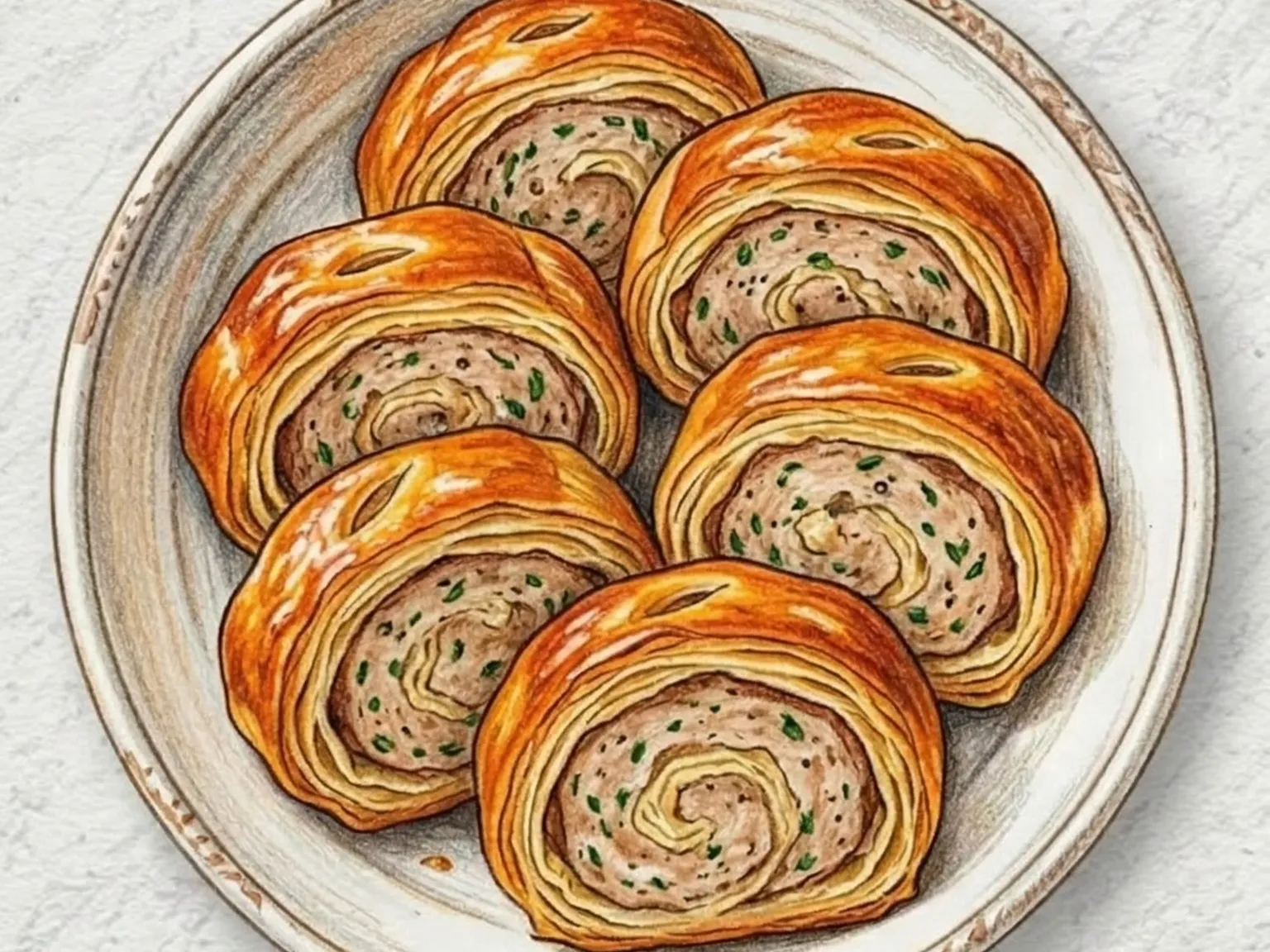
Sausage roll is a British bakery snack made by wrapping seasoned sausage meat in puff pastry, brushing with egg wash, and baking until golden. Mixing the meat with finely minced onion, breadcrumbs, and Dijon mustard adds moisture and flavor that keep the filling juicy after baking. Rolling the pastry around a log of filling and placing the seam side down prevents the roll from opening in the oven. Scoring the top allows steam to escape, which helps the pastry puff into crisp, distinct layers. Baking at 200 degrees Celsius for twenty to twenty-five minutes produces a deep golden shell with flaky, butter-rich layers encasing the savory meat inside. It works equally well as a snack, light meal, or picnic food.
Adjust Servings
Instructions
- 1
Preheat oven to 200C and finely mince the onion.
- 2
Combine sausage meat with onion, breadcrumbs, mustard, and pepper.
- 3
Roll out pastry, place filling in a log, and wrap tightly.
- 4
Cut into portions and brush with beaten egg.
- 5
Bake for 20-25 minutes until deep golden, then cool slightly.
As an Amazon Associate, we may earn from qualifying purchases.
Tips
Nutrition (per serving)
More Recipes

Scotch Egg
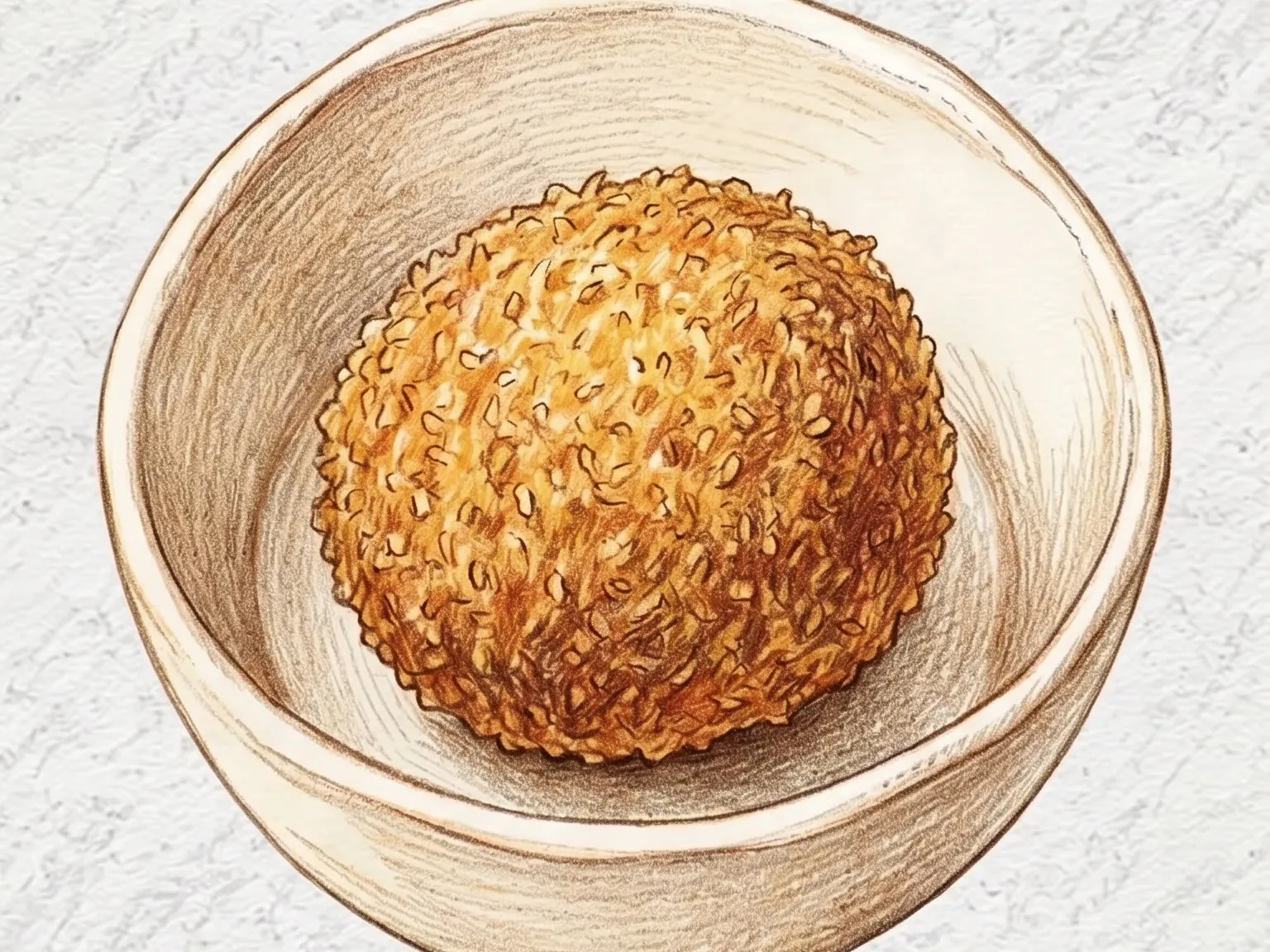
Scotch egg is a British dish in which a six-minute soft-boiled egg is wrapped in mustard-seasoned sausage meat, coated in flour, beaten egg, and breadcrumbs, then deep-fried or baked until crisp. Chilling the boiled egg in ice water immediately stops carryover cooking and preserves the runny yolk. Wrapping the meat in an even layer around each egg ensures it cooks uniformly during frying or baking. The breadcrumb crust crisps up in the heat and acts as a seal, keeping the sausage layer's juices locked inside. Cutting one open reveals three distinct layers - a crunchy golden shell, a savory ring of seasoned pork, and a soft yolk that runs when broken - each contributing a different texture and flavor. Scotch eggs can be served warm or cold, making them versatile for brunch, picnics, or snacking.

Cornish Pasty (British Hand Pie with Beef and Root Vegetables)
Cornish pasty is a traditional British hand pie from Cornwall, made by encasing raw diced beef, potatoes, rutabaga, and onion inside a sturdy pastry of flour, butter, salt, and water. Because the filling goes in uncooked and sealed, the meat and vegetables steam inside the crust during baking, concentrating their juices into a rich, savory gravy within the pastry. Crimping the edges tightly is essential to prevent the juices from leaking during the forty-to-forty-five-minute bake at 200 degrees Celsius. Cutting the filling small enough ensures even cooking throughout. An egg wash brushed over the surface before baking produces a glossy, golden crust.

Beef Wellington
Beef Wellington wraps a whole seared tenderloin in a layer of mushroom duxelles and prosciutto, then encases everything in puff pastry before baking. The initial sear locks a flavorful crust onto the beef surface, and the duxelles acts as a moisture barrier between the meat and the pastry, preventing the dough from going soggy as the tenderloin renders. In the oven, the pastry puffs into hundreds of golden, flaky layers while the beef inside cooks evenly to a pink medium-rare center. Slicing through the finished roll to reveal the clean cross-section - bronze pastry, dark mushroom layer, rosy beef - is the dramatic payoff of the careful assembly. A red wine reduction served alongside completes the dish for a formal occasion.

Toad in the Hole (British Sausages in Yorkshire Pudding)
Toad in the hole bakes pork sausages inside a risen Yorkshire pudding batter by first heating the sausages and oil in an oven pan at 220 degrees Celsius for 10 minutes, then quickly pouring cold batter into the scorching-hot fat. The temperature shock between cold batter and smoking oil is what drives the dramatic puff - if the pan cools before the batter goes in, the rise will be flat and dense. The batter itself is simple: flour, eggs, milk, salt, and pepper, rested for 10 minutes so the gluten relaxes and produces a more even rise. Once in the oven, the door must stay closed for the full 20 to 25 minutes - opening it drops the temperature and collapses the delicate air structure mid-bake. The finished dish has crisp, golden edges and a soft, custardy center cradling the browned sausages.

Blueberry Yogurt Scones
Blueberry yogurt scones use plain yogurt in the dough to create a crumb that is noticeably softer and more moist than the standard butter-and-cream version. The yogurt's mild tang permeates the dough, pairing with the butter to leave a clean, rounded finish on the palate. Blueberries partially burst during baking, sending violet-blue streaks through the pale interior and releasing a fragrant, fruity sweetness. The interaction between the baking powder and the yogurt's acidity gives the scones a gentle lift, so the exterior forms a light crust while the inside stays open and tender rather than dense. Sugar is deliberately minimal, letting the blueberries' own sweet-tart flavor do most of the work.

Classic British Scones
Classic British scones are made by rubbing cold butter into flour and binding the mixture with milk, using minimal handling to keep the dough light. This restraint is what creates the signature crumbly, layered texture - overworking develops gluten and produces a tough result. In the oven, the butter melts and generates steam between the flour layers, causing the scone to rise and split naturally along its sides. The exterior, brushed with egg wash before baking, turns golden and slightly crisp, while the interior stays soft and flaky, somewhere between bread and biscuit. Traditionally served during afternoon tea with clotted cream and strawberry jam, scones are split by hand rather than cut with a knife. The warmth of a freshly baked scone against the cool richness of clotted cream is the combination that defines the English tea table.