Tuna White Bean Salad (Mediterranean white bean salad)
Quick answer
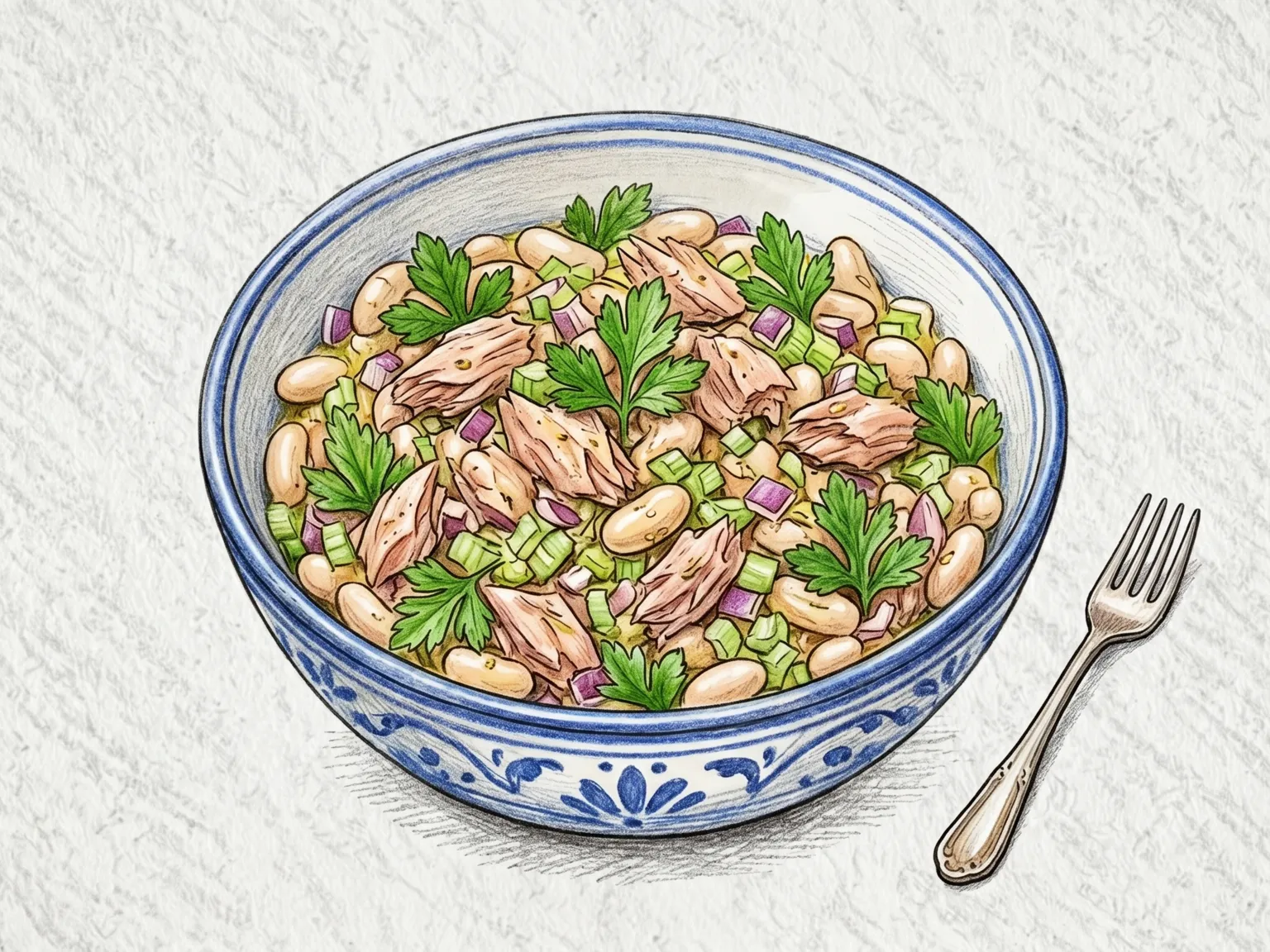
Tuna white bean salad tosses drained canned tuna and cooked white beans with a dressing of olive oil and lemon juice - a no-cook Mediterranean dish that comes together in minutes.
What makes this special
- Tuna White Bean Salad combines thoroughly drained ingredients with a sharp lemon-oil dressing.
- Draining both tuna and white beans keeps the dressing flavor undiluted
- Celery's crunch and red onion's bite create contrast against soft beans and tuna
Key ingredients
Core cooking flow
- 1 Place 160 g canned tuna and 220 g cooked white beans in a sieve for at least 5 minutes.
- 2 Finely chop 60 g celery and thinly slice or mince 30 g red onion.
- 3 In a large bowl, whisk 1.5 tablespoons olive oil with 1 tablespoon lemon juice for about 20 seconds.
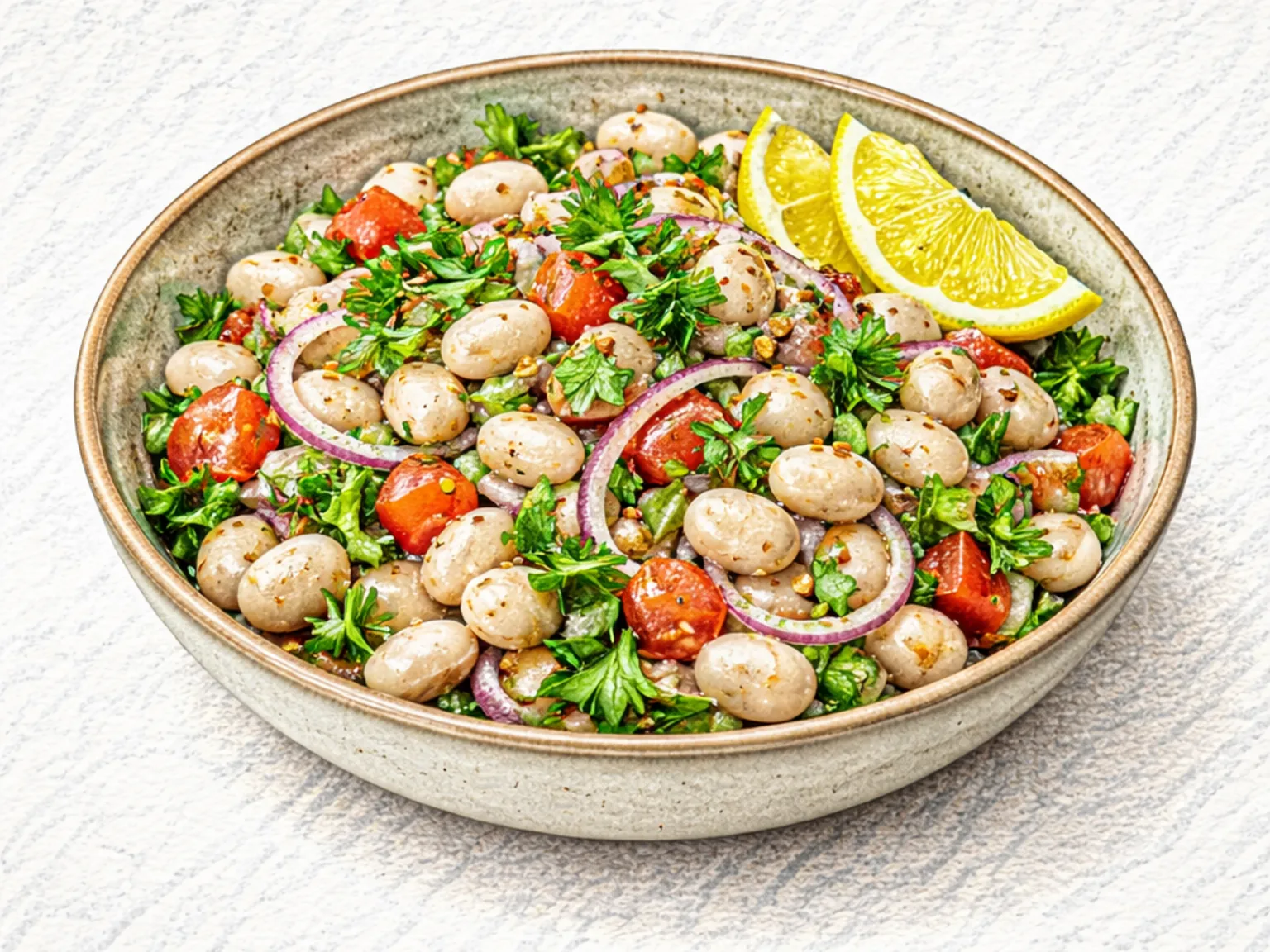
Tuna white bean salad tosses drained canned tuna and cooked white beans with a dressing of olive oil and lemon juice - a no-cook Mediterranean dish that comes together in minutes. Both the tuna and beans must be drained thoroughly so the dressing clings to the ingredients rather than pooling at the bottom of the bowl. Finely chopped celery adds a crisp, watery crunch, and thinly sliced red onion provides a mild sharpness that contrasts with the soft, creamy beans. Parsley scattered throughout gives a fresh, grassy finish. The olive oil carries a smooth richness while the lemon juice sharpens the tuna's natural umami, producing a simple but protein-dense meal that works equally well served immediately or chilled.
Instructions
Read the steps as a cooking flow: prep, heat, seasoning, doneness control, and finish.
- 1Finish
Place 160 g canned tuna and 220 g cooked white beans in a sieve for at least 5 minutes.
Press gently to remove extra liquid so the finished salad stays clean, not watery.
- 2Prep
Finely chop 60 g celery and thinly slice or mince 30 g red onion.
Chop 15 g parsley, using mostly the leaves, so its fresh herbal aroma spreads evenly without tough stems.
- 3Prep
In a large bowl, whisk 1.5 tablespoons olive oil with 1 tablespoon lemon juice for about 20 seconds.
Stop when the mixture looks glossy, which helps the sharp lemon flavor coat the beans and tuna evenly.
- 4Step
Add the white beans to the dressing first and fold from the bottom with a spoon or spatula.
Coat them within about 1 minute, handling gently so the beans stay whole and creamy rather than mashed.
- 5Step
Add the tuna, keeping some larger flakes, then add the celery, red onion, and parsley.
Fold instead of rubbing or stirring hard, so the tuna keeps texture and the vegetables stay crisp.
- 6Finish
Chill the salad for about 10 minutes to let the flavors settle, then check the bottom of the bowl.
If dressing has pooled, fold once more lightly and serve cold, or serve right away at cool room temperature.
After the steps
Pick a recipe that fits this dish.
Continue with shared ingredients, meal pairings, or a similar method.
Recipes That Go Well With This
More Salads →Based on shared ingredients and meal pairing
Mediterranean White Bean Salad
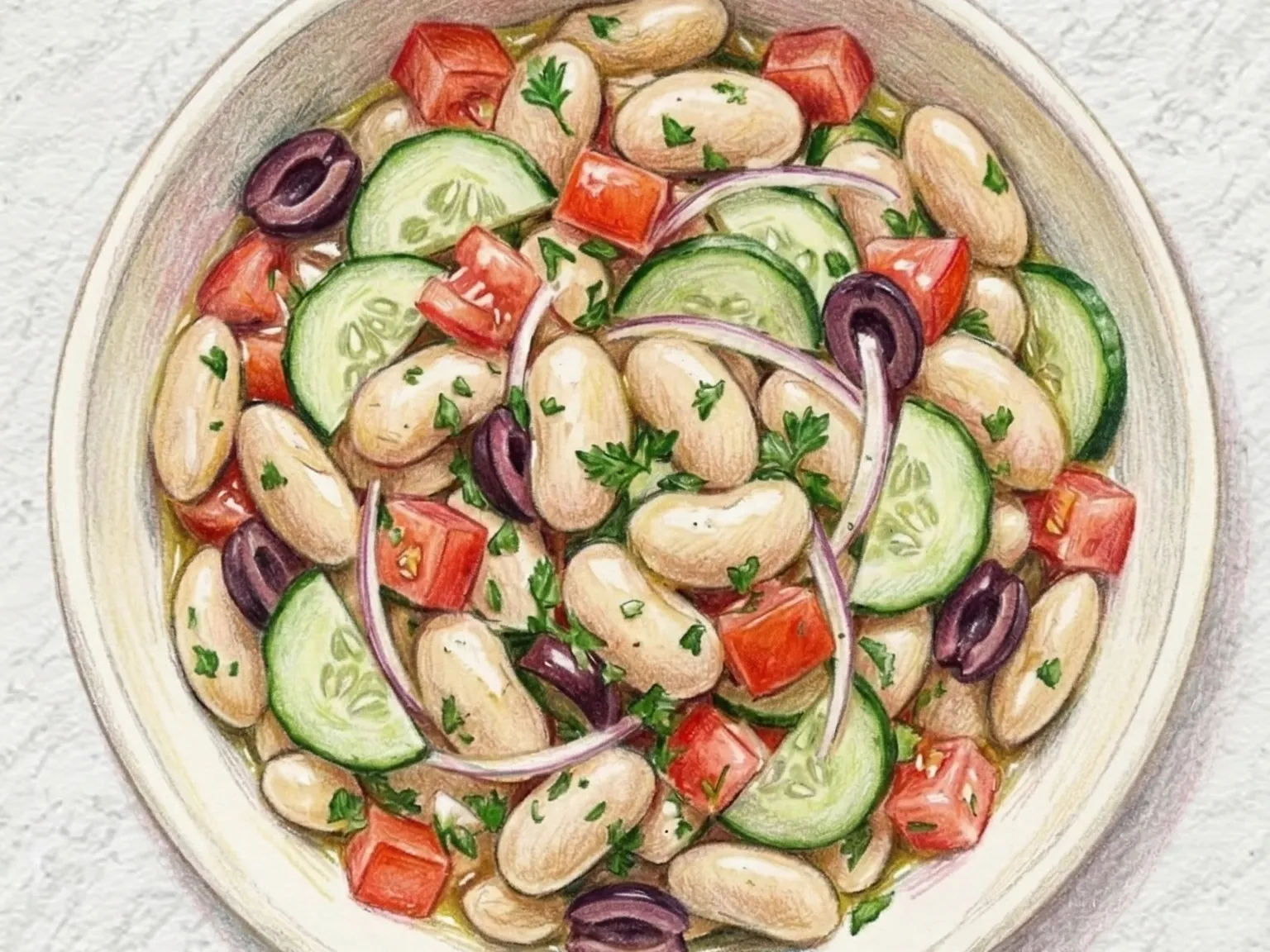
White beans anchor this salad with a soft, slightly mealy texture that makes the dish genuinely satisfying without relying on meat or grains. Diced cucumber and tomato bring moisture and fresh acidity to the mild legume base, while black olives add a briny, savory depth that pairs naturally with the simple lemon-and-olive-oil dressing. Finely chopped parsley brightens the bowl with herbal fragrance, and red onion is sliced thin enough that only a whisper of its sharpness remains, leaving room for everything else to come through. The entire salad requires no cooking and comes together in under fifteen minutes. Letting it rest for twenty to thirty minutes before serving allows the dressing to work into the beans and noticeably rounds out the flavor. Choosing an olive variety with dense, firm flesh like Kalamata adds a satisfying chew to every forkful, and a small spoon of Dijon mustard whisked into the dressing smooths the acidity into something rounder.
Quinoa Salad
Quinoa is boiled until fluffy and cooled to preserve its distinctive pop-when-bitten texture. Diced cucumber and halved cherry tomatoes mix in juicy crunch that energizes the mild grain base. Thinly sliced red onion adds sharpness, and generous chopped parsley pushes the herbal character forward. The dressing stays minimal - olive oil and lemon juice - letting raw ingredients speak clearly. As a complete protein containing all essential amino acids, quinoa makes this a nutritionally balanced light meal in a single bowl.
Blackened Chicken Caesar Salad
Blackened chicken Caesar salad starts with chicken breast coated thickly in paprika, cayenne, garlic powder, onion powder, and dried herbs before hitting a very hot, dry pan. The spice coating undergoes rapid charring at high temperature, forming a dark, smoky crust that seals in moisture and concentrates the spice aromatics on the surface of the meat. The interior of the chicken stays juicy because the charred crust acts as an insulating barrier, provided the pan is hot enough from the start. Creamy Caesar dressing, made with anchovy paste, egg yolk, lemon, and Parmesan, wraps around the cold, crisp romaine and the sliced hot chicken alike, moderating the cayenne heat without erasing the spice character entirely. Shaved Parmesan adds sharp, salty depth throughout, while croutons introduce a crunchy textural break against the tender chicken and limp lettuce. Because blackening generates substantial smoke, proper ventilation or an outdoor cooking setup is strongly recommended. The dish functions as a full main course rather than a starter salad.
Barley Grain Salad
Barley grain salad is a Mediterranean-inspired dish built around the chewy, nutty character of well-cooked pearl barley. The grain is boiled until tender but with a slight resistance, then cooled completely before it is tossed with diced bell pepper, cucumber, and red onion. Cooling the barley fully before adding the vegetables is important; warm grain draws moisture out of the fresh vegetables and dilutes the dressing. Olive oil forms the base of the lemon-herb dressing, providing a rounded richness that complements the earthy depth of the barley, while fresh lemon juice cuts through and lifts the whole bowl with clean, bright acidity. The raw vegetables add crunch and moisture, breaking up the density of the grain with each bite. Red onion contributes a sharp edge that sharpens the overall flavor profile. High in dietary fiber, the salad is genuinely filling for its size and works equally well as a standalone light meal or as a substantial side alongside grilled meat or fish.
Serve with this
Kimchi Tofu Alfredo Farfalle (Creamy Kimchi Bow-Tie Pasta)
Kimchi tofu Alfredo farfalle is a fusion pasta that counters the richness of a cream-and-Parmesan Alfredo sauce with the lactic acidity of well-fermented kimchi. Garlic bloomed in butter forms the aromatic base, then cream, milk, and Parmigiano are combined into the classic Alfredo sauce, after which chopped kimchi is folded in to introduce fermented tang and a layer of umami that a standard Alfredo lacks. Firm tofu cut into cubes and pan-fried until each side is golden provides a mild, neutral protein element with direct textural contrast against the smooth sauce. Farfalle's pinched center holds pockets of sauce against each piece of pasta, delivering a consistent hit of creaminess in every bite, and freshly ground black pepper draws a sharp line through the richness at the finish. The entire dish moves from pan to plate in about 15 minutes.
Jianbing (Chinese Savory Breakfast Crepe)
Jianbing is a northern Chinese street breakfast crepe assembled on a flat griddle within minutes. A thin batter of mung bean flour and wheat flour is spread into a wide circle, then an egg is cracked directly on top and smeared across the surface while still liquid. Chopped scallion is scattered over the egg before the crepe is flipped briefly to set the other side. Sweet bean sauce and chili sauce are brushed on, followed by fresh cilantro and a crispy fried wonton sheet that provides the signature crunch. The mung bean flour gives the batter a distinctive nutty flavor and slightly crisp edge that plain wheat flour cannot replicate. The whole assembly is folded into a neat rectangle meant to be eaten by hand. Timing is critical for the wonton cracker, which should be added last to prevent sogginess, creating a layered contrast of soft crepe, runny egg, sharp sauce, and shattering crunch.
Korean Scallion Pancake
Pa-jeon is a Korean scallion pancake made by cutting scallions into six-to-seven-centimeter lengths, laying them across an oiled pan, and pouring a batter of Korean pancake mix, water, egg, and salt directly over them before frying on medium heat. The method of placing the scallions first and covering them with batter means one side of each scallion presses against the hot pan surface, which caramelizes them and coaxes out a sweet, aromatic fragrance that would not develop if the scallions were simply mixed into the batter. Batter consistency is a meaningful variable: the mixture should flow off a spoon in a continuous stream rather than plopping, because anything thicker makes the pancake bready and reduces the proportion of scallion in each bite, while anything too thin prevents the distinctive crispy rim from forming around the edges. Adding an extra drizzle of oil around the perimeter before flipping fries the outer edge like a fritter, creating a sharp contrast between the crunchy border and the soft, scallion-loaded interior when dipped into a soy-based dipping sauce. Pa-jeon is also known in Korean culture as a dish that people instinctively crave on rainy days, a reputation closely tied to the sound of batter hitting a hot oiled pan.
Similar recipes
Three Bean Salad
Three bean salad consists of kidney beans, chickpeas, and fresh green beans that are prepared by blanching. The green beans undergo a brief cooking process in boiling water for three minutes, which ensures they retain a bright appearance and a snappy texture. In contrast, the kidney beans and chickpeas used are canned varieties that only require thorough rinsing and draining to remove any excess starch from their surface. The recipe includes red onions that have been thinly sliced and then soaked in cold water. This soaking step is used to remove the sharp, raw bite of the onion, resulting in a mild sweetness that integrates well with the other components. The dressing for this salad is a combination of olive oil, apple cider vinegar, and Dijon mustard. The apple cider vinegar contributes a soft acidity to the mixture, while the mustard introduces a sharp and peppery element that provides flavor to the beans. Storing the assembled salad in the refrigerator overnight is an important step because it allows the dressing to soak into the beans and the green beans. This waiting period makes the dish a suitable option for individuals looking to prepare their meals ahead of time.
Korean Cabbage Tuna Jeon (Crispy Shredded Cabbage Tuna Pancake)
Finely shredded cabbage, drained canned tuna, and thinly sliced onion are folded into a light batter of Korean pancake mix, egg, and salt, then spread thin in an oiled pan. As the cabbage cooks, it releases moisture and develops a natural sweetness that balances the tuna's salty, savory character. Spreading the batter thin ensures crisp edges throughout, and making smaller pancakes simplifies flipping. High in protein and relatively low in calories, this jeon doubles as a quick standalone meal or a diet-friendly option, finished with a scattering of chopped green onion on top.
Danza Noodle Soup (Tomato Chickpea Pasta Soup)
Danza noodle soup is a light Mediterranean-style soup that simmers diced tomatoes and chickpeas together in vegetable broth with dried oregano and thin pasta noodles. Sauteing onion in olive oil until translucent before adding the tomatoes builds a deeper, more aromatic base than starting with raw aromatics. Chickpeas soften gradually as the soup cooks, contributing a nutty richness and satisfying substance without making the broth heavy. Stirring in fresh parsley just before serving lifts the finished soup with a clean herbal brightness against the tomato backdrop. Cooking the pasta separately and adding it at serving keeps the broth clearer and prevents the noodles from absorbing too much liquid.