Zucchini Noodle Salad

Zucchini Noodle Salad

Quick answer

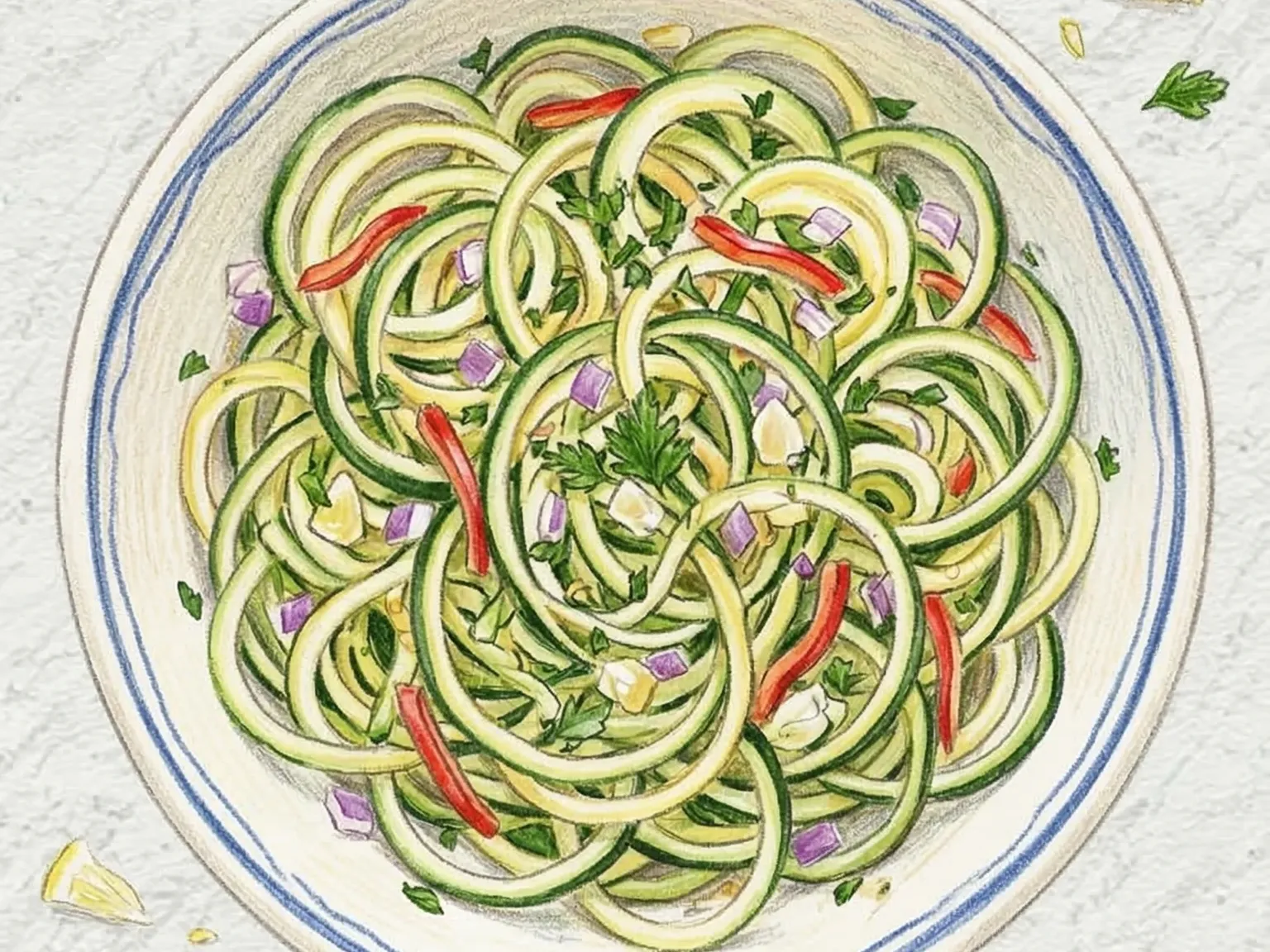
Zucchini noodle salad spiralizes or peels zucchini into long noodle strands and tosses them with halved cherry tomatoes and minced garlic in a lemon juice and olive oil d...

What makes this special

  • Zucchini Noodle Salad features spiralized strands and cherry tomatoes in a tangy lemon dressing.
  • High water content means zucchini must be dressed at the last moment only
  • Mincing garlic into olive oil disperses raw garlic aroma evenly over each strand
Total time
18 min
Level
Easy
Servings
2 servings
Ingredients
7
Calories
220 kcal
Protein
8 g

Key ingredients

zucchinicherry tomatoesParmesan cheesegarliclemon juice

Core cooking flow

  1. 1 Rinse 300 g zucchini, dry it well, and trim the ends.
  2. 2 Halve 120 g cherry tomatoes and keep the cut sides facing up so the juices s...
  3. 3 In a bowl, combine 1 tablespoon lemon juice with 2 tablespoons olive oil fir...

Zucchini noodle salad spiralizes or peels zucchini into long noodle strands and tosses them with halved cherry tomatoes and minced garlic in a lemon juice and olive oil dressing, finished with shaved Parmesan and fresh basil. Zucchini has a high water content that releases quickly once dressed, so the salad must be tossed immediately before serving to prevent the dressing from becoming diluted. Finely minced garlic dispersed through the olive oil distributes a sharp, pungent flavor evenly across every strand, and lemon juice gives the mild zucchini a defined, bright direction. The cherry tomatoes burst with juice that acts as a secondary dressing, and the Parmesan contributes salt and umami that pair with basil's herbaceous aroma to produce depth without any cooking.

Prep 18min 0 2 servings
Recipes by ingredient → garlic lemon juice olive oil

Instructions

Read the steps as a cooking flow: prep, heat, seasoning, doneness control, and finish.

6 steps
  1. 1
    Step

    Rinse 300 g zucchini, dry it well, and trim the ends.

    Use a peeler or spiralizer to make long strands, stopping when you reach the seedy center so the noodles stay firm.

  2. 2
    Prep

    Halve 120 g cherry tomatoes and keep the cut sides facing up so the juices stay mostly inside until mixing.

    Finely mince 1 garlic clove, breaking up any large pieces that would taste harsh.

  3. 3
    Prep

    In a bowl, combine 1 tablespoon lemon juice with 2 tablespoons olive oil first, then add the minced garlic.

    Stir for about 30 seconds until the garlic is evenly suspended in the oil.

  4. 4
    Prep

    Just before serving, add the zucchini noodles and toss for about 30 seconds, lifting the strands with tongs or chopsticks.

    Avoid pressing or squeezing them, because that releases water quickly.

  5. 5
    Finish

    Add the halved cherry tomatoes and toss only 20 seconds more, just until some juice blends with the dressing.

    If liquid starts pooling at the bottom, plate the salad right away.

  6. 6
    Finish

    Pile the salad lightly in a serving bowl and finish with 30 g Parmesan and 8 basil leaves.

    Serve immediately, chilled or at room temperature, before the zucchini dilutes the dressing.

After the steps

Pick a recipe that fits this dish.

Continue with shared ingredients, meal pairings, or a similar method.

Recipes That Go Well With This

More Salads →

Based on shared ingredients and meal pairing

Gamtae Avocado Shrimp Salad
Shared ingredient: cherry tomatoes Salads

Gamtae Avocado Shrimp Salad

Gamtae avocado shrimp salad pairs blanched shrimp with sliced avocado, romaine, and cherry tomatoes in a lime-soy dressing, finished with crumbled gamtae seaweed. Blanching the shrimp for exactly two minutes and plunging them immediately into cold water keeps the exterior springy while preserving a moist, tender interior - longer cooking makes them rubbery and dry. The dressing of lime juice, soy sauce, olive oil, and honey layers sharp citrus acidity against soy umami, cutting neatly through the richness of the avocado rather than letting it weigh down the bowl. Gamtae seaweed absorbs moisture rapidly and turns limp within minutes, so it must be crumbled over the salad only at the very moment of serving to retain its crunch and oceanic fragrance. Thinly sliced red onion should be rinsed briefly in cold water to remove the raw, sharp edge, letting it blend more quietly with the other ingredients. Domestic gamtae has a finer, more delicate structure than regular dried laver, so it crumbles cleanly by hand without any tool.

Grilled Peach Burrata Basil Salad
Shared ingredient: olive oil Salads

Grilled Peach Burrata Basil Salad

The peaches are sliced into wedges and brushed with a thin layer of olive oil before they are placed into a grill pan. Each side requires between one and two minutes of contact with the heat to develop a charred surface. This method draws out a caramelized sweetness and a subtle smoky quality that is not present in raw fruit. The application of direct heat to the cut surfaces of the peaches concentrates their natural sugars, which results in a deeper flavor profile and a savory quality that supports the other ingredients. Preparation of the burrata involves removing it from the refrigerator ten minutes prior to assembly. This pause allows the cheese to lose its chill so that the creamy interior can soften. When the cheese is eventually torn apart and placed over the peaches, the center should be loose enough to flow freely, which ensures the full milky richness is distributed throughout the salad. The assembly includes a base of warm grilled peaches topped with the torn burrata, fresh arugula, and basil leaves. Arugula is chosen for its peppery bitterness, which provides a functional balance to the sweet peaches and the heavy cream of the cheese, preventing the dish from becoming one-dimensional. Lightly toasted walnuts are added to provide a specific textural contrast and a roasted nuttiness that complements the softer components. Finally, a thick balsamic glaze with a sweet and tart profile is drizzled over the top to bring the different elements together into a single cohesive dish. This salad is best prepared during the summer when peaches are at their peak ripeness and sweetness.

Spaghetti alla Puttanesca
Serve together Western

Spaghetti alla Puttanesca

Spaghetti alla puttanesca melts anchovy fillets into olive oil with sliced garlic over low heat, creating a deeply savory base before any tomato is added. Hand-crushed whole tomatoes, halved black olives, capers, and red pepper flakes go in next and simmer for eight minutes, during which the sauce reduces and the briny, salty, and spicy elements fuse into a bold, cohesive flavor. The anchovies dissolve completely, leaving no trace of fish but contributing an intense umami backbone. Because capers and anchovies are already heavily salted, seasoning is adjusted only at the very end by taste. The spaghetti is pulled one minute short of al dente and finished in the sauce pan with a splash of pasta water, which allows the starch to bind the sauce tightly to each strand.

Gosari Smoked Duck Salad (Smoked Duck & Bracken Fern Salad)
Similar recipe Salads

Gosari Smoked Duck Salad (Smoked Duck & Bracken Fern Salad)

Gosari smoked duck salad is a Korean-style salad that pairs briefly seared smoked duck, blanched bracken fern, shredded cabbage, and thinly sliced Korean pear in a spicy soy-vinegar dressing. The smoked duck is placed skin-side down in a dry pan and cooked over medium heat for about three minutes, just enough time for the surface fat to render and the smoky aroma to intensify without drying out the interior. Going past that point causes the lean meat underneath to tighten and lose its moisture, which flattens the flavor. Bracken fern is blanched in boiling water for one minute and immediately rinsed under cold water to eliminate the slightly bitter, astringent quality it has when raw while preserving the chewy, springy resistance that makes it worth using instead of a softer green. Korean pear slices are added for both texture and function, since the clean, high-water-content fruit releases juice on each bite that washes through the fat left by the duck and refreshes the palate. The dressing combines soy sauce, vinegar, chili oil, and minced garlic into a sharply acidic and mildly spicy mixture that pushes against the deep, sweet smokiness of the duck rather than simply complementing it. Scattered toasted sesame seeds at the end add a final layer of warm, nutty fragrance.

Serve with this

Gochugaru Anchovy Broccolini Orecchiette
Pasta Easy

Gochugaru Anchovy Broccolini Orecchiette

Gochugaru anchovy broccolini orecchiette uses anchovy fillets dissolved in olive oil as the flavor foundation. The fillets go into the pan with garlic over low heat and are stirred continuously until they break apart and disappear into the oil, leaving behind deep salinity without any trace of fishiness. Korean red pepper flakes are added next and fried in the anchovy oil for twenty seconds so their aromatic compounds are released into the fat without scorching. The tomato sauce goes in immediately after and simmers for three minutes to cut its raw acidity against the rich oil base. Broccolini is blanched directly in the pasta cooking water during the final two minutes of boiling, which saves a separate pot and keeps the florets just crisp with a slightly bitter edge intact. Breadcrumbs toasted separately in a dry pan until golden are scattered over the plated pasta for crunch, since orecchiette's small ear shape traps sauce inside but offers a soft bite throughout. A squeeze of lemon juice is added off the heat to cut through the oil and brighten the plate. Parmesan shaved over the top adds a final layer of sharp saltiness.

🏠 Everyday ⚡ Quick
Prep 12min Cook 16min 2 servings
Cantonese Steamed Fish
Asian Easy

Cantonese Steamed Fish

Cantonese steamed fish - ching jing yu - is the clearest expression of the Cantonese philosophy of letting premium ingredients speak for themselves with minimal interference. The technique requires the freshest possible whole fish - sea bass, grouper, or pomfret are the standard choices - because steaming conceals nothing. Any fish that is even slightly past its peak will betray itself the moment it comes off the heat. The fish is scored on both sides to allow even heat penetration, placed on a plate with thin ginger slices tucked underneath and inside the cavity to neutralize any fishiness, then steamed over vigorously boiling water for exactly eight to ten minutes depending on thickness. Even one minute of overcooking transforms the silky, translucent flesh into something dry and dull - timing is the entire technique. The moment the fish leaves the steamer, all accumulated liquid on the plate must be poured off immediately, because that liquid carries concentrated fishiness that would spoil the clean finish. A generous pile of julienned scallion and fresh ginger is arranged on top, then a ladle of oil heated until just beginning to smoke is poured directly over the aromatics. The sizzling releases their fragrance in a single burst that infuses the fish. Seasoned soy sauce and a few drops of sesame oil complete the dish. In Cantonese banquet culture, the steamed fish course is typically the most expensive item on the table, with guests selecting a live fish directly from the restaurant tank.

🥗 Light & Healthy ⚡ Quick
Prep 15min Cook 12min 2 servings
Korean Salted Mackerel Grill
Grilled Easy

Korean Salted Mackerel Grill

Gan-godeungeo-gui is grilled salt-cured mackerel, one of the most dependable side dishes on a Korean home table. The mackerel is sold already salted at the market, so it goes straight onto heat without any additional seasoning preparation. During the curing process, the salt draws out excess moisture and firms the flesh, which makes the fish easier to handle than fresh mackerel and far less prone to falling apart in the pan. Cooking skin-side down over medium heat for seven minutes allows the fat embedded under the skin to render slowly outward, crisping the skin until it becomes paper-thin and shatters with the first touch of a spoon. Flipping the fish for just four more minutes finishes the flesh through without drying it out. The mackerel's oily richness is substantial enough to carry a bowl of rice on its own, but a wedge of lemon on the side adds a bright acidity that cuts cleanly through the fat, and a small mound of shredded daikon provides a palate-cleansing contrast that removes any lingering fishiness from the aftertaste. Frozen gan-godeungeo should be moved to the refrigerator the night before to thaw slowly, preventing the fish from weeping water all at once when it hits the hot pan.

🍺 Bar Snacks ⚡ Quick
Prep 10min Cook 15min 2 servings

Similar recipes

Tofu Avocado Salad (Silken Tofu and Avocado Sesame Bowl)
Salads Easy

Tofu Avocado Salad (Silken Tofu and Avocado Sesame Bowl)

Tofu avocado salad pairs pan-seared firm tofu with ripe avocado over a bed of mixed greens, dressed in soy sauce, sesame oil, and lemon juice. Pressing the tofu thoroughly before searing allows the surface to develop a golden Maillard crust that holds its shape even after tossing with the dressing. The avocado's creamy fat contrasts with the burst of juice from halved cherry tomatoes, creating textural variety in every bite. The dressing layers three dimensions - soy sauce for salinity, sesame oil for nuttiness, and lemon juice for acidity - giving depth to otherwise mild ingredients. Cutting the avocado just before serving prevents oxidation and keeps the color clean.

🥗 Light & Healthy ⚡ Quick
Prep 15min Cook 8min 2 servings
Oriental Soy Protein Noodle Salad
Noodles Easy

Oriental Soy Protein Noodle Salad

This noodle salad features soy protein noodles served with shredded chicken breast and fresh vegetables in a light soy-based dressing. The noodles require no boiling, only a quick rinse in cold water and thorough draining to preserve their springy texture. Chicken breast is boiled for eight minutes, cooled, and shredded along the grain to maximize dressing absorption. Thinly sliced cucumber, red bell pepper, and baby greens are arranged over the noodles. The dressing is prepared by mixing soy sauce, vinegar, olive oil, garlic, and allulose, which provides a clean sweetness without the weight of sugar. Drizzled right before eating and tossed lightly, this salad tastes best when chilled for ten minutes to enhance the firmness of the noodles.

🔥 Trending Now ⚡ Quick
Prep 15min Cook 5min 2 servings
Garlic Olive Oil Pasta
Noodles Easy

Garlic Olive Oil Pasta

Aglio e olio - garlic and oil - is the pasta Italians make at midnight with nothing in the kitchen but pantry staples. It originated in Naples, where olive oil was abundant and elaborate sauces were a luxury that working-class cooks could not afford. The entire dish depends on technique: garlic must be sliced thin and toasted slowly in generous olive oil over low heat until fragrant and barely golden - a matter of seconds past that point and it turns acrid and bitter. Peperoncino flakes go in briefly to release their capsaicin into the oil before the heat is adjusted. The real transformation happens when starchy pasta water hits the hot oil: it emulsifies into a silky, clinging sauce that coats every strand of spaghetti with a thin, even film rather than pooling at the bottom of the bowl. No cream, no cheese in the traditional version - just the clean triad of garlic, chili, and good olive oil. Flat-leaf parsley scattered on at the end contributes a fresh herbal brightness that lifts the whole dish.

🏠 Everyday 🌙 Late Night
Prep 10min Cook 15min 2 servings

Tips

Toss zucchini right before serving to avoid excess moisture.

Nutrition (per serving)

Calories
220
kcal
Protein
8
g
Carbs
12
g
Fat
17
g