Oriental Soy Protein Noodle Salad
Quick answer
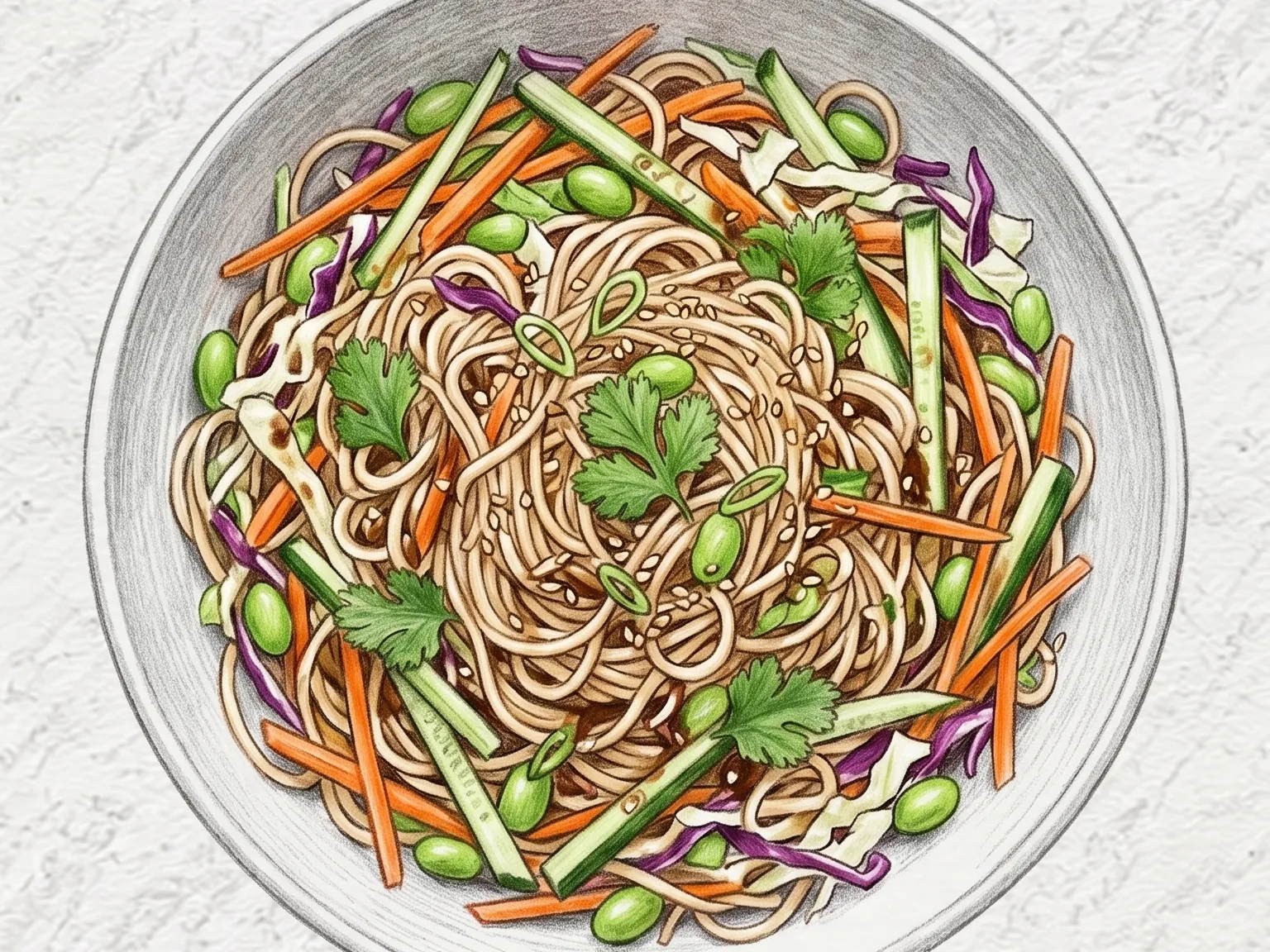
A light and healthy meal featuring low-calorie soy protein noodles with fresh vegetables and oriental dressing.
- Low-calorie soy protein noodles paired with fresh vegetables and a light oriental dressing.
- Soy protein noodles need only rinsing, no cooking
Key ingredients
Core cooking flow
- 1 Drain the soy protein noodles, rinse lightly in cold water, and drain completely.
- 2 Boil the chicken breast and shred it along the grain or cut into bite-sized pieces.
- 3 Thinly slice the cucumber and bell pepper, and wash the baby greens and drain them.
A light and healthy meal featuring low-calorie soy protein noodles with fresh vegetables and oriental dressing.
What Makes This Special
- Low-calorie soy protein noodles paired with fresh vegetables and a light oriental dressing.
- Soy protein noodles need only rinsing, no cooking
- Allulose-sweetened dressing finishes clean without sugar's heaviness
- Hand-torn chicken breast creates more surface for dressing absorption
Instructions
- 1
Drain the soy protein noodles, rinse lightly in cold water, and drain completely.
- 2
Boil the chicken breast and shred it along the grain or cut into bite-sized pieces.
- 3
Thinly slice the cucumber and bell pepper, and wash the baby greens and drain them.
- 4
In a small bowl, combine soy sauce, vinegar, olive oil, allulose, and minced garlic to make the oriental dressing.
- 5
Place the drained soy protein noodles in a bowl and top with the prepared vegetables and chicken.
- 6
Pour the dressing over the salad just before serving and toss lightly.
Tips
Nutrition (per serving)
Recipes to Cook Together
More Noodles →Serve with this
Chicken Cabbage Wraps
Simple chicken tenderloin and cabbage wraps, ideal for a diet-friendly side dish.
Jeolla-style Green Onion Kimchi
Deep-flavored green onion kimchi with rich fish sauce and spicy seasoning.
Chia Seed Yuja Dressing Tofu Salad
A healthy salad with refreshing yuja dressing and crunchy chia seeds.
Korean Sweet Pumpkin Pancake
Danhobak jeon is made by steaming kabocha squash, mashing it, then mixing the puree with glutinous rice flour and a small amount of all-purpose flour before shaping the mixture into rounds and pan-frying them in oil. The glutinous rice flour gives each piece a chewy, mochi-like texture, and the squash provides enough natural sweetness to keep added sugar minimal. The exterior crisps up in oil while the center stays soft and moist, like a compressed squash puree. The squash's natural sugars caramelize lightly against the hot pan, producing a golden color on the surface. Best eaten warm, when the squash's sweet, earthy aroma is most pronounced. Well suited as a snack or dessert.
Similar recipes
Tofu Avocado Salad (Silken Tofu and Avocado Sesame Bowl)
Tofu avocado salad pairs pan-seared firm tofu with ripe avocado over a bed of mixed greens, dressed in soy sauce, sesame oil, and lemon juice. Pressing the tofu thoroughly before searing allows the surface to develop a golden Maillard crust that holds its shape even after tossing with the dressing. The avocado's creamy fat contrasts with the burst of juice from halved cherry tomatoes, creating textural variety in every bite. The dressing layers three dimensions - soy sauce for salinity, sesame oil for nuttiness, and lemon juice for acidity - giving depth to otherwise mild ingredients. Cutting the avocado just before serving prevents oxidation and keeps the color clean.
Gosari Smoked Duck Salad (Smoked Duck & Bracken Fern Salad)
Gosari smoked duck salad is a Korean-style salad that pairs briefly seared smoked duck, blanched bracken fern, shredded cabbage, and thinly sliced Korean pear in a spicy soy-vinegar dressing. The smoked duck is placed skin-side down in a dry pan and cooked over medium heat for about three minutes, just enough time for the surface fat to render and the smoky aroma to intensify without drying out the interior. Going past that point causes the lean meat underneath to tighten and lose its moisture, which flattens the flavor. Bracken fern is blanched in boiling water for one minute and immediately rinsed under cold water to eliminate the slightly bitter, astringent quality it has when raw while preserving the chewy, springy resistance that makes it worth using instead of a softer green. Korean pear slices are added for both texture and function, since the clean, high-water-content fruit releases juice on each bite that washes through the fat left by the duck and refreshes the palate. The dressing combines soy sauce, vinegar, chili oil, and minced garlic into a sharply acidic and mildly spicy mixture that pushes against the deep, sweet smokiness of the duck rather than simply complementing it. Scattered toasted sesame seeds at the end add a final layer of warm, nutty fragrance.
Gamtae Avocado Shrimp Salad
Gamtae avocado shrimp salad pairs blanched shrimp with sliced avocado, romaine, and cherry tomatoes in a lime-soy dressing, finished with crumbled gamtae seaweed. Blanching the shrimp for exactly two minutes and plunging them immediately into cold water keeps the exterior springy while preserving a moist, tender interior - longer cooking makes them rubbery and dry. The dressing of lime juice, soy sauce, olive oil, and honey layers sharp citrus acidity against soy umami, cutting neatly through the richness of the avocado rather than letting it weigh down the bowl. Gamtae seaweed absorbs moisture rapidly and turns limp within minutes, so it must be crumbled over the salad only at the very moment of serving to retain its crunch and oceanic fragrance. Thinly sliced red onion should be rinsed briefly in cold water to remove the raw, sharp edge, letting it blend more quietly with the other ingredients. Domestic gamtae has a finer, more delicate structure than regular dried laver, so it crumbles cleanly by hand without any tool.
Kongguksu (Korean Cold Soy Milk Noodles)
Kongguksu is a Korean cold noodle dish in which thin somyeon noodles are served in a chilled broth made entirely from blended soybeans. Cooked white soybeans are peeled as thoroughly as possible to reduce any bitterness, then blended with cold water, sesame seeds, and salt until the mixture is smooth and creamy. The resulting soy broth is refrigerated until genuinely cold before use -- adding ice directly to the bowl would thin it out, so proper chilling in advance is the standard approach. Somyeon noodles are boiled until just cooked through, then rinsed vigorously under cold running water and briefly submerged in ice water to firm up their texture before being placed in the serving bowl. The cold soy broth is poured generously over the noodles, and julienned cucumber is arranged on top for color and crunch. Seasoning is personal: some eat it with salt only, others stir in a small amount of sugar. Straining the broth once through a fine mesh sieve eliminates any remaining gritty bits and gives the finished soup a noticeably silkier mouthfeel. High in plant protein and relatively light on the stomach despite its richness, it is exactly the kind of cold dish that makes summer heat more bearable. Black soybeans blended in alongside white ones deepen both the color and the toasty, nutty flavor.
Kimbap Salad Bowl (Without the rice)
Kimbap salad bowl strips away the rice and seaweed wrapper from a traditional kimbap roll and presents its core fillings as a deconstructed salad. Blanched spinach, julienned carrot, pickled radish, and thin egg strips are arranged in a bowl and dressed with soy sauce and sesame oil, the same combination that seasons a finished roll. The dressing replicates the savory, nutty quality of kimbap without the rice bulk, and pickled radish brings enough acidity and salt to balance the entire bowl without additional seasoning. Dried seaweed flakes must be added at the last moment before eating; any earlier and they absorb moisture and lose their snap and sea aroma. The bowl delivers a recognizable kimbap experience for anyone managing carbohydrate intake, and its components can be assembled from ingredients prepared in advance, making it a practical weekday lunchbox option.
Salmon Avocado Salad
Salmon avocado salad brings smoked salmon and ripe avocado together over chilled mixed greens with a lemon-Dijon vinaigrette that ties everything into focus. The dressing, olive oil whisked with fresh lemon juice and Dijon mustard, turns the smoky depth of the salmon clearer and brighter while the acidity cuts cleanly through the buttery weight of the avocado. Capers scattered throughout burst with briny tang on each bite, introducing a punchy contrast that keeps the richness from becoming monotonous. Paper-thin slices of raw onion contribute sharp fragrance and a clean crunch against the soft textures of salmon and avocado. Adding the dressing just before serving is the one step that matters most for texture, because the greens hold their crispness only if dressed at the last moment.