2741 Korean & World Recipes

2741+ Korean recipes, clean and organized. Ingredients to instructions, all at a glance.

Cooking Guides

Winter Korean Soups and Stews

Tang-guk, muguk, cheonggukjang, miyeok-guk, and kalguksu recipes for cold-weather meals.

Winter Korean Soups and Stews

Why This Collection Works

Winter soups need more than heat. They need enough depth to carry rice, vegetables, and a full meal.

How the Recipes Were Chosen

The collection spans clear radish soup, fermented cheonggukjang, filling kalguksu, and seafood broths.

How to Build a Meal

Prepare the broth base first, then add noodles, tofu, or vegetables close to serving.

Planning Tips

  • Choose one main dish first, then balance it with a soup, side dish, or quick vegetable recipe.
  • When time is limited, open the faster recipes first and save the more involved dishes for a weekend meal.
  • Use the category and tag links below to expand the collection into similar recipes.
Featured Recipes

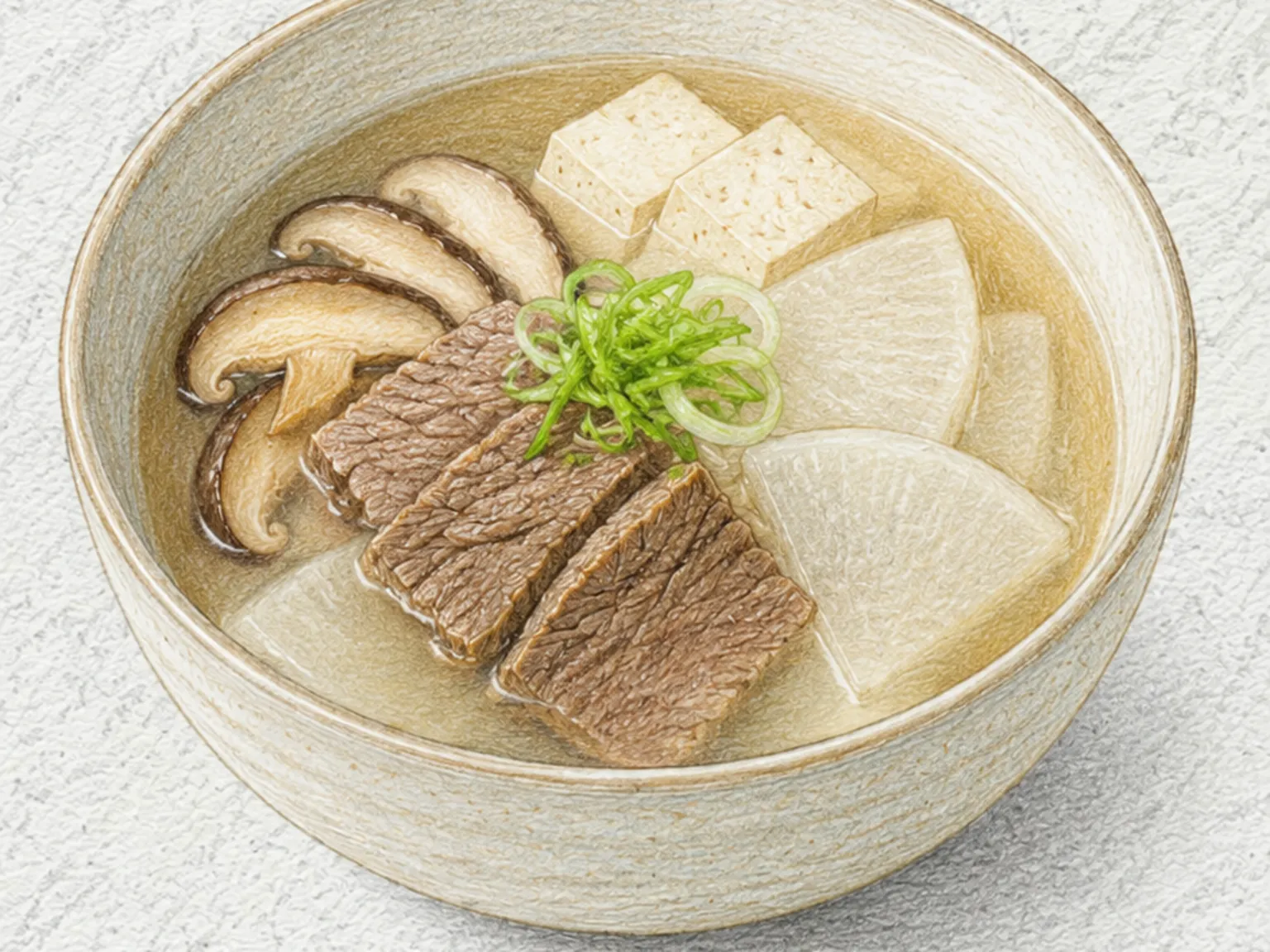
Jesa Tangguk (Ancestral Clear Beef Soup)
Soups Medium

Jesa Tangguk (Ancestral Clear Beef Soup)

Jesa-tangguk is a traditional Korean clear soup prepared for ancestral rites and formal family gatherings. Beef brisket is first soaked in cold water for at least an hour to draw out the blood, then simmered over medium heat for an extended time to produce a clear, deeply flavored stock that forms the foundation of the entire bowl. Skimming the surface regularly during cooking keeps the broth transparent and clean-tasting. Radish cooks until nearly translucent, releasing a gentle natural sweetness into the stock, while blocks of tofu and sliced shiitake mushrooms add contrasting textures. Seasoning is limited to soup soy sauce and garlic, preserving the purity of the broth and allowing each ingredient's flavor to come through undisguised. Fat is skimmed away before serving, producing the spotless, refined finish expected of ritual food. The aesthetic matters as much as the flavor: ingredients are cut into tidy, uniform shapes and arranged with deliberate care, reflecting the reverence that is central to the jesa ritual. Beyond ceremonial occasions, jesa-tangguk is a comforting home-style soup enjoyed at holidays and family meals for its clean, balanced warmth.

🏠 Everyday 🎉 Special Occasion
Prep 20min Cook 30min 4 servings
Cheonggukjang Jjigae (Korean Fermented Soybean Stew)
Stews Easy

Cheonggukjang Jjigae (Korean Fermented Soybean Stew)

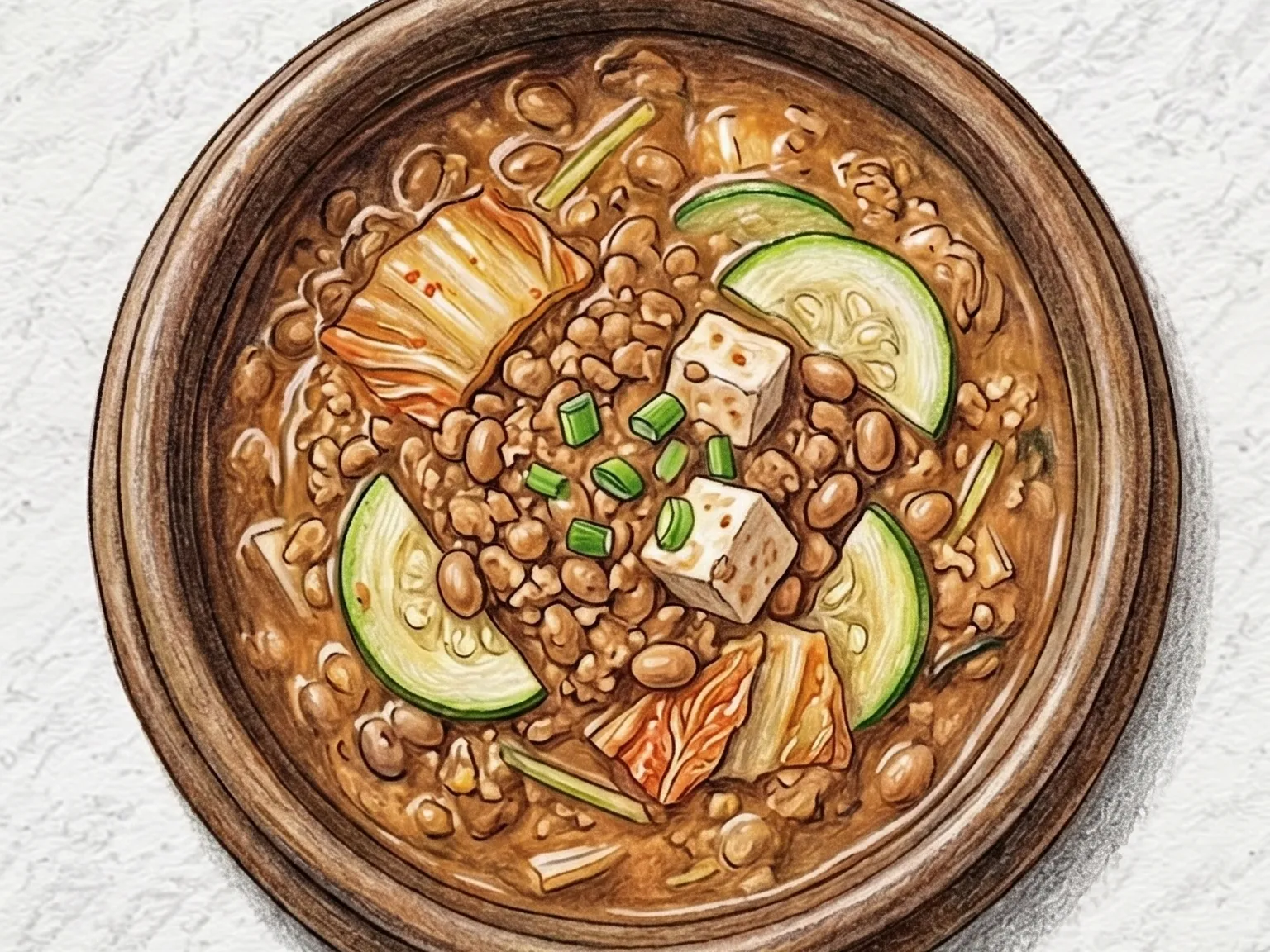
Cheonggukjang is a stew made from fast-fermented soybean paste. The short fermentation period produces a pungent, assertive aroma that mellows into a deeply nutty, savory flavor once the pot comes to a boil. Kimchi, zucchini, tofu, and onion are added to the bubbling liquid, each absorbing the thick, earthy broth as it simmers. Traditionally served piping hot in a stone pot, the stew is poured directly over freshly steamed rice -- a combination that represents one of the most enduring forms of Korean home cooking.

🏠 Everyday
Prep 10min Cook 15min 2 servings
Muguk (Korean Radish Anchovy Broth Soup)
Soups Easy

Muguk (Korean Radish Anchovy Broth Soup)

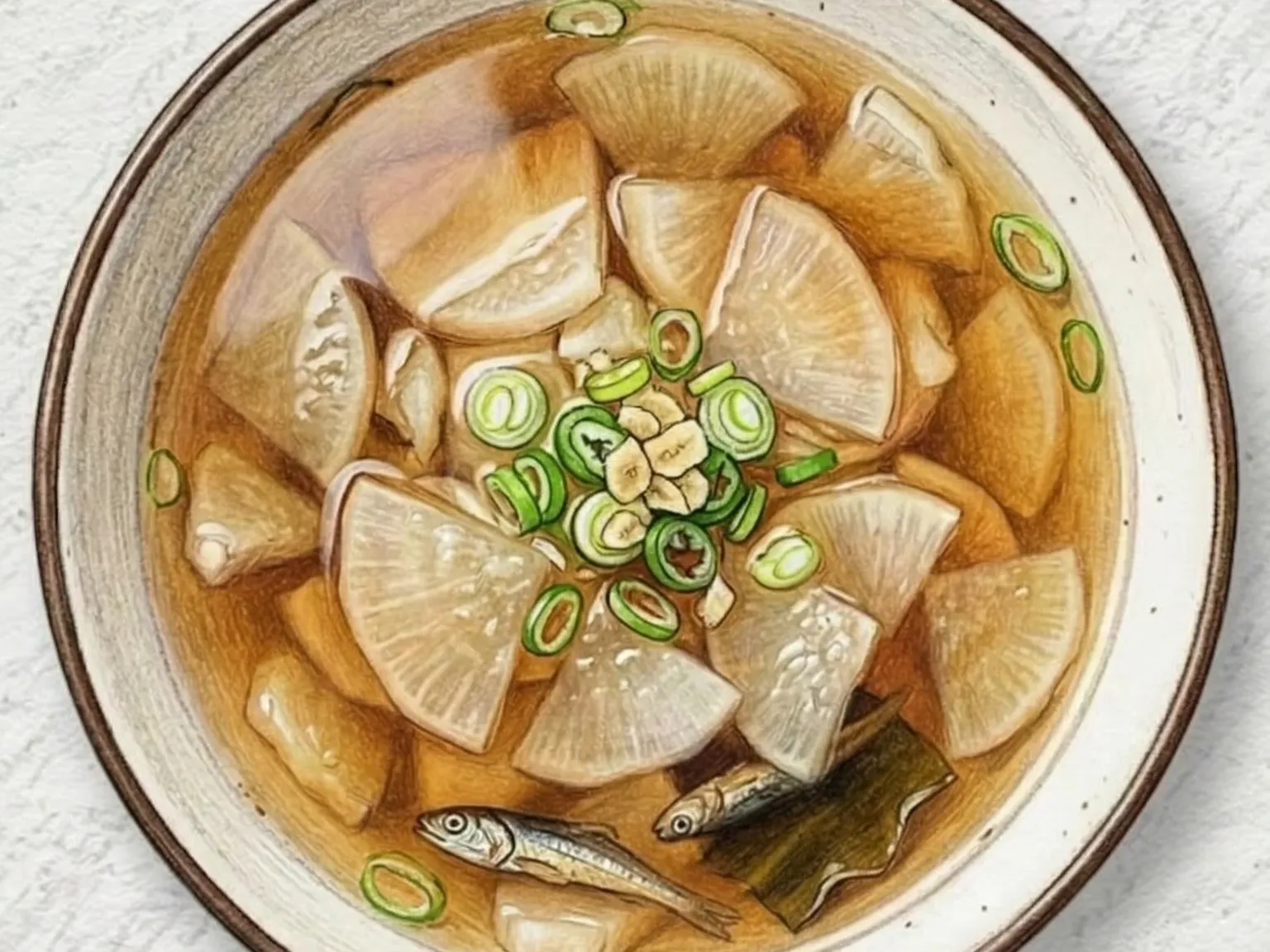
Muguk is the most elemental expression of Korean soup: radish cut generously and simmered in anchovy-kelp stock until the broth runs clear, sweet, and gently savory. The simplicity of the ingredient list is deceptive. As the radish cooks, its starch and natural sugars dissolve into the water, building a broth that tastes mild on the surface but carries real depth underneath. Cutting the radish in thick cubes or wide slabs preserves its shape through the long simmer while allowing the interior to soften completely. Slicing too thin causes the radish to disintegrate and the broth to turn cloudy. Seasoned with nothing more than soup soy sauce, garlic, and sliced green onion, muguk is versatile enough to sit beside any banchan without competing. It serves equally well as a framework: add beef strips and it becomes sogogi-muguk, add dried pollock and it becomes hwangtae-muguk, swap the soup soy for salted shrimp and the character shifts toward briny and refreshing. All that is needed to start a pot are a single radish, a handful of dried anchovies, and a strip of dried kelp, which is why Korean households return to this soup more frequently than almost any other. Reheated the next day, the radish softens further and the broth deepens, making leftovers better than the original.

🏠 Everyday
Prep 10min Cook 25min 2 servings
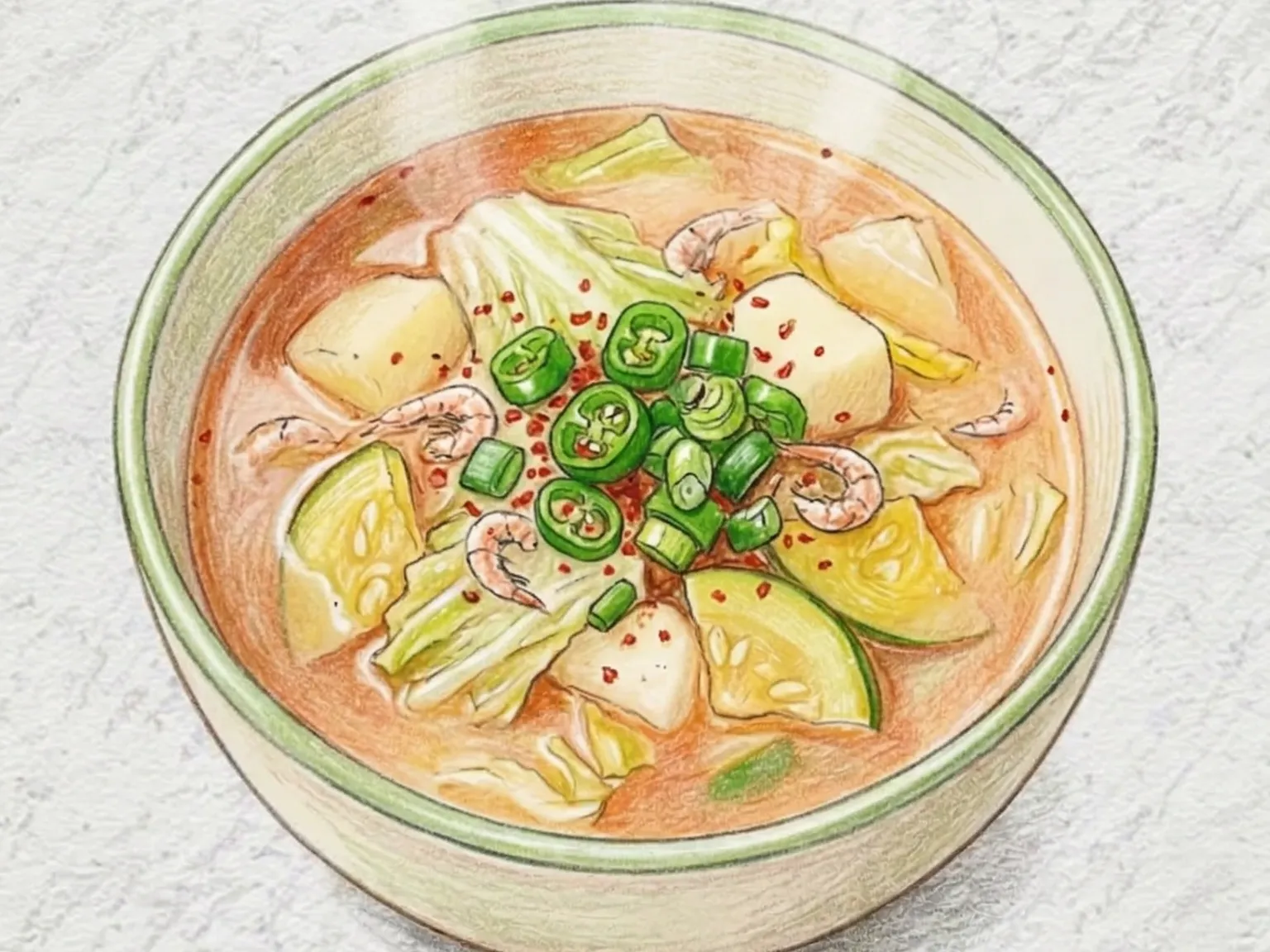
Korean Fermented Soybean Soup
Soups Easy

Korean Fermented Soybean Soup

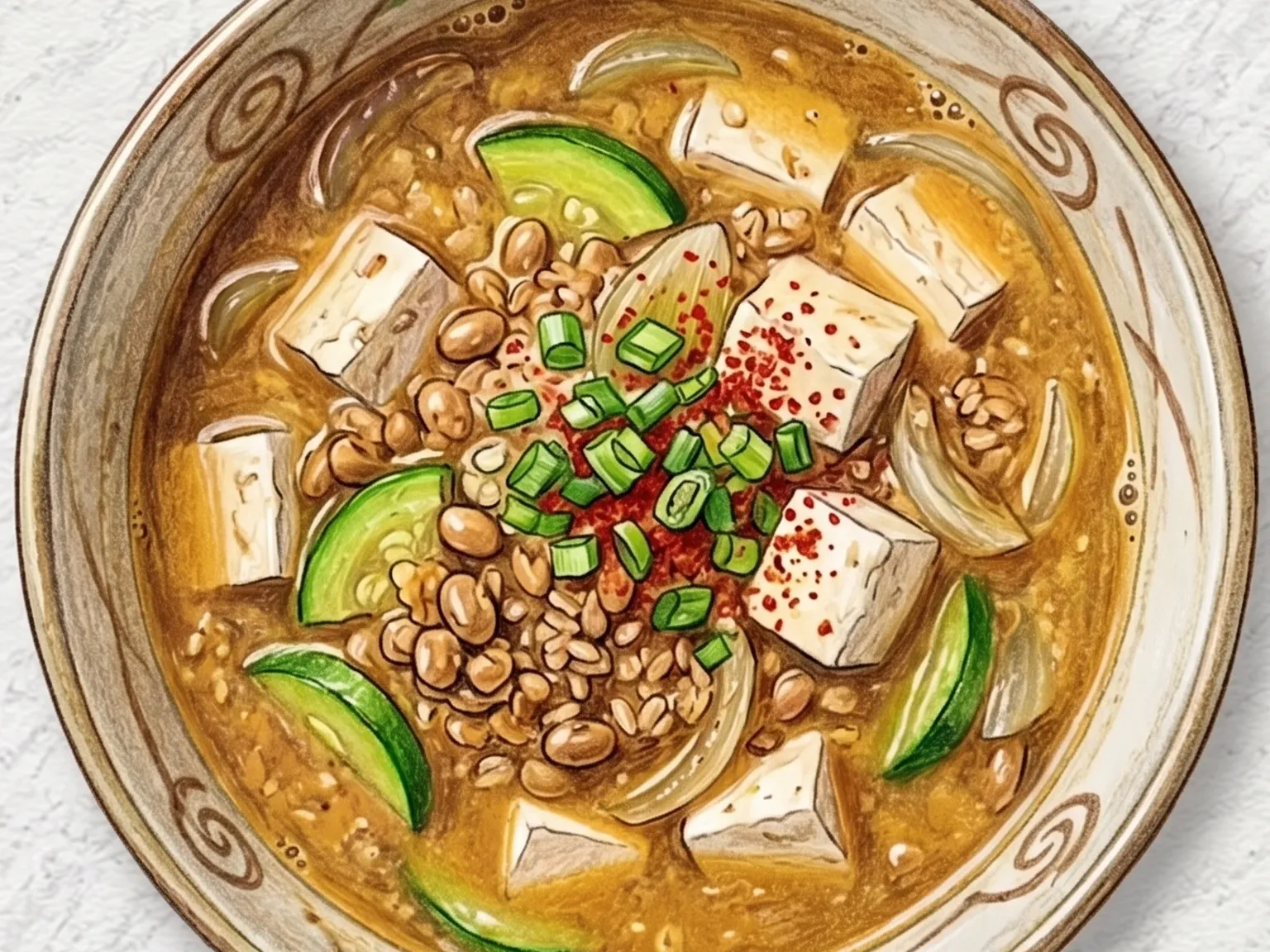
Cheonggukjang-guk is a soup where cheonggukjang -- a short-fermented soybean paste with an assertive, pungent aroma that distinguishes it from the milder doenjang -- is dissolved into anchovy-kelp stock and simmered with zucchini, onion, and tofu. The paste infuses the broth with a deep, earthy fermented quality that forms the core character of the soup. Zucchini and onion contribute natural sweetness that tempers the intensity of the fermented base, keeping the overall flavor approachable rather than overwhelming. Tofu is added partway through to absorb the broth without breaking apart, adding a soft textural contrast. Red chili flakes and sliced green onion go in at the end, lifting the finish with a gentle heat. Because cheonggukjang ferments faster and more aggressively than doenjang, its flavor is noticeably stronger -- starting with a smaller quantity and adjusting to taste is advised for first-time cooks.

🏠 Everyday
Prep 15min Cook 20min 2 servings
Korean Dried Pollock Potato Soup
Soups Easy

Korean Dried Pollock Potato Soup

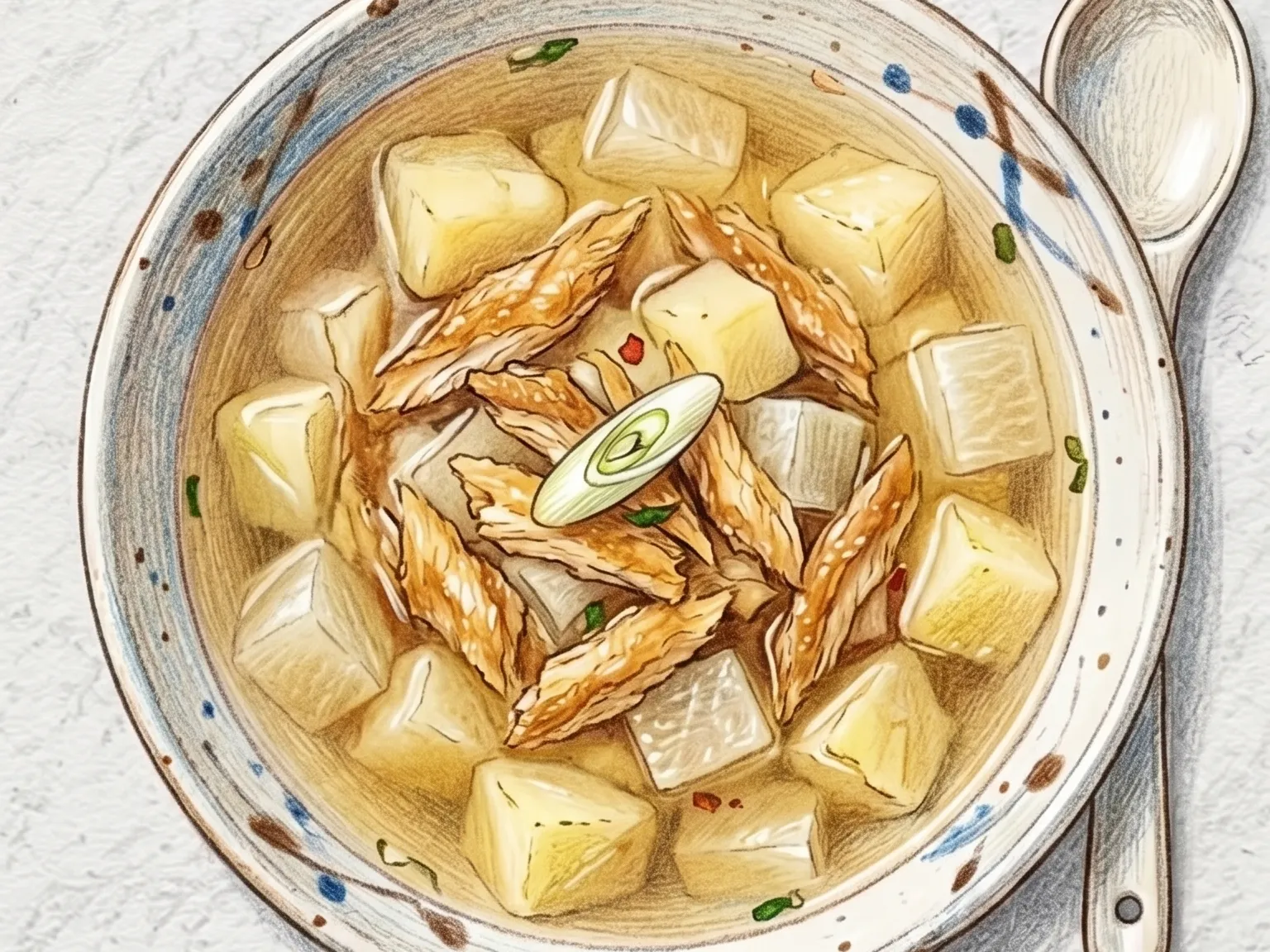
Hwangtae-gamja-guk is a clear Korean soup built around dried pollock strips that have been wind-dried and then sauteed in sesame oil before any liquid is added. That initial stir-fry step is what separates this soup from simpler broth dishes: the heat releases a toasty, nutty fragrance from the pollock that permeates the entire pot and melds with the anchovy-kelp stock poured in afterward. Potato slices simmer alongside radish, and as they soften their edges gradually break down, giving the broth a mild, natural body without the use of starch or thickener. Radish contributes a clean, cooling sweetness that tempers the concentrated umami of the dried pollock. Soup soy sauce and minced garlic handle the seasoning, keeping the flavor profile clear and uncluttered. The pollock itself stays pleasantly chewy even after prolonged simmering, providing a protein-rich bite that makes the bowl genuinely filling. This soup is a fixture on Korean breakfast tables, valued for its ability to settle the stomach and restore energy.

🏠 Everyday
Prep 15min Cook 30min 4 servings
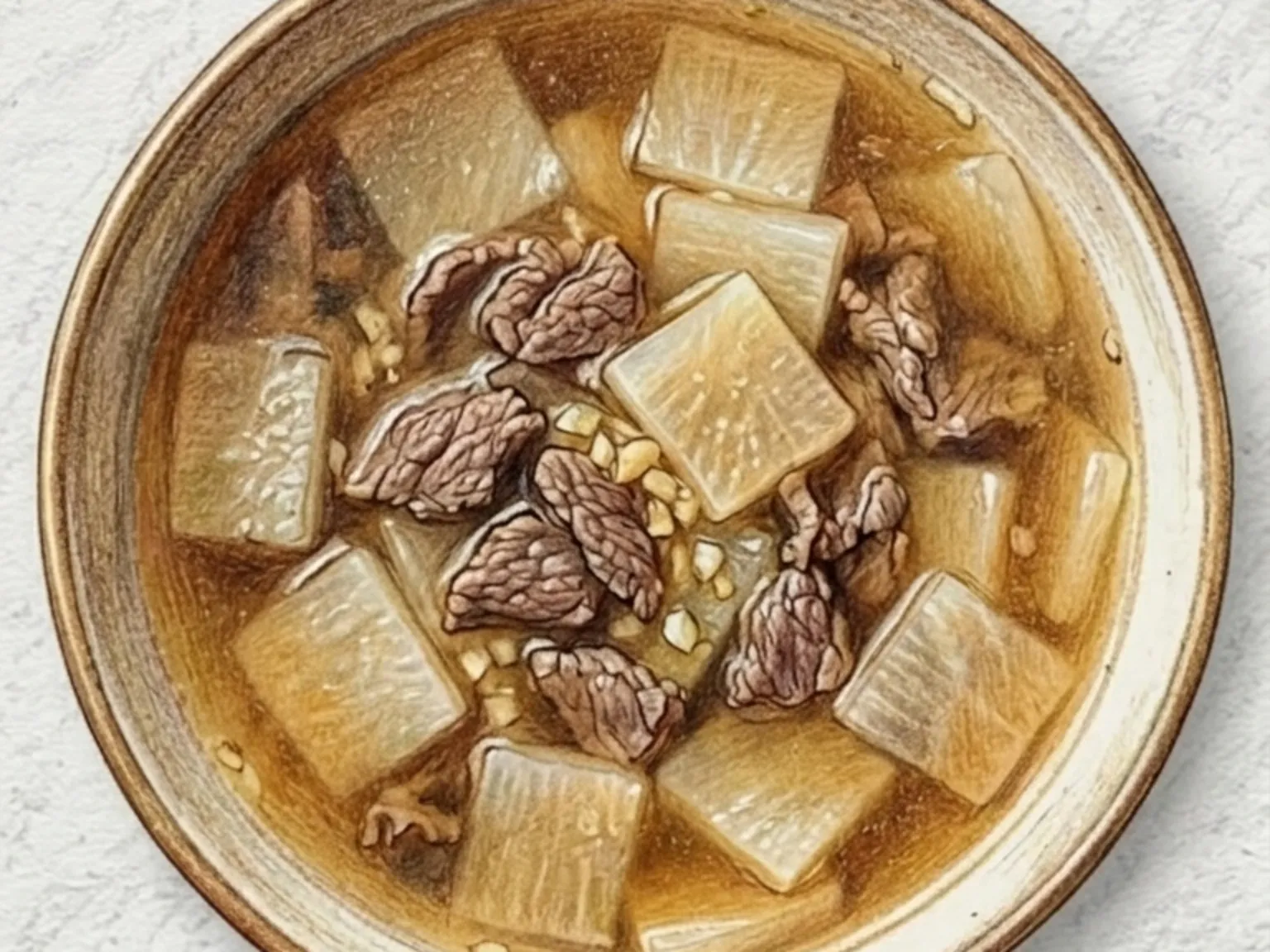
Korean Beef Radish Soup (Sesame Oil Braised Beef and Daikon)
Soups Easy

Korean Beef Radish Soup (Sesame Oil Braised Beef and Daikon)

Sogogi muguk is one of the most frequently cooked soups in Korean households, built from just two main ingredients: beef and daikon radish. Thin-cut beef is stir-fried in sesame oil until lightly browned, then thick radish slices go into the pot before water is added. As the soup comes to a boil and then settles into a steady simmer, the radish transforms: its initial sharpness mellows into a clean sweetness that balances the beef's depth, and its starch clouds the broth just enough to give it body. Soup soy sauce provides the seasoning, tinting the liquid a pale amber while pushing umami forward over saltiness. Minced garlic added near the end lends a quiet heat that sits behind the main flavors rather than competing with them. The radish, when properly cooked, should yield easily to a spoon yet still hold a hint of structure at its center. This soup also serves as the foundational broth for tteokguk on Lunar New Year, and Koreans reach for it instinctively when the weather turns cold or the body needs warming.

🏠 Everyday
Prep 15min Cook 40min 4 servings
Miyeok-guk (Seaweed Beef Sesame Soup)
Soups Easy

Miyeok-guk (Seaweed Beef Sesame Soup)

Miyeok-guk is one of the most culturally meaningful soups in Korean cuisine. Dried sea mustard is first rehydrated, then stir-fried in sesame oil until the strands glisten and deepen in color, and finally simmered with thinly sliced beef and water until the broth turns savory and lightly viscous from the seaweed's released gelatin. Seasoning is deliberately sparse: soup soy sauce, minced garlic, and a final touch of sesame oil are almost always sufficient, because the seaweed and beef provide the foundational umami. The soup is traditionally prepared for new mothers during the postpartum recovery period, as miyeok is rich in iodine, calcium, and iron. It also appears on every Korean birthday table as an act of remembrance toward the mother who endured childbirth on that day, making the bowl carry a weight of gratitude that goes far beyond nutrition. Beyond its symbolism, miyeok-guk is practical everyday cooking: it calls for few ingredients, comes together in under thirty minutes, and produces a broth that nourishes without heaviness. Substituting the beef with mussels, clams, or dried shrimp creates a lighter, more oceanic version that is equally rooted in tradition. The soup reheats well and frequently tastes even better the next day, once the seaweed has softened further and the flavors have had time to merge fully.

🏠 Everyday
Prep 30min Cook 30min 2 servings
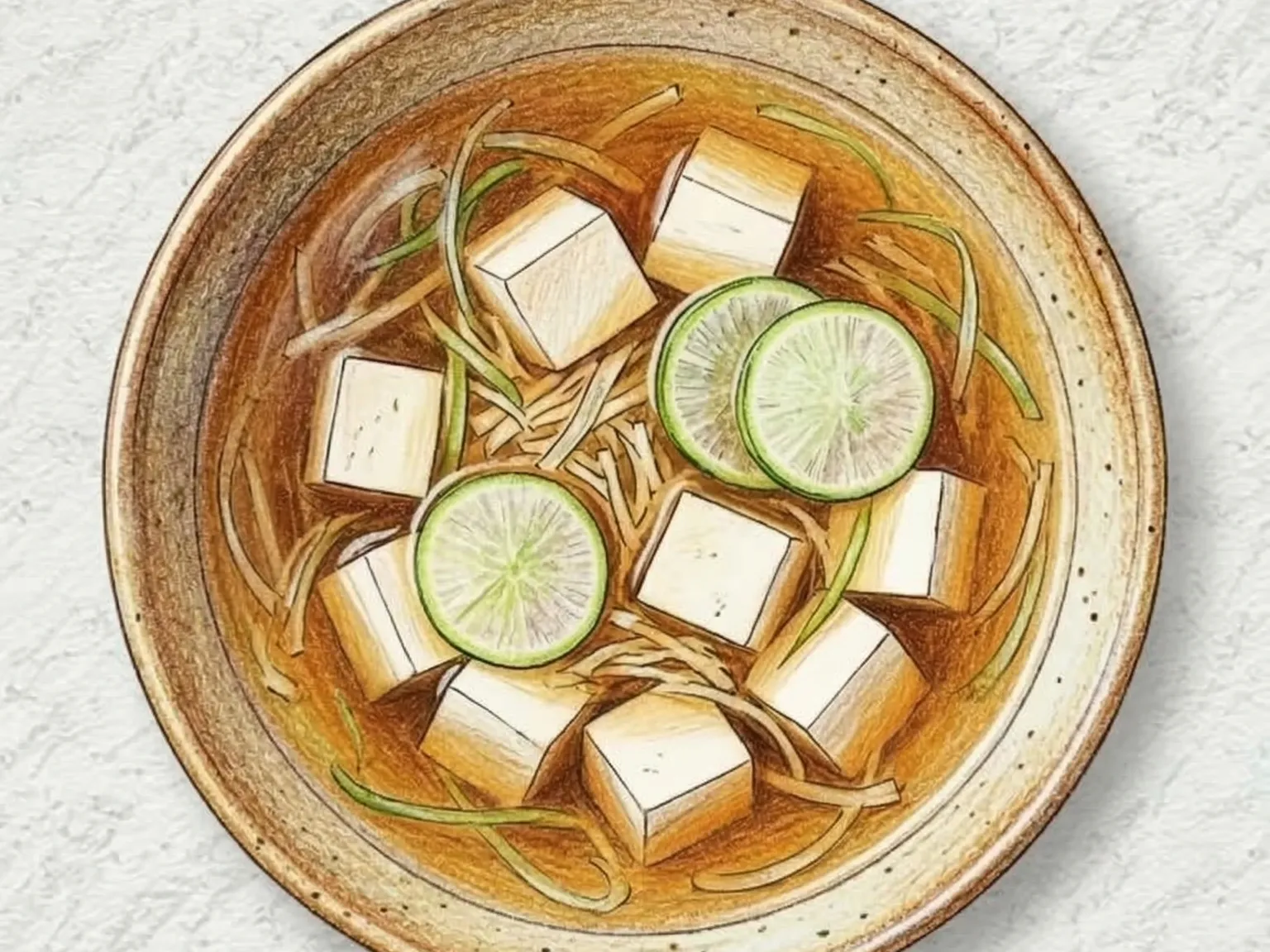
Dubu Guk (Korean Clear Tofu Soup Recipe)
Soups Easy

Dubu Guk (Korean Clear Tofu Soup Recipe)

Dubu guk is the basic Korean clear tofu soup, also called dubu jangguk, made with tofu, radish, shiitake mushrooms, and soup soy sauce in a clean broth. The radish goes in first and simmers for seven minutes, releasing a mild sweetness that forms the foundation of the broth. Shiitake and garlic follow for another four minutes, adding guanylate-rich umami that layers onto the radish base. The result is a broth with real depth even though the seasoning remains simple. Tofu is added last so the cubes stay clean-edged and tender instead of breaking apart. This is the best fit when you want a light Korean tofu soup rather than a spicy sundubu-style stew.

🏠 Everyday
Prep 10min Cook 15min 4 servings
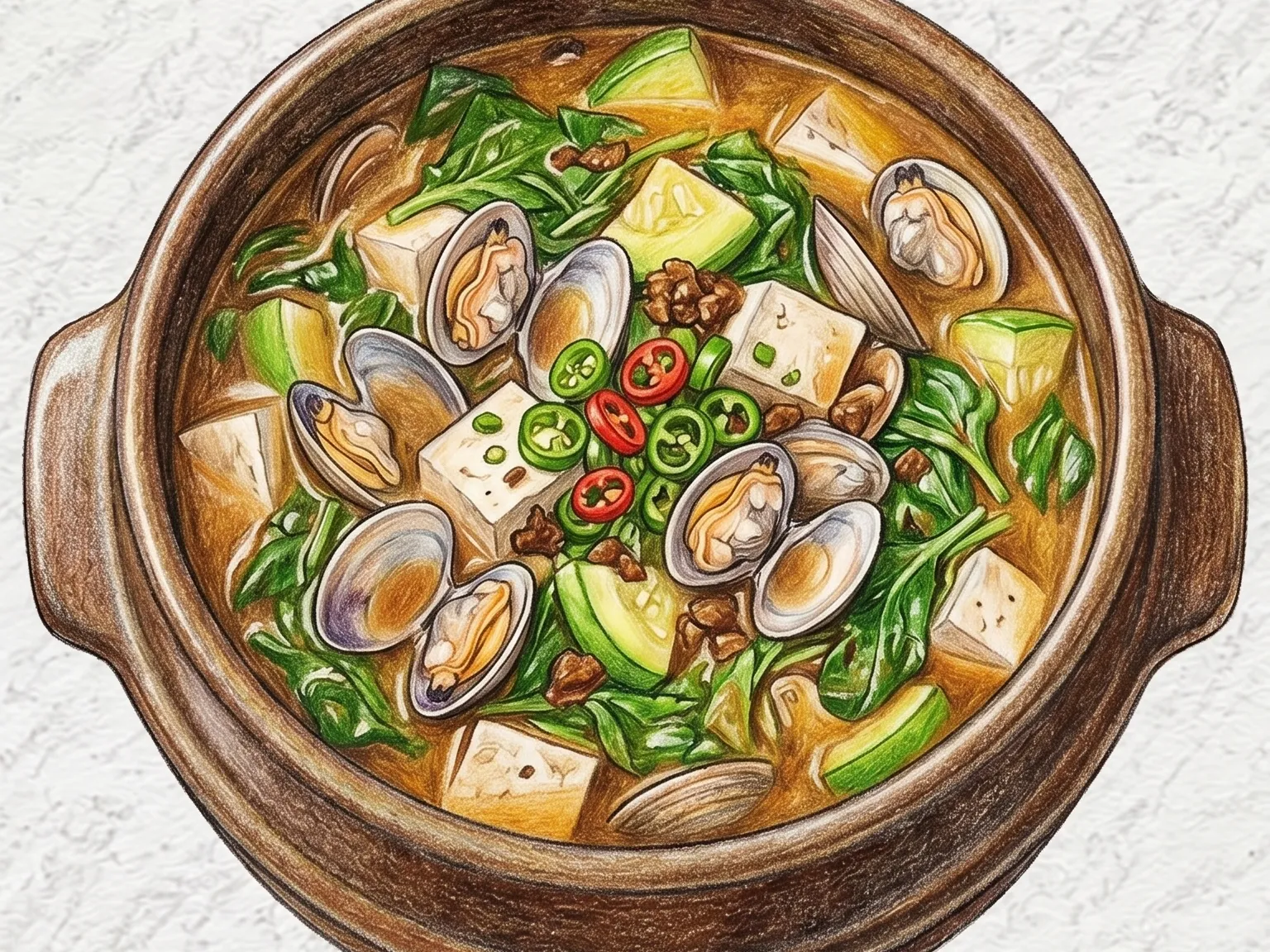
Korean Mallow & Clam Stew
Stews Easy

Korean Mallow & Clam Stew

Auk-bajirak-jjigae is a thick, meal-weight stew that takes the logic of the milder auk-bajirak-guk and pushes it further: more doenjang, a denser ingredient list, and cheongyang chili for heat. The clams go in first while the water is still cold, then the pot comes to a boil so the shells open slowly and release their concentrated sea juice into the base. Doenjang and gochugaru dissolve into the liquid together, creating a foundation that is simultaneously earthy, saline, and warm with chili. Cubed tofu and sliced zucchini fill out the pot and convert what might have been a soup into something substantial enough to anchor a meal with rice. Mallow leaves added at the end bring their natural mucilage, which thickens the broth and gives it a cling that plain stews lack. Sliced cheongyang chili on top cuts through the richness with a sharp, direct heat. On a cold evening eaten alongside steamed rice, this jjigae sits at the dense, deeply layered end of the Korean stew spectrum.

🥗 Light & Healthy 🏠 Everyday
Prep 15min Cook 18min 2 servings
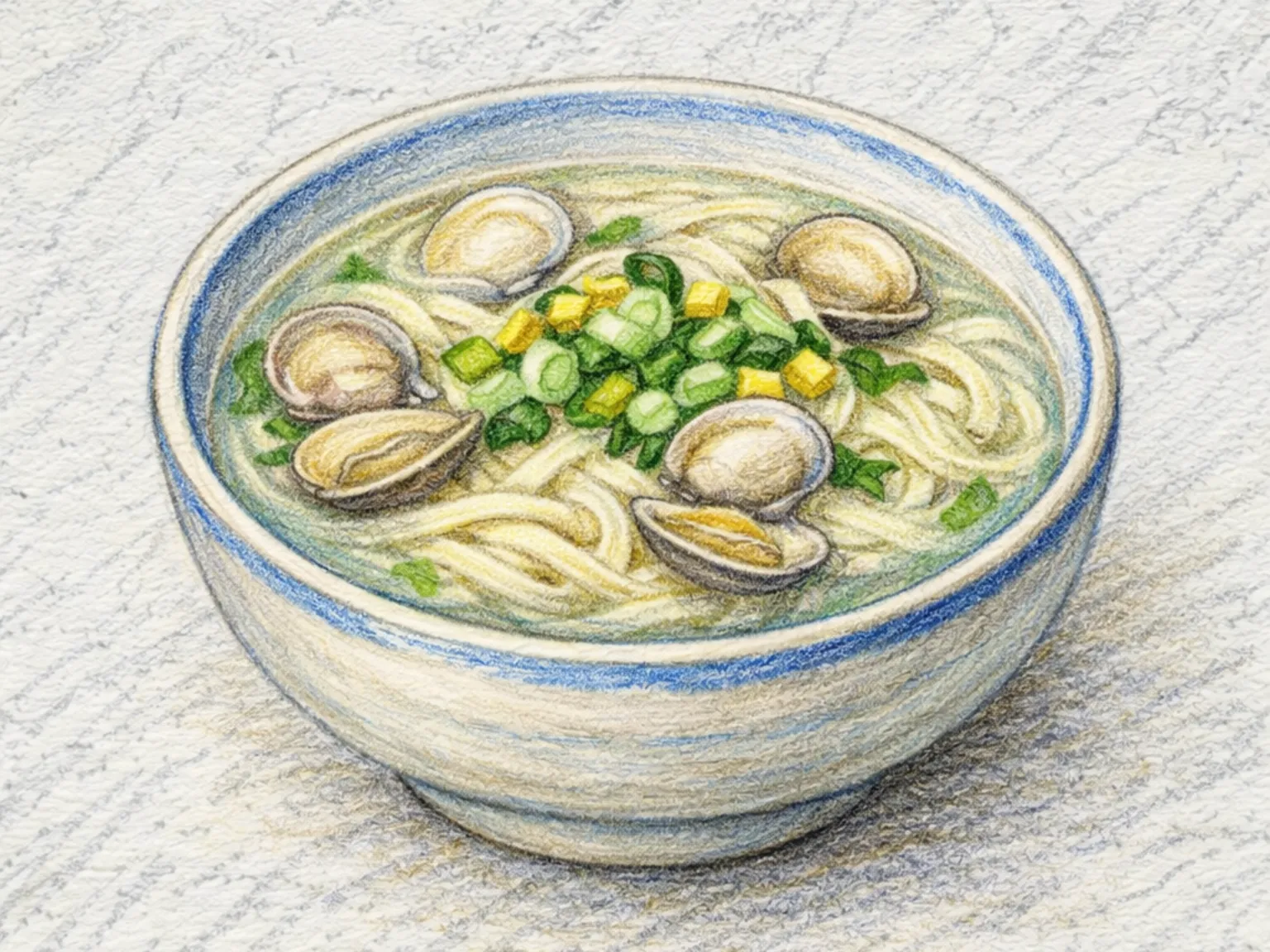
Korean Clam Kalguksu (Hand-Cut Noodles in Clam Broth)
Noodles Medium

Korean Clam Kalguksu (Hand-Cut Noodles in Clam Broth)

Baekhap kalguksu is a Korean knife-cut noodle soup in which the broth is derived entirely from hard clams rather than the more standard anchovy base. Purged clams are placed in cold water and brought to a boil; once the shells open, the clams are lifted out and the broth is strained through cheesecloth to remove any residual sand or shell fragments. Thinly sliced daikon radish and Korean zucchini cook in the strained broth for five minutes, contributing vegetal sweetness. The hand-cut noodles go in next and are boiled for six to seven minutes until they turn translucent; starch released from the noodles thickens the broth naturally into a lightly viscous, silky consistency without any additional thickener. Once the noodles are cooked, the reserved clam meat returns to the pot, and the soup is seasoned with minced garlic and guk-ganjang. Onion added with the vegetables deepens the broth's sweetness further. Because clam liquor rather than dried anchovy forms the base, the soup carries a distinctly marine, mineral character that permeates every strand of noodle, setting baekhap kalguksu apart from all other regional kalguksu variations. Along the coastal areas of South Chungcheong and Jeolla Provinces, this style of noodle soup has been a local specialty for generations, best in the seasons when clams are most abundant.

🎉 Special Occasion
Prep 20min Cook 25min 2 servings

Related Categories and Tags

Frequently Asked Questions

What recipes are included in Winter Korean Soups and Stews?

The collection spans clear radish soup, fermented cheonggukjang, filling kalguksu, and seafood broths.

How many dishes should I make at once?

For a regular meal, one main dish and one or two sides are enough. For holidays or guests, build around one main, one soup, and two or three side dishes.

Can I prepare these recipes ahead?

Prepare the broth base first, then add noodles, tofu, or vegetables close to serving.

More Guides