🎉 Special Occasion Recipes
Impressive dishes for guests and special occasions
929 recipes. Page 1 of 39
When guests are coming, the menu needs a little extra care. This tag features impressive dishes suited for entertaining - galbi-jjim, japchae, and bulgogi for a Korean spread, or pasta and steak for a Western-style course.
The key to stress-free hosting is choosing recipes that allow advance preparation. Do the heavy lifting the day before, then finish plating when guests arrive. That way, you can relax and enjoy the meal together.
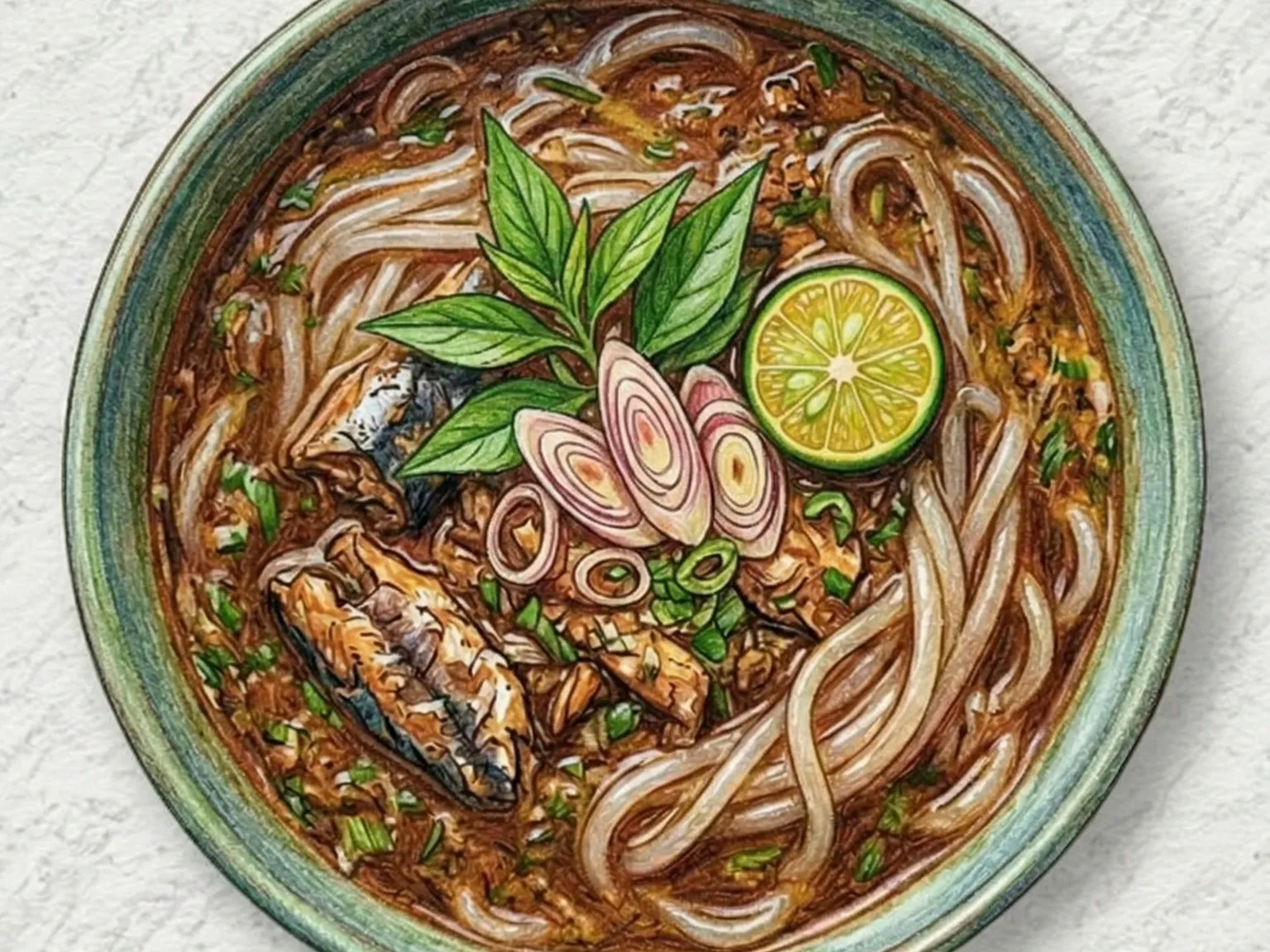
Tamarind Fish Noodle Soup
Asam laksa is Penang's defining noodle soup, recognized by UNESCO as one of Malaysia's intangible cultural heritage items. Where Singapore's curry laksa builds its richness on coconut milk, this version draws its entire character from a tamarind-soured fish broth that is tart, briny, and aggressively aromatic in a way that coconut-based versions never are. Whole mackerel is poached until it flakes, then removed and broken apart by hand; the remaining liquid is blended with torch ginger flower, lemongrass, and galangal pounded into a coarse paste to build the broth's layered fragrance. Tamarind sourness arrives first and dominates the initial impression, followed by a slow build of chili heat and the ocean depth of fish sauce. Thick rice noodles sit at the bottom of the bowl, their chewy resistance offering physical contrast to the sharp, lean broth that pours over them. The table condiments - julienned cucumber, fresh mint leaves, thinly sliced onion, and a spoonful of belacan-enriched prawn paste - are not optional garnishes but integral components: the fermented prawn paste in particular adds a dimension of umami that rounds the broth's acidity into something far more complex. Every hawker stall in Penang has its own spice ratios handed down through family lines, which is why no two bowls taste exactly alike.

Almond Biscotti
Biscotti - meaning 'twice-cooked' in Italian - originated in the Tuscan city of Prato, where they have been produced since at least the 14th century. They were originally designed as provisions for long sea voyages: the double baking drives out nearly all moisture, producing a cookie that resists spoilage for weeks without refrigeration. The dough is shaped into a flat log and baked once until firm throughout, then sliced on the diagonal and returned to the oven at a lower temperature until each piece is completely dry and hard. Whole almonds embedded in the crumb provide a contrasting crunch and a toasted, slightly bitter quality that plays against the vanilla-scented dough. The result is deliberately too hard to eat comfortably on its own - biscotti are made to be dipped. Dunked into espresso, Vin Santo, or strong black coffee, the outer layer softens immediately while the dense interior holds its structure, creating a texture that alternates between giving and crisp with each bite. In Prato, where the cookie is also called 'cantuccini' or 'pratesi,' the traditional pairing is with locally produced Vin Santo dessert wine.
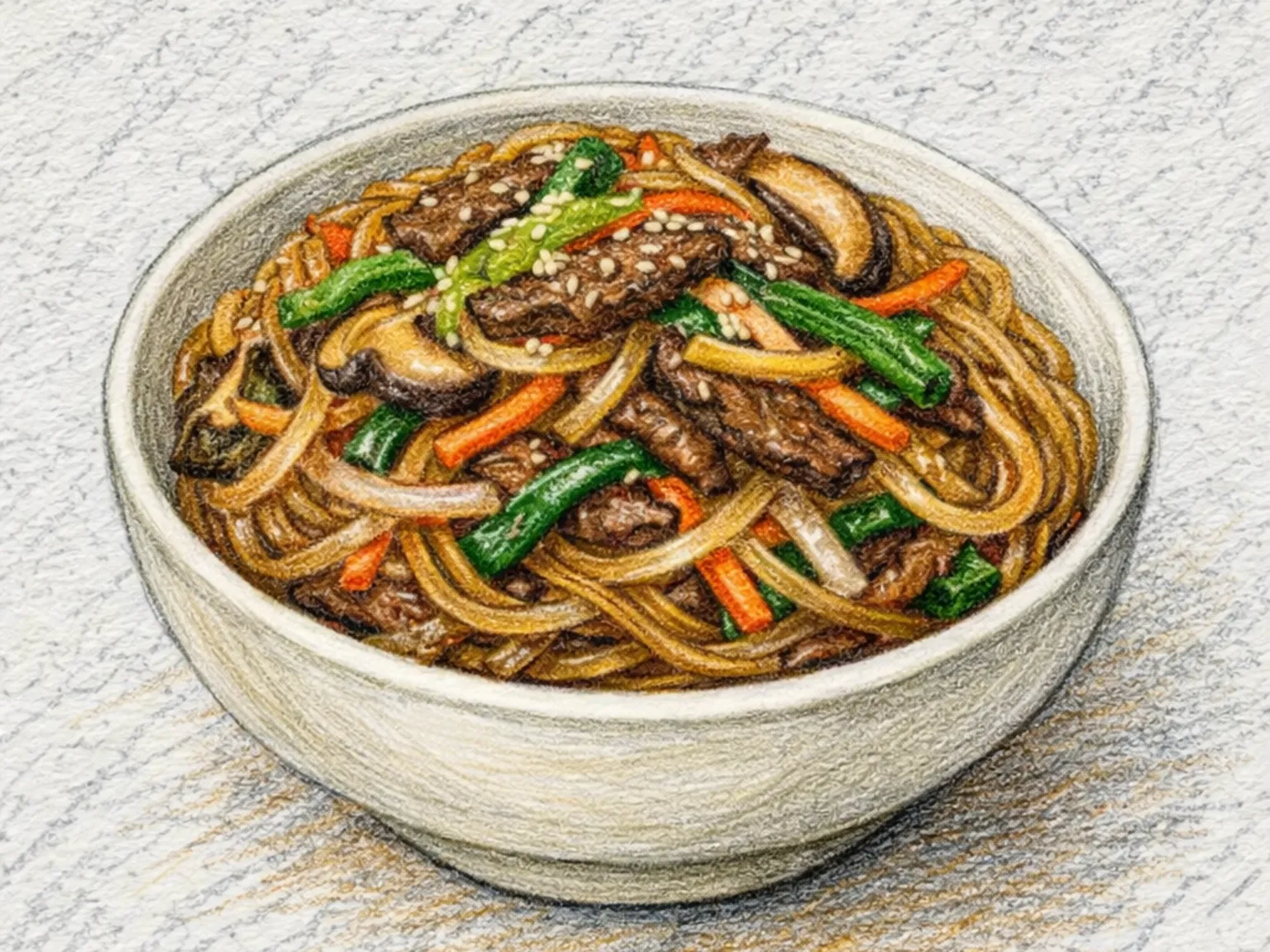
Korean Beef & Shiitake Japchae
Japchae originated as a Joseon royal court dish of stir-fried vegetables before sweet potato glass noodles were added to create the form recognized today. This version pairs glass noodles with soy-marinated beef and sliced shiitake mushrooms. Each component cooks separately: beef and mushrooms stir-fried with garlic, spinach blanched and squeezed dry, carrots and onions sauteed until just tender. A final toss with sesame oil brings everything together. The noodles should be translucent and springy, carrying a sweet-salty soy glaze into each forkful. A standard presence on every Korean holiday table at Chuseok, Seollal, and birthday celebrations alike.
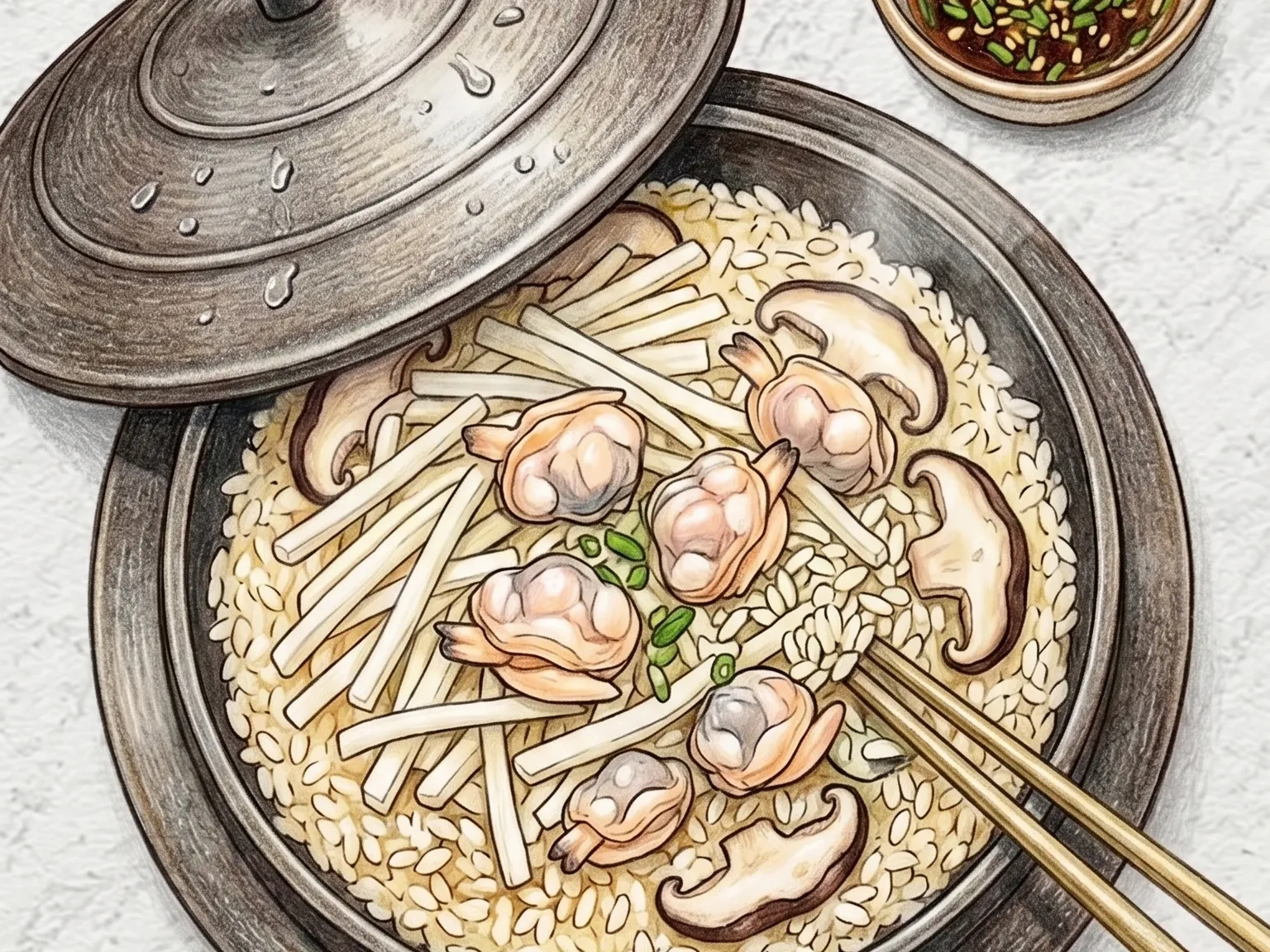
Korean Clam and Radish Pot Rice
Baekhap mu sotbap is a Korean pot rice dish where soaked rice is cooked with radish, shiitake mushrooms, and hard clam meat using kelp-infused water. The kelp water establishes a deeper umami base than plain water, and the glutamic acid released by shiitake mushrooms compounds with the clams' briny character to build layered savory depth. Radish sits on top of the rice and steams as the pot cooks, losing moisture while concentrating its natural sweetness into the surrounding grains. The clam meat must be added just before the resting phase rather than at the start, because prolonged heat toughens shellfish; residual steam finishes the cooking gently while keeping the clams firm. The resting period is critical - ten minutes with the lid sealed after the flame is turned off allows steam to redistribute evenly through the rice and all the toppings. A seasoning sauce of soy sauce, sesame oil, and chopped scallion is mixed in at the table, adding a salty richness that ties the seafood and vegetable components together. Hard clams require thorough purging before use; soaking in salted water for at least two hours removes sand, and any clam that does not open during this process should be discarded.
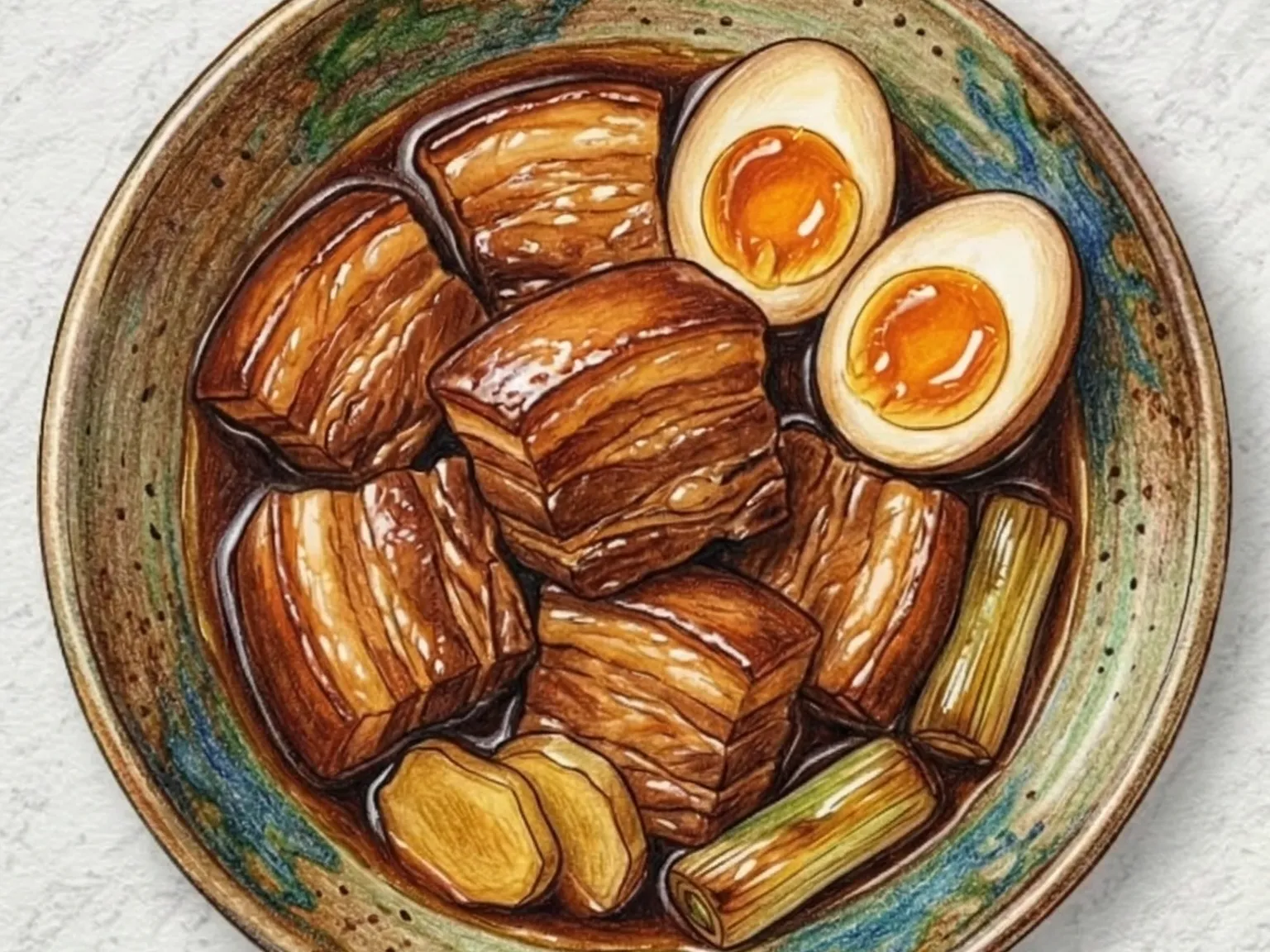
Japanese Braised Pork Belly
Thick cubes of pork belly are blanched for five minutes to remove impurities, then simmered in water with ginger and green onion for fifty minutes until the fat layers turn translucent and completely tender. The parboiled meat transfers to a fresh pot with soy sauce, mirin, and sugar, where it braises over medium-low heat for another thirty minutes as the liquid reduces by half and lacquers each piece in a dark, glossy coat. Mirin carries off residual off-odors along with its alcohol as it heats, while leaving a gentle sweetness behind in the meat. Ginger neutralizes the musky, funky quality that pork belly fat tends to develop during prolonged cooking. Boiled eggs added to the braising liquid absorb the soy-mirin mixture through their whites, turning amber and picking up savory flavor all the way through to the yolk. Cooling the finished dish completely and reheating it once deepens the texture further: the collagen that dissolved during cooking sets into a firm gel while cold, then melts again on reheating, thickening the sauce into something close to a demi-glace. Skimming the solidified fat from the chilled surface removes excess grease without stripping any of the flavor.
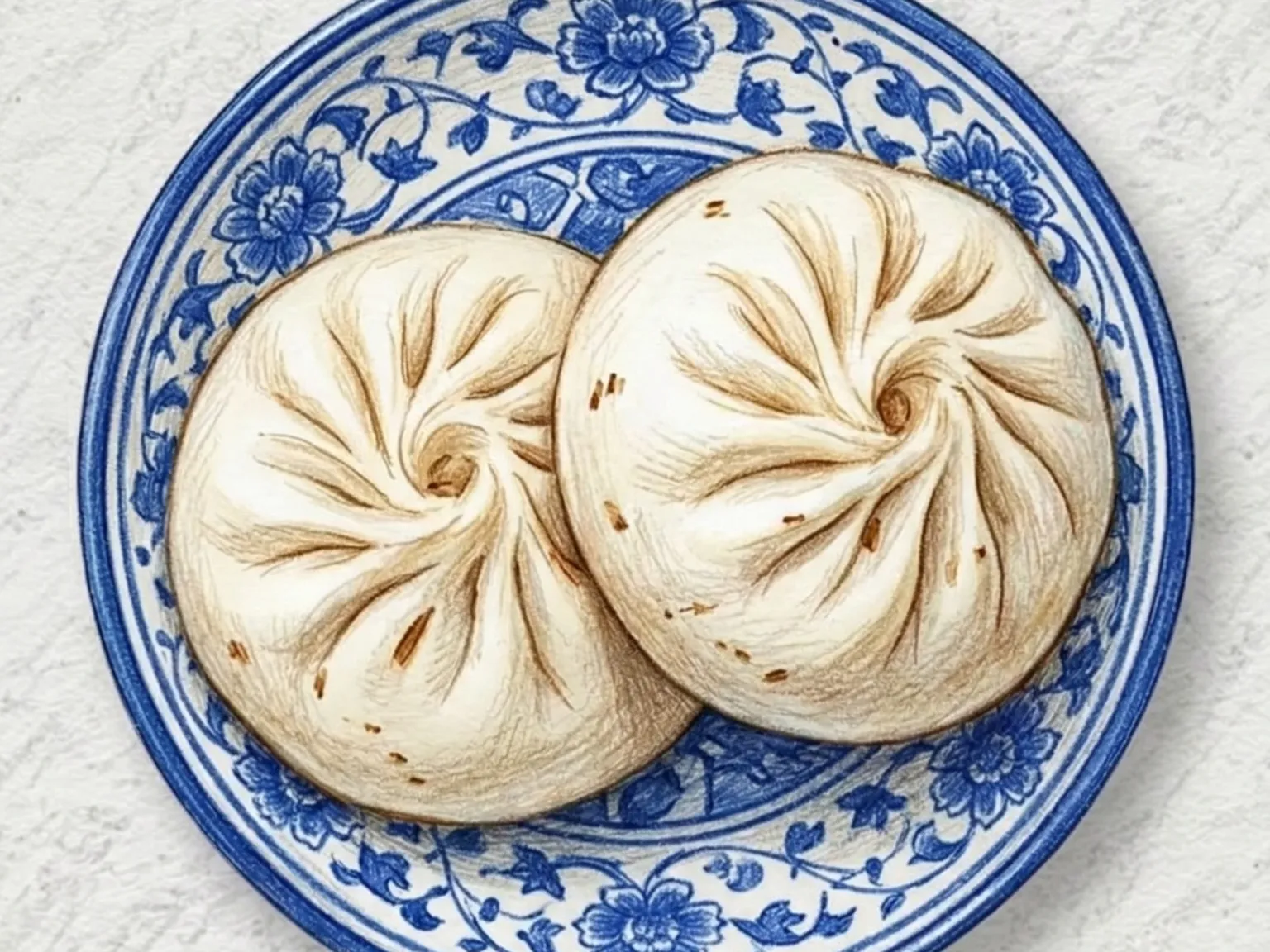
Pork Baozi (Chinese Steamed Pork Cabbage Bun)
Baozi is a Chinese steamed bun made from yeast-leavened wheat dough filled with seasoned ground pork, cabbage, and scallion. The dough proofs for 40 minutes, during which the yeast activity creates the open crumb structure that gives the finished bun its soft, pillowy texture when steamed. The filling is seasoned with soy sauce and sesame oil, which brings savory depth and aroma to the minced pork and vegetables. Pleating the top of each bun seals in the juices during the 15-minute steam and also creates the ridged crown that visually identifies a well-made baozi. Resting the buns for two minutes with the lid off after turning off the heat prevents the delicate skin from collapsing from the sudden temperature change between the steam environment and the open air. In China, baozi appears on breakfast tables and as a midday snack, and shares ancestry with the broader family of dim sum dumplings, though home kitchens make this version far more regularly than the restaurant varieties.
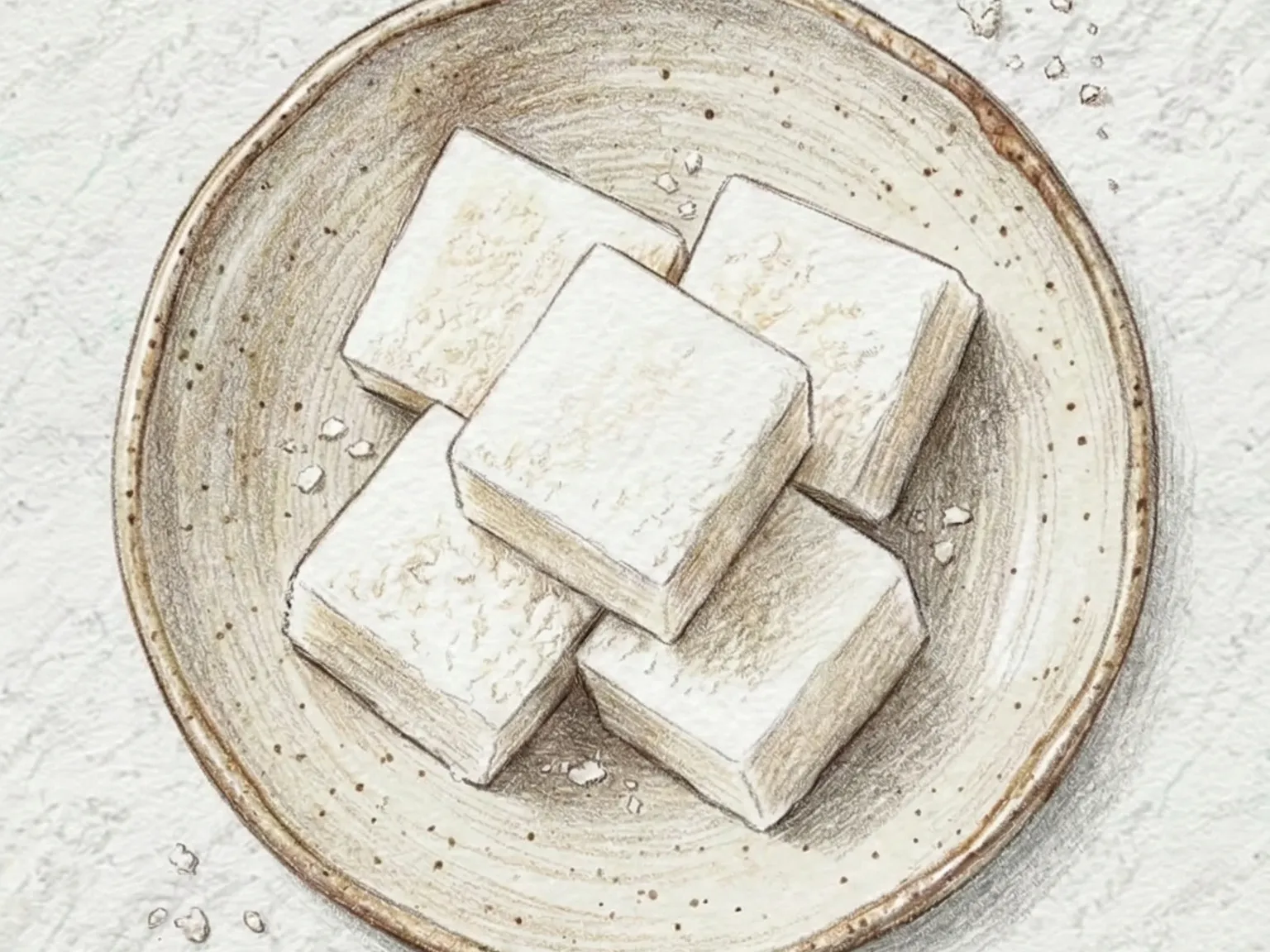
Steamed White Rice Cake (Soft Crumbly Korean Traditional Rice Dessert)
Baekseolgi is a white steamed rice cake made entirely from non-glutinous rice flour, with modest sugar and salt added. The ingredient list is short, which means technique determines the result. Sifting the flour two to three times builds air into the fine particles; that incorporated air produces the characteristic crumbly, soft texture after steaming. Skip the sifting and the cake steams dense and coarse. Moisture level is checked by hand: the flour should clump when squeezed but fall apart with a light touch. Too dry and the inside comes out powdery even after steaming; too wet and the surface turns sticky. The steamer must be fully boiling before the flour goes in, and strong steam maintained continuously for twenty to twenty-five minutes without lifting the lid. A cotton cloth laid under the lid catches condensation before it can drip onto the surface - those drops create wet patches that spoil the even white finish. Sugar is kept low, letting the clean, neutral sweetness of the rice come through. The cake firms up as it cools, so it is best eaten warm. Dried jujube slices or pumpkin seeds pressed into the surface before steaming add color to the otherwise plain white top.
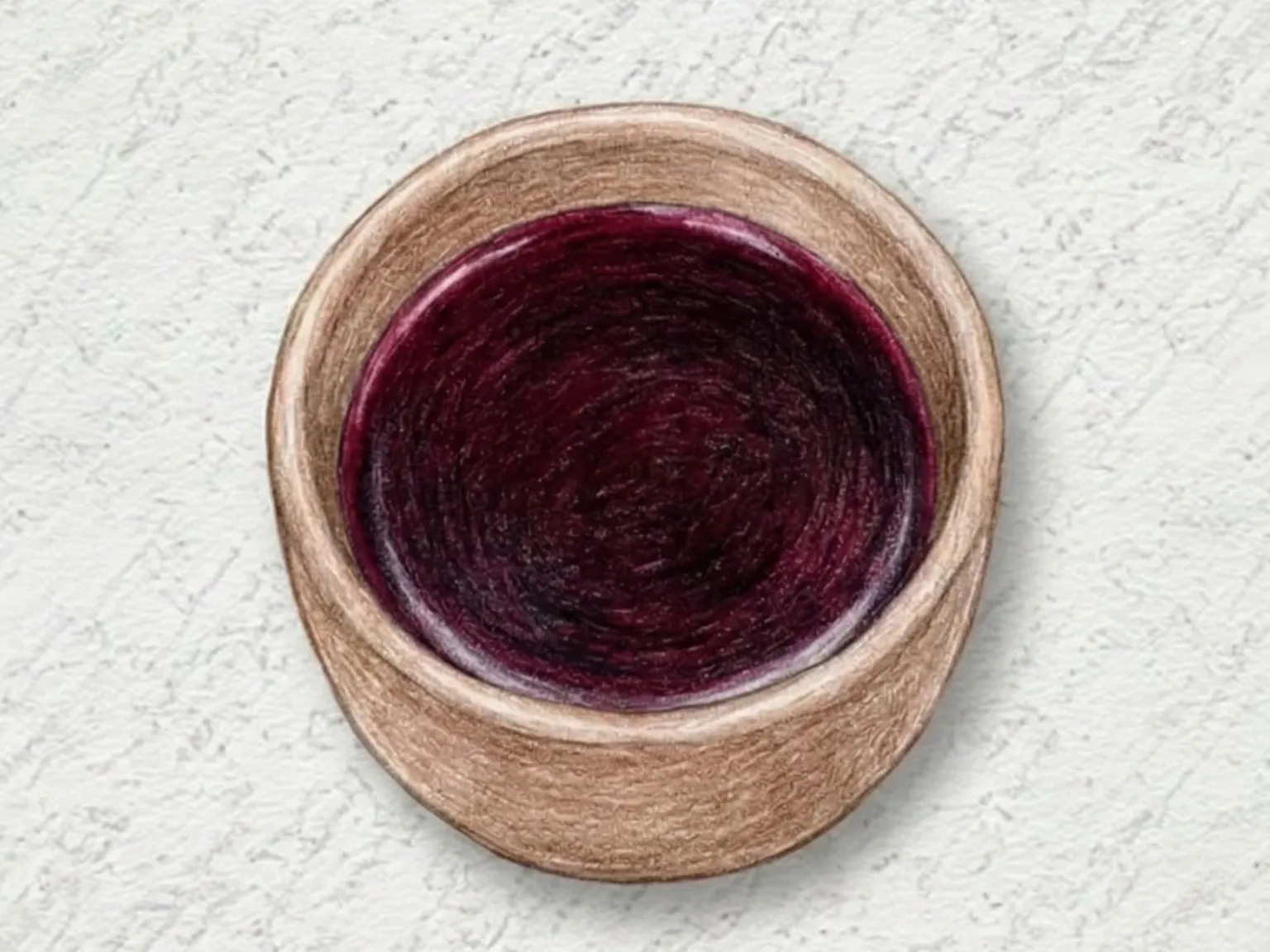
Korean Bokbunja Wine (Black Raspberry Soju-Infused Fruit Wine)
Bokbunja-ju is a deep ruby Korean fruit wine made by layering fresh black raspberries and sugar in a sterilized jar, then covering them with soju along with a strip of lemon peel and a cinnamon stick. At 1.2 kg of fresh fruit per batch, the berry flavor comes through with real concentration. The jar rests in a cool place for at least thirty days and is shaken gently once a week to dissolve the sugar evenly throughout the liquid. After straining through fine cloth, additional bottle aging softens the acidity and rounds out the berry aroma, producing a wine where the warm spice undertones from the cinnamon balance the tartness of the raspberries.
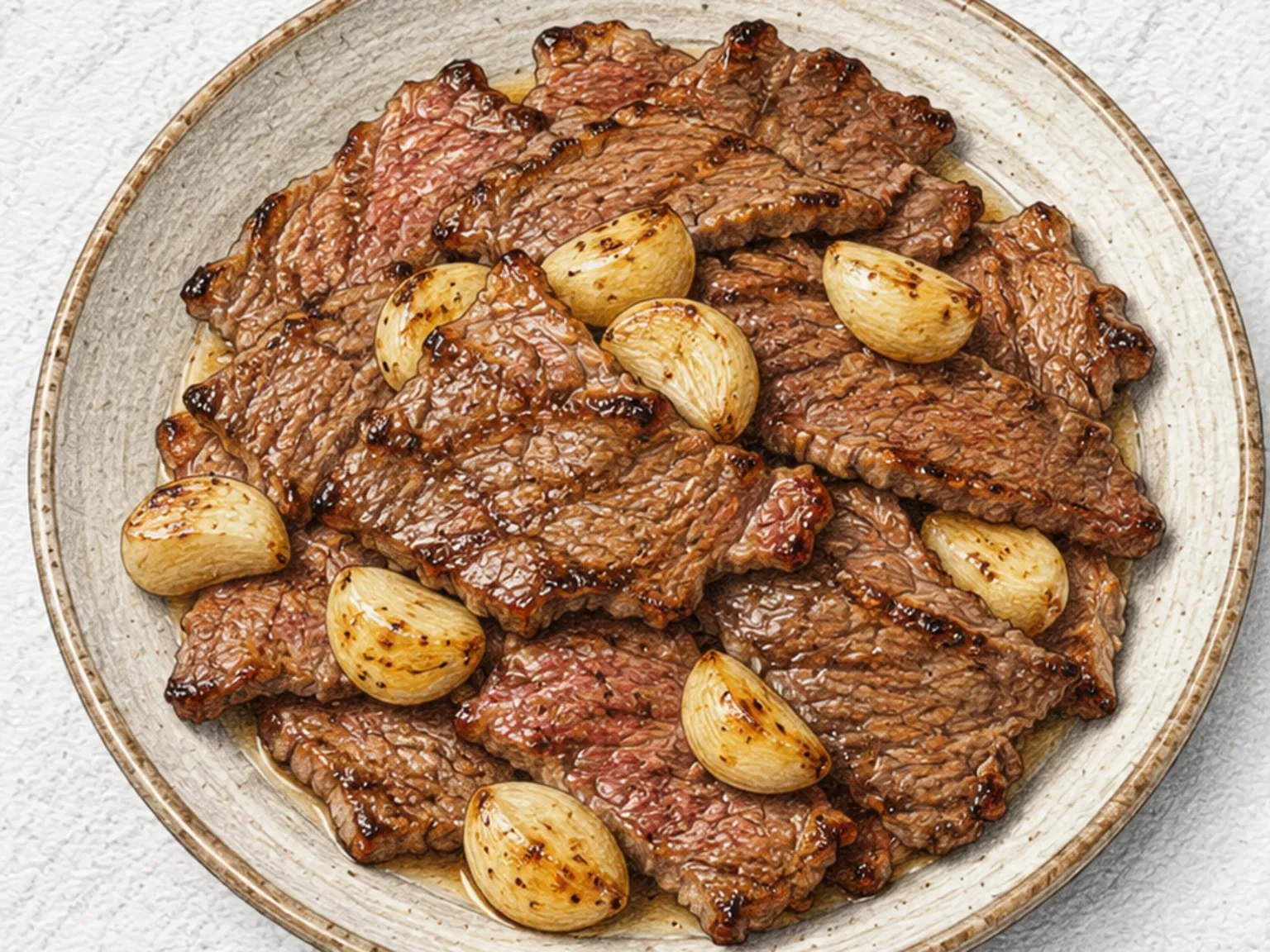
Korean Garlic-Grilled Skirt Steak
Anchangsal is the inner skirt cut from the diaphragm muscle, yielding roughly a kilogram per animal, which explains why Korean grill restaurants price it as a premium item. The grain runs coarse, marbling is tight within the thick muscle fibers, and the beefy flavor is intense - more so than well-known cuts like galbi or samgyeopsal. Marinating for too long or with aggressive seasoning buries those qualities. A short soak in soy sauce, sesame oil, minced garlic, and black pepper is enough. On a charcoal grill, thin slices cook in under a minute per side. The right doneness shows as caramelized edges with a slight char while the center stays pink - at that point the fat has rendered into the grain and the full flavor of the cut is present. Whole garlic cloves grilled alongside undergo a different transformation: about ten minutes of high heat takes away the sharpness and turns them sweet and soft. The standard way to eat it is wrapped in lettuce with ssamjang and a roasted garlic clove folded in together.
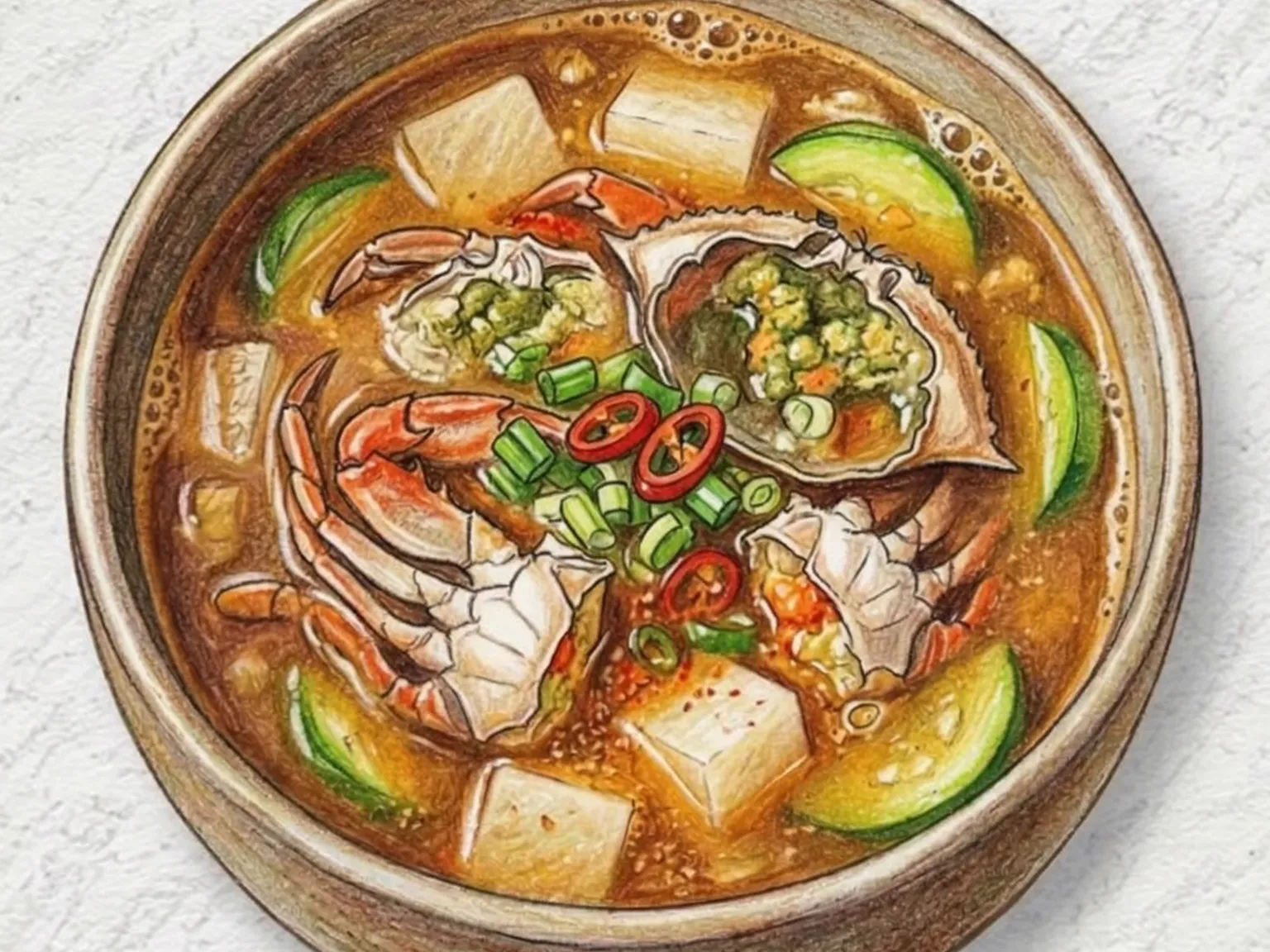
Korean Freshwater Crab Spicy Soup
This spicy freshwater crab soup is a traditional Korean regional dish featuring halved crabs simmered in a rich broth. The preparation starts by scrubbing the crabs and soaking them in light saltwater for five minutes to reduce any muddy odor. A base broth is made by boiling sliced radish and soybean paste, which is strained through a sieve to keep the texture smooth. The crabs are then added and boiled for ten minutes while skimming the foam. A combination of red pepper flakes and Cheongyang chilies builds a double layer of heat, complemented by minced garlic and soup soy sauce. Zucchini, green onions, and chili peppers are added during the final five minutes of cooking, allowing their natural sweetness to balance the spicy broth. Simmering for forty minutes in total extracts the deep, briny flavor of the freshwater crab.
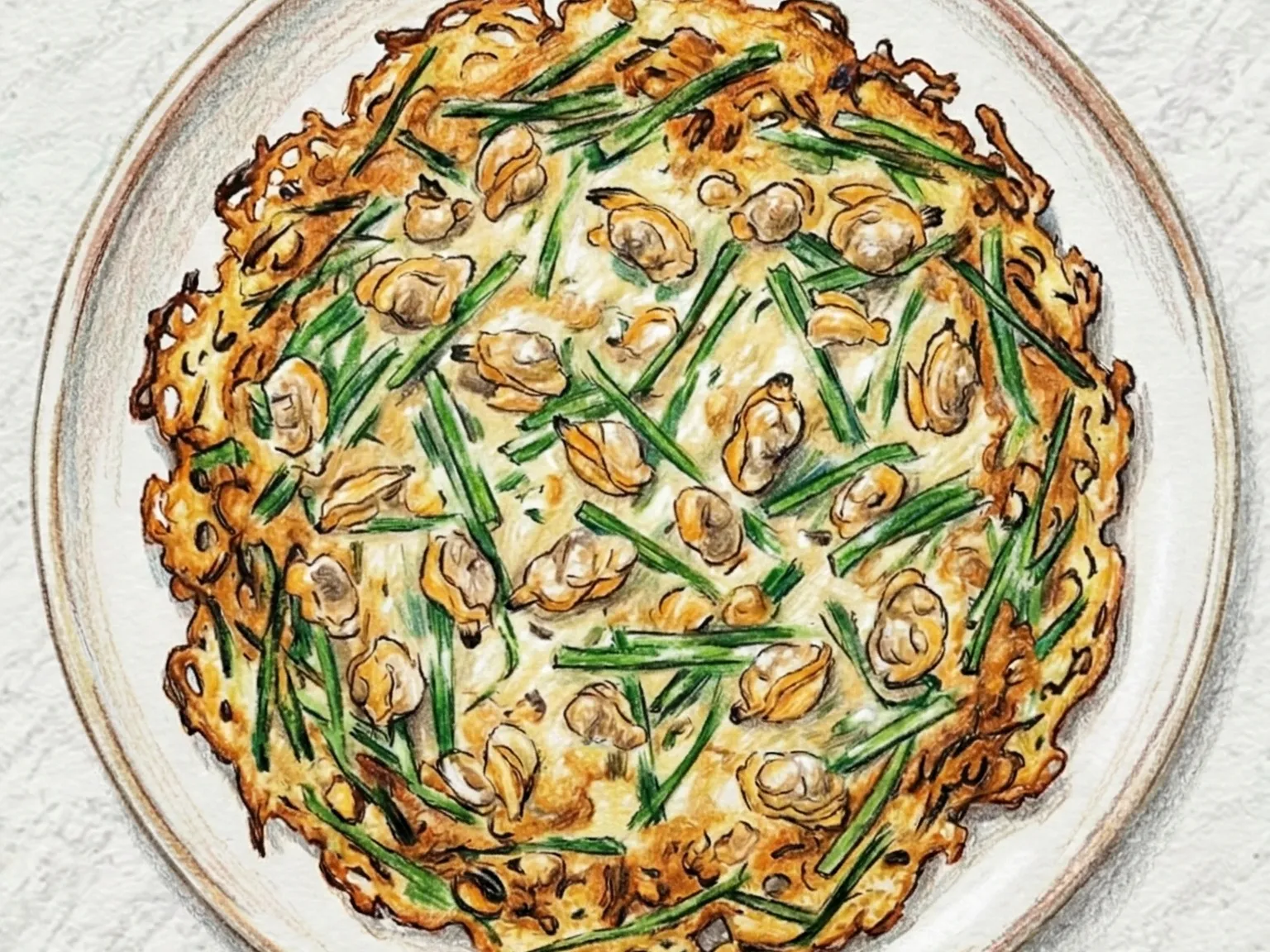
Korean Chive Clam Jeon (Garlic Chive and Clam Seafood Pancake)
Buchu-bajirak-jeon is a seafood pancake of garlic chives and clam meat, pan-fried in a batter made with a mix of all-purpose pancake flour and rice flour. The rice flour addition increases the chew and gives the finished jeon a slightly more resilient texture than plain flour batters. Clam meat releases a briny, oceanic liquid as it cooks that seeps into the batter and flavors it throughout, while the chives add a sharp, grassy counterpoint. Minced garlic and diagonally sliced cheongyang chili worked into the batter suppress any fishiness and build a layered fragrance. A generous amount of oil in the pan over medium heat produces edges that crisp and brown like the outside of a fritter. Waiting until the bottom is fully set before flipping prevents the pancake from tearing. Served with soy dipping sauce or a seasoned soy mixture, the clean salinity of the clams comes through clearly.
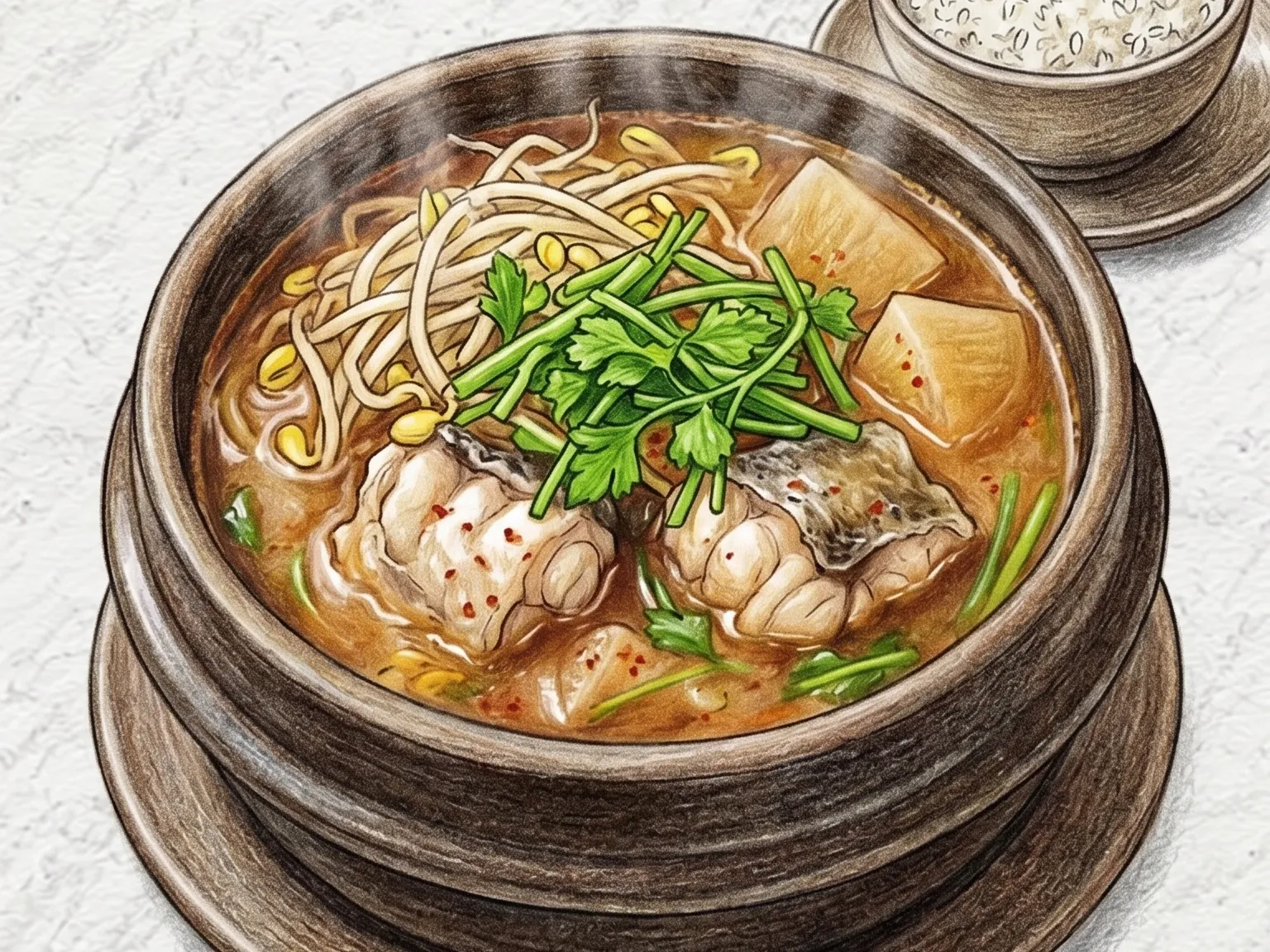
Korean Monkfish Spicy Stew
Agwi tang jjigae is a monkfish-based dish that occupies the middle ground between a clear soup and a more concentrated, heavily seasoned stew. It features a broth that is noticeably cloudier and carries a more intense flavor profile than what is typically found in either of those two distinct categories. The cooking process starts by simmering sliced radish in plain water for about ten minutes to establish a sweet and clear liquid base. After this time has passed, Korean red chili flakes and a small amount of fermented soybean paste are mixed into the pot. The soybean paste serves a specific purpose in this recipe, as it helps to neutralize any fishy smells from the monkfish while adding a foundational fermented taste to the overall broth. The monkfish is prepared over medium heat, which allows its gelatinous flesh to stay together in large, firm pieces rather than separating into flakes. To add both texture and bulk, bean sprouts are stirred into the pot to provide a crunch that balances the soft consistency of the fish. Water dropwort, which is called minari in Korean, is the final ingredient to be added. It is left to wilt in the remaining heat of the pot after the heat is reduced so that its unique herbal fragrance is infused into the liquid. Although the monkfish has a somewhat strange appearance, its flesh is thick and very sturdy, meaning it does not disintegrate even when cooked for a long period. Furthermore, the substantial layer of gelatin found under the skin melts into the soup as it simmers, providing a natural thickness to the broth without the use of any starch. When served with a bowl of hot steamed rice on a cold evening, this dish functions as a complete and satisfying meal.
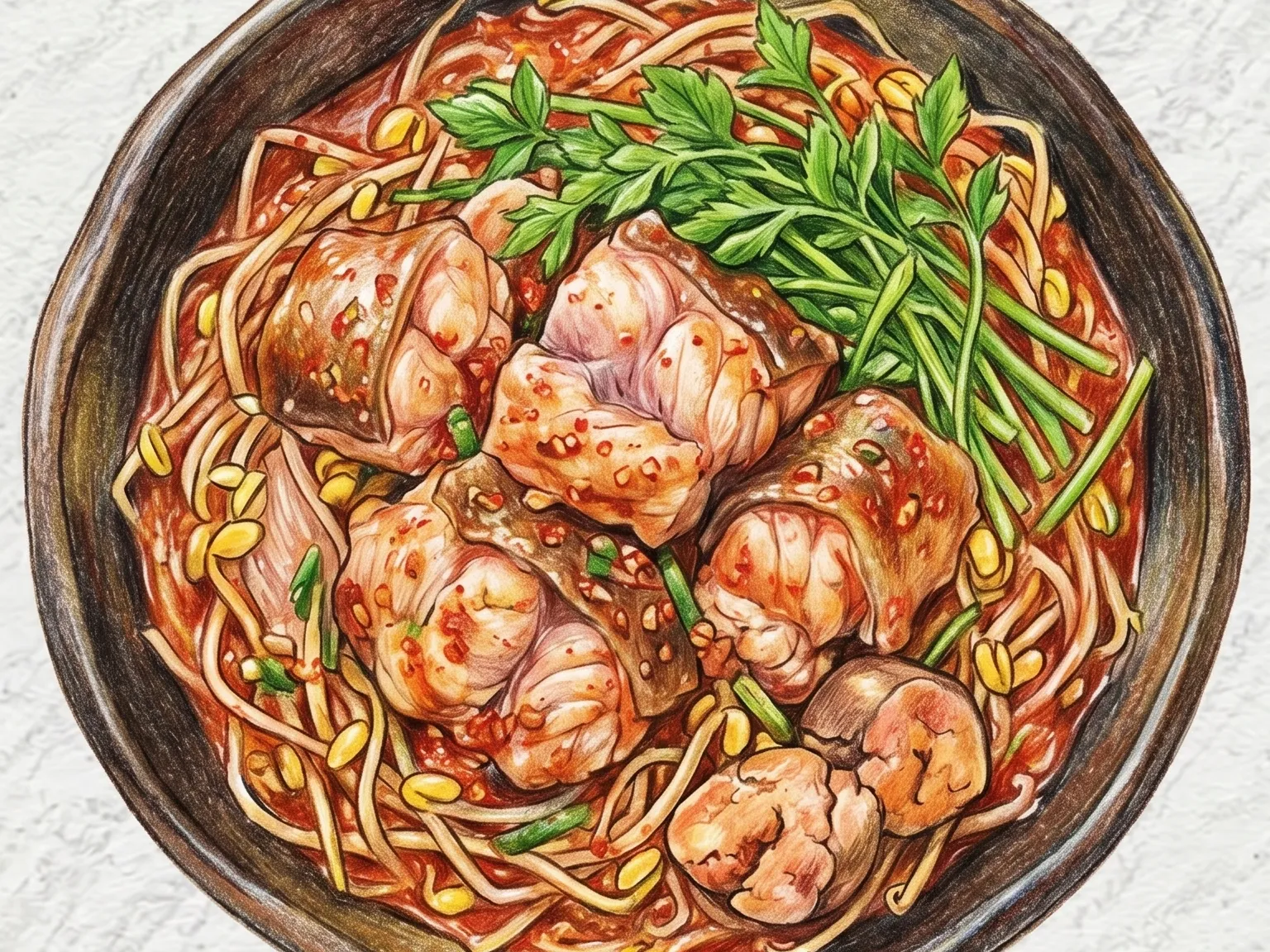
Korean Spicy Braised Monkfish
Agu-jjim originated as a specialized seafood preparation from Masan, which is a prominent port city located in the South Gyeongsang province of Korea. During the 1970s, fishmongers working in the harbor district of Odong-dong began a practice of braising unsold monkfish over high heat. They combined the fish with a substantial amount of bean sprouts and a thick chili paste, a combination that eventually led to the dish gaining recognition across the entire nation. The preparation involves coating pieces of monkfish in a heavy seasoning mixture made from gochugaru, gochujang, soy sauce, and garlic. These seasoned pieces are placed on top of a thick layer of bean sprouts and braised in a covered pot using high heat. Monkfish differs from many other types of white-fleshed fish because it possesses a firm and gelatinous texture that is particularly rich in collagen. This structural quality allows the fish to absorb the intense flavors of the seasoning without breaking into small pieces, ensuring the meat remains resilient and chewy throughout the entire cooking process. As the dish braises, the bean sprouts release their own moisture, which creates a natural braising liquid at the bottom of the pot. Water dropwort, known as minari in Korean, is introduced to the pot at the final stage of cooking. This ingredient provides an herbal flavor similar to celery that balances the heavy coating of chili and garlic while adding a certain brightness to the spice. Agu-jjim is typically served in a communal fashion on a large platter. It is considered a fundamental part of Korean social gatherings involving alcohol, where the intense heat of the spices is often paired with chilled beer or soju.
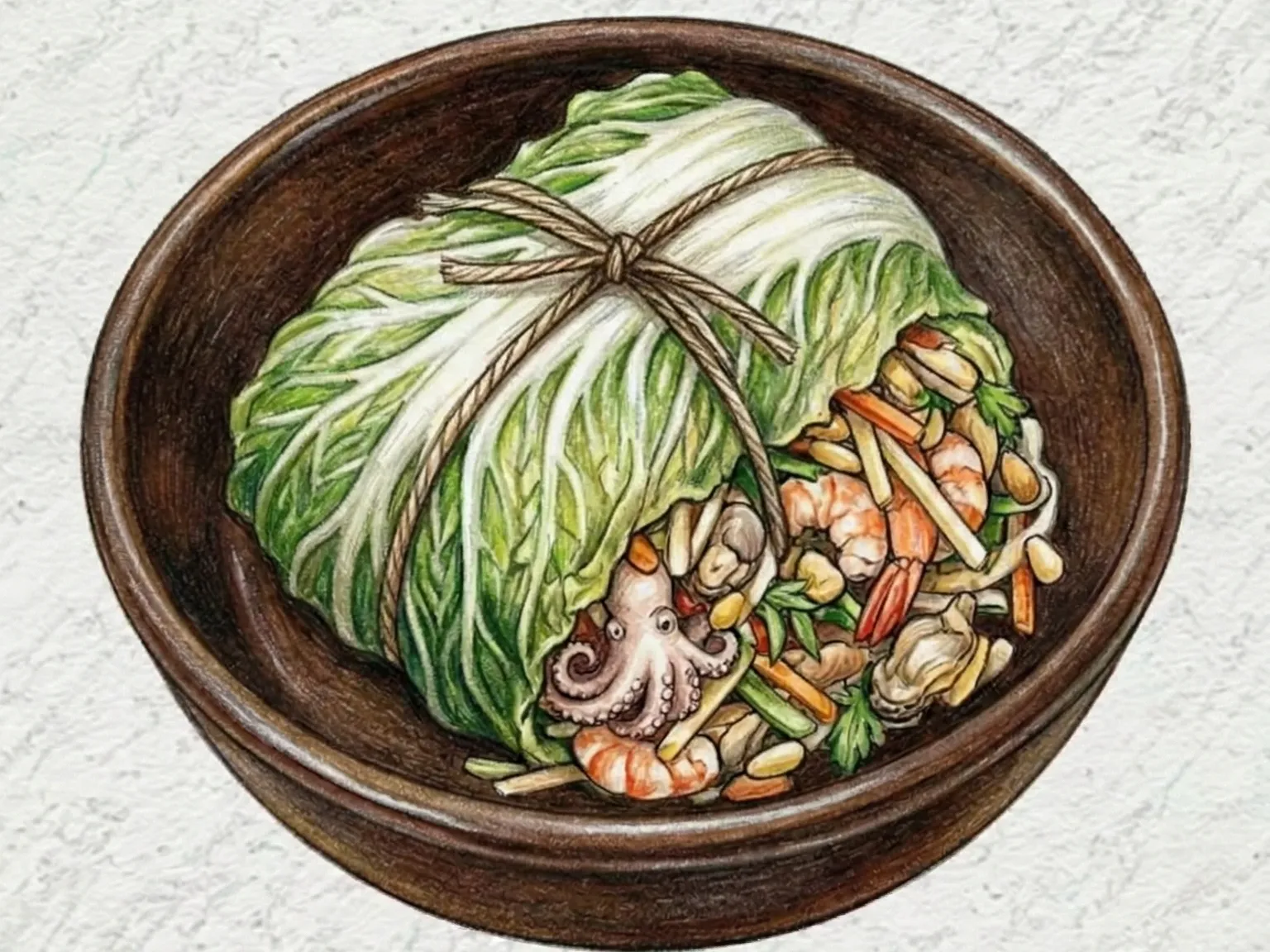
Korean Stuffed Bossam Kimchi
Bo-kimchi is a premium Korean stuffed kimchi where brined napa cabbage leaves are wrapped around a filling of julienned radish, water dropwort, chestnuts, jujubes, shrimp, and pine nuts, then tied into bundles and left to ferment. Each ingredient in the stuffing develops its own flavor during fermentation, building a complex, layered taste enclosed in a single neat package. Shrimp and pine nuts contribute richness and a roasted note, while chestnuts and jujubes add subtle sweetness that lifts this well above everyday kimchi. Originating in the Gaeseong region and tracing its lineage through Goryeo-era court cuisine, it is a kimchi reserved for holidays and formal occasions.
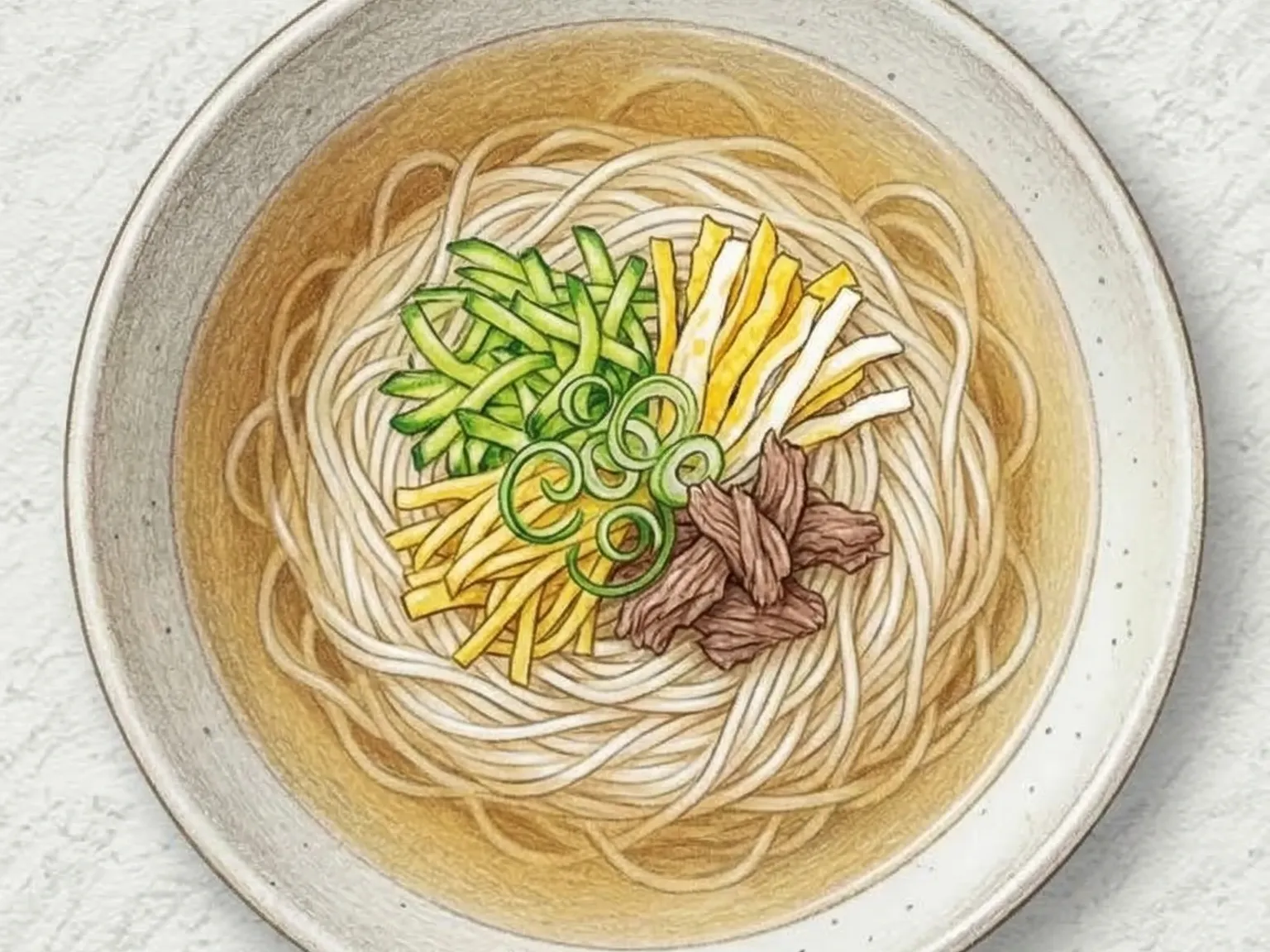
Korean Andong Guksi (Clear Beef Broth Celebration Noodles)
Andong guksi is a banquet noodle dish from the city of Andong in North Gyeongsang Province, served at weddings, ancestral rites, and major family ceremonies for centuries. In Korean culture, long noodles carry a symbolic association with longevity, and that significance kept this dish at the center of celebratory meals across generations. The broth is made from beef brisket and bones simmered for hours until the liquid is clear yet coated with dissolved gelatin - not milky-white in the style of bone broths pushed hard, but translucent and full of a quiet richness that clings faintly to the lips. Wheat noodles, traditionally hand-pulled but now usually dried and purchased, are cooked separately, rinsed, and placed in the strained broth. Toppings are deliberately minimal: thin egg jidan strips, julienned zucchini, and a few slices of the boiled brisket. Seasoning with soup soy sauce and a touch of garlic keeps the broth transparent and positions the beef flavor at the front. Andong's most famous export, jjimdak, relies on bold, chili-forward heat; guksi is the counterpoint - an exercise in restraint and clarity.
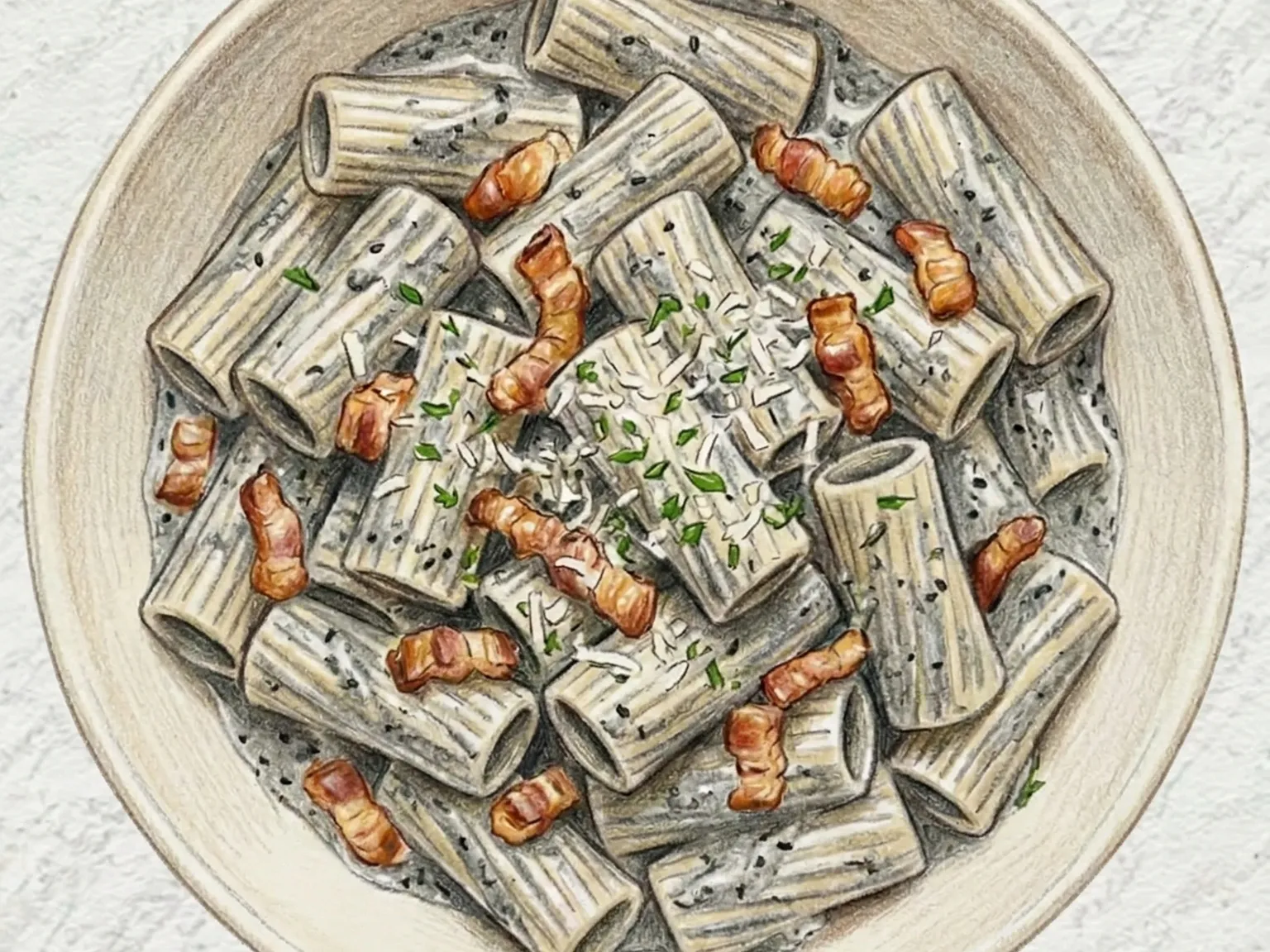
Heukimja Cream Bacon Rigatoni (Black Sesame Cream Pasta)
Black sesame cream bacon rigatoni is a fusion pasta that earns its crossover status through ingredient logic rather than novelty. Roasted black sesame ground to a fine powder and blended into heavy cream and milk produces a sauce with a deep, slightly bitter nuttiness - closer to a nut butter than a standard cream - with a grey-toned color that signals immediately this is not a conventional cream pasta. Bacon fried until crisp adds salt, smoke, and crunch at regular intervals throughout the dish, which is important because the sauce, however rich, stays uniform in texture without it. Rigatoni is the right format here: the tube shape traps sauce both inside each piece and on the outer ridges, so every forkful delivers the full flavor load. Finishing with grated Parmigiano or Pecorino deepens the salt and umami content, and a final dusting of black sesame powder over the plated dish reinforces the Korean ingredient that anchors the whole concept. The combination works because black sesame and cream are both fat-forward and round - they do not fight each other.
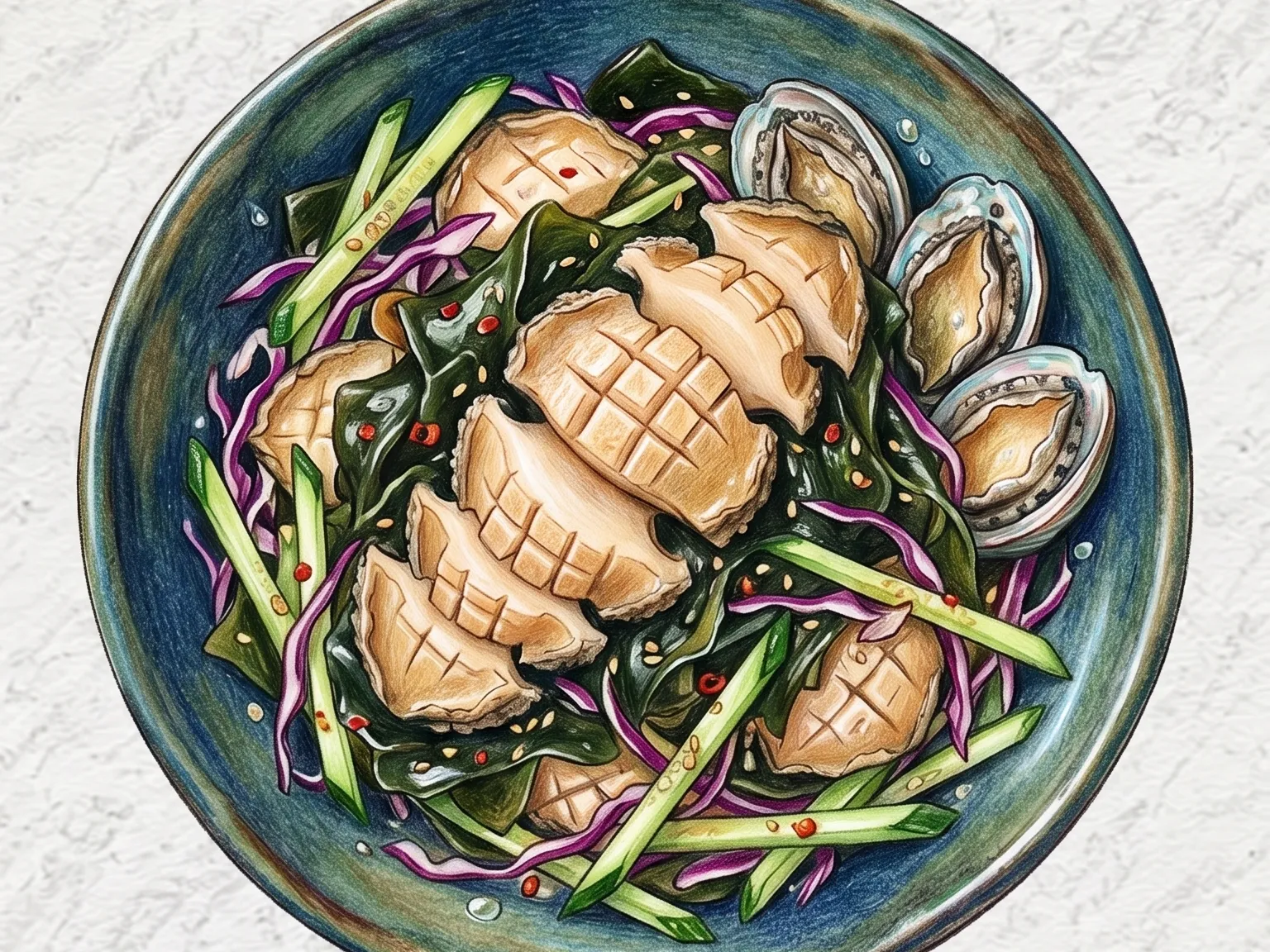
Abalone Seaweed Salad
This salad centers on abalone, the shellfish that haenyeo - Jeju Island's female free-divers - have harvested by hand for centuries, descending without oxygen tanks to pry the mollusks from the sea floor. The abalone is blanched for just 40 seconds, a precise window that preserves its springy texture and keeps the delicate sweetness and ocean flavor intact. Overcooked abalone turns tough quickly, so the short blanching time is more technique than convenience. Rehydrated sea mustard, thinly sliced cucumber, and red cabbage round out the bowl. The dressing - lemon juice, plum syrup, soup soy sauce, and a touch of vinegar - is calibrated to support the seafood's natural brininess rather than cover it. The combination of chewy abalone, slippery seaweed, and crunchy raw vegetables creates three distinct textures throughout, which sustains interest from first bite to last. Serve cold as a light appetizer before grilled dishes, or as a standalone side during summer. The quality of the abalone shows plainly with so few ingredients around it.
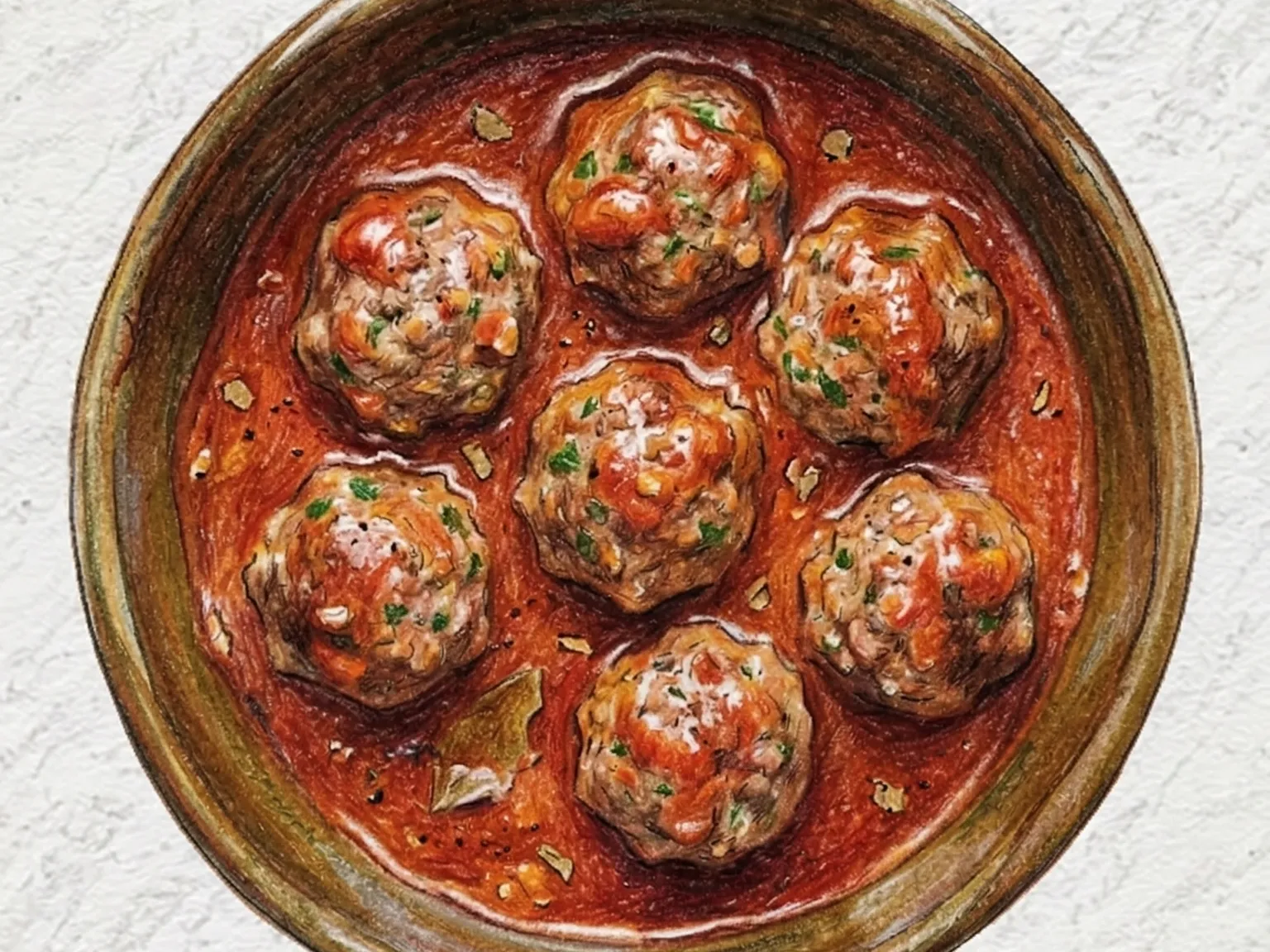
Albondigas en Salsa (Spanish Meatballs in Tomato Sauce)
Albondigas - the word itself tracing back to the Arabic 'al-bunduq' meaning a small round thing - arrived in Spain with the Moorish occupation and became embedded in everyday home cooking across the peninsula. Ground pork and beef are combined with bread soaked in milk or water, egg, and garlic, then rolled into small, dense balls and browned in olive oil before the braising begins. The soaked bread in the mixture is what keeps the meatballs from tightening into dense rounds as they cook - it loosens the structure and creates a soft, almost spongy interior that drinks in the sauce during the long simmer. The tomato sauce is built with onion and garlic fried until golden, then tomatoes, smoked paprika, and a bay leaf are added and the whole pot cooks down over twenty minutes of low heat until the raw acidity mellows into sweetness. The meatballs go back into the sauce for a final ten minutes so the braising liquid penetrates to the center. Crusty bread to mop up the glossy sauce is traditional, but the dish works equally well spooned over plain rice. This is the kind of Spanish grandmother cooking where nothing is measured and the result is always the same.
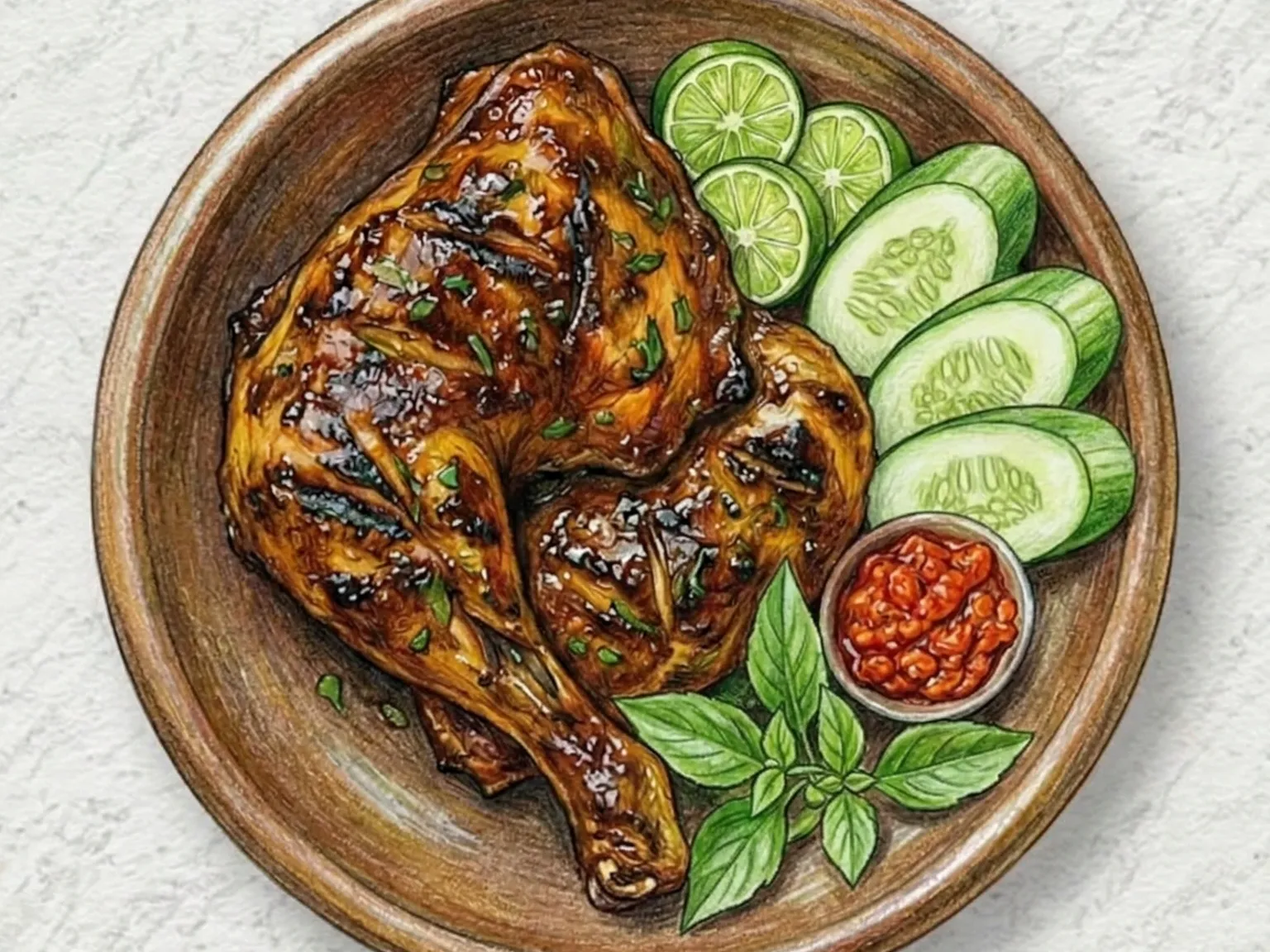
Ayam Bakar (Indonesian Grilled Chicken in Sweet Soy Marinade)
Ayam bakar means 'roasted chicken' in Malay-Indonesian and is a staple street food across Java, Sumatra, and Bali, where roadside warungs grill it over coconut-shell charcoal. The preparation follows a two-stage method: the chicken first simmers in a marinade of kecap manis (sweet soy sauce), garlic, ground coriander, turmeric, and lime juice until partially cooked and deeply colored throughout. The pre-cooked pieces then move to a very hot grill where the sugar-heavy glaze caramelizes rapidly, forming dark, lacquered patches with a faint char at the edges. This two-step approach ensures the meat stays moist under the intense grill heat while the exterior achieves maximum caramelization. The surface is sticky-sweet, with turmeric's earthiness and coriander's citrusy warmth detectable beneath. Served alongside steamed white rice, raw cucumber slices, and sambal, the dish relies on the sharp chili heat of the sauce and the cool cucumber to balance the sweetness of the glaze. The smoke from coconut-shell charcoal is considered part of the flavor, though a gas or charcoal grill at home produces an acceptable result.

Angel Food Cake
Angel food cake appeared in the United States in the late 19th century, most likely as a way to use the egg whites left over after making yolk-rich custards. The formula is unusually restrained: no butter, no oil, no yolks. Structure comes entirely from whipped egg whites stabilized with cream of tartar, folded into a mixture of cake flour and sugar. Baking produces a tall white ring with a snow-white crumb and a slightly chewy top crust that behaves like the skin of a marshmallow. After baking, the pan must be inverted and allowed to cool upside-down; leaving it right-side up allows the delicate foam structure to collapse under its own weight. The flavor is clean and vanilla-forward, without any of the richness that butter introduces into a conventional layer cake. Traditionally served with fresh berries and whipped cream, it has long been a fixture at American church socials and summer gatherings.
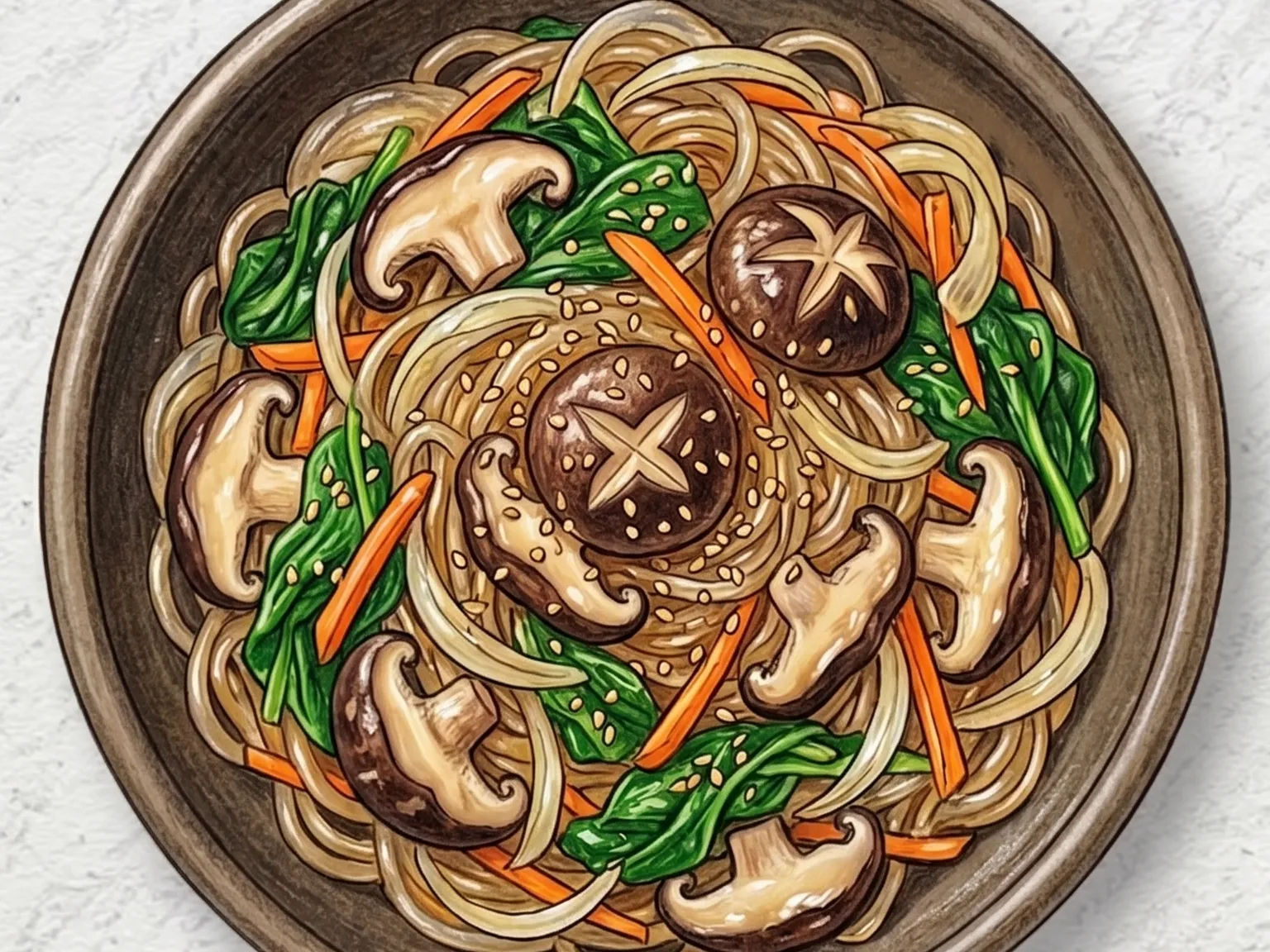
Korean Mushroom Japchae (Shiitake Glass Noodle Stir-Fry)
Beoseot japchae replaces beef with shiitake mushrooms as the primary source of savory depth, making it a staple of Buddhist temple cuisine and vegetarian tables alike. Sweet potato noodles are soaked and boiled, then rinsed in cold water immediately to lock in a firm, springy texture. Shiitake, spinach, carrot, and onion are each cooked separately - their moisture levels and heat tolerances differ enough that combining them prematurely flattens every component. Soy sauce, sugar, minced garlic, and sesame oil bring the noodles and vegetables together, and the finished dish rests for ten minutes so the seasoning penetrates the noodles evenly. The result is a japchae where the mushroom carries genuine umami weight without any meat.
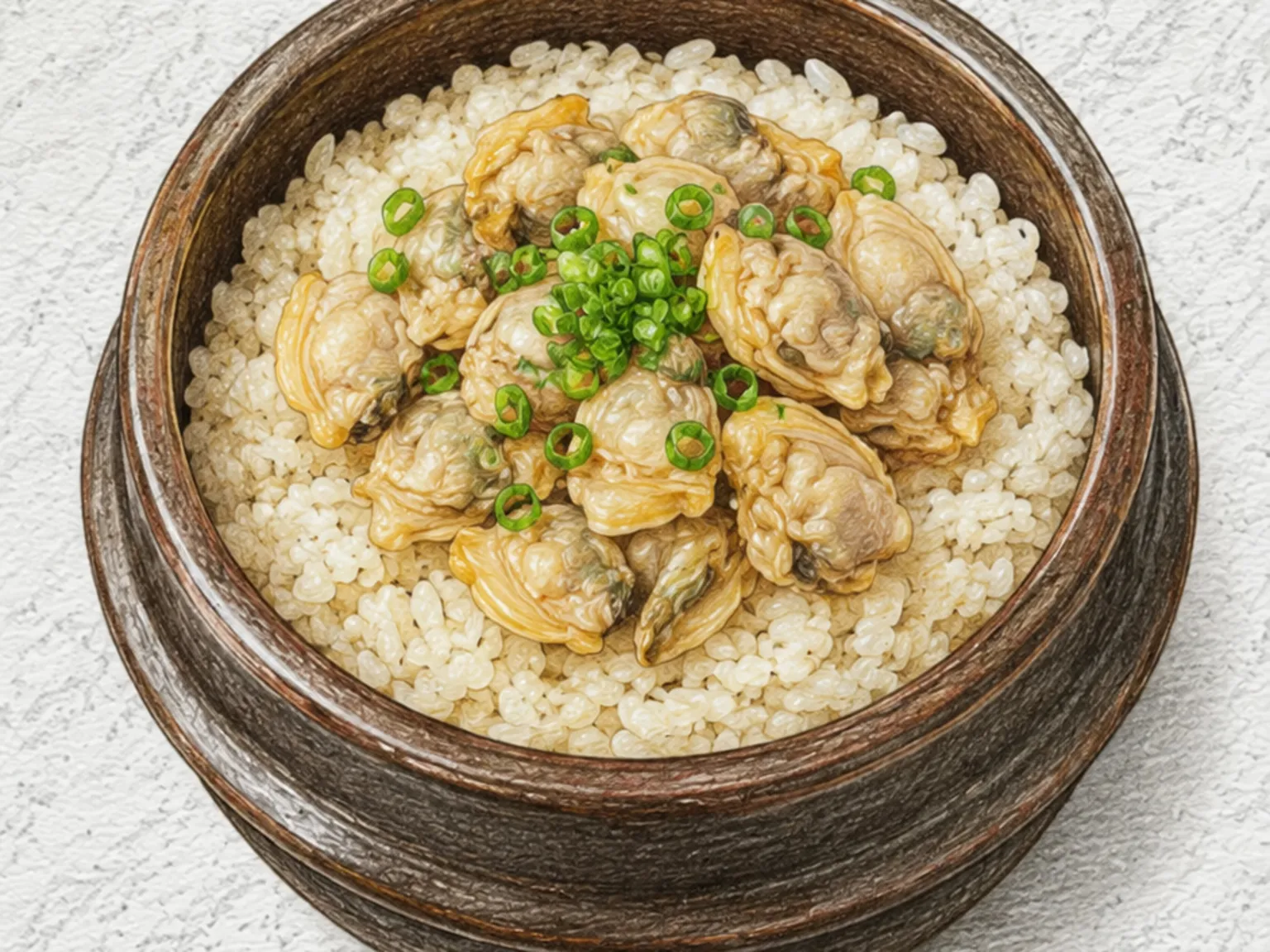
Korean Clam Pot Rice (Savory Clam Broth Cooked Rice Bowl)
Bajirak sotbap is a Korean pot rice where every grain is cooked in clam broth and topped with shucked clam meat just before serving. Purged clams are simmered with a piece of dried kelp until they open, then removed and shucked while the broth is strained through a fine sieve. The kelp contributes glutamic acid that reinforces the clam's natural umami, producing a cooking liquid with a depth that plain water cannot provide. This clam stock infuses every grain of rice as it cooks, embedding a marine character throughout. The rice, soaked for at least thirty minutes to ensure even absorption, goes into the pot with the measured clam broth and cooks over a sequence of high, medium, and low heat. Holding on low heat for an extra five minutes forms a thin nurungji - a lightly caramelized crust at the bottom - whose toasted aroma rises through the lid. During the resting phase, the shucked clam meat is placed on top of the rice so residual heat warms it through without further cooking; since the clams were already cooked once, additional heat would toughen them. A soy sauce and sesame oil dipping sauce is mixed into the rice at the table. The most memorable moment of the dish is lifting the lid, when the concentrated clam fragrance escapes in a sudden rush. After the rice is eaten, adding hot water to the pot dissolves the nurungji layer into a light, smoky scorched-rice tea that serves as a natural closer to the meal.
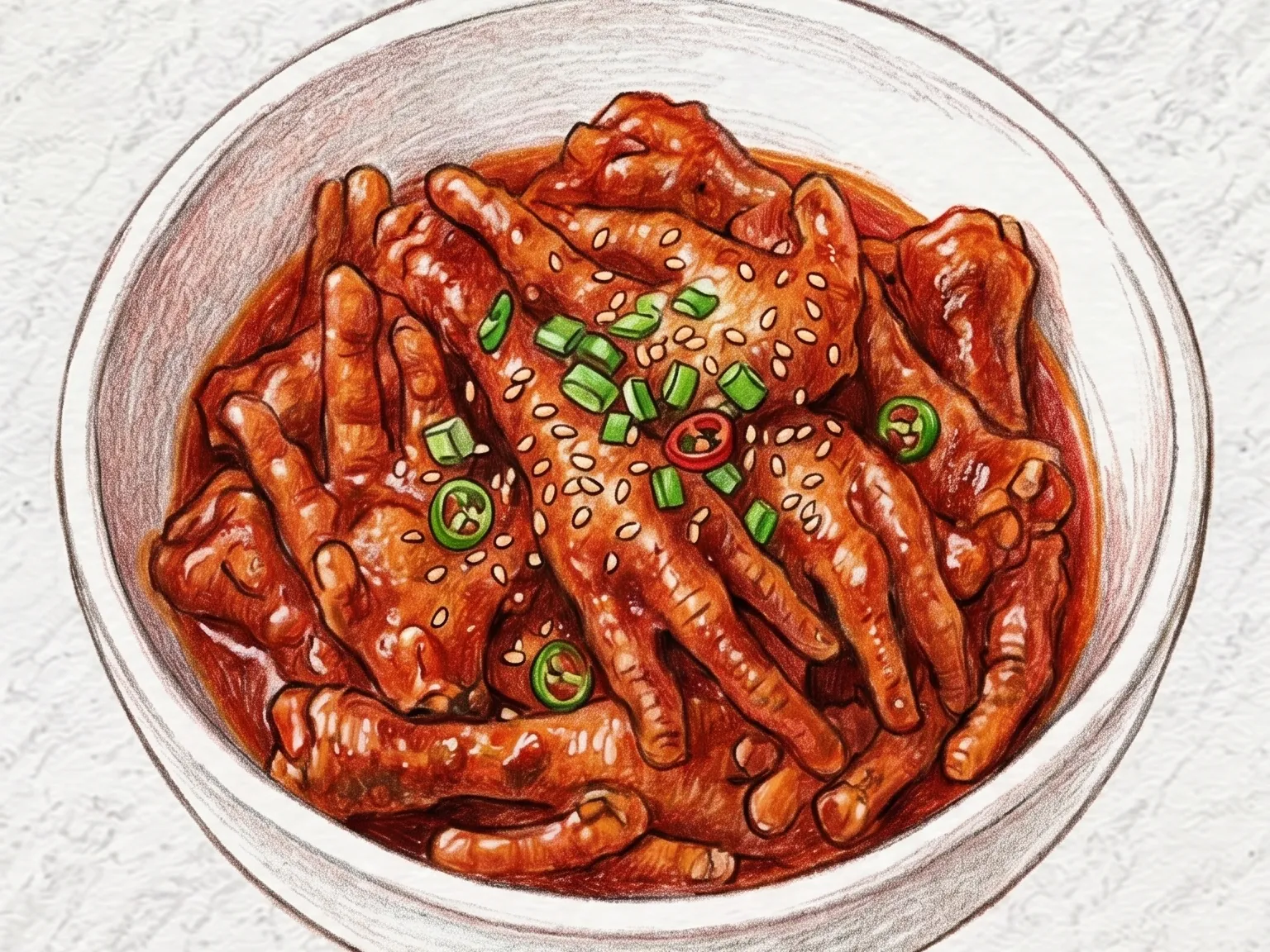
Korean Spicy Stir-fried Chicken Feet
Dakbal-bokkeum stir-fries chicken feet in a sauce of gochujang, gochugaru, and soy sauce to produce one of the most distinctively textured dishes in Korean drinking food. Chicken feet are almost entirely skin, cartilage, and small bones with very little actual meat, and it is precisely this structure that gives the dish its appeal. The skin is fatty and gelatinous, clinging to the bones with a sticky chew that is unlike any other protein. Gochujang and gochugaru create a layered heat that builds slowly, while sugar threads through the spice with a sweet, lingering finish. Adding cheongyang chili peppers intensifies the burn without changing its fundamental character. Because the bones are numerous and thin, eating dakbal is a hands-on, deliberate process of stripping skin and cartilage with the teeth and lips, which makes it an inherently social and unhurried dish. Its natural setting is alongside cold beer or soju. Different establishments vary the spice level and sauce base, ranging from fire-hot buldak-style preparations to milder soy-based versions.
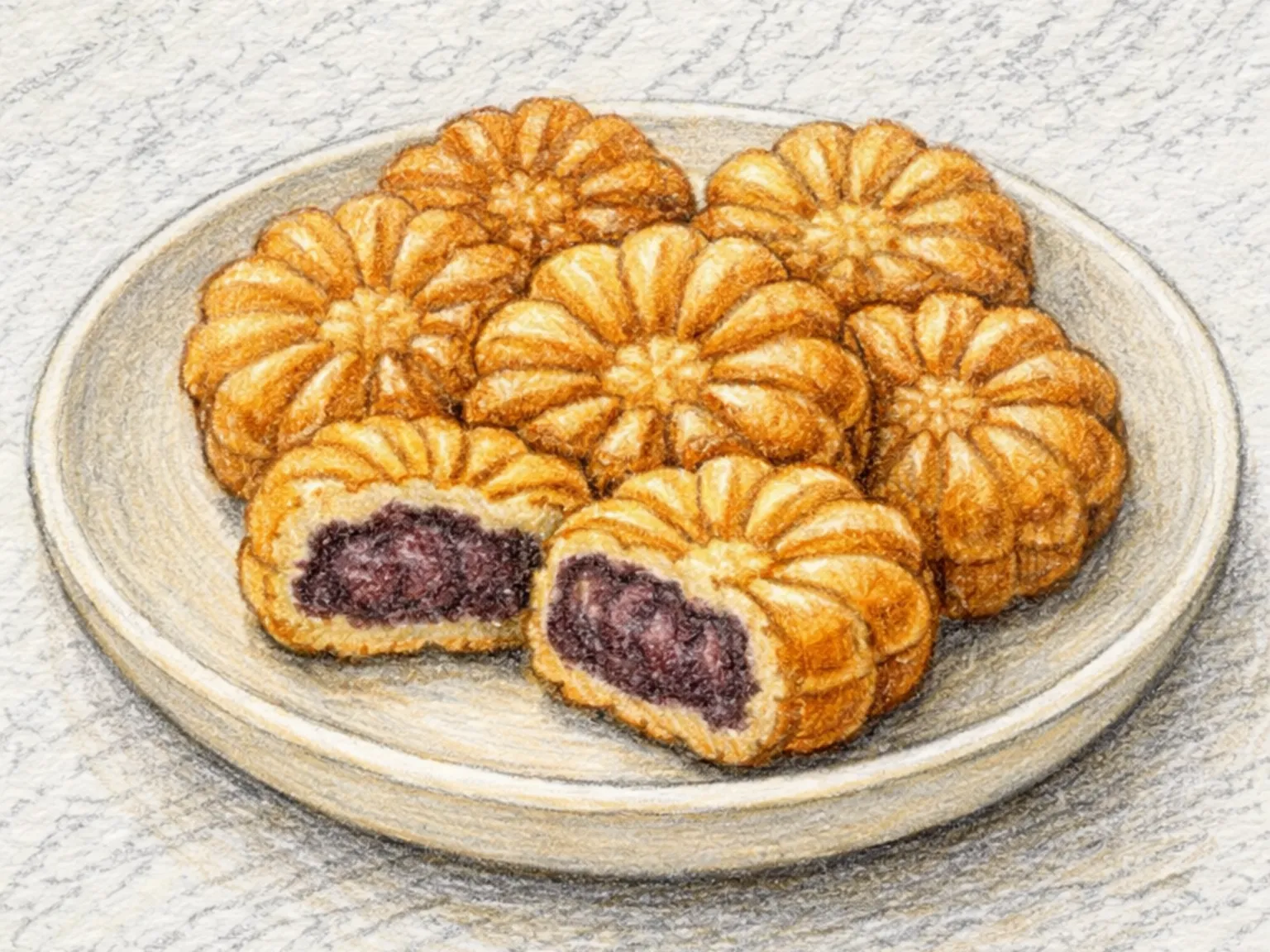
Korean Chrysanthemum Bean Cakes
Gukhwa-ppang is a Korean winter street pastry baked in a chrysanthemum flower-shaped cast-iron mold, filled with sweet red bean paste at the center. The batter of flour, baking powder, sugar, milk, egg, and melted butter is stirred together with minimal mixing to keep gluten development low, then poured to fill only one-third of the mold before a spoonful of bean paste is placed in the middle and covered with more batter, ensuring the filling sits centered in the finished pastry. Cooking over medium-low heat for three to four minutes on each side produces a golden crust with sharply defined flower-petal ridges pressed into the surface, while the bean paste inside stays soft and flows when the pastry is broken apart. It is often grouped with bungeoppang as a sibling street food, but the dough ratio is heavier and the shell is noticeably thicker, giving it a stronger bread-forward flavor and a slightly smaller proportion of filling to outer crust. The pastry is best eaten immediately after cooking, while the exterior is still crisp and the paste still hot. In recent years vendors have begun filling gukhwa-ppang with cream, chocolate, and sweet potato paste as alternatives to the traditional red bean filling.