Blondie Bars
Quick answer
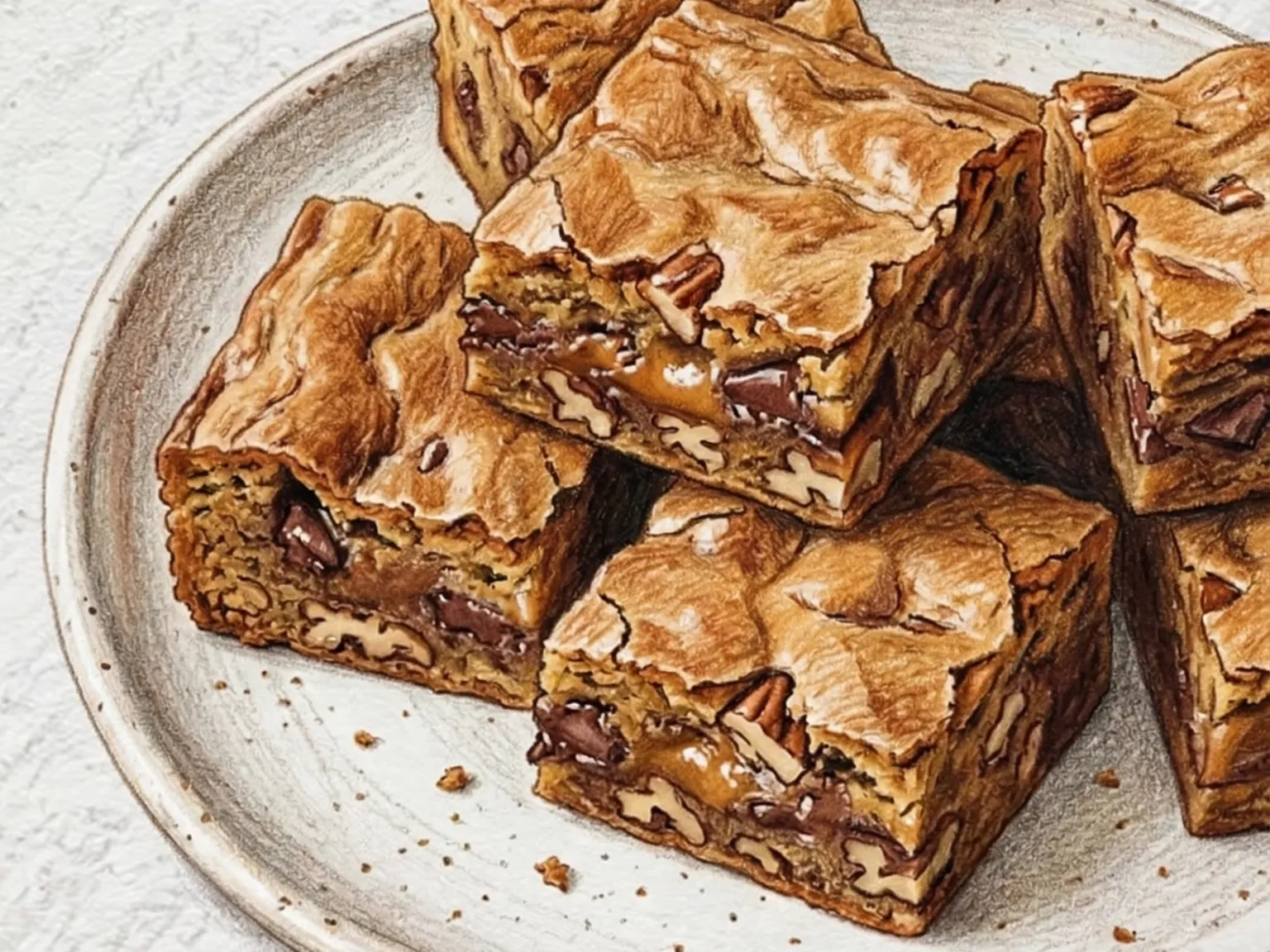
Blondie bars take the dense, fudgy structure of brownies and replace the chocolate with the caramel depth of browned butter and brown sugar.
What makes this special
- Blondie Bars use browned butter and brown sugar to create a dense, fudgy texture with toffee notes.
- Browning butter to hazelnut-toffee aroma is the single key step
- Thin crisp top crust coexists with a chewy, fudgy interior
Key ingredients
Core cooking flow
- 1 Preheat the oven to 175°C and line a 20cm square pan with parchment.
- 2 Melt 150g butter in a saucepan over medium heat.
- 3 Pour the browned butter into a mixing bowl so the hot pan does not keep cooking it.
Blondie bars take the dense, fudgy structure of brownies and replace the chocolate with the caramel depth of browned butter and brown sugar. Cooking the butter slowly until it turns a deep golden-brown color produces a pronounced nutty, toasted aroma that functions as the flavor backbone of the entire bar - more complex than plain melted butter can deliver. Brown sugar dissolves into the browned butter and contributes a toffee-like sweetness with a molasses undertone that white sugar simply cannot replicate. Eggs and vanilla extract add warmth, richness, and depth to round out the flavor. Using a modest amount of flour is deliberate: too much tips the texture toward cakey, while the right quantity keeps the baked bars dense, chewy, and slightly underdone in the center. The surface develops a thin, crackly shell during baking, while the interior stays soft and slightly sticky - that contrast of textures is central to a properly made blondie. The bars must cool completely before slicing; cutting too early causes them to collapse and lose their clean edges.
Instructions
Read the steps as a cooking flow: prep, heat, seasoning, doneness control, and finish.
- 1Season
Preheat the oven to 175°C and line a 20cm square pan with parchment.
Measure the butter, brown sugar, flour, salt, egg, and vanilla before starting, because the browned butter needs quick handling once it reaches the right color.
- 2Control
Melt 150g butter in a saucepan over medium heat.
Let it foam, then watch closely as the foam settles and the milk solids turn deep golden brown with a nutty aroma. Remove it from the heat immediately to prevent burning.
- 3Season
Pour the browned butter into a mixing bowl so the hot pan does not keep cooking it.
Stir in 180g brown sugar until evenly moistened, then cool the mixture to 30 to 40°C before adding the egg so it does not scramble.
- 4Season
Add 1 egg and 1 teaspoon vanilla extract, then stir until the mixture looks glossy and cohesive.
A few fine sugar grains are acceptable, so stop once the batter looks smooth rather than beating in extra air.
- 5Season
Add 180g all-purpose flour and 1/2 teaspoon salt, then fold with a spatula instead of whipping.
Stop as soon as no dry flour remains, because extra mixing pushes the bars toward a tougher, cakier texture.
- 6Heat
Spread the batter evenly in the prepared pan and level the surface.
Bake for 22 to 25 minutes, until the edges are set and the center springs back lightly. Cool completely before slicing so the dense interior holds clean edges.
After the steps
Pick a recipe that fits this dish.
Continue with shared ingredients, meal pairings, or a similar method.
Recipes That Go Well With This
More Baking →Based on shared ingredients and meal pairing
Chocolate Chip Cookies
Chocolate chip cookies are the most commonly baked cookie in American home kitchens, and despite a seemingly simple ingredient list the recipe conceals a precise set of variables that separate a good cookie from a great one. The ratio of brown sugar to granulated white sugar is the single most important decision: more brown sugar introduces molasses, which is hygroscopic and holds moisture in the finished cookie, producing a chewy, dense texture; more white sugar encourages the dough to spread in the oven and crisps the edges. Creaming softened butter with the sugars until the mixture turns pale and fluffy incorporates air into the dough, which gives the baked cookie lift and a slightly cakey interior. Chocolate chips, whether semi-sweet, dark, or a mixture, melt during baking and spread into the surrounding dough before re-solidifying as the cookie cools, forming pockets of concentrated chocolate distributed unevenly through each cookie. The moment to pull the tray from the oven is when the edges have set and turned golden while the center still appears underdone and almost raw-looking, because the residual heat of the pan continues to cook the interior as the cookies rest and cool. Pressing flaky sea salt into the surface of each cookie just before baking sharpens all the flavors, making the chocolate taste more chocolatey and the butter taste more buttery. Eaten warm, within minutes of coming out of the oven, a good chocolate chip cookie barely holds together and melts at the edges with the slightest pressure. That fragile, yielding moment is the whole point.
Brown Butter Chocolate Chip Cookies
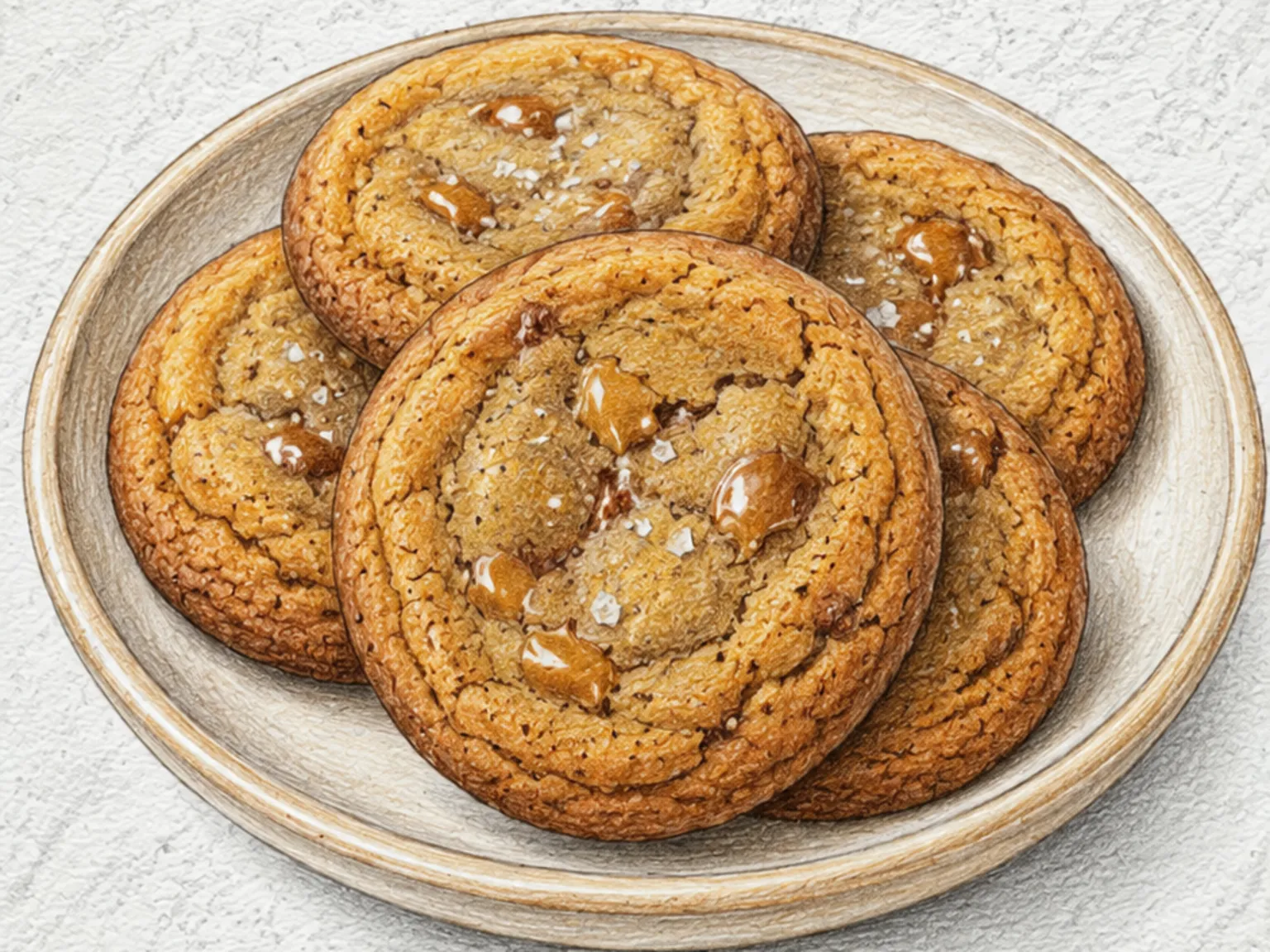
Brown butter chocolate chip cookies build on the familiar template by introducing browned butter, which is cooked over medium heat until the milk solids caramelize and turn golden, releasing an aroma of toasted hazelnuts and toffee that standard melted or creamed butter cannot produce. The browned butter is combined directly with brown sugar while still warm, which helps it dissolve completely and speeds up the mixing process. A high ratio of brown sugar relative to white sugar produces cookies with thin, crisp edges and a dense, chewy center that sinks slightly when pressed. Dark chocolate cut into rough chunks melts unevenly during baking, leaving some pockets fully liquid and others still partially solid, creating texture variation in each bite. Flaky sea salt pressed lightly onto the tops of the cookies before baking sharpens the sweetness and amplifies the chocolate flavor in a way that fine salt mixed into the dough cannot replicate. Fresh from the oven the cookies look underdone and collapse slightly when touched, but ten minutes of resting on the pan allows the structure to set: the edges firm up to a gentle snap while the center stays yielding and fudgy.
Real Pineapple Sherbet
A refreshing and cool fruit sherbet dessert made inside a hollowed-out pineapple.
Brownie Cookie Bars (Layered Brownie and Cookie Bar)
Brookie bars combine brownie batter and cookie dough in a single baking pan, stacking the two components so that each cut piece delivers both in one bite. The cookie layer sits at the bottom of the pan and is built on brown sugar and melted butter, which together produce a deep caramel flavor that plain white sugar cannot achieve. At the edges, where the batter is thinnest and heat penetrates fastest, the cookie bakes into a crisp, snapping crust. Toward the center, the same layer stays chewy and slightly underdone, with a pull to the texture that contrasts with the firmer brownie above. The brownie layer uses both cocoa powder and dark chocolate chips, a dual approach that delivers two distinct expressions of chocolate flavor. Cocoa powder spreads its bitter intensity throughout the entire layer, while the chips melt into pockets of concentrated richness that survive as soft inclusions in the finished bar. Where the two layers press against each other during baking, a narrow transition zone forms in which cookie and brownie are partially merged. This interstitial region carries the vanilla-butter warmth of the cookie alongside the bitter darkness of the brownie simultaneously. The bars must cool completely before cutting. Removing them from the pan too soon results in crumbling and smearing that destroys the clean cross-section that makes brookie bars visually satisfying.
Serve with this
Sloppy Joe
Sloppy Joe is an American sandwich where ground beef is browned with diced onion until the moisture cooks off, then simmered in a sweet-savory sauce made from tomato paste, ketchup, Worcestershire sauce, and a small amount of sugar. Browning the beef thoroughly before adding the sauce ingredients is critical - residual moisture dilutes the sauce and prevents the meat from developing flavor. Tomato paste provides concentrated umami, ketchup adds sweetness and body, and Worcestershire contributes a fermented depth that ties the flavors together. The mixture is simmered on low heat for about eight minutes until thick enough that it holds its shape on a spoon rather than running off. Toasting the buns before assembly creates a barrier that slows the inevitable soaking, and pickles served alongside cut through the richness.
Fruit Yogurt Salad
Apple, banana, strawberry, and blueberry are cut into bite-sized pieces and folded into plain yogurt for a fruit salad where the dressing serves as background rather than centerpiece. The yogurt provides gentle acidity that anchors the sweetness of the fruit without overwhelming it. Honey softens the sharper edge of the yogurt, and a squeeze of lemon juice does double duty: it slows the browning of cut apple and banana while leaving a clean citrus note on the finish. Roughly chopped walnuts scattered over the top introduce a crunchy, slightly bitter contrast to the soft fruit and smooth yogurt, breaking the monotony of texture. Swapping in seasonal fruit makes the recipe adaptable year-round without adjusting the base formula - peaches and melon in summer, persimmon and pear in autumn all work within the same yogurt, honey, and lemon framework. Light enough for a morning meal and refreshing enough after a heavy dinner, it sits comfortably in either role.
Citrus Espresso Tonic with Orange
Espresso tonic is a carbonated coffee drink built by slowly pouring espresso over chilled tonic water to form two distinct layers. The tonic must be thoroughly cold to maintain stable carbonation throughout; cooling the espresso for about thirty seconds before pouring it over a spoon produces a clean separation between the two liquids. The quinine bitterness in the tonic water meets the espresso's roast bitterness, creating a balanced interplay rather than one-note sharpness. Orange slices and lemon peel garnish the glass, releasing citrus oils that rise with the bubbles. Specialty espresso with pronounced fruit acidity works particularly well here, harmonizing with the tonic's effervescence and lending natural sweetness without added sugar. Pre-chilling the glass with ice before adding the tonic helps preserve carbonation. The drink gained popularity in Scandinavian coffee culture during the 2010s before spreading worldwide.
Similar recipes
Butter Mochi Cake (Hawaiian Glutinous Rice Coconut Cake)
Butter mochi cake is a Hawaiian baked dessert that uses sweet glutinous rice flour as its structural foundation, resulting in a single slice that contains both the dense chewiness of a mochi rice cake and the golden, lightly crisp crust of a conventional baked good. The batter is thin and pourable - sweet rice flour combined with sugar, eggs, melted butter, whole milk, and coconut milk - and it is baked low and slow in a rectangular pan until fully set. During the long bake, the bottom of the cake densifies and becomes chewy in the way mochi does, trapping moisture within the glutinous starch structure. The top surface, meanwhile, dries out and the sugars caramelize into a thin hazelnut-brown crust with a faint crunch. Coconut milk threads a subtle tropical aroma throughout every bite without dominating. The butter dissolves into the starch matrix during baking, replacing the neutral, slightly sticky character that plain mochi can have with a warm, dairy-rich depth. At room temperature, the chewiness is most pronounced. Gently rewarmed in an oven or toaster, the crust crisps back up and the textural contrast between the two layers becomes more vivid.
Black Sesame Brownies
Black sesame brownies are built on a base of dark chocolate and butter melted together over a double boiler, with roasted black sesame powder sifted in before folding. The bitter edge of the chocolate meets the toasted, grain-like aroma of the sesame, adding a nutty depth that standard brownies lack. The cake flour ratio is kept low to produce a fudgy, dense center that stays slightly underdone-looking even after the full bake at 175 degrees Celsius for twenty to twenty-five minutes. Because black sesame powder is naturally oily and prone to clumping, it must be sifted together with the flour and salt before going into the batter - skipping this step leaves uneven pockets of undistributed sesame. Pull them from the oven with a faint wobble at the center, and the residual heat finishes the interior as the pan cools. Wait until fully cool before cutting for clean edges.
Bananas Foster
Bananas Foster is a New Orleans dessert invented in the 1950s at Brennan's Restaurant, built around the simple technique of caramelizing bananas in butter and brown sugar before serving them over vanilla ice cream. The sauce begins by melting butter in a skillet and stirring in brown sugar until the two combine into a thick, bubbling caramel. Halved bananas go in cut-side down and cook just long enough to absorb the syrup while holding their shape. Ground cinnamon folded into the sauce adds a warm spice layer that keeps the sweetness from reading as flat, and a squeeze of lemon juice sharpens the overall profile. Traditional preparation calls for igniting rum poured into the hot pan - the blue flame burns off the alcohol and concentrates the molasses notes in a few dramatic seconds. The step can be skipped at home without meaningfully altering the result. Spooning the hot caramelized bananas over cold ice cream generates immediate steam, and the contrast between molten caramel and frozen cream defines every bite. The entire dish takes roughly ten minutes.