Sloppy Joe
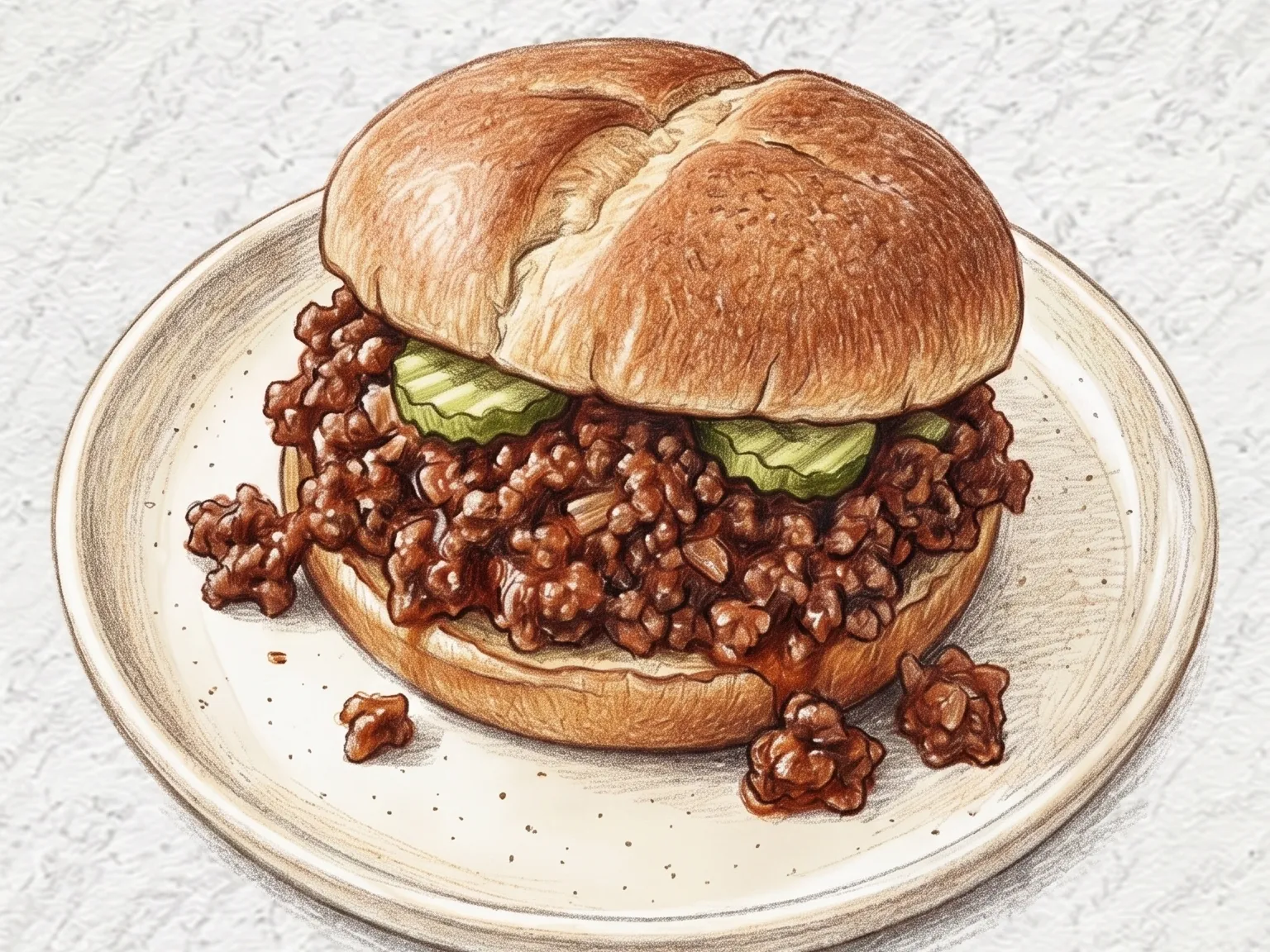
Sloppy Joe is an American sandwich where ground beef is browned with diced onion until the moisture cooks off, then simmered in a sweet-savory sauce made from tomato paste, ketchup, Worcestershire sauce, and a small amount of sugar. Browning the beef thoroughly before adding the sauce ingredients is critical - residual moisture dilutes the sauce and prevents the meat from developing flavor. Tomato paste provides concentrated umami, ketchup adds sweetness and body, and Worcestershire contributes a fermented depth that ties the flavors together. The mixture is simmered on low heat for about eight minutes until thick enough that it holds its shape on a spoon rather than running off. Toasting the buns before assembly creates a barrier that slows the inevitable soaking, and pickles served alongside cut through the richness.
Adjust Servings
Instructions
- 1
Melt butter in a pan and saute diced onion for 3 minutes.
- 2
Add ground beef and cook until browned and crumbly.
- 3
Stir in tomato paste, ketchup, Worcestershire sauce, and sugar.
- 4
Simmer on low heat for 8 minutes until thick and saucy.
- 5
Toast buns lightly and fill generously with the beef mixture.
As an Amazon Associate, we may earn from qualifying purchases.
Tips
Nutrition (per serving)
More Recipes

Classic Beef Burger
A classic beef burger shapes seasoned ground beef into a thick patty and sears it over high heat until a deep brown crust forms on the outside while the interior stays juicy. The Maillard reaction on the hot surface concentrates the beef flavor into that crust, and a slice of cheddar melted on top adds a salty, creamy layer. Crisp lettuce and a thick tomato slice bring moisture and freshness, while pickle slices cut through the richness with vinegar acidity. A brioche bun absorbs the rendered juices and condiments without falling apart, holding the stack together so every bite delivers all the components at once.

Philly Cheesesteak Sandwich
Philly Cheesesteak Sandwich originated in 1930s Philadelphia and remains one of America's defining street foods. Ribeye or top round is partially frozen for about thirty minutes so it can be sliced paper-thin, and these razor-thin slices are seared on a screaming-hot flat griddle where they caramelize almost instantly, developing char and retaining their juices. Onion and green bell pepper are cooked on the same griddle to absorb the beef's rendered fat and fond, and provolone cheese is draped over the pile of meat before a dome lid traps steam to melt it into a blanket that binds everything together. The hoagie roll provides the crucial structural balance - a lightly crisp exterior that gives way to a soft crumb capable of absorbing juices without becoming soggy or falling apart.

French Dip Sandwich
The French Dip sandwich was invented in Los Angeles, not France, and consists of thinly sliced roast beef piled onto a crusty French roll and served with a small bowl of au jus - the natural cooking juices rendered during roasting. The beef is typically roasted slowly until it can be sliced thin, retaining enough moisture to stay supple against the firm bread. Provolone or Swiss cheese melted over the meat adds a mild, creamy layer. The French roll must have a sturdy crust that holds its structure when dipped into the warm jus, absorbing the beefy, salty liquid without falling apart. Onions and garlic roasted alongside the beef enrich the jus with sweetness and depth. Each dip saturates the bread with concentrated meat flavor, and the contrast between the soaked, softened bread edges and the still-crisp center creates a texture that no dry sandwich can match.

Club Sandwich
A club sandwich stacks three slices of buttered, golden-toasted bread with layers of sliced chicken breast, crisp bacon, fresh lettuce, and tomato in a double-decker arrangement. The salty crunch of bacon meets the lean protein of chicken, while juicy tomato slices and crisp lettuce add freshness and texture contrast. Mayonnaise spread on each bread layer acts as a binding agent that smooths the bite and balances the savory components. Drying the lettuce thoroughly is essential to prevent the toast from softening. Securing with picks and cutting diagonally produces clean cross-section layers.

Vanilla Cupcakes
Butter and sugar are creamed until pale and fluffy, then eggs, vanilla extract, cake flour, and milk are incorporated to produce the most versatile cupcake in home baking. The creaming step is where the texture is decided: enough air beaten into the butter creates a light, tender crumb, while under-creaming yields a dense, flat result. Each egg is added individually to maintain a stable emulsion, and the low protein content of cake flour keeps the finished cupcake soft rather than chewy. Filling each liner to seventy percent capacity allows a domed rise without overflow, and the oven door should remain closed for the first fifteen minutes to prevent collapse. Once cooled, these cupcakes accept virtually any frosting - buttercream, cream cheese, ganache - without the base flavor competing. The vanilla is warm and present but never dominant, which is exactly what makes this recipe a dependable foundation for countless variations.

Chocolate Chip Cookies
Chocolate chip cookies are the most baked cookie in American kitchens, and their apparent simplicity masks a surprising number of variables. The ratio of brown sugar to white sugar determines the texture - more brown sugar yields chewier cookies, more white sugar makes them crisper. Creaming the butter aerates the dough, giving the baked cookies a slight puff. Chocolate chips, whether milk, dark, or semi-sweet, melt in the oven and resolidify into pockets of concentrated chocolate that contrast with the surrounding dough. The critical moment is knowing when to pull the tray from the oven: the edges should be golden and set while the center still looks underdone, because residual heat will finish the job as the cookies cool on the pan. A pinch of flaky salt pressed into the tops before baking sharpens every flavor. Fresh from the oven, the cookies are barely holding their shape, yielding to the slightest pressure - and that is precisely the point.