Chili Cheese Fries
Quick answer
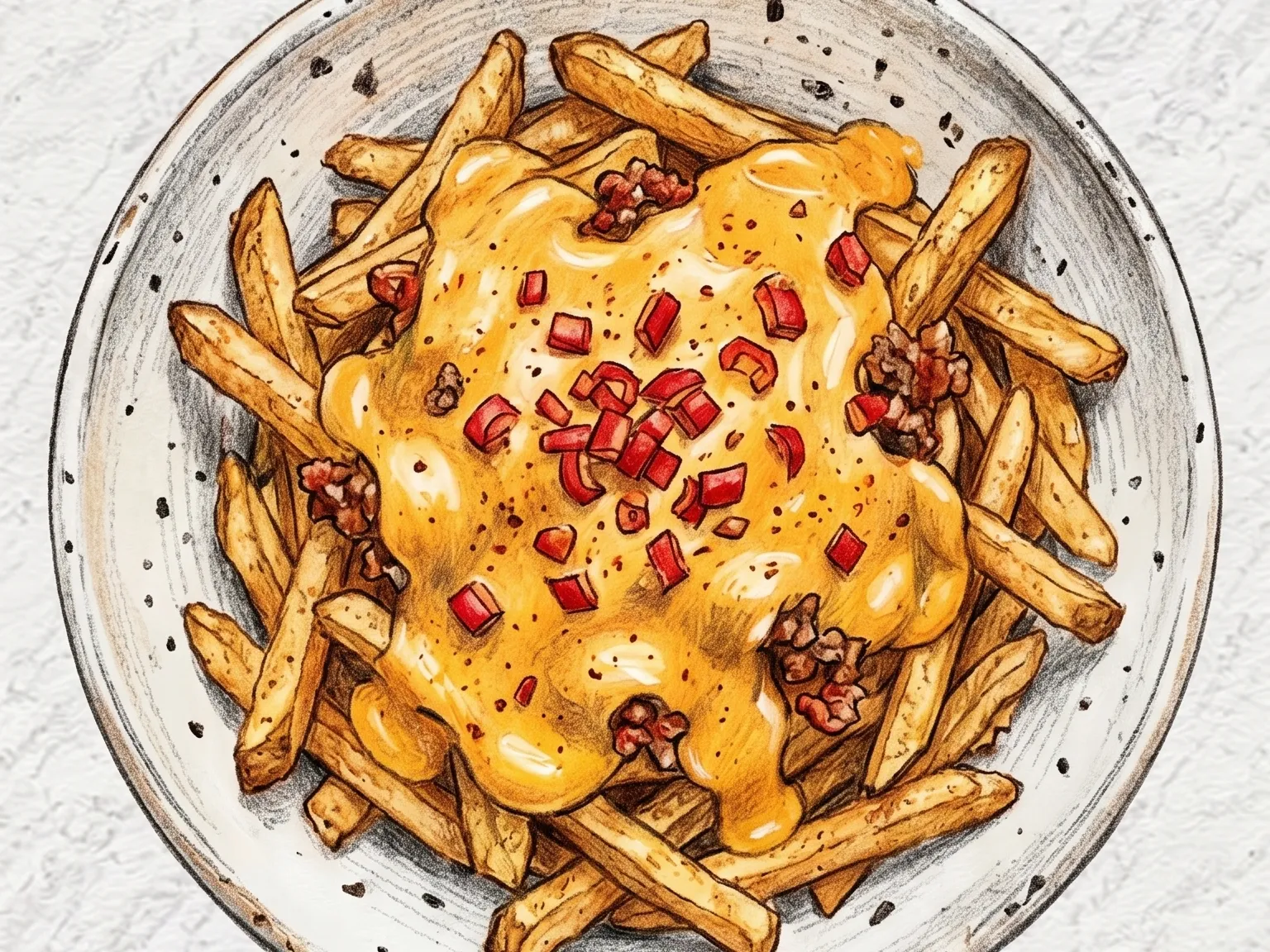
Crispy fries topped with rich, thick cheese sauce and savory chili.
- Milk stirred into processed cheddar over low heat creates a smooth, pour-ready sauce that covers the crispy fries.
- Four cheddar slices melted in 50ml milk make a thick nappe-style sauce
Key ingredients
Core cooking flow
- 1 Cook the french fries in an air fryer or deep fryer until crispy.
- 2 In a small pot, combine milk, butter, and cheddar cheese, stirring over low heat until melted.
- 3 Turn off the heat once the cheese is fully melted and becomes a thick sauce.
Crispy fries topped with rich, thick cheese sauce and savory chili.
What Makes This Special
- Milk stirred into processed cheddar over low heat creates a smooth, pour-ready sauce that covers the crispy fries.
- Four cheddar slices melted in 50ml milk make a thick nappe-style sauce
- Chili sauce layered under cheese builds two distinct flavor zones
- Pickled jalapeños cut through the dairy fat with sharp acidity
Instructions
- 1
Cook the french fries in an air fryer or deep fryer until crispy.
- 2
In a small pot, combine milk, butter, and cheddar cheese, stirring over low heat until melted.
- 3
Turn off the heat once the cheese is fully melted and becomes a thick sauce.
- 4
Warm the meat chili sauce in a microwave or pan.
- 5
Place fries on a plate and pour the chili sauce over them first.
- 6
Drizzle the prepared cheese sauce generously and top with chopped jalapenos.
Tips
Nutrition (per serving)
Recipes to Cook Together
More Western →Serve with this
Real Pineapple Sherbet
A refreshing and cool fruit sherbet dessert made inside a hollowed-out pineapple.
Chopped Rainbow Salad
Chopped rainbow salad dices romaine, red cabbage, carrot, bell pepper, and corn kernels into small, uniform pieces so that every forkful picks up multiple colors and textures at once. Keeping the cuts even ensures consistent crunch and even dressing coverage across the bowl. The dressing uses only olive oil, lemon juice, and salt, so each vegetable's natural character shows through without interference. Red cabbage's slight bitterness and the sweetness of corn create a built-in contrast, while bell pepper adds structural crunch that anchors the bowl. Because none of the ingredients carry high moisture, the salad holds up well after tossing without going limp, making it well suited for packed lunches or meals prepared in advance. Fresh herbs, crumbled feta, or sliced avocado can be added to turn it into a more substantial single-dish meal.
Fresh Lemon Ade
Fresh lemonade is a citrus drink assembled by pouring hand-squeezed lemon juice and simple syrup over ice, then topping slowly with sparkling water. The sharp acidity of fresh lemon is tempered by the syrup's rounded sweetness, creating a balance that bottled juice cannot replicate. A tiny pinch of salt amplifies both the sweet and sour notes simultaneously, a small addition with a noticeable effect. Lemon slices and mint leaves added to the glass release fragrance continuously as the drink sits. Pouring the sparkling water last and gently preserves the carbonation through every sip, so the order of assembly matters as much as the ingredients themselves.
Kimchi Bacon Mac and Cheese
Kimchi bacon mac and cheese layers aged kimchi's lactic tang and smoky bacon into a classic American cheddar cheese sauce over elbow macaroni. A butter-flour roux forms the base, with milk whisked in to build a béchamel before cheddar is melted into a thick, clinging sauce. Crisp bacon pieces add salt and crunch throughout, while chopped ripe kimchi introduces fermented acidity that counteracts the richness of the cheese. A pinch of gochugaru runs underneath with mild, warming heat. The tubular macaroni shape traps sauce inside and out, ensuring each forkful carries the full spectrum of creamy, tangy, and smoky flavors.
Similar recipes
Grilled Cheese Sandwich
Grilled cheese sandwich is made by buttering the outer sides of bread slices, filling them with cheddar and mozzarella cheese, and toasting both sides in a pan until golden and crisp. Combining cheddar's sharp saltiness with mozzarella's stretchy pull gives the sandwich both depth of flavor and satisfying texture. A thin layer of Dijon mustard spread on the inner bread adds a subtle, peppery bite that cuts through the richness of the melted cheese. Cooking over medium-low heat is essential - it gives the cheese enough time to melt completely before the bread surface burns. Pressing the sandwich lightly while flipping ensures the bread and cheese bond tightly, producing a clean cross-section when the sandwich is sliced in half.
Tuna Melt
Tuna melt mixes drained canned tuna with finely diced celery and mayonnaise, spreads the mixture on sandwich bread, tops it with cheddar cheese, butters the outside, and grills in a pan until both sides are crisp and golden. Draining the tuna thoroughly is the first priority - excess moisture soaks into the bread and prevents it from crisping no matter how long it cooks. The celery adds a textural crunch that contrasts with the soft, creamy tuna filling. Using several thin slices of cheese rather than one thick piece ensures more even melting and full coverage across the bread. Medium-low heat is essential: it gives the cheese enough time to melt completely before the bread burns, which high heat makes nearly impossible. The sandwich is best served immediately after cutting in half, while the cheese is still stretchy and warm.
Chicken a la King
Chicken a la king is an American home-style cream sauce dish built on a butter roux that forms the backbone of the sauce and holds every other element in place. The roux begins with flour cooked briefly in melted butter until it smells faintly nutty and raw flour taste has cooked off, at which point cold milk and chicken stock are added incrementally while whisking constantly to prevent lumps. The gradual addition of liquid to the roux, rather than all at once, is what produces a sauce that is smooth and velvety rather than gluey or broken. Chicken breast is cooked separately and removed as soon as the color changes through, because even a few extra minutes in heat will make it tough and dry. The mushrooms and onion are sauteed in butter before the liquid goes in, building flavor in the fat first: the onion softens and sweetens, and the mushrooms release their moisture and then concentrate into a savory, earthy depth. Bell pepper is added later in the process so it retains some snap, providing a textural contrast to the surrounding creaminess and contributing a mild sweetness that brightens the overall flavor. Once the chicken is returned to the sauce, it absorbs some of the cream and the seasoning rounds out. Ladled over toast, rice, or split biscuits, the sauce soaks into the starch beneath and turns the plate into a complete, satisfying meal.
Pork Chops with Apple Cider Pan Sauce
Apple Cider Pork Chops represent a traditional American one-pan cooking method where thick-cut pork loin chops are cooked in a single skillet to create a deep golden exterior crust. The preparation involves a pan sauce that utilizes the flavorful fond left behind in the skillet after searing the meat. For the best results, the pork chops should sit at room temperature for approximately thirty minutes before they are placed in the pan. This step is important because it allows the heat to penetrate the meat evenly from the outer edges to the center. It is also essential to use a paper towel to pat the surface of the pork until it is completely dry, which facilitates the chemical reaction needed for thorough browning. Once the pork has been seared and removed from the heat, finely chopped shallots and garlic are added to the rendered pork fat and sautéed until they become fragrant. Apple cider is then poured into the hot skillet to deglaze the surface, loosening the caramelized bits that remain attached to the bottom. The liquid is simmered and reduced until the natural sugars and acidic components of the cider become more concentrated and intense. To build additional layers of flavor, Dijon mustard is whisked into the reduction to provide a sharp and slightly peppery character. The final texture of the sauce is achieved by swirling in a piece of cold unsalted butter at the very end of the cooking process, which creates a glossy appearance and a smooth consistency. A whole sprig of fresh thyme is included during the simmering stage to provide an herbal element that connects the flavor profiles of the apple cider and the pork meat.
Cheese Arepa (Venezuelan Griddled Cornmeal Cheese Pocket)
The arepa is the daily bread of Venezuela and Colombia, with origins reaching back to pre-Columbian indigenous peoples who ground maize on stone metates and cooked the patties over fire. The dough has no leavening, no fat, no yeast - only pre-cooked cornmeal (masarepa), water, and salt, worked by hand into thick discs and cooked on a budare, a flat cast-iron griddle, until a golden-brown crust forms on both sides. Inside, the arepa stays soft with a faintly undercooked texture that contrasts the crust. For cheese arepas, queso blanco or mozzarella is either folded into the dough before cooking, creating pockets of molten cheese throughout, or stuffed inside a freshly grilled arepa split open while hot. Either way, the warm corn shell traps stretchy, salty melted cheese in every bite. The corn flavor reads toasty and cleanly sweet, and the fat from the cheese provides the counterpoint. Street vendors across Caracas and Bogota sell them around the clock, filled with everything from black beans to slow-cooked shredded beef.
Red Velvet Cake
Red velvet cake is an American layer cake defined by its bright crimson interior and its covering of tangy cream cheese frosting. The frosting serves to balance the sweetness of the cake layers. The batter is prepared with a small amount of cocoa powder, which provides depth to the flavor without making the cake taste like a typical chocolate dessert. Buttermilk is included in the recipe to provide a mild lactic acidity that adds complexity to the overall taste. Instead of using butter as the primary fat source, vegetable oil is used to create a moist sponge that remains soft for several days after it has been baked. The fine, velvety texture of the crumb is produced by a specific chemical reaction between baking soda and white vinegar. This reaction generates small air bubbles throughout the batter during the baking process. The frosting is made by beating cold cream cheese with butter and powdered sugar until it reaches a consistency thick enough to stay in place between the layers without sliding. The visual appeal of the cake comes from the sharp contrast between the deep red crumb and the white frosting, which is revealed when the cake is sliced. This appearance has made the cake a common choice for various celebrations. If a more natural appearance is preferred, beet powder can be used as a substitute for food coloring to create a more subdued shade of red.