Crunchy Chocolate Chip Baguette
Quick answer
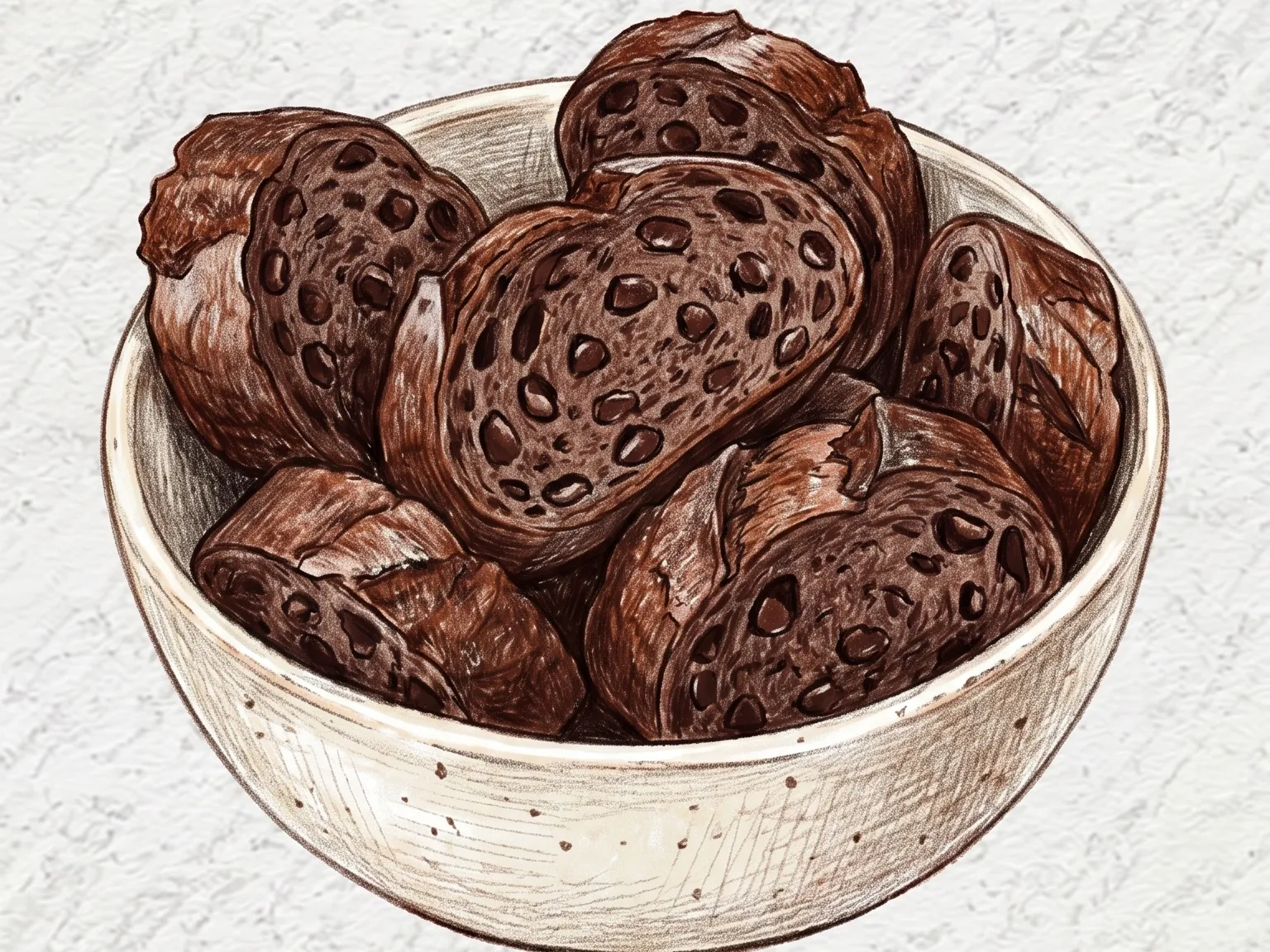
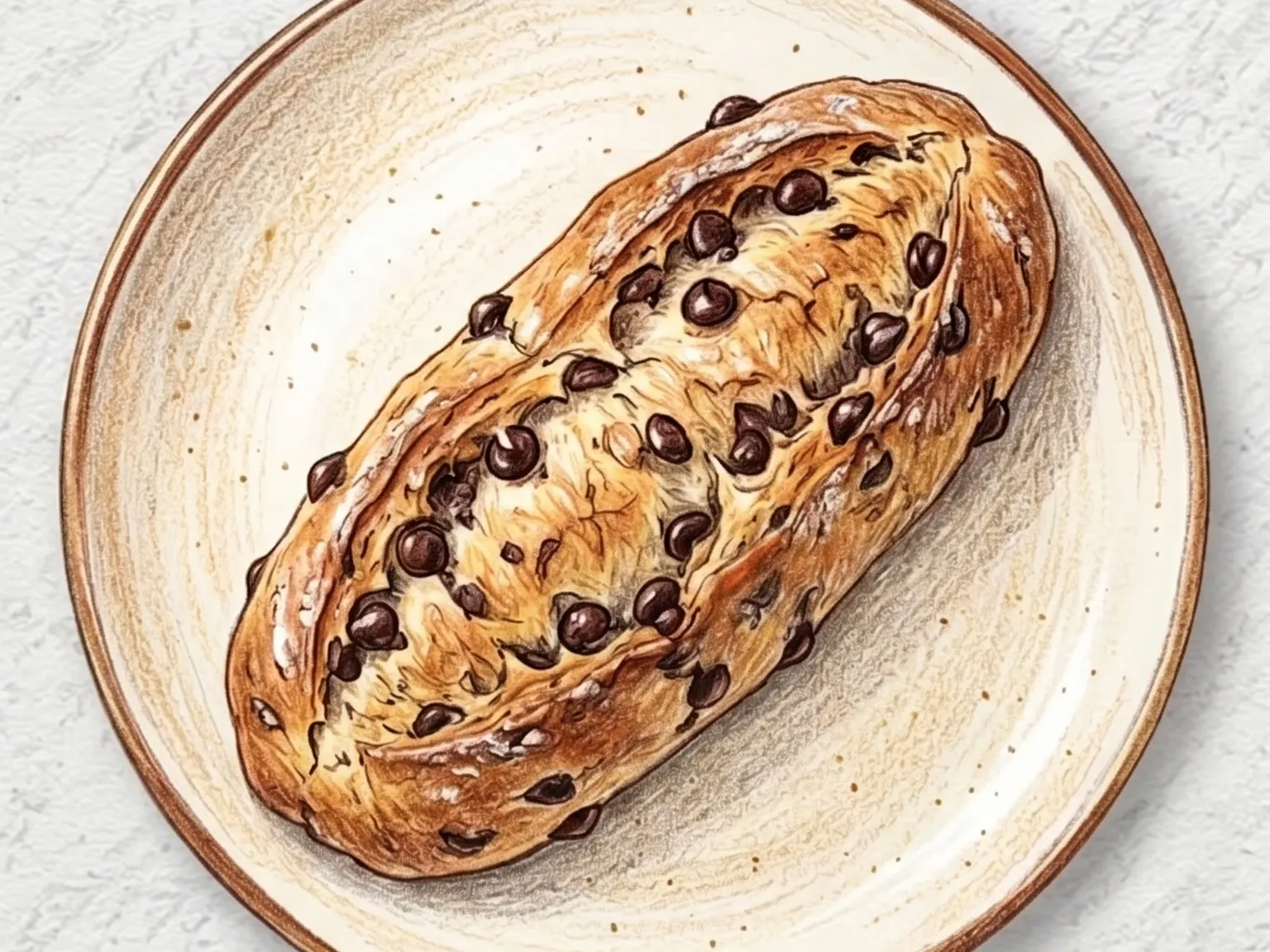
A charming chocolate baguette with sweet chocolate chips embedded in a crusty loaf.
What makes this special
- Cocoa dough and chocolate chips provide bittersweet depth to this crusty baguette loaf.
- Cocoa dough plus chocolate chips gives bittersweet depth on every bite
- Steam injection at 220°C drives the signature shattering crust
Key ingredients
Core cooking flow
- 1 Combine 250 g bread flour, 20 g cocoa powder, 15 g sugar, 5 g salt, and 4 g...
- 2 Pour in the water and mix until no dry flour remains, then knead for 8-10 minutes.
- 3 Before the dough gets too warm, add 60 g chocolate chips and fold them in briefly.
A charming chocolate baguette with sweet chocolate chips embedded in a crusty loaf.
Instructions
Read the steps as a cooking flow: prep, heat, seasoning, doneness control, and finish.
- 1Season
Combine 250 g bread flour, 20 g cocoa powder, 15 g sugar, 5 g salt, and 4 g instant dry yeast in a bowl until the color looks even.
Prepare 170 ml water lukewarm, not hot.
- 2Prep
Pour in the water and mix until no dry flour remains, then knead for 8-10 minutes.
The dough may feel slightly tacky, but keep kneading until the surface becomes smoother and more elastic.
- 3Step
Before the dough gets too warm, add 60 g chocolate chips and fold them in briefly.
Do not knead for long after adding them, or the chocolate can smear instead of staying evenly dotted through the dough.
- 4Control
Round the dough, cover it, and let it ferment in a warm place for about 1 hour.
It is ready when doubled in size and a gentle finger press leaves a dent that slowly springs back.
- 5Control
Gently press out excess gas, divide the dough into two pieces, and roll each into a long oval.
Place the seam side down, cover, and let them rise for 30 minutes until slightly puffy.
- 6Heat
Score the surface, spray it well with water, and bake at 220°C for 20-25 minutes.
Add a few ice cubes for steam if using that method, then cool the loaves once the crust feels firm.
After the steps
Pick the next recipe from here.
Continue with a similar dish, a pairing, or the same category.
Tips
Nutrition (per serving)
Recipes to Cook Together
More Baking →Serve with this
Clafoutis (French Baked Cherry Custard Dessert)
Clafoutis is a traditional French dessert from the Limousin region made by arranging fresh cherries in a buttered baking dish, then pouring over a thin batter of eggs, sugar, milk, and flour and baking at 180 degrees Celsius for thirty to thirty-five minutes. The batter is considerably thinner than pancake batter, and the result when baked is a texture that sits between a creamy custard and a light sponge -- the edges puff and turn golden while the center around the cherries stays moist and yielding. Using unpitted cherries is the traditional method: the pits release a faint almond scent during baking that perfumes the surrounding batter in a way that pitted fruit cannot replicate. The cherries also hold their shape better with the pits in. Vanilla extract deepens the egg-and-milk base, and the cherries' own tart juice seeps into the batter during baking, creating concentrated pockets of fruit flavor that balance the overall sweetness. Clafoutis is served directly from the baking dish, typically dusted with powdered sugar and brought to the table while still warm, because the custard texture softens and loosens slightly as it cools, making the warm version noticeably more appealing. Made with blueberries, plums, or apricots instead of cherries, the dessert takes a different name -- flaugnarde -- though the technique remains identical.
Beet and Goat Cheese Salad
Beet and goat cheese salad begins with whole beets wrapped in foil and roasted at 200°C for forty-five to sixty minutes, long enough for their raw, earthy undertone to convert almost entirely into a concentrated, caramel-adjacent sweetness. Peeling the skins while the beets are still warm requires only the pressure of a paper towel - they slip off cleanly - and slicing them before they cool preserves the vivid crimson-purple cross-section that makes the dish visually striking. Crumbled goat cheese placed on the warm slices softens slightly, and its tangy acidity cuts through the dense sweetness of the roasted root rather than competing with it. Walnuts toasted briefly in a dry pan lose much of their raw bitterness, developing a nuttiness that bridges the mineral quality of the beet and the dairy sharpness of the cheese. Balsamic reduction does more than dress the plate: its concentrated sweet-tart intensity ties the separate components into a coherent whole. Arugula underneath the beet slices provides a peppery bitterness that sharpens the contrast against the sweetness, giving the salad a complexity well beyond what its short ingredient list suggests. A simple dressing of extra-virgin olive oil and lemon juice over the greens keeps the balance light and clear.
Barley Puff Brittle (Korean Puffed Barley Walnut Sesame Candy)
Bori-gangjeong is a Korean barley puff brittle made by tossing puffed barley and roughly chopped walnuts with toasted sesame seeds in a syrup of rice malt, sugar, and honey cooked precisely to 118 degrees Celsius. Temperature is the deciding variable: below that threshold the brittle never fully sets and stays soft and sticky even when cool, while above it the result hardens into something that resists the teeth uncomfortably. Once the correct temperature is reached, the mixture must be worked quickly - the syrup sets fast. Sesame oil stirred in at the very end coats the barley in a layer of nutty fragrance that ties the toasty grain, the honey sweetness, and the dense crunch of walnut together. Scoring the slab while it is still pliable is essential: cuts made after the brittle fully sets tend to crack rather than slice cleanly, and the pieces lose their uniform shape. The deep sweetness of the rice malt syrup and the nuttiness of the barley combine into a straightforward but lingering flavor that keeps the hand returning to the plate.
Korean Ssanghwa Herbal Tea
Ssanghwa-cha is a traditional Korean tonic tea made by slow-simmering astragalus root, angelica root, cinnamon bark, licorice, and jujube in approximately 1800 ml of water over low heat for more than fifty minutes. The prolonged extraction coaxes layered complexity from each herb, producing a brew that is simultaneously bitter, sweet, and warmly aromatic with cinnamon woven through every sip. Jujubes added during the simmer soften the sharpest herbal edges while contributing a mild natural sweetness that rounds the overall profile. Honey is stirred in after straining to let each person adjust the sweetness to taste. The tea is poured hot into a ceramic cup and finished with a small cluster of pine nuts whose oil blooms on contact with the steaming surface, releasing a gentle, nutty fragrance. The deep medicinal warmth lingers in the throat long after each sip, making the drink a reliable remedy for fatigue and cold weather.
Similar recipes
Dark Chocolate Baguette
Crusty and savory baguette filled with sweet chocolate chips for a delightful contrast.
French Baguette
A baguette is a traditional French bread made from only four ingredients: bread flour, water, yeast, and salt. Because the formula strips away every variable beyond technique, the final quality is determined almost entirely by the precision of fermentation management and the confidence of the baker at each stage. A hydration level of seventy percent or higher is required to develop the open, irregular crumb structure that defines the interior; dough that is too dry will close up in the oven and produce a dense, uniform crumb with none of the characteristic airy pockets. A long first fermentation builds layers of acidity and deep wheat flavor that a short rise simply cannot provide, and during shaping the dough should be handled with restraint, using only gentle folds that preserve the large gas bubbles rather than pressing them out. Scoring lines, known as coupes, cut along the top surface control the direction of oven spring; the blade must be sharp enough and the movement decisive enough that the dough does not drag and tear beneath it. Introducing steam into the oven during the first ten to fifteen minutes of baking prevents the crust from setting prematurely, giving the loaf room to expand fully before the surface dries and crisps into its signature crackling shell. A well-made baguette crackles audibly when squeezed and, when sliced, reveals an interior cross-section showing holes of varied sizes scattered unevenly through the crumb. The day it is baked is the day it should be eaten; once the crust begins to soften as it cools, something irreplaceable is lost.
Pain au Chocolat
Two sticks of dark chocolate are sealed inside laminated croissant dough and baked until the exterior shatters into golden, buttery flakes. As the pastry cools for a minute on the rack, the chocolate inside transitions from fully molten to a soft, fudgy state that clings to the layers when torn apart. Dozens of paper-thin sheets of dough, created through repeated folding with cold butter, give each bite an audible crunch followed by a yielding, airy interior. Using chocolate with at least fifty-five percent cacao ensures that the filling carries enough bitterness to stand up to all that butter. Shaped portions freeze well, allowing an overnight thaw and morning proof for fresh pastries without starting from scratch.
Sourdough Bread
Sourdough bread is leavened entirely by a natural starter - a living culture of wild yeast and lactic acid bacteria maintained through regular feedings of flour and water - without any commercial yeast. The extended fermentation produces organic acids that give the bread its characteristic tangy flavor, a thick, blistered crust, and an open, irregular crumb structure. The process begins with an autolyse, where flour and water rest together before the starter and salt are incorporated. Four rounds of stretch-and-fold during a four-hour bulk fermentation develop gluten without intensive kneading. After shaping, the dough is cold-proofed in the refrigerator for twelve to sixteen hours, during which flavor compounds deepen and the structure firms for easier scoring. Baking in a preheated Dutch oven at 250 degrees Celsius traps steam around the loaf, allowing the crust to expand fully before setting into a thick, crackly shell. Removing the lid partway through finishes the crust to a deep, caramelized brown. The starter must be at peak activity - risen to its highest point and just beginning to dome - when mixed into the dough, or the loaf will not achieve adequate rise.
Chocolate Lava Cake
Chocolate lava cake bakes a batter of melted dark chocolate, butter, whole eggs, egg yolks, sugar, and a small measure of flour in buttered ramekins at 220 degrees Celsius for ten to twelve minutes, producing a set crust and molten center from a single brief baking window. The high oven temperature firms the outside and top of the batter into cake while the core stays liquid, so breaking the surface with a spoon releases a slow pour of concentrated warm chocolate. High-cacao dark chocolate provides a complex, bittersweet depth that pairs with the richness of butter fat, and vanilla extract softens and rounds the overall aroma. Timing controls everything in this recipe: overbaking by even two minutes sets the center solid and destroys the signature flow. The edges of each ramekin should feel just firm when pressed lightly through a towel at the ten-minute mark. Ramekins can be filled ahead and refrigerated, but the baking time then needs an extra one to two minutes to account for the colder starting temperature. Serving with a scoop of vanilla ice cream or a spoonful of cold heavy cream creates a striking contrast between the hot, dense chocolate interior and the chilled, lighter dairy.
Jambon-Beurre (Classic Butter and Ham Baguette)
The jambon-beurre is a staple French sandwich designed for daily consumption, consisting of a baguette, butter, and ham. Because the recipe uses only three primary ingredients, the specific characteristics of each component are fundamental to the assembly. A traditional version utilizes a baguette characterized by a crust that breaks easily and a crumb that provides a chewy texture. The butter chosen is typically a cultured unsalted variety. It is necessary to bring the butter to room temperature to ensure it is soft enough to spread across the bread without damaging the soft interior. The ham used is jambon blanc, which is prepared in thin slices to build the layers of the sandwich. A light application of Dijon mustard on one side of the bread provides a sharp and peppery flavor profile. This ingredient serves to balance the heavy fat content of the butter against the natural saltiness found in the ham. Sliced cornichons are included inside the bread to add a level of tart acidity. These pickles help to reduce the overall weight of the sandwich ingredients and maintain a consistent balance of flavors in every bite.