2741 Korean & World Recipes

2741+ Korean recipes, clean and organized. Ingredients to instructions, all at a glance.

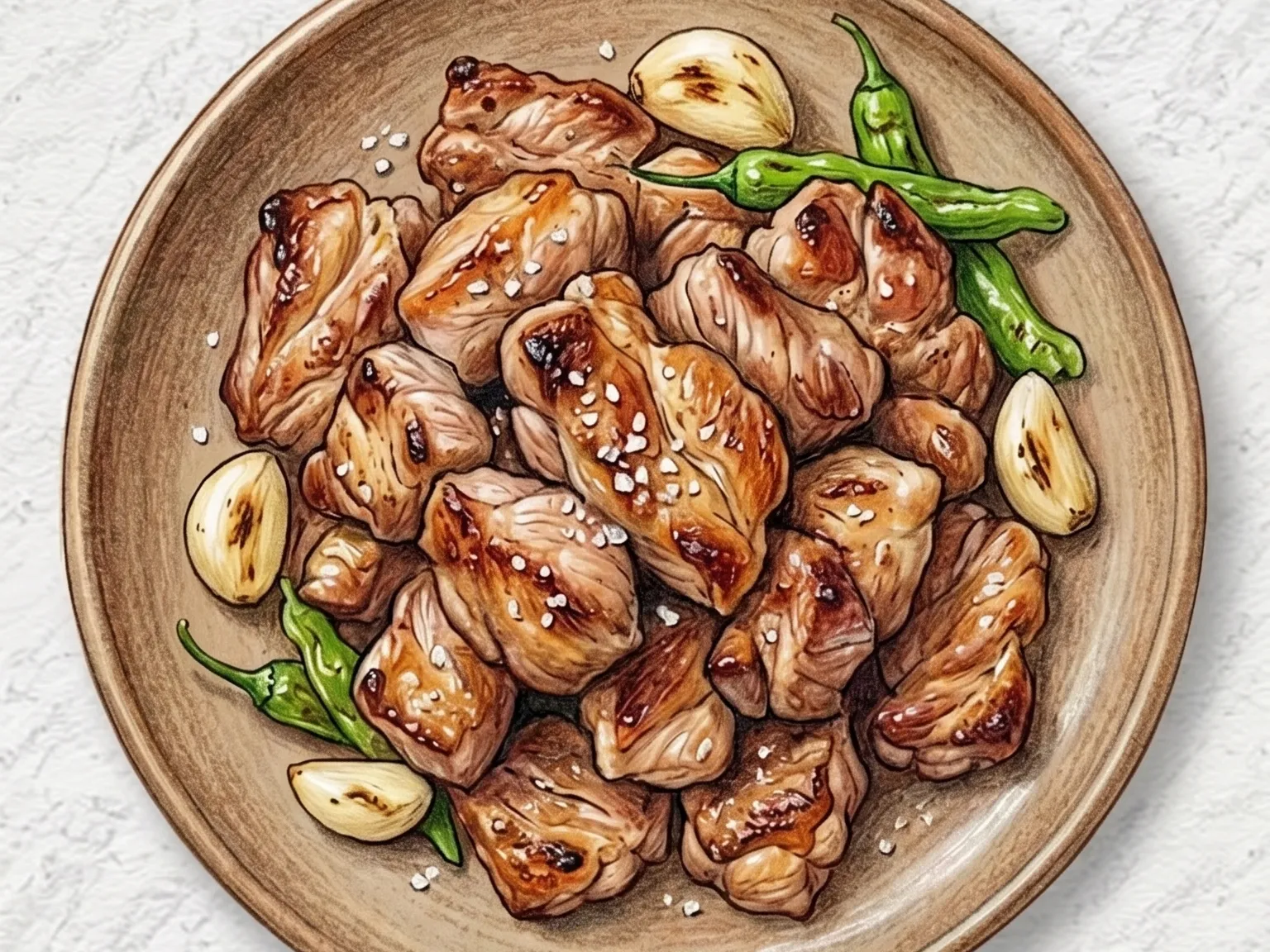
Salt-Grilled Pork Dwitgogi

Salt-Grilled Pork Dwitgogi

Chewy and savory grilled pork Dwitgogi, famously kept by butchers for themselves.

  • Salt-Grilled Pork Dwitgogi is a chewy, savory butcher's cut seared quickly to seal in juices.
  • High-heat initial sear seals juices before salt and pepper are added
Total time
30 min
Level
Easy
Servings
4 servings
Ingredients
6
Calories
520 kcal
Protein
40 g

Key ingredients

Dwitgogi (pork scraps mix)Sea saltWhole black pepperWhole garlicGreen onion

Core cooking flow

  1. 1 Blot 600g pork offcuts with paper towels to remove blood, then sprinkle 2 tb...
  2. 2 Cut 1 large green onion into chunky pieces and halve 10 peeled garlic cloves.
  3. 3 Heat a pan on high for 2 minutes until light smoke rises, then place the por...

Chewy and savory grilled pork Dwitgogi, famously kept by butchers for themselves.

What Makes This Special

  • Salt-Grilled Pork Dwitgogi is a chewy, savory butcher's cut seared quickly to seal in juices.
  • High-heat initial sear seals juices before salt and pepper are added
  • Mixed offcut mix gives a chewier, springier bite than regular pork belly
  • Scallion and garlic finish in rendered pork fat, seasoning through aroma
Prep 10min Cook 20min 4 servings
Recipes by ingredient → green onion

Instructions

  1. 1

    Blot 600g pork offcuts with paper towels to remove blood, then sprinkle 2 tbsp soju evenly over the meat and rest for 5 minutes to eliminate any off-odor.

  2. 2

    Cut 1 large green onion into chunky pieces and halve 10 peeled garlic cloves.

  3. 3

    Heat a pan on high for 2 minutes until light smoke rises, then place the pork and sear the surface quickly for 1 to 2 minutes to lock in the juices.

  4. 4

    When the pork is about halfway cooked, sprinkle 1 tsp sea salt and half a teaspoon of whole black pepper evenly, then add the whole garlic and green onion to cook alongside.

  5. 5

    Continue turning for 5 to 6 more minutes, cooking in a stir-fry style so the rendered fat absorbs the green onion and garlic aroma, until the meat is evenly browned throughout, then serve immediately.

Tips

Boil some Meljeot (salted anchovies) for dipping to enjoy it Jeju-island style.

Nutrition (per serving)

Calories
520
kcal
Protein
40
g
Carbs
3
g
Fat
38
g

Recipes to Cook Together

More Grilled →

Similar recipes

Korean Salt-Grilled Pork (Pork Belly and Neck BBQ)
Grilled Easy

Korean Salt-Grilled Pork (Pork Belly and Neck BBQ)

Doejigogi-gui is Korea's salt-grilled pork, made by seasoning thick-cut pork belly or pork neck with nothing but coarse salt and grilling over charcoal or on a cast iron pan. Because no marinade masks the flavor, the quality of the pork itself determines the outcome, and thick-cut belly requires patient cooking over medium heat so the fat layers render fully before the exterior chars -- rushing over high flame leaves the fat chewy and greasy rather than crisp. Blotting excess rendered fat from the pan with paper towels during cooking keeps the meat grilling rather than deep-frying and preserves the smoky char that defines the dish. Garlic slices cooked on the same pan alongside the pork add a mellow roasted note. The classic accompaniments -- sesame oil and salt for dipping, fresh lettuce or perilla leaves for wrapping, a dab of doenjang, and a sliver of cheongyang chili -- create the complete Korean barbecue experience, where a bite of rich pork, crunchy greens, and pungent condiments come together in one mouthful.

🍺 Bar Snacks ⚡ Quick
Prep 5min Cook 15min 2 servings
Korean Grilled Pork Belly
Grilled Easy

Korean Grilled Pork Belly

Samgyeopsal-gui is Korean grilled pork belly, the country's most iconic barbecue dish, where 400 grams of pork belly is cut into ten-centimeter lengths and grilled on a preheated pan or griddle over high heat without added oil-the alternating layers of fat and lean render enough grease to cook the meat in. Flipping only once, after four to five minutes per side, is critical because frequent turning lets juices escape before the fat has properly rendered and crisped. Once golden and cooked through, the meat is cut into bite-sized pieces with scissors, and thinly sliced garlic is toasted on the same surface until lightly browned. Each piece is eaten wrapped in lettuce with ssamjang, grilled garlic, and green onion, and an optional side of green onion oil dip-sesame oil mixed with salt and chopped scallion-adds nutty depth and a sharp allium kick on top of the pork fat's richness.

🍺 Bar Snacks
Prep 10min Cook 20min 2 servings
Korean Grilled Pork Neck (Salt-Seasoned Fatty Neck Cut BBQ)
Grilled Easy

Korean Grilled Pork Neck (Salt-Seasoned Fatty Neck Cut BBQ)

Dwaeji-moksal-gui is Korean salt-grilled pork neck sliced one centimeter thick and seasoned with nothing more than coarse salt and black pepper before being laid on a blazing grill. The neck cut is laced with fine intramuscular fat that renders quickly over high heat, basting the meat from within and producing a rich, clean pork flavor that needs no marinade to taste complete. Cuts with roughly a seven-to-three fat-to-lean ratio give the best results, where fat and juice remain in balance through the cooking. Each side must sear for under two minutes over maximum heat to build a dark, caramelized crust while the center stays moist. Flipping repeatedly drops the surface temperature and produces a gray, steamed result rather than the charred exterior that defines the dish. The standard way to eat moksal-gui is in a ssam: a leaf of lettuce loaded with a roasted garlic clove, a smear of ssamjang, and a slice of the grilled meat, folded and eaten in a single bite.

🍺 Bar Snacks
Prep 15min Cook 14min 2 servings
Korean Gochujang Grilled Pork Ribs
Grilled Hard

Korean Gochujang Grilled Pork Ribs

Gochujang dwaeji-galbi-gui is a Korean grilled pork rib dish that starts by soaking the ribs in cold water for thirty minutes to remove blood, followed by at least one hour in a marinade of gochujang, soy sauce, sugar, Asian pear juice, garlic, sesame oil, cooking wine, and black pepper. The pear juice works on two levels: its natural enzymes break down the muscle fibers to tenderize the meat, and its fructose provides a clean sweetness that tempers the fermented heat of gochujang. Because the marinade carries a high concentration of sugar, it catches and burns quickly on a hot surface. Each side is grilled four to five minutes over medium heat before the flame is reduced to finish the interior without incinerating the glaze. After cooking, resting the ribs for three minutes off the heat allows the juices to redistribute inward, so that when the pieces are sliced, every cut reveals a moist, tender interior beneath the deeply caramelized, glossy crust that is the hallmark of the dish.

🎉 Special Occasion
Prep 30min Cook 25min 4 servings
Tonkatsu Korean Style (Panko-Breaded Pork Cutlet with Sweet Sauce)
Street food Easy

Tonkatsu Korean Style (Panko-Breaded Pork Cutlet with Sweet Sauce)

Donkatsu is Korean-style breaded pork cutlet, made by dredging pork loin through flour, egg, and panko breadcrumbs in sequence before deep-frying in hot oil. Pounding the loin with a meat mallet to an even thickness ensures uniform heat transfer so the interior cooks through while staying moist, and the panko shell turns golden and audibly crunchy. Korean donkatsu sauce blends ketchup, Worcestershire sauce, and sugar into a sweet-salty condiment that is noticeably sweeter than Japanese tonkatsu's demi-glace-based sauce. Shredded raw cabbage served alongside provides a crisp, refreshing contrast to the fried cutlet and cuts through the richness. In Korean bunsik restaurants, donkatsu typically arrives as a set with rice and soup.

🧒 Kid-Friendly 🌙 Late Night
Prep 20min Cook 15min 2 servings
Korean Meat Mandu (Pork and Beef Dumplings with Tofu Filling)
Street food Medium

Korean Meat Mandu (Pork and Beef Dumplings with Tofu Filling)

Gogi-mandu is a Korean meat dumpling filled with ground pork, ground beef, squeezed tofu, onion, scallion, and garlic, seasoned with soy sauce and sesame oil. Kneading the filling in a single direction develops myosin bonds in the meat proteins, giving the mixture a sticky consistency that helps it hold together and retain moisture during cooking. The pork contributes fat and a mild sweetness, the beef adds a deeper, more savory flavor, and the tofu, wrung dry before mixing, softens the overall texture and prevents the filling from becoming too dense. These dumplings can be steamed in a basket for a clean, light result, or cooked using the steam-then-fry method: a splash of water in a covered pan brings them through with heat, then the lid is removed and the bottoms are crisped directly on the pan surface, producing a golden, crunchy base that contrasts with the soft filling above.

🧒 Kid-Friendly 🌙 Late Night
Prep 30min Cook 15min 4 servings