2741 Korean & World Recipes

2741+ Korean recipes, clean and organized. Ingredients to instructions, all at a glance.

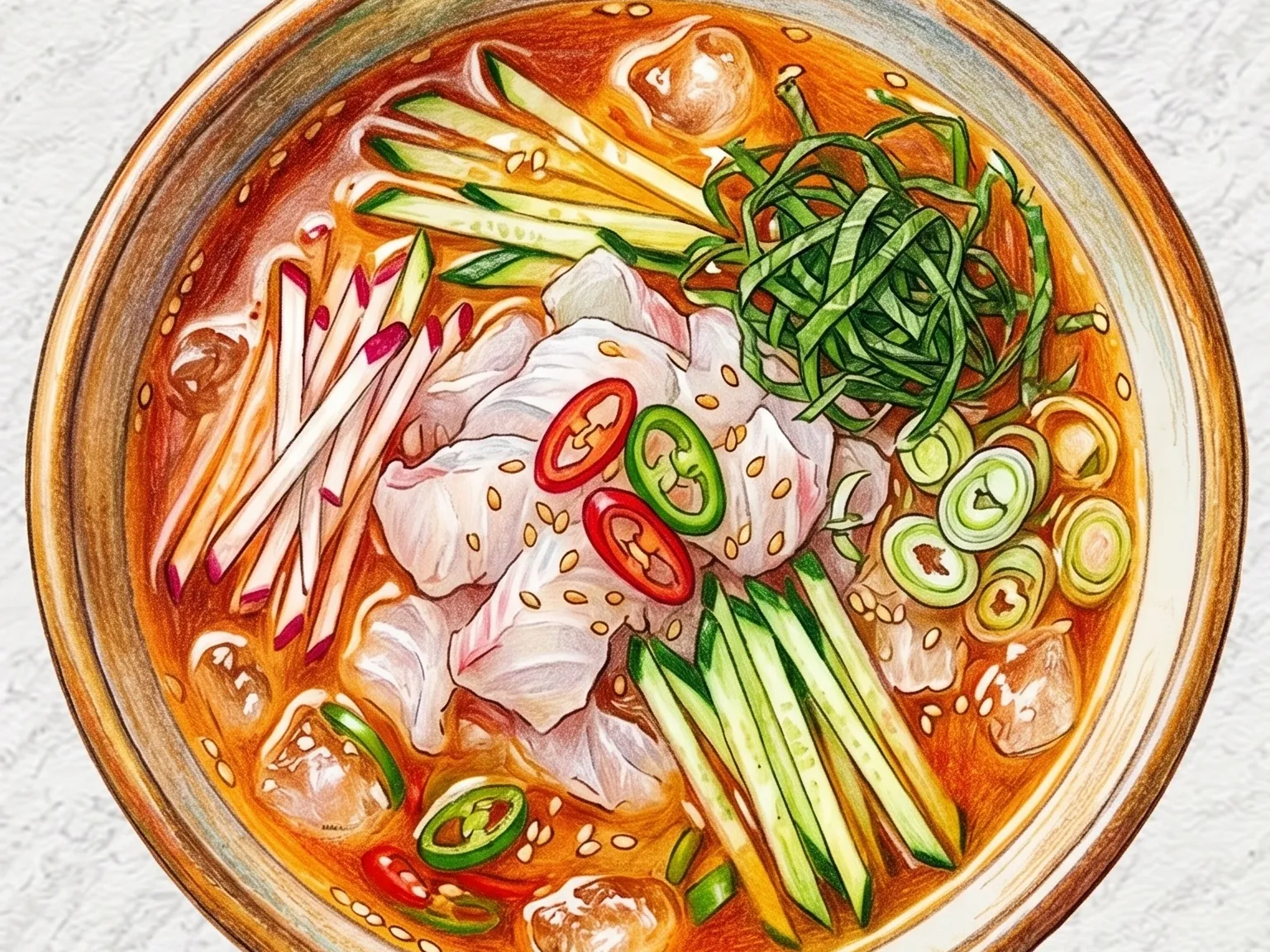
Refreshing Spicy Mulhoe Broth
Soups Easy

Refreshing Spicy Mulhoe Broth

A golden ratio recipe for a refreshing, spicy, and sweet-and-sour Mulhoe broth.

  • Mulhoe-yuksu uses vinegar and plum syrup to balance the spicy acidity of this fish broth.
  • Six tbsp vinegar plus plum syrup create double acidity blocking fishy notes
Total time
20 min
Level
Easy
Servings
2 servings
Ingredients
10
Calories
180 kcal
Protein
2 g

Key ingredients

Red pepper pasteRed pepper powderVinegarSugarPlum syrup

Core cooking flow

  1. 1 In a large bowl, combine red pepper paste, red pepper powder, sugar, and minced garlic.
  2. 2 Add vinegar and plum syrup, stirring well until the sugar is completely dissolved.
  3. 3 Pour in water and lemon-lime soda, then season with soup soy sauce and mix thoroughly.

A golden ratio recipe for a refreshing, spicy, and sweet-and-sour Mulhoe broth.

What Makes This Special

  • Mulhoe-yuksu uses vinegar and plum syrup to balance the spicy acidity of this fish broth.
  • Six tbsp vinegar plus plum syrup create double acidity blocking fishy notes
  • 100 ml cider adds carbonation that lifts a bright, airy note in the broth
  • Serving semi-frozen lets the ice dilute the broth gradually as sashimi thaws
Prep 15min Cook 5min 2 servings

Instructions

  1. 1

    In a large bowl, combine red pepper paste, red pepper powder, sugar, and minced garlic.

  2. 2

    Add vinegar and plum syrup, stirring well until the sugar is completely dissolved.

  3. 3

    Pour in water and lemon-lime soda, then season with soup soy sauce and mix thoroughly.

  4. 4

    Place the finished broth in the freezer for 1-2 hours to create a slushy texture.

  5. 5

    Pour the cold broth over prepared raw fish and vegetables, then garnish with sesame seeds.

Tips

Using pear juice instead of soda provides a more sophisticated sweetness.
Aging the broth in the refrigerator for a day deepens the flavor.

Nutrition (per serving)

Calories
180
kcal
Protein
2
g
Carbs
42
g
Fat
1
g

Recipes to Cook Together

More Soups →

Similar recipes

Korean Zucchini Soybean Paste Soup
Soups Easy

Korean Zucchini Soybean Paste Soup

The soup that comes to mind when Koreans think of home cooking. Not a dish for special occasions - this is what gets made on ordinary weeknights when nothing more specific has been decided. Anchovy-kelp stock is the base: dried anchovies and a piece of kombu in cold water, brought to a boil and simmered ten minutes. Doenjang dissolved through a strainer into the finished stock adds the fermented, earthy depth that defines the soup. Onion goes in first and sweetens the broth as it softens. Zucchini, sliced into half-moons, follows with minced garlic, cooking for five minutes at most - past that point the slices lose their shape and the broth becomes murky. Cubed tofu is added last, just to warm through without breaking. The result is a cloudy, golden soup where the salty funk of the doenjang sits underneath a gentle vegetable sweetness. A sliced cheongyang chili makes it spicy; left out, the soup is mild enough for any table.

🏠 Everyday
Prep 10min Cook 15min 2 servings
Korean Monkfish Soup (Spicy Southern Coastal Fish Broth)
Soups Medium

Korean Monkfish Soup (Spicy Southern Coastal Fish Broth)

Agwi-tang is the soup form of Korea's monkfish repertoire, originating along the fishing villages of the southern coast where the fish - known as agwi or agu depending on dialect - is caught and sold fresh daily. Where braised preparations like agwi-jjim build intensity through reduction and heavy sauce, the tang prioritizes the broth. Anchovy stock is the base; radish simmers in it for eight minutes to release its sweetness before the monkfish enters. As the fish cooks gently over medium heat, its collagen dissolves into the liquid and gives it body. The monkfish flesh itself is mild and gelatinous, a texture unlike most white fish. Bean sprouts go in at the end to contribute crunch against the soft fish. Sliced green onion and a hit of gochugaru cloud the broth red and add spice. In coastal towns this was morning food - hangover soup served steaming at predawn markets to fishermen and dock workers before the day started.

🏠 Everyday
Prep 25min Cook 35min 2 servings
Korean Mallow Clam Soup (Doenjang Mallow and Clam Broth)
Soups Medium

Korean Mallow Clam Soup (Doenjang Mallow and Clam Broth)

Auk-bajirak-guk pairs mallow greens and littleneck clams in a doenjang broth, a combination that Korean coastal households have prepared together for generations. The two ingredients come from the same geographic region - the shallow tidal flats and vegetable gardens of Korea's southern and western coasts - and their flavor profiles complement each other in a way that seems almost deliberate. The clams are purged of sand by soaking in salted water, then brought to a boil until the shells open. The liquid they release is immediately saline and oceanic, becoming the backbone of the broth. Doenjang dissolved into that clam liquor adds fermented earthiness and depth that the brine alone cannot provide. Mallow leaves are added at the very end - less than a minute before the pot comes off the heat. Cooking them longer dulls their color, turns the broth cloudy, and produces an excess of the mucilage the leaves naturally contain. Brief cooking preserves their silky, almost slippery texture, and the small amount of mucilage that does release thickens the broth very slightly, giving it more body. The flavor balance across the three components is precise: the doenjang's savory funk is sharpened by the clam's brininess, and the mallow's gentle sweetness smooths both into a rounded whole. The broth is flavorful enough to eat on its own poured over rice. Spring is the best season for this soup, when young mallow leaves are at their most tender.

🏠 Everyday
Prep 20min Cook 20min 4 servings
Korean Mallow Soup (Joseon-Era Doenjang Mallow Soup)
Soups Easy

Korean Mallow Soup (Joseon-Era Doenjang Mallow Soup)

Auk-guk - mallow doenjang soup - has been part of Korean home cooking since the Joseon era, when auk (mallow) was among the most commonly grown leafy greens in household kitchen gardens. An anchovy-kelp stock provides the base, and doenjang is pushed through a sieve directly into the simmering liquid so it dissolves without lumps. Garlic contributes a quiet, pungent undercurrent beneath the fermented paste. Mallow leaves, torn roughly by hand, wilt into the broth in under a minute. What separates auk-guk from other doenjang-guks is textural: the mallow's natural mucilage thickens the soup slightly and gives it a slippery, almost coating quality on the tongue, unlike the clean, transparent broth of spinach or radish versions. Korean folk tradition holds that nursing mothers ate auk-guk to support milk production, a belief that reflects how deeply the plant was embedded in everyday domestic life. The soup reaches its best in early summer when fresh mallow leaves are at their most tender.

🏠 Everyday
Prep 10min Cook 15min 2 servings
Korean Napa Cabbage Perilla Soup
Soups Easy

Korean Napa Cabbage Perilla Soup

Baechu deulkkae-guk is a Korean soup built from three foundations: soft-cooked napa cabbage, fermented doenjang, and ground perilla seeds. The cabbage is simmered in anchovy-kelp stock until the white stems turn translucent and the leafy parts nearly dissolve into the broth, releasing a gentle natural sweetness into the liquid. Doenjang dissolved into the stock provides the fermented, earthy backbone that anchors the flavor. Ground perilla seeds, stirred in during the final minutes of cooking, transform the broth from clear to a pale, creamy suspension and introduce a distinctly herbal, nutty aroma that has no close equivalent in sesame or any other common seed. Adding the perilla off high heat prevents it from turning gritty and preserves the volatile aromatic compounds that give it character. This soup belongs to the Korean tradition of deulkkae-guk, a category of perilla-based soups that also includes versions made with dried radish greens, mushrooms, and other cold-weather vegetables. It is among the first dishes Korean home cooks reach for when autumn temperatures drop, and it pairs naturally with plain steamed rice. Perilla has grown wild in Korea's mountains and fields since ancient times and is considered a native ingredient; in this soup, it combines with doenjang to create a flavor pairing that is entirely Korean in character.

🏠 Everyday
Prep 12min Cook 22min 4 servings
Korean Napa Cabbage Doenjang Soup
Soups Easy

Korean Napa Cabbage Doenjang Soup

Baechu doenjang guk is a foundational Korean soup built on anchovy-kelp stock seasoned with fermented soybean paste and napa cabbage. Straining the doenjang through a fine sieve as it dissolves into the hot stock keeps the broth visually clear while extracting the full depth of its fermented, earthy flavor. The cabbage stalks go into the pot first and simmer for five minutes alone, drawing out their inherent sweetness before the leaf sections and cubed tofu are added. A small spoonful of gochujang introduced at this point gives the broth a gentle heat and a reddish cast that adds both visual contrast and flavor complexity beyond doenjang alone. Sliced cheongyang chili and scallion are stirred in during the final two minutes, contributing sharpness and aroma without turning limp. Doenjang saltiness varies significantly between brands and aged batches, so starting with a conservative amount and adjusting by taste prevents over-salting. As the cabbage softens fully, its natural sweetness seeps gradually into the broth, where it finds a natural balance with the deep fermented character of the paste. It is among the most accessible soups in Korean home cooking, requiring only the most common pantry and refrigerator ingredients.

🏠 Everyday
Prep 12min Cook 20min 4 servings